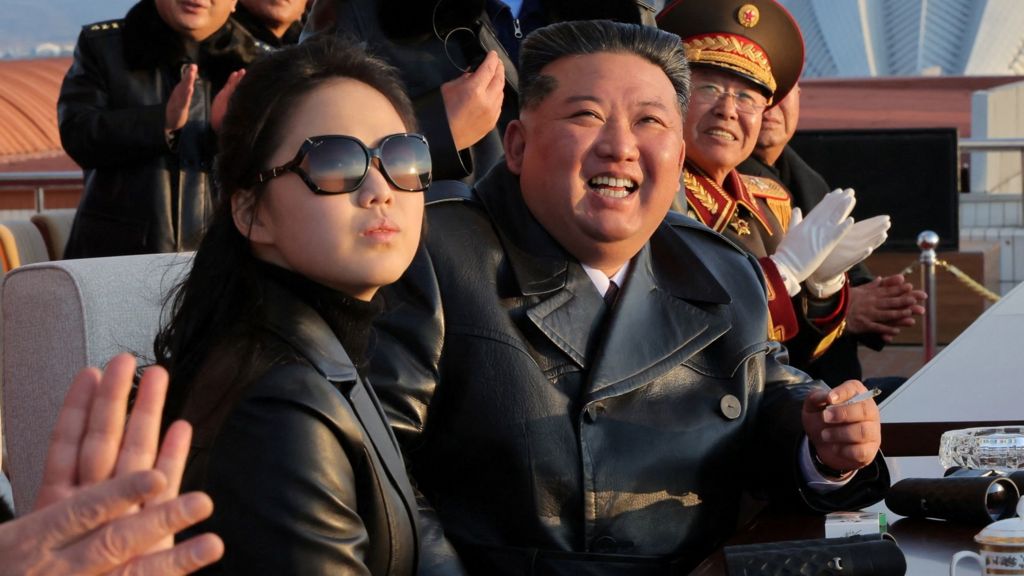
For decades, outside observers have pored over every small clue emerging from North Korea’s closed political system to unpack the country’s long-term leadership plans. Today, a new focal point of speculation has emerged: the public presentation of Kim Jong Un’s daughter, and what subtle clues in her public appearances and wardrobe reveal about a potential coming succession.
In recent months, the teenage daughter of North Korea’s supreme leader has made increasingly frequent high-profile public appearances alongside her father, joining him at military parades, state events, and on-site inspections of key national facilities. What has drawn particular attention from regional security analysts and Korea watchers is not just her growing visibility, but the careful curation of her public image – from the formal, authoritative clothing choices she has worn at state occasions to the measured, poised demeanor she displays in front of state media cameras.
These analysts argue that the intentional styling of Kim Jong Un’s daughter is far more than a matter of personal taste. Rather, they frame it as a deliberate, gradual process of political grooming, laying the groundwork for a eventual transfer of power that would continue the Kim family’s three-generation grip on North Korean governance. Where previous generations of the Kim leadership maintained strict secrecy around family members until late in the succession process, the gradual, incremental public rollout of the leader’s daughter marks a noticeable shift in how the North Korean regime is preparing for its next chapter.
While no official confirmation of a succession plan has been released by Pyongyang, the pattern of public appearances and curated image has led many experts to conclude that North Korea’s elite is already laying the institutional groundwork for a transition. This slow, visible preparation is being read as a signal that the regime is focused on ensuring stability and continuity of the ruling family’s control, even as it faces mounting international pressure over its nuclear program and ongoing economic challenges.
For regional powers and global observers, these subtle shifts in North Korea’s public political landscape carry significant implications. Any long-term leadership transition in the reclusive nuclear state carries the potential to reshape regional security dynamics on the Korean Peninsula and across Northeast Asia more broadly. As such, every new public appearance, every detail of presentation, continues to be scrutinized for insight into what comes next for one of the world’s most isolated nations.