分类: politics

  • One Nation eyes Western Sydney seats ahead of 2028 federal election: Joyce

    One Nation eyes Western Sydney seats ahead of 2028 federal election: Joyce

    Australia’s right-wing populist party One Nation has made an unprecedented breakthrough in national politics, securing its first ever lower house parliamentary seat in a landslide by-election upset that has immediately paved the way for an aggressive expansion into key Sydney battlegrounds ahead of the 2028 federal election.

    On Saturday, One Nation candidate David Farley claimed victory in the rural New South Wales seat of Farrer, ending 77 consecutive years of unbroken control over the electorate by the conservative Liberal-National Coalition. The win marks a historic milestone for the party, which was founded by Pauline Hanson in 1997 and had never before won a seat in Australia’s lower house.

    The expansion plan was revealed by Barnaby Joyce, the former Nationals leader who defected to One Nation last November. Speaking on Seven Network’s *Sunrise* program on Monday, Joyce doubled down on remarks he made on election night, confirming that the party is actively scouting potential candidates to contest Labor-held seats across Western Sydney, a densely populated urban region that has long been a progressive stronghold. When pressed, Joyce did not rule out targeting the seat of McMahon, currently held by federal Energy Minister Chris Bowen, which covers the major working-class suburbs of Blacktown, Penrith, Cumberland and Fairfield.

    “We are very much focused on the western suburbs of Sydney. I was talking to people on the ground from the region just last night,” Joyce told reporters. “To be quite frank, I think we’re talking to potential candidates. People are very enthusiastic. They know we have huge potential as a movement, and they want to be part of that, not part of this empty, performative butterfly chasing exercise that passes for politics today.” Joyce declined to share specific details about the candidates under consideration, but noted they are mostly first- and second-generation Australian residents, reflecting the demographic makeup of the region.

    The stunning by-election result has sparked finger-pointing across the political spectrum, with Prime Minister Anthony Albanese blaming the Coalition’s own strategic missteps for One Nation’s victory. Albanese argued that the fractured conservative bloc had effectively legitimized One Nation over recent years, first by adopting watered-down versions of the party’s populist policy platform, then by directing candidate preferences to One Nation during the by-election.

    “I think the Liberal Party and National Party made a big mistake legitimising One Nation … and then following that up by giving them preferences, they were saying effectively that it was OK to vote for One Nation rather than the traditional conservative party,” Albanese told ABC Radio National.

    The Prime Minister also cited multiple internal rifts within the Coalition as key factors in the upset. The conservative alliance split twice in 2025: first in May, then again the following January, leaving deep divisions among long-time conservative voters. Albanese added that the unceremonious ousting of former Liberal leader Sussan Ley, who had held the Farrer seat for 25 years, also fueled voter anger. Ley was removed from the leadership without even being given the opportunity to deliver a single budget reply, and the leadership challenge was controversially held on the same day as the funeral of a former Liberal colleague, a move Albanese said left a “legacy of betrayal” among Farrer voters.

    Beyond internal conservative chaos, Albanese acknowledged that deep-seated economic anxiety also drove the result. “Quite clearly, there’s a lot of people under financial pressure who feel like the system isn’t working for them,” he said. “And that’s a message for all political parties in the system.”

  • Changing geopolitics are in focus as France’s Macron kicks off Kenya visit for an Africa summit

    Changing geopolitics are in focus as France’s Macron kicks off Kenya visit for an Africa summit

    On a Sunday morning in Nairobi, Kenya, French President Emmanuel Macron touched down to kick off a high-stakes diplomatic visit, setting the stage for the first-ever Africa Forward Summit — a landmark event designed to introduce France’s long-teased revised policy approach to the African continent. After decades of criticism over its colonial-era paternalistic influence across the region, Paris is positioning this summit as a formal break from the past, rebranding its relationship with African nations as one between equal partners rather than a dominant power and subordinate states.

    The 2024 summit carries historic weight: it marks the first time this kind of major France-led African diplomatic gathering has been hosted in an Anglophone nation, a deliberate shift that comes on the heels of France’s full withdrawal of all military troops from West Africa completed in 2023, a move that followed years of steadily waning French political and military influence across the Sahel region. Analysts and African leaders alike are closely watching the summit to see how Macron will frame this exit and what commitments France will make to its revised vision for the continent.

    For nearly 60 years after most former French African colonies gained independence, Paris maintained a system of economic, political, and military dominance across the region known colloquially as Françafrique. This system included the permanent stationing of thousands of French troops across multiple West and Central African states, a policy that drew repeated backlash from sitting African leaders and opposition figures alike. Critics across the continent have long decried Françafrique as demeaning and overly heavy-handed, arguing that it undermined African sovereignty and perpetuated neocolonial power structures.

    Kenyan President William Ruto, Macron’s host for the summit, has framed the gathering as a potential turning point for Franco-African relations. Speaking ahead of the two-day event, which is scheduled to begin Monday and expects to welcome 30 sitting heads of state from across the continent, Ruto noted that both he and Macron share the goal of building a more equitable collaborative partnership.

    Addressing shifting global geopolitical dynamics, Macron struck a conciliatory tone, acknowledging that while France may hold policy disagreements with some West African governments, it maintains unwavering respect for African populations. Ruto, for his part, pushed back against narratives that Kenya is aligning with either Western or Eastern power blocs, stating that Nairobi’s diplomatic priority is pursuing progressive, mutually beneficial relationships with all global partners, regardless of geographic or ideological orientation.

    Not all reaction to the summit and its Kenyan host venue has been positive, however. Kalonzo Musyoka, leader of Kenya’s main opposition bloc, has publicly condemned the decision to host the gathering in Nairobi. He argued that the country currently faces a deepening democratic crisis ahead of the 2027 national general election, noting what he calls escalating attacks on opposition voices, widespread human rights violations, and deep political divisions that undermine any claim of national cohesion. “There will be an air of pretense that we are a cohesive nation,” Musyoka said, adding “We know that is far from the truth.”

    On the first day of Macron’s visit, Kenya and France signed 11 new bilateral agreements covering cross-sector investment partnerships. Key projects include an ambitious new nuclear energy facility, upgrades to national transport infrastructure, and expanded investment in sustainable agricultural development. Macron emphasized that these investments are aligned with the summit’s core focus: supporting innovation across the continent and investing in Africa’s rapidly growing young population by strengthening human capital.

  • Israeli soldiers say orders were to kill any man encountered in Gaza

    Israeli soldiers say orders were to kill any man encountered in Gaza

    An explosive investigative report aired on Israel’s Channel 13 has pulled back the curtain on sweeping, deadly rules of engagement Israeli forces received for their 2023 ground operation in Gaza, with serving and former soldiers confirming that troops were ordered to kill any male encountered on sight, regardless of age, and told to treat all civilians as potential threats.

    The testimony was collected directly by Iris Haim, whose son Yotam—one of three Israeli captives wrongfully killed by Israeli forces in Gaza City’s Shujaiya neighborhood in December 2023—was among the victims of the mistaken attack. In an account that has upended official military narratives, an anonymous soldier who admitted to opening fire on the three captives described the explicit standing orders he and his unit received. “A man, no matter what age, don’t play games with it; kill immediately,” the soldier said, adding that commanders even instructed troops to use lethal judgment against women and children if they perceived any threat, with similar protocols applied to working animals like donkeys in the area.

    The December 2023 killing of the three captives sparked immediate international and domestic outcry, because the hostages were unarmed, shirtless, waving a white flag, and posed no visible threat to Israeli troops when they were shot. The newly released testimonies lay bare a stark gap between on-the-ground orders and the Israeli military’s official post-incident investigation. Per the soldiers’ accounts, no ceasefire order was issued in the moments before the shooting—directly contradicting the military’s official claim that all troops received a command to halt fire.

    Recounting the fatal encounter, the soldier who participated in the shooting told Haim he operated under the mindset drilled into him by training: “I fire 500 bullets a minute. I blow things up. I don’t care. I’m here to kill terrorists.” When he spotted the three men approaching, he opened fire, believing them to be enemy fighters. After he hit two, his weapon jammed, and another soldier stepped in to kill the surviving captive, who was later identified as Yotam Haim. The investigation further confirmed that a brigade commander had instructed Yotam to approach the Israeli outpost, only for troops to open fire the moment he emerged.

    In a damning exchange with Iris Haim, the brigade commander overseeing the operation explicitly confirmed the lethal policy. When asked if even unarmed people were targeted, the commander replied: “Of course, we need to kill him – yes, even if he is completely unarmed.” He added that troops were ordered to kill any approaching threat rather than attempt to take them into custody, a framing that Iris Haim said amounted to an order to “kill every person walking on two legs.”

    A second soldier echoed those claims, telling investigators that all Gazans were framed as potential risks from the start of the operation. “Even an old man can blow himself up with an explosive device. The protocol was to shoot them,” he said, confirming that there were multiple documented cases of civilians waving white flags being shot on sight. The soldier added that the senior commander in charge of the captive shooting had publicly stated that distinguishing between Hamas fighters and civilian non-combatants in Gaza was impossible—yet that same commander was later promoted by Israeli Army Chief of Staff Eyal Zamir, with military officials praising him as “an outstanding officer.”

    Raviv Drucker, the investigative journalist who led the Channel 13 report, accused the Israeli military of carrying out a deliberate cover-up in its official investigation into the captive deaths. He said families of the deceased captives had pushed for a full, transparent inquiry “to receive a real investigation, and not what was presented to them, which in their eyes, and in mine as well, was a cover-up and a whitewash.”

    The investigation also uncovered new details of missed warnings that could have prevented the killings. Five days before the shooting, Israeli forces fired a missile at a northern Gaza building where the three captives were hiding, after an exchange of fire with Hamas fighters nearby. The captives survived the strike and moved through residential areas of Shujaiya, hanging handwritten signs requesting help from Israeli forces. But according to the report, military intelligence ignored on-the-ground reports of the captives’ presence, failing to pass the information to frontline troops.

    The killings of the three captives fit into a broader pattern of Israeli military actions harming Israeli hostages held in Gaza, the report notes. Of the 251 people taken captive during the October 7, 2023, Hamas attack on southern Israel, 85 died in captivity or were killed before they could be rescued, under circumstances that remain heavily contested. While the Israeli government has repeatedly denied or declined to comment on accusations that its operations have killed captive Israelis, multiple independent reports confirm that Israeli military actions have directly and indirectly caused the deaths of many hostages. Israeli newspaper Maariv even reported in October 2025 that, per anonymous Israeli official sources, dozens of captives were killed by Israeli attacks, particularly in the chaotic early stages of the war.

    From the first day of the conflict, the Israeli military activated the controversial Hannibal Directive, a longstanding military protocol that orders troops to fire on captives and abductors alike to prevent captives from being taken away, even if that puts the lives of the captives at extreme risk.

    As of 2025, Israeli military operations in Gaza have killed more than 72,700 Palestinians, according to local health officials, with 850 additional deaths recorded after a ceasefire was declared in October 2025. Thousands more Palestinians remain unaccounted for, and are presumed buried under the rubble of destroyed residential and infrastructure across the enclave.

  • Workers paint Lincoln Memorial Reflecting Pool blue

    Workers paint Lincoln Memorial Reflecting Pool blue

    As the United States prepares to mark its 250th anniversary this summer, a high-profile renovation project at one of Washington D.C.’s most iconic national landmarks has sparked fierce political and ethical debate. Workers have already started applying what former President Donald Trump calls “American Flag Blue” paint to the 2,030-foot Lincoln Memorial Reflecting Pool, a 104-year-old historic site stretching between the Lincoln Memorial and Washington Monument that has suffered from decades of chronic problems: persistent leaks, structural decay, broken plumbing, rampant algae overgrowth, and accumulated bird waste.

    Trump framed the project as a signature beautification effort for the national celebration, pushing back against original renovation proposals that came with a $300 million price tag and a multi-year construction timeline that would have required removing and replacing the pool’s original 1922 granite foundation. In an April video address from the Oval Office, Trump criticized the pool as “filthy, dirty, and it leaked like a sieve for many years”, crediting Interior Secretary Doug Burgum, whose department oversees national monuments, with committing to deliver a solution on his watch.

    Instead of moving forward with the government’s standard procurement process, Trump turned to contractors he had previously hired for private swimming pool renovations, touting a low-cost alternative approach that he claimed would cost only $1.5 million to $2 million. Under the accelerated plan, workers first cleaned the original granite, repaired and regrouted the entire structure over roughly two weeks, and are now applying an industrial-grade pool coating in the custom blue shade selected by Trump. The president has claimed the finished work will eliminate leaks entirely, last 40 to 50 years, and result in a more beautiful pool than the 1922 original, all at a fraction of the originally projected cost.

    However, reporting from The New York Times has revealed the actual contract awarded by the Trump administration came in at $6.9 million – more than three times the president’s public estimate – and was granted as a no-bid agreement using an emergency exemption that skips standard competitive bidding requirements designed to prevent favoritism and waste. The no-bid award has drawn sharp criticism from government watchdog groups, who argue the project bypasses critical legal safeguards to advance what they call a vanity project for the president.

    Tim Whitehouse, executive director of the nonpartisan nonprofit watchdog Public Employees for Environmental Responsibility, called the project clear evidence that “the system of checks and balances has broken down in the United States”. He added that Burgum “is dispensing with a variety of legal safeguards to improperly facilitate Trump vanity projects in the nation’s capital”. The BBC has reached out to the White House for official comment on the controversy, as of yet no response has been issued.

    This blue paint renovation is just the latest in a series of controversial changes Trump has advanced in Washington D.C. during his second term. Other projects include a plan to build a 250-foot victory arch on the National Mall, the demolition of the White House East Wing to construct a large new presidential ballroom, and the rebranding of multiple federal and cultural institutions to add Trump’s name to their official titles. While the president frames these changes as upgrades to the nation’s capital that honor American history ahead of the semiquincentennial, critics argue they represent a dangerous concentration of power and the abuse of federal authority for personal political gain. Experts also remain uncertain whether the cosmetic paint renovation will actually address the root structural issues that have plagued the nearly century-old reflecting pool for decades.

  • Britain’s Starmer fights for his job as calls for his ouster grow after local election losses

    Britain’s Starmer fights for his job as calls for his ouster grow after local election losses

    LONDON – Less than two years after securing a landslide general election victory that brought his centre-left Labour Party back to national power, British Prime Minister Keir Starmer now faces an existential threat to his leadership, triggered by catastrophic losses across last week’s local, devolved and regional elections.

    The poor electoral showing, widely framed by political analysts as an unofficial public referendum on Starmer’s premiership, has spurred dozens of sitting Labour lawmakers to publicly call for his resignation. With internal party rivals already weighing potential leadership bids, Starmer is gearing up to deliver a make-or-break speech on Monday, where he will attempt to outline a new policy direction and rebuild his government’s flagging political fortunes.

    One backbench Labour lawmaker, Catherine West, has issued an explicit ultimatum: if she is unimpressed by the content of Starmer’s address, she will move to formally trigger a party leadership contest. Though West acknowledged she currently lacks the 51 signatures from parliamentary colleagues required to force a contest, her move is widely seen as an effort to pressure higher-profile potential challengers to publicly declare their opposition to Starmer.

    Among the most talked-about potential challengers is former Deputy Prime Minister Angela Rayner, who stopped short of directly calling for Starmer’s ouster but acknowledged the party urgently needs to shift course. “The prime minister must now meet the moment and set out the change our country needs,” Rayner said in a statement released after the election results.

    Last week’s elections, held across English local councils, as well as devolved legislative bodies in Scotland and Wales, delivered historic losses for Labour. The party was squeezed from both the left and right flanks of British politics, shedding votes to the right-wing, anti-immigration Reform UK party and the left-leaning Green Party – a shift that underscores the growing fragmentation of Britain’s traditionally two-party system, long dominated by Labour and the Conservative Party.

    Starmer’s premiership has been plagued by unmet promises and repeated missteps since taking office. His administration has failed to deliver the promised economic growth voters were promised, has struggled to repair underfunded, stretched public services, and has not meaningfully eased the persistent cost-of-living crisis that continues to burden working households across the UK. Repeated policy U-turns and mismanagement on high-profile issues, including welfare reform, have further eroded public trust. The Prime Minister also faced widespread backlash for his decision to appoint Peter Mandelson, a politician long tied to convicted sex offender Jeffrey Epstein, as Britain’s ambassador to Washington – a appointment that was ultimately scrapped amid the scandal.

    Despite the mounting pressure, Starmer struck a defiant tone in an interview with The Observer newspaper on Sunday, saying he intends to remain in Downing Street for a full decade. He is pinning his political survival on two key upcoming events: his Monday policy speech, and the State Opening of Parliament on Wednesday, where King Charles III will deliver the Labour government’s full slate of upcoming legislative plans.

    A central pillar of Starmer’s proposed new policy direction is a push for closer economic and social ties with the European Union, which the UK left in 2016, following a narrow membership referendum. Starmer’s government has already moved to relax some of the post-Brexit trade barriers that have hurt British businesses since the split, and he now plans to negotiate a youth mobility agreement that would allow British young people to work across EU member states for multiple years. “Brexit has held back our young people. We have to be closer to Europe,” Starmer told The Observer. While Labour campaigned to remain in the EU in 2016, Starmer has repeatedly ruled out seeking full re-entry to the bloc, its customs union or single market – policies that business leaders say would deliver major economic benefits.

    While no high-profile potential challengers including Rayner, Health Secretary Wes Streeting and Greater Manchester Mayor Andy Burnham have yet to publicly call for Starmer’s resignation, a growing number of backbench MPs are demanding he lay out a clear timeline for stepping down. Unlike many parliamentary democracies, UK political rules allow parties to replace their sitting prime minister mid-term without holding an early general election.

    Josh Simons, a previously loyal Labour MP, wrote in The Times of London that Starmer “has lost the country” and “should take control of the situation by overseeing an orderly transition to a new prime minister.” West echoed that sentiment, framing the internal pressure as a response to voter anger. “Working people sent us a message. We have to listen to that, and we have to change and we have to do it quickly,” she said.

  • Iran war could make Trump’s trip to China a bit chillier than his first-term visit

    Iran war could make Trump’s trip to China a bit chillier than his first-term visit

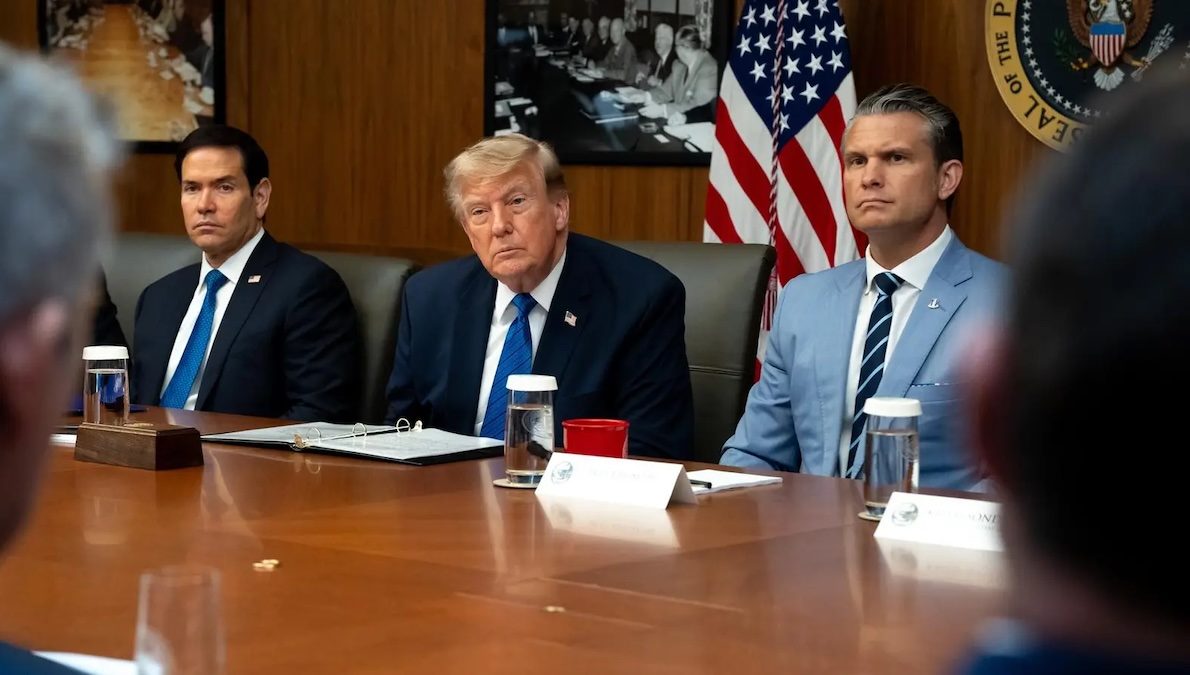
    As U.S. President Donald Trump prepares to depart for his highly anticipated visit to Beijing this week, long-simmering trade tensions, deep economic ties between China and Iran, and shifting bilateral dynamics threaten to dampen the warm goodwill Trump has long projected for his Chinese counterpart Xi Jinping. Weeks ahead of his departure, Trump already took to social media to predict Xi would greet him with a warm embrace, a reflection of the consistent public praise he has lavished on the Chinese leader throughout his political career, framing Xi as a formidable competitor worthy of his respect.

    Unlike Trump’s historic 2017 first-term visit to Beijing — which Beijing designated a “state visit-plus” marked by unprecedented ceremonial fanfare — this year’s trip is expected to be far lower in scale and shorter in duration. Trump, who has openly expressed discomfort with long-haul flights and extended stays away from Washington and his personal properties, will only spend roughly three partial days on the ground in China, with ceremonial arrangements that experts say will not match the grandeur of his first trip.

    The 2017 visit set a unique bar for high-level diplomatic spectacle between the two leaders. China rolled out an extraordinary red-carpet welcome: military bands played state honors, uniformed children waved national flags and chanted welcomes, Xi personally hosted Trump and first lady Melania Trump for a private tour and dinner inside the Forbidden City, an honor never before extended to a foreign leader since the founding of the People’s Republic of China. The next day, a formal welcome ceremony and full military parade was held at the Great Hall of the People, capped by a state banquet featuring footage of Xi’s earlier visit to the U.S. and a clip of Trump’s granddaughter Arabella singing a song in Mandarin. Such extraordinary treatment is rarely extended to visiting world leaders: when British Prime Minister Keir Starmer toured the Forbidden City earlier this year, Xi did not attend, the site remained open to the general public, and Starmer shared the space with ordinary tourists.

    Jonathan Czin, a former China director at the Biden administration’s National Security Council and current Brookings Institution fellow, noted that tensions between the two powers already ruled out a repeat of the 2017 “state visit-plus” format long before the recent escalation of conflict over Iran. “Even before this whole conflagration with Iran, they weren’t going to go state visit-plus like last time, just because things are tense,” Czin explained.

    Ali Wyne, senior U.S.-China research and advocacy adviser at the Washington-based Crisis Group, acknowledges that Chinese organizers will still work to craft a memorable experience for Trump, who has long been drawn to displays of grandeur. “The Chinese delegation will likely do its utmost to ensure that Trump leaves Beijing believing that he has just concluded the most extraordinary state visit of his two presidencies,” Wyne said. But he added that the purpose of this pageantry has shifted significantly from 2017: today, “Xi has a much better understanding of Trump, and the administration’s own national security strategy and national defense strategy recognize China as a near-peer.”

    Expectations for major breakthroughs from this summit are far lower than they were for Trump’s first visit, Czin argued. Chinese negotiators are likely to hold off on offering major concessions on trade or other core issues, he explained, as they time their strategy around upcoming U.S. midterm elections. Beijing is working from the theory that the closer the U.S. approaches Election Day, the more leverage it will hold in negotiations, he noted.

    The Republican Party is currently fighting to retain control of Congress, with recent polling showing most Americans hold negative views of Trump’s economic policies and believe the U.S. overstepped in its recent actions against Iran. Even so, the White House has pushed back against low expectations, arguing that Trump’s past hardline stance on tariffs (though many of those tariffs were ultimately struck down by the U.S. Supreme Court) leaves the U.S. in a strong negotiating position. “President Trump cares about results, not symbols,” White House spokesperson Anna Kelly said. “But even still, the president has a great relationship with President Xi, and the upcoming summit in Beijing will be both symbolically and substantively significant.”

    The coming year could bring four scheduled meetings between the two leaders: after Trump’s Beijing visit, he plans to host Xi at the White House, he is expected to attend the November Asia-Pacific Economic Cooperation summit in Shenzhen, China, and Xi is scheduled to attend the December Group of 20 summit hosted at Trump’s Doral, Florida resort. Czin cautioned that not all of these meetings may ultimately take place, noting that Xi, like Trump, is not fond of extensive foreign travel, and Xi prioritizes institutional authority over the personal, relationship-driven diplomacy that Trump prefers. Czin also pointed to January’s major Chinese military reshuffle, which saw the replacement of multiple officials with long-standing personal ties to Xi’s family, as evidence of this approach.

    Even so, Wyne noted that Xi recognizes the unique opportunity presented by Trump’s leadership. Xi “appreciates that he is unlikely to deal with another U.S. president who admires him as greatly and embraces as narrow a view of strategic competition,” Wyne said. That dynamic means Xi may “attempt to pocket as many economic and security concessions from Trump as possible.”

    Trump has repeatedly emphasized his positive personal rapport with Xi for years. In a 2024 interview with The Wall Street Journal’s editorial board, Trump said, “Xi was actually a really good … I don’t want to say ‘friend.’ I don’t want to act foolish. ‘He was my friend.’ But I got along with him great.” Trump has even suggested that military confrontation over Taiwan can be avoided solely because of his personal relationship with Xi, despite recent signals that his administration is considering new arms sales to the self-governing island.

    The Beijing visit, originally scheduled for March, was postponed earlier this year amid the early escalation of conflict with Iran. The conflict has put Beijing in a delicate position: as the largest purchaser of Iranian oil, China holds deep economic ties to Tehran, and the ongoing conflict has already added headwinds to China’s already slowing projected economic growth. China helped broker a fragile ceasefire in the Strait of Hormuz after Iran blocked the waterway and disrupted global energy markets, though efforts to reopen the strait did not go as far as Trump pushed for. If Beijing can help lock in a lasting ceasefire, that move could strengthen its hand in upcoming trade negotiations with the U.S.

    Trade issues remain the core sticking point for bilateral talks. The $250 billion in non-binding trade deals Trump announced during his 2017 visit never fully materialized, and a $200 billion round of trade agreements reached in 2020 also largely failed to be implemented before the end of Trump’s first term. Last year, Trump’s announcement of steep new global tariffs prompted retaliation from Beijing, which halted purchases of U.S. soybeans and tightened export controls on rare earth minerals critical to U.S. manufacturing. Tensions have eased somewhat since a trade truce was reached last fall, which kept new tariffs on hold for both sides. The Trump administration has made cutting the U.S. trade deficit with China a top policy priority, while asserting it aims to expand overall bilateral trade at the same time.

    “I expect great stability in the relationship,” Treasury Secretary Scott Bessent said. “But that doesn’t mean our trade deficit can’t continue dropping.” Kelly reiterated that the president comes to the summit prepared to win tangible gains for American voters. “Trump doesn’t travel anywhere without bringing deliverables home to our country,” she said. “Americans can expect the president to deliver more good deals for the United States while in China.”

  • Philippines to summon former national police chief in probe into Duterte-era killings

    Philippines to summon former national police chief in probe into Duterte-era killings

    MANILA, Philippines — A fresh domestic investigation into widespread extrajudicial killings linked to former Philippine President Rodrigo Duterte’s brutal anti-drug campaign is moving forward, with top former law enforcement official Ronald dela Rosa set to be the first person summoned for questioning, the country’s interior secretary announced Sunday.

    Interior Secretary Juanito Victor Remulla Jr. confirmed that dela Rosa — currently a sitting Philippine senator who previously served as Duterte’s chief of the Philippine National Police — will receive his summons on Monday. The probe comes after months of speculation that dela Rosa could face imminent arrest related to an International Criminal Court (ICC) case connected to the same killings. Dela Rosa has not attended any Senate sessions since November 2025, after reports of a potential impending arrest first emerged.

    Thousands of mostly low-income, alleged drug suspects were killed across the country during the crackdown, which began when Duterte served as mayor of Davao City and expanded nationwide after he won the presidency in 2016. The wave of extrajudicial killings during police anti-drug operations drew widespread condemnation from global human rights organizations and Western governments led by the United States over allegations of systematic human rights abuses. In March 2025, the 81-year-old Duterte was arrested and transferred to the Netherlands, where he is currently on trial at the ICC on charges of crimes against humanity.

    dela Rosa has deep personal ties to Duterte’s anti-drug initiative: he previously served as police chief of Davao City during Duterte’s tenure as mayor, before Duterte appointed him to lead the national police force when he took the presidency. Both Duterte, dela Rosa and other former senior police officials have long denied any wrongdoing, claiming all people killed in the raids were shot after attacking or threatening responding law enforcement officers. Despite these denials, Duterte openly and repeatedly publicly threatened death to drug suspects throughout his time in office. A 2024 Philippine congressional inquiry already recommended filing formal criminal charges against Duterte and multiple high-ranking police officials tied to the crackdown.

    In comments to reporters, Remulla clarified that dela Rosa has never been subject to a formal personal investigation as part of domestic efforts to address the killings. “All officers involved must be held accountable,” Remulla said. “Just to be clear, he was the tip of the spear in the extrajudicial killings drive, so we will start with him and investigate down further.” Remulla framed the new probe as a critical step toward national accountability for what he called “those dark years where extrajudicial killings became a state policy.”

    To prevent dela Rosa from fleeing the country before questioning, Remulla confirmed that all Philippine airports, seaports and official exit points have been placed on high alert, and all domestic and international airlines operating in the country have been notified of the alert. He did not provide additional details on the scope of the border notification. Remulla also emphasized that the new domestic investigation is fully separate from and unrelated to the ongoing ICC probe into Duterte and the killings. Duterte ordered the Philippines to withdraw from the ICC in 2019, a move human rights activists widely viewed as an attempt to avoid accountability for the alleged crimes. The abuses under investigation by the ICC all occurred before the Philippine withdrawal took effect, so the court retains jurisdiction over the case.

  • Putin says he thinks Ukraine conflict ‘coming to an end’

    Putin says he thinks Ukraine conflict ‘coming to an end’

    On Russia’s annual World War II Victory Day, Moscow’s Red Square hosted a significantly downsized 2026 parade, marking the first time in nearly 20 years that iconic heavy military hardware such as battle tanks and intercontinental missiles were absent from the traditional display. The scaled-back event was organized in direct response to elevated security fears, with Russian authorities assessing a high risk of Ukrainian drone strikes targeting the central Moscow ceremonial site. That threat was partially mitigated hours before the parade began, when a last-minute ceasefire between Moscow and Kyiv was finalized through brokering efforts by US President Donald Trump, allowing the event to conclude without any security incidents.

    Shortly after delivering his formal Victory Parade address, Russian President Vladimir Putin spoke to reporters, offering his most direct public assessment of the ongoing “special military operation” in Ukraine to date: he stated firmly that he believes the conflict is moving toward its conclusion. In his earlier parade speech, Putin had framed Russia’s military action as a morally “just” campaign, characterizing Ukraine as an aggressive faction that receives extensive military backing from the entire NATO alliance. He doubled down on this criticism of Western support for Kyiv during the post-parade press conference, accusing Western powers of deliberately stoking continued confrontation between the two countries, a conflict that he acknowledged remains a serious issue even as it nears resolution.

    On the topic of potential diplomatic talks with Ukrainian President Volodymyr Zelenskyy, Putin laid out clear conditions for any face-to-face meeting. The Russian leader noted that while he has heard repeated claims that Zelenskyy is eager for a direct summit, he will only agree to such a meeting after a comprehensive, long-lasting peace deal has been finalized through preliminary negotiations. He added that a meeting in a neutral third country could be arranged as the final step to formally sign the agreed-upon treaty, but refused any preliminary meeting before text is settled.

    Putin also commented on future negotiations over European security arrangements, stating that he is open to discussing new regional security frameworks and naming his longstanding personal associate, former German Chancellor Gerhard Schröder, as his preferred negotiating counterpart for those talks. Schröder’s close ties to Putin have long been controversial across Europe, particularly due to his post-chancellorship work for Russian state-owned energy corporations.

    As a core component of the newly agreed US-brokered ceasefire, both Russia and Ukraine committed to a large prisoner of war swap, with each side set to release 1,000 detained service members to the other. However, Putin confirmed Saturday that as of his press conference, Russian officials had not yet received any formal communication from Kyiv outlining next steps for the exchange.

    Beyond the absence of military hardware, this year’s Victory Parade also featured restricted media access: far fewer journalists were granted entry to cover the event, with most international media organizations denied accreditation entirely. The parade, which the Kremlin has long used to project Russian military power to global audiences, instead featured only marching troops, reflecting the ongoing strains of the nearly two-year conflict with Ukraine.

  • ‘Not working for young people’: Chalmers flags huge tax changes

    ‘Not working for young people’: Chalmers flags huge tax changes

    Ahead of the highly anticipated federal budget release this Tuesday, Australian Treasurer Jim Chalmers has given the clearest hint yet that major, game-changing tax policy shifts will be front and center of the new fiscal plan, framing the adjustments as difficult but necessary to fix deep structural inequities in the nation’s housing and tax systems. In an exclusive interview on Sky News’ public affairs program *Sunday Agenda*, Chalmers stopped short of locking in concrete changes to controversial property investment tax concessions, namely negative gearing and the capital gains tax (CGT) discount, but confirmed the upcoming budget will center on targeted reform rather than broad-based revenue grabs. “When it comes to the tax package in the budget, it will have some difficult but necessary reforms,” Chalmers told host. “It is overwhelmingly not about collecting heaps more revenue over the budget period, it is about more reforms.”

    Chalmers, whose center-left Labor government won power 12 months prior, called the current arrangement unfair, noting it fails to adequately recognize the contributions of ordinary working Australians when compared to individuals who generate most of their income through investment holdings. For weeks, budget leaks have outlined two core proposed reforms to property investment taxation that are expected to be confirmed in Tuesday’s announcement. The first, for negative gearing — a tax break that allows property investors to deduct expenses including mortgage interest and repair costs from their overall taxable income when annual expenses exceed rental income — will only apply to new investment purchases of newly constructed properties. Crucially, the proposed changes are grandfathered: the more than 1 million existing Australian landlords who currently use negative gearing will retain their existing tax breaks, eliminating any immediate disruption for current holders. The policy design is intended to drive new construction and ease the nation’s chronic housing supply shortage, the core root of the country’s ongoing affordability crisis.

    The second major shift would alter the CGT discount, changing rules that have been in place since the Howard government in 1999. Under current policy, investors holding assets for at least 12 months qualify for an automatic 50% discount on any capital gains. The proposed change would return the system to inflation indexing, which matches the taxable portion of gains to rising prices, rather than offering a flat half-discount across all asset classes. Unlike the negative gearing adjustments, this change would apply to all current and future investors.

    Addressing growing public speculation that the government could also roll out a new earned income offset worth between $200 and $300 per taxpayer as cost-of-living relief, Chalmers pushed back against expectations of large, short-term cash handouts, framing the budget as a fiscally restrained document designed to avoid adding to existing inflationary pressures. “People shouldn’t expect in a very tight and responsible budget defined by spending restraint… big near term cash splashes in the budget because we take this inflation challenge seriously,” he said. The Treasurer noted the government has already delivered multiple forms of tax relief, including a cut to fuel taxes and an instant asset tax deduction for businesses, with already scheduled stage three income tax cuts set to take effect on July 1 next year.

    Rejecting criticism that the reforms amount to a punitive attack on existing investors, Chalmers emphasized the policy’s core goal is expanding access to homeownership for young and aspirational Australians, not punishing past investment decisions. “We’re not trying to punish anybody who has made decisions about how they’ve used the tax system or the housing market in the past,” he said. “It’s about trying to expand opportunities in the housing market for more people. Our motivation in considering some of these changes is recognising that helping people get a toehold in the housing market is a really important way of helping people get a toehold in the economy more broadly.” The Treasurer added that while boosting housing supply has been the government’s first priority, the status quo on housing and taxation is broken, unfair, and demands a policy response from a responsible government. Tuesday’s budget, he said, will mark the start of a more ambitious year of reform, following the first year in office focused on delivering on prior election commitments.

    Opposition figures have sharply condemned the proposed reforms, framing them as a naked tax grab that will fail to boost housing supply and hurt working Australians across all age groups. Liberal Senator Jane Hume questioned the government’s reversal on prior commitments to avoid negative gearing changes and challenged the government’s claims the reforms will increase housing construction. Shadow Treasurer Tim Wilson went further, dismissing the leaked budget plan as disjointed and ideologically driven. “So far their budget seems to be in complete disarray,” Wilson said. He criticized the plan for protecting existing older investors while closing off opportunities for young people seeking to enter the market, adding that the CGT changes will penalize young Australians saving for a home deposit through share market investments. Wilson argued that the changes will not result in more home construction, will drive up rents in major capital cities, and amounts to redistribution that does nothing to drive broader economic growth. “We need a tax system that is orientated towards encouraging wealth creation, jobs and growth for the next generation of Australians, while Labor’s plan is to feed resentment and redistribution,” he said.

    The budget announcement, scheduled for Tuesday night, will bring the years-long debate over Australia’s property tax system to a head, with stakeholders across the housing, finance and construction industries waiting for full details of the proposed reforms.

  • Why Canada is seeing its biggest military recruitment surge in 30 years

    Why Canada is seeing its biggest military recruitment surge in 30 years

    For generations, Canada has been widely regarded as a global underperformer when it comes to defence investment. Just two years ago, recruitment shortfalls grew so severe that a former Canadian defence minister issued a stark warning: the country’s armed forces were caught in an irreversible “death spiral.”

    Today, that narrative is shifting dramatically. The Canadian Armed Forces are now expanding at a pace unmatched in 30 years, posting the largest annual intake of new recruits in three decades, a turnaround that could finally reverse the chronic personnel shortages that have hobbled the military for generations. This surge over the past two years has unfolded against a backdrop of rising global geopolitical tension, with major armed conflicts raging across multiple regions and widespread uncertainty reshaping security calculations around the world. It also comes as the Canadian government has committed tens of billions in new military spending after decades of falling short of its mandatory NATO defence spending obligations.

    This recruitment boom also aligns with a notable uptick in Canadian nationalist sentiment, a shift triggered after former U.S. President Donald Trump’s provocative comment labeling Canada the “51st state” — a remark widely interpreted as a threat to Canadian sovereignty from its closest and most powerful neighbor. According to Charlotte Duval-Lantoine, a defense researcher at the Canadian Global Affairs Institute, while a so-called “Trump effect” likely contributed to rising enlistment, the spike in military applications actually began in 2022, coinciding directly with Russia’s full-scale invasion of Ukraine.

    “When people recognize that the world is no longer as secure as they once believed, and that their own country could face risk, we consistently see more people step forward to join the military,” Duval-Lantoine explained.

    Global instability is far from the only factor driving this surge. Canada’s persistently high youth unemployment rate, which hovered near 14% in March this year, paired with new promises of job security and substantial pay raises following Prime Minister Mark Carney’s announcement of the largest military pay increase in a generation, have also drawn more young people to enlist, Duval-Lantoine added. Since taking office 12 months ago, Carney has centered military expansion and modernization as a core priority of his administration, rolling out what he describes as an “ambitious” roadmap to rapidly grow and upgrade the Canadian Armed Forces.

    In March of this year, Carney announced that Canada had officially hit the NATO target of devoting 2% of its gross domestic product to defence — a milestone the country had not reached since the late 1980s. This year’s defence spending totals more than C$63 billion ($46 billion), and Carney has also committed Canada to the NATO alliance’s new pledge to raise defence spending to 5% of GDP by 2035. Canada hit the 2% target through a combination of across-the-board salary increases for service members, pledges to purchase new advanced military equipment, upgrades to existing domestic bases, and new infrastructure investments in the Canadian Arctic to strengthen sovereignty claims.

    Even with this surge in new recruits, however, defence analysts caution that the Canadian military still lags far behind many of its key NATO allies, and it will take years for new funding to translate into meaningful operational improvements. Richard Shimooka, a senior defence fellow at the Ottawa-based Macdonald-Laurier Institute public policy think tank, noted that the Canadian Armed Forces currently only have the capacity to deploy a few thousand active soldiers at any given time, alongside a very limited fleet of operational fighter jets. For context, the United Kingdom’s military can deploy 10,000 troops on short notice when required, he said.

    “The Canadian Armed Forces are starting from a very low point right now, and it will take between five and 10 years before we see a real, tangible improvement in operational capability,” Shimooka said. A core underlying reason for this slow pace of progress, he argued, is Canada’s decades-long overreliance on the United States — its southern neighbor and the world’s dominant military power — for collective defence.

    Successive U.S. presidential administrations and senior officials have repeatedly pressured Canada to ramp up defence spending, and critics have long labeled Canada a military “freeloader” that benefits from U.S. security guarantees without contributing its fair share. In 2024, U.S. House of Representatives Speaker Mike Johnson publicly accused Canada of “riding on America’s coattails” when it came to defence. Last year, Trump name-checked Canada as one of NATO’s top “low-payers,” telling reporters: “Canada says, ‘Why should we pay when the United States will protect us for free?’”

    Even after hitting the 2% GDP target this year, Canada still ranks among the lowest-spending NATO members when compared to alliance peers, falling behind the U.S., UK and France, according to a 2025 NATO defence report. Still, the sharp rise in new recruits is seen as an early sign that gradual improvement is underway. Canadian Defence Minister David McGuinty says he expects the country to hit its long-term personnel recruitment goals sooner than previously projected.

    The rate of attrition — the share of active service members leaving the military each year — has also dipped slightly, a major reversal from 2024, when then-Defence Minister Bill Blair warned that chronic attrition had pushed the force into a “death spiral.” Active service members deployed on a recent Arctic sovereignty and security operation in Canada’s northern Nunavut territory told reporters the new funding package is widely welcomed, and in many cases, has been decades in the making.

    “We’ve been behind for a couple of decades, but at least we’re finally taking action to fix things now,” said Alden Campbell, a first officer with the Royal Canadian Air Force. Campbell noted that the recent restructuring of military pay has given a major boost to troop morale, as has the government’s promise to deliver long-awaited upgraded equipment. “Hopefully I’ll still be in my career long enough to benefit from these upgrades,” he added.

    In late April, the Canadian military confirmed it had enrolled more than 7,000 new active service members in the 2025-2026 fiscal year, the highest annual recruit total in 30 years. That 7,000 figure only accounts for recruits who completed the full enlistment process; total confirmed eligible applications to the Canadian Armed Forces nearly doubled year-over-year as of February, jumping from 21,700 in 2024-2025 to 40,116 this year, according to data shared by Canada’s Department of National Defence. The total number of people who expressed initial interest in enlistment was far higher, reaching nearly 100,000 over the past 12 months, a massive jump from the 36,000 total applications recorded in 2019-2020.

    Travis Haines, a lieutenant colonel in the Canadian Armed Forces, told reporters he attributes a large share of the recruitment surge to the military’s recent efforts to cut through outdated red tape. For years, the military faced heavy criticism for its slow, bureaucratic application process that left many eligible applicants waiting months for a response. In recent years, the force has digitized key parts of the application process — including allowing electronic submission of required eligibility documents — to drastically cut processing times. “There has always been strong public interest in joining, it was just nearly impossible to get through the old system,” Haines explained.

    Another key policy shift that has expanded the applicant pool is the 2022 change opening enlistment to Canadian permanent residents, not just Canadian citizens. Last year, foreign-born permanent residents made up roughly 20% of all new recruits. Now, Canada is laying the groundwork for a major military expansion, with a long-term target of 85,500 active regular service members and a total mobilization reserve force of up to 300,000. Duval-Lantoine noted that Canada has not pursued a mobilization plan of this scale since 2004, a clear sign the country is adjusting its defence posture in response to the ongoing war in Ukraine, where the role of large-scale military manpower has been a defining feature of the conflict. Like its European NATO allies, Duval-Lantoine said, Canada is “preparing for future conflicts by studying the lessons of the current one.”