分类: politics

  • Trump’s deal making with Xi next week may determine Hong Kong jailed activist Jimmy Lai’s fate

    Trump’s deal making with Xi next week may determine Hong Kong jailed activist Jimmy Lai’s fate

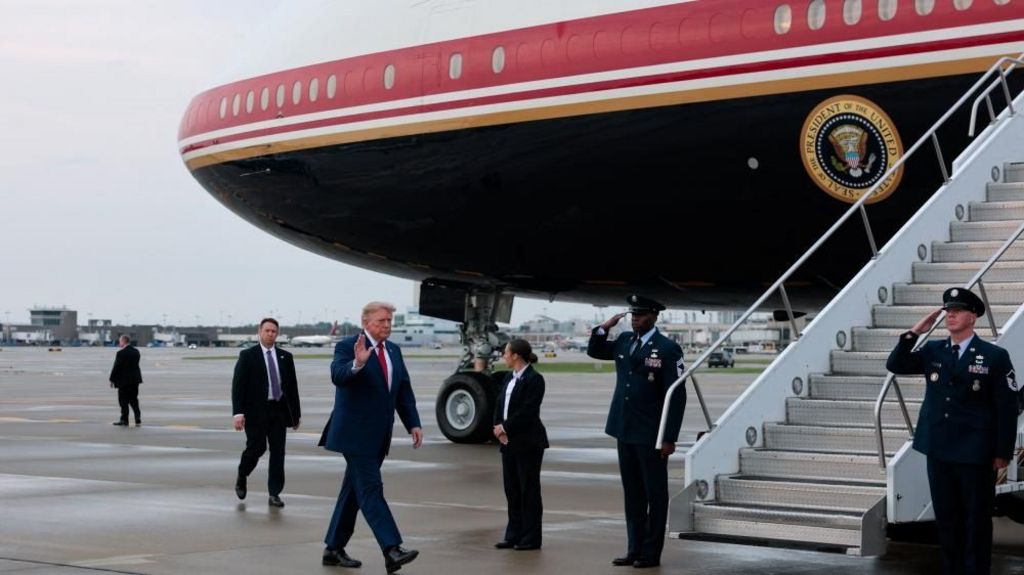
    As former U.S. President Donald Trump prepares for a high-stakes upcoming summit with Chinese President Xi Jinping in Beijing, a pressing humanitarian and geopolitical plea has taken center stage: the family of imprisoned Hong Kong pro-democracy activist Jimmy Lai is urgently calling on Trump to leverage the meeting to secure Lai’s release, warning that the 78-year-old’s declining health leaves little time for delayed action.

    Lai, once a prominent media tycoon and vocal critic of Beijing’s governance in Hong Kong, founded the now-shuttered pro-democracy newspaper Apple Daily. The outlet was forced to close during the sweeping crackdown that followed Hong Kong’s 2019 large-scale anti-government protests. Last year, Lai was sentenced to a total of 20 years in prison under the controversial national security law that Beijing imposed on Hong Kong in 2020 — a law that Lai had once hoped a U.S. president would intervene to stop.

    In an exclusive interview with the Associated Press, Lai’s 31-year-old son Sebastien Lai, who is based in London, laid out the family’s last-ditch hopes for diplomatic intervention. Sebastien, who has maintained contact with his father through letters during his five years in custody, warned that his father’s pre-existing health conditions — including heart palpitations and diabetes — put his life at grave risk if he remains behind bars. “My father will die in prison if he’s not freed,” Sebastien said, adding that an in-custody death would create a lose-lose outcome for all parties, turning Lai into a martyr and deepening international distrust of Beijing. If released, Sebastien added, his father only desires to live out the rest of his years in quiet seclusion.

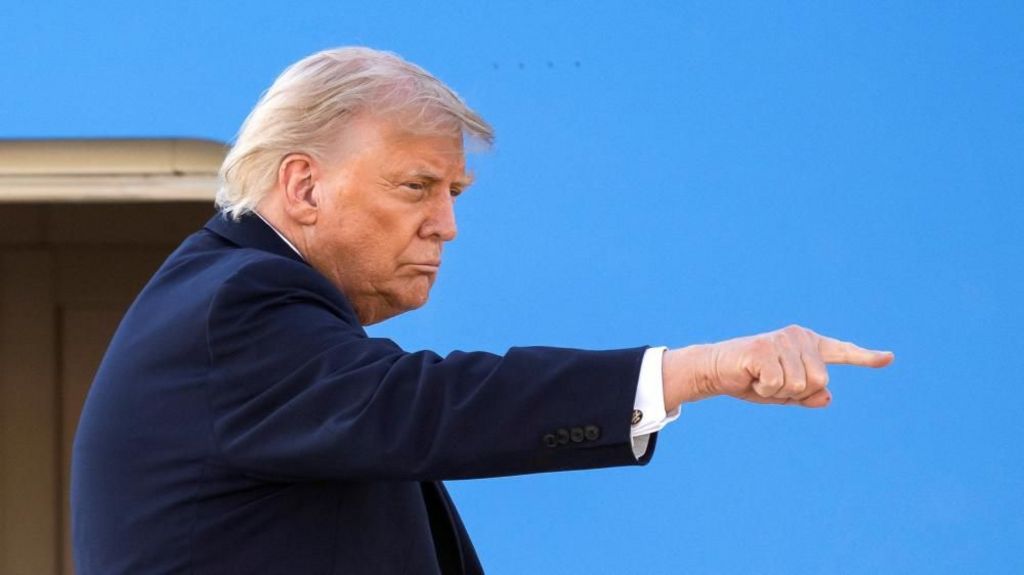
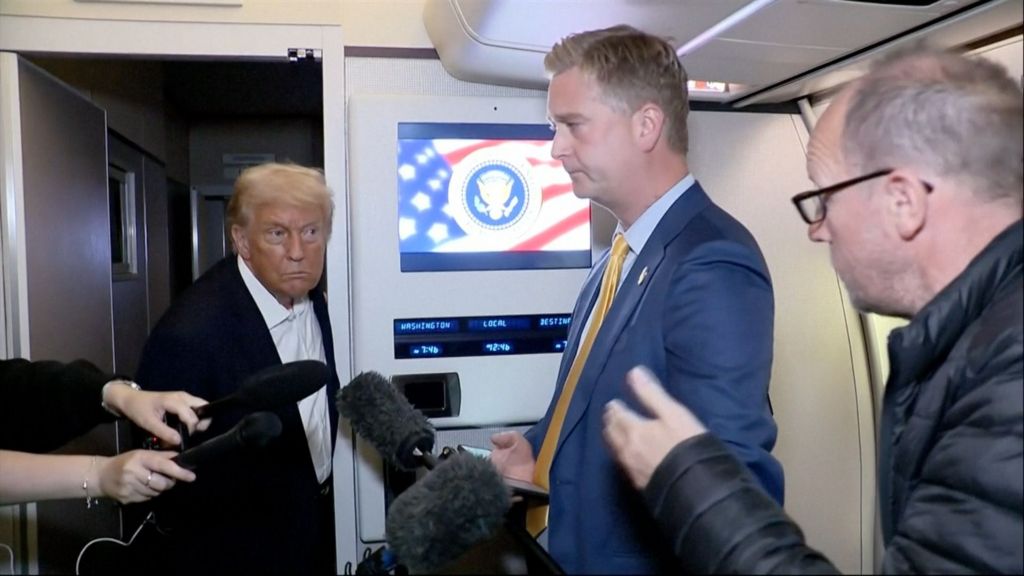
    Trump has already signaled he plans to raise Lai’s case during the Beijing talks, alongside other core agenda items including trade relations, the ongoing Iran war and cross-strait tensions over Taiwan. Speaking to conservative radio host Hugh Hewitt, Trump noted he holds “a little bitterness” over Lai’s continued detention. This is not the first time the former president has raised the issue: he first brought up Lai’s case during an October 2024 meeting with Xi, and has twice instructed senior administration officials to raise the demand in bilateral talks with Chinese counterparts, according to Mark Clifford, president of the Committee for Freedom in Hong Kong Foundation, which advocates for Lai’s release.

    Clifford, citing sources briefed on previous diplomatic engagements, said Chinese officials have acknowledged U.S. calls for Lai’s release without aggressive pushback in private discussions, a shift he calls a positive sign that the door for negotiation remains open. The U.S. Treasury Department declined to comment on the diplomatic outreach, while the White House has not responded to questions about how aggressively it will press for Lai’s release during the upcoming summit. More than 100 bipartisan U.S. lawmakers have already signed a public letter urging the Trump administration to prioritize Lai’s release at the Beijing talks.

    Publicly, however, Beijing has maintained a firm stance that Lai’s case falls entirely under China’s internal affairs, barring any foreign interference. Chinese foreign ministry officials have labeled Lai the mastermind of the 2019 Hong Kong riots, while the Hong Kong government has rejected claims that his conviction threatens press freedom, emphasizing that Lai received a fair and open public trial. Authorities are also currently moving to seize all of Lai’s assets on national security grounds, a step Sebastien calls a continued retaliatory attack against his father. Lai, a British citizen whom Beijing insists is Chinese, has chosen not to appeal his conviction and sentence.

    Analysts and activists are divided over the likelihood of a diplomatic breakthrough, amid shifting patterns in Sino-U.S. prisoner exchanges. While Washington secured the release of U.S. pastor David Lin and other detainees in a 2024 diplomatic swap, rights advocates note Beijing has grown far less willing to release high-profile political detainees under President Xi Jinping than it was under previous leaders. Human rights lawyer Jared Genser, who represented late Nobel Peace Prize laureate Liu Xiaobo, who died in Chinese custody in 2017 despite international calls for his medical release, said Xi’s administration prioritizes framing its actions as resistance to foreign interference over protecting its international reputation. Unlike under Hu Jintao’s leadership, when China was more open to concessions to maintain smooth economic relations, Genser said, “China knows that most countries will only raise these cases privately, and that self-censorship makes it far harder to secure the release of political prisoners today.”

    John Kamm, founder of the Dui Hua Foundation which advocates for political prisoners, noted that China has historically made concessions on detainee cases when it seeks specific diplomatic or economic gains — such as when it agreed to goodwill gestures ahead of hosting the Olympic Games. But Kamm argued that the Trump administration has shown little sustained focus on political prisoners in China, with Trump’s priorities for the summit firmly fixed on trade, investment and the Iran war. Still, other analysts see room for a mutually beneficial deal. Thomas Kellogg, executive director of the Georgetown Center for Asian Law, said releasing Lai could serve both sides: it would allow Beijing to signal it is ready to move past the post-2019 crackdown era in Hong Kong, while delivering a much-needed diplomatic win for the Trump administration after a string of recent political challenges. A deal on Lai would even earn Trump praise from his domestic critics, Kellogg added.

    Wilson Chan, co-founder of the Pagoda Institute think tank, offered a more pessimistic outlook, arguing that the chances of a diplomatic solution are slim. Chan noted that Beijing has deliberately chosen to use Lai’s case to send a message to both domestic and international audiences, and continued international pressure on the issue only reinforces Beijing’s view that Lai remains a persistent national security threat. Without sustained, high-profile public pressure, Chan added, Beijing faces no incentive to compromise. For Sebastien Lai and his family, however, there is no alternative to pushing for diplomatic action: with every passing month, the clock ticks closer to what they fear is an inevitable, tragic outcome if intervention does not come soon.

  • Acting US attorney general pursues Trump grievances at Justice Dept

    Acting US attorney general pursues Trump grievances at Justice Dept

    Weeks after U.S. President Donald Trump ousted former Attorney General Pam Bondi for what multiple reports indicate was her refusal to aggressively target his political opponents, Trump’s hand-picked interim replacement, his ex-personal lawyer Todd Blanche, has moved rapidly to advance the commander-in-chief’s political agenda through the nation’s top law enforcement agency. The development has sparked fierce debate over the future of the Department of Justice’s long-standing tradition of impartiality and independence from presidential influence.

    Blanche, a former federal prosecutor who previously served as the Justice Department’s deputy attorney general and was a core member of Trump’s legal defense team during his multiple pre-2025 inauguration criminal cases, has already made sweeping moves targeting figures and organizations labeled as enemies by Trump. His actions have prompted critics to warn that the department is being transformed from an impartial arbiter of justice into a political weapon for the sitting president.

    According to reporting, Bondi was removed from her post last month largely over her failure to pursue high-profile criminal cases against two of Trump’s most prominent critics: former FBI Director James Comey, who has been an outspoken opponent of Trump since his first term, and New York Attorney General Letitia James, who secured a $454 million civil judgment against Trump in a 2023 real estate fraud case. Within weeks of taking the top role at the Justice Department, Blanche secured a new criminal indictment against Comey, centered on a seemingly innocuous Instagram post featuring seashells arranged to spell out the numbers “8647”. Prosecutors argue “86” is coded slang for assassination, and “47” references Trump’s status as the 47th U.S. president.

    Legal experts across the political spectrum have widely condemned the indictment as a blatant abuse of prosecutorial power. Randall Eliason, a former federal prosecutor, called the case against Comey a “joke” in a recent Substack analysis, while noting that the underlying abuse of power represented by the prosecution is no laughing matter. “This is not about prosecuting a legitimate criminal case,” Eliason wrote. “It’s about using the justice system to punish one of Trump’s perceived enemies. Even if it does not result in a conviction, such a prosecution results in tremendous emotional and financial harm. And that’s precisely the point.”

    Beyond targeting individual Trump critics, Blanche has also opened a major criminal case against the Southern Poverty Law Center (SPLC), a prominent civil rights organization that has long monitored and opposed far-right extremist groups across the United States. The SPLC faces charges of wire fraud, bank fraud, and money laundering conspiracy related to its long-standing practice of using donor funds to pay confidential informants embedded within hate groups including the Ku Klux Klan and the National Socialist Party of America.

    In his first public press conference after taking office, Blanche defended his actions and pushed back against accusations that he is weaponizing the Justice Department for political purposes. He argued that investigating figures the president views as threats is not just within the president’s right, but a core duty of his administration. “It is true that some of them involve men, women and entities that the president, in the past, has had issues with and believes should be investigated,” Blanche said. “That is his right, and indeed, it is his duty to do that.”

    Blanche also reversed the accusation of weaponization, claiming that the Department of Justice had already been turned into a political tool by the prior Biden administration in unprecedented fashion. Blanche’s history as a core member of Trump’s legal team is well-documented: he represented Trump during his 2024 New York hush money trial and the two federal criminal cases brought by Special Counsel Jack Smith, one over alleged improper handling of classified documents and another over efforts to overturn the 2020 presidential election results. Both federal cases were dropped immediately after Trump won the 2024 presidential election.

    Barbara McQuade, a former U.S. attorney and current law professor at the University of Michigan, told reporters that even prior to Blanche’s appointment, the Justice Department was already operating more like Trump’s personal law firm than an impartial government agency. But she added that the situation has deteriorated sharply under Blanche’s leadership. McQuade argued that Blanche’s aggressive moves to target Trump’s opponents give every indication that he is actively auditioning for a permanent appointment as attorney general by currying favor with the president.

    Blanche is permitted to serve in an acting capacity for 210 days under federal law, after which he will require confirmation by the U.S. Senate to keep the post permanently. The push to target political opponents is just one part of a broader post-inauguration purge by Trump, who has already removed hundreds of government officials he deems insufficiently loyal, targeted private law firms that participated in prior cases against him, and pulled federal funding from universities that have drawn his ire.

    Former Democratic President Barack Obama recently spoke out against the sweeping changes to U.S. governing norms, during an appearance on *The Late Show with Stephen Colbert*. While he did not mention Trump by name, Obama made clear his opposition to the idea that the White House should direct law enforcement to target political opponents. “The White House shouldn’t be able to direct the attorney general to go around prosecuting whoever the president wants to prosecute,” Obama said. “The norm is, the idea is, that the attorney general is the people’s lawyer. It’s not the president’s consigliere.”

  • Christian Zionism: What it is and how it affects the US and Israel

    Christian Zionism: What it is and how it affects the US and Israel

    For decades, Washington’s unwavering support for Israel amid ongoing conflicts in the Middle East, including the current war in Gaza and escalations against Iran, has been shaped by a mix of strategic geopolitical interests and a powerful ideological undercurrent: Christian Zionism. This unique fusion of religious belief and political advocacy has quietly shaped U.S. foreign policy for more than a century, and remains a dominant force in contemporary Republican politics even as it faces growing criticism for its ties to extremism and underlying antisemitic undertones.

    At its core, Christian Zionism is a political-religious ideology that centers on the belief that Jewish resettlement in the Holy Land – an area encompassing modern-day Israel, Israeli-occupied Palestinian territories, and parts of neighboring Egypt, Lebanon, Syria, and Jordan – is a required step to fulfill biblical prophecies. Adherents argue that this mass return will pave the way for the Second Coming of Jesus Christ, the Rapture, and the End Times, when all faithful Christian believers will be taken to heaven. While most Christian Zionists back the existence of the State of Israel, many go further to openly endorse Israeli occupation and settlement expansion in the West Bank and Gaza. A central, deeply controversial tenet of the ideology holds that once Jews have returned to the Holy Land, they must convert to Christianity – a requirement that many Jewish communities and leaders have labeled inherently antisemitic.

    The origins of Christian Zionism stretch back to 16th-century Europe in the wake of the Protestant Reformation, when Protestant theologians in England and Scotland began framing Jewish people as essential to the fulfillment of end-times prophecies outlined in the Book of Revelation, including the arrival of a thousand-year Messianic Age. When Puritan groups migrated to North America in the 17th century, they carried these ideological beliefs with them, planting the roots of Christian Zionism in what would become the United States.

    The movement gained significant momentum in the 19th century through the Dispensationalist movement, led by Anglo-Irish minister John Nelson Darby, which promoted a literal interpretation of the Bible and divided human history into distinct divine eras called “dispensations”, including the Rapture and a period of apocalyptic Tribulation. Influential political and religious figures across the United Kingdom and United States soon adopted the ideology: British reformer Lord Shaftesbury publicly pushed for Jewish resettlement in Israel, while American Evangelical pastor William Blackstone’s 1878 bestseller *Jesus is Coming* cemented Christian Zionism as a mainstream belief among U.S. evangelicals. Eventually, these ideas aligned with the growing Jewish Zionist movement, particularly the work of secular founder Theodor Herzl, who popularized Zionist goals on the global stage. In 1917, UK Foreign Secretary Arthur Balfour, a sympathetic Christian Zionist, issued the landmark Balfour Declaration, which pledged British support for a Jewish national home in Palestine.

    Today, Christian Zionism’s strongest base of support is among Evangelical Christians, a broad umbrella of Christian denominations that prioritize evangelizing to non-believers and hold a literal, fact-based interpretation of the Bible as the ultimate source of moral guidance. Estimates place the global Evangelical population between 300 million and 600 million of the world’s 2 billion Christians. According to 2024 Pew Research Center polling, roughly 73 million U.S. adults identify as Evangelical Protestants, accounting for 21% of the national population – compared to just 5.8 million Jewish Americans recorded in Pew’s 2020 survey. More than half of U.S. Evangelicals reside in the Southern states and southern Midwest, a region known as the Bible Belt that forms a core voting bloc for the socially conservative Republican Party, which has dominated the area since the 1960s and carried every Bible Belt state in Donald Trump’s 2024 presidential election victory.

    Christian Zionism has shaped U.S. Middle East policy for more than a century. In the 1940s, Evangelical activists formed a core part of the American Christian Palestine Committee, which lobbied heavily for the creation of the State of Israel. In the 1980s, President Ronald Reagan, a self-identified “born-again” Protestant, courted Evangelical voters by regularly referencing Armageddon end-times theology. Today, the ideology holds prominent sway in the second Trump administration: key officials including Secretary of War Pete Hegseth, U.S. Ambassador to Israel Mike Huckabee, and House Speaker Mike Johnson are all Evangelical Christian Zionists, as was former Vice President Mike Pence during Trump’s first term. Televangelist Paula White-Cain, Trump’s personal spiritual advisor, explicitly framed unwavering support for Israel as a biblical mandate in a 2024 statement, writing, “In this pivotal moment in human history, we are called to STAND with ISRAEL! This isn’t about politics; this is about living in harmony with the WORD of God!”

    The most powerful Christian Zionist lobbying group in the U.S. is Christians United for Israel (CUFI), led by prominent televangelist John Hagee. With more than 10 million members, CUFI is twice the size of the American Israel Public Affairs Committee (AIPAC), the leading Jewish pro-Israel lobby. The group claims credit for key policy shifts including the 2018 Trump administration decision to move the U.S. Embassy from Tel Aviv to Jerusalem. In a 2019 interview with the *Jerusalem Post*, Hagee recalled discussing the embassy move with Trump months before it was announced, and praised Trump as “the most pro-Israel president” in U.S. history. Trump himself acknowledged the movement’s outsized role in the decision, telling a 2020 Wisconsin rally that the move was “for the Evangelicals” and noting, “the Evangelicals are more excited by that than Jewish people, it’s incredible!”

    Harvard Kennedy School international affairs professor Stephen Walt, co-author of the landmark 2003 study *The Israel Lobby and US Foreign Policy*, told Middle East Eye that Christian Zionism has expanded pro-Israel advocacy far beyond the American Jewish community, reinforcing the work of AIPAC and shaping the views of key policymakers like Huckabee. But Walt also noted that support for the ideology and for unwavering pro-Israel policy has declined among U.S. Evangelicals in recent years. “I believe it is less influential than it once was, in part because Evangelicals have focused on other issues and because some parts of the Evangelical community have been disturbed by Israel’s behaviour, which has caused its support to plummet within the US population,” he explained. Recent Pew polling backs this assessment, finding that support for Israel has waned across all segments of the U.S. population, including Evangelicals, amid Israel’s ongoing military campaign in Gaza.

    Critics have also accused leading Christian Zionist figures of using biblical prophecy to justify escalated conflict, including the recent U.S.-backed war on Iran. Hours after the start of hostilities in March, Hagee claimed in a sermon that “prophetically, we’re right on cue”, and prayed that God would destroy the enemies of Zion and the United States. Hegseth has repeatedly cited biblical verses (including a fictional verse featured in the film *Pulp Fiction*) in public statements during the conflict, and called for “overwhelming violence of action against those who deserve no mercy” during a Pentagon prayer service early in the war. Even U.S. military commanders have faced accusations of framing the conflict as part of a divine End Times plan: an anonymous U.S. officer told the Military Religious Freedom Foundation in March that his commander ordered troops to be told the war was “all part of God’s divine plan”, and repeatedly cited passages from the Book of Revelation referencing Armageddon and the imminent return of Jesus Christ.

    While Christian Zionism holds far less sway in Europe, where Evangelicals make up only an estimated 3% of the population, the movement is growing in other regions. It has expanded across parts of sub-Saharan Africa and South Korea, where Evangelicals account for roughly 20% of the population. In Brazil, Christian Zionism was a core ideological influence during far-right Evangelical President Jair Bolsonaro’s 2019-2023 tenure; Bolsonaro campaigned on moving Brazil’s embassy to Jerusalem in 2018, a promise he never fulfilled, and his son Flavio, a 2026 presidential candidate, repeated the same pledge earlier this year.

    Beyond its policy impact, Christian Zionism has faced sustained criticism for its inherent antisemitism. University of Nottingham Professor Emeritus of Historical Theology Thomas O’Loughlin explained to MEE that “Christian Zionism does not see any purpose in Judaism, which it views as only a passing phenomenon. It sees Christians as having superseded Judaism. Christian Zionism only supports the return of the Jews to the Holy Land because [it believes] the Jews must be gathered back so that when the whole scattering of Israel is reversed, they can then be given a chance to convert to Christianity.” This core tenet, he argued, makes the ideology “ultimately antisemitic”.

    Multiple prominent Christian Zionist leaders have a documented history of antisemitic and anti-religious remarks. In a 2010 interview, Trump advisor and televangelist Robert Jeffress, who led the opening prayer at the 2018 U.S. Embassy dedication in Jerusalem, stated, “Judaism – you can’t be saved being a Jew. You know who said that, by the way? The three greatest Jews in the New Testament: Peter, Paul and Jesus Christ. They all said Judaism won’t do it.” He also labeled Islam and Mormonism “heresy from the pit of hell”. In the late 1990s, Hagee claimed the Holocaust was allowed by God to push Jews to return to Israel, saying, “How did it happen? Because God allowed it to happen. Because God said my top priority for the Jewish people is to get them to come back to the land of Israel.”

    Interestingly, Israeli leaders have actively cultivated close ties to leading Christian Zionists despite the ideology’s antisemitic core. In December 2025, Israeli Prime Minister Benjamin Netanyahu told a gathering of Evangelical leaders in Palm Beach, Florida that “You are representatives of the Christian Zionists who made Jewish Zionism possible. It’s hard for me to conceive the emergence of the Jewish state, the re-emergence of the Jewish state, without the support of Christian Zionists in the United States, also in Britain, but the main thrust was in the United States in the 19th century.”

    Even so, the ideology is broadly rejected by most mainstream Christian denominations outside of Evangelicalism. Non-Evangelical Protestant traditions including Lutheranism and Anglicanism reject Christian Zionist beliefs, as do Eastern Orthodox churches and the Catholic Church, which only established formal diplomatic relations with Israel in 1993 and publicly supports a two-state solution to the Israeli-Palestinian conflict. In January 2026, the heads of Orthodox, Catholic, and Protestant churches in Jerusalem issued a joint statement condemning Christian Zionism amid ongoing Israeli violations of the Status Quo agreement for shared holy sites. The statement called Christian Zionism a “damaging ideology” that “misleads the public, sow confusion, and harm the unity of our flock.” O’Loughlin noted that mainstream Christian theologians widely dismiss the ideology’s core claims, with Orthodox thinkers particularly labeling it a fundamental misreading of Christian theology.

    As conflicts across the Middle East escalate and Christian Zionism remains a powerful force in U.S. politics, the debate over its ideological roots, political impact, and ethical standing continues to shape global conversations about the future of the region.

  • Hungary’s new PM to be sworn in during ‘regime change’ party

    Hungary’s new PM to be sworn in during ‘regime change’ party

    Nearly four weeks after a stunning electoral upheaval that ended 16 years of conservative rule under Viktor Orbán, Hungary is set to swear in its new prime minister, Péter Magyar, leader of the upstart Tisza party. The political transformation is one of the most dramatic in modern European history: founded just two years ago, Tisza now controls 141 of 199 seats in the national parliament, rising from zero representation to an absolute majority in a single electoral cycle.

    To mark the historic transition, Magyar has organized a large-scale “celebration of freedom and democracy” scheduled for Saturday along the Danube riverfront outside Budapest’s parliament building, where he has urged Hungarian citizens to join in crossing what he calls the “gateway of regime change.”

    The defeat of Orbán’s long-ruling Fidesz party has triggered what appears to be a full implosion of the once-dominant political force. Fidesz’s parliamentary representation collapsed from 135 seats to just 52 in the latest vote, and Orbán alongside most of his top party allies have announced they will not take their newly won seats in the legislature. The former prime minister and his team have only issued a vague pledge to “rebuild the national side,” leaving their long-term political futures completely uncertain.

    In the weeks since the election, new allegations of systemic corruption against Fidesz — which held unchallenged control of Hungary’s government since 2010 — emerge on a near-daily basis. Magyar ran on a platform promising not just a change in governing leadership, but a full “change of system” to root out graft and institutionalize accountability.

    It remains unclear whether Orbán will even attend Saturday’s opening parliamentary session, even as a non-participating guest. Incoming cabinet member Zoltán Tarr, tapped to serve as Minister for Social Relations and Culture, laid out the new government’s immediate priorities in comments to the BBC, noting: “The main priority is to set up the government… on the ruins of the previous one. We are ready to face a very grim economic situation. But at the moment, we just don’t know the severity.”

    Years of directing state contracts and public funds to business circles closely aligned with Fidesz were compounded by a massive pre-election spending spree launched by the Orbán administration in the final eight months of its term. The result has left Hungary’s national budget deficit already swollen to nearly hit the full-year target set by the previous government, creating an immediate fiscal crisis for the incoming administration.

    The Tisza leadership has moved quickly to position itself as a morally transparent alternative to Fidesz, taking decisive steps to address even hints of impropriety. Just days after the election, prominent businessman György Wáberer — who defected from Fidesz to Tisza a week before voting — revealed he had donated €280,000 to the new party. Magyar immediately returned the full sum to avoid any conflict of interest. When public outcry erupted on social media over the nomination of Magyar’s brother-in-law, Márton Melléthei-Barna, for the post of justice minister, Melléthei-Barna withdrew his candidacy just days later, saying he wanted to ensure “not even the slightest shadow is cast on the transition.”

    Incoming ministers have stressed that their efforts to address past wrongdoing will not amount to political retribution, but that anyone found guilty of financial crimes will face full legal accountability. A new government body, the Office for the Recovery of Stolen Assets, will be established to pursue misappropriated public funds. Rejecting calls for rapid, show trials for former officials accused of siphoning national wealth, Tarr explained: “I don’t think that we should talk about a guillotine. We are talking about investigations and actions which are totally in line with the rule of law. Interestingly enough, the current chief prosecutor, and the police, have started certain investigations which they did not start before the election. They are questioning people.”

    A source close to Hungary’s prosecutor’s office told the BBC that what was once a trickle of prosecutions against high-profile Fidesz-connected figures has now become a steady stream, noting: “not because we didn’t want to prosecute before, but because the police and the tax office were reluctant to gather evidence. What has changed is that people are now coming forward. So a lot more evidence is suddenly available.”

    One high-profile target of ongoing investigations is the sprawling media empire owned by Gyula Balásy, which won hundreds of millions of euros in state contracts over the past decade and ran Fidesz’s hostile political campaigns against groups and figures labeled “enemies of the nation” — including philanthropist George Soros, Ukrainian President Volodymyr Zelensky, and Péter Magyar himself. In an emotional interview last week, Balásy offered to hand over all his companies and investments to the Hungarian state, though he continues to deny any criminal wrongdoing. Authorities have already frozen the bank accounts of several of his linked companies. A second major investigation is focused on Hungary’s National Cultural Fund, specifically its £57.2 million Urban Civil Fund, over allegations that public money was illegally diverted to Fidesz election candidates.

    Beyond corruption investigations and fiscal stabilization, the new Magyar government faces a series of daunting policy challenges. The most pressing is unlocking €17 billion in European Union funds that the European Commission froze over rule of law concerns during the Orbán administration. Recent Brussels-based sources have warned that a portion of these funds could be permanently lost if the new government does not move quickly to meet required reforms.

    Other unresolved policy issues include reaching a unified position on the EU’s new migration pact, which the Orbán government fiercely opposed. The pact is set to enter full force on June 12, and Hungary currently faces daily fines of €1 million from the European Court of Justice over non-compliance related to its treatment of migrant arrivals. Public opinion polling shows that Tisza voters, much like Fidesz voters before them, remain deeply concerned about irregular migration. Voters also broadly share skepticism of Ukraine’s bid to join the EU, and Magyar has echoed Orbán’s position that Hungary will need to maintain imports of Russian oil and natural gas at least in the short term to avoid energy disruptions.

    Despite the long list of challenges, incoming cabinet member Tarr remains optimistic about the new government’s prospects. He argues that the European Union is prepared to work with Hungary’s new leadership as it implements reforms, and he dismisses concerns that the wave of popular enthusiasm that propelled Tisza to victory will fade into disillusionment. Celebrations of the electoral win that began along the Danube on April 12 will continue this Saturday, with thousands of supporters expected to gather again. “I’m not worried, I’m excited… We are serving the country. We are serving the people. We are not here to rule. We are here to serve. We are here to fulfil a mandate,” Tarr said.

  • From trusted aide to biggest rival: Suvendu Adhikari set to become West Bengal chief minister

    From trusted aide to biggest rival: Suvendu Adhikari set to become West Bengal chief minister

    West Bengal, one of India’s most politically charged states, is poised to enter an unprecedented new era this weekend, as one of its most controversial and battle-tested politicians prepares to take the highest office. Suvendu Adhikari, leader of the Bharatiya Janata Party (BJP) and once the closest confidant of outgoing Chief Minister Mamata Banerjee, will be sworn in as the state’s new chief minister on Saturday, capping a decades-long political climb that has upended the region’s power dynamics.

    The BJP’s landslide victory in the 2026 West Bengal assembly election, which saw the party claim 207 of the chamber’s 294 seats, brought an end to 15 years of rule by Banerjee’s All India Trinamool Congress (TMC). It also marks the first time the Hindu nationalist BJP has secured power in the state, a political milestone long sought by Prime Minister Narendra Modi’s national government.

    Adhikari’s path to the chief minister’s office did not start with the BJP. Born in 1970 into one of coastal West Bengal’s most influential political clans in Purba Medinipur district, he cut his political teeth with the Indian National Congress before switching to the TMC in the party’s early years as an opposition bloc challenging the long-dominant Left Front. Building on the political network established by his father, veteran Member of Parliament Sisir Adhikari, Adhikari rose through the TMC ranks on the back of grassroots organizing and a reputation for unflinching political combat.

    His breakout moment came during the 2007 Nandigram land acquisition protests, a mass movement against the Left Front government’s plan to seize farmland for industrial development. Violent clashes during the agitation fatally weakened the Left regime and cleared the way for Banerjee’s TMC to win power in 2011, and Adhikari—who led much of the on-the-ground organizing—emerged as the TMC’s most effective young operator. For more than a decade after that, he was viewed as Banerjee’s heir apparent, her most trusted lieutenant across the state.

    The relationship between the two leaders began to fray in 2016, when Adhikari was caught up in a high-profile sting operation controversy. Secret videos released ahead of that year’s state election appeared to show Adhikari accepting cash from a fake investor in his office, allegations he forcefully denied, questioning both the authenticity and context of the leaked footage. Tensions continued to mount in the years that followed, until Adhikari made his dramatic break: defecting to the BJP in 2020, just months ahead of the 2021 state election.

    The 2021 vote proved to be a turning point for Adhikari’s national profile. Contesting the Nandigram seat against his former mentor Banerjee, he pulled off a shocking upset that defeated the sitting chief minister in her own backyard. Though the BJP lost the overall election that year, Adhikari’s win cemented his status as Banerjee’s primary rival and elevated him to the top of the state BJP’s leadership.

    Five years later, Adhikari has led the party to an even more historic upset. In the 2026 election, he not only retained his Nandigram seat, but also defeated Banerjee in her decades-long stronghold of Bhabanipur, helping the BJP secure a commanding majority across the state. The win marks a stunning reversal for the BJP, which was once a marginal political force in West Bengal.

    But Adhikari’s ascent has never been without controversy. Critics have long painted him as a polarizing figure who has deployed inflammatory, communal rhetoric to deepen political divisions in the state. In 2021, the Election Commission of India issued a formal notice to Adhikari after a campaign speech where he allegedly referred to Banerjee as “Begum” and claimed voting for her was equivalent to supporting a “mini-Pakistan.” Last year, he sparked national outrage when he declared that a BJP government would “physically throw Muslim MLAs out of the assembly” after winning the 2026 election. The remarks drew widespread accusations of hate speech from the TMC, led to a privilege motion against him, and resulted in his suspension from the state assembly. He has also faced intense condemnation for unsubstantiated claims that medicines distributed at TMC-run medical camps were designed to reduce the state’s Hindu population through birth control.

    Even as Adhikari prepares to take office, the state has already been roiled by post-election unrest. Earlier this week, a close personal aide to Adhikari was shot and killed by unidentified assailants near his home, in what BJP leaders have called a targeted political assassination. The killing has amplified long-running concerns about political violence in the state, which has surged amid the bitter rivalry between the BJP and TMC.

    Beyond security concerns, Adhikari inherits a state facing deep structural economic challenges. For decades, West Bengal has lagged behind other major Indian states in attracting large-scale private investment, and youth unemployment remains a persistent, pressing issue that the BJP centered its 2026 campaign around. He also takes control of a state deeply divided by years of partisan conflict, with frequent outbreaks of election-related violence and allegations of political intimidation on both sides.

    To his supporters, however, Adhikari is a leader cut from a different cloth than India’s elite, Delhi-based political class: a grassroots organizer deeply rooted in local communities, with a relentless drive to deliver on the BJP’s campaign promises. They celebrate his combative campaigning style as a much-needed change from the status quo that defined TMC’s 15-year rule. Now, as he prepares to take the oath of office, Adhikari faces his greatest test yet: transitioning from a firebrand opposition leader to a chief executive capable of uniting a divided state, attracting investment, creating jobs, and governing one of India’s most politically volatile regions.

  • Nation plans to upgrade, customize fighter jet

    Nation plans to upgrade, customize fighter jet

    China’s largest aerospace manufacturer, Aviation Industry Corp of China (AVIC), is set to implement ongoing upgrades and customer-specific customizations for its export-focused J-10CE advanced fighter jet, aligning the platform with the unique operational requirements of international clients, according to the aircraft’s chief designer.

    Li Jun, a senior researcher at the Chengdu Aircraft Design and Research Institute — one of AVIC’s key Sichuan-based subsidiaries — outlined the jet’s development roadmap during a public media briefing held Thursday as part of an open-house event hosted by the institute and Chengdu Aircraft Industry Group. Li noted that the J-10CE, the first export-exclusive variant of the J-10 fighter family, retains substantial room for technological advancement and is projected to remain a competitive, market-relevant platform for a minimum of 20 to 30 years of service.

    “ We are ready to export this aircraft to any friendly nation that aligns with our development vision, provided their procurement requests meet China’s relevant national laws and regulations, ” Li stated.

    The Chengdu-based AVIC units are responsible for developing and manufacturing some of the Chinese People’s Liberation Army Air Force’s most capable combat aircraft, including the entire J-10 fighter family and the fifth-generation J-20 stealth fighter fleet. The J-10CE has already been acquired and entered active service with the Pakistan Air Force, marking the platform’s first international deployment.

    Li emphasized that the J-10CE is built to adapt to a wide range of mission profiles, from establishing air superiority to executing precision ground strike operations. The platform can be modified to accommodate the unique operating environments and operational demands of different buyer nations, with flexible optional payload packages available to meet specific customer needs.

    Compared to earlier generations of J-10 aircraft, the J-10CE delivers a generational leap in combat system technology, emerging as a fully multi-role operational platform. Early J-10 models were only compatible with roughly 10 types of armament, while the J-10CE can carry dozens of different weapons tailored for air-to-air, air-to-ground, and air-to-sea combat missions, Li explained.

    The jet’s avionics suite has also received a full generational upgrade, headlined by an Active Electronically Scanned Array (AESA) radar that can rapidly detect and track multiple targets, outperforming older mechanically scanned radar systems by a significant margin. Additional advanced capabilities include network-centric cooperative combat operations, beyond-visual-range engagement of multiple targets in high-intensity contested electromagnetic environments, multi-mode precision strike capability, and superior performance in medium- and low-altitude close-range dogfights.

    Beyond delivering the fighter jet itself, AVIC provides international clients with a complete end-to-end combat ecosystem that includes early warning, command and control, and electronic warfare infrastructure. Li pointed to the J-10CE’s proven real combat record — credited with shooting down multiple hostile aircraft while sustaining zero operational losses — as clear proof of the platform’s capabilities and the strength of its supporting combat systems.

    Zhang Xuefeng, a retired People’s Liberation Army Air Force officer and independent military technology analyst, noted that China’s advanced fighter aircraft portfolio, led by the J-10 series, is reshaping the global defense trade market through a set of unique competitive advantages. Zhang explained that Chinese fighter jets offer exceptional cost-effectiveness: while Western-made advanced fighters typically carry a price tag of hundreds of millions of dollars per unit, Chinese alternatives deliver comparable combat performance at a far more accessible price point. Additionally, China can tailor full defense packages to fit a wide range of buyer budgets, matching the diverse operational and financial needs of nations across the global spectrum.

    Zhang added that China also holds a unique capability to export fully integrated end-to-end weapon systems, including a complete lineup of airborne armaments and electronic warfare infrastructure. “ We can deliver compatible airborne early warning aircraft and supporting data links that enable full digital modernization of a buyer nation’s entire combat force structure, ” he said.

  • How Palestine Action defendants ended up back in prison

    How Palestine Action defendants ended up back in prison

    A high-profile retrial of six pro-Palestine activists linked to a 2024 raid on a UK facility operated by Israeli arms manufacturer Elbit Systems has concluded with four convictions, triggering fierce condemnation from legal teams, family members, and human rights advocates over what they decry as a politically skewed, unfair judicial process.

    On 6 August 2024, the six activists carried out a direct action at Elbit Systems’ plant near Bristol, leading to charges including criminal damage, violent disorder, and assault against law enforcement. After a first trial that ended with a full acquittal on aggravated burglary charges and mixed outcomes for other counts, the CPS opted to retry the group on the outstanding criminal damage charge. Two activists – 31-year-old Jordan Devlin and 22-year-old Zoe Rogers – were ultimately cleared of criminal damage in the retrial, which concluded at London’s Woolwich Crown Court last Tuesday.

    The four found guilty are 30-year-old Leona Kamio, 23-year-old Samuel Corner, 21-year-old Fatema Rajwani, and 29-year-old Charlotte Head. All were convicted unanimously on criminal damage charges connected to the raid. Corner faced an additional charge of causing grievous bodily harm with intent for hitting a police officer with a sledgehammer; he was acquitted of the more severe count, but found guilty by an 11-1 majority verdict of the lesser offence of inflicting GBH without intent. Following the initial trial, the CPS also dropped all outstanding violent disorder charges against the four convicted activists.

    Prior to the first trial’s conclusion, all six defendants spent 18 months in pre-trial detention – a period that far exceeds the UK’s standard custody time limits ahead of trial. They were granted bail in February this year, and legal representatives confirm none of the activists have breached any bail conditions in the months since their release. Despite this track record of compliance, Justice Andrew Johnson ruled to remand the four convicted activists back into custody immediately after the guilty verdicts were returned, to await their sentencing scheduled for 12 June.

    In justifying his remand decision, Johnson argued there were “substantial grounds” to believe the four would reoffend, noting that their closing statements made it clear they still viewed their actions as morally justified. The ruling left Rajwani and Head visibly distraught, with the pair breaking down in tears in the dock.

    Defence legal teams have roundly rejected the justification for remand. Mira Hammad, representing Kamio, pointed out that the evidence presented in the retrial is identical to the evidence available when Johnson granted bail back in February, with no new factors to justify a change in custody status. Audrey Cherryl Mogan, counsel for acquitted defendant Zoe Rogers, called the decision “shocking”, emphasizing that the activists had fully complied with all bail requirements, providing tangible proof that they posed no risk of reoffending or failure to attend court.

    Family members of the activists have gone further, denouncing the custody decision as cruel and politically motivated. Clare Hinchcliffe, mother of Zoe Rogers, told reporters outside Woolwich Crown Court that the 18 months the group spent in pre-trial detention without conviction already amounts to a sentence equivalent to that for a four-year criminal offence. “The cruelty of that and the spite of that just takes my breath away,” Hinchcliffe said, adding that the entire trial had been shaped by political influence and unfair restrictions on what evidence jurors were permitted to hear. In a social media post, Hinchcliffe added that Rogers found the convictions of her co-defendants devastating, and that Rogers had said she would not have shed a tear if all six had been found guilty.

    Speaking to reporters after the verdict, Rogers said her convicted co-defendants should not be behind bars, and added that she does not fault the jury, given that critical context was withheld from them throughout the proceedings. Devlin, who was also acquitted, publicly admitted he had damaged drone equipment at the facility, calling the act an honour. He argued that his acquittal came about after missing security camera footage – including footage showing him being struck in the face by a security guard during the raid – backfired for the prosecution, and that the conviction of his co-defendants is a travesty of justice, noting “the damage to Elbit weapons they’re accused of was to save Palestinian lives.”

    Beyond the convictions and remand decision, the case has sparked major constitutional controversy over judicial restrictions on defence argument and ongoing contempt of court proceedings against lead defence counsel Rajiv Menon KC. From the outset of the first trial, Justice Johnson barred defendants from presenting evidence about their motivations connected to Elbit’s role supplying arms to Israel for its military campaign in Gaza, instructing jurors that their views on Israel’s actions in Gaza were irrelevant to the case. He also barred defence lawyers from reminding jurors of their long-established right to acquit defendants based on conscience, a legal principle known as jury equity, which dates back to the 1670 Bushell’s Case that established jury independence in English common law.

    During his closing statement in the first trial, Menon – who represents Head in both trials – read the inscription on a Bushell’s Case plaque at London’s Old Bailey, and argued that it was ridiculous to expect jurors to ignore the wider context of the activists’ actions, including Elbit’s role in Gaza. Justice Johnson ruled that Menon’s speech defied the court’s pre-trial directions, leading to contempt of court proceedings against the barrister. Menon has challenged the ruling, and the case is now awaiting a decision from the Court of Appeal.

    Veteran human rights barrister Michael Mansfield KC, who has worked alongside Menon on high-profile public inquiries including the Grenfell Tower fire and Hillsborough disaster, called the proceedings against Menon unprecedented. “I’ve been at the bar for well over 50 years, and I am unaware of any case where counsel has been accused of contempt of court,” Mansfield told Middle East Eye. He noted that even if no punishment is ultimately issued, the contempt allegation itself already risks damaging Menon’s reputation and ability to practice. He added that the case creates a dangerous chilling effect, adding that the court’s handling of the issue – which was processed publicly rather than through the standard internal professional route through the Bar Council – is extraordinary. Garden Court Chambers, Menon’s chambers, echoed these concerns, saying the prosecution is “wholly without historical precedent” and undermines the core principle that defendants in high-profile political cases are entitled to robust, committed legal representation.

    Towards the end of the retrial, the defendants took the unusual step of dismissing their legal team and delivering their own closing statements. Head told jurors that court restrictions had prevented her defence team from representing the group fairly, adding that proposed UK government reforms to eliminate jury trials in many cases are rooted in fear of the power that juries hold: “They are afraid of the power you hold as a jury,” she said. Rogers echoed the criticism of evidence restrictions, telling jurors that throughout the three-week trial, key terms including “genocide” had been effectively blacklisted from court proceedings, with no mention of the word permitted until the closing statements by the defendants.

    Outside the court, the Metropolitan Police imposed a Section 14 order banning demonstrations near the Woolwich Crown Court building during the trial. Nine supporters were arrested in April for breaching the order after holding signs reminding jurors of jury equity, a move that came despite a recent High Court ruling that found a similar placard held by activist Trudi Warner was protected free speech and did not improperly influence juries.

    The Judicial Office declined to comment on the case when approached by Middle East Eye. Ahead of the 12 June sentencing, the defence has called for full disclosure of the value of damage claimed by Elbit Systems, noting the prosecution has cited an unsubstantiated figure of £1 million from an anonymous witness, with no disclosure of the witness identity or itemized list of damaged property. Justice Johnson has said sentencing will be based on an assessment of offence seriousness rather than a strict financial value of damage, and the defence has urged the judge to consider that the action targeted an arms manufacturer supplying weapons to Israel, arguing the context requires a different assessment than an attack on an unrelated civilian business.

  • Israeli army chief recommends commander who destroyed Gaza university for senior role

    Israeli army chief recommends commander who destroyed Gaza university for senior role

    Israel’s military chief of staff Eyal Zamir has put forward the name of controversial senior commander Barak Hiram to serve as military secretary to Prime Minister Benjamin Netanyahu, according to Israeli outlet Ynet. The nomination has reignited debate over far-right ideological shifts within the country’s top military ranks, given Hiram’s long record of divisive actions and hardline political views tied to the ongoing war in Gaza.

    Hiram is one of two final contenders for the position, which will be vacated by outgoing official Roman Gofman, a close ally of Netanyahu who is widely expected to take over as head of the Mossad intelligence agency. The other candidate for the role is Tal Politis, a senior leader in the Israeli Navy.

    Hiram first became a polarizing public figure immediately after the October 7 attacks led by Hamas, when he ordered Israeli tank forces to fire on a residential home in Kibbutz Beeri where Hamas fighters were holding Israeli civilian captives. Of the 15 hostages inside the building during the strike, only two survived the incident. Despite widespread public outcry over the deadly incident, Hiram has repeatedly defended his decision, noting in subsequent media interviews with outlets including *The New York Times* and Israel’s Channel 12 that the operation also killed multiple Hamas militants.

    Months before Israel launched its full ground invasion of Gaza, Hiram also laid out an uncompromising stance on eliminating the group, stating publicly that the Israeli military could not fully destroy Hamas’ infrastructure and governing institutions without a full ground incursion and reoccupation of Gaza territory. That position put him firmly in line with the most hardline elements of Netanyahu’s governing coalition.

    Even amid sustained criticism over the Kibbutz Beeri incident, Hiram has continued to climb the military leadership ladder. He was later appointed to lead the Israeli military’s Gaza Division, and was previously reported by Israeli media to be in consideration for the role of head of the military’s Operations Directorate, one of the most powerful positions in the entire Israeli armed forces.

    In 2024, then-Israeli military chief Herzi Halevi issued a formal reprimand to Hiram over the unauthorized demolition of a university building in central Gaza City. Israeli media confirmed the demolition was carried out without approval from senior command, and military assessments found the structure did not pose any immediate threat to Israeli troops deployed in the area. Later that same year, while Hiram commanded the Gaza Division, a unit under his leadership was linked to the killing of 15 Palestinian aid workers and paramedics in the Tel al-Sultan neighborhood of Rafah. No formal disciplinary or legal action has ever been brought against Hiram in connection with that killing.

    In 2025 comments tied to ongoing hostage release negotiations with Hamas, Hiram echoed hardline Israeli government and military positions that calling for holding humanitarian aid access to Gaza hostage as leverage, stating that captive Israelis held by Hamas would only be freed “through pressure.”

    Critics warn that Hiram’s potential promotion to a key post in Netanyahu’s immediate office comes as part of a broader trend of growing influence for far-right ideologues and West Bank settlement supporters within Israeli military leadership. One high-profile example of this shift is Avi Bluth, the current head of the military’s Central Command, who generated global outrage earlier this year for publicly boasting that Israeli forces were killing Palestinians at a rate “not seen since 1967.”

    Investigative reporting from Israeli newspaper Haaretz has shed additional light on Hiram’s long-held hardline views: the outlet confirmed that Hiram expressed ideological alignment with far-right extremist Meir Kahane during his youth. Kahane, who infamously advocated for the forced expulsion of all Palestinians from Israel and occupied Palestinian territories, saw his Kach movement banned in Israel and designated as a terrorist organization by multiple governments. A former high school classmate told Haaretz in May 2025 that a “Greater Israel” expansionist vision was core to Hiram’s beliefs even as a teenager.

    Haaretz further reported that Hiram previously lived in an unauthorized Israeli settler outpost in the occupied West Bank, before moving to the formal Israeli settlement of Tekoa, located southeast of Bethlehem, where he currently resides. When Hiram took command of the Gaza Division in August 2024, his inaugural speech drew sharp condemnation from liberal Israeli voices, when he framed the ongoing war in Gaza as a generational opportunity to advance a Zionist vision of greater Israeli control over the territory. “Our steadfastness stands in complete contrast to the Israeli culture that has developed here, which seeks everything now,” Hiram said in the address, adding that the war offered a chance to secure Israel’s future and advance “the shared Zionist vision for which we longed, prayed, and hoped over thousands of generations.”

  • Australian by-election a litmus test for right-wing One Nation Party

    Australian by-election a litmus test for right-wing One Nation Party

    Polling stations opened Saturday in the high-stakes Farrer by-election, a contest that could reshape Australian federal politics by delivering right-wing populist party One Nation its first ever elected member of the House of Representatives. The race was called after Sussan Ley, former leader of the conservative opposition Liberal Party, stepped down from the sprawling regional New South Wales seat following her ousting after just nine months in the leadership role. Though the Liberal Party has fielded a candidate to retain the historically conservative-held electorate, recent polling points to a tight, unexpected race between local independent candidate Michelle Milthorpe and One Nation’s nominee David Farley.

    Milthorpe, a local educator, secured second place in the two-candidate preferred count against Ley during the 2025 federal election, where Ley turned in her weakest electoral performance since first capturing the seat in 2001. Under Australia’s preferential voting system, voters rank candidates by preference, and the final result is determined by a head-to-head count after lower-ranked candidates’ preferences are distributed to remaining contenders. Notably, the center-left Labor Party, which holds a commanding majority in the federal parliament, has opted not to contest the by-election, opening a path for neither of the country’s two major political blocs to reach the final two-candidate preferred count — a first in modern Australian federal electoral history.

    The by-election doubles as a critical first electoral test for One Nation, led by founder Pauline Hanson, fresh off the party’s strongest ever showing at the state level. In March’s South Australian state election, One Nation secured the second-largest share of the national vote across the state, a milestone that signaled growing voter appetite for the party’s populist platform. While Hanson has served in the Australian Parliament as a senator since 2016, and briefly held a lower house seat as an independent in the 1990s, One Nation as an organization has never won a federal lower house constituency.

    One Nation’s candidate Farley, former chief executive of major Australian beef producer Australian Agricultural Company, has centered his campaign on growing voter disillusionment with the country’s major political parties. “I’ve lost a bit of faith in the major parties,” Farley said in a campaign video circulated on social media. “They say one thing to your face and then go and do something else in parliament.”

    Stretching across 127,000 square kilometers — an area larger than the entire nation of South Korea — the Farrer electorate covers major regional hubs including Albury, Griffith and Deniliquin, and has been held exclusively by either the Liberal Party or its conservative coalition partner the National Party since its creation. This by-election also marks the first electoral test for the new leadership of both opposition conservative parties: Angus Taylor, who replaced Ley as Liberal leader in February, and Matt Canavan, who took over the National Party leadership from David Littleproud in March. The Liberal-National coalition has faced ongoing internal turmoil and consistently poor polling since suffering a historic landslide defeat in last year’s federal election.

    Voting is scheduled to close at 6 p.m. local time Saturday, 9 a.m. BST, with official projections and results expected to emerge shortly after polls close. While the final outcome will not alter Labor’s governing majority in Canberra, a One Nation victory would mark a seismic shift in Australian conservative politics, reflecting sustained erosion of support for the traditional major parties among regional voters.

  • Trump claiming Iran war ‘win’ – here’s the reality

    Trump claiming Iran war ‘win’ – here’s the reality

    Two full months have passed since the outbreak of open conflict between the United States and Iran, and the core justifications Washington initially laid out for launching military operations, along with its stated minimum benchmarks for declaring victory, have collapsed into incoherence. The confusion has grown so severe that senior US officials now claim the conflict already ended in an American victory nearly a month ago, when a temporary ceasefire took effect.

    Few examples illustrate the utter failure of Donald Trump’s catastrophic Iran war more starkly than the remarks Secretary of State Marco Rubio delivered to reporters on May 5. Rubio told press that Washington’s top remaining priority was restoring the Strait of Hormuz to its pre-war status: open to all commercial traffic, free of naval mines, and unburdened by unauthorized transit fees. This mission, he insisted, was a standalone defensive and humanitarian operation, one that would only escalate back to full war if US vessels came under direct attack. That same day, US ships were targeted. What Rubio failed to acknowledge was the glaring contradiction: the humanitarian operation he touted was only necessary because of the same war he had already declared a success.

    The day’s absurdities did not end there. Within hours of Rubio’s briefing, Trump announced he was suspending “Project Freedom” — the US Navy’s planned tanker escort mission through the strait — just one day after it launched. The president cited “great progress” toward a negotiated settlement with Iran. In a pattern that has repeated throughout the conflict, global stock markets initially rallied on the news of a potential breakthrough before retreating to previous levels as the lack of concrete progress became clear.

    While there is no question Trump is eager to put the disastrous war behind him, especially ahead of his scheduled May 14 trip to Beijing, he has vastly overstated the scale of any diplomatic breakthrough. All Iran has agreed to do is consider a 14-point framework for 30 days of negotiations aimed at reaching a durable end to hostilities — nothing more.

    A far more credible explanation for Trump’s sudden cancellation of Project Freedom is that the initiative was already clearly doomed to fail. Of the roughly 1,500 commercial vessels stranded on either side of the closed strait, most ship owners refused to risk transit even with US naval protection. Meanwhile, Iran’s retaliatory strikes on commercial shipping and missile attacks against the United Arab Emirates had already put the fragile ceasefire itself at serious risk.

    Washington faces a core bargaining obstacle: Iran has made clear that talks cannot formally begin, and the Strait of Hormuz will not reopen, unless Trump first agrees to lift the economic blockade on Iranian maritime trade. The US embargo has already inflicted severe damage on the Iranian economy, and Tehran views its removal as a logical reciprocal gesture to match any opening of the strait. Iranian leaders also recognize that the prolonged closure of the strait — one of the world’s most critical energy and trade chokepoints — is already causing lasting structural damage to the global economy, a reality that strengthens their negotiating hand dramatically.

    Even if formal negotiations get underway, the same fundamental barrier that blocked a deal before the war still stands. Trump lacks the disciplined, well-resourced institutional policy framework that Barack Obama relied on to negotiate the 2015 Iran Nuclear Deal, the agreement Trump has long sought to surpass. Obama’s landmark deal required 20 months of intensive, detailed diplomacy to finalize; Trump has neither the patience, technical policy expertise, nor established direct diplomatic channels to replicate that achievement.

    The war has also introduced new layers of uncertainty. Iran’s internal decision-making process has grown more fragmented, and hardline elites who tolerate higher levels of military and economic pressure have gained greater influence. Most importantly, Iran has now fully recognized the extraordinary leverage it holds through its ability to shut down a critical artery of the global economy.

    On the core issue of Iran’s nuclear program, any eventual agreement will likely be a messy compromise. Iran could agree to a temporary moratorium on uranium enrichment, without committing immediately to shipping its existing stockpiles of enriched uranium out of the country or diluting them — a fudge that would allow negotiations to continue. If relatively more moderate factions in Tehran gain the upper hand (a very large if), this would be a straightforward concession to make: Iran’s geographic advantages and advanced ballistic missile program already provide a credible deterrent against any future large-scale attack.

    The open question remains whether anything short of total Iranian surrender on the nuclear issue will be acceptable to Trump, and whether he is willing to push back against inevitable fierce opposition from Israel to blurring Washington’s stated red lines. If no compromise can be reached, Trump has already threatened to resume bombing campaigns at a far higher intensity than before. Yet analysts widely doubt Trump has the political appetite for a renewed escalation, and even if he does move forward, there is little reason to believe that any amount of US and Israeli bombing can force the Iranian regime into total capitulation.

    Trump’s constantly shifting war aims and frantic scramble for an exit strategy make one conclusion unavoidable: the entire US military enterprise in Iran has been a colossal strategic failure. The war will shape Trump’s political legacy, reorder the balance of power in the Middle East, and deepen the humanitarian suffering of the Iranian people — all outcomes that are the exact opposite of what Trump repeatedly promised to deliver.

    The conflict has also shattered confidence among Washington’s regional allies in the US government’s ability to provide security and predictability. It has alienated long-standing traditional US partners, who have been blamed and punished for failing to resolve a crisis they did not create and could not fix. The combined US and Israeli military campaign has further entrenched hardline rule in Iran, made future negotiation far more difficult, and completely sidelined moderate political voices within the country.

    If negotiations do ultimately succeed, the limited gains that Trump and his advisors have touted — the destruction of portions of Iran’s military industry and naval fleet — are technically real. But the damage to military industrial capacity will likely only be temporary, and the degradation of Iran’s navy has done nothing to meaningfully restore freedom of navigation through the strait.

    The only bright spot in this saga is that Trump’s brief experiment with unilateral military adventurism — an aberration even within his own inconsistent political trajectory — appears to be coming to an end. This analysis is by Christian Emery, Associate Professor of International Politics at UCL, republished with permission from The Conversation under a Creative Commons license.