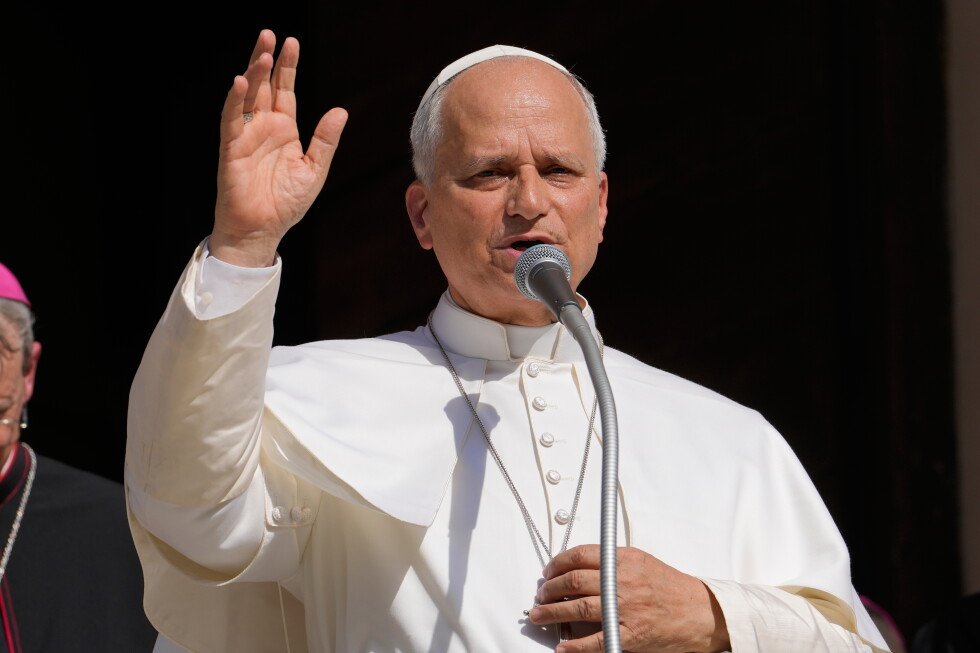
On the eve of the United States’ 250th anniversary of the Declaration of Independence, history’s first American-born pontiff Pope Leo XIV delivered a remote address urging the nation to renew its commitment to the core founding principles of protecting life and upholding universal human dignity. Appearing via live video link from Vatican City in Rome to the nonpartisan National Constitution Center based in Philadelphia, the pope used the platform to highlight two long-held American traditions: the longstanding practice of welcoming migrants and the robust protection of religious freedom.
The National Constitution Center, a leading institution dedicated to constitutional education and public debate, presented Pope Leo with its annual Liberty Medal this year. The award, which recognizes global figures of “courage and conviction” who advance the cause of liberty worldwide, honors the pontiff for his decades-long work advancing religious liberty, freedom of conscience, and freedom of expression across the globe — values explicitly codified in the U.S. Constitution’s First Amendment, the center noted in its citation.
After receiving the honor, with the medal worn around his neck, Pope Leo outlined his plans for July 4 itself: a visit to the Sicilian island of Lampedusa, a site heavy with symbolic meaning amid the Trump administration’s strict new crackdown on unauthorized migration. For hundreds of thousands of people fleeing conflict, economic hardship, and extreme poverty across Africa and the Middle East, Lampedusa has long been the first point of arrival in Europe.
Pope Leo’s public call for humane treatment of migrants has already put him at direct odds with former President Trump, who has defended restrictive border policies. The pontiff has repeatedly framed the welcome of migrants as a core Gospel mandate, rooted in the biblical instruction to “welcome the stranger.”
In his address, the pope reflected on the origins of the United States, noting it was founded by “courageous men and women who dreamed of liberty and of a better life for themselves and for their children.” He recalled the Founding Fathers’ assertion that all people are created equal, endowed with unalienable rights to life, liberty, and the pursuit of happiness. He tied this founding vision directly to America’s legacy of immigration, noting the “noble vision” of the nation’s founders turned the U.S. into a global byword for freedom by opening its doors to successive waves of newcomers, allowing immigrants and their descendants to contribute to shaping the country’s future.
The pope also emphasized the founding ideal of the right to life, echoing longstanding Vatican teaching that opposes abortion and euthanasia by asserting every person has inherent dignity that must be protected from conception through natural death. “The moral greatness of a nation is manifested, above all, in its capacity to support, protect and cherish the lives of all, especially the most vulnerable and those whose worth is questioned,” he told the gathering.
Pope Leo closed his remarks with a prayer, asking that the founding ideals of shared human dignity, equal rights, and fundamental freedoms remain a “guiding light” for the U.S. in the present and for generations to come. He expressed hope that the 250th anniversary of independence would serve as a moment for the nation to make a solemn recommitment to these principles that have shaped America as a nation committed to peace and prosperity, marked by generosity and nobility of heart.
The Liberty Medal has an established roster of distinguished past recipients, including Ukrainian President Volodymyr Zelenskyy, the late U.S. Supreme Court Justice Ruth Bader Ginsburg, and the late civil rights icon and U.S. Representative John Lewis.
This reporting from the Associated Press, which receives financial support for religion coverage through a collaboration with The Conversation US funded by Lilly Endowment Inc., notes that the AP holds sole editorial responsibility for the content.