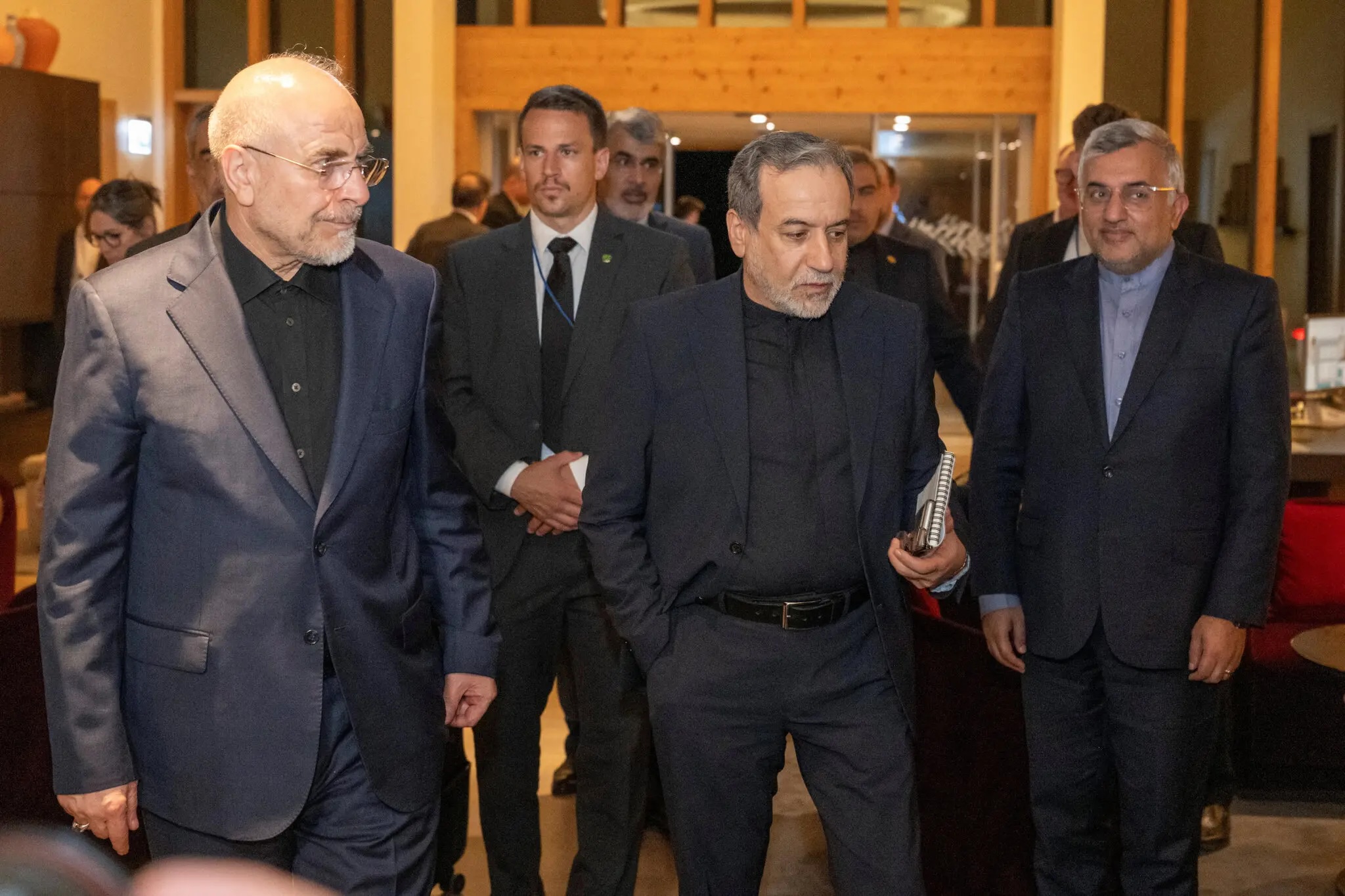
Fragile diplomatic efforts to end a months-long joint US-Israeli military campaign against Iran have been thrown into turmoil by new reports revealing that senior Trump administration officials detected Israeli plans to assassinate Iran’s top negotiating leaders to sabotage any potential peace deal. Two leading US outlets, The New York Times and The Washington Post, have corroborated the claims, citing unnamed current and former American officials and on-the-record confirmation from a senior Iranian aide.
According to the Times’ reporting published Thursday, US intelligence concerns over planned Israeli targeting of two senior Iranian figures—Foreign Minister Abbas Araghchi and Parliament Speaker Mohammad Bagher Ghalibaf—grew sharply amid sensitive ceasefire negotiations that launched in April. The alarm was so severe that US officials went so far as to coordinate with regional third countries to relay explicit warnings to Iran about the looming threat to the two negotiators.
The timeline of the crisis dates back to late February, when the US and Israel launched a joint offensive campaign that has already killed dozens of high-ranking Iranian officials. By late March, both countries had temporarily removed Araghchi and Ghalibaf from their official target lists, a step that opened the door for high-level talks to end the ongoing conflict. But the Times reports that Israeli leadership remained determined to eliminate the negotiators, a finding later confirmed by independent reporting from The Washington Post.
One dramatic April incident laid bare the severity of the threat. Ghalibaf had planned a trip to Islamabad, Pakistan, to meet with US Vice President JD Vance, and Pakistani fighter jets escorted the Iranian aircraft carrying the 70-member delegation from the Iran-Pakistan border to the capital and back after the meeting concluded. However, as the plane began its return trip to Tehran, Israeli security threats emerged. Two unnamed American officials confirmed that Iranian security intercepted intelligence indicating Israel planned to target the plane, and that two Israeli fighter jets had entered Iranian airspace through the western border near Iraq.
Mahdi Mohammadi, a senior adviser to Ghalibaf who accompanied the delegation on the Islamabad trip, later confirmed the entire account on his public social media page. To avoid the imminent threat, the plane made an emergency landing in Mashhad, the closest major Iranian airport to the Pakistani border, and the entire delegation completed the remaining journey to Tehran over an eight-hour land trip.
The revelations have further exposed growing rifts between US and Israeli strategic approaches to the conflict, rifts that first emerged after Israel assassinated top Iranian national security official Ali Larijani in March. Speaking to reporters in late March, former President Donald Trump himself acknowledged that Israel’s widespread assassination campaign had complicated efforts to find viable Iranian negotiating partners, noting “They’ve wiped out everybody.”
Analysts say Israel’s efforts to derail peace talks align with long-standing strategic goals and the immediate political interests of Israeli Prime Minister Benjamin Netanyahu. Trita Parsi, executive vice president of the Quincy Institute for Responsible Statecraft, argued that while Israel is formally classified as a US partner, its leadership is so committed to undermining US-led diplomacy that it is willing to assassinate the very Iranian officials Washington is negotiating with.
“I can’t recall a government as terrified of peace as the one running Israel,” Parsi wrote in response to the new reporting.
Netanyahu has already escalated tensions in the region through his ongoing military occupation and assault on southern Lebanon, a core issue that Iran has identified as a non-negotiable point in the ongoing ceasefire talks. During a visit to occupied southern Lebanon earlier this week, Netanyahu told Israeli troops that “our insistence is that we will not leave … until the threat is removed,” a statement that further weakened trust ahead of negotiations.
Parsi added that beyond Netanyahu’s long-stated goal of leveraging US power to bring Iran under Israeli dominance and reshape the regional balance of power in Israel’s favor, the Israeli prime minister faces urgent personal and political incentives to disrupt any peace deal. The emerging US-Iran memorandum of understanding on a ceasefire has already come at a major political cost for Netanyahu, whose chances of winning re-election in October’s national vote are now weaker than they have been in months. Once positioned as the only Israeli leader capable of maintaining a strong alliance with the Trump administration, Netanyahu now faces the prospect that a successful peace deal will leave Israel in a strategically weaker position, undermining the core justification for his leadership.
Most critically, if Netanyahu loses the October election, he will lose his legal immunity as prime minister and faces ongoing corruption trials that could result in years of prison time.