分类: other

  • People fly Kongming lanterns in Jinghong, China’s Yunnan

    People fly Kongming lanterns in Jinghong, China’s Yunnan

    Since 1994, all intellectual property rights to content distributed across China Daily’s official digital platform are held exclusively by China Daily Information Co (CDIC). This copyright protection extends to every form of content hosted on the site, including but not limited to written articles, photographic material, and multimedia productions. Any form of republication or uncredited use of this content is strictly prohibited unless the user has obtained explicit, written authorization from CDIC in advance. For optimal user experience, CDIC recommends that visitors access the site using a web browser configured to a display resolution of 1024*768 or higher. Beyond the core copyright regulations, the site also publicly lists key operational and regulatory details: its license for online multimedia publication is numbered 0108263, and its official business registration number is 130349. To improve public engagement and accessibility, the platform also maintains dedicated sections covering general information about the China Daily organization, opportunities for advertising partnerships, contact channels for inquiries, open recruitment listings for domestic roles, and specific employment opportunities for foreign expats. Users can also follow China Daily’s updated content across multiple social media platforms via the follow links provided on the site.

  • Pope Leo XIV in Algeria to walk in footsteps of his spiritual father, St. Augustine

    Pope Leo XIV in Algeria to walk in footsteps of his spiritual father, St. Augustine

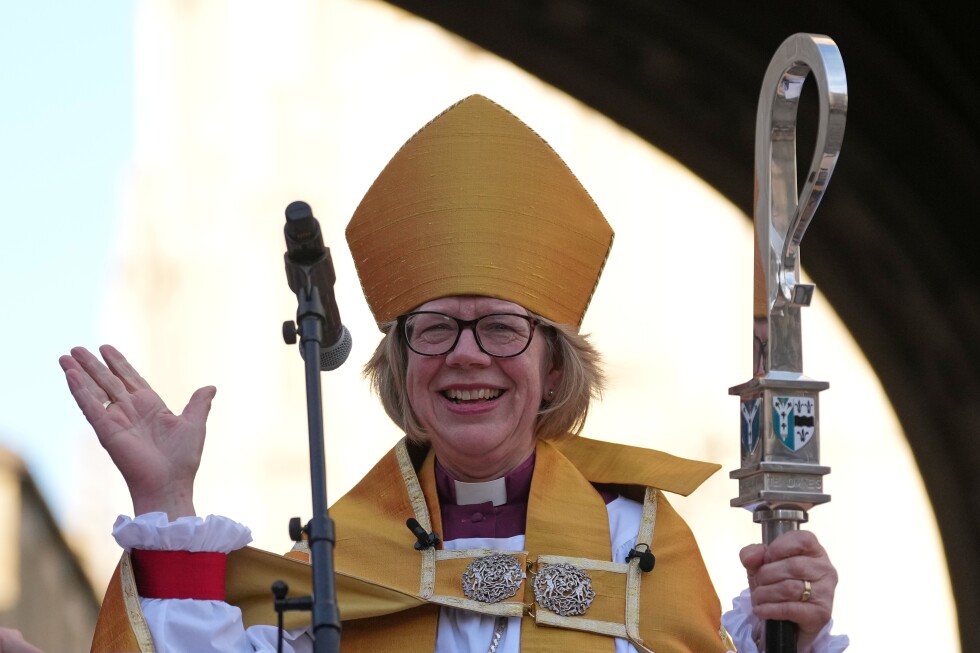
    On just his second full day in Algeria, marking the first ever papal visit to the North African nation, Pope Leo XIV traveled to Annaba — modern-day Hippo — to walk in the footsteps of his greatest spiritual inspiration, St. Augustine. This pilgrimage is far more than a diplomatic stop: it is a deeply personal homecoming for the first American pope, who has anchored his pontificate to the legacy of the fifth-century Christian theologian, and comes against the backdrop of a growing public feud with U.S. President Donald Trump over Leo’s calls for peace amid the U.S.-Israel conflict with Iran.

    Leo has long tied his papacy to Augustine, identifying himself as a “son of St. Augustine” the night of his election and repeatedly citing the theologian’s teachings in his first year in office. For this trip, which is centered on advancing a message of interfaith harmony between Christians and Muslims, Leo is framing Augustine as a timeless model of bridge-building across ideological and religious divides.

    The visit also reframes a key figure in Western thought, drawing long-overdue attention to Augustine’s North African origins. Though Augustine is widely framed through a Eurocentric lens as one of the most influential European Christian thinkers, he spent nearly his entire life in what is now Algeria. Born in 354 CE to a Berber mother and Roman father in Thagaste — modern-day Souk Ahras, near Algeria’s border with Tunisia — Augustine was educated in Carthage (part of modern-day Tunisia) and taught rhetoric there before leaving for Italy in 383 CE. After his conversion to Christianity in Milan, he returned to North Africa just a few years later, founded a monastery in Hippo, served as a bishop, and wrote his most iconic works — including *Confessions* and *The City of God*, cornerstones of the Western intellectual canon — before his death in Hippo. Only five years of his life were spent on Italian soil.

    Scholar Catherine Conybeare, an Augustine expert at Bryn Mawr College in Pennsylvania, explores this underemphasized African identity in her new book *Augustine the African*, which examines how Augustine viewed himself as a North African looking toward Rome as the center of his faith, yet grappled with insecurity over his Punic-accented Latin. Conybeare notes that the narrative of Augustine’s legacy was shaped for centuries by European successors who relocated his remains to Pavia, Italy, after his death — leaving only one forearm relic in Annaba’s St. Augustine Basilica. “One of the most important thinkers in the Western intellectual tradition actually came from Africa, spent almost his whole life in Africa,” Conybeare told the Associated Press. “How does that change things?”

    Algerian President Abdelmadjid Tebboune welcomed the pope, expressing the nation’s “immense pride” in Augustine, calling him “a cherished son of this land, which having been his first cradle, proudly became his initial resting place.”

    For Leo, the pilgrimage is the fulfillment of a long-held promise. He told reporters on the papal plane that he had planned this stop as the first trip of his pontificate, having announced as early as the previous May that he wanted his first international journey as pope to be to Africa. Multiple advisors immediately pointed him toward Algeria, given his deep ties to Augustine. Though other travel priorities intervened, Leo ultimately kept the commitment. This is not his first visit to the region: he traveled to Annaba twice before while serving as superior of the Augustinian religious order, which was founded in 13th-century Italy in Augustine’s honor.

    Leo emphasized that Augustine’s legacy offers a critical model for a divided world today. The saint, he said, represents “a very important bridge in interreligious dialogue” that global communities urgently need. “We must always seek bridges to build peace and reconciliation,” he said. “This journey, then, truly represents a valuable opportunity to continue with the same voice, with the same message, that we wish to convey: to promote peace, reconciliation, respect and consideration for all peoples.”

    During his time in Annaba, the pope toured the archaeological ruins of ancient Roman Hippo, including the theater, market, thermal baths, and the foundations of the original basilica where Augustine preached and the adjoining baptistry. He also met with a local order of nuns and the small Augustinian community based in the city, before closing the day with a Mass at the 19th-century Basilica of St. Augustine, which houses Augustine’s remaining forearm relic. The site draws thousands of pilgrims annually, including Muslim visitors, a testament to the shared cultural heritage Leo seeks to highlight.

    This coverage of religion by the Associated Press is supported through a collaboration with The Conversation US, with funding from Lilly Endowment Inc. The AP retains sole responsibility for all content.

  • Blooming Heze, more than blooms

    Blooming Heze, more than blooms

    Nestled in eastern China’s Shandong Province, the city of Heze has long been known as China’s peony capital, where sprawling fields of layered, fragrant blooms draw visitors every spring. But in mid-April 2026, the city proved it offers far more than just picturesque floral displays, when it played host to the 2026 Heze Peony International Communication Forum on April 11.

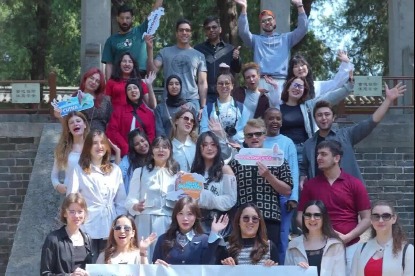
    The event drew a diverse crowd of guests from every corner of the globe, who traveled to Heze not just to admire the peonies in full spring bloom, but to engage in open, people-to-people cross-cultural exchange rooted in the shared connection of the city’s iconic flower. Attendees spanned multiple sectors and backgrounds: from international journalists and media professionals covering China’s cultural development, to foreign students and educators studying at Chinese institutions, all united by a curiosity to deepen their understanding of Chinese culture and people-to-people ties.

    Organized around the central theme of peony as a cultural bond, the forum created intentional space for informal dialogue and firsthand connection, allowing global guests to move beyond secondhand narratives and experience Heze’s unique cultural heritage directly. What began as a celebration of one of China’s most beloved traditional flowers has grown into a platform for building global mutual understanding, proving that floral culture can serve as a soft, accessible entry point for cross-border friendship and collaboration. For Heze, the forum marks another step in positioning the city as a welcoming hub for international exchange, where ancient cultural traditions meet modern global dialogue.

  • Spring fields buzzing with activity across China

    Spring fields buzzing with activity across China

    This page outlines foundational legal and operational information for the China Daily website, managed by China Daily Information Co (CDIC). Established with formal online multimedia publishing authorization, the site carries a full copyright notice dating back to 1994, with all intellectual property rights reserved for all published content. This includes, but is not limited to, textual articles, photographic materials, multimedia segments and all other forms of digital content hosted on the platform. Per CDIC’s formal terms, no part of the site’s content may be republished or utilized in any format without explicit prior written approval from the organization. For optimal user experience, the site recommends visitors use a web browser configured to a minimum resolution of 1024*768 or higher. Additionally, the page lists the platform’s official regulatory registration number, 130349, and provides core site navigation links for users. These links cover general information about China Daily, advertising partnership opportunities, contact channels for the organization, open domestic employment positions, and dedicated roles for expatriate workers, alongside an invitation for users to follow the publication’s official social media channels.

  • Pope making first papal visit to Algeria to launch Africa trip and honor locally born St. Augustine

    Pope making first papal visit to Algeria to launch Africa trip and honor locally born St. Augustine

    VATICAN CITY (Rewritten Report) — History is being made this week as Pope Leo XIV, the first American-born pontiff in Catholic history, touches down in Algeria on Monday for the first-ever papal visit to the North African nation. The two-day stop kicks off an ambitious 11-day, four-country tour across Africa — a region increasingly recognized as the dynamic growing heart of the global Catholic Church — that will also take him to Cameroon, Angola, and Equatorial Guinea.

    Upon arrival at Algiers’ international airport, Pope Leo was scheduled to be welcomed by Algerian President Abdelmadjid Tebboune, followed by an official meeting at the El Mouradia presidential palace. The first day of the itinerary includes an address to national authorities, a visit to Algiers’ iconic Great Mosque, an interfaith gathering at the landmark Our Lady of Africa basilica, and a solemn prayer vigil at a nearby monument honoring migrants who lost their lives in shipwrecks while attempting to cross the Mediterranean to Europe.

    The 19th-century Roman-Byzantine basilica, constructed during France’s colonial rule of Algeria, will host a unique interfaith gathering bringing together a Catholic nun, a Pentecostal worshiper, and a Muslim representative to share testimonies ahead of the pope’s remarks. The trip’s official motto, drawn from Pope Leo’s standard opening greeting for all his public engagements, is “Peace be with you,” and Vatican officials have confirmed that advancing interfaith harmony between Christians and Muslims and a global message of peace will serve as the visit’s core themes, particularly amid rising religious and geopolitical conflict around the world.

    Vatican statistics show Algeria is home to a tiny Catholic community of roughly 9,000 people, most of whom are foreign residents, living alongside a majority Sunni Muslim population of nearly 47 million. Remarkably, Algiers Archbishop Jean-Paul Vesco, a French cardinal, noted that nine out of 10 daily visitors to the Our Lady of Africa basilica are Muslim, a quiet demonstration of everyday coexistence in the country. “It’s wonderful to be able to show that we can be brothers and sisters together, building a society despite our different religions,” Vesco told the Associated Press on the eve of the pope’s arrival. “And that is what our church has been doing since this country gained independence.”

    Despite this grassroots harmony, the visit takes place against a backdrop of ongoing international scrutiny of religious freedom in Algeria. The U.S. government has included Algeria on its special watch list for severe religious freedom violations, noting that while the country’s constitution recognizes faiths other than Islam and permits private worship that adheres to public order regulations, proselytizing to Muslims by non-Muslims is a criminal offense, and multiple independent Christian denominations have faced government pressure including forced church closures. Some Algerian citizens have raised questions about the long-term impact of the papal visit on religious minorities: “I imagine it’s a good thing that a pope is visiting Algeria,” said Selma Dénane, a student in the coastal city of Annaba. “But what will it change afterward? Will Christians be able to say, ‘I am a Christian’ without fear or stigmatization?’”

    The trip also includes a powerful tribute to religious martyrs of Algeria’s brutal modern history. Three decades after winning independence from France, the country descended into a 1990s civil war known locally as the “black decade,” which killed an estimated 250,000 people as government forces battled an Islamist insurgency. Nineteen Catholics were among those killed, including seven Trappist monks from the Tibhirine monastery south of Algiers, who were kidnapped and murdered in 1996, as well as two nuns from Pope Leo’s own Augustinian religious order. On Monday, the pope will pay homage to the 19 martyrs, all of whom were beatified in 2018 in the first such ceremony ever held in the Muslim world. He will also meet with remaining Augustinian nuns who operate an interfaith social services program out of the Algiers basilica that supports people of all religious backgrounds.

    Archbishop Vesco pointed out a striking coincidence: Pope Leo was elected to the papacy on May 8, which is the Catholic feast day of these 19 Algerian martyrs. Vesco extended an invitation to visit immediately after Leo’s election, and the pope has long drawn inspiration from the community: he has adopted a phrase from Christian de Chergé, the martyred prior of the Tibhirine monastery, as a personal mantra — speaking of “unarmed and disarming peace” — and has cited the line repeatedly since the night of his election. “Obviously he will speak a lot about peace, it’s urgent and current,” Vesco said.

    Beyond its interfaith and pastoral goals, the Algeria visit is a deeply personal pilgrimage for Pope Leo, a lifelong member of the Augustinian order. The order draws its founding inspiration from St. Augustine of Hippo, the 5th-century theological and philosophical giant of the early Christian church, who was born in what is now Algeria and spent nearly all his life in the region. On Tuesday, the pope will travel to Annaba, the modern city built on the site of ancient Hippo where St. Augustine served as bishop for 30 years, to walk in the saint’s footsteps.

    From his first public address after his election, Pope Leo has introduced himself as a “son of St. Augustine,” and has referenced the early church father repeatedly in speeches, homilies, and official documents over his first year in office. Paul Camacho, associate director of the Augustinian Institute at Villanova University — Pope Leo’s Augustinian-run alma mater near Philadelphia — noted that references to St. Augustine are a consistent throughline in the pope’s teaching. “I don’t know if I have seen a statement, a homily, an apostolic letter or exhortation that doesn’t reference Augustine,” Camacho said. “The shadow that he casts on Western thought, not just the Roman Catholic Church but on Western thought more broadly, is very, very long indeed.”

    This reporting was compiled from original on-the-ground contributions by Ouali and Santalucia in Algiers, Algeria.

  • Intl forum discusses role of peony flowers in cultural exchange and mutual understanding

    Intl forum discusses role of peony flowers in cultural exchange and mutual understanding

    In the heart of China’s famed “Peony Capital” of Heze, Shandong province, global stakeholders from academia, government, and cultural institutions gathered on Saturday for the 2026 Heze Peony International Communication Forum, a landmark event designed to frame the iconic peony flower as a powerful cross-cultural bridge fostering global mutual understanding. Bringing together officials, scholars and industry specialists from nations including Russia and Italy, the forum builds on centuries of peony cultivation heritage in Heze to open new avenues for people-to-people connection across borders.

    This gathering marks a core component of the 2026 World Peony Conference, a 30-day global event that launched the previous day under the unifying theme “Blooming Across the World, Cultivating Shared Beauty”. The conference and accompanying forum shine a global spotlight on Heze’s unparalleled legacy as one of the world’s preeminent centers of peony cultivation: the region boasts more than 1,500 years of continuous peony growing history, with 1,308 officially registered varieties spanning nine distinct color groups and 10 unique flower forms. Beyond its cultural significance, Heze’s peony industry has grown into a major economic driver, with the total output value spanning from primary cultivation to high-value processed peony goods surpassing 13 billion yuan in 2025.

    The forum opened with a symbolic act of cross-cultural friendship, as Tatiana Bakurova, principal of Oryol State First High School in Russia, presented an original oil painting of peonies titled *Flower of Friendship* — a work created collectively by her school’s teachers and students. In return, the Publicity Department of Heze gifted the Russian delegation a traditional handcrafted peony paper-cut artwork, a tangible example of China’s intangible cultural heritage tied to the iconic bloom. This gift exchange set the collaborative tone for the day’s discussions.

    In his opening address, Zhang Lun, secretary of the Heze Municipal Committee of the Communist Party of China, emphasized the universal appeal of floral aesthetics. “Flowers are an aesthetic language that transcends national borders,” Zhang noted. He called for coordinated collective action to advance two complementary goals: expanding global access to Heze’s peony varieties and cultural products, while welcoming international floral expertise and cultural exchange to Heze. This dual approach, Zhang argued, would inject fresh momentum into global efforts to build a harmonious shared global community rooted in mutual respect and understanding.

  • Longtime AP reporter and editor Bill Mann dies at 83

    Longtime AP reporter and editor Bill Mann dies at 83

    RESTON, Va. – Bill Mann, a journalist whose nearly 50-year career with The Associated Press took him across six continents to cover some of the world’s most high-profile and turbulent beats, passed away Thursday at a memory care facility in Reston, Virginia. He was 83 years old.

    A native of Georgia and graduate of the University of Georgia’s journalism program, where he met his wife Mimi of more than 60 years, Mann’s path to global reporting began with military service. After graduating college, he attended officer candidate school, commissioned as a U.S. Navy officer, and served four years of active duty at a Philippine base and the Pentagon. Following his discharge from the Navy, he launched his AP career in 1960 at the agency’s Louisville, Kentucky bureau, later moving to the New York headquarters and other domestic postings before accepting a 10-year appointment as AP’s Cairo bureau chief.

    Over his decades-long tenure, Mann built a reputation for sharp, meticulous reporting from some of the world’s most volatile regions, including the Philippines under authoritarian President Ferdinand Marcos, post-colonial India, Scandinavia, Washington D.C., and the Middle East. Even as a veteran correspondent who had covered conflict and crisis for decades, an early 1990s reporting trip to famine- and war-ravaged Somalia left such a deep emotional mark that Mann never spoke publicly about what he witnessed during the assignment, his daughter Samantha Rudolph recalled.

    Among the hundreds of prominent figures Mann interviewed over his career – including dozens of heads of state and global leaders – he often cited his 1960s encounter with a young Cassius Clay, the amateur boxer who would go on to become global heavyweight champion Muhammad Ali, as his absolute favorite and most memorable conversation. Outside of journalism and his family, Mann’s greatest passion was his alma mater’s athletics program; he was a lifelong, diehard fan of the Georgia Bulldogs, according to his family.

    Mann was diagnosed with Alzheimer’s disease in 2010, and ultimately died from an unspecified virus while receiving care at the memory care facility, his wife confirmed. Even as his condition progressed, he never lost his lifelong love for the craft of journalism, Mimi Mann said.

    Colleagues and loved ones remembered Mann as a consummate newsroom professional whose commitment to precision and detail made his work a benchmark for AP reporting, while his gentle, generous nature set him apart as a mentor and leader. “Billy Mann was a wonderful representative for The Associated Press in global hot spots from the Philippines under President Ferdinand Marcos to the turbulent Middle East,” said Edith M. Lederer, longtime AP United Nations bureau chief. “He was well-liked for his warm personality and admired for his deft reporting.”

    Former AP editor Ken Guggenheim echoed that sentiment, noting that Mann’s legacy extended beyond his reporting to the example he set for younger journalists. “Billy was just the consummate AP man. He was just a stickler for details, determined that the grammar was right, the style was right and that the story would be perfect when it would hit the wire,” Guggenheim said. “Everyone loved Billy. He was someone who showed you could be a great journalist and a great person at the same time.”

    Mann is survived by his wife of 61 years, Mimi, his daughter Samantha, his son, and four grandchildren.

  • Guangzhou airport unveils replica of China’s first airplane

    Guangzhou airport unveils replica of China’s first airplane

    On Friday, Guangzhou Baiyun International Airport, one of China’s busiest aviation hubs, held an unveiling ceremony for a full-scale replica of China’s first domestically built airplane at its Terminal 2. Named the “Wing Can”, this new installation honors the groundbreaking legacy of Feng Ru, a pioneering aviation engineer from Guangdong Province who designed and constructed the original aircraft in 1909.

    Feng Ru, who is widely recognized as the father of Chinese aviation, achieved the historic feat of building and flying China’s first powered airplane more than a century ago, laying the early ideological and technical groundwork for the country’s modern aviation industry. Born in 1884, Feng Ru passed away at a young age in 1912, but his contributions to Chinese aerospace innovation have never been forgotten.

    In an official statement released following the unveiling, airport officials framed the new replica as more than a historical monument. The installation is described as a lasting symbol of exploratory ambition, cross-continental connection, and forward momentum, carrying the auspicious cultural connotation of a nation reaching new heights and rising with opportunity. The statement added that the exhibit underscores the unwavering lofty aspirations and pioneering spirit of China’s broader aviation sector, which continues to pursue groundbreaking technological breakthroughs and chart new courses for global connectivity in the modern era. For passengers passing through one of China’s most central travel hubs, the replica offers a tangible connection to the 100-plus-year history of Chinese aviation innovation.

  • Doctoral defence in Tibetan Buddhism

    Doctoral defence in Tibetan Buddhism

    For practitioners of the Geluk school of Tibetan Buddhism, earning the tradition’s highest academic degree is no simple feat. It demands decades of dedicated, rigorous study of Buddhist scriptures, philosophy, and core doctrines, laying a deep foundational knowledge that candidates must draw on for their final, make-or-break evaluation.

    That final public test, known as the Geshe Lharampa defence, takes place at one of Tibetan Buddhism’s most sacred sites: Jokhang Temple in Lhasa, Xizang Autonomous Region. Unlike typical academic defences in secular higher education, this centuries-old ritual centres on structured, dynamic debate. Candidates must respond to probing, often challenging questions from senior monks and fellow scholar-practitioners, defending their interpretations of Buddhist teachings with sharp logical reasoning, quick critical thinking, and deep mastery of the tradition.

    This public event is far more than a degree requirement. It is a living showcase of the long-standing academic and spiritual traditions of Tibetan Buddhism, bringing together generations of practitioners to uphold centuries of knowledge transmission within the faith. Visible to onlookers, the passionate exchanges between debaters highlight the intellectual rigor that defines the path to earning the tradition’s highest honor, preserving a cultural and spiritual practice that has endured for hundreds of years.

  • Roadside shops showcase Shanghai’s vibrant street life

    Roadside shops showcase Shanghai’s vibrant street life

    Established as one of China’s leading English-language media outlets, China Daily holds full intellectual property rights over all content distributed through its official website, a position formally outlined in the site’s legal documentation. Dating back to 1994, China Daily Information Co (CDIC) retains exclusive ownership of every form of content hosted on the platform, ranging from written articles and photographic imagery to audio and video multimedia materials. Per the site’s terms of use, no party is permitted to republish or utilize any of this content in any format without first obtaining explicit written authorization from CDIC. Beyond intellectual property regulations, the platform also includes a technical recommendation for end users, suggesting that visitors access the site using a web browser configured to a screen resolution of 1024*768 or higher to ensure optimal browsing performance. Additional administrative records listed on the site include an online multimedia publishing license, issued under registration number 0108263, and a general operating registration number 130349. To increase transparency and accessibility for audiences and partners, the site also provides a dedicated menu of navigation links for core institutional information and outreach opportunities. These sections cover an institutional overview of China Daily, guidelines for brands and organizations interested in purchasing advertising space on the platform, contact information for general inquiries, current open employment positions, and dedicated resources for expatriate job seekers. Visitors are also invited to connect with China Daily’s social media channels to follow the outlet’s latest updates and engage with its content across digital platforms.