分类: other

  • Sinologists trace Su Dongpo’s footsteps in Yixing

    Sinologists trace Su Dongpo’s footsteps in Yixing

    Between April 21 and 22, a cohort of leading sinologists from North America, Europe and Latin America — including Canada, Italy and Mexico — embarked on a immersive cultural journey through Yixing, a scenic county-level city administered by Wuxi in eastern China’s Jiangsu province, to walk in the footsteps of one of China’s most celebrated literary giants, Su Dongpo.

    Better known by his courtesy name Su Dongpo, Su Shi (1037–1101) was a towering Song Dynasty poet, calligrapher, and statesman whose works remain a cornerstone of classical Chinese literature centuries after his lifetime. For Su, Yixing held a deeply personal significance: the city has long been hailed as the great writer’s “second hometown,” where he spent extended periods of time, drew profound creative inspiration from its misty mountains and winding waterways, and composed dozens of enduring poems that reflect his love for the region’s natural beauty and tranquil lifestyle.

    During their two-day visit, the international scholars engaged in a full schedule of cultural and academic activities: they joined in-depth literary exchanges centered on Su Dongpo’s legacy in Yixing, meandered through the sprawling, emerald Yixing Bamboo Sea that once stirred Su’s poetic imagination, explored the otherworldly geological formations of the famous Shanjuan Cave, and even gathered to recite some of the master’s most beloved classic poems firsthand. The trip offered these global experts on Chinese culture a rare, on-the-ground opportunity to connect with the historical settings that shaped one of China’s most iconic literary figures, deepening their understanding of Su Dongpo’s life, work, and enduring influence on Chinese cultural identity.

  • Milan design week draws global creatives and makers despite war and economic worries

    Milan design week draws global creatives and makers despite war and economic worries

    Against the backdrop of global economic uncertainty and travel disruptions sparked by ongoing conflicts in the Middle East, one of the world’s most anticipated annual design gatherings kicked off in Italy’s design capital Milan this week, drawing thousands of creators, industry leaders and design enthusiasts from across the globe. The 202X iteration of Milan Design Week, paired with the flagship Milan Furniture Fair at Fiera Milano Rho, has turned the entire city into a sprawling open-air exhibition, blending boundary-pushing conceptual art, artisanal craftsmanship, industrial innovation and high-end luxury in an energetic, eclectic celebration of global design. The event officially opened its doors to trade visitors on Tuesday, following a full day of invitation-only previews and networking receptions across the city’s most exclusive venues on Monday, where the atmosphere remained notably upbeat despite headwinds facing the global design industry.

  • Remains of 12 Chinese martyrs from Korean War buried in homeland

    Remains of 12 Chinese martyrs from Korean War buried in homeland

    This page outlines key administrative and legal information for the digital content platform operated by China Daily Information Co (CDIC). First established with copyrighted protections in 1994, CDIC holds full intellectual property rights over all material published across its website, covering everything from written text and photographic assets to multimedia content. No part of this published content may be reproduced, redistributed or repurposed in any format without explicit written permission granted directly by CDIC.

    Beyond copyright regulations, the platform includes technical guidance for visitors, recommending that users access the site through a browser that supports a minimum screen resolution of 1024*768 or higher to ensure optimal display and functionality. Additional administrative details are also listed on the page: the platform holds an online multimedia publishing license numbered 0108263 and carries an official registration number of 130349.

    The page also provides navigation links for visitors seeking more information about the organization or engagement opportunities. These resources include an introductory page about China Daily, information on placing advertising campaigns on the site, official contact details for inquiries, open listings for available positions, and dedicated resources for expatriate job seekers. Finally, the page prompts visitors to connect with China Daily’s content across its social media channels to follow updated coverage.

  • 77-year journey of Chinese PLA Navy

    77-year journey of Chinese PLA Navy

    This document outlines the core intellectual property and operational terms for the digital content platform operated by China Daily Information Co (CDIC). First established in 1994, CDIC holds full copyright ownership over all material published across its website, including text, photographic content, multimedia assets, and all other forms of digital content distributed through the platform. Under the stated copyright regulations, no portion of CDIC’s published content may be republished, redistributed, or reused in any format without explicit prior written authorization granted by the company.

    In addition to intellectual property guidelines, the website includes a technical recommendation for visitors: users are advised to access the site via a browser configured to a display resolution of 1024*768 or higher to ensure the optimal browsing experience. The platform also lists its official regulatory registration details required for online multimedia publishing: its online publishing license number is 0108263, and its official business registration number is 130349.

    To help visitors engage further with the organization, the site also includes navigation links to key resource pages. These sections cover general information about China Daily, opportunities for placing advertising on the platform, contact information for organizational inquiries, open employment listings, and specific employment resources for expatriate workers. Visitors are also invited to follow China Daily’s official channels across social media and other digital platforms for regular updates.

  • Pope wraps up an Africa visit for the history books with a Mass in Equatorial Guinea

    Pope wraps up an Africa visit for the history books with a Mass in Equatorial Guinea

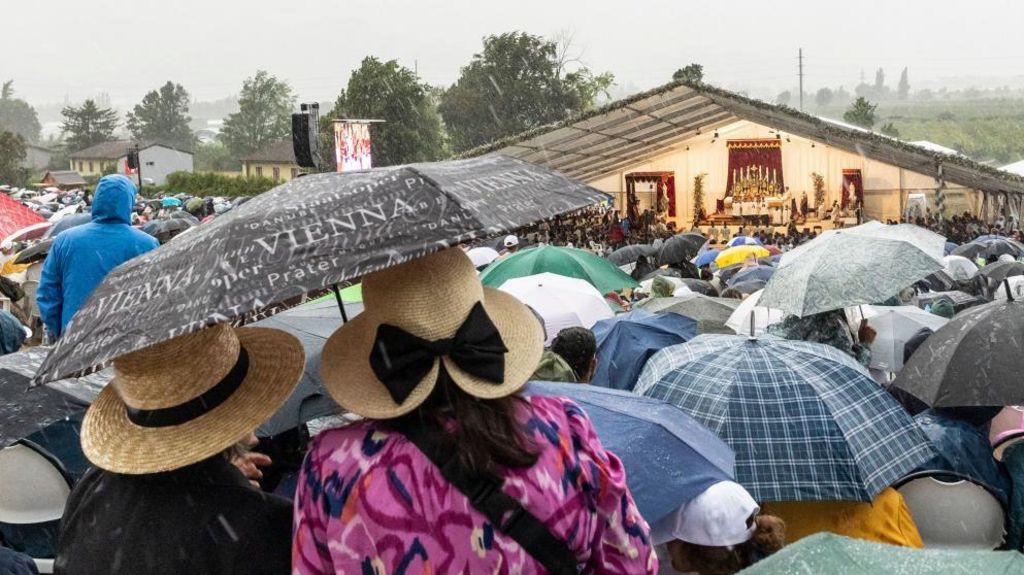
    MALABO, Equatorial Guinea – Pope Leo XIV closed out a landmark 11-day, four-nation tour of Africa on Thursday, wrapping up one of the most closely watched papal journeys in modern history, overshadowed by a highly public back-and-forth with former U.S. President Donald Trump. The final stop of the trip, a farewell Mass held at Malabo’s main sports stadium, was greeted by an intense early-morning rainstorm that soaked the 30,000 devotees who had gathered before dawn to see the pontiff. The downpour paused just as Pope Leo arrived in his covered popemobile, weaving through a crowd of cheering worshippers greeting him with thunderous applause. This voyage spanned more than 17,700 kilometers (11,000 miles) across Algeria, Cameroon, Angola, and Equatorial Guinea, with 18 separate flights – including three in a single day Wednesday that crisscrossed Equatorial Guinea from its western coast to its eastern border with Gabon and back.

    As the first American pope in Church history, Leo drew raucous, enthusiastic welcome nearly everywhere he traveled, particularly in remote regions that had never hosted a papal visit before. Papal foreign travel dates back to 1964, when Pope Paul VI made the first modern international trip to Jordan and Israel. It was St. John Paul II who transformed the role of the globetrotting pontiff, completing 104 foreign trips over 27 years and popularizing multi-nation itineraries like the one Leo followed on this African journey.

    Many local worshippers went to extraordinary lengths to attend the final Mass. Michaela Mecha, a nurse who brought her two young daughters and her sister Encarnacion to the stadium, arrived at 4 a.m. in the pouring rain, decked out head-to-toe in pope-themed gear, including yellow umbrellas printed with Leo’s portrait. “We feel very special and blessed that the pope has chosen our country,” Mecha said. “This visit is bringing young people closer to God.” In his homily, Leo honored Fortunato Nsue Esono Ayíambeng, the vicar general of Malabo and a member of the tour’s organizing committee, who died on April 17. “May full light be shed on the circumstances of his death,” the pontiff said, an apparent nod to widespread rumors of foul play surrounding the death.

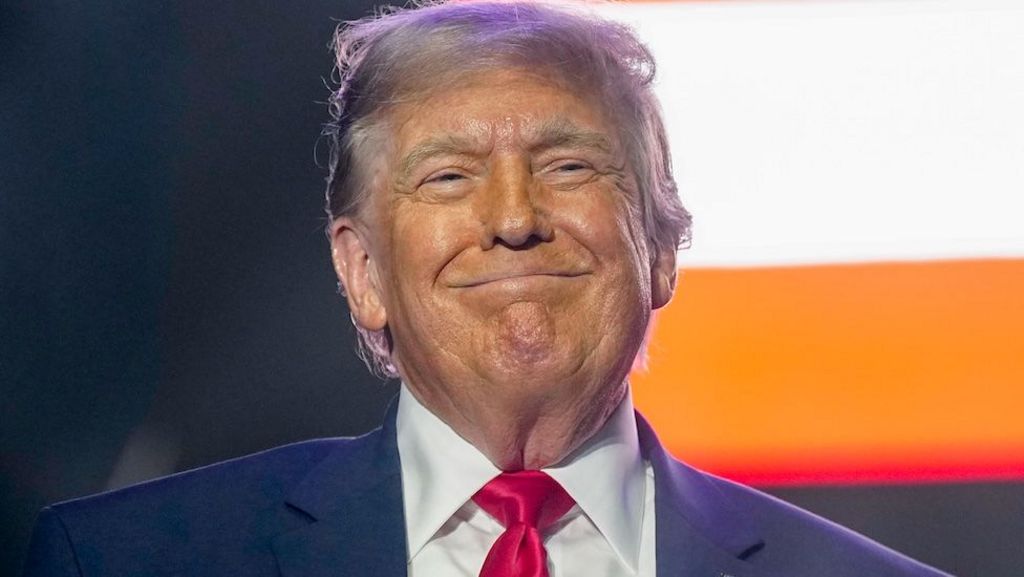
    What was expected to be a focused pastoral trip quickly became entangled in geopolitical tension, when Trump launched a series of unprecedented public attacks against the pope over his stance on the ongoing Iran conflict. On the first day of the tour, Leo pushed back, noting he was simply preaching the Gospel of peace and maintained he had no fear of the Trump administration, after Trump accused the pope of being soft on crime and aligned with left-wing politics. As attacks continued, Vice President JD Vance joined the criticism, warning Leo to “be careful” when discussing theological issues. Leo attempted to de-escalate the conflict, blaming media for taking his words out of context. The effort ultimately succeeded: both sides moved on from the dispute, allowing the pope to refocus on his African agenda, which centered on encouraging local Catholics with a message of hope while calling out what he described as the continued “colonization” of the continent’s natural resources by foreign actors. Later, after headlines misconstrued a criticism of “a handful of tyrants” as an attack on Trump, the pope clarified the remark was not aimed at the U.S. president.

    The 11-day trip was filled with emotional and personal moments that highlighted Leo’s pastoral approach. In Sampaka, Equatorial Guinea, he deviated from a planned visit to a psychiatric hospital to greet every patient individually and pose for selfies. In Muxima, Angola – a historic hub of the transatlantic slave trade and now one of the country’s most popular Catholic pilgrimage sites – Leo prayed the rosary, a deeply personal act given that his own ancestry includes both enslaved people and slave owners. In Algeria’s Bab El Oued, he stopped to visit nuns from his own Augustinian religious order, and purchased a tree-of-life necklace from a display of crafts made by local women, noting it was a gift for his niece. In Cameroon’s Bamenda, located at the center of a nearly 10-year separatist conflict, he pleaded for an end to violence and condemned war-mongering leaders.

    One of the most striking moments of the entire tour came during a visit to a prison in Bata, Equatorial Guinea. In the lead-up to the pope’s visit, inmates were given new neon orange or beige uniforms and new rubber shoes, the facility was repainted salmon pink, and new saplings were planted along its perimeter. When Leo arrived, inmates stood in pre-arranged positions in the open courtyard and sang a hymn about sin. After the pope spoke to them of God’s love and inherent human dignity, they danced and waved Vatican flags in unison as another rainstorm poured over the complex. Immediately after Leo and Equatorial Guinea’s justice minister exited the courtyard, the inmates broke from their choreographed formation and began chanting “Libertad! Libertad! Libertad!” – Freedom! Freedom! Freedom! – as they danced.

    The lengthy tour also brought quiet milestones. On the papal plane, Leo marked the one-year anniversary of Pope Francis’ death with an off-the-cuff tribute that remembered Francis’ commitment to mercy and small, kind gestures. He also celebrated the birthdays of several reporters traveling with the Vatican press pool, with the ITA Airways flight crew passing out birthday cake to mark each occasion. When answering questions from journalists mid-tour, Leo dropped a piece of news that delighted local Catholics: the southern African nation of Angola will likely receive its first cardinal in the coming years, though not in the immediate future.

    Associated Press writer Monika Pronczuk contributed to this report. AP religion coverage is supported through a collaboration with The Conversation US, with funding from Lilly Endowment Inc. The AP retains sole responsibility for all content.

  • Museums and cultural institutions build bridges between China, US

    Museums and cultural institutions build bridges between China, US

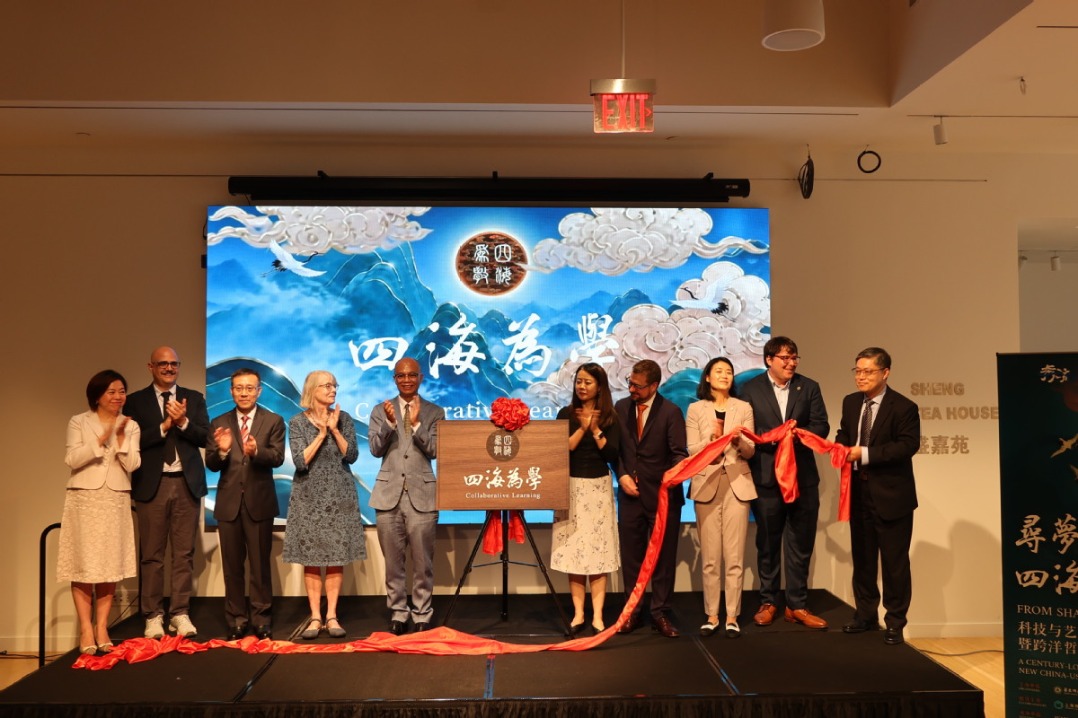
    Against a backdrop of rising geopolitical friction between the world’s two largest economies, cultural and museum institutions on both sides are quietly working to sustain open lines of communication, building tangible connections that deepen mutual understanding between the Chinese and American people.

    The grassroots push for cross-border cultural exchange traces its origins to a deeply personal journey for Tina He, founder of the H Foundation for the Arts. As a university student, He traveled back to her ancestral hometown of Fuzhou, where a walk through the historic Three Lanes and Seven Alleys district — widely celebrated as an open-air museum of Ming and Qing dynasty architecture — left an indelible mark on her. Wandering the preserved lanes, she encountered the enduring legacies of Lin Zexu, Yan Fu, and Bing Xin, three iconic figures whose work and lives fundamentally shaped the course of modern China. That experience planted the seed for a career dedicated to sharing Chinese cultural heritage with global audiences.

    In 2016, that vision became a formal institution when He established the Cultural Foundations of Zhendai He, named in honor of her great-grandfather, a prominent 20th-century Chinese poet and classical scholar. Speaking at the foundation’s 10th anniversary forum earlier this year, He emphasized that the organization’s mission extends far beyond simply establishing an administrative body. “It is not merely about creating an institution, but rather about undertaking a legacy of continuity, carrying these cultural values forward into a new era,” she explained.

    Over the past decade, the foundation has pursued a two-way exchange model that benefits creative communities on both sides of the Pacific. It has supported emerging and established Chinese artists in securing exhibition opportunities at major American cultural institutions, including the Los Angeles County Museum of Art, bringing contemporary Chinese creative practice to mainstream US audiences. At the same time, it facilitates residencies and exhibitions that introduce contemporary American artists to cultural hubs in China, most notably Jingdezhen in Jiangxi province, the centuries-old historic center of Chinese porcelain production, where visiting creators can engage with local artisans and audiences.

    “By building this kind of bridge, we promote cultural exchange between China and the United States,” He noted.

    The critical role of museums and cultural institutions as neutral, accessible spaces for cross-cultural dialogue took center stage at a recent forum hosted by the foundation, which brought together leading scholars, museum administrators, and cultural leaders to explore how public and private cultural organizations can strengthen people-to-people ties between the two nations.

    Daryle Williams, dean of the College of Humanities, Arts and Social Sciences at the University of California, Riverside, noted that American public cultural and academic institutions are constantly evolving to reflect the changing makeup of the communities they serve. “We really want to look at how the Chinese American history is,” Williams said. “Now we’re considering Asian American, Pacific Islander experiences as an integral part of our community that’s evolved over time.”

    Leading curators from top American museums echoed the forum’s core theme, emphasizing that museums serve as global stewards of humanity’s shared cultural legacy, making them uniquely positioned to foster cross-cultural understanding.

    Jason Sun, curator of Chinese art at New York’s Metropolitan Museum of Art — the most visited art museum in the world — pointed out that Chinese art has occupied a central place in the Met’s narrative of global civilization for decades. Through landmark, carefully curated exhibitions, the Met has introduced millions of American audiences to defining chapters of Chinese history and artistic development. Sun explained that these exhibitions do more than showcase the depth and richness of Chinese civilization; they also illuminate the centuries-long history of exchange and interaction between East and West, demonstrating that all civilizations have grown and evolved through mutual learning. “Through museums, one can understand a country’s culture and history, and thereby understand the country itself,” Sun said.

    Similar perspectives were shared by Claire Lyons, curator of antiquities at the J. Paul Getty Museum in Los Angeles. Lyons noted that the Getty has maintained long-standing collaborative partnerships with Chinese cultural institutions, and her team sees enormous untapped potential for even deeper cooperative work in the coming years. The Getty’s China-focused programming has explored topics ranging from Qing Dynasty porcelain trade and export, highlighting hundreds of years of maritime and commercial exchange between China and global markets, to landmark exhibitions showcasing the ancient artistic heritage of the Mogao Caves in Gansu province. These projects do more than allow visitors to appreciate the artistic beauty of Chinese cultural treasures; they also draw attention to the painstaking work of cultural heritage preservation that sustains these sites for future generations.

    For Emily Zhang, program director of the H Foundation for the Arts, the work of building these cultural connections has grown even more important in an era defined by rapid technological change. As artificial intelligence and digital tools reshape nearly every aspect of daily life, Zhang argued that human connection and cross-cultural understanding have only grown in urgency, rather than becoming less important. “In a world where technology becomes more powerful, what matters more and more is our community,” she said. “It’s not just about what we can do, but how we understand each other and how we stay connected. That is exactly what arts and culture can do.”

  • For a moment, only the story matters

    For a moment, only the story matters

    Every April 23, readers around the globe mark World Book Day — a celebration that carries unique, layered meaning in China, where the practice of reading has long transcended a simple pastime to become a foundational part of cultural heritage.

    For countless generations of Chinese people, reading is not merely a leisure activity or a task tied to academic or professional advancement. Instead, it is a tradition rooted in the ancient wisdom of Chinese philosophers and embedded in the nation’s long-held noble ideals, woven tightly into the fabric of ordinary daily life across every region of the country. From hand-copied scrolls passed down through imperial dynasties to modern printed paperbacks and digital reading platforms accessible to millions today, this enduring tradition has nurtured generation after generation, shaping worldviews, fostering critical thinking, and strengthening cultural bonds between communities.

    As the nation marks this year’s World Book Day, the occasion invites readers of all ages and backgrounds to pause and reflect on their own personal journeys with literature. Whether the memory is a childhood picture book read by a grandparent by lamplight, a worn classic novel carried through years of schooling, or a quiet 10 minutes of reading snatched from a busy workday on a commuter train, these small, intimate moments with stories connect individual experiences to thousands of years of Chinese literary and cultural tradition. In those quiet moments when the page opens, nothing matters except the story itself — a universal experience that continues to bind readers across China together today.

    This year’s World Book Day observance also aligns with broader national cultural efforts centered on storytelling and cultural identity, framed as a key priority for public cultural engagement in recent special coverage from Chinese media outlets.

  • US student finds connection to China through classical poetry

    US student finds connection to China through classical poetry

    For many international learners of Chinese, the path to understanding the heart of Chinese culture rarely follows a straight line. For JongMay Urbonya, an American serving as an ambassador for the HSK Chinese Proficiency Test, that deep connection to China was unlocked through the concise, emotion-drenched lines of classical Chinese poetry. In a recent feature shared by China Daily, Urbonya opened up about her enduring love for this ancient literary art form, explaining how even the shortest poetic verses carry layers of profound feeling and timeless allure that resonate across cultural divides. A particular favorite of Urbonya’s is Li Qingzhao, the iconic Song Dynasty poet celebrated for her subtle, intimate explorations of love, loss, and everyday life. Urbonya notes that the delicate, deeply human emotions woven into Li’s works remain just as moving today as they were nearly a thousand years ago, holding power to touch readers regardless of their nationality or cultural background. For Urbonya, classical Chinese poetry is far more than just an academic subject or a language learning tool. It acts as a bridge that transcends the boundaries of time, cultural tradition, and national borders, offering her a uniquely intimate window into the values, perspectives, and soul of China. What began as a study of language has grown into a deeply personal connection to the country and its centuries-old cultural heritage, showing how art and literature can build unexpected bonds between people across the globe.

  • China launches national reading week

    China launches national reading week

    China has officially launched its annual national reading week, kicking off the 2026 initiative during the fifth National Conference on Reading held Monday in Nanchang, the capital city of East China’s Jiangxi province.

    Li Shulei, a member of the Political Bureau of the Communist Party of China Central Committee and head of the CPC Central Committee’s Publicity Department, was in attendance at the opening event and delivered a keynote address to assembled participants.

    Event attendees united in a call for amplified action to popularize reading among all segments of the Chinese public and cultivate a pervasive, society-wide culture of regular reading. Stressing that reading forms the most foundational pillar of cultural advancement, participants emphasized that nationwide reading programs must be fully leveraged to support China’s broader national strategy to build itself into a leading global culture power.

    In addition to promoting public engagement with reading, attendees called for strengthened investment, development and regulatory oversight of public reading infrastructure, including libraries, community reading spaces and other public resources that make accessible reading materials available to all citizens.

    Running this week from Monday through Sunday, the 2026 National Reading Week will feature a diverse lineup of community and national events designed to reignite public passion for reading, spanning book fairs, author talks, reading clubs and youth engagement programs that reach across urban and rural communities to encourage people of all ages to pick up books and build regular reading habits.

  • Kites bridge cultures in Weifang

    Kites bridge cultures in Weifang

    On April 18, the skies above Weifang, the coastal city in East China’s Shandong province, filled with a dazzling array of colorful, innovative kites from every corner of the globe, marking the official opening of the 43rd Weifang International Kite Festival and 2026 Weifang Kite Carnival. Hosted at the city’s iconic World Kite Park, this year’s gathering drew nearly 260 dedicated kite teams hailing from 57 distinct countries and regions, turning the local event into a true global celebration of craft, connection, and shared passion.

    Long recognized internationally as the “World Capital of Kites”, Weifang carries a kite-making legacy that stretches back more than two millennia. Generations of local artisans have honed and refined this traditional craft over centuries, passing down techniques that have elevated Weifang kites to a globally celebrated art form. What began as a centuries-old cultural practice has grown into a thriving modern economic driver for the region: the city’s entire kite industry now posts more than 2 billion yuan, equivalent to roughly $29.24 million, in annual sales, with Weifang-made kites exported to more than 50 markets across the world.

    Beyond economic impact, the annual International Kite Festival has emerged as a powerful bridge connecting disparate cultures. Kite enthusiasts, master craftspeople, and hobbyists from around the world travel to Weifang each year to showcase their unique designs, exchange traditional techniques, and build cross-cultural connections that transcend geographic and political divides. For participants and attendees alike, the event highlights how a shared love of a simple, timeless pastime can bring global communities closer together, cementing Weifang’s reputation as a welcoming hub for international cultural exchange.