
As another week of global events draws to a close, several high-profile developments have dominated headlines across the world, even as many other stories have flown under the radar of public attention. Among the most widely covered incidents this week, a fragile ceasefire between the United States and Iran has managed to hold, despite escalating tensions that followed former U.S. President Donald Trump’s public vow to enforce a full blockade of the strategically critical Strait of Hormuz. Across the globe in Oceania, the Duke and Duchess of Sussex, Prince Harry and Meghan Markle, carried out an official visit to Australia, drawing widespread public and media interest during their trip. In a more unusual small-scale story that made headlines nonetheless, a single pair of trainers from budget retail chain Primark played an unexpected key role in securing the conviction and imprisonment of a burglary ring that had been operating in the region. With so many breaking developments unfolding across the world every week, it is easy for even engaged news consumers to miss key details of major stories. Compiled by editor Ben Fell, this weekly news quiz offers readers a chance to test just how closely they have followed this week’s most notable events. For readers eager to put their news knowledge to the test beyond this week’s round of questions, additional quizzes are available to access, including last week’s quiz and a full archive of past weekly quizzes covering previous months of global events.
分类: other
-
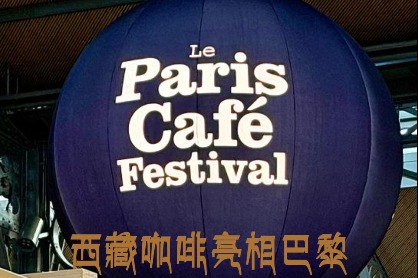
Tibetan coffee wins praise at Paris Coffee Festival
Between April 11 and 13, 2026, one of China’s most promising emerging specialty coffee brands — Nindo Coffee, rooted in the Xizang Autonomous Region — marked its second showcasing at a major European industry event, taking center stage at the Paris Coffee Festival. The homegrown regional brand brought a one-of-a-kind experience to global attendees, pairing high-quality specialty coffee with a vivid display of the dynamic blend of time-honored tradition and cutting-edge modern energy that defines contemporary Xizang, quickly earning widespread international recognition for its unique offerings.
Tsomo, founder and lead visionary behind Nindo Coffee, shared that the brand’s core mission extends far beyond selling specialty coffee. For her team, coffee acts as a accessible, approachable cultural medium to weave authentic Tibetan heritage into global cultural conversations, all to showcase a fresh, nuanced image of Xizang as a region where ancient traditions coexist and thrive alongside modern innovation. While the Tibetan specialty coffee sector remains in its early developmental stages, Tsomo and her team have prioritized three core goals: continuous product refinement, cultivation of distinct, terroir-driven flavor profiles unique to Xizang’s high-altitude growing conditions, and sharing the authentic essence of Tibetan culture alongside the forward-thinking worldview of today’s young Tibetan generation.
By the end of the three-day industry gathering, Nindo Coffee’s Xizang-inspired specialty coffee creations had garnered overwhelmingly positive feedback from hundreds of general attendees. Industry veterans and coffee professionals also offered high praise for the brand’s consistent product quality and complex, memorable flavor profiles, marking a key milestone for Tibetan specialty coffee as it gains a foothold in global markets.
-

How many people did Vlad actually impale?
For centuries, the name Vlad the Impaler has been synonymous with brutal violence and legendary cruelty, thanks in no small part to his infamous signature execution method that gave him his haunting nickname. For historians, enthusiasts of medieval history, and casual curious readers alike, one persistent question has outlasted the centuries: exactly how many people did Vlad actually impale? This query is far more than just a morbid thought experiment; it sits at the intersection of medieval historical record, propaganda, and mythmaking that has grown up around one of Wallachia’s most controversial rulers. Vlad III, better known by his moniker, ruled the 15th-century Romanian principality of Wallachia multiple times during a turbulent political era marked by ongoing conflict between the Ottoman Empire and Christian European states. Contemporary accounts from the period often wildly inflated his death toll, with some chronicles claiming he slaughtered tens of thousands, even hundreds of thousands of people, many via impalement. Modern historians have pushed back against these inflated numbers, noting that many contemporary records were written by political enemies or foreign propagandists seeking to frame Vlad as a monstrous tyrant to justify their own political claims to the region. Verifiable archival evidence is sparse, making it difficult to pin down an exact count that separates fact from exaggerated myth. Some recent scholarly analyses suggest the actual number is likely far lower than the legendary claims, falling somewhere in the thousands rather than tens or hundreds of thousands. Even so, the lack of surviving definitive records means the question of how many people he actually impaled will likely remain a topic of ongoing debate among historians and history enthusiasts for years to come.
-
Paper-cutting pioneer fuses scissors with software
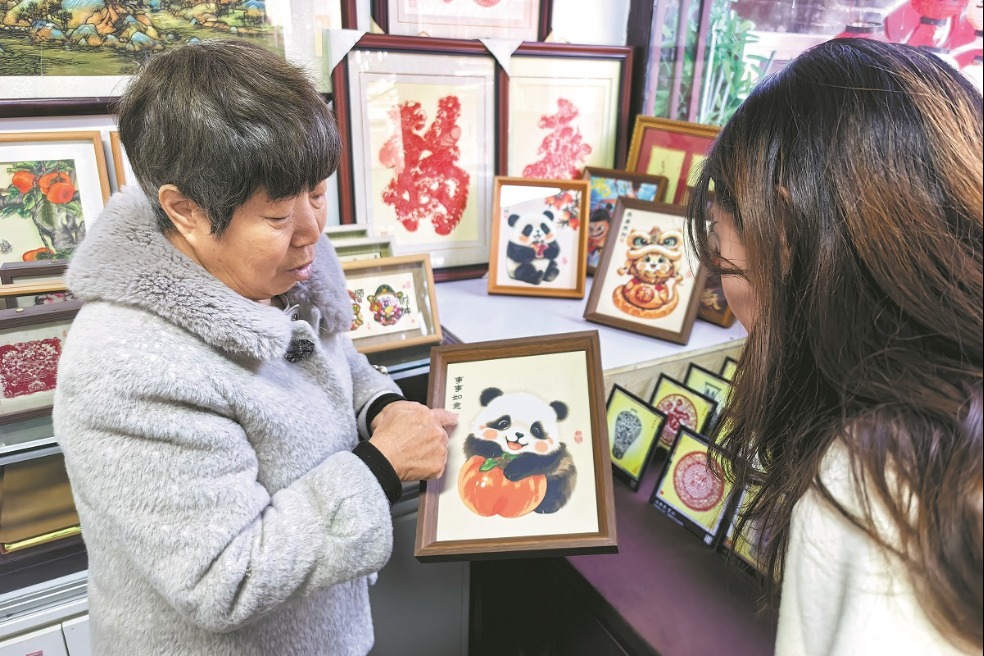
Centuries-old traditional Chinese crafts are finding new life in the 21st century, thanks to innovators willing to bridge time-honored skills and cutting-edge digital tools. For Hao Guifen, a 67-year-old inheritor of Yangliuqing paper-cutting, a 300-year-old folk craft rooted in northern China, that transformation has turned her work into a globally recognized cultural treasure. Today, her reimagined take on the art form even serves as a recurring national gift for international diplomatic exchange.
Hao’s journey of artistic revolution began back in the 1990s, when she first stepped away from the monochromatic red paper that has long defined traditional Chinese paper-cutting, used most commonly for holiday window decorations. Over decades of refinement, she organized her evolved creative system into four core technical pillars, with multilayered and dyed paper-cutting emerging as the signature innovations that set her work apart.
The biggest breakthrough came when Hao turned to technology to solve a persistent creative challenge. As she pushed the boundaries of her craft to create more intricate layered works, she found her naked eye could no longer accurately distinguish the subtle color gradients needed for seamless separation of layers. That barrier fell when a younger member of her family introduced her to computer-aided design, which now helps her precisely decompose patterns into individual layers. Today, her most complex pieces feature up to 18 stacked layers of hand-cut colored paper, creating a nuanced three-dimensional effect that mimics the depth of fine art painting.
Walk into Hao’s Tianjin-based studio in Xiqing District, and visitors are immediately met with walls lined with paper-cutting works spanning every size and theme. While traditional motifs remain a core part of her practice—each carrying the symbolic meaning that has long anchored folk art—she has also expanded her subjects to fit modern tastes. A lush persimmon tree, for example, plays on the Chinese homophone for persimmon and “affairs” to convey the traditional wish “may all things go as you desire”, while a layered rolling mountain landscape symbolizes enduring prosperity and steady, long-lasting good fortune. Alongside these classic themes, she also creates designs of popular anime characters that resonate with younger audiences, bringing the ancient craft into the lived experience of modern generations.
Many of her large-scale hanging works stretch more than two meters long, with intricate details and rich, vivid coloration that completely upend common expectations of paper-cutting. At first glance, many visitors mistake her finely layered works for oil paintings or delicate fine-brush Chinese watercolors—only on close inspection do they notice the precise, hand-cut edges that reveal the work’s true identity. Her giant panda design is a perfect example: every shade of the animal’s iconic black-and-white coat comes from a separate, individually cut layer of paper, stacked to create subtle light and shadow that gives the piece remarkable depth.
Yangliuqing paper-cutting was first recognized as an intangible cultural heritage of Tianjin when it was added to the city’s second batch of protected heritage items back in 2009. Since then, Hao’s innovative fusion of traditional scissors work and modern digital design has elevated the craft far beyond its local roots, bringing it to a global audience and securing its place as a distinctive representative of Chinese traditional culture on the world stage. As she continues to teach the craft to a new generation of enthusiasts, her work proves that even centuries-old traditions can thrive when paired with creative adaptation and modern innovation.
-
Kiln it — porcelain hub pulls foreign artists
Nestled in China’s Jiangxi province, Jingdezhen — a city whose name has been synonymous with porcelain craftsmanship for more than a millennium — is steadily building a new reputation as a welcoming crossroads for creative talent from across the globe. Blending centuries-old artisanal traditions with cutting-edge modern infrastructure and an open, inclusive creative culture, the city is drawing a growing stream of international artists, designers, and cultural explorers who find its unique duality irresistible.
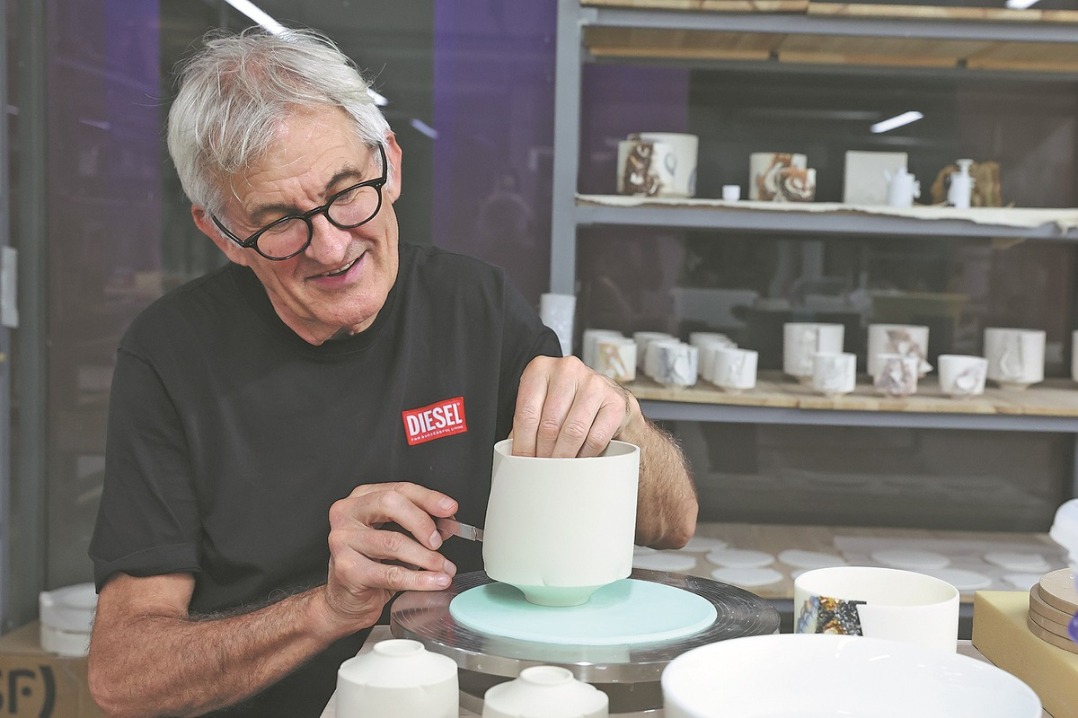
One of the many foreign creatives who have put down roots in Jingdezhen is Canadian artist Philip Read. In the center of his local studio sits a porcelain plate that stands as his most cherished work, and a quiet meditation on the city that inspires him. The hand-painted piece depicts a river cutting through Jingdezhen, splitting its landscape into two complementary worlds. One bank bustles with distinctly modern energy, dotted with recognizable global brand logos from popular chain restaurants KFC and McDonald’s. The opposite bank unfolds into a serene, timeless landscape of sloped tiled roofs, arched stone bridges, green fields, and still water — a slower, calmer existence that holds its own gentle power against the hurry of 21st-century life.
For Read, the painted plate is far more than just an art object: it is a perfect reflection of Jingdezhen itself. “It is both modern and international, but if you look a little further, Jingdezhen is still calm, still able to make you focus,” he explained. “That is part of its charm.”
This unique balance — an open, globally connected creative ecosystem that never loses the textured, quiet soul of its centuries-old craft heritage — is the core of Jingdezhen’s growing magnetic pull for artists from overseas. Long renowned globally as China’s unrivaled porcelain capital, the city earned international recognition for its cultural legacy when it was named a UNESCO Creative City of Crafts and Folk Art back in 2014. In recent years, targeted investments in artist residency programs, large-scale international ceramic art exhibitions, open-air creative markets, and cross-cultural exchange platforms have turned the city into a must-visit destination for ceramic artists and creatives of all disciplines. Photographs of international artists at work in Jingdezhen’s creative hubs, like Taoxichuan Ceramic Art Avenue, have showcased the city’s vibrant, inclusive creative scene to audiences around the world, cementing its rising status in the global contemporary art world.
-
Homeric hangover cure: Greek claim over ancient bovine belly broth stirs feud with rival Turks
A decades-long culinary rivalry between Greece and Turkey has reignited over a humble, hearty offal soup, with both nations staking competing claims to the dish as Greece pushes to have it recognized as an official intangible cultural heritage by UNESCO.
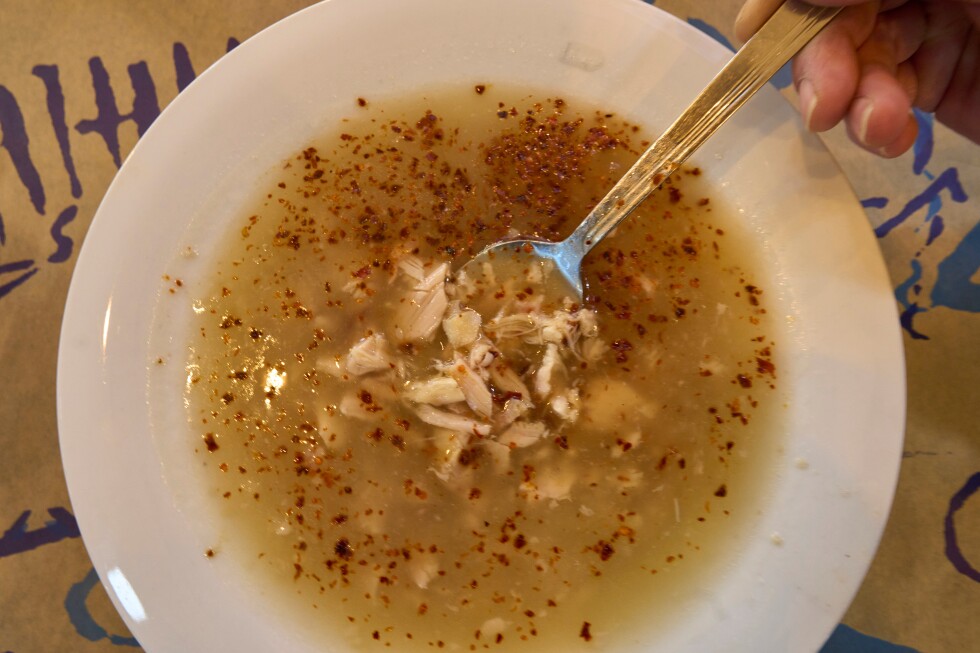
In the northern Greek port city of Thessaloniki, Dimitris Tsarouhas, a third-generation restaurateur who has spent decades perfecting the recipe for what Greeks call patsa, is leading the charge for UNESCO registration. The dish, a slow-simmered broth made from bovine bellies and trotters, has long been a beloved staple in Greek culture — particularly as a soothing morning meal that locals swear eases the discomfort of hangovers and even treats chronic stomach ailments. Proponents of the Greek claim trace the dish’s origins all the way back to 8th century BCE, referencing a mention in Homer’s *Odyssey* that describes a similar preparation served at a feast for Penelope’s suitors, moments before Odysseus reveals his identity after 10 years of travel. According to Tsarouhas, the epic describes a dish of stuffed bovine belly mixed with suet and blood — a description he says matches the core of modern Greek patsa perfectly.
Tsarouhas has not undertaken this effort alone. Working alongside a local Thessaloniki cultural association and Lena Oflidis, the only historian to have published a full book on the soup’s history, he has compiled a comprehensive dossier to submit to UNESCO outlining Greece’s historical and cultural connection to the dish. For the chefs who prepare patsa daily, the recipe’s lineage is clear: 22-year veteran patsa chef Pantazis Koukoumvris explains that ancient Greek cooks developed the preparation, which was later adopted by Byzantine chefs, passed to the Ottoman Empire, and preserved through generations in Greek cooking.
Beyond its legendary roots, regular patrons and proponents point to the dish’s practical and cultural place in modern Greek life. Dozens of customers flock to Tsarouhas’ restaurant at all hours, starting at dawn, to enjoy a bowl, customized to preference with coarsely or finely chopped meat, topped with mustard, hot pepper flakes and sesame seeds. Tsarouhas, citing medical research, notes that the slow-cooked trotters contain nearly 33.4% consumable collagen, making it a popular remedy for joint pain after surgery, stomach ulcers and other digestive issues linked to alcohol consumption. Long-time patron Christos Mousoulis emphasizes that regardless of any similarities between the Greek and Turkish versions, patsa has been a fixture in Greek family life for generations. “We grew up with Greek patsa,” he explained. That shared cultural connection, he argues, is the foundation of Greece’s claim.
But across the Aegean Sea, Turkish chefs, restaurateurs and members of the public are pushing back hard against the Greek bid, calling it an attempt to appropriate a dish that Turks have called iskembe çorbası, or simply iskembe, as a national staple for centuries. Unlike Greek patsa, which includes both tripe and trotters, Turkish iskembe is made exclusively with slow-cooked tripe, simmered for 8 to 9 hours overnight before being served in a rich garlicky broth.
Ali Turkmen, a 59-year-old Istanbul restaurateur who has specialized in iskembe for decades, says the dish is inherently tied to Turkish cultural identity. “It’s been a staple in our culture for centuries. Tripe soup is something specific to Turks,” he said, echoing the long-running pattern of culinary disputes between the two neighbors that have already included competing claims to baklava, stuffed grape leaves, and Turkish coffee, all legacies of centuries of shared Ottoman history.
Turkish historical evidence points to 17th-century writings from famed Ottoman traveler Evliya Celebi, who documented street vendors selling tripe and trotter soup in the streets of Istanbul in his *Book of Travels*, proving a 400-year recorded history of the dish in Turkish lands. Turkish media has widely framed the Greek bid as cultural appropriation, and members of the public are calling for official pushback. “Tripe soup is one of the dishes we should be promoting to the world,” said Murat Pajik, a regular customer at Istanbul’s iconic Alem Iskembe restaurant. “Measures need to be taken to protect our heritage.” Another patron, Engin Cakar, called the Greek claim futile: “This tripe dish is from our grandfathers, our mothers. It belongs to us.”
Despite the public friction, Tsarouhas remains confident in Greece’s case, striking a conciliatory tone amid the dispute. “Nobody’s stopping them from making their own claim,” he said. “We believe that we have all the documentation to secure certification for patsa as Greek heritage. We don’t have anything to divide with our neighbors — rather the taste unites us.”
The UNESCO registration process is expected to take months, leaving the question of which nation can lay claim to the beloved soup still very much up in the air.
-

People fly Kongming lanterns in Jinghong, China’s Yunnan
Since 1994, all intellectual property rights to content distributed across China Daily’s official digital platform are held exclusively by China Daily Information Co (CDIC). This copyright protection extends to every form of content hosted on the site, including but not limited to written articles, photographic material, and multimedia productions. Any form of republication or uncredited use of this content is strictly prohibited unless the user has obtained explicit, written authorization from CDIC in advance. For optimal user experience, CDIC recommends that visitors access the site using a web browser configured to a display resolution of 1024*768 or higher. Beyond the core copyright regulations, the site also publicly lists key operational and regulatory details: its license for online multimedia publication is numbered 0108263, and its official business registration number is 130349. To improve public engagement and accessibility, the platform also maintains dedicated sections covering general information about the China Daily organization, opportunities for advertising partnerships, contact channels for inquiries, open recruitment listings for domestic roles, and specific employment opportunities for foreign expats. Users can also follow China Daily’s updated content across multiple social media platforms via the follow links provided on the site.
-

Pope Leo XIV in Algeria to walk in footsteps of his spiritual father, St. Augustine
On just his second full day in Algeria, marking the first ever papal visit to the North African nation, Pope Leo XIV traveled to Annaba — modern-day Hippo — to walk in the footsteps of his greatest spiritual inspiration, St. Augustine. This pilgrimage is far more than a diplomatic stop: it is a deeply personal homecoming for the first American pope, who has anchored his pontificate to the legacy of the fifth-century Christian theologian, and comes against the backdrop of a growing public feud with U.S. President Donald Trump over Leo’s calls for peace amid the U.S.-Israel conflict with Iran.
Leo has long tied his papacy to Augustine, identifying himself as a “son of St. Augustine” the night of his election and repeatedly citing the theologian’s teachings in his first year in office. For this trip, which is centered on advancing a message of interfaith harmony between Christians and Muslims, Leo is framing Augustine as a timeless model of bridge-building across ideological and religious divides.
The visit also reframes a key figure in Western thought, drawing long-overdue attention to Augustine’s North African origins. Though Augustine is widely framed through a Eurocentric lens as one of the most influential European Christian thinkers, he spent nearly his entire life in what is now Algeria. Born in 354 CE to a Berber mother and Roman father in Thagaste — modern-day Souk Ahras, near Algeria’s border with Tunisia — Augustine was educated in Carthage (part of modern-day Tunisia) and taught rhetoric there before leaving for Italy in 383 CE. After his conversion to Christianity in Milan, he returned to North Africa just a few years later, founded a monastery in Hippo, served as a bishop, and wrote his most iconic works — including *Confessions* and *The City of God*, cornerstones of the Western intellectual canon — before his death in Hippo. Only five years of his life were spent on Italian soil.
Scholar Catherine Conybeare, an Augustine expert at Bryn Mawr College in Pennsylvania, explores this underemphasized African identity in her new book *Augustine the African*, which examines how Augustine viewed himself as a North African looking toward Rome as the center of his faith, yet grappled with insecurity over his Punic-accented Latin. Conybeare notes that the narrative of Augustine’s legacy was shaped for centuries by European successors who relocated his remains to Pavia, Italy, after his death — leaving only one forearm relic in Annaba’s St. Augustine Basilica. “One of the most important thinkers in the Western intellectual tradition actually came from Africa, spent almost his whole life in Africa,” Conybeare told the Associated Press. “How does that change things?”
Algerian President Abdelmadjid Tebboune welcomed the pope, expressing the nation’s “immense pride” in Augustine, calling him “a cherished son of this land, which having been his first cradle, proudly became his initial resting place.”
For Leo, the pilgrimage is the fulfillment of a long-held promise. He told reporters on the papal plane that he had planned this stop as the first trip of his pontificate, having announced as early as the previous May that he wanted his first international journey as pope to be to Africa. Multiple advisors immediately pointed him toward Algeria, given his deep ties to Augustine. Though other travel priorities intervened, Leo ultimately kept the commitment. This is not his first visit to the region: he traveled to Annaba twice before while serving as superior of the Augustinian religious order, which was founded in 13th-century Italy in Augustine’s honor.
Leo emphasized that Augustine’s legacy offers a critical model for a divided world today. The saint, he said, represents “a very important bridge in interreligious dialogue” that global communities urgently need. “We must always seek bridges to build peace and reconciliation,” he said. “This journey, then, truly represents a valuable opportunity to continue with the same voice, with the same message, that we wish to convey: to promote peace, reconciliation, respect and consideration for all peoples.”
During his time in Annaba, the pope toured the archaeological ruins of ancient Roman Hippo, including the theater, market, thermal baths, and the foundations of the original basilica where Augustine preached and the adjoining baptistry. He also met with a local order of nuns and the small Augustinian community based in the city, before closing the day with a Mass at the 19th-century Basilica of St. Augustine, which houses Augustine’s remaining forearm relic. The site draws thousands of pilgrims annually, including Muslim visitors, a testament to the shared cultural heritage Leo seeks to highlight.
This coverage of religion by the Associated Press is supported through a collaboration with The Conversation US, with funding from Lilly Endowment Inc. The AP retains sole responsibility for all content.
-

Blooming Heze, more than blooms
Nestled in eastern China’s Shandong Province, the city of Heze has long been known as China’s peony capital, where sprawling fields of layered, fragrant blooms draw visitors every spring. But in mid-April 2026, the city proved it offers far more than just picturesque floral displays, when it played host to the 2026 Heze Peony International Communication Forum on April 11.
The event drew a diverse crowd of guests from every corner of the globe, who traveled to Heze not just to admire the peonies in full spring bloom, but to engage in open, people-to-people cross-cultural exchange rooted in the shared connection of the city’s iconic flower. Attendees spanned multiple sectors and backgrounds: from international journalists and media professionals covering China’s cultural development, to foreign students and educators studying at Chinese institutions, all united by a curiosity to deepen their understanding of Chinese culture and people-to-people ties.
Organized around the central theme of peony as a cultural bond, the forum created intentional space for informal dialogue and firsthand connection, allowing global guests to move beyond secondhand narratives and experience Heze’s unique cultural heritage directly. What began as a celebration of one of China’s most beloved traditional flowers has grown into a platform for building global mutual understanding, proving that floral culture can serve as a soft, accessible entry point for cross-border friendship and collaboration. For Heze, the forum marks another step in positioning the city as a welcoming hub for international exchange, where ancient cultural traditions meet modern global dialogue.
-

Spring fields buzzing with activity across China
This page outlines foundational legal and operational information for the China Daily website, managed by China Daily Information Co (CDIC). Established with formal online multimedia publishing authorization, the site carries a full copyright notice dating back to 1994, with all intellectual property rights reserved for all published content. This includes, but is not limited to, textual articles, photographic materials, multimedia segments and all other forms of digital content hosted on the platform. Per CDIC’s formal terms, no part of the site’s content may be republished or utilized in any format without explicit prior written approval from the organization. For optimal user experience, the site recommends visitors use a web browser configured to a minimum resolution of 1024*768 or higher. Additionally, the page lists the platform’s official regulatory registration number, 130349, and provides core site navigation links for users. These links cover general information about China Daily, advertising partnership opportunities, contact channels for the organization, open domestic employment positions, and dedicated roles for expatriate workers, alongside an invitation for users to follow the publication’s official social media channels.