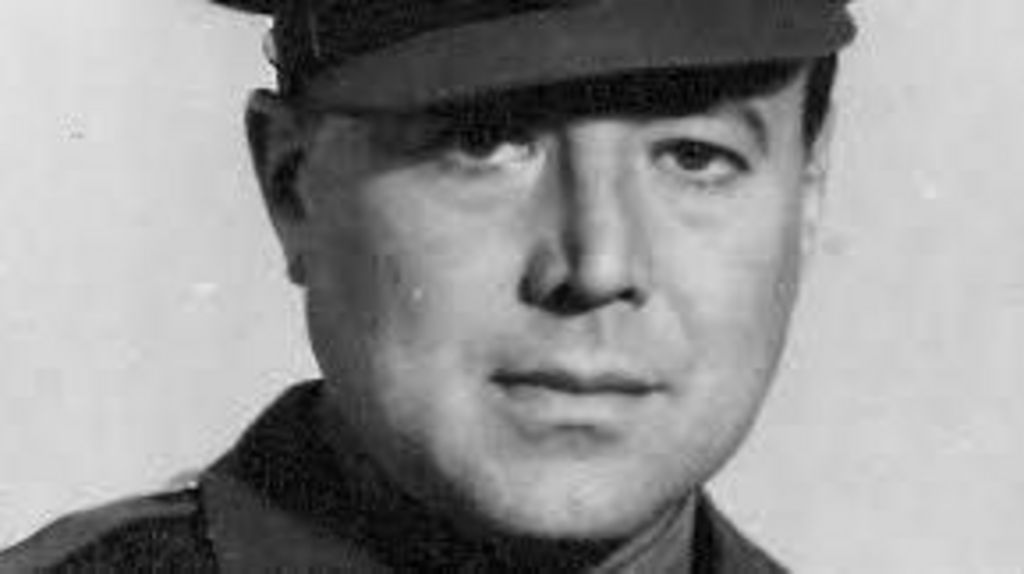
Eighty years after the end of World War II, one of the conflict’s most decorated joint heroes of Wales and France remains at the center of an unresolved, little-known mystery: how exactly did Jacques Vaillant de Guélis meet his death just days after the guns fell silent in Europe?
Born in 1907 in central Cardiff to French parents who built their fortune exporting Welsh coal to Brittany, Vaillant de Guélis was a polyglot Oxford graduate with a thriving career in advertising when war broke out across Europe in 1939. Like many of his generation, he walked away from his comfortable civilian life to enlist in the British Army, and his unique background – a French-born upbringing paired with deep roots in the UK – quickly caught the eye of Britain’s most elite covert organization: the Special Operations Executive (SOE), the shadowy unit tasked with sabotage and resistance building behind enemy lines.
Vaillant de Guélis’s military career was defined by near-miraculous escapes and relentless courage from its earliest days. In 1939, he served as a liaison officer with the British Expeditionary Force, and after Germany’s invasion of France forced the Dunkirk evacuation, he immediately volunteered to return to occupied France in June 1940 to help evacuate thousands of stranded Allied soldiers. When he completed that mission, it was too late to escape across the English Channel, so he led a small group south through Marseille, crossed the Pyrenees into neutral Spain, where he was interned for months before British diplomatic efforts secured his release and a return to Scotland.
That bold exploit put him on the SOE’s radar in April 1941. Recruited by Major Lewis Gielgud (brother of legendary actor Sir John Gielgud) and even reportedly interviewed for the role personally by Prime Minister Winston Churchill, Vaillant de Guélis began his career as a covert operative. He completed four separate missions behind German lines over the course of the war. His first deployment, in August 1941, saw him parachute into Vichy France, where he supplied resistance fighters with forged documents, radio equipment, and critical military intelligence to coordinate attacks against Nazi forces. After successfully completing that mission, he extracted via a rough, makeshift airstrip picked up by the Royal Air Force.
By 1943, Vaillant de Guélis had joined General Charles de Gaulle’s Free French Army in North Africa, fighting through the North African campaign before joining the assault to liberate Corsica, where he saw brutal hand-to-hand combat to oust German forces from the island. After D-Day in 1944, he was once again dropped behind enemy lines, tasked with coordinating resistance cells to disrupt German retreats from the Allied advance. Author and World War II historian Greg Lewis, who has researched Vaillant de Guélis extensively, notes that deploying an operative of his seniority and knowledge of SOE networks directly into the field was extremely risky – but Vaillant de Guélis’s proven skill and local familiarity made him irreplaceable.
It was his final mission, however, that would end his life just days after the war in Europe officially ended. On May 16, 1945, just eight days after VE Day, Vaillant de Guélis was sent to the newly liberated Flossenbürg concentration camp near the modern-day Czech-German border to gather intelligence on captured SOE operatives who had been imprisoned and killed there. While he was standing just yards from the camp gates, he was struck by a car driven by a German soldier who had worked as a camp guard just days earlier. He was rushed to emergency care in Paris, then transferred to a military hospital in Staffordshire, England, where he died from his injuries three months later on August 7, 1945.
To this day, the circumstances of the crash remain unclear, fueling decades of speculation. Many have suggested that Vaillant de Guélis may have been deliberately targeted by a former Nazi camp guard who wanted to prevent evidence of war crimes from reaching Allied authorities – evidence that would later be used to prosecute Nazi leaders at the Nuremberg Trials. Lewis, who first became interested in Vaillant de Guélis while researching Cathays Cemetery in Cardiff, where the hero’s ashes are buried in a family plot, says there is no concrete evidence to support claims of an organized assassination. But the speed with which the case was closed – it was shut down almost immediately after it was opened – and the lack of surviving documentation has left critical questions unanswered. Lewis acknowledges that while chaos across post-war Germany makes an organized plot unlikely, a rogue former Nazi acting alone to silence Vaillant de Guélis cannot be ruled out.
Vaillant de Guélis was posthumously honored for his extraordinary bravery by both his home nations: he received the Member of the Order of the British Empire (MBE) from the United Kingdom and the Croix de Guerre with Palm, France’s highest award for gallantry, from the French government. Today, a blue plaque marks the Cardiff building where he was born, honoring his service. For Lewis, the tragedy of Vaillant de Guélis’s story extends beyond his early death: unlike many SOE operatives who survived the war and left firsthand recollections of their service, all that remains of his legacy is an official military file, with no personal memoir or firsthand account of his extraordinary exploits.