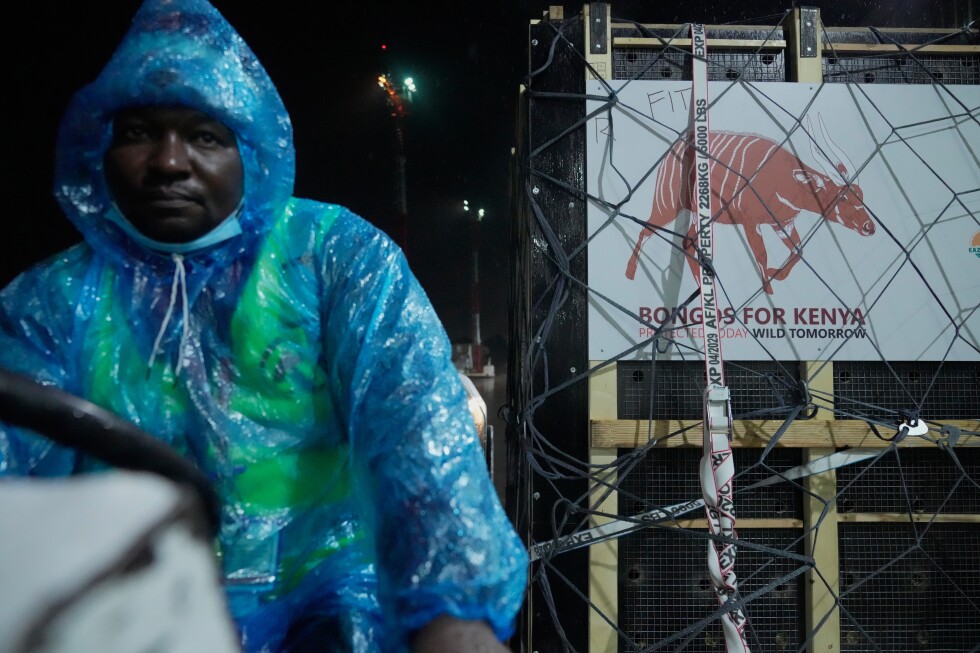
NAIROBI, Kenya — In a landmark milestone for global endangered species conservation, four critically endangered mountain bongos have touched down in Kenya, marking the next step in their journey back to the wild forests that have been their species’ native home for centuries. The rare antelopes, recognizable by their striking striped coats, have spent decades under protective care at Dvur Kralove Zoo in the Czech Republic, a legacy of conservation emergency measures taken in the 1980s.
Today, mountain bongos are classified as critically endangered by global conservation bodies, with fewer than 100 individuals remaining in their natural wild habitat across Kenya, according to official Kenyan government data. The species’ sharp population decline stems from two major threats: rampant poaching and devastating outbreaks of infectious disease. The 1980s rinderpest outbreak that swept through regional wildlife populations killed thousands of bongos, pushing the species to the brink of extinction. In a bid to save the genetically distinct lineages that survived the outbreak, conservationists relocated dozens of bongos to European zoos, where they could be protected and bred safely.
The four newly arrived bongos traveled to Jomo Kenyatta International Airport, Kenya’s main air hub, aboard a KLM cargo flight, secured in climate-controlled wooden crates designed to minimize stress during the long journey. They were officially welcomed at the airport by Kenya’s Prime Cabinet Secretary Musalia Mudavadi and Cabinet Secretary for Tourism and Wildlife Rebecca Miano, who framed the arrival as a symbolic and practical “homecoming of the majestic bongos.”
This relocation marks the third repatriation of zoo-bred mountain bongos to Kenya in recent years, following the last successful transfer in February 2025. Before the antelopes can be released into their natural wild habitat, they will undergo a mandatory period of quarantine and gradual acclimatization to prepare them for life outside captivity. After this adjustment period, they will be transferred to the Mount Kenya Wildlife Conservancy, a protected facility that already hosts 102 bongos as part of the species’ national recovery program.
The conservancy, which manages Kenya’s National Mountain Bongo Recovery and Action Plan in close partnership with the national government, developed the repatriation project with a clear core goal: expanding the species’ existing gene pool through cross-breeding between newly arrived individuals and the conservancy’s current population. Conservation experts emphasize that increasing genetic diversity is the single most critical step to building long-term resilience for the small, vulnerable bongo population.
Kenyan-born conservation filmmakers and explorers Jahawi and Elke Bertolli, who have long documented mountain bongo conservation efforts, shared their insight with the Associated Press on the significance of this arrival. Beyond boosting genetic variation, they noted, the bongo species plays an underrecognized key role in maintaining the health of Kenya’s montane forests — ecosystems that form the backbone of the country’s freshwater supply, serving millions of people across the region.
Nicol Adamcova, Ambassador of the Czech Republic to Kenya, emphasized that the successful repatriation is a product of decades of collaborative partnership between the two nations. “This relocation reflects our shared long-standing commitment to protecting global biodiversity and reversing the decline of species on the brink of extinction,” she said.
Prime Cabinet Secretary Mudavadi echoed that sentiment, highlighting what cross-sector, cross-border collaboration can achieve when aligned around a common conservation goal. “This milestone is proof of what we can deliver when policy, science, and international partnership come together for conservation,” he said. “I commend every stakeholder involved in this work, and I can assure you that the Kenyan government remains unwavering in its support to strengthen conservation frameworks and ensure our nation’s rich biodiversity continues to thrive for generations.”
Tourism Minister Miano added that the addition of genetically diverse individuals to the bongo breeding program is a transformative step forward. “Strengthening the species’ genetic resilience through increased diversity puts us on a stronger path to pulling this iconic animal back from the edge of extinction,” she said.