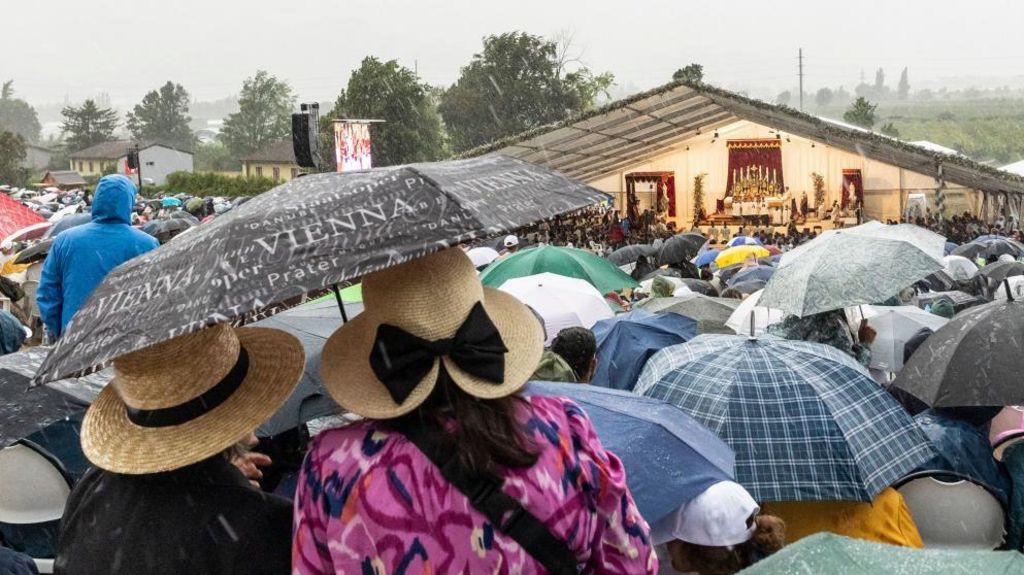
In an unprecedented and sharply escalated step that has shaken global Catholicism, the Vatican has excommunicated every member of the Society of Saint Pius X (SSPX), a conservative traditionalist splinter group counting more than half a million worshippers worldwide. The extraordinary punishment comes after the group defied a direct order from Pope Leo XIV to consecrate four new bishops during a ceremony in Geneva, Switzerland on Wednesday.
The crackdown extends far beyond the SSPX’s six active bishops, all of whom have now been formally excommunicated. In a highly unusual departure from standard church discipline, the Vatican has also ruled that all lay followers who remain affiliated with the society are to be classified as schismatic and stripped of their communion with the Roman Catholic Church. The Vatican did leave an open door for reconciliation, noting that any members who choose to leave the SSPX and return to full communion with the institutional church will be welcomed with sincere pastoral affection.
Founded in 1970, the SSPX has long stood in opposition to the sweeping modernizing reforms adopted by the global Catholic Church at the Second Vatican Council in the 1960s. Named for Pope Pius X, a 20th century pontiff famous for his staunch resistance to theological and liturgical modernization, the group retains traditional liturgical practices rejected by most modern Catholic communities. Unlike the standard Novus Ordo Mass celebrated in local languages around the world, all SSPX services are held exclusively in Latin, with priests facing the altar rather than the congregation during worship. Communion is only placed directly into the mouth of kneeling worshippers, a departure from the common practice of allowing congregants to receive the sacrament while standing and holding it themselves. Women in SSPX congregations are also required to cover their heads during services, and the group as a whole adheres to far stricter, more traditional social teachings than the mainstream modern Catholic Church. It also rejects the Vatican’s modern stance of pursuing open interfaith dialogue with other Christian denominations and non-Christian religious traditions.
Today, the SSPX claims approximately 600,000 followers spread across the globe, with its largest concentrations of members in the United States and France. In the United Kingdom alone, the group hosts regular Masses at 26 separate locations, stretching from Lerwick in the Shetland Islands down to Devon, with its main UK regional hub based in Wimbledon, South London.
For many long-time SSPX followers, the break with the Vatican does not weaken their commitment to the group – if anything, it has reinforced their conviction that they are the ones upholding true Catholic doctrine. Rita Reid, a 76-year-old retired bed and breakfast owner from Jersey in the Channel Islands, said the excommunication announcement left her feeling stronger in her beliefs. “Before the consecrations yesterday I said to my husband, ‘Do you know what? Even if they excommunicate us, go ahead, bring it on, it’s not going to make one bit of difference,” Reid shared in an interview.
Reid, who previously attended both modern mainstream Catholic services and SSPX gatherings before committing fully to the traditionalist group, described SSPX liturgies as far more profound than the contemporary Mass, saying she feels the true presence of Jesus in SSPX ceremonies that is missing from the modern liturgy, which she called “so weak and wishy-washy.” She also criticized mainstream Catholic parishes for failing to consistently teach traditional social values, such as the church’s historic teaching against premarital sex, arguing that this lack of clear guidance has led younger generations of Catholics to abandon core doctrinal teachings.
This is not the first time the SSPX has clashed with the Vatican over unauthorized episcopal consecrations. In the 1980s, SSPX bishops were excommunicated for similar acts of disobedience to Rome, but that earlier punishment was later reversed by the Vatican as part of outreach efforts to repair the rift between the church and the traditionalist group. In recent years, Vatican officials had held ongoing talks aimed at reaching a full reconciliation that would bring the SSPX back into full communion with Rome.
Analysts and Catholic observers had widely expected that the unsanctioned consecrations in Geneva would lead to excommunication for the four newly ordained bishops and the society’s existing leadership. What has caught many off guard is the Vatican’s decision to extend the excommunication penalty to all 600,000 lay members of the SSPX, a far harsher step than most predicted. The move pushes the traditionalist group further away from the center of Catholic power than it has ever been in its 54-year history.
Excommunication is one of the harshest disciplinary penalties the Catholic Church can issue, effectively expelling recipients from full membership in the faith and barring them from core elements of Catholic spiritual life. Excommunicated believers are considered out of communion with the church, meaning they cannot receive the sacraments – including confession and marriage – through official Catholic channels. In an official statement released Thursday, the Vatican clarified that “The sacred ministers of the Society of St Pius X administer the sacraments illicitly, while the sacrament of penance they administer and the marriages they witness are invalid.”
The ruling now leaves SSPX members with a clear choice: remain part of a movement the Vatican has formally labeled a schism, or abandon their traditionalist beliefs and practices to retain their membership in the Roman Catholic Church. For many SSPX followers, however, the conviction remains firm: it is the modern Vatican that has strayed from true Catholic doctrine, not the traditionalist movement that seeks to preserve the faith unchanged.