分类: other

  • David Briscoe, AP journalist who chronicled Philippines’ democratic revolution, dies at 82

    David Briscoe, AP journalist who chronicled Philippines’ democratic revolution, dies at 82

    Veteran Associated Press journalist David Briscoe, whose decades-long career was defined by his vivid on-the-ground coverage of the collapse of authoritarian rule and the birth of democracy in the Philippines during one of the nation’s most turbulent modern eras, has died at the age of 82. His wife, Leonor Briscoe, confirmed he passed away Sunday at an assisted living community in Kapolei, Hawaii, following an April diagnosis of amyloidosis, a progressive condition marked by dangerous protein buildup that damages vital organs.

    Over a career that stretched across five decades and multiple continents, Briscoe brought his signature relentless curiosity to assignments across his home state of Utah, the nation’s capital in Washington D.C., and Hawaii. But it was his posting as Manila bureau chief that placed him at the center of the most consequential story of his professional life.

    When Briscoe took the reins of the AP’s Manila bureau in 1980, he spent the next six years documenting the final declining years of Ferdinand Marcos’ brutal authoritarian regime, and the national chaos that erupted following the assassination of opposition leader Benigno Aquino Jr. Briscoe and his reporting team crisscrossed the archipelago, traveling via chartered aircraft, rented jeeps, and on one notable occasion, a horse-drawn cart, to keep up with the fast-moving story. They covered a relentless string of corruption investigations, legislative hearings, and the unlikely 1986 presidential campaign that saw Aquino’s grieving widow, Corazon Aquino, pushed into the national spotlight to lead a grassroots democratic movement.

    The iconic finale of that movement, which saw Corazon Aquino sworn in as president and Marcos forced into sudden exile, remained etched in Briscoe’s memory for the rest of his life. He often recalled searing, unforgettable images from that period: “of nuns kneeling in front of military tanks” and “soldiers and civilians crying in each other’s arms.” Writing for AP World, the outlet’s in-house publication shortly after the revolution in 1986, Briscoe noted, “I expect to witness or cover no greater event in my life.”

    Born David Chesley Briscoe on July 30, 1943, in Salt Lake City, Utah, Briscoe grew up in a working-class household, where his father worked as a union steward and his mother as a homemaker, raising Briscoe and his brother in the Church of Jesus Christ of Latter-day Saints. He first discovered his passion for journalism while studying at the University of Utah, writing for the campus student newspaper before landing his first professional role at the Deseret News, where he cut his teeth writing obituaries and profiles of high-achieving local students.

    After two years at the Utah paper, Briscoe joined the Peace Corps and was assigned first to Paracale, then to Naga City in the Philippines, where he taught English. For a young man who had barely left his home state of Utah in his early life, every corner of the Philippines was a revelation: from water buffalo cooling off in muddy waterholes to children running along sunbaked dirt roads.

    Briscoe quickly fell in love with his adopted country, and bristled at the thought of leaving when his Peace Corps service came to an end. He took a job at a local Philippine newspaper, and while covering an event featuring a speech by Ferdinand Marcos, he met Leonor Aureus, an editor at a competing local outlet. The pair bonded over their shared love of journalism, and soon married, decorating their wedding aisle with copies of their respective papers, The Naga Times and the Bicol Mail.

    In 1970, Briscoe was hired by the AP’s Manila bureau, where he covered major breaking stories including a deadly earthquake that shook the capital, an assassination attempt on Pope Paul VI during a pastoral visit, and a commercial plane hijacking. By 1971, however, AP leadership ordered Briscoe to return to the United States to take up a domestic posting. He moved back to Salt Lake City, holding out hope that fate would one day bring him back to the Philippines he had come to love.

    During his time back in Utah, Briscoe found himself increasingly at odds with the Latter-day Saint Church that had shaped his upbringing. His wife recalled he faced church discipline after speaking out against the Church’s longstanding ban barring Black men from the priesthood during a discussion class he taught; Briscoe openly opposed the exclusion, which the Church eventually lifted years later. He also ran afoul of Church leadership after co-writing a three-part investigative series with colleague Bill Beecham that examined the Church’s extensive network of business holdings, estimating that annual revenue from member tithing alone exceeded $1 billion. No major Utah newspaper dared to publish the reporting, the pair later said.

    After nine years back in Salt Lake City, AP leadership offered Briscoe the chance to return to Manila as bureau chief. He immediately called his wife with the news, asking her, “Noree, are you sitting down?”

    After completing his six-year term leading the AP Manila bureau, Briscoe relocated to Washington D.C. in 1986, where he covered international affairs. He went on to serve as AP’s Honolulu bureau chief from 2001 until his retirement in 2009. In Hawaii, dressed in casual aloha shirts and soaking up the tropical sunshine, Briscoe often said he felt “halfway back” to the Philippines he cherished.

    Until his final days, Briscoe held his time covering the Philippines close to his heart. As his health declined in his final weeks, his family gathered at his side to pray. He squeezed his wife’s hand, told her he loved her, and asked her to let him pass peacefully.

    Per his family’s plans, a boat will carry Briscoe’s ashes out into the Pacific Ocean, where they will be scattered, with the hope that ocean currents will carry his remains back to the Philippines that became his adopted home. “The land that David learned to love,” his wife said, “and where he met the love of his life.”

  • Lao president visits China Academy of Space Technology

    Lao president visits China Academy of Space Technology

    For decades, China Daily Information Co (CDIC) has maintained clear intellectual property guidelines for all content hosted on its official digital platform. First established with copyright protection in 1994, the company retains full legal rights to every piece of content published on the site, covering a broad range of material from written articles and photographic work to interactive multimedia resources. Under CDIC’s intellectual property rules, no party is permitted to republish or reuse any content from the platform in any format without obtaining explicit, written advance authorization from the organization.

    Beyond its copyright policies, the website also provides practical guidance for visitors, recommending that users access the platform through browsers configured to a minimum resolution of 1024*768 for the optimal viewing experience. The site also holds the required official licensing for online multimedia publication, with a published license identifier 0108263 and official registration number 130349 on record.

    To help visitors engage more deeply with the organization, the platform lists a range of quick access links for core services and resources. These include a detailed informational page about China Daily, resources for brands and organizations interested in purchasing advertising space on the site, contact information for general inquiries, current open job vacancies for job seekers, and dedicated employment resources for expatriate workers looking for opportunities with the organization. Visitors are also invited to follow China Daily’s content across its social media channels to stay updated on the latest news and updates.

  • The Revolutionary War’s chief villain is being rehabilitated — just in time for America’s 250th

    The Revolutionary War’s chief villain is being rehabilitated — just in time for America’s 250th

    As the United States prepares to mark its 250th year of independence, a long-held popular portrayal of King George III – the man Americans were taught to see as a tyrannical, mad monarch who drove the colonies to revolution – is undergoing a long-overdue reassessment by historians and cultural institutions.

    For generations, American popular culture has cemented this one-note image of George III: the maniacal villain of the Broadway megahit *Hamilton*, the central figure of *The Madness of King George*, and the tyrant referenced in the classic educational song *No More Kings* who imposed unfair taxes without colonial consent. But new archival access and modern scholarship are upending this long-accepted narrative, revealing that the founding story’s iconic villain was far more complex than wartime propaganda depicted.

    Leading British historian Andrew Roberts, author of the 2021 biography *The Last King of America*, argues that the simplified caricature of George III grew from wartime misinformation, a pattern common to most conflicts. “Truth became the first casualty of the American War of Independence, as it is in most wars,” Roberts notes, pointing out that 25 of the 27 grievances against the king listed in the Declaration of Independence collapse under historical scrutiny. In his view, the American Revolution was not a reaction to fabricated tyranny of George III, but rather a reflection of colonists’ deep desire for political autonomy.

    Even in 1972, decades before this recent wave of reappraisal, then-Prince Charles (now King Charles III) pushed back against the pervasive narrative in a foreword to a George III biography. “If the average schoolchild remembers anything about history after leaving school, he will remember that George III was mad,” Charles wrote. “If he is American as well then madness is often given as a reason for the ‘irrational’ behavior of the King toward the Colonists, making it necessary for them to declare independence.” He closed with a hope that Americans would one day see the true king without centuries of bias.

    Historical context confirms that George III, who inherited the British throne in 1760 at just 22 years old, was a constitutional monarch operating within existing British political structures. As is still the case in the modern UK, all legislation and taxation were approved by Parliament, not imposed unilaterally by the crown. While George stood with Parliament as tensions escalated – from the 1765 Stamp Act to the 1773 Coercive Acts that responded to the Boston Tea Party – his role was largely ceremonial, bound by the will of elected lawmakers. When the first shots of the revolution rang out at Lexington and Concord in 1775, the conflict was as much a dispute between Parliament and colonial assemblies as it was a rejection of the monarchy itself.

    A major catalyst for this historical shift came in 2015, when Queen Elizabeth II oversaw the public release and digitization of 280,000 uncatalogued Georgian Papers from Windsor Castle’s archives. The complete record revealed a meticulous, engaged monarch who tracked everything from crop yields to parliamentary politics in detailed journals and notes, and offered new granular insight into his long-debated medical condition. The long-popular theory that George suffered from the genetic metabolic disorder porphyria has now been discredited; modern medical analysis of the new records points to Type 1 bipolar affective disorder, which only caused severe, extended manic episodes after 1788 – more than a decade after the Revolutionary War ended.

    That finding confirms a core claim of the reassessment: George III was not experiencing mental instability during the revolution, a point that cultural institutions across the U.S. are now highlighting as part of 250th anniversary programming. The Library of Congress’ major exhibit *The Two Georges* frames the revolution as a clash between two contemporary leaders – George III and George Washington – rather than a battle against a mad tyrant. Philadelphia’s Museum of the American Revolution opens its core exhibit by acknowledging that, in the 15 years before the revolution, many colonists held George III in such high regard that they widely referred to him as “the king of liberty” and displayed royal symbols on everyday household objects and public buildings.

    This new framing received a high-profile public validation in April 2024, when current King Charles III twice referenced his five-times great-grandfather George III during a visit to Washington D.C., marking the upcoming 250th anniversary. Speaking from the U.S. Congress rostrum, he lightheartedly endorsed the “Tale of Two Georges” exhibit theme, joking: “King George never set foot in America, and, please rest assured, I am not here as part of some cunning rear-guard action.” The assembled lawmakers reacted with no hostility, and Charles repeated the reference that evening during a White House state dinner, noting “As the direct descendant of King George III, I know this is a nation that never gives up.”

    Still, historian Roberts is skeptical that the traditional caricature will fade entirely from American popular memory. When asked if his scholarship had shifted broader public perception, he wrote via email: “Nothing will dislodge the Americans from their desire to see GIII as an evil dictator.”

  • Legacy of Himalaya’s ‘Sherlock Holmes’ lives on in digital

    Legacy of Himalaya’s ‘Sherlock Holmes’ lives on in digital

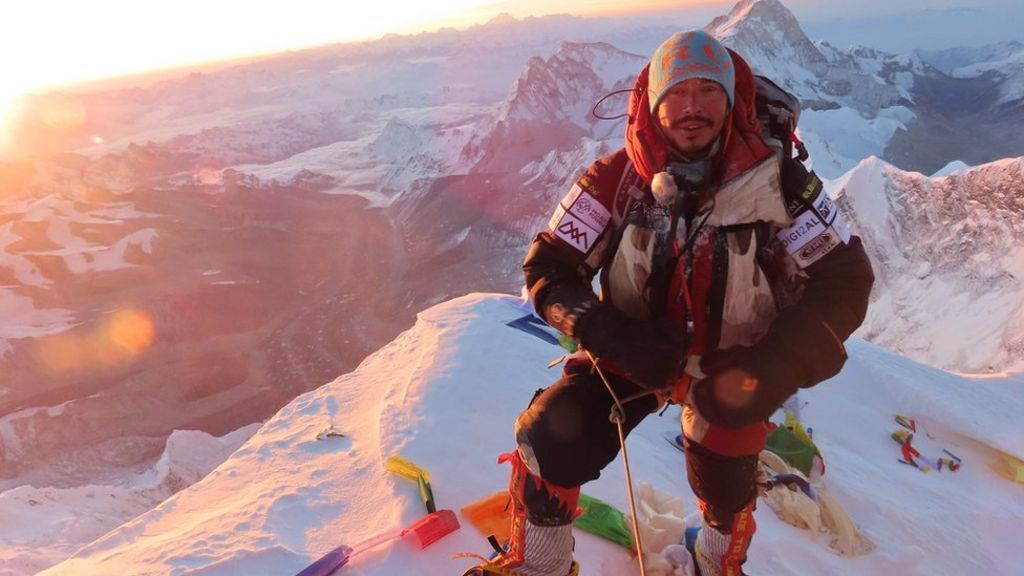
    Nestled in a bustling Kathmandu restaurant, thousands of meters below Nepal’s snow-capped Himalayan peaks, German climber Billi Bierling sits across from expeditions returning from high altitude, grilling them on the details of their summit bids. Every answer, every triumph and every disputed claim gets logged into the Himalayan Database, a 60-year-old authoritative record of Himalayan mountaineering that has become the gold standard for climbers, researchers, and historians worldwide.

    The archive traces its origins back to 1963, when American journalist Elizabeth Hawley traveled to Nepal to cover a US expedition to Mount Everest. Though Hawley herself never climbed a mountain and never once visited a Himalayan base camp, she became captivated by the people who pursued these high-altitude feats. She began conducting mandatory post-expedition interviews with every team that returned from the mountains, meticulously hand-writing every detail of their journey.

    Over five decades of relentless work, Hawley earned the nickname “the Sherlock Holmes of the mountaineering world” from Sir Edmund Hillary, who alongside Tenzing Norgay completed the first recorded ascent of Everest in 1953. By the time of her death in 2018, she had cemented her reputation as the most trusted voice on Himalayan climbing, and her growing archive had become the definitive record of every major expedition in the region. As Bierling, who inherited stewardship of the project from Hawley, tells it, Hawley applied the same rigorous fact-checking to everyone she interviewed, from climbing legends like Reinhold Messner (the first person to summit Everest solo) and Ueli Steck to casual climbers just starting out.

    Bierling first crossed paths with Hawley in 2001, when she traveled to Nepal to climb 7,129-meter Baruntse. She began assisting Hawley with the project in 2004, and took over full leadership after Hawley’s passing. Today, she leads a small team of volunteers that continues to expand and update the database at a time when Himalayan mountaineering is growing faster than ever before.

    The archive’s journey into the digital age began back in 1991, when American climber Richard Salisbury recognized the historical value and vulnerability of Hawley’s handwritten records, which filled 40 full file drawers. He proposed digitizing the entire collection, a painstaking process that took nearly 11 years to complete. Today, the archive exists as a fully searchable digital resource, accessible to climbers and researchers around the world.

    For the mountaineering community, the database’s authority is unmatched. “If it wasn’t recorded, it didn’t happen,” explains Garrett Madison, a veteran expedition organizer who has led teams in Nepal since the 2000s. For climbers chasing first ascents of unclimbed peaks, the resource is irreplaceable. Japanese climber Tatsuro Sugimoto, who recently completed the first ascent of 6,473-meter Jarkya, notes that the database lets climbers quickly verify which peaks have not yet been summited, eliminating redundant work for teams exploring new routes.

    As commercial mountaineering has boomed in recent decades, the work of maintaining the database has changed dramatically. Where Hawley once only had to interview a handful of teams each season, working from her blue Volkswagen Beetle at Kathmandu’s small airport, Nepal this spring issued a record 492 solo permits for Everest alone, with hundreds more climbers tackling other peaks across the Himalayas. Hundreds of climbers now attempt high-altitude summits every season, with many targeting multiple peaks in a single trip.

    Bierling says the sheer volume of expeditions makes it impossible to interview every single climber in person, a shift that has forced the team to adapt. “If we wanted to meet everybody in person, we’d need an army of 100 people,” she explains. “It’s all so quick. People come and go, they fly in, they fly out.” The team now supplements its interviews with official expedition permit data from Nepal’s Ministry of Tourism, and focuses its in-person reporting on groundbreaking ascents: first summits, new routes, and climbs that push the boundaries of what is thought possible on the world’s highest peaks.

    Even with these adaptations, the team still adheres to the core principles Hawley established decades ago. The team starts by trusting a climber’s account of their summit, only digging deeper to verify claims when questions arise. Volunteers cross-reference photos, check topographical details, and investigate conflicting reports from other climbers, and disputed claims are tagged clearly in the database. For Bierling, every disputed claim brings her back to the question that guides all her work: what would Elizabeth Hawley do in this situation? As the mountaineering world continues to change, Hawley’s legacy lives on, preserved for future generations in the digital archive she built.

  • Weekly quiz: Which tennis star dazzled the French Open with an ‘Eiffel Tower’ dress?

    Weekly quiz: Which tennis star dazzled the French Open with an ‘Eiffel Tower’ dress?

    The past seven days have brought a string of high-profile headlines across vastly different sectors, capturing public attention in fragmented waves. First, new developments in the widely discussed *Married At First Sight UK* controversy have emerged this week, with more behind-the-scenes details of the on-screen scandal coming into public view.

    In a separate, more serious political development, Peter Murrell, the former chief executive of the Scottish National Party (SNP), has pled guilty to embezzling more than £400,000 in funds from the party, a revelation that has sent ripples through Scottish political circles.

    Meanwhile, in Australia, a planned celebratory drone light display over Sydney’s iconic Darling Harbour went dramatically awry when nearly 90 of the participating unmanned aerial vehicles crashed into the water below, disrupting the event and leaving onlookers surprised.

    Against this backdrop of headline-grabbing events, compiled by quiz editor Ben Fell, this weekly current affairs quiz challenges readers to test how closely they have paid attention to all global developments from the past week, not just the top trending stories. For those eager to continue testing their knowledge, opportunities to try the previous week’s quiz or explore past quizzes from the outlet’s archives are also available.

  • Love birds: twice-extinct parakeet gets lifeline from randy pair

    Love birds: twice-extinct parakeet gets lifeline from randy pair

    Deep in New Zealand’s conservation efforts, a species once written off twice is staging a remarkable comeback, all thanks to one extraordinarily prolific pair of feathered parents. The orange-fronted parakeet, known locally as kakariki karaka, has bounced between extinction declarations and rediscovery for decades, holding the grim title of one of the world’s rarest parakeet species. Today, a viral pair of captive breeders have become unlikely saviors, pushing the species’ total population to a more stable 450 individuals scattered across protected sanctuaries, predator-free offshore islands, and small remote wild habitats.

    Nacho and Trixie, the power couple at the heart of this success story, were paired for the first time in early 2024 at the Isaac Conservation and Wildlife Trust based in Christchurch. In less than a full breeding cycle, the pair has produced an astonishing 55 chicks – with 33 of those hatching in 2024 alone. Even more remarkably, as the official breeding season draws to a close, Trixie shows no signs of slowing down, with a seventh clutch of new chicks currently under her care.

    Leigh Percasky, wildlife manager at the Isaac Conservation and Wildlife Trust, has showered praise on the hardworking pair, particularly highlighting Trixie’s relentless dedication as a “super-mum”. “Ideally we’d prefer her to stop so she can have a rest, but she shows no signs of that,” Percasky explained in an interview, adding that researchers and conservation staff are still stunned by the pair’s endless energy. Nacho, for his part, has also earned recognition for his consistent support: he takes on the full responsibility of foraging for food to sustain Trixie and their growing brood, a demanding full-time role through every stage of chick rearing.

    Captive breeding programs like this one form the backbone of New Zealand’s efforts to save endemic species lost to invasive predators, a longstanding threat to the country’s unique native birdlife. Wayne Beggs, who leads the orange-fronted parakeet recovery program for New Zealand’s Department of Conservation, explained that pairs like Nacho and Trixie are the backbone of the species’ survival. Wild populations of the parakeet remain extremely vulnerable to stoats, rats, and other introduced predators that have decimated New Zealand’s native bird populations over the past two centuries. Without captive breeding programs to build a safe backup population and supply individuals to reestablish new wild colonies on predator-free islands, the species would have no safety net against extinction.

    “Nacho and Trixie have made a massive contribution to the survival of their species,” Percasky noted. After their current clutch of chicks reaches independence, conservation planners are planning to give the tireless love birds a long, well-earned break from breeding duties to recover before the next cycle. For a species that has already been declared extinct twice, this surge in population from one dedicated pair offers a rare hopeful story for global conservation efforts.

  • Dang Van Phuoc, AP combat photographer who lost an eye in the Vietnam War, dies at 91

    Dang Van Phuoc, AP combat photographer who lost an eye in the Vietnam War, dies at 91

    Dang Van Phuoc, the fearless former Associated Press photographer who built a legendary career covering the Vietnam War through devastating personal injury and immense hardship, has passed away at the age of 91. He died suddenly Saturday at his home in Southern California, confirmed his nephew Van Nguyen.

    Phuoc’s life was marked by struggle from its earliest days. Born in 1935 in a small Vietnamese village near Quang Ngai, south of Da Nang, he was orphaned by his mid-teens: his father was killed by Viet Cong insurgents when Phuoc was around 10 years old, and his mother died a few years later, leaving him homeless with no support system.

    In his young adulthood, Phuoc volunteered to carry equipment at a Saigon film studio where his aunt worked as a cook. It was in this space that he first encountered a camera, teaching himself the fundamentals of photography through self-guided practice and on-the-job observation.

    In 1965, Horst Faas, AP’s then–photo chief, hired Phuoc to replace a local photojournalist who had been killed while on assignment. It did not take long for Phuoc to earn a distinctive reputation among fellow journalists and coalition troops: he had an almost preternatural ability to reach the center of active combat, putting him in position to capture raw, unflinching images of the war that other photographers could not access. Faas would later dub Phuoc the news agency’s “secret weapon” for his unmatched prowess in the field. Phuoc regularly walked alongside the lead point man on combat patrols, a choice that produced extraordinary photography but exposed him to constant mortal danger.

    Over his 10-year tenure covering the war for AP, Phuoc sustained at least five separate combat injuries. Just five months after he was hired, a grenade explosion sprayed shrapnel into his chest and leg, but he returned to frontline reporting within a few months to continue covering the protracted conflict between North Vietnam’s Communist forces and the U.S.-backed South Vietnamese military. In 1968, he suffered a concussion when a rocket fragment struck his head while he documented intense street fighting in Saigon. That same year, he braved continuous sniper fire to carry a wounded U.S. soldier to safety, earning a formal commendation from the Ninth U.S. Army Infantry Division for his act of courage.

    The most devastating injury came in 1969, when a grenade explosion during a patrol with a U.S. Ranger battalion south of Da Nang cost Phuoc his right eye. Undeterred, he relearned how to frame and shoot photographs with a single eye and returned to his post within months. In a 2011 interview for AP’s institutional archives, Phuoc opened up about the unique challenges of working with one eye: he had to balance peering through his camera viewfinder while also staying alert for silent hand signals from the soldiers accompanying him on patrol.

    Huỳnh Công “Nick” Út, Phuoc’s colleague in AP’s Saigon bureau and the Pulitzer Prize-winning photographer behind the iconic image of a burned Vietnamese girl fleeing a napalm attack, remembered Phuoc as both a fearless professional and a devoted friend. “He was fearless and resourceful in the field,” Út said. “Behind the scenes, he was a giving man and loyal friend who treated me like a brother. When I heard he had passed, I cried, ‘My brother, he’s gone.’ Everyone loved him so much.”

    Though Phuoc was celebrated for his gripping combat photography, he often said the images that mattered most to him were those that captured the suffering of civilian civilians trapped in the crossfire of war. In the 2011 interview, he framed his work as a quiet act of service, comparing himself to “a small grain of sand” who used his camera to amplify unheard stories of civilian hardship to a global audience.

    When Saigon fell to North Vietnamese forces in 1975, Phuoc fled Vietnam with his family, carrying only the clothes on their backs and a single bottle of milk for his child. After being stranded in a Guam refugee camp, AP reporter Linda Deutsch—who was covering the camp at the time—intervened to help the family resettle, and they were flown to the U.S. to process at Camp Pendleton in Southern California.

    Phuoc briefly returned to Asia to work for AP’s Hong Kong bureau before leaving the news organization and settling permanently in Southern California with his family. He built a second career as a professional portrait photographer in Orange County, home to Little Saigon, the largest community of Vietnamese refugees outside Vietnam.

    In retirement, Phuoc remained deeply engaged in his craft and his community. He was a founding member of The Artistic Photography Association, where he trained generations of young emerging photographers. He also served as a civilian volunteer for the Los Angeles County Sheriff’s Department, and was named the county’s Volunteer of the Year in 1994.

    Kim Nguyen, Phuoc’s great-nephew, reflected on his legacy Tuesday, recalling the childhood portraits Phuoc took of him as an infant and a recent visit to a Vietnamese museum where he brought his own infant son to view Phuoc’s wartime work on public display.

  • A rare sanctuary in Congo looks after baby bonobos away from poaching threat

    A rare sanctuary in Congo looks after baby bonobos away from poaching threat

    Deep in the forested fringe of Kinshasa, the capital of the Democratic Republic of Congo, sits a one-of-a-kind safe haven for the world’s most threatened great apes: Lola ya Bonobo, the only sanctuary on Earth dedicated exclusively to rescuing and raising orphaned bonobos. For 24 years, Micheline Nzonzi has served as a foster mother to these vulnerable young primates, and she currently cares for a sleepy 1-year-old orphan whose life depends on her care. With consistent maternal attention, bottle feeding, and regular social play with other rescued young bonobos, this tiny ape stands a strong chance of survival. “Without me, without us, these bonobos cannot survive,” Nzonzi explained. “They survive thanks to human affection.”

    Bonobos, one of humanity’s closest living genetic relatives sharing 98.7% of our DNA, have existed as a distinct species only since 1933, when American zoologist Harold Coolidge formalized the classification first proposed by German anatomist Ernst Schwarz four years earlier. Found only in the dense equatorial rainforests south of the Congo River, these apes are famously known for their female-led social structures, peaceful temperament, and high emotional intelligence, earning them the nickname “hippie apes” for their conflict-resolution and social behaviors. A 2025 study from Johns Hopkins University even suggests bonobos may possess a capacity for imagination, cementing their status as one of the most fascinating species on the planet.

    Yet today, the species faces imminent collapse. Population estimates have plummeted from 100,000 wild bonobos in the 1980s to roughly 20,000 today, landing the species on the International Union for Conservation of Nature’s endangered list. The primary threat driving this decline is the unregulated commercial bushmeat trade. While bonobos are legally protected from hunting across the DRC, demand for wild game extends far beyond the Congo Basin, and the iconic apes fetch a premium price on black markets. Poachers often use captured baby bonobos as live bait: when adult bonobos approach to investigate the cries of the trapped infant, they are shot and killed for their meat. The surviving infants are then trafficked, sometimes kept as pets or sold into the exotic pet trade before being rescued by sanctuary workers.

    Cultural beliefs have compounded conservation challenges in the DRC, unlike neighboring Uganda where great apes are not hunted for consumption. “In Congo, they believe that you can become as strong as the primate you eat,” explained primatologist Gladys Kalema-Zikusoka, founder of Uganda-based conservation group Conservation Through Public Health. To curb hunting and protect bonobo habitat, Congolese authorities launched a novel proposal last year: “bonobo credits”, a market-based conservation model modeled after carbon credits that would reward local communities for preserving old-growth forest. As of early 2025, the program has not yet been implemented.

    In Kinshasa, the illegal primate meat trade has been pushed underground after a nationwide ban aimed at preventing the spread of zoonotic diseases like Ebola. Local vendors confirm that open sales of monkey and ape meat have ceased, though unregulated trade in other wild game from giant rodents to pythons continues openly in city markets. For sanctuary staff, the work of rescue and education remains an ongoing battle. “The bonobos are in danger. We are educating people to not kill the bonobos,” said Arsène Madimba, an educator at Lola ya Bonobo. “We can’t kill them, we can’t keep them as pets at home, we can’t eat them. Because of poaching, we see large-scale trafficking of orphaned bonobos across the entire country.”

    Today, Lola ya Bonobo, run by the Congolese conservation nonprofit Les Amis des Bonobos du Congo, houses dozens of adult bonobos, some of whom have lived at the sanctuary since it opened in 2002, plus 11 orphaned infants in its on-site nursery, with the most recent arrival arriving earlier this year. Each baby is paired with a long-term foster caregiver who will care for it for three to five years – matching the slow reproductive and developmental cycle that makes bonobos particularly vulnerable to population loss – before the young ape is integrated into a larger social group open to visitors. In rare, carefully planned cases, rehabilitated bonobos are eventually reintroduced to protected wild habitats, a process that requires years of preparation.

    For the sanctuary staff that works with the apes daily, the human-bonobo bond is tangible. Feeder Frank Lutete, who paddles across the sanctuary’s waterways to deliver fruit to the social groups, says the apes regularly show their gratitude. “Some bonobos thank me,” he explained, “tapping their chests in a gesture of gratitude.”

  • A year in, what’s on Pope Leo XIV’s to-do list? And what has he done so far?

    A year in, what’s on Pope Leo XIV’s to-do list? And what has he done so far?

    VATICAN CITY – When Pope Francis took the helm of the global Catholic Church, he launched his pontificate with an immediate flurry of institutional reforms, leadership reshuffles, and new governing structures that upended longstanding norms. In contrast, Pope Leo XIV has adopted a far more deliberate, methodical approach to his early tenure, prioritizing steady foundational work over rapid change as he charts a path for his papacy.

    As Leo settles into his role, he has already finalized several notable leadership and policy shifts, while a handful of high-stakes challenges loom on the horizon that will test his authority and vision for the church.

    ### Upcoming Key Appointments to Reshape Church Leadership
    A series of impending leadership vacancies in the United States and the Vatican will give Leo a unique opportunity to mold the church’s global hierarchy and central governance to align with his priorities.

    In Chicago, one of the most prominent U.S. archdioceses, Cardinal Blase Cupich turned 77 in March – two years past the standard mandatory retirement age for Catholic bishops, leaving the door open for Leo to appoint a new leader to his home country’s major see. By the end of December, Los Angeles Archbishop José Gomez will reach the standard retirement age of 75, giving Leo the chance to name a new head of the largest archdiocese in the United States. He has already filled one top U.S. vacancy, appointing Archbishop Ronald Hicks to succeed retiring Cardinal Timothy Dolan of New York. According to Michael Moreland, a professor of law and religion at Villanova University – Leo’s alma mater – that appointment did not carry a strong ideological lean in either direction, reflecting the pope’s overall cautious, non-partisan approach to personnel decisions.

    At the Vatican level, several senior leadership roles will soon open up. British Cardinal Arthur Roche, 76, leads the Vatican’s liturgy office, which oversaw Pope Francis’ highly controversial restrictions on the traditional Latin Mass. The selection of Roche’s eventual successor will be closely watched for clues about how Leo plans to address this deeply divisive issue within the church. American Cardinal Kevin Farrell, 78, who is well past retirement age, still heads the Vatican’s department for family and laity, and holds two other high-stakes posts: camerlengo, the official who oversaw the conclave that elected Leo, and chair of the Holy See’s most sensitive committees overseeing financial investments and the Vatican City State’s highest court of appeal. Canadian Cardinal Michael Czerny, head of the Vatican’s office for migrants, environment and development, will turn 80 in July. Once he turns 80, he will be ineligible to vote in future papal conclaves, dropping the total number of voting-age cardinals to 117 – below the traditional 120-person cap. That shift paves the way for Leo to announce his first slate of new cardinals within the next year, expanding the college of electors who will one day choose his successor.

    ### Policy Shifts: Rolling Back and Revising Francis-Era Initiatives
    From the start of his pontificate, Francis encouraged young Catholics to disrupt diocesan institutions and “make a mess” to drive renewal. Leo has moved quickly to unwind and reorganize a number of these initiatives, addressing what he and other leaders see as unworkable structures born of Francis’ agenda.

    In April, the Vatican canceled the World Day of Children, a signature Francis initiative that had drawn ongoing questions about its core mission and purpose. The cancellation followed Leo’s formal disbanding of the ad hoc pontifical commission Francis created to organize the event in 2024. In December, Leo dissolved a Holy See fundraising commission that had been established under questionable circumstances in 2025, during the final weeks of Francis’ life when he was hospitalized. The commission was composed entirely of Italian members with no professional fundraising experience, and its president was a senior official from the Secretariat of State – the same Vatican department Francis stripped of asset management authority after it lost tens of millions of euros in the infamous London property investment scandal. After disbanding the flawed commission, Leo launched a new, reorganized committee to develop transparent, effective fundraising strategies and structures.

    Ward Fitzgerald, president of The Papal Foundation, a U.S.-based group of wealthy donors that funds papal charity projects across the developing world, noted: “The Holy Father was clearly paying attention. He realized that it was not going to be highly functional.”

    Beyond organizational overhauls, Leo has also revised Francis-era financial policy: he revoked a 2022 law that concentrated all Holy See financial power in the Vatican bank, issuing a new regulation that allows the Holy See’s investment committee to work with external banks when it delivers better financial outcomes. Leo has also broken new ground on the long-running clergy sexual abuse crisis, meeting with activist survivor groups who advocate for institutional reform. Survivors say the pope promised ongoing dialogue as they push the Vatican to adopt a binding global zero-tolerance policy for abuse. While Francis met regularly with individual abuse survivors, he largely kept organized activist advocacy groups at arm’s length.

    ### Private Audiences Reveal Openness to Diverse Perspectives
    Pope Leo’s closed-door private meetings with a range of stakeholders have offered insight into his priorities, showing he is willing to engage with groups across ideological divides even as he keeps his own final positions closely held. In mid-March, he met with Gareth Gore, author of a controversial book alleging widespread abuses within the influential conservative Catholic movement Opus Dei. In February, he held a private audience with a delegation from Courage International, a church-affiliated organization that supports people with same-sex attraction seeking to live in accordance with Catholic teaching on chastity. While critics have labeled the group anti-gay and accused it of promoting conversion therapy, the organization denies those claims. Earlier in March, he met with the authors of a new book on traditional Latin Mass Catholics in the U.S., who presented findings from their large-scale survey of the community. Leo has made clear he is well aware of the deep divisions sparked by Francis’ Latin Mass restrictions, and has expressed a desire to hear directly from traditionalist Catholics to better understand their perspectives as he works to heal rifts over the traditional liturgy.

    ### Two Major Looming Challenges
    The ongoing dispute over the traditional Latin Mass is on track to reach a critical turning point on July 1, when four new traditionalist bishops are set to be consecrated without Pope Leo’s formal approval. The bishops belong to the Society of St. Pius X (SSPX), a breakaway traditionalist group, and an unsanctioned consecration would qualify as a schismatic act that automatically triggers excommunication for all involved. While the SSPX remains a fringe group within the broader traditionalist Catholic movement, traditionalists in full communion with the Holy See are closely watching how Leo responds to the provocation. On the opposite end of the ideological spectrum, the Vatican faces the threat of a major institutional split with the German Catholic Church over its years-long Synodal Path reform process. German leaders have proposed creating a permanent joint governing body made up of both bishops and lay Catholics to make collective decisions – a direct break from traditional Catholic ecclesiology, which reserves full governing authority for bishops. The Vatican has already publicly stated its opposition to this shared governance structure, and has also pushed back against German proposals to formalize public blessings for same-sex couples, a practice Francis only allowed on an informal, spontaneous basis. A direct confrontation is likely once the full German reform proposals are submitted to Rome for final approval.

    ### The Upcoming Landmark Encyclical on Artificial Intelligence
    While many outside observers frame the most pressing issue for Leo as his relationship with U.S. President Donald Trump and the prospect of a papal visit to the U.S. (currently, no visit is scheduled for 2025), the pope himself has signaled his top near-term priority is his first encyclical. The document, which is expected to be released in the coming weeks, focuses on artificial intelligence and broader questions of global peace and justice. Leo has already drawn a parallel between the AI revolution and the industrial upheaval of the late 19th century, which his namesake Pope Leo XIII addressed in his landmark 1891 encyclical *Rerum Novarum* on workers’ rights. “Like his namesake Leo XIII with the Industrial Revolution, Leo clearly sees the church as having something important to offer in an era of what may turn out to be epochal technological change,” said Dan Rober, associate professor of Catholic studies at Sacred Heart University.

    This reporting on religion was supported by a collaboration between the Associated Press and The Conversation US, with funding from Lilly Endowment Inc. The Associated Press holds sole editorial responsibility for this content.

  • The WW2 spy killed in mystery crash days after the war ended

    The WW2 spy killed in mystery crash days after the war ended

    Eighty years after the end of World War II, one of the conflict’s most decorated joint heroes of Wales and France remains at the center of an unresolved, little-known mystery: how exactly did Jacques Vaillant de Guélis meet his death just days after the guns fell silent in Europe?

    Born in 1907 in central Cardiff to French parents who built their fortune exporting Welsh coal to Brittany, Vaillant de Guélis was a polyglot Oxford graduate with a thriving career in advertising when war broke out across Europe in 1939. Like many of his generation, he walked away from his comfortable civilian life to enlist in the British Army, and his unique background – a French-born upbringing paired with deep roots in the UK – quickly caught the eye of Britain’s most elite covert organization: the Special Operations Executive (SOE), the shadowy unit tasked with sabotage and resistance building behind enemy lines.

    Vaillant de Guélis’s military career was defined by near-miraculous escapes and relentless courage from its earliest days. In 1939, he served as a liaison officer with the British Expeditionary Force, and after Germany’s invasion of France forced the Dunkirk evacuation, he immediately volunteered to return to occupied France in June 1940 to help evacuate thousands of stranded Allied soldiers. When he completed that mission, it was too late to escape across the English Channel, so he led a small group south through Marseille, crossed the Pyrenees into neutral Spain, where he was interned for months before British diplomatic efforts secured his release and a return to Scotland.

    That bold exploit put him on the SOE’s radar in April 1941. Recruited by Major Lewis Gielgud (brother of legendary actor Sir John Gielgud) and even reportedly interviewed for the role personally by Prime Minister Winston Churchill, Vaillant de Guélis began his career as a covert operative. He completed four separate missions behind German lines over the course of the war. His first deployment, in August 1941, saw him parachute into Vichy France, where he supplied resistance fighters with forged documents, radio equipment, and critical military intelligence to coordinate attacks against Nazi forces. After successfully completing that mission, he extracted via a rough, makeshift airstrip picked up by the Royal Air Force.

    By 1943, Vaillant de Guélis had joined General Charles de Gaulle’s Free French Army in North Africa, fighting through the North African campaign before joining the assault to liberate Corsica, where he saw brutal hand-to-hand combat to oust German forces from the island. After D-Day in 1944, he was once again dropped behind enemy lines, tasked with coordinating resistance cells to disrupt German retreats from the Allied advance. Author and World War II historian Greg Lewis, who has researched Vaillant de Guélis extensively, notes that deploying an operative of his seniority and knowledge of SOE networks directly into the field was extremely risky – but Vaillant de Guélis’s proven skill and local familiarity made him irreplaceable.

    It was his final mission, however, that would end his life just days after the war in Europe officially ended. On May 16, 1945, just eight days after VE Day, Vaillant de Guélis was sent to the newly liberated Flossenbürg concentration camp near the modern-day Czech-German border to gather intelligence on captured SOE operatives who had been imprisoned and killed there. While he was standing just yards from the camp gates, he was struck by a car driven by a German soldier who had worked as a camp guard just days earlier. He was rushed to emergency care in Paris, then transferred to a military hospital in Staffordshire, England, where he died from his injuries three months later on August 7, 1945.

    To this day, the circumstances of the crash remain unclear, fueling decades of speculation. Many have suggested that Vaillant de Guélis may have been deliberately targeted by a former Nazi camp guard who wanted to prevent evidence of war crimes from reaching Allied authorities – evidence that would later be used to prosecute Nazi leaders at the Nuremberg Trials. Lewis, who first became interested in Vaillant de Guélis while researching Cathays Cemetery in Cardiff, where the hero’s ashes are buried in a family plot, says there is no concrete evidence to support claims of an organized assassination. But the speed with which the case was closed – it was shut down almost immediately after it was opened – and the lack of surviving documentation has left critical questions unanswered. Lewis acknowledges that while chaos across post-war Germany makes an organized plot unlikely, a rogue former Nazi acting alone to silence Vaillant de Guélis cannot be ruled out.

    Vaillant de Guélis was posthumously honored for his extraordinary bravery by both his home nations: he received the Member of the Order of the British Empire (MBE) from the United Kingdom and the Croix de Guerre with Palm, France’s highest award for gallantry, from the French government. Today, a blue plaque marks the Cardiff building where he was born, honoring his service. For Lewis, the tragedy of Vaillant de Guélis’s story extends beyond his early death: unlike many SOE operatives who survived the war and left firsthand recollections of their service, all that remains of his legacy is an official military file, with no personal memoir or firsthand account of his extraordinary exploits.