分类: environment

  • Australian environment groups write to UN over fears for Great Barrier Reef

    Australian environment groups write to UN over fears for Great Barrier Reef

    As the United Nations prepares to convene a critical global meeting on the future of one of Australia’s most cherished natural landmarks, five of the nation’s largest environmental advocacy organizations have issued an urgent formal appeal to the world body to place Great Barrier Reef land clearing practices under ongoing annual international oversight.

    Drafted in April and signed by the Australian Climate and Biodiversity Foundation, Greenpeace Australia, the Australian Conservation Foundation, WWF Australia, and the Wilderness Society, the open letter calls on UNESCO to mandate annual progress reports from the Australian federal government through 2030, requiring verifiable evidence that rates of harmful land clearing in reef catchment areas are steadily declining.

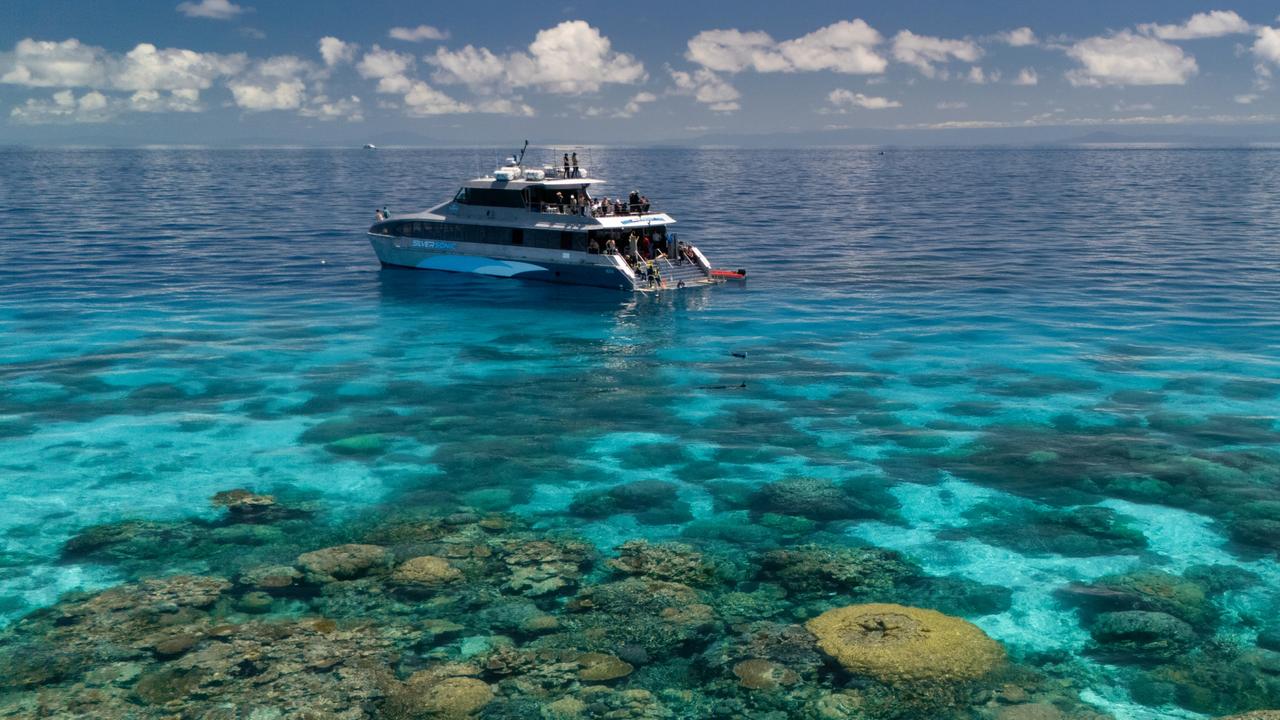
    Stretching more than 2,300 kilometers along Australia’s northeast coast, the Great Barrier Reef was inscribed on UNESCO’s World Heritage List in 1981. It contributes more than AUD $9 billion annually to the national economy and supports tens of thousands of jobs, cementing its status as both an ecological and economic cornerstone of the country. In recent decades, however, UNESCO has labeled the reef a site of “utmost concern” amid mounting threats from climate change, rising ocean temperatures, and declining water quality driven by upstream human activity.

    Of all the hazards facing the reef ecosystem, unregulated land clearing in the river catchments that drain into the Coral Sea is ranked among the most damaging. Environmental advocates warn that large-scale deforestation loosens dry sediment and allows toxic agricultural pesticides to wash downstream directly onto reef systems, where sediment smothers living coral and blocks the sunlight coral needs to survive. In response to growing pressure, the federal Albanese government passed landmark reforms to the Environment Protection and Biodiversity Act late last year, introducing mandatory federal environmental assessments for all new land clearing projects within 50 meters of waterways that flow into the reef catchment.

    While the letter acknowledges that the new reforms represent a promising first step toward addressing runoff and poor water quality, the groups warn that implementation could range from highly effective to completely inadequate to address the concerns UNESCO first flagged in 2025. The advocacy groups emphasize that securing strong, consistent enforcement of the updated national environment laws would offer a once-in-a-generation opportunity to reverse decades of damage to water quality caused by large-scale deforestation in upstream catchments.

    The letter outlines that it will take between 12 and 36 months to accurately assess whether the reforms are successfully protecting high-value native vegetation and cutting harmful runoff that impacts the reef’s World Heritage-listed values. Several key gaps remain in the regulatory framework that have delayed meaningful oversight, the groups note: Queensland’s state government retains primary regulatory authority over most land clearing in reef catchments, and it remains unclear whether the state will fully cooperate with the new national rules or strengthen its own existing regulations. Additionally, the national environmental standards that will guide land clearing assessment decisions have not yet been finalized, there is no comprehensive public data on ongoing clearing activity, and no formal compliance mechanisms to enforce reporting requirements—current rules rely entirely on voluntary self-referral by landholders. The new federal National Environmental Protection Agency, tasked with enforcing the reforms, will not launch until at least July 2026, leaving a years-long gap in formal regulatory oversight.

    New details of regulatory gaps emerged last week during Senate estimates hearings, where it was revealed that out of 248 calls and 11 emails from landholders seeking clarification on land clearing rules from the Department of Climate Change, Energy, the Environment and Water (DCCEEW), only six landholders received a formal pre-referral consultation meeting. Department officials confirmed they expect only two or three of these inquiries to progress to full formal assessment, and they have yet to confirm how many of the requests relate specifically to projects within the Great Barrier Reef catchment. During questioning, Declan O’Connor-Cox, head of Queensland’s Environment Assessments branch, clarified that exemptions for ongoing continuous clearing do not apply to projects within 50 meters of reef catchment waterways: even if a property cleared the same stretch of land two years ago, any new clearing requires fresh assessment under the new rules.

    Lyndon Schneiders, executive director of the Australian Climate and Biodiversity Foundation, emphasized that the reef is a defining Australian icon that requires urgent government action to protect. “The time is now for Environment Minister Murray Watt to lead and put in place strong protections to ensure the clearing stops and the reef is given a helping hand,” Schneiders said. “As a Queenslander, he knows the reef is special, and as a former agriculture minister, he also knows that sometimes a small number of cowboy beef farmers make the whole industry look bad. It is in everyone’s interest to stop the clearing and help the Reef.”

    The appeal comes less than two months before the UNESCO World Heritage Committee convenes its annual meeting on July 19, where the future of the Great Barrier Reef and Australia’s management of the site will be a core item on the meeting’s agenda.

  • Venice’s growing flamingo population finds refuge in recovering wetlands

    Venice’s growing flamingo population finds refuge in recovering wetlands

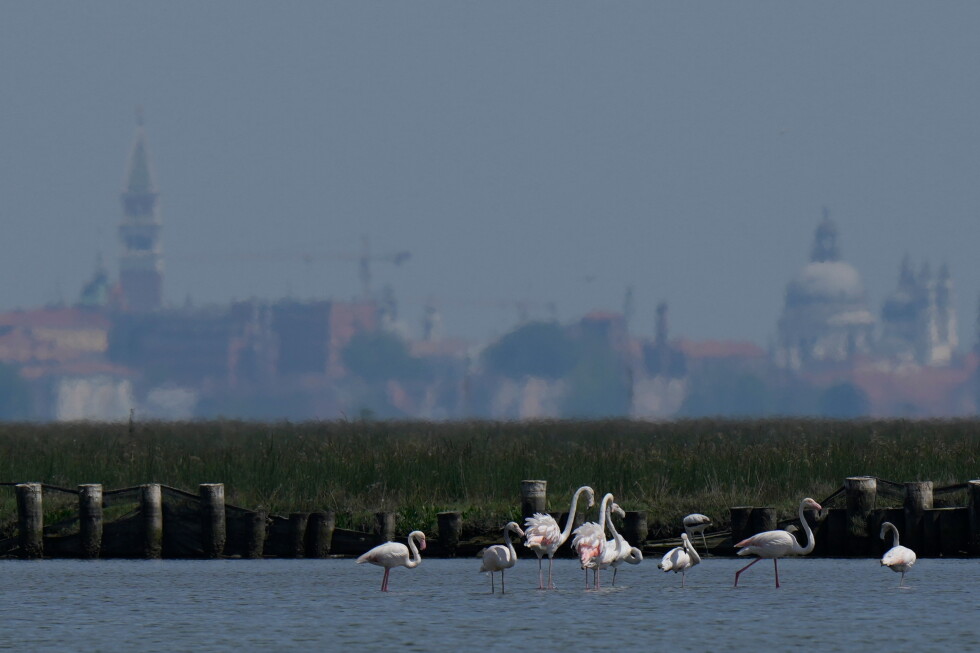
    VENICE, Italy — For generations, the iconic pale pink flamingo has been absent from local Venetian vocabulary, a quiet reflection of how recently these striking birds have made the Venetian Lagoon their home. Today, that narrative is shifting dramatically: flamingo numbers in this storied coastal ecosystem have hit all-time highs, as large-scale wetland restoration projects create new viable habitats that could soon support the first permanent, self-sustaining nesting colony in the region’s modern history.

    Flamingos, which have long established major nesting sites in Spain and France, first began appearing in the 550-square-kilometer Venetian Lagoon in the early 2000s. Initially, sightings were largely limited to remote fishing valleys and tidal mudflats along the lagoon’s outer edges, with almost no encounters in the canal-laced historic center that draws millions of global tourists each year. That pattern has shifted sharply in recent years, however. Last year’s official ornithological census counted nearly 24,000 wintering flamingos in the lagoon — an increase of 8,000 from the previous year’s total.

    “This count cements the Venetian Lagoon as one of the most critical wintering grounds for flamingos across their entire European range,” explained Alessandro Sartori, a leading ornithologist who monitors the lagoon’s bird populations weekly by boat. Over 90% of the counted flamingos currently congregate in the northern lagoon, where large expanses of intact natural salt marsh and semi-natural traditional fishing valleys provide abundant food sources. These managed embanked wetlands, however, have also created occasional conflict between the feeding birds and local fishing activity.

    Sartori has spent years searching for signs of successful nesting, a milestone that would confirm the establishment of a self-sustaining local colony. Two previous attempts in 2008 and 2013, in northern lagoon fishing valleys, ended in devastating setbacks: a severe hailstorm killed dozens of young birds, halting early colonization efforts. That could change soon, thanks to a landmark EU-backed wetland restoration project focused on rebuilding eroding salt marshes in the isolated southern lagoon, located beyond Venice’s historic center and the Marghera industrial port.

    Once, nearly half of the entire Venetian Lagoon consisted of natural salt marshes, known locally as *barene* in the Venetian dialect. Today, salt marshes make up just 7% of the lagoon’s total area, with only half of that remaining habitat naturally formed. Decades of erosion, accelerated by the dredging of shipping channels for the Marghera industrial port in the 1960s, has pushed the lagoon toward a worrying transition: without intervention, it could eventually degrade into an open marine bay, according to conservation leaders.

    The 23.6 million euro ($27.5 million) five-year WaterLANDS project, led in part by local conservation group We Are Here Venice, aims to reverse that trend by rebuilding salt marsh habitats at a scalable scale. Beyond creating new feeding and potential nesting grounds for flamingos, restored salt marshes deliver major climate benefits: they trap carbon dioxide, the primary greenhouse gas driving climate change, and buffer the lagoon against the impacts of rising sea levels. “This project is designed to prove that we can reverse centuries of erosion and change the trajectory of the lagoon,” said Jane da Mosto, executive director of We Are Here Venice.

    Conservation teams working on the southern lagoon project have already documented clear signs of increasing flamingo activity, from scattered pink feathers to regularly feeding flocks. Sartori has already observed a dramatic jump in flamingo numbers in the restored southern wetlands: over the past three years, counts have grown from just a handful of birds to between 300 and 400 during peak wintering periods. “Our hope is that just as flamingos have established nesting colonies in other parts of the Mediterranean, they will find suitable breeding ground right here on these restored barene,” Sartori said.

    Beyond conservation gains, the arrival of Venice’s pink newcomers offers a new opportunity to reframe the city’s ecological identity, adding a layer of natural significance to its already well-known historical and cultural heritage. While casual flamingo sightings remain rare for most tourists — the birds favor remote, shallow tidal reaches that require careful navigation through shifting channels, and they scatter quickly when disturbed by human activity — Sartori predicts that flamingo watching will become an increasingly popular sustainable activity as populations grow, with occasional sightings already possible from the shores of the popular lagoon islands of Murano and Burano. He emphasized that any wildlife viewing must prioritize the birds’ safety, with visitors maintaining a safe distance to avoid disrupting their feeding and resting routines.

    The Associated Press’ climate and environmental reporting is supported by funding from private philanthropic foundations, with AP maintaining full editorial control over all content.

  • Australia sues US giant 3M for $2bn over ‘forever chemicals’ in firefighting foam

    Australia sues US giant 3M for $2bn over ‘forever chemicals’ in firefighting foam

    On Thursday, the Australian federal government announced one of the most significant legal actions in its history, filing a AU$2 billion (US$1.4 billion) damages lawsuit against U.S. manufacturing conglomerate 3M over widespread toxic contamination linked to per- and poly-fluoroalkyl substances (PFAS), the persistent “forever chemicals” used in the company’s firefighting foam. The legal claim targets contamination that has impacted 28 separate Australian Department of Defence bases across the nation, marking the largest civil claim ever brought by the Australian government, according to Attorney-General Michelle Rowland.

    PFAS, a family of man-made chemical compounds prized for their water and grease-resistant properties, appear in a wide range of consumer and industrial products from non-stick cookware to waterproof clothing and electronics. But their defining trait — resistance to natural environmental breakdown — has turned them into a persistent public health and environmental threat: the chemicals accumulate in soil, groundwater, and food chains, and can remain in the human body for years, with peer-reviewed research linking long-term exposure to a range of serious health conditions including multiple forms of cancer. In 2022, 3M publicly announced it would phase out all production and use of PFAS globally in response to growing public and regulatory concern over these health risks.

    The Australian government’s lawsuit alleges that 3M engaged in deliberate misconduct spanning decades: the company knowingly withheld critical information about the toxicity and environmental persistence of PFAS found in its aqueous film-forming foam (AFFF), a product widely used by Australian defence forces for firefighting training and emergency response. According to the claim, 3M deliberately misrepresented the safety of the product, repeatedly reassuring Australian authorities that the foam posed no environmental risk even when internal company data confirmed the opposite. The contamination has already imposed massive costs on Australian taxpayers, with more than AU$1 billion spent to date on investigations, site remediation, and risk mitigation across the contaminated defence estate.

    “This misconduct has contributed to substantial costs for defence and the Australian taxpayer,” Rowland said in her official announcement of the suit. “Make no mistake, this legal action against 3M is significant. The government is committed to holding 3M and 3M Australia to account for the economic and environmental harms associated with PFAS contamination.”

    In its official response to the claim, 3M pushed back against the allegations, noting that the company never manufactured PFAS within Australia’s borders and halted all sales of PFAS-containing firefighting foam in the country 20 years ago. The company also pointed out that the Australian Department of Defence continued to use its existing stockpiles of the foam for two decades after 3M stopped sales. A company spokesperson confirmed that 3M intends to vigorously contest the government’s claims through the formal legal process.

  • Brazil to invest $75 million in highway through Amazon and unveils environmental protection plan

    Brazil to invest $75 million in highway through Amazon and unveils environmental protection plan

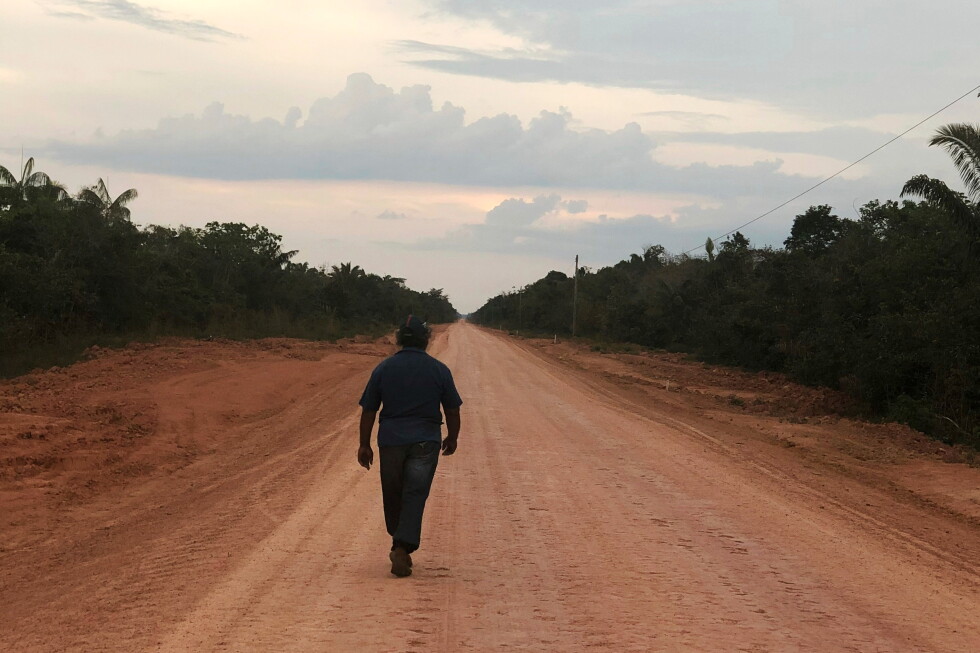
    On a Wednesday ceremony held in Iranduba, a small Amazonas city roughly 37 kilometers from the Amazon basin’s largest urban center Manaus, Brazil’s federal government unveiled a $75 million investment plan to pave the long-unfinished BR-319 highway, a major infrastructure project cutting through the heart of the world’s most biodiverse and climate-critical rainforest. The 1976-originated highway remains largely unpaved to this day, connecting the northern Amazonian states of Amazonas and Rondonia to the rest of Brazil and ending in Manaus, a city home to more than 2 million residents. Running parallel to the Madeira River, a key tributary of the Amazon that has been repeatedly crippled by severe droughts disrupting regional cargo transport, the project is framed by the administration of President Luiz Inácio Lula da Silva as a critical step for regional connectivity while promising rigorous environmental safeguards that would set a global benchmark.

    “From an environmental standpoint, it will be the most modern road in the world,” Lula told attendees at the event, which was also attended by Environment Minister João Paulo Capobianco and a cohort of local politicians widely expected to back Lula’s campaign for a fourth non-consecutive presidential term in October’s national election. “Any foreigner who comes here to weigh in on the climate issue, we will show what we’ve done here,” the president added. Alongside the highway funding announcement, the government revealed additional planned local investments led by state-run energy giant Petrobras and its pipeline subsidiary Transpetro.

    To address widespread environmental concerns over the project, the Lula administration unveiled a parallel environmental protection plan that it says will mitigate the highway’s potential impact on the rainforest. The plan includes continuous satellite and on-the-ground environmental monitoring across a 31-mile-wide buffer zone stretching along the entire length of the highway, new inspection checkpoints, permanent bases for environmental enforcement agencies, and the creation of new protected conservation units. Officials noted that the highway corridor cuts through one of the Amazon’s most ecologically sensitive regions, requiring a stronger permanent state presence to prevent unauthorized incursion. A private contractor will be hired in 2028 to support ongoing enforcement efforts, according to the government’s plan. A day before the formal announcement, Lula visited an active work section of the dirt highway, posing for photos with construction crews and machinery to signal the administration’s commitment to moving the project forward.

    Despite the government’s promises of robust protection, environmental organizations have fiercely opposed the project and challenged it in Brazil’s courts. Leading climate advocacy group Climate Observatory filed a lawsuit in 2024 to overturn the project’s 2022 preliminary paving license, arguing that regulators ignored formal technical warnings from Brazil’s national environmental agency and failed to complete required pre-construction steps, including meaningful consultation with Indigenous communities and independent climate impact assessments. A subsequent legal challenge briefly paused a related bidding process for construction contracts back in April, though a higher Brazilian court quickly overturned the suspension. Federal Minister George Santoro confirmed Wednesday that the entire highway will be contracted out and construction will be underway across the full route by the end of June.

    Ecologists and environmental policy experts have long linked the construction of paved roads in the Amazon to accelerated deforestation, a trend that threatens both the rainforest’s ability to regulate the global climate and the sovereignty of Indigenous communities that call the region home. The BR-319 corridor cuts through one of the Amazon biome’s last remaining well-preserved intact forest landscapes, which hosts dozens of established protected areas and Indigenous territorial reserves. Peer-reviewed scientific research has repeatedly confirmed that opening new official roads in the Amazon creates pathways for illegal logging, land grabbing, and the construction of unauthorized side roads that expand deforestation deep into intact forest. A 2014 study published in *Biological Conservation* found that 95% of all Amazon deforestation occurs within 3.4 miles of constructed roads, and for every one kilometer of official paved road built, an average of 1.9 kilometers of informal illegal side roads are carved into the forest.

    Critics point out that deforestation in the BR-319 region spiked almost immediately after the project was first announced under former President Jair Bolsonaro, long before any paving began. Marina Silva, a former environment minister in Lula’s current administration who stepped down in April to run for a seat in Congress, told a Senate hearing last year that clearing had already surged after the initial announcement. Marcio Astrini, executive director of the Climate Observatory, argues that the Lula administration is cutting corners on environmental due process by rolling out protection plans at the same time construction proceeds, rather than finalizing and implementing safeguards before paving work begins.

    “Just the simple announcement under (former President Jair) Bolsonaro’s government that the road would be rebuilt nearly doubled land grabbing and deforestation in the area. Laying asphalt there creates another incentive,” Astrini said. “If there are no protection measures in place, it just becomes yet another driver of deforestation.”

  • Western Australian government offering scheme offering residents $150 in cash to plant native trees

    Western Australian government offering scheme offering residents $150 in cash to plant native trees

    Thousands of adult residents across Western Australia are currently eligible to receive a one-off $150 cash rebate through a state government environmental initiative designed to boost local native tree populations. Launched one year ago under the name “Treebate,” the incentive program is administered by the WA Department of Water and Environmental Regulation, and has already drawn more than 2,000 participants with two months remaining until its first anniversary.

    The core premise of the program is simple: eligible residents 18 years and older can purchase a qualifying native tree from a local garden center or nursery, plant it on their residential property, and submit a rebate claim through the ServiceWA online platform to receive the full $150 purchase incentive. To qualify for the rebate, participants must meet three key requirements: select a native species that will grow to a minimum mature canopy height of 3 meters, provide clear photographic evidence of the tree labeled with its common or scientific name, and retain a tax invoice as official proof of purchase.

    The $6.9 million four-year program was developed in direct response to a pressing ecological crisis in Perth, where more than 4,500 native trees have been killed in recent years by invasive shot-hole borer insects. To complement the residential Treebate scheme, the state government has also launched a second complementary initiative, the WA Tree Recovery Program, which offers landowners the same $150 rebate for every native tree they replace after it was lost to the shot-hole borer infestation.

    WA Environment Minister Matthew Swinbourn emphasized the far-reaching value of expanding the state’s native tree cover, noting that every new tree planted across Perth and broader Western Australia delivers cascading social, economic, and environmental benefits that lift up the entire community. With more than $4 million in remaining funding allocated for the program, thousands more eligible residents are still able to claim the rebate before the program’s allocated funds are exhausted.

  • Whale to be removed from Danish island after failed German rescue

    Whale to be removed from Danish island after failed German rescue

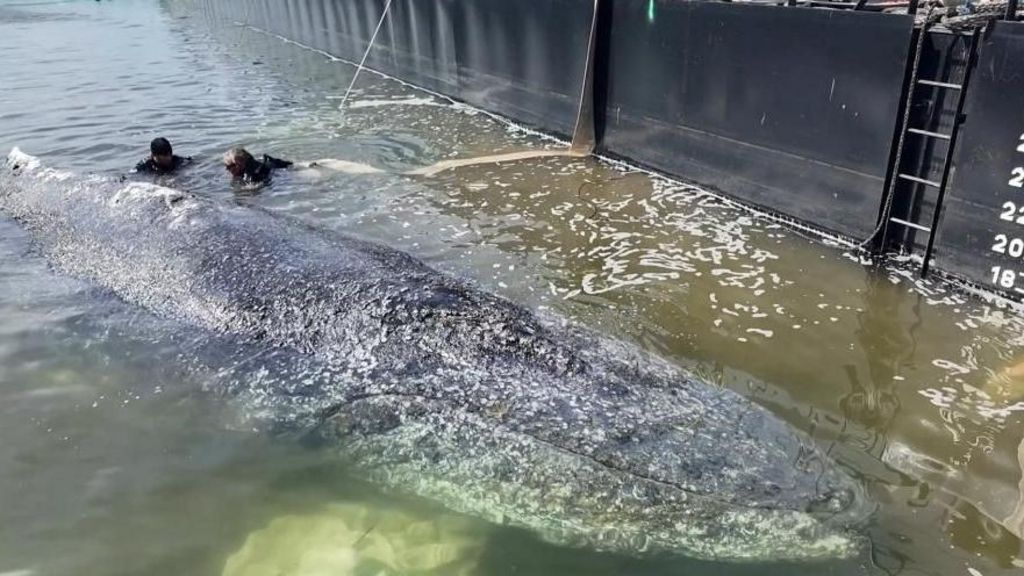
    A months-long high-profile rescue effort for a stranded humpback whale has come to a somber end, with the animal’s decomposing carcass now washing ashore on Denmark’s Anholt Island — leaving local officials scrambling to plan a safe removal while the small coastal community navigates unexpected public attention and public health risks.

    The story of the whale, which captured widespread public interest across Germany after it first became stranded on the Baltic Sea coast in early March, began when the mammal got tangled in fishing gear near Lübeck Bay. First spotted stuck at Timmendorfer Beach — the location that gave the whale its popular media nicknames, “Timmy” and “Hope” — the weak animal managed to swim further east along the German coast before becoming re-stranded off the island of Poel weeks later.

    Two private German entrepreneurs launched a private rescue bid to save the humpback, moving the animal onto a barge in late April to ferry it out to open water. The team released the whale into the North Sea roughly 70 kilometers from Denmark’s northern tip, far from the Kattegat Strait where it ultimately washed up. German wildlife experts had warned from the start that the whale was severely underweight and unlikely to survive, and authorities had already abandoned hope of the animal’s survival by early April.

    Last weekend, just two weeks after that attempted rescue release, the whale’s carcass was discovered beached just a few meters off Anholt’s coastline. Environmental officials confirmed the body was indeed the rescued humpback after locating a GPS tracking tag that had been attached to the animal during the rescue operation. To this day, it remains unclear how the dead whale drifted from its release location off northern Denmark to Anholt, off the East Jutland coast.

    As decomposition progresses, the carcass has swollen with trapped built-up gas, sparking public fears that the massive animal could explode. Danish environmental officials have announced plans to remove the carcass from the island, while also warning local residents to stay far away from the remains to avoid potential infection risks. No official timeline or detailed plan for the removal has been released as of Wednesday, with the agency only confirming it is working on a strategy that will allow for a full post-mortem examination and the collection of valuable tissue samples for scientific research.

    Local reactions to the beached carcass have been mixed. One anonymous Anholt resident, speaking to reporters, noted the body is currently 20 to 30 meters from the shore and continues to drift along the beach, adding that while some locals are unnerved by the risk of an explosion, she sees it as a natural process and holds no personal fears. Many islanders have also expressed bemusement at the ongoing international attention the dead whale has drawn, with curious German tourists already traveling to the small island to catch a glimpse of the animal and follow new developments in the saga.

  • Whale found dead near Danish island after German rescue operation

    Whale found dead near Danish island after German rescue operation

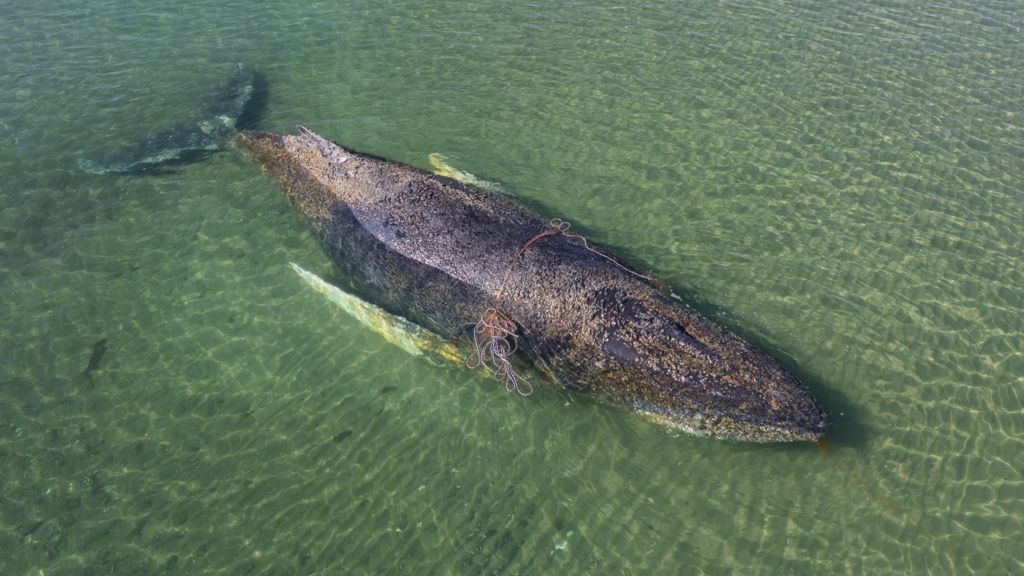
    In a conclusion that has reignited debate over large-scale marine wildlife rescue efforts, a humpback whale that captured German public attention after repeated stranding on the Baltic coast has been confirmed dead near the Danish island of Anholt, between Denmark and Sweden.

    The story of the 12-meter mammal, nicknamed alternately “Timmy” and “Hope” by rescuers and local media, began on March 23, when it first became stranded on a sandbank off Germany’s Poel Island, before re-stranding multiple times on Timmendorfer Beach in Lübeck Bay after an initial escape. After several unsuccessful rescue attempts by German state authorities, officials ultimately called off the official operation, leaving conservationists and the public divided over the whale’s fate.

    The impasse broke when two private German entrepreneurs, Karin Walter-Mommert and Walter Gunz, stepped forward to fully fund an independent rescue mission. The team fit the weak whale with a satellite tracking device, coaxed it into a custom water-filled barge named Fortuna B, and transported it out to the deeper, saltier waters of the North Sea, releasing it in early May. The operation was immediately hailed as a landmark moment by regional officials: Till Backhaus, environment minister for Germany’s northern state of Mecklenburg-Vorpommern, called the mission a success and an inspiring example of what collective action could achieve for animal welfare across the country.

    But the private rescue sparked fierce controversy even before the whale was released. Leading wildlife conservation organizations warned from the start that the vulnerable, underweight animal faced very low odds of long-term survival. The German Oceanographic Museum pointed out that the whale’s prolonged stay in the low-salinity Baltic waters had already left it severely weakened, putting it at constant risk of drowning even after relocation. The international NGO Whale and Dolphin Conservation added that the extended stranding had caused permanent skin damage from low salinity, arguing that the stressful translocation would only prolong the animal’s suffering rather than save it.

    Weeks after the successful release, a whale carcass was spotted off Anholt Island on Thursday. Confirming the identity took several days, as poor weather conditions initially prevented authorities from accessing the site. On Saturday, the Danish Environmental Protection Agency announced it had verified the carcass was indeed the rescued humpback, and successfully recovered its tracking device.

    Currently, Danish officials say there are no immediate plans to remove the carcass from the coastal area or conduct a necropsy to determine the exact cause of death, as the remains do not yet pose a hazard to local navigation or ecosystems. However, authorities have issued a public safety warning: local residents and visitors are urged not to approach the carcass, as decomposing whale remains can carry zoonotic diseases transmissible to humans. Officials also noted that there is a small risk of a natural rupture driven by buildup of decomposition gases inside the mammal’s body, a common hazard with large beached whale carcasses.

  • Invasive plant threatens livelihoods in Colombia’s largest coastal wetland

    Invasive plant threatens livelihoods in Colombia’s largest coastal wetland

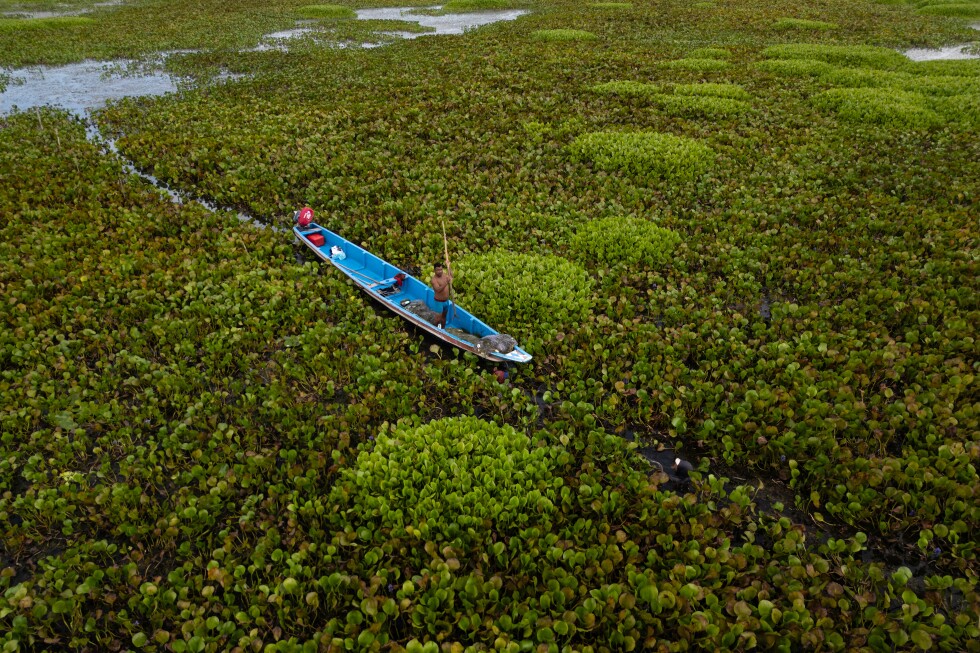
    On Colombia’s sun-dappled Caribbean coast, 30 kilometers from the bustling port city of Santa Marta, lies the Cienaga Grande de Santa Marta — a 428,000-hectare network of lagoons, mangroves and salt marshes, designated a UNESCO biosphere reserve in 2000 and long celebrated as one of the nation’s most productive critical fishing ecosystems, a natural nursery supporting hundreds of aquatic species. For generations, two remote stilt-built fishing communities, Nueva Venecia and Buenavista, have thrived here, their 5,650 total residents traveling between stilt houses, schools and fishing grounds via small wooden canoes, drawing every part of their livelihood and daily survival from the wetland’s waters. Today, this centuries-old way of life is on the brink of collapse, choked out by the explosive, unchecked spread of an invasive Asian aquatic plant that has transformed open waterways into thick, impenetrable green mats.

    Leaning over the gunwale of a small speedboat in late April 2026, Jhon Cantillo, a 32-year-old local environmental and community leader, lifts a clump of bright green Hydrilla verticillata, the invader that has overrun the lagoon. From the air, the plant forms a dense, carpet-like blanket stretching across the water as far as the eye can see. Below the surface, long trailing strands extend deep toward the lagoon bed, anchoring the vegetation so firmly that full removal is nearly impossible. Even small fragments broken off during clearing efforts can re-root and spread, turning attempted removal into a catalyst for faster growth.

    First spotted in the wetland in mid-2025, Hydrilla verticillata — nicknamed “horse tail” by locals — has exploded across the lagoon over the past 12 months, aided by man-made conditions that have created a perfect breeding ground. Experts point to two core drivers of the rapid spread: unchecked pollution and shifting water flows. The Cienaga Grande is fed by the Magdalena River, Colombia’s largest and most important waterway, which carries high volumes of untreated domestic and industrial wastewater loaded with nitrogen and phosphorus downstream to the coastal wetland. Water engineer Julián Arbelaez explains that this excess nutrient load triggers eutrophication, a process that supercharges fast-growing invasive aquatic plants, allowing them to spread at unnatural rates.

    Shifting water dynamics have also exacerbated the crisis. Local leaders and ecologists note that increased freshwater flows into the lagoon have displaced the saltwater that once naturally suppressed Hydrilla verticillata, which cannot tolerate high salinity. While researchers still lack definitive data on exactly how the plant arrived, ecologist Sandra Vilardy, a professor at Universidad de los Andes with 20 years of research in the region, says the most plausible origin is accidental introduction via maritime transport: plant fragments likely hitched a ride on large vessels moving through major river systems, then spread to the wetland via smaller local boats and dredging activity. A less likely hypothesis points to improper disposal of aquarium plants, a common source of aquatic invasions globally, though Vilardy notes this does not align with the region’s specific context. A second invasive species, floating water hyacinth (Eichhornia crassipes), has long been present in the lagoon, but its spread has been far slower and its impact less sudden than that of Hydrilla verticillata.

    For the already marginalized communities that call the wetland home, the impact has been catastrophic and all-encompassing. Local fishermen, who once pulled steady catches from open waters, now spend hours untangling their nets from thick plant strands, with overall catches plummeting as fish habitat becomes choked. “We can’t work because of this plant,” explained 61-year-old fisherman Santander Cueto, as he pulled brittle dried vegetation from his net laid out in the midday sun. “It doesn’t let us cast our nets — everything gets tangled.” Demóstenes Guerrero, a 58-year-old Buenavista fisherman and local association representative, added, “The lagoon’s completely covered. There’s nowhere left to fish.”

    Local residents have been forced to take matters into their own hands, heading out in wooden boats to hack narrow, temporary passages through the thick vegetation to keep canoes from tangling and allow children to reach school and residents to access basic goods. These labor-intensive efforts must be repeated every few days, as Hydrilla verticillata’s explosive growth quickly closes the cleared routes again. Beyond disrupted fishing, the plant has blocked the traditional routes residents use to reach clean freshwater channels connected to the Magdalena River, forcing families to collect water closer to their homes, where supplies are often contaminated with raw sewage. As a result, residents are now forced to purchase costly bottled water, driving steep increases in living costs for already low-income households.

    Local leaders warn that without urgent, large-scale intervention, the crisis could trigger mass displacement of the communities that have lived here for nearly 180 years. “We now face a risk that we didn’t have 20 or 25 years ago — the risk of mass displacement,” Cantillo said. Tensions are rising as locals grow increasingly frustrated with what they describe as a glacially slow and vastly insufficient response from national and regional authorities. Local residents have already held protests and blocked roads to draw attention to the crisis, but little progress has been made.

    Alfredo Martínez, director of CORPAMAG, the regional environmental authority, defended ongoing efforts, noting that Hydrilla verticillata is not yet formally classified as an invasive species under Colombian law, and national control guidelines are still being developed. He claims monitoring and small-scale removal projects with community participation have stopped further spread of the plant since March 2026, with lower seasonal water levels slowing growth. But community leaders reject this assessment, saying the crisis continues to worsen with no end in sight.

    César Rodríguez Ayala, a community leader in Nueva Venecia, emphasized that the invasion touches every corner of daily life: “If the fisherman can’t work, the shop doesn’t sell. We are living a very difficult situation, economically and environmentally. We are part of Colombia too. We live on the water, but we also deserve to be seen — and helped — in a moment like this.” Experts warn that full eradication is unlikely in the short term, due to the plant’s hardiness, the size of the affected area, and the high cost of large-scale mechanical removal, leaving the future of one of Colombia’s most important ecosystems and the communities that depend on it hanging in the balance.

    The Associated Press’ climate and environmental reporting receives funding from multiple private foundations, with AP retaining full editorial control over all content.

  • Middle East conflicts a danger for whales off S.Africa: study

    Middle East conflicts a danger for whales off S.Africa: study

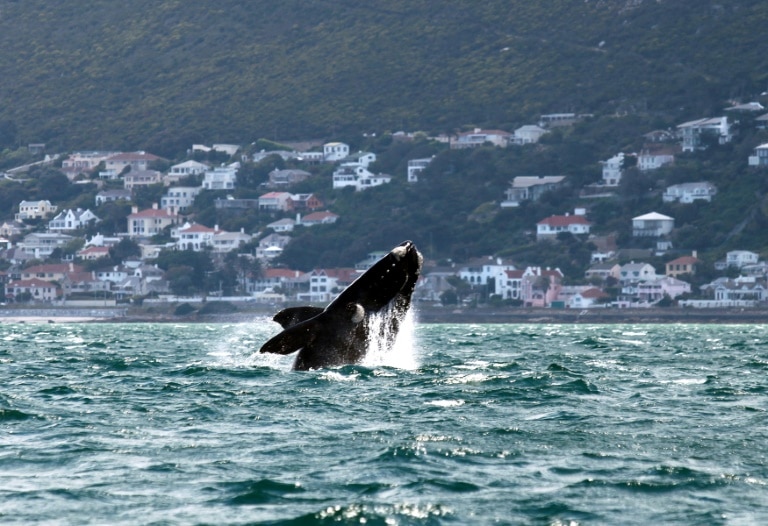
    Geopolitical tensions and ongoing conflicts across the Middle East have triggered an unexpected and growing threat to vulnerable whale populations off South Africa’s southern coast, according to new scientific research presented to the International Whaling Commission (IWC) this month. The crisis has forced global shipping companies to reroute massive volumes of vessel traffic away from the historically popular Red Sea and Suez Canal corridors, pushing more ships straight through critical whale habitats along the Cape of Good Hope and dramatically increasing the likelihood of deadly collisions between large vessels and marine mammals.

    The disruption to global shipping lanes began in November 2023, when Houthi rebels seized the British-owned cargo vessel Galaxy Leader off the coast of Yemen. Subsequent attacks on commercial shipping transiting the Red Sea, paired with escalating regional tensions between Israel, the United States and Iran that have threatened transit access through the Strait of Hormuz, have pushed an ever-growing share of global maritime trade to take the longer southern route around South Africa. Data from the International Monetary Fund’s PortWatch monitoring platform underscores the scale of this shift: between March 1 and April 24 of 2024, an average of 89 commercial vessels sailed around southern Africa daily, more than double the average of 44 recorded over the same period in 2023.

    South Africa’s southwestern coastline already supports some of the most ecologically significant whale populations on the planet, while also serving as a key transit route for international trade. This creates extensive spatial overlap between heavy maritime traffic and whale feeding, breeding, and migration grounds, a dynamic that drastically amplifies collision risk, explained lead researcher Els Vermeulen, who heads the University of Pretoria’s whale research unit.

    Vermeulen told reporters that growing awareness of this risk has been amplified by unsolicited social media content from crew members on passing cargo ships. Many posts showcase large groups of whales swimming alongside vessels, framing the sighting as a thrilling novelty, but for researchers, the content tells a far more alarming story. “My heart stopped when I saw those posts — you know that with that much traffic moving through dense whale habitats, they are striking a number of whales already,” Vermeulen said. She added that whales often do not recognize or react to approaching large vessels, as they are frequently preoccupied with feeding or other critical survival activities.

    Most concerning, researchers note, is that the volume of high-speed commercial traffic — the category of vessel that poses the greatest risk of lethal collision — has increased fourfold along the route in less than six months. This rapid, unplanned shift has left whale populations no time to adapt their behavior to the new threat, explained Chris Johnson, global lead for the World Wildlife Fund’s Whale and Dolphin Conservation initiative. Different whale species respond to ship noise in unexpected ways that do not help them avoid collisions: for example, blue whales off the coast of Los Angeles simply dive deeper below the surface when they hear approaching vessels, rather than leaving the area, putting them directly in the path of oncoming shipping traffic.

    Compounding the risk, long-term ecological shifts driven by climate change have already pushed more whales into these newly busy shipping corridors. Ken Findlay, a blue economy consultant and contributing author to the report, noted that large superpods of humpback whales have begun feeding seasonally off South Africa’s increasingly busy west coast since 2011, a behavioral shift that has already elevated baseline collision risk before the current shipping surge.

    Deadly ship strikes are already recognized as one of the leading causes of human-caused whale mortality worldwide, and collisions are drastically underreported globally, according to a 2024 study published in the journal *Science*. Despite this risk, few meaningful protection measures are currently in place for whale populations that have only been slowly recovering since the 1986 global ban on commercial whaling.

    The research presented to the IWC outlines accessible, low-impact solutions to mitigate the growing risk. Modest adjustments to shipping lanes that shift traffic further offshore, away from core whale habitats, could reduce collision exposure for vulnerable whale species by between 20 and 50 percent, the report finds. Critically, this adjustment would add only 20 nautical miles to journeys that often exceed 10,000 nautical miles in total length, making the impact on shipping timelines and costs negligible. MSC, the world’s largest shipping company headquartered in Switzerland, has already successfully implemented similar lane adjustments off the coasts of Greece and Sri Lanka to protect whale populations in those regions.

    Additional mitigation strategies are also under exploration, including real-time alert systems that notify vessel captains of the presence of whale superpods via dedicated mobile applications or radio broadcasts, and the deployment of AI-powered cameras on commercial vessels to improve early detection of whales in shipping lanes. Estelle van der Merwe, head of the South African environmental NGO Ocean Action Network, noted that all feasible measures need to be on the table to address the rapidly emerging threat.

    South Africa’s Department of Environment, Forestry and Fisheries confirmed in a statement to AFP that it is committed to evaluating all available mitigation options. “Once the scientific studies and assessments have been completed, the maritime authorities will be on the front line, alongside the DFFE, to chart the way forward,” the department said.

  • European fishing firms reflag ships to tap Indian Ocean tuna quotas, report finds

    European fishing firms reflag ships to tap Indian Ocean tuna quotas, report finds

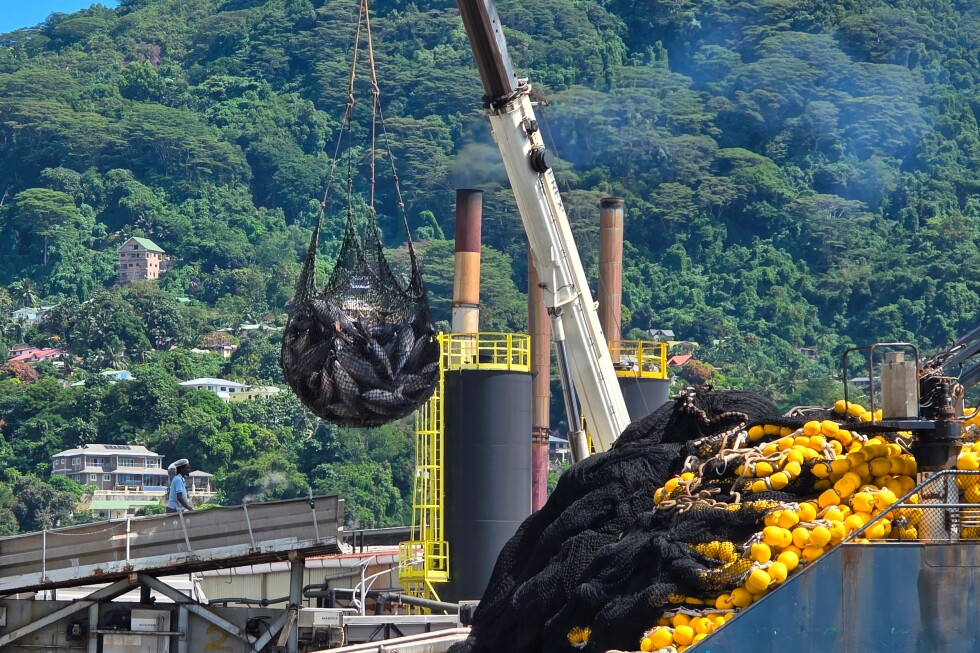
    For decades, the European fishing industry has held unmatched dominance in Indian Ocean tropical tuna harvesting, centered around a fleet of large purse seiners—massive vessels with the capacity to hold up to 1.8 million kilograms of tuna in a single trip. Dozens of these ships patrol the Indian Ocean’s waters, catching skipjack, yellowfin and bigeye tuna that eventually end up as canned products on grocery store shelves across the globe. But when Jess Rattle, head of investigations at the London-based environmental non-profit Blue Marine Foundation, spotted numerous purse seiners operating under the flags of Mauritius, Tanzania and Oman, she began questioning the true ownership of these vessels.

    “Our core goal was to unpack who actually holds ownership of these vessels,” Rattle explained. “Were they the property of the coastal states whose fishing quotas they were using, or did the true ownership trace back to European Union entities?”

    A groundbreaking joint investigation released Thursday by Blue Marine Foundation and global corporate investigations firm Kroll, shared exclusively with The Associated Press ahead of publication, now lays bare the full scale of European access to Indian Ocean tuna stocks. The probe finds that European companies currently take one-third of all tropical tuna caught in the region—a revelation that comes as yellowfin and bigeye tuna populations remain strained, still working to recover from historic overfishing.

    Rattle’s investigation confirms that European firms access these extra quotas by reflagging their vessels to five coastal Indian Ocean nations: the Seychelles, Mauritius, Kenya, Tanzania and Oman. This common, though not illegal, practice has allowed the European-controlled fleet to expand to more than 50 purse seiners and support vessels, and maintain high catch levels even as the EU made public commitments to reduce overall tuna harvesting to support stock recovery.

    The findings arrive on the eve of the annual gathering of the Indian Ocean Tuna Commission (IOTC) in the Maldives, a summit that brings together the EU and 20 member nations with commercial stakes in the region’s tuna industry. While reflagging is widespread across the global fishing sector, it creates significant barriers for regulators and independent observers seeking to accurately measure European firms’ impact on vulnerable tuna stocks. True parent company ownership is often hidden behind complex layers of shell companies and opaque foreign registry systems, which Rattle and Kroll’s team spent months untangling to map the full extent of hidden European control.

    While European firms have operated under the Seychelles’ flag for decades, Rattle notes that growing reflagging to Oman and Kenya is a new, unreported trend. In response to the investigation’s findings, Europeche Tuna Group, the trade body representing the European tuna industry, framed its cross-border partnerships as a net positive for regional economies. “Our industry’s relationships with coastal African and Indian Ocean nations are built on decades of long-term investment and deep local collaboration,” said group spokesperson Anne-France Mattlet. She added that European operators contribute to local economies through tax and fishing license payments, investment in local infrastructure, and offloading catches at regional ports and canneries. Mattlet also confirmed the investigation’s count of more than 50 European-linked purse seine and support vessels operating in the Indian Ocean, including those flying non-EU flags.

    A spokesperson for the European Commission, Maciej Berestecki, noted that reflagging is a private commercial decision made independent of EU public authorities, and that the bloc does not advocate for or represent the interests of vessels registered to non-EU countries. “The EU has worked, and continues to work, to the fullest extent to promote and enforce binding catch limits that support sustainable tuna management,” Berestecki said in a statement.

    European dominance in the Indian Ocean tuna trade is not new: Spanish and French tuna companies first introduced large purse seine technology to the region in the 1980s, allowing the fleet to rapidly scale annual catches and establish a dominant market position. But this outsized influence has repeatedly brought the EU into conflict with coastal nations seeking greater control over fishing activities in their adjacent waters. Five years ago, as yellowfin populations plummeted, the Maldives publicly accused the EU of refusing to table meaningful proposals to cut catch quotas during a heated IOTC meeting. In 2023, the bloc opposed an Indonesian proposal for targeted restrictions on purse seine fishing that passed with support from 15 other IOTC member states.

    In recent years, the IOTC has implemented new binding management rules designed to rebuild vulnerable yellowfin and bigeye tuna populations, which have started to show early signs of recovery. As part of these measures, the EU agreed to cut yellowfin tuna catches for EU-flagged vessels by 21%. Glen Holmes, a senior officer with the Pew Charitable Trusts, says these mandatory cuts are likely pushing European firms to turn to reflagging to tap into other nations’ quotas and maintain their historic catch volumes. Holmes, alongside partners from Pew, Global Fishing Watch and other conservation groups, is pushing for stricter ownership transparency requirements for all fishing fleets operating in the Indian Ocean.

    Foreign reflagging has long been a point of contention for transparency advocates, who argue the practice enables weak oversight of vessel activities. The phenomenon mirrors trends seen in the “shadow fleet” of sanctioned oil tankers, which frequently change names and flags to hide true ownership and evade international sanctions. Certain coastal states have become known as “flags of convenience,” offering low registration fees and lax enforcement of international fishing and trade rules, in many cases due to limited resources to patrol and regulate distant fleets.

    A January 2024 investigation by environmental group Oceana already documented widespread reflagging of European-owned fishing vessels to non-EU nations, including some the EU itself has accused of ignoring illegal fishing activity. Oceana is calling on EU member states to mandate collection and public publication of full beneficial ownership data for all European-controlled fishing vessels, regardless of the flag they fly. Vanya Vulperhorst, Oceana’s Europe director for illegal fishing campaigns, says this change would help the EU enforce its own existing laws, which bar European individuals and companies from profiting from illegal fishing activity. It would also reveal the true size of the European fishing footprint: “What our investigation found last year is that the actual size of the European fleet, when you add all the non-EU flagged vessels controlled by European firms, doubles the official count,” Vulperhorst said.

    This reporting was supported by funding from the Walton Family Foundation, with The Associated Press holding sole editorial responsibility for all content.