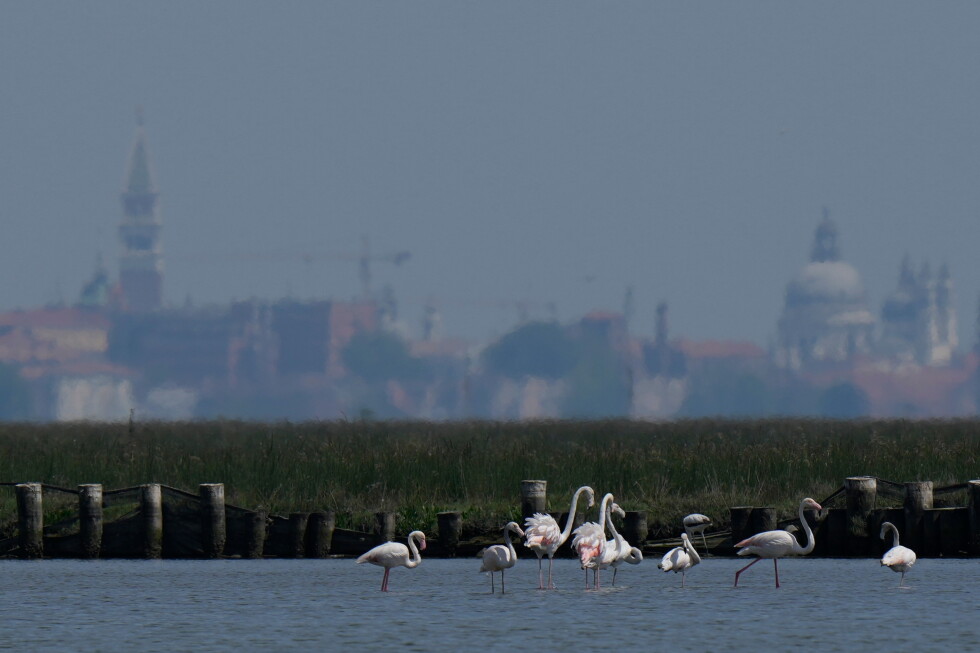
VENICE, Italy — For generations, the iconic pale pink flamingo has been absent from local Venetian vocabulary, a quiet reflection of how recently these striking birds have made the Venetian Lagoon their home. Today, that narrative is shifting dramatically: flamingo numbers in this storied coastal ecosystem have hit all-time highs, as large-scale wetland restoration projects create new viable habitats that could soon support the first permanent, self-sustaining nesting colony in the region’s modern history.
Flamingos, which have long established major nesting sites in Spain and France, first began appearing in the 550-square-kilometer Venetian Lagoon in the early 2000s. Initially, sightings were largely limited to remote fishing valleys and tidal mudflats along the lagoon’s outer edges, with almost no encounters in the canal-laced historic center that draws millions of global tourists each year. That pattern has shifted sharply in recent years, however. Last year’s official ornithological census counted nearly 24,000 wintering flamingos in the lagoon — an increase of 8,000 from the previous year’s total.
“This count cements the Venetian Lagoon as one of the most critical wintering grounds for flamingos across their entire European range,” explained Alessandro Sartori, a leading ornithologist who monitors the lagoon’s bird populations weekly by boat. Over 90% of the counted flamingos currently congregate in the northern lagoon, where large expanses of intact natural salt marsh and semi-natural traditional fishing valleys provide abundant food sources. These managed embanked wetlands, however, have also created occasional conflict between the feeding birds and local fishing activity.
Sartori has spent years searching for signs of successful nesting, a milestone that would confirm the establishment of a self-sustaining local colony. Two previous attempts in 2008 and 2013, in northern lagoon fishing valleys, ended in devastating setbacks: a severe hailstorm killed dozens of young birds, halting early colonization efforts. That could change soon, thanks to a landmark EU-backed wetland restoration project focused on rebuilding eroding salt marshes in the isolated southern lagoon, located beyond Venice’s historic center and the Marghera industrial port.
Once, nearly half of the entire Venetian Lagoon consisted of natural salt marshes, known locally as *barene* in the Venetian dialect. Today, salt marshes make up just 7% of the lagoon’s total area, with only half of that remaining habitat naturally formed. Decades of erosion, accelerated by the dredging of shipping channels for the Marghera industrial port in the 1960s, has pushed the lagoon toward a worrying transition: without intervention, it could eventually degrade into an open marine bay, according to conservation leaders.
The 23.6 million euro ($27.5 million) five-year WaterLANDS project, led in part by local conservation group We Are Here Venice, aims to reverse that trend by rebuilding salt marsh habitats at a scalable scale. Beyond creating new feeding and potential nesting grounds for flamingos, restored salt marshes deliver major climate benefits: they trap carbon dioxide, the primary greenhouse gas driving climate change, and buffer the lagoon against the impacts of rising sea levels. “This project is designed to prove that we can reverse centuries of erosion and change the trajectory of the lagoon,” said Jane da Mosto, executive director of We Are Here Venice.
Conservation teams working on the southern lagoon project have already documented clear signs of increasing flamingo activity, from scattered pink feathers to regularly feeding flocks. Sartori has already observed a dramatic jump in flamingo numbers in the restored southern wetlands: over the past three years, counts have grown from just a handful of birds to between 300 and 400 during peak wintering periods. “Our hope is that just as flamingos have established nesting colonies in other parts of the Mediterranean, they will find suitable breeding ground right here on these restored barene,” Sartori said.
Beyond conservation gains, the arrival of Venice’s pink newcomers offers a new opportunity to reframe the city’s ecological identity, adding a layer of natural significance to its already well-known historical and cultural heritage. While casual flamingo sightings remain rare for most tourists — the birds favor remote, shallow tidal reaches that require careful navigation through shifting channels, and they scatter quickly when disturbed by human activity — Sartori predicts that flamingo watching will become an increasingly popular sustainable activity as populations grow, with occasional sightings already possible from the shores of the popular lagoon islands of Murano and Burano. He emphasized that any wildlife viewing must prioritize the birds’ safety, with visitors maintaining a safe distance to avoid disrupting their feeding and resting routines.
The Associated Press’ climate and environmental reporting is supported by funding from private philanthropic foundations, with AP maintaining full editorial control over all content.