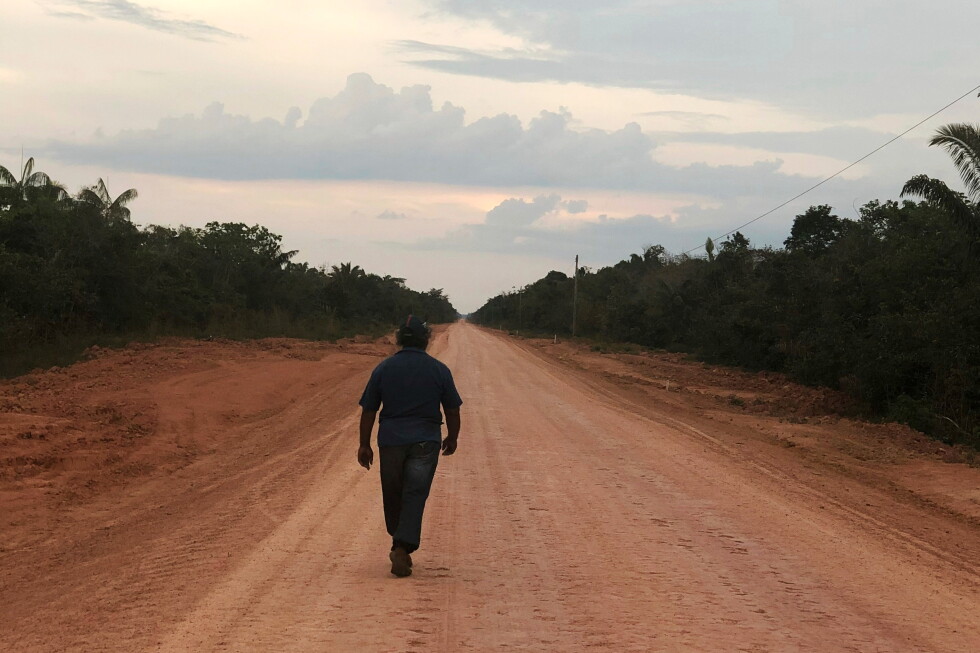
On a Wednesday ceremony held in Iranduba, a small Amazonas city roughly 37 kilometers from the Amazon basin’s largest urban center Manaus, Brazil’s federal government unveiled a $75 million investment plan to pave the long-unfinished BR-319 highway, a major infrastructure project cutting through the heart of the world’s most biodiverse and climate-critical rainforest. The 1976-originated highway remains largely unpaved to this day, connecting the northern Amazonian states of Amazonas and Rondonia to the rest of Brazil and ending in Manaus, a city home to more than 2 million residents. Running parallel to the Madeira River, a key tributary of the Amazon that has been repeatedly crippled by severe droughts disrupting regional cargo transport, the project is framed by the administration of President Luiz Inácio Lula da Silva as a critical step for regional connectivity while promising rigorous environmental safeguards that would set a global benchmark.
“From an environmental standpoint, it will be the most modern road in the world,” Lula told attendees at the event, which was also attended by Environment Minister João Paulo Capobianco and a cohort of local politicians widely expected to back Lula’s campaign for a fourth non-consecutive presidential term in October’s national election. “Any foreigner who comes here to weigh in on the climate issue, we will show what we’ve done here,” the president added. Alongside the highway funding announcement, the government revealed additional planned local investments led by state-run energy giant Petrobras and its pipeline subsidiary Transpetro.
To address widespread environmental concerns over the project, the Lula administration unveiled a parallel environmental protection plan that it says will mitigate the highway’s potential impact on the rainforest. The plan includes continuous satellite and on-the-ground environmental monitoring across a 31-mile-wide buffer zone stretching along the entire length of the highway, new inspection checkpoints, permanent bases for environmental enforcement agencies, and the creation of new protected conservation units. Officials noted that the highway corridor cuts through one of the Amazon’s most ecologically sensitive regions, requiring a stronger permanent state presence to prevent unauthorized incursion. A private contractor will be hired in 2028 to support ongoing enforcement efforts, according to the government’s plan. A day before the formal announcement, Lula visited an active work section of the dirt highway, posing for photos with construction crews and machinery to signal the administration’s commitment to moving the project forward.
Despite the government’s promises of robust protection, environmental organizations have fiercely opposed the project and challenged it in Brazil’s courts. Leading climate advocacy group Climate Observatory filed a lawsuit in 2024 to overturn the project’s 2022 preliminary paving license, arguing that regulators ignored formal technical warnings from Brazil’s national environmental agency and failed to complete required pre-construction steps, including meaningful consultation with Indigenous communities and independent climate impact assessments. A subsequent legal challenge briefly paused a related bidding process for construction contracts back in April, though a higher Brazilian court quickly overturned the suspension. Federal Minister George Santoro confirmed Wednesday that the entire highway will be contracted out and construction will be underway across the full route by the end of June.
Ecologists and environmental policy experts have long linked the construction of paved roads in the Amazon to accelerated deforestation, a trend that threatens both the rainforest’s ability to regulate the global climate and the sovereignty of Indigenous communities that call the region home. The BR-319 corridor cuts through one of the Amazon biome’s last remaining well-preserved intact forest landscapes, which hosts dozens of established protected areas and Indigenous territorial reserves. Peer-reviewed scientific research has repeatedly confirmed that opening new official roads in the Amazon creates pathways for illegal logging, land grabbing, and the construction of unauthorized side roads that expand deforestation deep into intact forest. A 2014 study published in *Biological Conservation* found that 95% of all Amazon deforestation occurs within 3.4 miles of constructed roads, and for every one kilometer of official paved road built, an average of 1.9 kilometers of informal illegal side roads are carved into the forest.
Critics point out that deforestation in the BR-319 region spiked almost immediately after the project was first announced under former President Jair Bolsonaro, long before any paving began. Marina Silva, a former environment minister in Lula’s current administration who stepped down in April to run for a seat in Congress, told a Senate hearing last year that clearing had already surged after the initial announcement. Marcio Astrini, executive director of the Climate Observatory, argues that the Lula administration is cutting corners on environmental due process by rolling out protection plans at the same time construction proceeds, rather than finalizing and implementing safeguards before paving work begins.
“Just the simple announcement under (former President Jair) Bolsonaro’s government that the road would be rebuilt nearly doubled land grabbing and deforestation in the area. Laying asphalt there creates another incentive,” Astrini said. “If there are no protection measures in place, it just becomes yet another driver of deforestation.”