分类: environment

  • Watch: Wildfires rage across France and Spain

    Watch: Wildfires rage across France and Spain

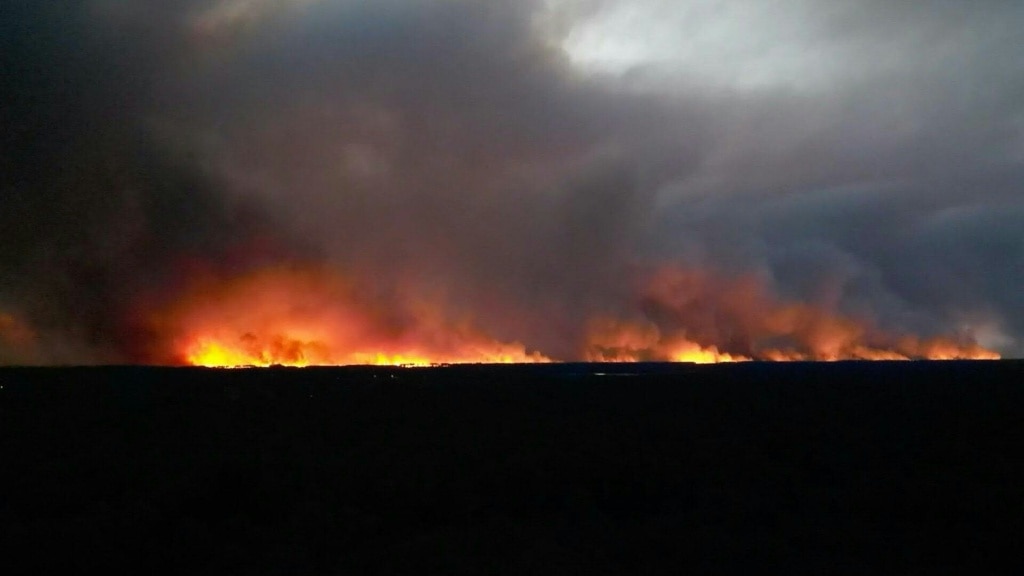
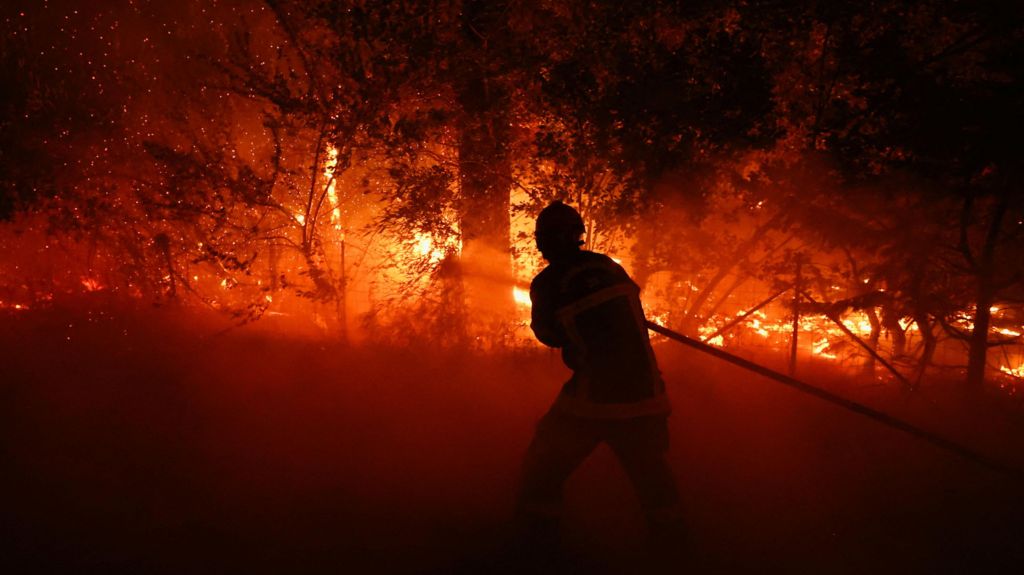
    Southern Europe is grappling with an escalating climate-driven disaster as intense, fast-spreading wildfires rage across large swathes of France and Spain, forcing mass evacuations of popular tourist destinations and pushing authorities to enact sweeping emergency measures. In France, the worst-hit regions have seen flames devour thousands of hectares of forest and brushland, pushing emergency responders to their limits. Local French officials have issued mandatory evacuation orders for communities in the country’s iconic Mediterranean coastal tourist hubs, areas that draw millions of visitors each summer. With dry, windy conditions amplifying the spread of the blazes, thousands of residents and vacationers have been forced to flee their accommodations and homes with little advance notice.

    Across the border in Spain, the scale of the wildfire crisis has prompted the national government to elevate the response to a full state of national emergency. The blazes, fanned by record-breaking heatwaves and prolonged drought that have parched vegetation across the Iberian Peninsula, have scorched vast areas of rural and protected natural land, destroyed critical infrastructure, and threatened populated regions. The declaration of national emergency unlocks additional federal resources, including additional firefighting personnel, military support, and emergency funding, to help local regions contain the outbreaks and support affected communities. Satellite imagery from recent days shows massive plumes of smoke drifting across the Mediterranean, a visible reminder of how widespread the disaster has become. Climate scientists have repeatedly warned that rising global temperatures are increasing the frequency and severity of extreme wildfire events across the Mediterranean basin, turning what was once a seasonal risk into a growing annual catastrophe for the region.

  • Fires in Europe: latest developments

    Fires in Europe: latest developments

    Across the European continent, rapidly spreading and destructive wildfires have triggered emergency responses, mass displacement of residents, and renewed warnings about the accelerating impacts of human-caused climate change. New satellite data collected by the European Forest Fire Information System (EFFIS) confirms that 2024 has already seen the second-largest total area of burned land across European Union member states since systematic record-keeping began.

    A new analysis published this week by the international climate research group World Weather Attribution draws a direct line between the increasing frequency and intensity of European blazes and rising global temperatures driven by the combustion of fossil fuels including oil, coal, and gas. The study confirms that regional drought conditions across the continent have grown far more severe in recent decades, creating tinder-dry landscapes that enable wildfires to ignite and spread much faster than historical norms.

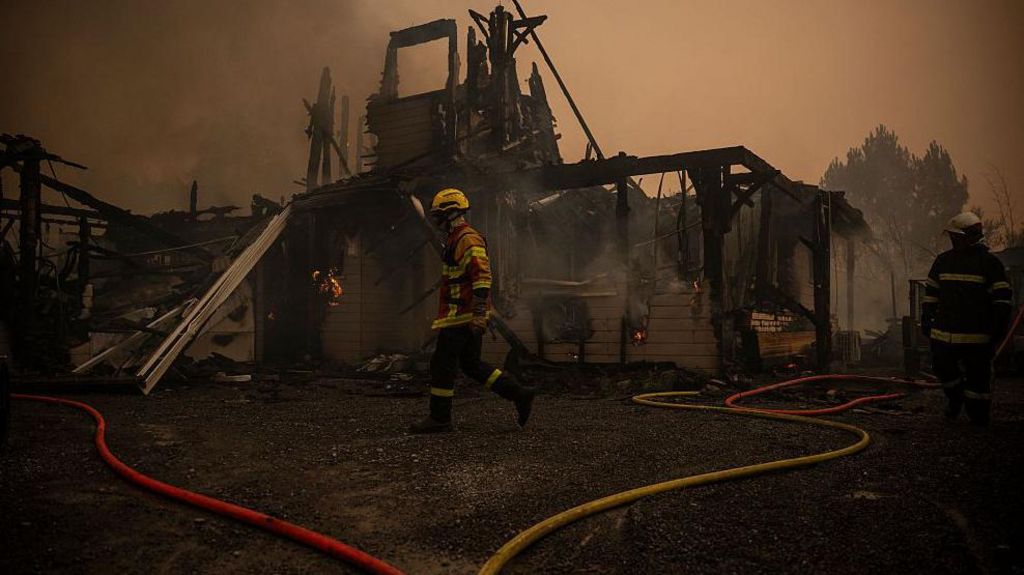
    France, one of the countries hardest hit by this year’s fire season, is facing what officials are calling the most destructive blaze of the current period. In southwestern France, a single massive wildfire in the Lege Cap-Ferret forest region has already burned through more than 10,000 hectares (approximately 25,000 acres) of land, forcing the evacuation of around 40,000 residents to safer areas. French Interior Minister Laurent Nunez confirmed in an interview with Agence France-Presse that the blaze has destroyed 80 residential structures, with roughly 50 of those homes reduced to complete ruin. As of the latest update, no casualties have been reported from the fire.

    Across the entire country, 32 separate wildfires of varying intensity are still actively burning as of Friday. Nunez noted that total burned area in France since the start of the year has surpassed 50,000 hectares, a figure that is nearly three times higher than the total recorded over the same period in 2023. As the main blaze advanced on the Cap Ferret peninsula on Friday, hundreds of residents and visitors were forced to evacuate the coastal area by boat, after the fire outpaced ground evacuation routes. By early Friday, the Cap Ferret blaze had already consumed an area nearly twice the size of Manhattan, according to on-site reports.

    Neighboring Spain is also grappling with out-of-control blazes that threaten populated areas. Two large uncontained wildfires are burning less than 100 kilometers (60 miles) from the Spanish capital of Madrid, and regional authorities warn that difficult weather conditions, particularly strong gusty winds, will hamper firefighting efforts through Friday. Spanish Prime Minister Pedro Sanchez has described the ongoing wildfire crisis as dramatic, noting that extreme fire conditions are impacting multiple provinces across Spain as well as regions in neighboring European countries. Sanchez confirmed that the national government has deployed every available resource to contain the blazes and protect affected communities.

  • Thousands flee wildfires in southern Europe

    Thousands flee wildfires in southern Europe

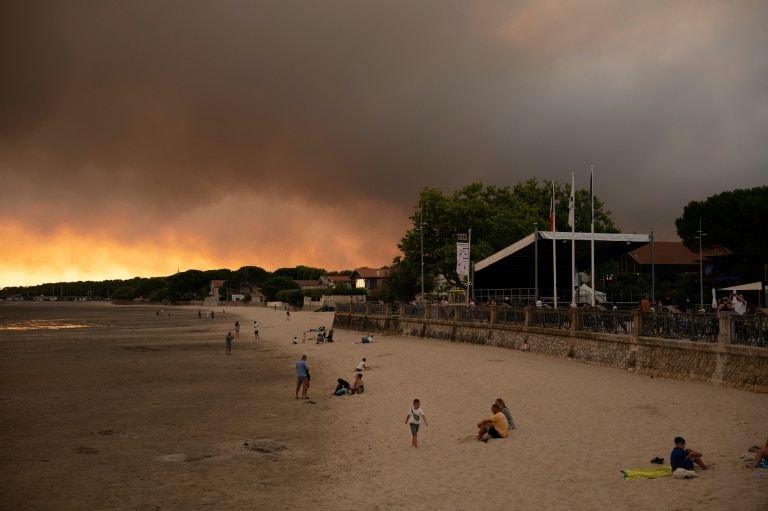
    A devastating wave of wildfires fanned by record-breaking high temperatures is sweeping across Western and Southern Europe, triggering mass evacuations, emergency declarations, and urgent requests for cross-continental assistance as blazes consume thousands of hectares of land and claim multiple lives. As of Friday, smoke from out-of-control blazes burning just 60 miles from the Spanish capital had drifted into Madrid, while thousands of tourists and local residents were evacuated by boat from a popular French Atlantic vacation peninsula, marking one of the most severe wildfire crises the region has faced in years.

  • At least 50 people killed and 700,000 displaced by India floods after monsoon rains

    At least 50 people killed and 700,000 displaced by India floods after monsoon rains

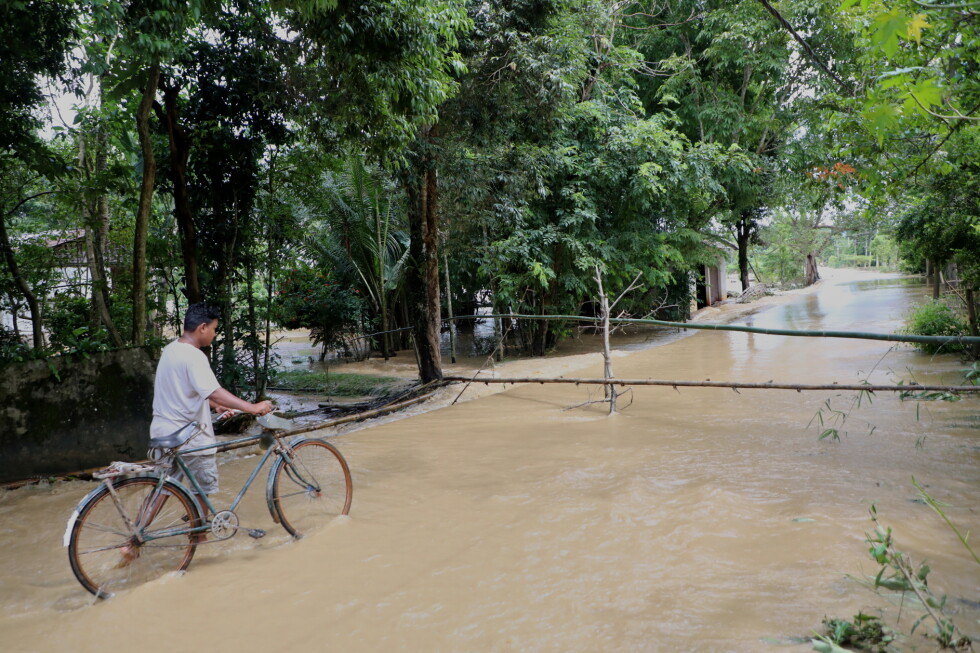
    Devastating floodwaters triggered by days of relentless heavy monsoon rainfall have swept through India’s northeastern Assam state, leaving at least 50 people dead and forcing more than 700,000 residents from their homes, government officials confirmed Friday. The downpour swelled the banks of the Brahmaputra River, one of Asia’s largest transboundary waterways, beyond capacity, turning vast swathes of the rural and urban landscape into submerged disaster zones.

    Originating in China’s Tibet Autonomous Region, the Brahmaputra cuts 900 kilometers through the length of Assam. This year’s extreme flood event has swallowed nearly 900 entire villages, destroyed thousands of structures, and left thousands of households without critical power access. Official data shows more than 7,000 homes are currently without electricity, while over 290,000 displaced people have sought emergency shelter in government-run relief camps across the state.

    Assam’s Chief Minister Himanta Biswa Sarma confirmed that disaster management authorities have rolled out large-scale relief operations, including airdrops of food, clean water, and essential supplies from military helicopters to cut-off communities. State police, national disaster response teams, and hundreds of local volunteers have been deployed to conduct rescue missions for residents stranded by rising floodwaters and distribute emergency provisions to affected populations.

    For residents like 52-year-old Nazira-based farmer Jatin Gogoi, the floods have brought total ruin. Rising waters washed away his traditional bamboo-walled home, killed all of his cattle, and destroyed his only source of income. With no property left to return to, Gogoi and his five-member family are now relying on the charity of relatives for temporary shelter. “I lost all my cattle. My five-member family and I have nowhere to go, so we are taking shelter in a relative’s home,” Gogoi shared in a phone interview.

    The disaster has also severely disrupted life in Assam’s capital city of Guwahati, a bustling urban center home to nearly 2 million people. Flash flooding on Thursday evening submerged major arterial roads, leaving commuters trapped in their vehicles or workplaces for hours. Sudip Mazumdar, a journalist based in Guwahati, recounted being forced to spend the night at his office after floodwaters reached waist depth on access roads, making travel impossible.

    Climate scientists have long warned that human-caused climate change is intensifying monsoon patterns across South Asia, where the seasonal rain system traditionally occurs in two predictable phases: June to September and October to December. In recent decades, the monsoon has grown far less predictable, with extreme short-duration rain bursts replacing gradual, steady rainfall, followed by extended dry periods that exacerbate both flood and drought risk across the region.

  • Spain declares an emergency after wildfires force evacuations of 10,000 people

    Spain declares an emergency after wildfires force evacuations of 10,000 people

    MADRID – In a dramatic escalation of response to rapidly spreading wildfires that have displaced thousands, Spain’s national government enacted a nationwide state of emergency this Friday. The declaration comes as multiple out-of-control blazes, supercharged by an unrelenting heat wave, swept through central areas surrounding the capital, prompting emergency evacuation orders for nearly 10,000 residents across dozens of small villages.

    Under the new emergency framework, Spain’s interior ministry – the federal body that oversees the country’s national police and security forces – will assume centralized command of all wildfire suppression operations currently being carried out by regional authorities. This move streamlines coordination between local and national response teams, a step officials say is critical to containing the fast-moving fires that have overwhelmed regional resources.

    The Madrid regional government, which governs a broad swath of territory surrounding the capital city, confirmed that evacuation orders had been issued for communities across high-risk fire zones, with the total number of displaced residents climbing to 10,000 as of Friday afternoon. Record-high temperatures and persistent dry conditions have created tinder-dry vegetation across much of the country, turning small ignitions into large, unmanageable conflagrations that spread rapidly with shifting wind patterns.

    Spain has already suffered catastrophic fire damage in 2024, with more than 100,000 hectares (nearly 247,000 acres) of forest and scrubland consumed by flames since the start of the year. Among the most damaging blazes is the second-largest wildfire recorded in modern Spanish history, which has burned roughly 32,000 hectares (79,000 acres) in the central province of Guadalajara over the past several days. The disaster has already claimed human life: earlier this month, 13 people died in a large wildfire that tore through southern Spain, underscoring the deadly threat posed by this year’s extreme fire season.

  • France orders evacuation of peninsula as hundreds flee wildfires by boat

    France orders evacuation of peninsula as hundreds flee wildfires by boat

    A growing cross-border wildfire crisis has swept across southwestern Europe this week, forcing mass evacuations of a popular French tourist destination and prompting Spain to declare a national state of emergency as flames burn out of control near major population centers.

    In southwestern France, local authorities have issued a mandatory full evacuation order for the entire Cap Ferret peninsula, a beloved tourism hot spot in the Gironde region, where hundreds of residents and visitors have already fled the advancing wildfire by sea and road. The blaze, which ignited on Tuesday in the nearby town of Saumos, expanded rapidly overnight, scorching a total of 8,700 hectares (approximately 21,500 acres) of land as of Friday.

    The evacuation order, labeled the “final phase” of the area’s relocation plan, was issued early Friday by Gironde’s regional prefect Sophie Brocas. evacuees were instructed to exit the peninsula via the main highway connecting the area to Bordeaux, while special watercraft were deployed between 7 a.m. and 10 a.m. local time from four public piers to evacuate residents and visitors who could not leave by road.

    French President Emmanuel Macron described the country’s ongoing wildfire situation as “very tense” during an address Thursday night, singling out the Gironde region as the area of greatest concern. In response to the rapidly spreading blaze, Macron confirmed he has requested cross-border assistance from the European Union, with aerial fire-fighting support from Croatia, Portugal, the Czech Republic and Slovakia expected to arrive in the coming days to help ground crews contain the flames. Tragically, two firefighters lost their lives earlier this week while battling a separate blaze near Bordeaux’s airport, though officials confirmed Friday morning that no new casualties had been reported as of press time.

    Across the border in neighboring Spain, the crisis has prompted even stronger government action: Interior Minister Fernando Grande-Marlaska has officially declared a national emergency as out-of-control wildfires burn across multiple areas within close proximity to the capital city of Madrid. Active blazes are currently being fought at Villa del Prado and San Martín de Valdeiglesias in the Madrid autonomous region, as well as at Burgohondo in the neighboring province of Ávila.

    The concurrent wildfire outbreaks come as southwestern Europe faces ongoing record-high summer temperatures and dry conditions that have created extreme wildfire risk across the Iberian Peninsula and southern France, turning the 2026 summer fire season into one of the most challenging in recent years for regional emergency services.

  • Hundreds flee French peninsula by boat to escape wildfire

    Hundreds flee French peninsula by boat to escape wildfire

    A rapidly spreading wildfire forced the complete evacuation of France’s Cap Ferret peninsula on Friday, with more than 400 residents and vacationers escaping the blaze via a fleet of civilian and official boats. The evacuation order came as the inferno, burning just kilometers from one of France’s most famous Bordeaux wine regions, expanded to cover more than 8,000 hectares — an area roughly one and a half times the size of Manhattan. The Cap Ferret wildfire is not an isolated disaster: it is one of multiple active blazes burning across the country amid the peak summer vacation season, which has drawn thousands of tourists to the southwestern Atlantic coast. In response to the spreading flames, authorities have already ordered thousands more visitors to evacuate coastal campsites and seasonal holiday homes, as hundreds of firefighters backed by water-bombing aircraft work around the clock to contain the fire lines. As the crisis escalates beyond the capacity of national response resources, French President Emmanuel Macron announced that Paris has activated the European Union’s civil protection mechanism to request additional firefighting support from neighboring member states. Macron warned that the wildfire situation across the country remains “very intense”, with little sign of relief in the coming days. Data from the European Forest Fire Information System (EFFIS) confirms that 2024 is already shaping up to be one of the worst years for wildfire activity on the continent: the total area of burned vegetation across EU countries is already the second largest recorded since systematic satellite tracking began. The unfolding disaster comes as southern Europe continues to face record-breaking summer heat waves and drought conditions, which have created tinder-dry conditions across forests and shrublands, increasing the risk of uncontrolled wildfire spread.

  • A model Indigenous territory in Brazil’s Amazon seeks protection from criminal gangs

    A model Indigenous territory in Brazil’s Amazon seeks protection from criminal gangs

    For 30 years, the Ashaninka Indigenous people have stood as a global model of Indigenous self-governance and rainforest stewardship along the remote Brazil-Peru border. After reclaiming their ancestral territory from illegal settlers three decades ago, the community built a thriving, self-sustaining way of life: they manage their own governance systems, grow traditional crops, and have successfully protected the old-growth forest that forms the core of their homeland. For Indigenous communities across the Amazon basin, the Ashaninka’s success has long been a beacon of what sovereign Indigenous land stewardship can achieve. Today, that hard-won way of life is under growing violent attack.

    Criminal drug trafficking gangs are increasingly encroaching on Ashaninka territory, turning the remote Amazon rainforest and its winding river networks into major transit corridors for cocaine moving from Andean producer countries to global markets. Ashaninka leaders confirm that violent incursions have continued as recently as this month, and have formally pleaded for federal protection, including a high-level meeting with Brazilian government officials in the national capital this past Thursday. While security forces have been briefly deployed to the region in response to these appeals, Indigenous advocates across the Amazon note that government security presence in these remote border areas is almost always temporary, even as the criminal threat remains constant and growing.

    The invasion of Ashaninka land is not an isolated incident. It is part of a broad, dangerous shift along the Amazon’s border regions, as criminal organizations expand their operations along what experts have named the Solimões River trafficking route. This network of interconnected navigable waterways stretches from the Peru-Brazil border all the way to the major Amazonian hub of Manaus, and has emerged over the past decade as the primary transit corridor for cocaine produced in Peru, Colombia, and Bolivia en route to Brazilian Atlantic ports, from where it is distributed to consumer markets across Brazil and Europe. Today, the route is largely controlled by one of Brazil’s most powerful criminal organizations, the Red Command gang, according to retired Amazonas state police colonel César Mello, who now teaches at the Federal University of Pará and the University of the State of Amazonas.

    Indigenous territories have become strategically critical to this illegal trade for multiple reasons. Remote, densely forested, and largely cut off from consistent government oversight, these lands offer ideal hiding spots for traffickers to store product and move shipments undetected. Beyond the geographic advantages, Mello explained, language barriers, cultural differences, and widespread lack of economic opportunity in Indigenous communities leave many residents vulnerable to criminal exploitation. “These factors make Indigenous peoples a vulnerable population and an attractive source of labor for criminal organizations,” Mello said. Gangs typically first attempt to recruit young Indigenous people with offers of cash and social status that are unavailable in the formal local economy, and turn to intimidation and violence when recruitment fails, he added.

    At the same time, decades of research have confirmed that Indigenous territorial stewardship is one of the most effective tools to curb deforestation in the Amazon, the world’s largest tropical rainforest and a critical bulwark against worsening global climate change. The same forests the Ashaninka have spent 30 years protecting, in other words, have made them a target for the criminal groups that now exploit that remote, dense cover for their operations.

    Local tensions boiled over earlier this month, when a group of armed men invaded the Kampa Indigenous territory, part of the larger Ashaninka ancestral homeland along the Amonia River in the western Amazon. On July 6, five armed Spanish-speaking men carrying machine guns threatened entire families and carried out a targeted search for the territory’s top Indigenous leaders. “It’s one thing for outsiders to enter our territory to steal resources, like timber and wildlife. But this was different. They entered our land looking for our leaders, intending to kill them,” said Francisco Piyãko, coordinator of the Organization of Indigenous Peoples of the Juruá River, who filed formal complaints with Acre state authorities and the Brazilian Army following the incursion. The complaint prompted the deployment of federal security forces, but the damage and fear have lingered.

    The Ashaninka have a long history of pushing back against illegal activity in their territory. Decades ago, traffickers approached the community seeking permission to build a clandestine airstrip for drug shipments; the Ashaninka refused outright, and have remained a consistent block to criminal expansion in the border region for generations. “We have a long history of opposing any kind of illegal activity,” Piyãko said.

    Despite repeated formal appeals to authorities, Ashaninka leaders and other Indigenous advocates say consistent, targeted government protection remains out of reach. Major Jonatas Soares, a police officer based in the key border city of Tabatinga in Amazonas state, near the borders of Colombia and Peru, says there is a fundamental failure in how Brazilian public security serves Indigenous communities. “There is an institutional and intercultural blind spot in the public security services provided to Indigenous peoples,” Soares explained. “The state formally recognizes their territories, yet it fails to translate that presence into continuous protection tailored to their specific needs.”

    Earlier this year, Brazilian Supreme Court Justice Flávio Dino ordered the federal government to ramp up efforts to dismantle criminal organizations operating in the Amazon, citing official investigations that confirm criminal groups are expanding their presence and posing an existential threat to Indigenous communities across the region. Multiple Brazilian government agencies, including the Ministries of Indigenous Peoples, Foreign Affairs, and Justice, as well as the Brazilian Army and the Acre state government, did not respond to requests for comment from the Associated Press on the recent threats to the Ashaninka.

    While the community remains shaken by the recent targeted attack, leaders say their commitment to defending their territory and their way of life remains unbroken. Still, Piyãko stressed that confronting heavily armed criminal groups is not the responsibility of the Ashaninka or other Indigenous communities—it is the legal duty of the Brazilian and Peruvian states. “They allowed this to happen through their absence, so they bear that responsibility,” Piyãko said.
  • Albania police teargas protesters against Trump-linked resort

    Albania police teargas protesters against Trump-linked resort

    On a tense Thursday in Albania’s capital Tirana, security forces deployed tear gas and water cannons to disperse hundreds of demonstrators gathered outside the country’s parliament building, capping more than a month of sustained public anger over a luxury coastal tourism development linked to the Trump family. What began as a targeted environmental campaign against construction in a protected coastal wildlife reserve has grown into a broader protest over government transparency, public corruption, and misallocated public funds, uniting environmental activists, opposition politicians, and ordinary citizens against the ruling administration.

    The wave of daily demonstrations first launched in late May, sparked by plans to build a sprawling luxury resort complex connected to Ivanka Trump and Jared Kushner, the daughter and son-in-law of former U.S. President Donald Trump. The proposed development is located on a protected, unspoiled stretch of Albania’s Adriatic coast, in a protected nature reserve that hosts endangered loggerhead turtle nesting grounds and stable flamingo colonies on an adjacent uninhabited island. Scientists and local environmental activists say preliminary site work has already caused irreversible ecological harm, destroying critical habitats already at risk.

    Marine biologist Olsi Nika, who leads the prominent Albanian environmental NGO EcoAlbania, described the damage from early construction activities as “an absolute biodiversity massacre.” The site’s once-pristine coastal ecosystems, scientists confirm, have been permanently altered, eliminating nesting areas for loggerhead turtles, a species classified as threatened with extinction globally. The project’s location inside a protected natural and cultural heritage zone has amplified public outrage, with critics arguing the government bypassed environmental regulations and public oversight to advance a deal that benefits connected interests.

    Thursday’s clashes broke out as protesters attempted to push through heavy police security cordons to reach the parliament entrance. By the end of the day, Albania’s health ministry confirmed six police officers and 11 demonstrators suffered minor injuries and were treated at local Tirana hospitals. The demonstration was timed to coincide with a parliamentary vote on a 4 million euro ($4.6 million) public subsidy for a Kanye West concert held in Tirana earlier in July, a decision that further enraged a public already frustrated by the government’s handling of the resort project.

    In the chaotic parliamentary session, the subsidy was ultimately approved by 80 votes, all from the ruling Socialist Party, which holds a majority in the 140-seat unicameral legislature. Prime Minister Edi Rama had previously committed to the public funding, arguing it was required to prevent the high-profile concert from being canceled. For protesters, the approval of large public spending for a celebrity concert while pushing forward an environmentally destructive private resort project underscored what they call the government’s lopsided, non-transparent priorities.

    The project has become a major flashpoint for discontent in Albania, drawing thousands of nightly protesters through at least mid-July, according to on-the-ground reporting from Agence France-Presse. Clashes between demonstrators and police have occurred repeatedly in recent weeks outside parliament, with protesters previously throwing eggs at lawmakers as they entered the building. The development’s ties to the Trump family have also drawn international attention to the conflict, turning a local environmental dispute into a globally watched case of conservation versus high-profile development.

    No official crowd counts have been released by the Albanian government, but AFP journalists on site estimate thousands of people have joined the sustained daily protests through more than a month of action. Critics say the project highlights broader concerns about corruption and lack of accountability in Albania’s government, with environmental harm serving as the most visible trigger for widespread public anger that continues to roil the country’s political landscape.

  • Wildfire spreads near popular French tourist town as thousands are evacuated

    Wildfire spreads near popular French tourist town as thousands are evacuated

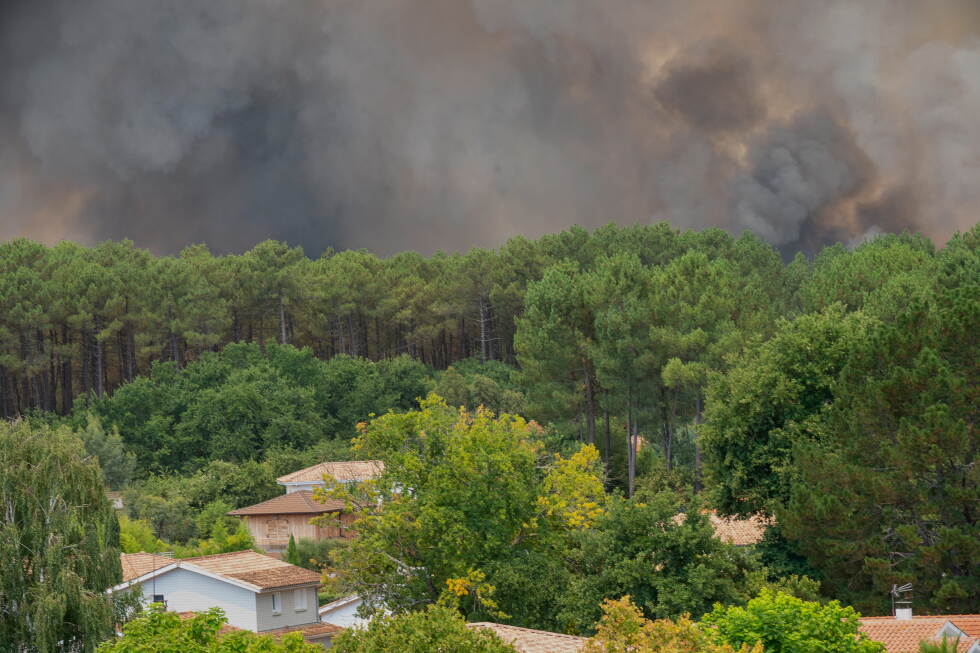
    A fast-spreading wildfire burning through Gironde region forestland along France’s Atlantic coast has forced roughly 20,000 residents and vacationers to flee their homes and resorts, in what marks the latest major wildfire event to hit Southern Europe amid a season of record heat and prolonged drought.

    The blaze, which ignited near the coastal town of Lège-Cap Ferret, roughly 60 kilometers southwest of Bordeaux, has already scorched more than 31 square kilometers of vegetation, regional authorities confirmed Thursday. As of the latest update, no injuries have been documented, but the fire has advanced to within 300 meters of residential neighborhoods in the town of Lège, prompting urgent emergency action.

    More than 700 firefighters, including reinforcement teams deployed from the Paris region, have been assigned to contain the blaze, with water bombers called in to drop massive amounts of water on the fire line from the air. By Thursday evening, regional prefect Sophie Brocas’ office reported that while the fire has not yet been fully extinguished, it has been successfully contained to the northern area of Lège, limiting further spread for the time being.

    Evacuation efforts unfolded in two phases overnight and through Thursday: first, roughly 11,000 people, including tourists staying at coastal holiday camps and campgrounds, plus more than 1,000 permanent residents living along the forest edge, were moved to safe zones. As a precautionary measure, authorities later ordered a full evacuation of the nearby village of Claouey, which hosts multiple additional campsites, adding another 8,800 people to the total evacuation count. Local municipalities have set up dedicated reception centers to provide shelter, food, and basic support for displaced evacuees.

    This Gironde blaze is just one part of a far wider wildfire crisis that has engulfed Southern Europe this summer, a disaster climate scientists link directly to human-caused climate change, which is amplifying the frequency and severity of extreme heat and prolonged dry conditions across the Mediterranean region. France has already faced a cascade of heat waves starting earlier than usual this year, bringing record-breaking high temperatures and leaving vegetation so parched that wildfire risk has jumped dramatically. French Interior Minister Laurent Nunez reported that as of this week, more than 12,500 wildfires have burned across France since the start of 2024, consuming nearly 44,000 hectares of land.

    The crisis extends far beyond France’s borders. In Italy, wildfires continued to spread across Sicily on Thursday, just one day after a veteran fire department chief, Alessandro Marchì, died while battling a blaze in the province of Caltanissetta. Italian President Sergio Mattarella released a formal statement of condolences to Marchì’s family and fellow first responders following his death.

    In Spain, firefighters are working around the clock to contain dozens of active blazes amid an ongoing severe heat wave that is projected to push temperatures as high as 44 degrees Celsius (111 degrees Fahrenheit) in the country’s southeast. A blaze near Alcalá de Henares, just outside of Madrid, forced a temporary suspension of high-speed rail service between the capital and Barcelona on Thursday, disrupting travel for thousands of passengers. In the province of Guadalajara, crews continue to battle a week-old blaze that is already the second-largest wildfire recorded in modern Spanish history, having burned 320 square kilometers of land. Other active fires in central Spain, including one near the city of Toledo, have destroyed roughly 20 residential structures and forced additional evacuations of local communities.