分类: environment

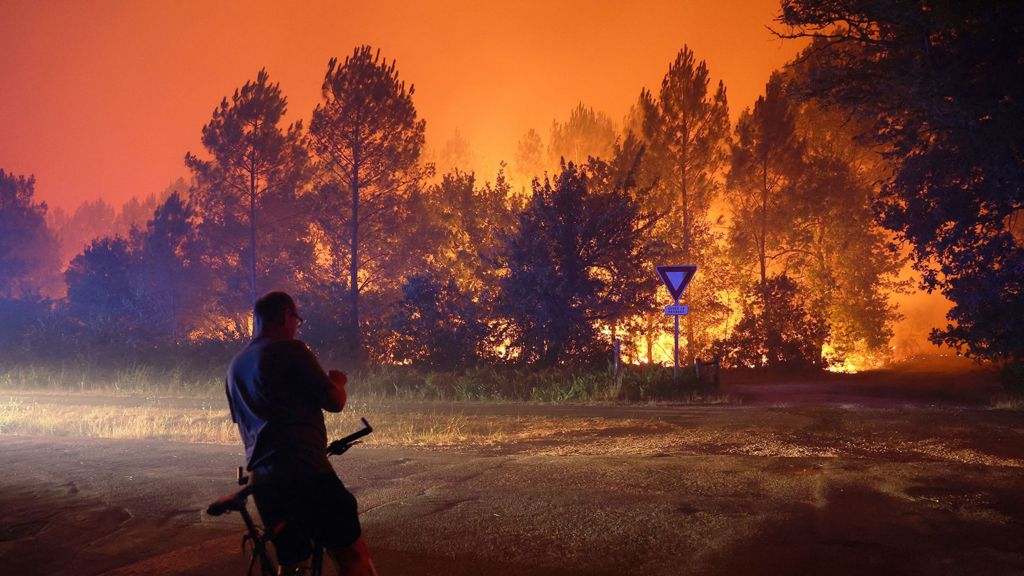
  • Around 12,000 people evacuated in France fires

    Around 12,000 people evacuated in France fires

    A wave of destructive, heat-fueled wildfires is tearing across multiple regions of Southern Europe this summer, leaving three firefighters dead, forcing mass evacuations of thousands of residents and tourists, and destroying vast swathes of forest and land. The crisis unfolded just weeks after a landmark climate report confirmed Europe is the world’s fastest-warming continent, amplifying concerns over the growing frequency and intensity of extreme weather events driven by climate change.

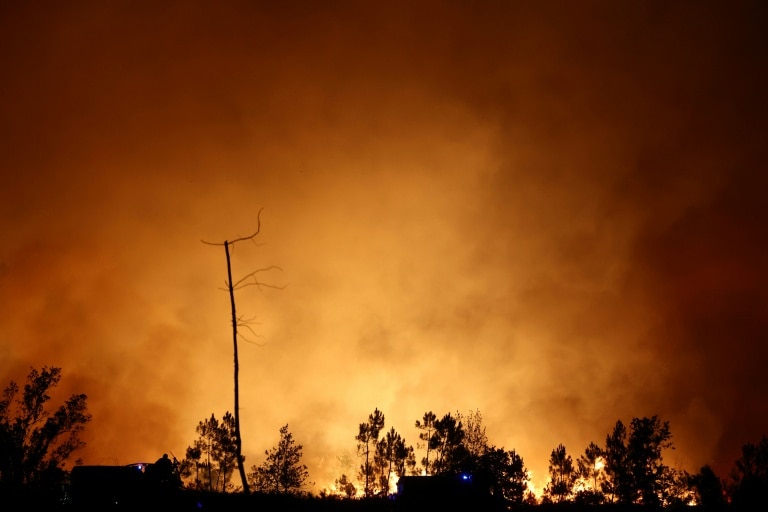
    In southwestern France’s Gironde region, local officials confirmed that roughly 12,000 people have been evacuated to escape advancing flames, with 10,000 of those displaced being tourists visiting the popular coastal and forested area. As of Thursday, the wildfire has already burned through more than 2,000 hectares of land, just days after two firefighters lost their lives battling blazes near Bordeaux Airport. No new civilian injuries have been reported as of Thursday, but authorities have enacted strict emergency measures to slow the spread of the fire: all combustion and electric engine use has been banned in heavily forested zones, multiple major roads have been closed, and all high-risk leisure sites in exposed forest areas will stay shut through Thursday evening. Gironde remains under red wildfire alert, as the region grapples with the same prolonged, record-breaking heatwave that has raised fire risk across much of Western Europe.

    French officials have held formal tributes to the two fallen firefighters this week. Interior Minister Laurent Nuñez shared images from a Wednesday memorial, describing the occasion as one marked by “immense emotion” and extending “infinite gratitude” and “unwavering support” to the firefighters’ families.

    Across the Mediterranean, Italy is also reeling from a deadly wildfire crisis of its own. On the island of Sicily, a 60-year-old firefighter Alessandro Marchi died Wednesday while battling a large blaze in San Cataldo. Another firefighter was injured in the same operation, and Sicilian President Renato Schifani has publicly wished the injured first responder a “speedy recovery.” Italian Interior Minister Matteo Piantedosi honored Marchi’s sacrifice in a post on X, writing that the firefighter died “in service to the community” and that “He will not be forgotten.”

    Sicilian Civil Protection head Salvo Cocina confirmed Wednesday that the island has recorded more than 350 separate wildfires in recent days, including 10 major blazes that have already triggered precautionary evacuations. Cocina noted that nearly all of the fires were caused by human activity, and warned that repeated large-scale wildfire events have turned firefighting into a persistent public order and social crisis for the island.

    In neighboring Spain, wildfires have reached the outskirts of Madrid, forcing the evacuation of hundreds of residents earlier this week. Overnight, most displaced residents were allowed to return to their homes, though one neighborhood in Villa del Prado remains off-limits as an adjacent fire continues to burn. Roughly 90 emergency personnel and one firefighting helicopter have been deployed to contain the remaining blaze, with emergency crews launching a “direct attack” on the flames to stop it from spreading further. Spanish weather service AEMET forecast maximum temperatures will reach 36 degrees Celsius across the region on Thursday, and local authorities have continued to warn of an “extreme risk of fires” for the coming 24 hours.

    The current wave of wildfires comes amid a longer-term trend of rising temperatures and increasing fire risk across Europe. A April 2025 report from the Copernicus Climate Change Service confirmed that at least 95% of Europe recorded above-average annual temperatures in 2025, and the continent is warming faster than any other major region on Earth. The report also found that both the total area burned by wildfires and fire-related carbon emissions reached all-time record highs across the continent last year, highlighting the growing threat climate change poses to European communities.

  • Deadly wildfires force thousands from homes in parts of Europe

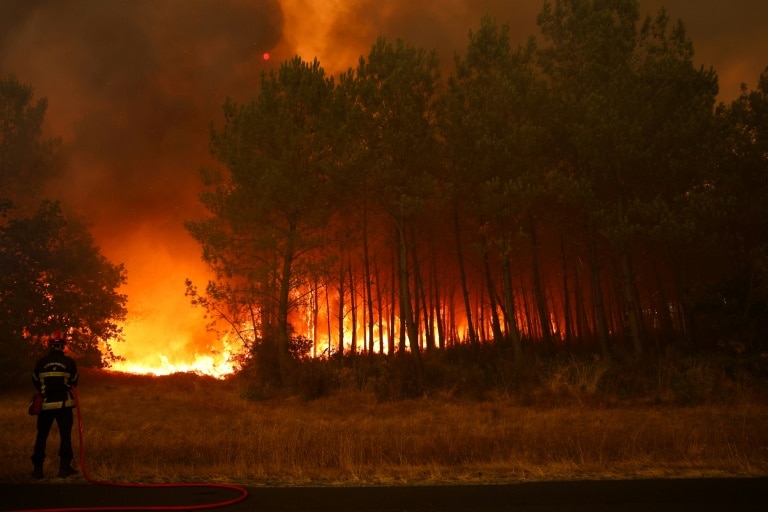
    Deadly wildfires force thousands from homes in parts of Europe

    As a brutal heatwave pushes temperatures past 40 degrees Celsius across the Mediterranean, fast-moving wildfires have ripped through populated and forested areas of Italy, France and Spain this week, leaving three firefighters dead and forcing tens of thousands of residents and tourists to flee their homes and accommodations. The ongoing disaster comes as climate scientists have long warned that human-caused fossil fuel emissions are intensifying extreme weather events, making heatwaves and wildfires more frequent, longer-running, and far more destructive than historical averages. In Italy, the island of Sicily has become one of the hardest-hit regions, where roughly 6,000 first responders including firefighters, forest rangers and civil protection personnel have battled dozens of blazes that have burned uncontrolled for days. Even with the support of water-bombing aircraft, crews have struggled to contain the flames, fueled by extremely high temperatures and parched, drought-stricken soil that acts as kindling for wildfires. Italian Interior Minister Matteo Piantedosi confirmed one firefighter died after suffering a medical emergency while on the fire lines, with the nation’s Civil Protection Agency describing the overall situation on the island as “serious.” To the northeast of Sicily, the adjacent Calabria region has recorded more than 160 separate blazes, with local civil protection chief blaming most of the fires on intentional arson perpetrated by “malicious individuals.” In one shocking allegation, he claimed arsonists tied flammable liquid-soaked rags to the tails of stray cats to ignite new fires across the region. Across the border in southwestern France, more than 10,000 tourists were forced to evacuate campgrounds and holiday rentals near Bordeaux on Thursday after a wildfire tore through a coastal pine forest. The Le Porge blaze has consumed more than 2,000 hectares of land – an area roughly three times the size of Gibraltar – since it ignited on Wednesday. Two firefighters were killed on Tuesday while battling a separate blaze near Bordeaux Airport, a loss that came as fire department unions warned crews were already stretched to breaking point, facing widespread exhaustion and critical shortages of resources. Wilfried Schneider, a fire captain on the ground in Le Porge, described the blaze as having an intensity rarely seen in the region, fueled by densely packed pine stands that burn hot and spread quickly. “We saw a big cloud of black smoke spread across the sky in the middle of the afternoon,” said Julie Leonard, a 30-something Bordeaux resident who traveled with her family to a safe observation point outside the evacuation zone. Bernard Roche, a 75-year-old long-term resident of the area who evacuated his cabin, noted that conditions had been exceptionally dry for weeks. “If I’d been brave, I would have stayed in my cabin, but it was too hot. I got in my car and left,” Roche said. While Le Porge mayor Martial Zaninetti suggested the fire may have started from a machine used to clear forest tracks, no official cause has been confirmed. Local authorities confirmed that 700 residents evacuated their homes as a precaution, with an additional 3,000 campers relocated to safer areas further from the fire. Further north in Spain, emergency officials reported Thursday that progress on containing a large wildfire south of Madrid has allowed most displaced residents to return to their homes. That blaze ignited Wednesday near Toledo, roughly 75 kilometers from the Spanish capital, prompting immediate evacuation orders for multiple communities as flames advanced toward residential areas. Only residents of El Encinar del Alberche in Villa del Prado municipality remain under evacuation orders as of Thursday. Fire crews called overnight containment progress “very positive,” though the blaze has not been fully stabilized and multiple regional roads remain closed. Hundreds of firefighters continue to battle a much larger, older blaze in Guadalajara province, roughly 100 kilometers north of Madrid, which has burned nearly 32,000 hectares since it started one week ago. According to data from the European Forest Fire Information System, Spain has already lost more than 393,000 hectares of land to wildfires in 2025 – the worst annual wildfire toll in the country’s modern recorded history.

  • Hundreds hospitalised in Japan heatwave ‘disaster’

    Hundreds hospitalised in Japan heatwave ‘disaster’

    Japan is currently grappling with an unprecedented extreme heatwave that has officially been labeled a national disaster, leaving at least 14 people dead and forcing hundreds of residents and visitors into hospital care for heat-related illnesses. On Thursday, Tokyo Fire Department officials released staggering daily figures confirming that 453 people required emergency hospital treatment for heatstroke and related complications on Wednesday alone — the highest single-day count recorded since the city began tracking such statistics 16 years ago in 2008. Emergency service callouts for heat-related incidents also hit a record high not seen since consistent record-keeping began in 1963.

    The unprecedented surge in heat-related hospitalizations comes as much of the island nation bakes under consistent high temperatures, with the death toll rising to at least 14 across the country over the past seven days, per data from Japan’s Fire and Disaster Management Agency. In Tokyo prefecture, home to roughly 14 million residents, one person has already died from heat-related causes in this event, with four more in critical condition and 18 others classified as seriously ill.

    “We are urgently urging people across the capital to stay consistently hydrated and run air conditioning whenever possible to avoid heatstroke,” a fire department spokesperson told reporters. The spokesperson added that patient numbers have climbed steadily alongside rising temperatures, with sharp, worrying increases reported on both Tuesday and Wednesday.

    Tourists visiting popular Tokyo attractions have described the conditions as punishing, with many altering entire travel itineraries to prioritize access to cool spaces. Nick Estes, a 35-year-old American tourist visiting Tokyo’s historic Asakusa district with his family, noted the extreme conditions felt even more intense than his trip last summer. “We’ve planned every part of our day around staying cool: spending time on the air-conditioned metro, popping into small air-conditioned souvenir shops, doing anything we can to bring our body temperatures down,” Estes explained. “Especially with young kids, it’s been absolutely brutal. I was here last summer, and somehow it feels even hotter this year.”

    Central Japanese regions have seen some of the worst heat, with Aichi Prefecture — home to the major city of Nagoya and Toyota Motor’s global headquarters — reporting 116 hospitalizations on Wednesday alone. Nationwide, heatstroke alerts have been issued for nearly all of Japan’s 125 million residents, and the disaster management agency has formally categorized the event as a disaster.

    “Temperatures have climbed steadily since mid-July, and severe heat is forecast to continue across the entire country,” the agency stated in an official release. “It is no exaggeration to call this extreme heat a disaster, given how many people are being rushed to hospitals or even losing their lives to heatstroke.”

    By early afternoon Thursday, at least six locations across Japan recorded temperatures of 40°C or higher, with three more sites hitting 39.9°C. The highest reading was logged in Hamamatsu, located in central Shizuoka Prefecture, which hit 41.1°C. Toyota City followed at 40.8°C, and Kuwana in Mie Prefecture reached 40.7°C. Japan’s all-time record high temperature of 41.8°C was set just last month in Isesaki, north of Tokyo.

    This year, Japanese authorities introduced a new official term for days with temperatures exceeding 40°C: kokushobi, which translates to “cruelly hot day.” The label was created to draw greater public attention to the severe risks of extreme heat, though it does not trigger mandatory nationwide emergency measures.

    Climate scientists have repeatedly warned that human-caused climate change is steadily increasing both the frequency and intensity of extreme heat events across Japan and the globe. Last year, Japan experienced the hottest summer on its national record, a trend that visitors and residents alike say they are noticing firsthand.

    “You leave your hotel at 8:30 in the morning and it already feels like midday, and it just gets hotter and hotter as the day goes on,” said Yesenia Gueta, a 47-year-old tourist from Los Angeles. “Now I understand why Japanese clothing is loose, and why people carry umbrellas to block the sun all the time. This heat is extreme, and that new name ‘cruelly hot day’ fits perfectly.”

    Many Japanese residents are also expressing growing anxiety about what the coming weeks of summer will bring, with temperatures already hitting record levels in mid-July. “Since it’s already this hot in mid-July, I’m worried about what August will be like,” said 24-year-old Japanese university student Nukochama, who carries a fully charged portable electric fan at all times to stay cool.

  • Giant swing on Swiss peak aims to boost summer tourism as Alps warm

    Giant swing on Swiss peak aims to boost summer tourism as Alps warm

    Beneath the bright summer sun of the Swiss Alps, piercing shrieks—half thrill, half nervous excitement—cut through the crisp mountain air as a chairlift approaches Grand Chamossaire peak, the centerpiece of Villars ski resort. Perched 2,110 meters above sea level, a striking 12-meter V-shaped steel structure holds the resort’s newest star attraction: a giant swing that launches riders out over a steep, open void, with sweeping panoramic views of snow-dusted Alpine peaks and rolling green valleys stretching out before them.

    The attraction, which opened to the public earlier this month, is far more than just a new adventure activity for thrill-seekers. It represents a strategic, long-term adaptation by Alpine ski resorts to a shifting climate, as rising temperatures make winter snowfall increasingly unpredictable at many mid-altitude mountain locations. For Villars-Gryons-Diableret, the region that manages the Villars resort, the goal is simple: diversify tourist offerings to draw more off-season visitors, put underused ski lift infrastructure to work in summer, and protect the local tourism economy that supports hundreds of jobs.

    Martin Deburaux, head of the ski area, told Agence France-Presse that while the past two winter seasons have actually drawn record visitor numbers—as skiers who once frequented lower-altitude slopes now travel higher to find reliable snow—the resort is planning ahead for an uncertain future. “We know we are facing climate change,” Deburaux explained. “We are looking for substitutes to conserve jobs, the dynamism and the tourist economy built up around our ski lift facilities.”

    Right now, the gap between winter and summer visitor numbers is stark: the resort welcomes more than 700,000 guests during the winter ski season, but only around 100,000 in the summer months. Resort leaders aim to triple summer visitor volumes over the next few years, a goal that requires building a diverse lineup of warm-weather activities beyond skiing. The giant swing is just the latest addition to a growing portfolio that already includes hiking trails, mountain biking routes, and a large-scale ephemeral land art fresco by French artist Saype, which covers an entire hillside with an image of a child drawing.

    In a nod to travelers who seek quiet, undisturbed nature alongside adventure, resort planners intentionally sited the new swing in an area already zoned for recreational activities, leaving larger swathes of the mountain untouched for visitors who prefer peaceful Alpine scenery over adrenaline rushes. Accessible to anyone with a ski lift ticket, the swing can accommodate up to three riders at once. Each participant sits on a saddle shaped like the body of an Alpine ibex, grips sturdy handlebars, and is secured with heavy safety straps before a system of cables and pulleys pulls them back to a 90-degree suspended position, hanging face-down hundreds of meters above the valley floor.

    When the safety release triggers, the swing lurches forward into a dramatic plunge that elicits everything from joyful screams to breathless laughter from riders. Many who have tested the attraction describe the experience as equal parts terrifying and exhilarating. “I had a bit of a pit in my stomach before getting strapped in,” said Alexandra Henchoz, a 37-year-old visitor who tried the swing with her husband and 10-year-old daughter. “But once it is happening, it is just incredible. You feel like a bird flying.”

    Other visitors echoed that mix of fear and delight. Yannick Boudouin, 38, called the moment of release “an amazing sensation,” while his partner Anais Fougairolles, 31, described it as “a mini free-fall and then nothing but fun.” Seventy-year-old Marc Truffer admitted he was so scared he couldn’t even scream during the initial plunge. “It took my breath away going down, but then the view was magnificent,” he said.

    As climate change continues to reshape the Alpine landscape, the Grand Chamossaire swing offers a model for how mountain resort communities are proactively reimagining their economies, balancing the need to grow off-season tourism with respect for the fragile natural environment that draws visitors to the region in the first place.

  • South American trade bloc’s top court takes up unprecedented Peru illegal mining case

    South American trade bloc’s top court takes up unprecedented Peru illegal mining case

    In an unprecedented move that marks a new chapter in regional environmental accountability, the Andean Court of Justice — the judicial body tasked with upholding the rule of law for the Andean Community trade bloc — has accepted a landmark lawsuit against Peru over the country’s repeated failures to crack down on rampant illegal mining across its Amazonian territories. This case is the first in the court’s history to examine whether an Andean Community member state has fulfilled its binding regional legal obligations to curtail illicit mining activity, setting a critical precedent for environmental governance across South America.

    The legal challenge targets Peru’s long-standing policy of extending deadlines for REINFO, the nation’s formalization program designed to transition small-scale informal miners into legal, regulated operations. Critics of the policy, including the Indigenous and local plaintiffs who brought the case, argue that repeated extensions have not helped legitimate small-scale operators; instead, they have provided de facto temporary legal protection for large-scale illegal mining operations to continue operating with impunity.

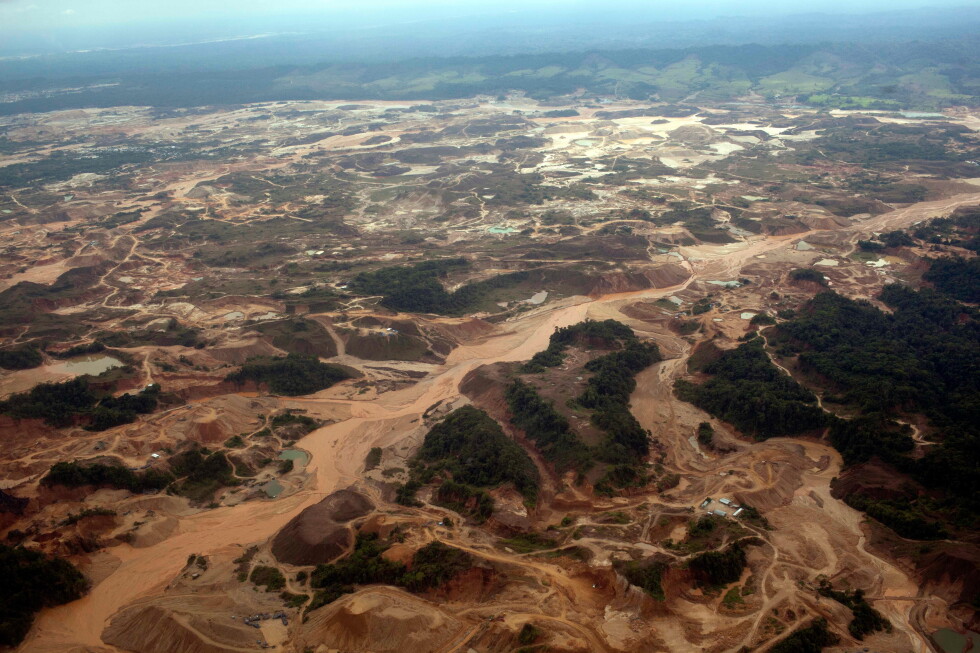
    Illegal gold mining has emerged as one of the most destructive environmental threats facing the Amazon basin in recent decades. The unregulated activity drives rampant deforestation as miners clear old-growth forest to access gold deposits, poisons river systems with toxic mercury that contaminates drinking water and food chains for both human and wildlife communities, and fuels brutal violent conflict against Indigenous groups that have inhabited the Amazon for millennia. In Peru, illegal mining operations have spread far beyond their historic hub in the southern Madre de Dios region, expanding into untouched areas of the Amazon including the ecologically sensitive Nanay River basin near the northern city of Iquitos — the region where the plaintiffs in the case are based.

    The court accepted the case in a formal order dated July 15, and notified all involved parties on July 20, granting Peru a 40-calendar-day window to file its official response to the claims. The judicial body has not yet issued a ruling on the plaintiffs’ request for precautionary measures, which include a temporary suspension of the REINFO program for the duration of the proceedings.

    The lawsuit was brought by a collective of Indigenous and rural communities from the Nanay River basin, joined by seven local residents of the Peruvian Amazon. The plaintiffs argue that the Peruvian government has refused to strengthen enforcement against illegal mining, associated money laundering, and other connected criminal activity, despite clear obligations outlined in Andean Community law. The trade bloc counts Bolivia, Colombia, Ecuador, and Peru as its four member states.

    The case traces its roots back to a 2025 findings report from the General Secretariat of the Andean Community — the bloc’s executive governing body — which concluded that Peru had failed to adequately build out regulatory and enforcement measures to combat illegal mining and linked crimes, including effective asset forfeiture mechanisms to seize assets from illegal operations. The secretariat also determined that Peru’s repeated extensions of REINFO directly contradict the country’s binding legal obligations under Andean Community regulations.

    Environmental organizations and Indigenous advocacy groups across the region have long echoed this conclusion, noting that ongoing extensions have allowed illicit mining to operate openly under the cover of the formalization process. For its part, the Peruvian government has defended the policy, arguing that extensions are necessary because thousands of small-scale miners have not yet completed the required formalization process. As of this report, Peru’s Ministry of Energy and Mines and Ministry of Environment have not responded to requests for comment on the ongoing lawsuit.

    César Ipenza, an environmental attorney representing the plaintiffs, emphasized that the case breaks entirely new ground for regional environmental accountability. “This is the first time a person or organization has sued one of the Andean countries for failing to comply with obligations established under the Andean integration system,” he explained. While accepting the case is only a procedural step, Ipenza noted that the admission itself is a major milestone: it opens the door for the regional court to formally examine whether a member state has breached its obligations to combat illegal mining.

    If the court ultimately rules against Peru and the national government fails to comply with the final judgment, Ipenza said the case could result in tangible economic consequences for Peru under the Andean Community’s existing legal framework. Beyond the immediate outcome for Peru, he added, the case sets a critical precedent that will shape environmental enforcement across the region. “Without a doubt, this is an important precedent,” Ipenza said. “It could lead the other countries to reconsider and understand that these obligations must be fulfilled.”

    This reporting on climate and the environment from The Associated Press receives funding support from multiple private foundations, with The AP retaining full editorial control over all content. Information on AP’s ethical standards for philanthropic partnerships, a full list of supporters, and an overview of funded coverage areas is available at AP.org.

  • June heatwave cost UK economy more than £1bn: study

    June heatwave cost UK economy more than £1bn: study

    Last month’s record-shattering June heatwave carved a more than £1 billion ($1.5 billion) hole in the United Kingdom’s economy, new research from the London School of Economics (LSE) reveals. The groundbreaking study, released Thursday, quantifies the far-reaching economic and social costs of extreme heat that is becoming increasingly common across Europe as climate change intensifies.

    When an unseasonal heat blanket settled across Western Europe in June, bringing all-time high temperatures to the UK and forcing widespread disruptions to transport networks, school operations and hospital services, it also left a hidden mark on the national labor market. The joint research, conducted by LSE’s Grantham Research Institute and the Euro-Mediterranean Center on Climate Change (CMCC), draws on survey data from 1,950 working adults across the UK to map the heat’s impact on productivity and working hours.

    The analysis found that the extreme heat led to a total of 24 million lost working hours across the country during the peak heat week of June 22. On average, each worker cut their working hours by 0.47 hours that week, with stark disparities emerging across different job sectors. Workers in physically demanding, outdoor roles that carry high heat exposure—such as construction and agriculture—saw far larger reductions in working hours than employees in indoor, low-exposure roles like academic work. Even more striking, 3.6 percent of respondents, equal to roughly 1.25 million total workers across the UK, missed the entire work week entirely due to heat-related issues.

    Beyond lost work hours, the heatwave triggered widespread health impacts for the British workforce. A full 87 percent of survey participants reported experiencing at least one heat-related health problem during the sweltering week. These issues ranged from mild but disruptive symptoms like interrupted sleep and workplace fatigue to more serious concerns including dizziness, fainting and elevated heart rates. Researchers also collected data on how the heat altered workers’ commute patterns and overall daily functioning.

    Study leaders emphasized that the findings paint a clear picture: the UK remains dangerously unprepared for the rising frequency of extreme heat events driven by climate change. “Our findings point to a country that remains insufficiently adapted to the changing climate,” said Elizabeth Robinson, director of the Grantham Institute. “The government cannot continue to ignore extreme heat,” she added, urging immediate policy action to upgrade infrastructure and improve national preparedness for future heatwaves.

    This June marked the warmest June ever recorded in England, and climate scientists have repeatedly warned that human-caused climate change is making extreme weather events like this heatwave both more frequent and more intense across the globe. The study’s billion-pound price tag for just one heatwave offers a stark reminder of the economic costs of failing to address climate adaptation and mitigation.

  • Even camels can’t cope: Africa’s ships of the desert hit by rising temperatures

    Even camels can’t cope: Africa’s ships of the desert hit by rising temperatures

    For generations, dromedary camels have been the unchallenged masters of Africa’s harshest arid landscapes, earning their nickname as the “ships of the desert” for their extraordinary ability to withstand scorching temperatures and severe drought. It is this legendary resilience that led 80% of the world’s one-humped camel population to settle in North Africa and the Horn of Africa, and that pushed countless livestock herders to switch from cattle and sheep to camels as climate conditions worsened across the region. But new research and on-the-ground accounts from herders and veterinarians make clear that even these iconic hardy animals are no match for the record-breaking extreme heat sweeping the continent – a rapidly growing threat that is pushing camels, and the communities that depend on them, into crisis.

  • Hosepipe ban across Republic of Ireland but NI avoids same precaution

    Hosepipe ban across Republic of Ireland but NI avoids same precaution

    As unusually prolonged warm and dry conditions stretch across Ireland, national water utility Uisce Éireann, formerly known as Irish Water, has implemented a full nationwide six-week hosepipe ban that took effect immediately after midnight on Friday. The restrictions will remain in force through August 26, marking a significant expansion of local conservation measures that were rolled out just one week earlier across the greater Dublin region and parts of six other southern and eastern Irish counties.

    Utility officials cited two key drivers behind the new nationwide order: consistently soaring consumer demand for water paired with weeks of well-below-average rainfall that has depleted reserve supplies across the country. A national heat warning was also issued for the Republic of Ireland earlier this month, when temperatures climbed well above seasonal averages, exacerbating strain on water infrastructure.

    Under the newly enacted Water Conservation Order, the use of hosepipes is strictly prohibited for a range of non-essential activities, including residential garden watering, private vehicle and boat cleaning, and filling personal recreational items such as paddling pools, as well as private ponds and outdoor fountains. Uisce Éireann emphasized that such restrictive measures are only enacted when absolutely necessary, and urged all residents to shift to only essential water use for the duration of the ban. “Conserving and reducing water consumption in these circumstances is critical to ensure continuity of supply,” the utility stated in an official release.

    Across the Irish border in Northern Ireland, regional water provider NI Water has announced it has no plans to introduce matching hosepipe restrictions at this time. The organization noted that current reservoir levels across the region remain at reasonable levels for mid-July, even after three consecutive days of temperatures above 25°C during the second heatwave to hit Northern Ireland this summer.

    Despite holding off on a ban, NI Water is encouraging all residents to maintain voluntary water conservation efforts, as current demand still runs far higher than typical seasonal levels. Paul Bryce, NI Water’s head of water operations, stressed that local communities should not take reliable water access for granted amid the ongoing warm spell. “Every drop counts,” Bryce said. “By continuing to use water wisely, customers can help reduce pressure on the network and help ensure water continues to be available for everyone who needs it.” The organization also issued a public safety reminder, urging people to avoid unregulated recreation around open reservoirs, which remain dangerously cold and deep even during periods of high air temperature.

  • Wildfires ravage parts of southern France, Italy and Spain

    Wildfires ravage parts of southern France, Italy and Spain

    A wave of intense, fast-spreading wildfires is tearing through Mediterranean regions of Southern Europe this week, leaving one first responder dead, forcing mass evacuations across France, Italy, and Spain, and destroying thousands of hectares of forested land as record-high temperatures and dry conditions amplify fire risk.

    In Italy, the island of Sicily has been burning for several consecutive days, with temperatures soaring past 40°C and gusty hot winds pushing flames deeper into populated and wooded areas. On Wednesday, regional president Renato Schifani confirmed that roughly 6,000 first responders, forestry workers, and civil protection personnel had been deployed to contain the blazes, supported by water-bombing aircraft. Even with the massive response, 50 active fires were still burning across the island as of Wednesday. The situation has been labeled “serious” by Italian Civil Protection Agency spokespeople, who note that extremely high temperatures and parched, dry soil are creating ideal conditions for fire spread. Tragically, Interior Minister Matteo Piantedosi confirmed one firefighter died after falling ill while working to contain the blazes.

    Just north of Sicily, the neighboring Calabria region has recorded more than 160 active fires, and local civil protection leaders say most are the result of deliberate arson by malicious actors. In a shocking detail, officials report some arsonists have tied flammable liquid-soaked rags to the tails of stray cats, turning the animals into unwitting fire starters to spread blazes across large areas.

    Across the Mediterranean in France, two major blazes near the popular Arcachon Basin, just outside Bordeaux, have forced thousands of residents and visitors to evacuate. One fire alone has already scorched more than 1,000 hectares (nearly 2,500 acres) of dense pine forest. Captain Wilfried Schneider, a French firefighter, described the blaze as having “rare” intensity, fueled by the tightly packed, extremely dry pine stands that cover much of the region. Bernard Roche, a 75-year-old resident who has lived in the affected Le Porge area for 35 years, told reporters he fled his cabin despite decades of living in the region, saying the heat and intensity of the fire was too dangerous to stay. Le Porge mayor Martial Zaninetti said early investigations suggest the fire may have been sparked by heavy machinery used to clear forest tracks, though no official confirmation has been released.

    Further east along France’s Mediterranean coast, a separate blaze that broke out Tuesday in the Var region between Marseille and Nice spread at an unexpectedly rapid rate, burning 2,550 hectares — an area twice the size of London’s Heathrow Airport — and forcing 400 people to evacuate. Nearly 1,000 firefighters and water-carrying aircraft managed to partially contain the blaze by Wednesday morning.

    In central Spain, a new wildfire burning outside the historic city of Toledo, roughly 75 kilometers south of Madrid, prompted authorities to order the evacuation of three villages on Wednesday, while residents of a fourth were told to shelter in place with doors and windows sealed. The Civil Guard issued emergency mobile alerts to at-risk residents and closed several major arterial roads cut off by the advancing blaze. This new fire comes as hundreds of firefighters continue to battle a far larger blaze 100 kilometers north of Madrid that has already destroyed 32,000 hectares of land. Data from the European Forest Fire Information System shows that Spain has already seen more than 393,000 hectares of land consumed by wildfires in 2025, making it the worst wildfire season for the country in recorded modern history.

    Climate scientists have long confirmed that human-caused fossil fuel emissions are driving rising global temperatures, which in turn make extreme weather events including heatwaves and wildfires far more frequent and more severe than historical norms.

  • Mysterious white foam draws crowds on  Nigerian highway

    Mysterious white foam draws crowds on Nigerian highway

    A strange, white foamy substance along one of Nigeria’s busiest intercity highways has triggered an urgent official investigation after drawing crowds of curious onlookers and stoking widespread public safety fears.

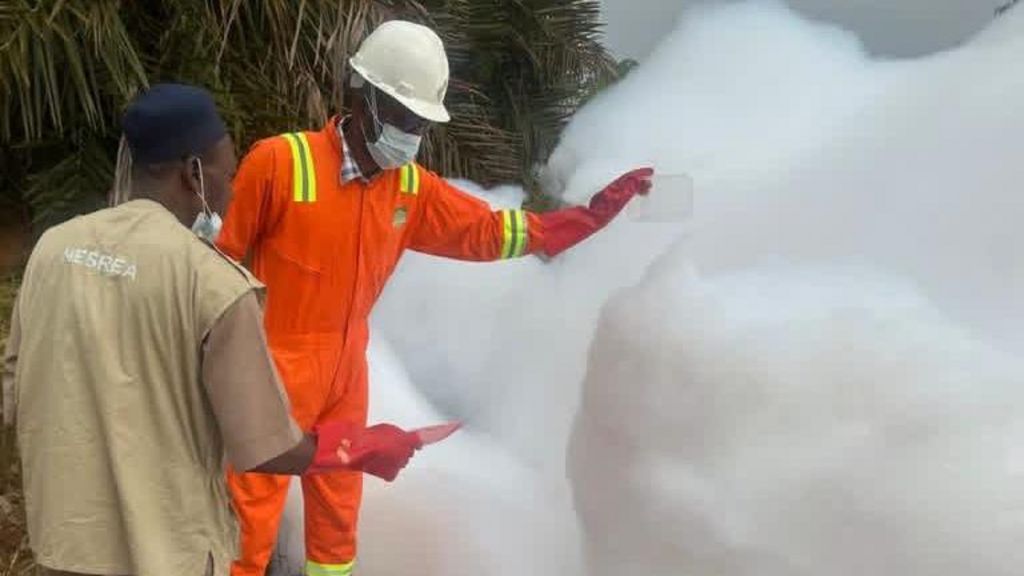
    The unidentified material appeared on the Kaduna-Abuja Expressway, a critical transport artery that connects northern Nigeria’s largest commercial hub to the country’s federal capital. Nigeria’s top environmental regulator, the National Environmental Standards and Regulations Enforcement Agency (Nesrea), has issued an immediate warning asking the public to stay far away from the foamy deposit, which has spread across a section of the highway and its surrounding areas.

    Since the substance emerged several days ago, hundreds of passing motorists have pulled over to capture photos and videos of the unusual sight, with thousands of the images shared widely across local social media platforms. Wild public speculation has grown around the origin and nature of the foam: some have guessed it is the result of an unchecked chemical leak from an industrial facility, while others have treated the bizarre scene as a novelty attraction, drawing close to pose for photos.

    Isah Aminu, a driver who regularly travels the route, shared his experience with the BBC. He told reporters that the first rumor circulating among drivers was that the foam was “clouds that had fallen from the sky.” “That was the first information many of us got — that it’s clouds from the sky,” Aminu explained. “But like many, I also stopped to see it and it looked like snow.” Aminu added that he chose not to touch the unknown substance, but he noticed dozens of other visitors approaching it closely to interact with the foam. He called on regulators to release clear information quickly to end the widespread public confusion.

    Nesrea has confirmed that a specialized response team from its Kaduna State Field Office, headed by state coordinator Hena Dangari Emmanuel, has already completed an on-site assessment of the affected area. Investigators collected multiple samples: of the foamy material itself, as well as soil from the roadside and water from a nearby stream. All samples are now undergoing rigorous laboratory testing to pinpoint the exact chemical composition of the substance and measure any potential long-term risks to human health and local ecosystems.

    Pending the results of the testing, the agency has repeated its warning for local residents and passing travelers to avoid any contact with the foam, the nearby stream water, and surrounding roadside soil. The precaution is designed to prevent accidental exposure to potentially toxic or hazardous materials that could be present in the spill.

    “We have to know what it is first before we can tell people how to handle it or what the dangers are,” a Nesrea spokesperson told reporters. The agency’s preliminary investigation has already traced the origin of the foam to a spill from a cargo lorry that was involved in a traffic accident along the highway, though officials have not yet been able to confirm what the truck was carrying when the crash occurred. The full results of the laboratory analysis are expected to be released publicly once testing is completed.