分类: environment

  • With minutes to flee, Spain fire evacuees grab what they can

    With minutes to flee, Spain fire evacuees grab what they can

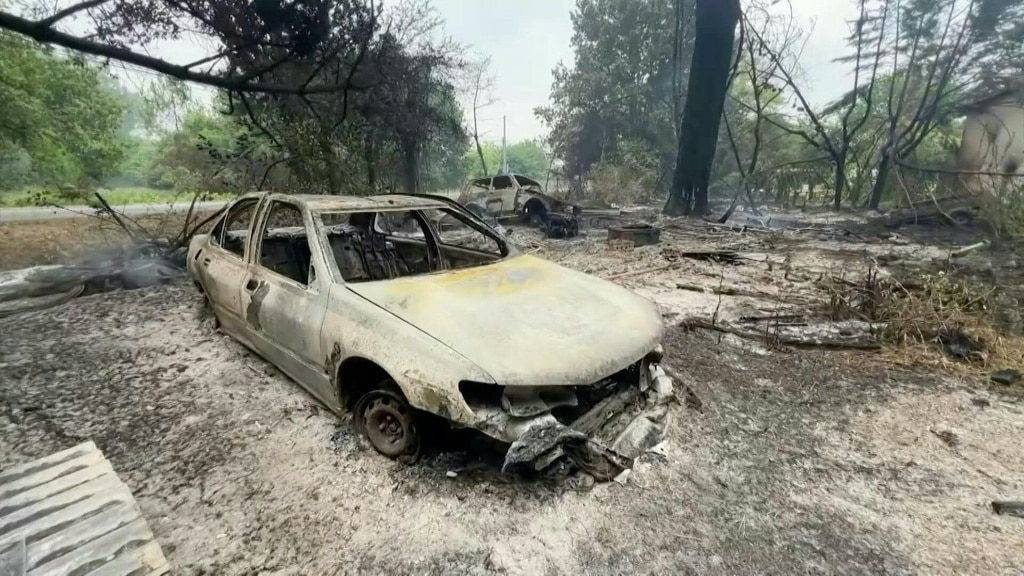
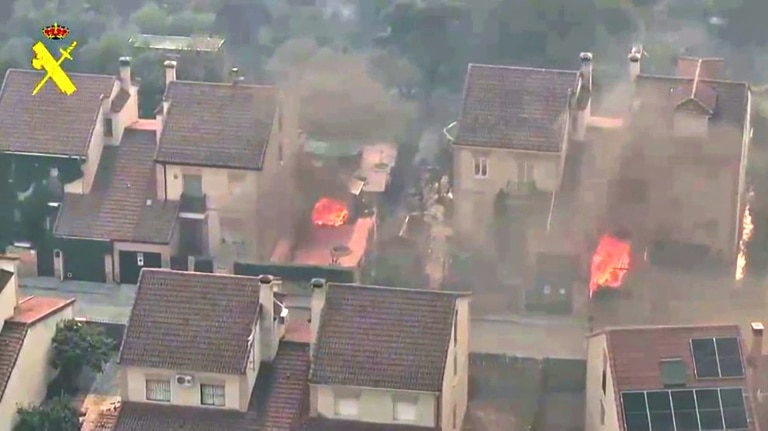
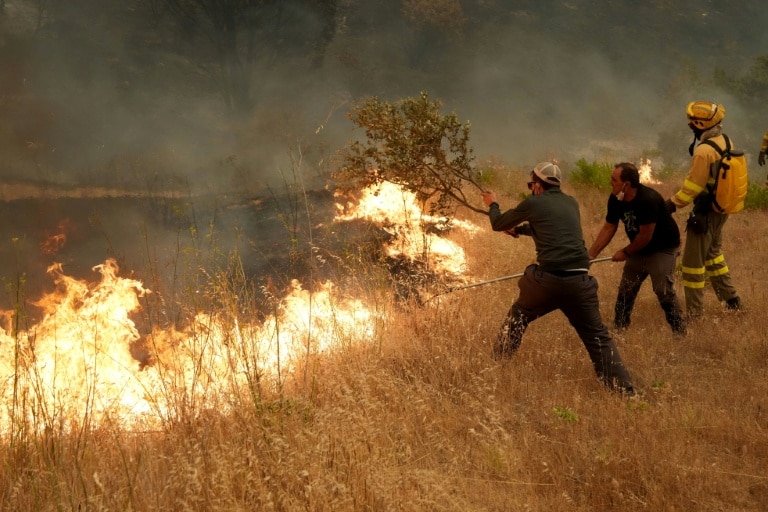
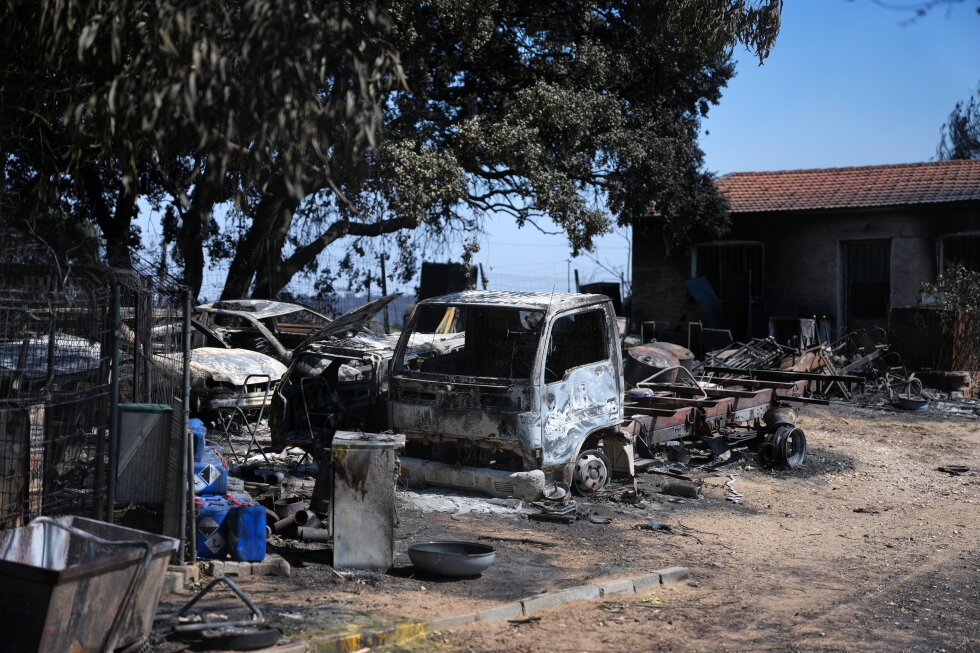
    A catastrophic wildfire burning through central Spain has become the largest blaze in the nation’s recent history, scorching tens of thousands of hectares of land and forcing thousands of rural residents to flee their homes with only minutes to grab their most precious belongings.

    Evacuation orders dropped with little warning as flames advanced rapidly across dry terrain, leaving local communities scrambling to prioritize what to save and what to leave behind as emergency services closed off entire affected regions. For many, the rushed evacuation meant abandoning cherished possessions, beloved pets, and critical daily items that they would only later recover through brief, closely monitored return trips.

    On a highway cordoned off by police blocking access to her locked-down commune of Robledo de Chavela, 50-year-old Olga Congacha described the chaotic fear that gripped the village as the evacuation order came through. “Everyone had to get out of the village quickly — it was a critical situation and people were scared,” she told Agence France-Presse. She and her husband only managed to grab their most vital legal documents and a small stack of clothing before fleeing. It was not until Sunday that authorities allowed her a short trip back to her home to retrieve medication required for an upcoming surgery, where she discovered her property already coated in a thick layer of wildfire ash.

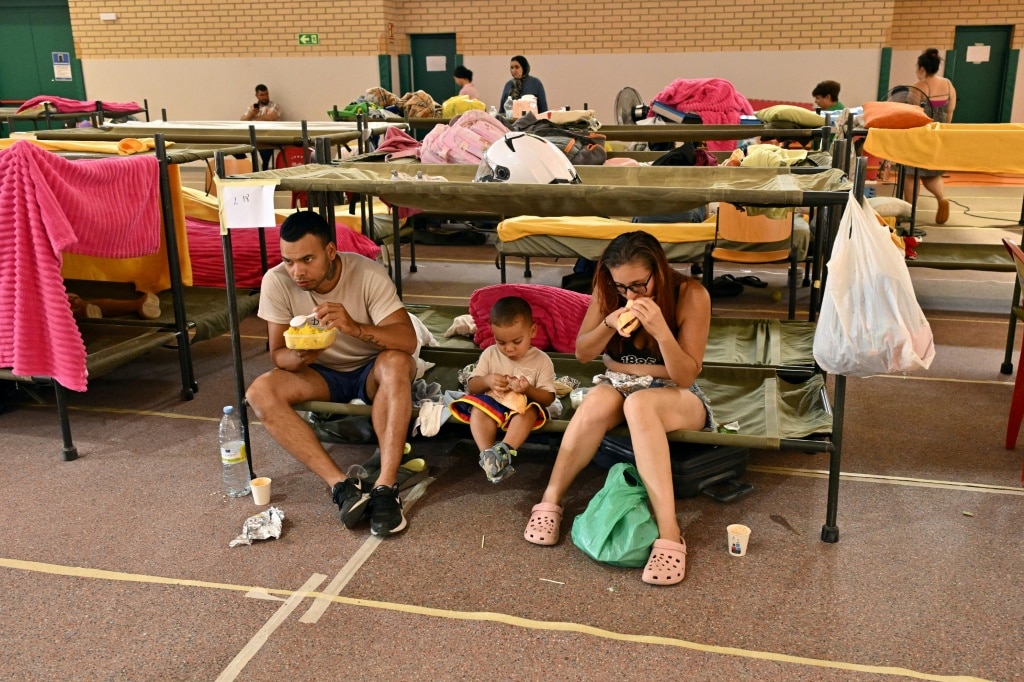
    At an emergency evacuation centre set up inside a sports hall north of Madrid, 84-year-old Roberto Velasco recounted his split-second decision of what to save from his Navalagamella home. After living in Spain for 50 years, he brought only a small suitcase and a single hard drive loaded with digital copies of decades of old family letters and heirloom mementos from his relatives in Chile. “I didn’t know what to bring. I thought the whole house was going to burn,” he explained, sitting weary on a temporary camp bed in a stained grey t-shirt. He had initially planned to pack his favourite books and a collection of music, but in the rush, he left even those behind – and forgot to pack so much as a towel.

    West of Madrid, at another shelter in Villamanta, 81-year-old Jose Luis (who requested his full name not be published to protect his privacy amid the crisis) can now monitor his abandoned Aldea del Fresno home remotely via smart cameras installed around his property. When the evacuation alert blared on his phone, he and his wife fled in minutes, leaving almost everything behind. Authorities later granted them a 30-minute window to return for essential medication, and the couple took the opportunity to leave extra food for their pet canary, Pavarotti, whom they were forced to leave behind. “He has the voice of an angel,” Jose Luis said of the bird. “When you put music on for him he won’t stop singing — bachata, rock ‘n’ roll, anything noisy.” During his quick return, he also watered his houseplants and grabbed his electric razor, the only other item he had space to take.

    For 56-year-old Rosa, also a resident of Robledo de Chavela, abandoning her two rescued feral cats was a heartbreaking choice she tried desperately to avoid. “They are feral — you can’t pick them up without a net,” she explained. She reached out to local animal protection groups for help, but rescuers were not permitted to enter the restricted fire zone. Police eventually had to compel her to evacuate, and she was one of the final residents to leave as flames reached the village edge. “They kind of tricked me, saying they were going to get the cats out, so I said OK. But of course, they had no intention of getting the cats out. They came for me,” she said. Still, she holds out hope her pets are unharmed: “The cats are alright — they are in the house and have things to eat. I left it all for them. The only thing that will be wrong is the floor will be dirty.”

    At the Villamanta sports hall shelter, 70-year-old Margarita has worn the same stained t-shirt for four straight days, after she and her 45-year-old daughter Helena fled with nothing more than the clothes on their backs. The pair assumed they would be able to return home within 24 hours, so they packed nothing extra. Margarita also suffered a swollen ankle after a fall at the evacuation centre, but the pair say emergency workers have provided adequate care, including regular meals and access to paracetamol for pain. On Sunday, Spain’s King Felipe VI and Queen Letizia visited the shelter to meet with evacuees from Aldea del Fresno. “The queen came to say hello to us — and I was wearing this dirty thing,” Margarita laughed.

    Ecology Minister Sara Aagesen confirmed Sunday that the wildfire burning near the capital Madrid is the largest recorded in Spain in recent memory, highlighting the growing severity of wildfire risk across southern Europe amid rising global temperatures and prolonged summer droughts.
  • As Indonesia cuts methane emissions, life atop a mountain of garbage begins to change

    As Indonesia cuts methane emissions, life atop a mountain of garbage begins to change

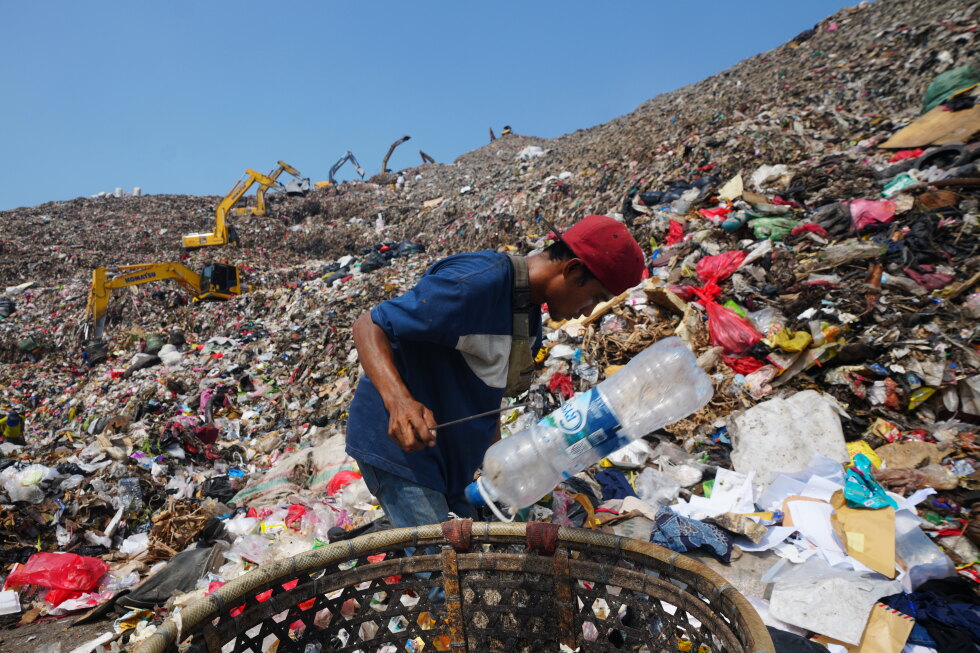
    In the pre-dawn darkness that hangs over Indonesia’s Bantargebang, the country’s largest landfill site on the eastern outskirts of Jakarta, thousands of waste pickers already scramble across towering heaps of garbage to hunt for recyclable and resalable materials before fresh waste buries their finds. Among them is 35-year-old Nur Wencih, a widow who has followed in her parents’ footsteps working at the site for 20 years. For Wencih, who lives alone in a small rented room near the landfill, sorting discarded cardboard, plastic bottles, and discarded toys has paid for daily food, rent, and the education of her two teenage daughters, who stay with relatives in a rural village. On a good day, she earns roughly $12, and occasional lucky finds of forgotten gold jewelry feel like winning the lottery, she told the Associated Press during a break from the sweltering July heat. But like thousands of her colleagues, Wencih now faces an uncertain future as Indonesia launches one of its most sweeping national waste management reforms in decades.

    Starting August 1, the Bantargebang site will end its current open dumping operations and transition to a controlled, sanitary landfill system. This shift is part of a national policy that will shut down open dumping at 343 of Indonesia’s 550 existing disposal sites nationwide. Under the new rules, all landfills will gradually shift to only accept non-recyclable, non-compostable residual waste — items such as soiled diapers, used paper towels, and adhesive stickers that cannot be processed for reuse. At the same time, Indonesian households will be required to sort organic and recyclable waste for separate processing, a large-scale practice that most of the population has never been trained to adopt.

    The core driver of this reform is climate action. Open, unmanaged landfills produce massive amounts of methane, a greenhouse gas that traps 80 times more heat in the atmosphere than carbon dioxide over its first 20 years, and is responsible for roughly one-third of current global warming. Cutting methane emissions is widely recognized by global climate leaders, including U.N. Secretary-General António Guterres, as one of the fastest, most effective ways to slow the pace of near-term global warming.

    Bantargebang itself has become a flashpoint for global methane reduction efforts. Originally opened in 1989 as a properly designed sanitary landfill with a working methane collection system, the site gradually shifted to full open dumping after a private sector management contract expired in 2016. Today, only 2 of its original 12 methane extraction wells still operate. Satellite data analyzed by UCLA’s STOP Methane initiative ranked Bantargebang as the world’s second-highest methane-emitting landfill in 2025, outranked only by a large site in Argentina. Covering 110 hectares (272 acres), the landfill has grown into a 60-meter-tall man-made mountain — as high as a 20-story building — that receives 7,500 tons of Jakarta’s waste every single day. In March, a landslide triggered by heavy rain at the site killed seven people, a tragedy that underscored the urgent risks of the site’s overloaded, unmanaged state. “Its carrying capacity is reaching, or even exceeding, its limits,” said Agung Pujo Winarko, head of the Bantargebang facility.

    Under the government’s rehabilitation plan, large sections of the Bantargebang site are already being covered with impermeable tarps to capture escaping methane, with the full overhaul estimated to cost up to $12 million. Dudi Gardesi Asikin, head of Jakarta’s Environment Agency, says the reform will deliver major public benefits: improved environmental health, reduced local pollution, and deep cuts in harmful methane emissions. It will also make daily work far safer for the people who sort waste here, he noted: currently, thousands of pickers race alongside heavy construction excavators to reach recyclable materials before they are buried, putting their lives at constant risk.

    But the reform also creates a pressing national dilemma: how to protect the livelihoods of roughly 600,000 informal waste pickers across Indonesia who depend on open dumps for their income. At Bantargebang alone, more than 4,000 registered waste pickers work the site every day, and their work supports an entire local ecosystem of recycling traders, rental housing, and food stalls that serve the worker community. “What worries me most is how I will feed my family,” Wencih said. Local community leader Bunin, a 53-year-old resident who lives near the site, added that while the landfill has brought severe pollution to the area, it has also created critical economic opportunities for low-income local families. “The landfill not only brings negative impacts, there are also economic benefits,” he said.

    Government officials say the reform will ultimately create better, more formal, safer jobs for waste pickers in the new recycling and composting sectors, and that pickers already receive basic social security and healthcare through national programs. But the transition remains fraught with uncertainty for the workers who have built their lives around Bantargebang, many of whom are third-generation waste pickers like Wencih, who hopes her own daughters will never have to work in the landfill.

    The success of the broader national reform also depends on changing decades-old waste habits across Jakarta, where residents have never been required to sort household waste before disposal. Many ordinary residents say the new rules have already created confusion, as public education campaigns have been slow to reach all communities. “All we know is to throw the trash in the bin, not to sort it,” said Rukasih Wanti, a resident of Central Jakarta. “The new rule is confusing us. It’s inconvenient, creates extra work and wastes our time.”

    Environmental advocates say the urgent need for this reform highlights decades of delay in updating Indonesia’s waste management infrastructure. Currently, only about 25 percent of the country’s daily waste is processed through formal waste systems, with the rest dumped, burned, or left unmanaged. David Sutasurya, executive director of Indonesian environmental organization YPBB, noted that up to 80 percent of Jakarta’s waste is either compostable or recyclable, meaning most waste currently going to landfills could be diverted with the right infrastructure. “We delayed transforming our waste-management system for too long, and only realized the problem when landfills were already close to full,” he said.

    Still, grassroots activists are working to build public support for the shift across the country. In a West Jakarta neighborhood, community organizer Monica T. Anggriani has spent more than a decade persuading neighbors to sort their household waste, building a community waste bank that now processes one ton of organic waste daily through composting, maggot cultivation, and urban farming. “Our generation was never taught to separate waste,” Anggriani said. “If we don’t start now, nothing will change in the future.”

  • Displaced from wildfires in Spain share their stories of uncertainty and narrow escapes

    Displaced from wildfires in Spain share their stories of uncertainty and narrow escapes

    Across the Iberian Peninsula, out-of-control wildfires have carved a path of destruction through central Spain and southwestern France’s Bordeaux wine region, displacing nearly 340,000 people and leaving thousands of properties reduced to ash. For survivors sheltering in temporary evacuation facilities, the question of what awaits when they return to their hometowns hangs heavy, casting a dark shadow over a nation that just days earlier was gripped by World Cup celebration.

    Seventy-nine-year-old retiree Elvira Menéndez counts herself among the lucky. Her home in Chapinería, a small town west of Madrid, remains standing, unlike hundreds of others consumed by the rapidly spreading flames. But her relief is tempered by concern for neighbors who lost everything: a young family with three children that lives down the street from her son lost their entire home to the blaze. “They have been left with nothing,” Menéndez told the Associated Press from her temporary shelter.

    Menéndez is one of nearly 90,000 people forced to evacuate across three central Spanish provinces after a series of merging blazes created an unprecedented wildfire event. On Friday afternoon, two large wildfires burning in the area surrounding Madrid merged into one fast-growing inferno, which later combined with a third fire already burning in Ávila, north of the capital. The unprecedented scale of the blaze pushed the Spanish government to declare its first national-level fire emergency in history. Flames have since spread further into the southwestern province of Toledo, with a total of 77,000 hectares — an area roughly equivalent to 297 square miles — already scorched across central Spain alone. Across the border in France, more than 250,000 people have fled their homes as wildfires tear through the major Bordeaux wine growing region.

    Evacuated just hours before flames reached her neighborhood, Menéndez was spending her third consecutive night on Sunday at a makeshift shelter set up in a sports complex in Villaviciosa de Odón, a 40-minute drive from her home. She is staying at the shelter alongside her entire family and their pet dog, and says she is clinging to small mercies in an uncertain time: “At least we’re all together.”

    Her anxiety and loss are shared by dozens of other survivors staying at the same shelter. Rocío Domínguez, a 35-year-old unemployed resident who fled with her parents and siblings, escaped with nothing more than the clothes on her back and an emergency kit for her two dogs. “All the clothes, all the memories, everything, everything, everything,” were left behind as she rushed to evacuate, she said. Every item she has now — from her daily clothing to food and basic toiletries — has been donated by aid workers at the shelter. Domínguez still vividly recalls the chaos of the evacuation, describing the scene as apocalyptic: “It was madness with cars going up and down, traffic jams in the village streets as people tried to get out. You couldn’t see anything. Everything was covered in ash, and you could see all the burned animals.”

    Spanish King Felipe VI and Queen Letizia met with displaced survivors on Sunday during a visit to a second evacuation shelter in Villamartín, 45 kilometers west of Madrid, where they heard firsthand accounts of loss and uncertainty. Following the meetings, Queen Letizia told reporters that centering survivors’ experiences was critical: it was important “to hear how they feel and how they recount their hasty departure from their home. How they have felt the sadness they describe, the anguish, the uncertainty, and those questions they leave hanging in the air.”

    The disaster is far from over. Spanish Minister of Ecological Transition Sara Aagesen has warned that more evacuations are likely to be ordered in the coming days as flames continue to spread through dry, warm conditions.

    The wildfire disaster has dramatically shifted the national mood in Spain, just one week after millions of Spaniards filled streets across the country to celebrate the men’s national football team’s second World Cup title, won in a final against Argentina in New Jersey. As the cheers of celebration faded, members of the champion team have stepped up to support displaced fire survivors. Luis de la Fuente, head coach of the World Cup-winning squad, visited evacuees at a sports center in Las Rozas, where the Spanish Football Federation (RFEF) has its national headquarters. The RFEF has opened the national team’s training facilities, normally used by the newly crowned champions, to house vulnerable evacuated families.

    De la Fuente told public broadcaster TVE that the entire nation is standing with wildfire survivors, echoing the unity the team felt during their World Cup run. “All of Spain is watching over them,” he said. “They have the support of the entire country, the same support we have when we play soccer. It’s exactly the same.”

  • Wildfires overwhelm exhausted firefighters in France and Spain

    Wildfires overwhelm exhausted firefighters in France and Spain

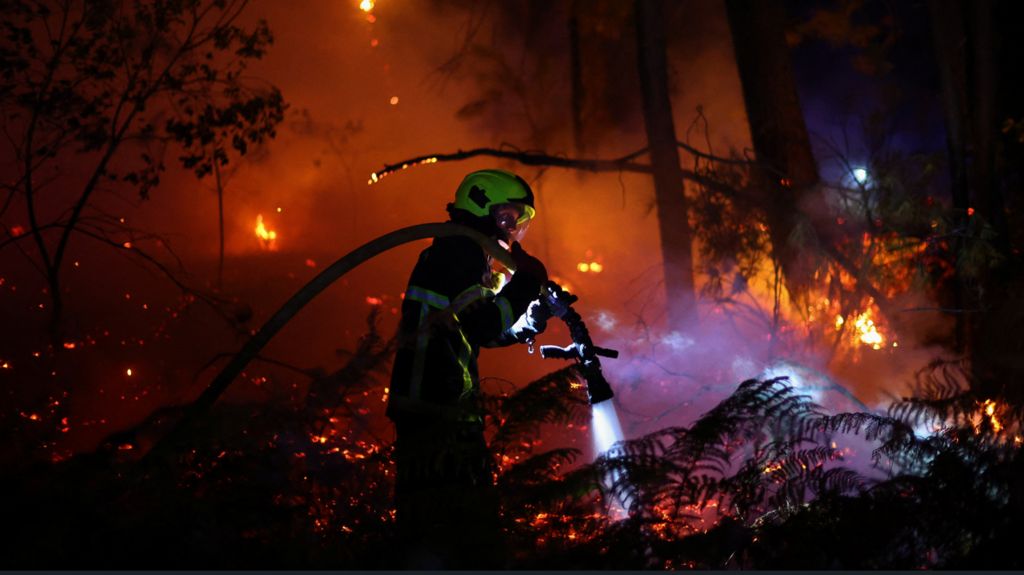
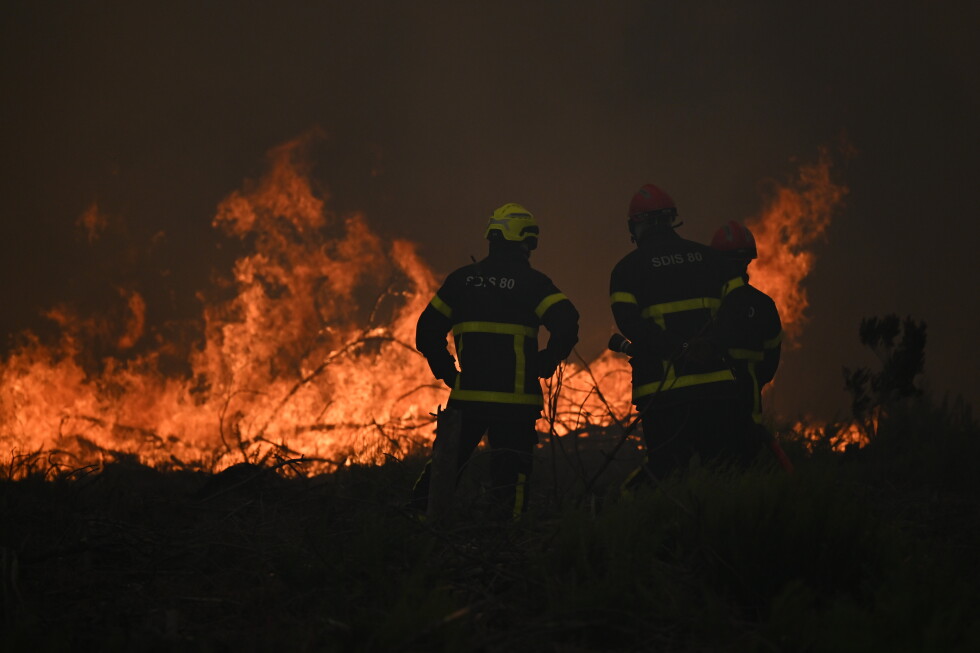
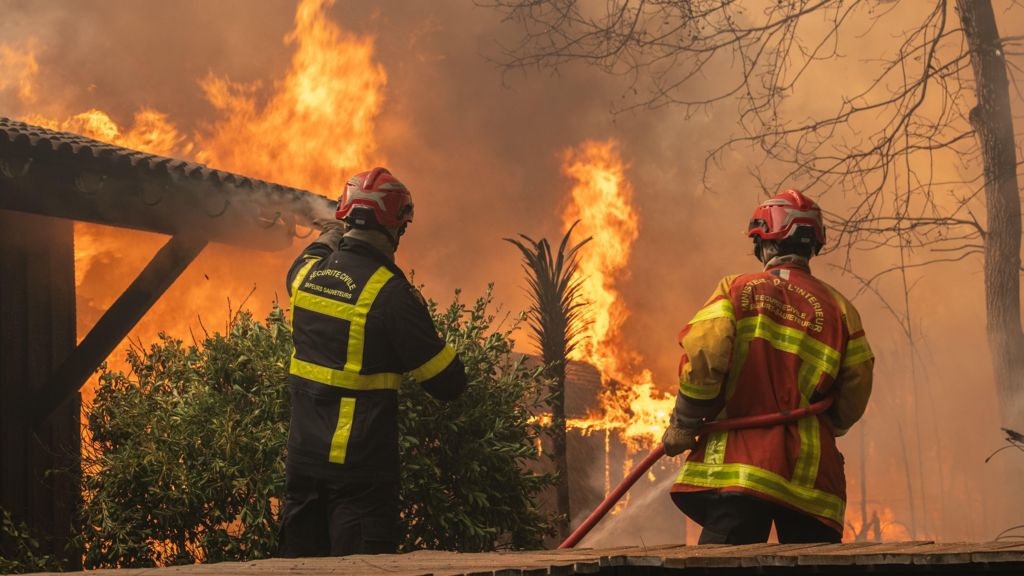
    A wave of catastrophic, unpredictable wildfires sweeping across southern France and eastern and central Spain pushed exhausted firefighting crews to their breaking point on Sunday, forcing more than 300,000 people to flee their homes and critical infrastructure as blazes advanced through parched, drought-stricken landscapes.

    In southwestern France, the fire crisis has grown into one of the most severe the country has faced since World War II, with the iconic wine-producing region surrounding Bordeaux facing direct threat. Key transportation links, including a major highway and regional rail lines, have been severed by advancing flames, which have already burned an area four times the size of the French capital Paris. More than 250,000 residents and tourists across high-season Atlantic coastal holiday destinations have been ordered to evacuate the danger zone.

    Over 5,200 first responders, soldiers and law enforcement personnel have been mobilized to tackle the Gironde region inferno, which crept closer to Bordeaux’s city limits over the weekend. The village of Cestas, located on Bordeaux’s southwestern edge, was almost entirely evacuated; only a handful of the community’s 17,000 residents remained behind. “This fire is unpredictable and each time we think we’ve got on top of it unfortunately it surprises us in the worst possible way,” Cestas mayor Jerome Steffe told BFMTV. “Right now, it’s impossible to say where the fire will end up.”

    Aerial footage from AFPTV showed entire homes in the coastal village of Le Porge reduced to ash. A second large fire in the neighboring Landes region, which displaced 30,000 people, was reported to be partially contained but not yet fully stopped. Local officials noted that shifting, turbulent winds have continuously frustrated containment efforts, keeping conditions extremely unstable across the country’s fire zones. French Interior Minister Laurent Nunez confirmed Sunday that the overall situation remains highly unfavorable for wildfire response.

    French Prime Minister Sebastien Lecornu labeled the ongoing crisis a “historic situation” for the nation. Two firefighters have already died battling the blazes near Bordeaux earlier this week.

    Across the border in Spain, the emergency has followed a similarly grim trajectory. A large wildfire burning west of Madrid has already forced 60,000 people from their homes; shifting winds pushed the blaze south over the weekend, moving it away from the capital for the moment but forcing additional overnight evacuations of villages in its path. To the east, a sudden new fire front erupted near the Mediterranean coastal city of Valencia, forcing an additional 15,000 evacuations just hours after it ignited. Valencia regional president Juanfran Perez Llorca told reporters that the blaze has outpaced local response capacity: “The fire is beyond our capacity to extinguish.”

    One civilian has been killed in a smaller separate fire near Valencia, marking the nation’s first reported civilian fatality from this wildfire season. Spanish Prime Minister Pedro Sanchez, who visited the affected region for the second time in 24 hours on Saturday, acknowledged that “difficult hours” lie ahead, though he noted minor positive progress in containment efforts around the Madrid fire zone.

    The extreme wildfire activity follows months of relentless heat and drought that have dried out woodlands across both countries, creating prime conditions for large, fast-spreading blazes. Climate scientists have repeatedly warned that human-caused global warming is increasing the frequency and intensity of extreme weather events across the globe, and Europe is warming faster than any other continent, amplifying these wildfire risks.

    After three straight days of nonstop firefighting, first responders on both sides of the border are overwhelmed and suffering from severe exhaustion. To supplement stretched domestic resources, both France and Spain requested and received emergency assistance from the European Union and neighboring countries. Five aircraft and two helicopters, plus a Swiss firefighting crew, have been deployed to France, while four aircraft have been sent to support Spanish operations. France has additionally activated a modified A400M military transport plane capable of dumping up to 20 tonnes of water or fire retardant, joining 18 other aerial firefighting assets already operating over French fire zones. Spain maintains at least 29 aircraft airborne over the Madrid fire zone alone.

  • France battles fire ‘whirlwinds’ as another 55,000 evacuated

    France battles fire ‘whirlwinds’ as another 55,000 evacuated

    As extreme fire activity accelerates across Western Europe, a new wave of mass evacuation has been ordered in southwestern France, where the country’s decades-worst wildfire crisis continues to spiral out of control. On Friday, local authorities ordered 55,000 additional residents and visitors to leave six towns located south of Bordeaux in the Gironde region, marking one of the largest single evacuation phases of the ongoing disaster. The wildfire emergency that began spreading across the continent a week ago has hit France and Spain the hardest, with a cumulative total of more than 330,000 people displaced by fast-moving flames across both nations.

    For France, the current outbreak stands as one of the most devastating forest fire events since the conclusion of World War Two. So far, more than 42,000 hectares of forest and vegetation have burned in this active wave alone, and the total burnt area across the country has already hit 98,000 hectares since the start of 2026. Firefighting commanders on the ground say the unpredictable behavior of the flames has made containment efforts extremely difficult. “The fire has generated its own winds, even creating powerful whirlwinds,” explained Captain Nicolas Braz, a senior leader of the French firefighting response. “It is completely erratic and impossible to manage with standard tactics.”

    Unusually parched vegetation and sustained strong winds have created ideal conditions for the blaze to expand rapidly. The spread has forced the closure of a 60-kilometer stretch of the A63 motorway, a major transport route connecting France to northern Spain. French Interior Minister Laurent Nunez warned in an interview with La Tribune published Sunday that full containment will be a lengthy process, and that displaced residents will not be able to return to their homes until the fire is fully under control. In response to the escalating crisis, France has deployed military reinforcements to support frontline firefighters, with troops tasked with clearing dry brush and constructing strategic fire breaks to slow the spread of flames. President Emmanuel Macron has released a public statement affirming that the French state will support all affected communities, saying the nation will “rebuild” and that his administration will remain committed to the response effort “for as long as is needed.”

    The wildfire crisis is equally severe across the border in Spain, where fast-moving blazes continue to push deeper into populated regions. More than 90,000 people have already been evacuated from fire-prone areas surrounding Madrid and Ávila. Late Saturday, evacuation orders were issued for at least eight additional municipalities near Toledo, though the exact number of residents required to leave has not yet been confirmed by authorities. Forecasters are predicting another day of extreme conditions on Sunday, with high temperatures and very low humidity that will likely enable further rapid fire expansion.

    Isabel Díaz Ayuso, regional president of Madrid, called the current outbreak the “worst fire in the history of the region.” Spanish Prime Minister Pedro Sánchez has acknowledged that the country faces a prolonged period of challenge, saying “complex times ahead” for response and recovery. Tragically, the disaster has already claimed its first confirmed life: authorities in the València region announced Sunday that one man has died in a wildfire burning in the area.

  • Fires in Europe: latest developments

    Fires in Europe: latest developments

    Across southwestern France and central Spain, out-of-control wildfires have carved a path of destruction, forcing hundreds of thousands of residents to flee their homes, shutting down key transport links and prompting a major military deployment to combat the blazes. The rapid spread of the infernos, fueled by unseasonably high temperatures and strong gusty winds, has created one of the most severe wildfire crises Europe has faced in decades, with new developments unfolding hourly over the weekend.

    In France’s Gironde region, the massive wildfire burning outside the major city of Bordeaux has already consumed 42,000 hectares of forest and inhabited land, marking it as one of the largest single wildfire events recorded in the country since the end of World War II. For context, the largest wildfire in modern French history, recorded in 1949, scorched roughly 50,000 hectares. By Sunday, the scale of evacuations from Gironde and surrounding at-risk areas had surpassed 220,000 people, with an additional 55,000 villagers ordered to leave their homes overnight Saturday as the fire line advanced toward populated areas. Further south in the Landes region, another 30,000 residents have already been relocated to emergency shelters away from the advancing flames.

    To bolster firefighting efforts, the French government announced it would deploy an extra 500 soldiers to the southwestern fire zone, bringing the total number of military personnel supporting response operations to 1,500. Defense officials confirmed the troops will support local emergency teams with evacuation logistics and help secure abandoned properties to prevent looting and further damage.

    Strong winds pushed the Gironde fire across containment lines over the weekend, forcing authorities to close 60 kilometers of the A63 motorway, the primary highway connecting Bordeaux to the Spanish border. National rail operator SNCF also suspended passenger and freight service along a 100-kilometer stretch of track south of Bordeaux, cutting off a key north-south transport link for the region.

    French officials have warned residents that the battle against the blazes will be a prolonged one. Following a downward revision of weather forecasts, Prime Minister Sebastien Lecornu cautioned late Saturday that “the coming hours could be difficult” for crews working to contain the fire near Bordeaux. Interior Minister Laurent Nunez added that evacuated residents would not be permitted to return to their properties until the blaze is fully contained and the area is deemed safe.

    In a surprising development, three local men were taken into custody Saturday in Gironde on charges of endangering public life. Prosecutors confirmed two of the three are accused of setting off unauthorized fireworks in a dry, wooded area, an act investigators believe may have sparked one of the regional blazes that has now scorched more than 32,000 hectares.

    The wildfire crisis is not isolated to southwestern France. In southeastern Var, the Ponteves wildfire remained “very active” on Sunday after five days of burning, having already destroyed 4,000 hectares of land and leaving roughly 2,000 displaced residents unable to return to their homes. On the island of Corsica, firefighters continued to battle an out-of-control blaze near the town of Corte that has spread across more than 800 hectares of vegetation.

    The cross-border crisis has hit Spain just as hard. As of Sunday, at least 60,000 people have been forced to evacuate wildfire zones surrounding the capital city of Madrid. On Saturday evening, Spanish authorities ordered the evacuation of eight additional municipalities near Toledo, located west of Madrid. All residents of Buenaventura, Navamorcuende, Real de San Vicente, Hinojosa de San Vicente, Castillo de Bayuela, Garciotum, Nuno Gomez and Pelahustan were instructed to leave their homes immediately as the fire advanced. In eastern Spain’s Valencia region, one person has already been confirmed dead in a wildfire that was only contained by firefighters after it spread through populated areas.

    The widespread destruction has even disrupted major international events. Organizers of the Tour de France announced Sunday that they would shorten the race’s final stage in a show of solidarity with affected communities. The original route, which was set to run from Thoiry to Paris, will be adjusted to avoid passing through fire-impacted regions of southwestern France.

    As fire crews from across the continent work to contain the blazes, officials warn that ongoing heat and dry conditions are likely to keep wildfire risk elevated across much of Southern Europe through the coming weeks.

  • Wildfires in France drive 250,000 people from their homes, creep toward wine city

    Wildfires in France drive 250,000 people from their homes, creep toward wine city

    LEGE-CAP FERRET, France — Uncontrolled wildfires tearing through southwestern France have triggered a sweeping new wave of evacuations, forcing 55,000 additional residents to flee their homes overnight Sunday. This new displacement pushes the total number of people evacuated from the Gironde region alone — the country’s renowned wine-producing area home to the historic city of Bordeaux — to 220,000, as fast-spreading flames draw steadily closer to the city’s urban core.

    Regional officials confirmed overnight evacuation orders for five more communities located southwest of Bordeaux, a centuries-old city celebrated globally for its wine industry and cultural heritage. According to an official statement, strong gusting winds amplified the blaze through the overnight hours, supercharging the spread of a fire that has burned without containment since the middle of last week.

    The prefect of Gironde also implemented a partial closure of a major highway running southwest out of Bordeaux, a key transport link for the region, to support emergency response efforts and keep residents out of harm’s way. Bordeaux’s mayor emphasized in a public update that the fire remains an immediate threat to the metropolitan area, with the closest edge of the blaze now sitting just 15 kilometers, or roughly 9 miles, from the city’s outer limits.

    A second large-scale wildfire, burning hundreds of kilometers south in France’s Landes region, has forced another 30,000 people to evacuate since the outbreak began earlier this week. When combined, the two French blazes have now displaced more than 250,000 people total. The crisis is not confined to France, either: neighboring Spain is also facing its own severe wildfire emergency, with authorities reporting that 70,000 people have been evacuated from areas west of Madrid this week as blazes spread across the region amid hot, dry conditions.

  • Whale ‘supergroups’ show numbers are rebounding from hunting. But Iran war holds dangers for them

    Whale ‘supergroups’ show numbers are rebounding from hunting. But Iran war holds dangers for them

    Off the rugged west coast of South Africa, a seasoned wildlife observer couple encountered a once-in-a-generation marine spectacle last December that has reinforced one of the oceans’ most remarkable conservation success stories — while shining a light on growing new dangers facing recovering whale populations.

    Veteran marine photographer Chris Fallows and his wife Monique Fallows, a naturalist and author, set out on a routine excursion familiar to their decades of work documenting ocean life. What they encountered exceeded even their most optimistic expectations: a sprawling “supergroup” of humpback whales, with more than 200 enormous blowhole sprays rising steadily from the water, creating a silhouette Chris Fallows compared to the dense skyline of Manhattan. By the time the pair finished their systematic count, using the global standard practice of identifying individual whales from their unique tail flukes, they documented 299 humpbacks gathered in a single area — the largest such supergroup ever recorded.

    For marine scientists, this extraordinary sighting is far more than a thrilling wildlife encounter. It is tangible proof that decades of protection have allowed humpback whale populations in the southern hemisphere to rebound dramatically from the brink of extinction. Following the 1986 international ban on commercial whaling, southern hemisphere humpback numbers have surged from fewer than 10,000 at the peak of industrial whaling to more than 100,000 today, according to data from the International Whaling Commission.

    Humpback whales are typically solitary creatures or travel in small, loose pods, only forming massive supergroups in areas with extraordinary concentrations of their primary prey: tiny krill and small schooling fish. Happywhale, a global citizen science project that maintains a massive open database of whale sightings contributed by recreational and professional observers alike, confirmed the Fallows’ count as the largest humpback supergroup ever recorded. Els Vermeulen, chief scientist of the University of Pretoria’s Whale Unit, noted that humpback supergroups began reappearing in southern hemisphere waters around 2012, a trend directly tied to their population recovery after decades of overhunting.

    “In general, the moratorium on whaling can be classified as one of the strongest conservation success stories in the marine environment,” said Vermeulen, a zoology expert who has studied southern hemisphere whale populations for years. She explained that once large feeding groups form, the low-frequency underwater sounds humpbacks produce attract more whales to the area, creating the massive gatherings researchers are now observing with increasing frequency.

    But even as humpbacks celebrate a rare conservation win, scientists warn that new and growing threats put this hard-won recovery at risk. While humpbacks have bounced back strongly, the World Wildlife Fund notes that recovery remains uneven across all great whale species: seven of the 14 recognized great whale species are still classified as endangered or vulnerable by the International Union for Conservation of Nature, including North Atlantic right whales, whose global population numbers only around 380 individuals today. All whale species face persistent existing threats, including entanglement in commercial fishing gear, ship strikes, and disruptions to feeding and migration patterns caused by climate change.

    Most alarmingly, researchers have identified a sudden, rapidly growing threat to South African whale populations tied to geopolitical conflict in the Middle East. Since the outbreak of the Israel-Hamas war in late 2023 and subsequent attacks on commercial shipping in the Red Sea by Yemen’s Houthi rebels, coupled with growing security tensions around the Strait of Hormuz linked to ongoing Middle East instability, thousands of commercial ships have diverted their routes around the southern tip of Africa to avoid the Red Sea. Preliminary research co-authored by Vermeulen found that shipping traffic around South Africa’s Cape region has quadrupled since December 2023.

    This surge in traffic has drastically increased the risk of fatal ship strikes for whales, a threat that is often undercounted because most whales killed by ships sink to the ocean floor rather than washing ashore. Gregg Oelofse, coastal and environmental manager for the city of Cape Town, confirmed that whale carcasses that do wash ashore regularly show clear evidence of fatal collisions: large, deep cuts from ship propellers that cut through the whales’ bodies.

    “More whales and more shipping clearly increase the risk,” Oelofse said. To mitigate this growing danger, Vermeulen and other marine conservation researchers are lobbying South African regulators to implement mandatory speed limits for large commercial vessels traveling near key whale feeding and migration routes off the country’s coast. Slower ship speeds give both crew and whales more time to avoid collisions, drastically reducing the risk of fatal strikes, researchers say.

  • More than 250,000 flee wildfires in France and Spain

    More than 250,000 flee wildfires in France and Spain

    Across Southern and Western Europe, a devastating outbreak of unseasonably early and widespread wildfires is overwhelming firefighting resources, displacing hundreds of thousands of people and leaving emergency responders scrambling to contain blazes fueled by record heat and unpredictable gusty winds. The crisis has already spread from France and Spain to Italy and the United Kingdom, with regional and EU officials warning that 2026 is on track to become the worst year for European wildfire damage on record.

    In southwestern France, the situation remains particularly critical, with strong winds pushing large active flames within 40 to 50 kilometers of the major city of Bordeaux. As of Saturday morning, smoke carried by prevailing winds had already reached Bordeaux, leaving a sharp acrid odor hanging over the city, even as the main blaze remained outside the urban center. One senior French official confirmed that response teams are still far from gaining full control of the fastest-spreading blazes in the Gironde and Landes regions.

    To date, approximately 200,000 residents and tourists have been evacuated from high-risk areas across southwestern France, with emergency orders issued overnight for seven small communities located west of Bordeaux. Temporary emergency shelters have been constructed across the region to house displaced people, while the French government has mobilized military personnel to support overstretched local firefighters, clearing underbrush and constructing strategic fire breaks to slow the advance of flames. French Interior Minister Laurent Nuñez announced that a total of 98,000 hectares of land have already burned across the country since the start of 2026, and President Emmanuel Macron has called an emergency cabinet meeting to coordinate the national response amid an unprecedented outbreak of roughly 30 active fires across the nation.

    The crisis has also disrupted major public events: organizers of the Tour de France confirmed they have shortened the race’s final Sunday leg from 133 kilometers to 89 kilometers, allowing security forces that were assigned to the route to be redeployed to wildfire-affected zones.

    Many evacuees, including a large number of international tourists staying in popular coastal and regional vacation spots, have described terrifying experiences fleeing the advancing flames. Spencer Randall, a British tourist who evacuated with his family in the early hours of Saturday to a town 100 miles east of Bordeaux, told reporters his group can still smell smoke from the wildfires at their safe location. “It’s quite strong winds fanning the flames, just terrifying,” he said. Another British vacationing couple in the Bordeaux area reported that ash from the fires has coated their rental property’s swimming pool and turned their shoes black during outdoor walks, with smoke that irritates lungs almost immediately after stepping outside. Local residents described the unfolding disaster as deeply stressful, with one calling the widespread destruction a “total disaster.”

    To the south, Spain is facing its own unprecedented wildfire crisis, with a national state of emergency declared. One fatality has already been confirmed: a man in his 70s was found dead in his car by responding firefighters working to extinguish a blaze in the Salt de l’Aigua ravine in Manises, in the València region, according to local media reports.

    So far in 2026, more than 130,000 hectares of land have burned across Spain, which exceeds the 10-year annual average of 100,000 hectares for the country. Nearly 60,000 people have been evacuated from high-risk areas in the Madrid and Ávila regions, with more than 28,000 remaining confined to their homes to avoid exposure to smoke and fire hazards. Madrid’s regional president Isabel Díaz Ayuso called the current outbreak the “worst fire in the history of the region.”

    While shifting weather conditions, including lower temperatures, higher humidity and reduced wind speeds, have created a small window of opportunity for firefighters to gain ground on blazes outside Madrid, Prime Minister Pedro Sánchez warned that major challenges remain. “It’s true that temperatures have dropped a little bit. But still the wind is making it difficult and there may be thunderstorms as well,” Sánchez told reporters from Cenicientos, south-west of Madrid, adding that the country still faces “complex times ahead.”

    The wildfire crisis is not limited to France and Spain. On the Italian island of Sicily, civil protection officials confirmed that more than 350 separate fires, including 10 large major blazes, have broken out, prompting multiple evacuation orders. In Scotland, emergency services declared a major incident on Friday evening to respond to a large wildfire that has been burning uncontrolled for 10 days in the Cairngorms National Park.

    EU crisis management commissioner Hadja Lahbib warned that the current season is on track to break last year’s grim record of 1 million hectares of burned land across Europe. “We are expecting to face another historical, sad record because the season has started earlier in the year,” Lahbib told the BBC, adding that forecasters predict another upcoming heatwave that could trigger additional new outbreaks across the continent.

    To support overwhelmed national response efforts, the EU has activated its civil protection mechanism, with cross-border reinforcements deployed to the hardest-hit countries. France is receiving three Canadair water bombers from Croatia, two Air Tractor water aircraft from Portugal, Black Hawk helicopters from the Czech Republic and Slovakia, and a 40-person forest firefighting team from Romania. EU Commission President Ursula von der Leyen added that 11 additional aircraft and helicopters from the EU’s shared firefighting fleet have also been deployed to both France and Spain to boost response capacity.

  • Spain fights to ‘save lives’ as wildfires rage near Madrid

    Spain fights to ‘save lives’ as wildfires rage near Madrid

    A historic, record-breaking wildfire burning across dry landscapes west of Madrid has forced 70,000 residents to evacuate their homes, pushing Spanish emergency crews into a desperate fight to contain the flames that officials describe as the worst fire the region has ever seen.

    Spanish Prime Minister Pedro Sanchez traveled Saturday to the fire-hit village of Cenicientos, where he emphasized that protecting human life remains the national response’s top priority. “Our priority, our thinking, our aim is for your lives, to save your lives and protect inhabited areas,” Sanchez told reporters on site. He warned that the coming hours would remain extremely challenging, as unpredictable high winds threaten to reignite and spread the blaze even after overnight temperatures cooled. “We do not know exactly how the wind will develop, how strong it will be,” he added, noting that dropping overnight temperatures have created a narrow window of opportunity to gain ground against the fire.

    Local officials have described the blaze as an unprecedented catastrophe. Brunete Mayor Mar Nicolas told AFP she was deeply concerned for displaced residents affected by the disaster. “Every year there are fires, but this one has been tremendous. It is a catastrophe,” she said.

    The full scale of the disaster has become increasingly visible across the Madrid region: thick gray smoke has blanketed the skies west of the capital, with the acrid smell of burning vegetation reaching central Madrid’s city streets by Saturday morning. The smoke triggered respiratory irritation for local residents, forcing many to close windows and stay indoors. Spain’s Ministry of Health issued a public advisory via X urging people to avoid prolonged outdoor activity due to hazardous air quality.

    Most evacuees have found temporary shelter in repurposed sports halls and municipal gymnasiums across Madrid’s suburbs. Jacqueline Villafranca, a 38-year-old Peruvian resident of the evacuated village Navalagamella, described the chaotic evacuation that unfolded Friday evening. When emergency alerts blared on residents’ mobile phones, she told AFP, “I thought everything was going to burn, the house and everything.” Villafranca, her husband, and their two children — ages 16 and 2 — were transported by bus to a municipal shelter in Alcobendas, a northern Madrid suburb, where the family rested after a harrowing 24 hours. She recalled her 16-year-old daughter returning from a holiday camp Thursday with smoke-related irritation, saying “Mum, I can’t open my eyes, my eyes are burning,” before evacuation orders were issued.

    The blaze formed Friday when two separate wildfires burning in the Madrid region merged into one massive inferno, which is currently at risk of joining a third fire burning near Avila in the neighboring Castilla y Leon region. Overnight cool weather gave crews a much-needed reprieve: according to an update from the Madrid government delegation posted to X early Saturday, lower temperatures “greatly aided the fight against the wildfires, which advanced little and decreased in intensity.” As of Saturday, 10 villages in the Madrid region have been fully evacuated, while three additional communities have ordered residents to remain indoors to avoid smoke exposure. More than 2,000 evacuees are currently being supported across 14 dedicated emergency shelters, regional government data shows.

    The historic El Escorial Monastery, a major cultural site northwest of Madrid, was found shrouded in thick smoke during an on-site visit by an AFP reporter.

    Data from the European Union’s European Forest Fire Information System (EFFIS) shows this season’s wildfires have already burned more than 168,000 hectares of land across Spain in 2025. The country is already on track to see one of its most severe wildfire seasons in modern history: EFFIS records show 2022, which saw more than 393,000 hectares destroyed, currently holds the record as Spain’s worst wildfire season in recent decades.