分类: environment

  • Firefighters in central Spain battle huge wildfire during heat wave

    Firefighters in central Spain battle huge wildfire during heat wave

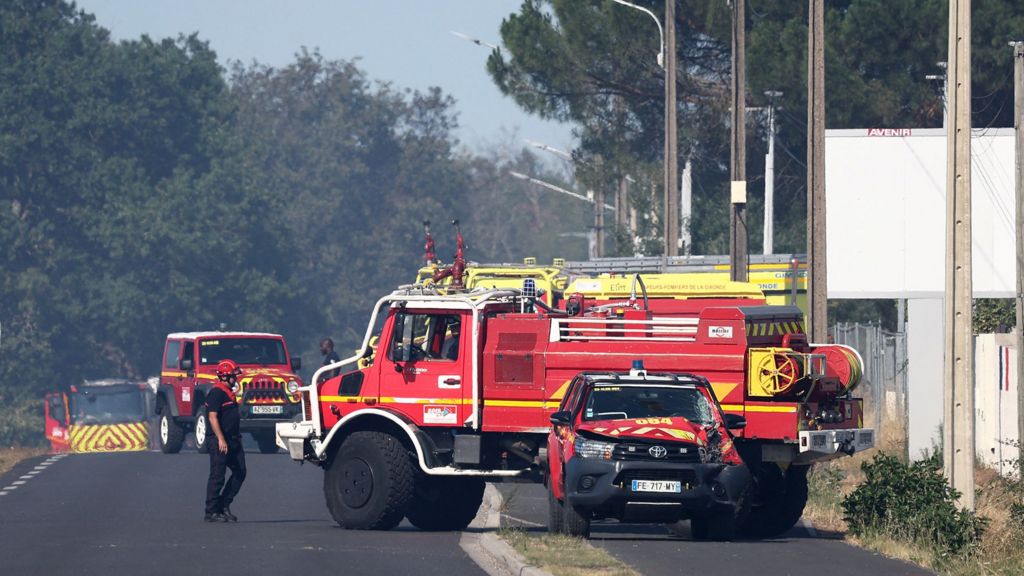
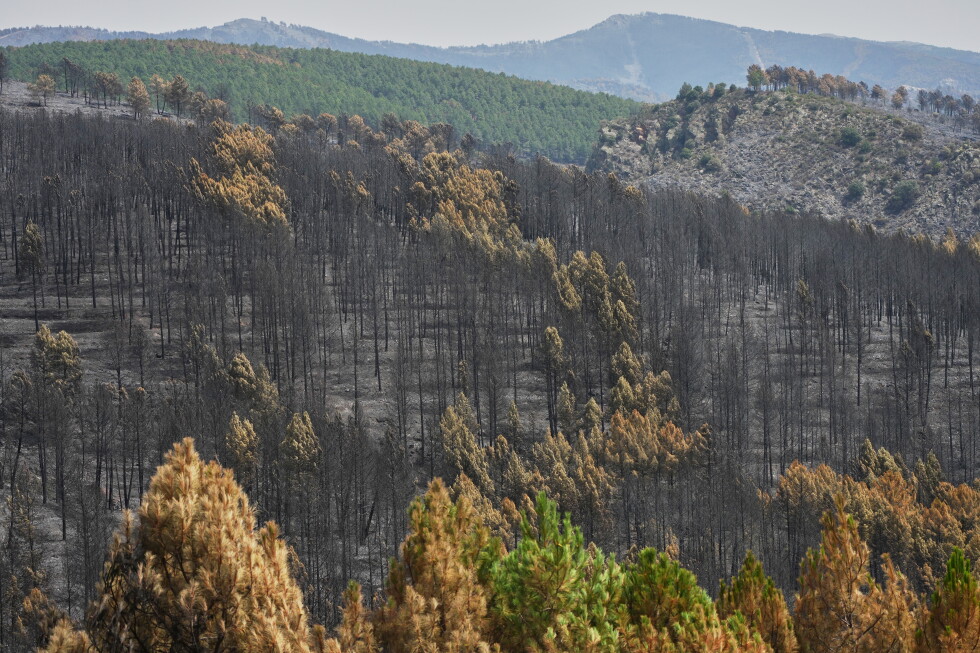
    On July 22, 2026, hundreds of firefighters and aerial water-bombing teams continued their battle against an unprecedented wildfire burning through rural central Spain’s Guadalajara province, a blaze already ranked as one of the largest the southern European nation has faced in modern history. As of Wednesday, the inferno had scorched more than 32,000 hectares (79,000 acres) of land, 90% of which lies within a protected national park, forcing the evacuation of 34 nearby villages.

    The emergency comes less than two weeks after a far deadlier wildfire ripped through a small coastal expat community in southern Spain, killing 13 people—including multiple foreign residents—in one of Spain’s deadliest wildfire events on record. Unlike that earlier blaze, no fatalities or critical injuries have been reported from the Guadalajara fire so far, a small relief for responding authorities.

    During an official visit to the fire-stricken town of Tamajón, a two-hour drive northeast of the Spanish capital Madrid, Prime Minister Pedro Sánchez highlighted the clear link between rising global temperatures and the growing wildfire crisis facing the nation. “Year after year we clearly see how climate change kills and destroys wealth in our communities,” Sánchez told reporters on site. He emphasized that the threat of climate breakdown is not a partisan political issue, but a fact-backed scientific reality, and issued a call for all national political parties to join a unified cross-party pact to strengthen Spain’s climate action and wildfire preparedness.

    Sánchez also shared grim new data showing the accelerating scale of Spain’s 2026 wildfire season: the country has already recorded 22 major blazes (defined as fires burning more than 500 hectares) this year. The total area scorched by wildfires across Spain in 2026 is already four times the amount burned by this point in 2025, with more than 100,000 hectares (247,000 acres) lost as of mid-July—already matching the full-year average recorded over the past decade.
    Spain’s Minister for the Ecological Transition, Sara Aagesen, confirmed that the Guadalajara fire is the largest wildfire ever recorded in the Castilla-La Mancha region, and one of the largest in the country’s recent history. Regional president of Castilla-La Mancha Emiliano García-Page noted that responding teams have successfully protected all residential properties across 40 villages in the fire’s path, and crews are aiming to bring the week-old blaze under full control by Friday. That timeline, however, is at growing risk from an incoming extreme heat wave that is already raising temperatures across the country.

    Spain’s national weather agency has placed Guadalajara and much of inland Spain under high temperature alerts, with the current heat wave peaking between Wednesday and Thursday. Forecasters predict temperatures will climb to nearly 40°C (104°F) in most inland areas, and could exceed 42°C (108°F) in parts of southern Spain’s Andalusia region. Like many Mediterranean nations, Spain is facing a perfect storm of wildfire conditions: extreme heat, persistent drought, low rainfall and gusty winds that allow small ignitions to spread rapidly into large, out-of-control infernos.

    Local officials have praised the tireless work of frontline firefighting teams. Miguel Ángel Moreno, mayor of the evacuated village Zarzuela de Jadraque, told Spain’s national broadcaster TVE that all 100 of the town’s residents were evacuated the previous Friday, with 14 residents taking shelter at a local Red Cross facility. While two local barns were destroyed in the blaze, firefighters managed to save every residential home in the village. “Besides the heroes who won the World Cup, we have other heroes who remain nameless,” Moreno said, comparing the firefighters to the nation’s recently victorious World Cup soccer squad. “(They) had to run from one side of the village to the other putting out fires.”

    Climate scientists have long warned that wildfire risk across southern Europe will grow more severe as the planet warms. Data from the European Union’s Copernicus Climate Change Service confirms that Europe is warming faster than any other continent on Earth, with temperatures rising twice as quickly as the global average since the 1980s. Globally, 2025 was the third-hottest year ever recorded, bringing repeated extreme heat events across the continent. Researchers warn that climate change is intensifying the frequency and severity of heat waves and drought across southern and southeastern Europe, leaving the region far more vulnerable to destructive wildfires and public health crises.


  • France’s environment minister resigns over emergency bill allowing 2 banned pesticides

    France’s environment minister resigns over emergency bill allowing 2 banned pesticides

    PARIS – In a high-profile move that lays bare deep divisions over France’s environmental and agricultural policy, Monique Barbut, the country’s Minister for Ecological Transition, has announced her resignation in protest of emergency legislation that carves out temporary legal exemptions for two restricted pesticides widely linked to harm in bee populations.

    Barbut, who assumed her cabinet role just nine months ago in October 2023, confirmed she would formally submit her resignation to President Emmanuel Macron on Wednesday. The controversial bill, which was approved by French national legislators on Tuesday, grants France’s public health agency for food, environment and occupational safety the authority to approve limited use of the two neonicotinoid-derived pesticides — acetamiprid and flupyradifurone — for agricultural sectors facing acute production challenges.

    In a public statement shared via social media, Barbut framed her tenure as a fight for underrepresented environmental priorities. “Over the past nine months, I have defended those who do not march, who do not vote, and who do not shout: the silence of our forests, the quality of our water, the purity of our air, the richness of our soils, and the diversity of life,” she wrote. “Today, I must acknowledge that the forces opposing these goals have become so powerful that I no longer have the means to carry this ambition through.”

    The two pesticides at the center of the debate fall under the neonicotinoid class of agrochemicals. While they are permitted under broad European Union regulatory frameworks, France has enforced a full national ban on their use for years. The new exemptions will allow their application on four high-value crops: sugar beets, apples, hazelnuts, and cherries.

    Barbut added that the government had blocked all attempts to amend or debate the pesticide exemption provision, breaking explicit commitments made to her when she took office. This political clash comes exactly one year after France’s Constitutional Court struck down a similar provision in a broader agricultural reform bill that would have reauthorized acetamiprid. The pesticide has been banned nationwide since 2018, after research confirmed its toxic impact on bees and other critical pollinator species. In its 2023 ruling, the high court found the proposed reauthorization violated legal obligations to protect the environment and the interests of future generations, setting the stage for the current standoff.

  • Japan temperatures soar over 40C, marking first ‘cruelly hot day’

    Japan temperatures soar over 40C, marking first ‘cruelly hot day’

    Japan has marked a historic and concerning milestone in its climate history, recording its first official “kokushobi” — translated as a “cruelly hot day” — after mercury levels climbed above the 40 degrees Celsius (104 degrees Fahrenheit) threshold across multiple regions this week.

    The new terminology, launched back in April by the Japan Meteorological Agency (JMA), was created specifically to better communicate the extreme danger of severe heat to the general public, filling a gap in the country’s existing graded heat warning system. Japan already had standardized terms for days exceeding 25C, 30C, and 35C; days above 35C have long been labeled “moshobi,” or “extremely hot days.” The new label “kokushobi” draws from the Japanese word “koku,” meaning harsh or cruel, to underscore the life-threatening risk of heat that reaches or surpasses 40C.

    On Tuesday, three central Japanese cities — Tajimi, Gujo, and Toyoda — all hit the 40C benchmark to trigger the country’s first official kokushobi. According to Kyodo News, nearly 300 of Japan’s 914 national temperature observation stations recorded moshobi conditions across the country on the same day. The JMA has warned that the oppressive heat dome will persist through next week, leaving little relief for affected communities.

    This record comes amid a global pattern of intensifying extreme heat events driven by climate change, which has made summer temperatures across Japan progressively hotter and more dangerous year over year. In 2025, Japan hit its all-time highest recorded temperature of 41.8C in the city of Isesaki, and workplace heatstroke data already reflects a growing public health crisis. A Kyodo report from last year found that the number of heatstroke cases among working people hit a record 1,803, with 19 fatalities reported.

    In response to the current heatwave, Japanese authorities have issued heatstroke warnings for more than 40 of the country’s prefectures. Public health guidance urges residents to stay indoors as much as possible, avoid extended outdoor activity, run air conditioning consistently, and maintain hydration and electrolyte levels to prevent heat illness.

    Tokyo officials reported a staggering new annual high for heatstroke hospitalizations on Tuesday: the Tokyo Fire Department confirmed 287 people ranging in age from 3 to 103 were admitted to city hospitals for suspected heatstroke, according to public broadcaster NHK. By Wednesday, the department was forced to issue an ambulance overload alert due to sustained high demand for emergency heat-related responses, repeating urgent calls for residents to take proactive steps to avoid heatstroke.

    As the country prepares for what is projected to be another record hot summer, regional governments have introduced adaptive measures to cut energy use and reduce heat risk. The Tokyo metropolitan government, for example, has encouraged office workers to adopt casual cool attire such as T-shirts and shorts instead of formal suits and ties, to reduce the need for excessive air conditioning while keeping workers comfortable.

  • Beluga whales rescued from closed Canadian marine park arrive in US

    Beluga whales rescued from closed Canadian marine park arrive in US

    After months of planning and coordination between marine conservation groups, six beluga whales that were left without proper care when a Canadian marine park ceased operations have successfully completed their journey to new sanctuaries in the United States.

    The closure of the Canadian facility left the captive belugas in a precarious position: the park’s operators could no longer meet the animals’ complex dietary, medical and habitat needs, prompting an urgent cross-border rescue effort. Conservation teams worked for weeks to plan the safe transport, taking extra precautions to minimize stress for the marine mammals during the move.

    Upon their arrival, the belugas were greeted by a team of marine biologists and veterinarians who conducted immediate health assessments. The new facilities, which prioritize animal welfare and conservation education, offer larger, more naturalistic enclosures designed to support the belugas’ physical and social needs.

    This rescue effort highlights growing global conversations about the ethics of keeping marine mammals in entertainment-focused facilities, and the work of conservation organizations to rehome captive marine life when operations shut down. For the six belugas, the arrival in the U.S. marks the start of a new chapter in environments built around their well-being.

  • France reintroduces ‘bee-harming pesticides’, environment minister to quit

    France reintroduces ‘bee-harming pesticides’, environment minister to quit

    In a move that has split French politics and sparked outrage among environmental groups, France’s upper legislative chamber, the Senate, has approved a divisive bill to bring back two insecticides widely documented to harm bee populations, prompting the nation’s environment minister to announce her imminent resignation.

    Monique Barbut, France’s current environment minister, confirmed to close aides Tuesday that she sees no path forward but to step down, with plans to formally submit her resignation to President Emmanuel Macron by the start of Wednesday.

    The two pesticides at the center of the debate — acetamiprid and flupyradifurone — have been banned from domestic use in France since 2018 and 2019 respectively. Backers of the legislation, led by conservative senator Laurent Duplomb, argue that domestic producers of sugar beets, apples and hazelnuts need access to the chemicals to remain competitive against farmers in other EU member states, where the two substances remain legal for use. Following the vote Tuesday evening, Duplomb told fellow senators he was proud of the legislative work that secured the bill’s passage, which passed the lower house National Assembly earlier the same day. The final Senate vote count stood at 214 in favor and 111 opposed.

    Agriculture Minister Annie Genevard has also defended the policy, framing it as a necessary response to widespread farmer discontent that erupted into large-scale protests across France this past winter. She emphasized that the bill restricts use of the pesticides to narrow emergency circumstances: it will only be approved for specific regions and limited time frames, she said, on the condition that no harm to human health or the environment is proven and no viable alternative pest control option exists.

    Critics, however, reject these assurances, pointing to robust scientific research that confirms the substances’ toxicity to pollinators and potential risks to people. Multiple studies have documented that acetamiprid poisons honeybees, damaging their ability to forage for food and impairing their memory. A 2024 academic study further found that flupyradifurone can be lethal to certain bee species.

    This is not the first attempt to reintroduce acetamiprid: last year, France’s Constitutional Council, the nation’s highest constitutional court, struck down a similar provision in an earlier agriculture bill backed by Duplomb, ruling that the chemical posed unacceptable risks to human health. That ruling came after more than two million French citizens signed a public petition opposing the reintroduction. Following the National Assembly’s approval of the new bill this week, left-wing parties have already announced plans to challenge the new legislation before the Constitutional Council if it secured Senate approval.

    The bill passed despite unified opposition from most left-wing lawmakers in the lower house, after securing backing from far-right parties and a majority of centrist legislators. Environmental and beekeeping advocacy groups have decried the move as a rejection of scientific consensus and popular will.

    “The government and its allies are trampling on science, health, the environment, and the will of the people,” environmental NGO Greenpeace said in a statement after the lower house vote. Henri Clement, a representative of the French Beekeeping Union, told regional outlet Ici Gard Lozere that the approval of the bill is “absolutely catastrophic” for France’s bee populations and beekeeping industry.

  • Weeklong rainstorms in Chile blamed on El Nino kill at least 10 and trigger flash floods

    Weeklong rainstorms in Chile blamed on El Nino kill at least 10 and trigger flash floods

    SANTIAGO, Chile — A devastating seven-day rainfall event amplified by El Niño has wreaked unprecedented havoc across Chile, leaving at least 10 people dead and forcing emergency response teams into a frantic race on Tuesday to reach more than 100,000 residents cut off by destructive flash floods. The catastrophe ranks among the most severe weather-driven disasters the South American nation has faced in 30 years, with impacts rippling across multiple regions far beyond the hardest-hit northern zones.

    Torrential downpours paired with gusty strong winds have continued to pummel the normally arid northern regions of Atacama and Coquimbo, an area unaccustomed to such extreme volumes of precipitation. On Monday, President José Antonio Kast’s government officially declared a state of emergency across the affected zone to mobilize additional resources and streamline response efforts.

    As of Tuesday’s latest official update, disaster authorities confirmed that alongside the 10 fatalities, the storms have left 16 people with injuries and forced more than 4,000 residents to flee their damaged or destroyed homes. Of those displaced, 1,031 are currently sheltering in temporary emergency evacuation centers set up by local officials. Tens of thousands more residents across impacted areas have been left without access to critical utilities, including electrical power and safe drinking water, worsening the humanitarian crisis on the ground.

    Preliminary infrastructure assessments show the extreme rainfall has completely destroyed 81 residential properties and damaged more than 20,000 others, leaving many uninhabitable. Chile’s national disaster response agency, Senapred, has issued hundreds of mandatory evacuation warnings across 10 of the country’s 16 administrative regions, as flood risks extend far beyond the initial storm zone.

    Swollen, overflowing riverbanks and flood-washed out roads have left 104,271 people stranded, unable to evacuate to safer ground or receive emergency supplies. Senapred head Alicia Cebrián issued an urgent warning that even once the rain stops, major flood risks will persist for hours after the storm system moves out.

    “River levels do not necessarily rise at the same time precipitation is falling,” Cebrián explained to reporters Tuesday. “Water accumulates in the foothill areas, which means river levels can continue rising even hours after the storm system has passed.”

    Climate scientists and meteorologists have traced the extreme deluge back to the recent return of El Niño, a naturally occurring recurring climate pattern centered in the tropical Pacific Ocean that shifts global weather patterns. The phenomenon pushes ocean surface temperatures higher and amplifies the frequency and intensity of extreme weather events across the globe. For southern South America, El Niño is historically linked to significantly higher than average rainfall, creating the conditions that led to this week’s catastrophic flooding.

  • Two French firefighters die tackling blaze near Bordeaux airport

    Two French firefighters die tackling blaze near Bordeaux airport

    France is grappling with an unprecedented wave of wildfires amplified by record-breaking heatwaves, with two firefighters losing their lives battling a major blaze near Bordeaux-Mérignac Airport in southwestern France, local officials have confirmed. Local French media reports indicate the fire, which ignited close to one of the airport’s public parking lots, began as an uncontrolled brush fire before rapidly spreading to an adjacent structure.

    Social media footage and imagery captured by on-site witnesses show commercial airline passengers disembarking onto airport tarmacs as a towering, dense plume of dark smoke billowed into the sky just kilometers from the runway. In response to the emergency, airport authorities implemented flight delays for all incoming scheduled services to prevent additional risk to passengers and crew. Roughly 100 ground-based firefighters, supported by specialized aerial firefighting aircraft, have been deployed to bring the blaze under control.

    French Interior Minister Laurent Nuñez confirmed the fatalities during a scheduled question-and-answer session at the French National Assembly on Tuesday, noting he had received official notification of the deaths from administrative leaders in Gironde, the department where the Bordeaux fire is burning. Nuñez added that he would travel to Gironde “as soon as possible” to personally oversee ongoing suppression efforts. Gironde is among a growing number of French departments already reeling from weeks of wildfire activity, which has been stoked by an extended, unseasonal heatwave that has pushed regional temperatures well above average.

    Hours after the Bordeaux fire was reported, a new large-scale wildfire erupted on Tuesday in the southeastern department of Var. The fire, burning across territory in the commune of Pontevès, “remains entirely out of control and is spreading at a rapid pace,” according to the Voluntary Association for Fire Monitoring in France (PSFDF). In response, officials have deployed 500 firefighters and rescue personnel to contain the blaze, and have already ordered the evacuation of 150 local residents to safe emergency shelters.

    This season’s wildfire activity has already surpassed all modern records in France. Official data compiled by the European Forest Fire Information System (Effis) shows that between the start of January and mid-July, more than 42,000 hectares (103,784 acres) of land have burned across the country — a total that already exceeds the full-year record set in 2022. French President Emmanuel Macron noted last week that France has not faced this level of wildfire activity since the end of World War Two, with nearly 11,000 separate blazes recorded nationwide since the start of 2026.

    The surge in destructive wildfires across France and broader Europe is directly tied to human-caused climate change, according to climate scientists. Data from the Copernicus Climate Change Service confirms Europe is warming twice as fast as the global average, making the continent disproportionately vulnerable to extreme weather events. Rising global temperatures are fueling longer, more intense summer heatwaves, straining regional water supplies, and creating drier conditions that increase the frequency and severity of destructive wildfires.

    The current heat and wildfire crisis is not limited to France. Neighboring Spain has already seen at least 13 fatalities linked to this summer’s wildfires, with a single massive blaze north of Madrid destroying more than 29,000 hectares of forest and populated land, marking one of the most destructive wildfires in the country’s modern history.

  • Brazil’s Amazon sees sharp decline in size of area burned in 2025

    Brazil’s Amazon sees sharp decline in size of area burned in 2025

    Following a catastrophic 2024 fire season that scorched a record-breaking expanse of Brazil’s Amazon rainforest, newly released data from leading deforestation monitoring network MapBiomas reveals a dramatic and historic drop in burned land across the biome for 2025.

    MapBiomas’ latest annual report puts the total burned area of the Brazilian Amazon at just 3.1 million hectares in 2025, a stark plunge from the 15.8 million hectares consumed by fires in 2024. This figure marks the smallest area burned in the world’s largest tropical rainforest since the organization began consistent tracking in 1985.

    The sharp decline aligns with a core campaign pledge made by President Luiz Inácio Lula da Silva during his 2022 election run, and the positive data is widely expected to strengthen his position ahead of Brazil’s October 2026 re-election vote. The 2024 fire season, by contrast, was the most severe the Amazon had seen in more than 40 years, with the European Union’s Copernicus Climate Change Service attributing the disaster to a dangerous combination of extreme climate conditions and unregulated human activity.

    Vera Arruda, a lead researcher at the Amazon Environmental Research Institute (IPAM) and MapBiomas project coordinator, shared that the 2025 results carry major significance for rainforest conservation efforts. “The 31% drop compared to the historical average — driven primarily by the lowest number of fires recorded in the Amazon in 41 years — is positive news, but it does not yet allow us to conclude that this is an established trend or to scale back prevention efforts,” Arruda told the BBC.

    The downward trend in burned area extends far beyond the Amazon basin, covering the entirety of Brazil. Nationwide, total burned land fell from 30 million hectares in 2024 to 12.7 million hectares in 2025. The previous national record for burned area, set back in 2007, stands at 30.7 million hectares.

    Researchers attribute part of the 2025 improvement to a shift in global weather patterns: the cooling influence of La Niña replaced the heat-driving El Niño conditions that amplified 2024’s extreme drought and fire risk. Even with this year’s positive results, MapBiomas has issued a warning that El Niño’s return in 2026 could extend the Amazon’s dry season and push fire risk back up to dangerous levels.

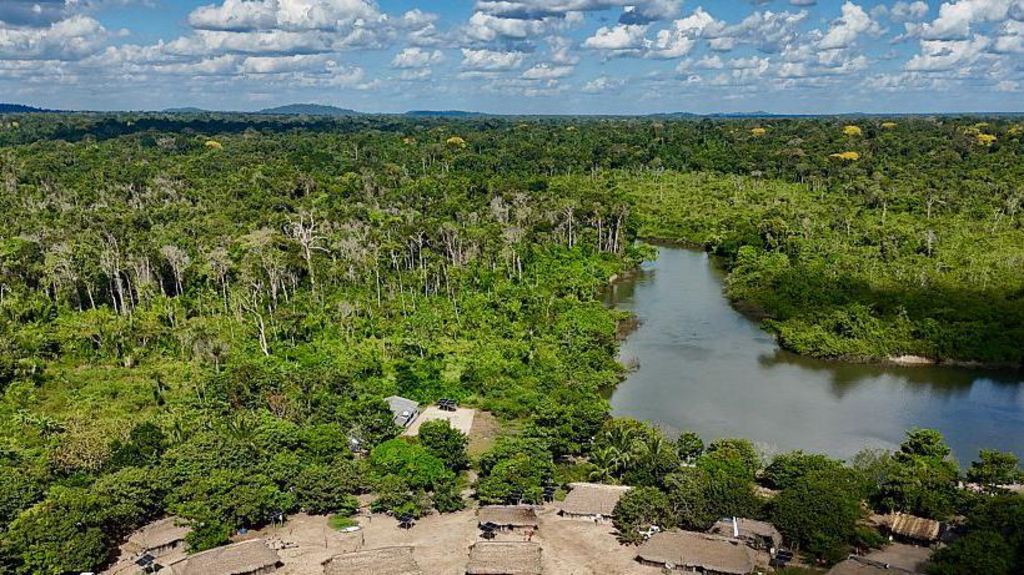
    The Amazon rainforest plays an irreplaceable role in global climate regulation: as a healthy ecosystem, it absorbs billions of tons of planet-warming carbon dioxide each year and supports millions of unique plant and animal species. For decades, however, the biome has faced growing pressure from intentional land clearing for industrial agriculture and illegal logging, paired with rising global temperatures that create ideal conditions for large, uncontrolled fires to spread.

    When Lula took office in January 2023, he made a public promise to reverse the surge in deforestation that occurred during the presidency of his predecessor, Jair Bolsonaro. Bolsonaro had advocated for expanded agricultural development and mining operations in the Amazon, arguing that increased economic activity would reduce regional poverty, but environmental activists widely condemned his policies for enabling accelerated forest clearing. During the third year of Bolsonaro’s term, Amazon deforestation rates rose 75% compared to pre-Bolsonaro levels.

    On his first day in office, Lula reaffirmed his administration’s commitment to ending Amazon deforestation entirely, a pledge that earned widespread praise from the global environmental community. Despite this progress on reducing burned area and deforestation, Lula has faced significant backlash from climate activists for his recent approval of offshore oil exploration at the mouth of the Amazon River, a decision critics say directly contradicts his promise to protect the rainforest ecosystem.

  • Fires in Brazil’s Amazon dropped to historic low in 2025

    Fires in Brazil’s Amazon dropped to historic low in 2025

    In a striking reversal of the previous year’s catastrophic environmental damage, forest fires in Brazil’s Amazon rainforest dropped to the lowest level recorded since official monitoring began in 1985, according to a new report released this week by independent environmental monitoring network MapBiomas.

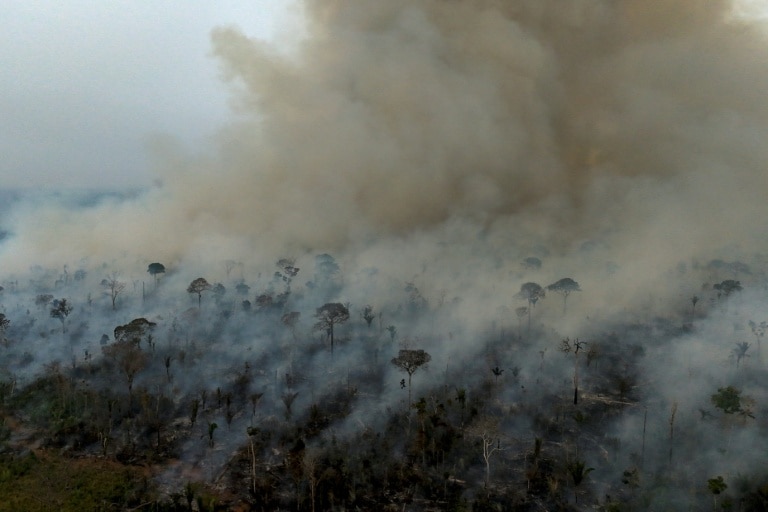
    The 2025 decline comes after 2024 saw the Amazon ravaged by widespread flames, driven by an unprecedented drought that amplified the spread of predominantly human-set blazes tied to agricultural clearing and illicit deforestation. MapBiomas’ analysis of satellite data puts the total burned area across the Brazilian Amazon in 2025 at 3.1 million hectares, or 7.7 million acres — a figure that marks a dramatic break from years of expanding fire activity in the world’s largest tropical rainforest.

    The downward trend was not limited to the Amazon: nationwide, total burned area across Brazil also fell to its smallest size since 2018. Report coordinator and geographer Ane Alencar described the sharp decline as “out of the ordinary,” attributing the shift to three key factors.

    First, an unusually delayed rainy season between the end of 2024 and start of 2025 eliminated the typical dry weather window that land clearers rely on to set intentional fires for agricultural expansion. These poorly managed blazes, often linked to illegal deforestation and unregulated mining activity, are the leading cause of Amazon wildfires.

    Second, MapBiomas recorded a parallel drop in Amazon deforestation in 2025, which reduced the volume of dry, cleared vegetation that acts as fuel for spreading flames. Finally, Alencar noted a significant “psychological factor” at play: communities that lived through the devastating 2024 fire season proactively helped contain small outbreaks before they could escalate into large-scale blazes.

    The report notes that this sharp decline interrupts a multi-year trend of growing fire activity in the Amazon, bringing the region back to historic low levels of burned area. However, the findings also include important caveats and warnings. Fires in the vast Cerrado savanna biome, which sits adjacent to the Amazon in central Brazil, continued to burn at the same high rates seen in recent years, with no decline recorded. Alencar also warned of rising risk for 2026, pointing to the projected arrival of a “super El Niño” event — a climate pattern that brings extended dry conditions and elevated wildfire risk to the Amazon.

    The drop in fires and deforestation represents a major political win for leftist Brazilian President Luiz Inácio Lula da Silva, who has made Amazon protection a core pillar of his reelection campaign ahead of October’s general election, where he is seeking a fourth non-consecutive term. Official data from the first quarter of 2026 already shows Amazon deforestation at its lowest rate this decade, and Lula has pledged to fully eradicate illegal deforestation across the country by 2030. Protecting the Amazon is widely recognized as a critical global priority for combatting climate change, as the rainforest’s dense vegetation absorbs vast volumes of the greenhouse gases that drive global warming.

    Even as Lula gains credit for the declining fire numbers, he faces ongoing backlash from environmental activists over his endorsement of a major new offshore oil exploration project off the Amazon coast, a decision that has drawn fierce criticism from climate and Indigenous rights groups.

  • Tropical Storm Bertha threatens US Gulf coast

    Tropical Storm Bertha threatens US Gulf coast

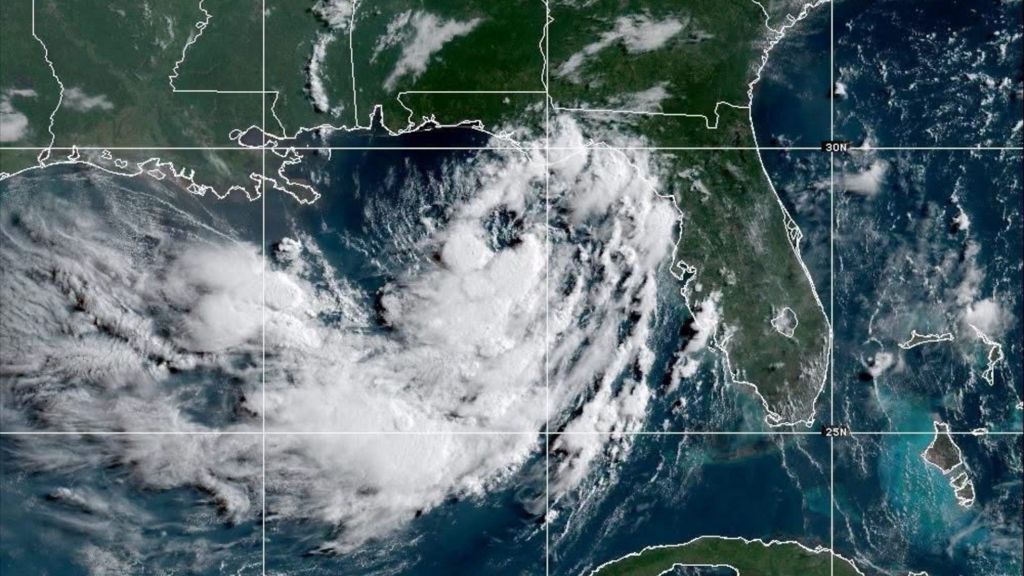
    As the 2025 Atlantic hurricane season unfolds, the second named storm of the year is already posing major hazards to communities across the U.S. Gulf Coast. The National Hurricane Center (NHC), based in Miami, has issued urgent warnings that Tropical Storm Bertha, currently churning in the Gulf of Mexico, will bring extreme weather conditions including life-threatening storm surges, widespread flooding, and isolated tornadoes to the Southeast United States over the coming days.

    As of Monday’s official updates, the storm was positioned roughly 105 miles (165 kilometers) south of Panama City, Florida. At that time, it packed sustained maximum winds of 40 miles per hour (65 kilometers per hour), with tropical storm-force gusts extending as far as 70 miles out from the storm’s central circulation. Tracking northwest at a slow pace of just 3 miles per hour, the NHC projects Bertha will travel along or near the northern Gulf Coast through mid-week, gradually gaining strength before making a potential landfall near New Orleans, Louisiana on Wednesday.

    The forecasted storm path puts multiple Gulf states on high alert: Alabama, Florida, Louisiana, and Mississippi all face elevated risks of flash flooding and storm surge as the system drifts westward toward the Texas coastline. Meteorologists predict some regions could accumulate up to 8 inches (20 centimeters) of total rainfall by Friday, and Florida is at particular risk of brief, isolated tornadoes that can spin off from slow-moving tropical systems. For coastal areas of Louisiana and Mississippi, officials expect storm surges to reach between 1 and 4 feet above normal tide levels, a rise that can overwhelm low-lying shoreline communities and cause widespread coastal flooding. Slow-moving storms also raise the risk of urban flash flooding, as heavy rainfall overwhelms drainage systems in densely populated areas.

    In preparation for the storm’s arrival, New Orleans has already begun distributing sandbags to residents to reinforce homes and properties against floodwaters. Local officials have also urged residents to clear debris from public storm drains to help prevent clogging that would worsen flood conditions. The storm’s landfall comes as the U.S. South is already gripped by a record-breaking sweltering summer heatwave, adding an extra layer of risk for residents who may lose power during storm impacts.

    After making landfall, forecasters project that Bertha will gradually weaken back to tropical depression status by Thursday, and is expected to fully dissipate by the end of the week as it approaches the Texas coast. Currently, a tropical storm watch is in effect stretching from Florida’s Ochlockonee River westward to the border of Jefferson and Plaquemines Parishes in Louisiana, covering hundreds of miles of vulnerable coastline. Bertha follows Tropical Storm Arthur, which brought moderate flooding to parts of the U.S. last month, marking just the second named storm of this year’s Atlantic hurricane season.