分类: environment

  • Wildfire haze hangs over eastern US — and World Cup final

    Wildfire haze hangs over eastern US — and World Cup final

    A thick, acrid blanket of wildfire smoke drifted south from raging Canadian blazes to engulf much of the eastern United States on Saturday, creating dangerous air quality conditions across major population centers and casting uncertainty over the 2026 FIFA World Cup final scheduled for Sunday at an open-air New Jersey stadium located just across the Hudson River from New York City.

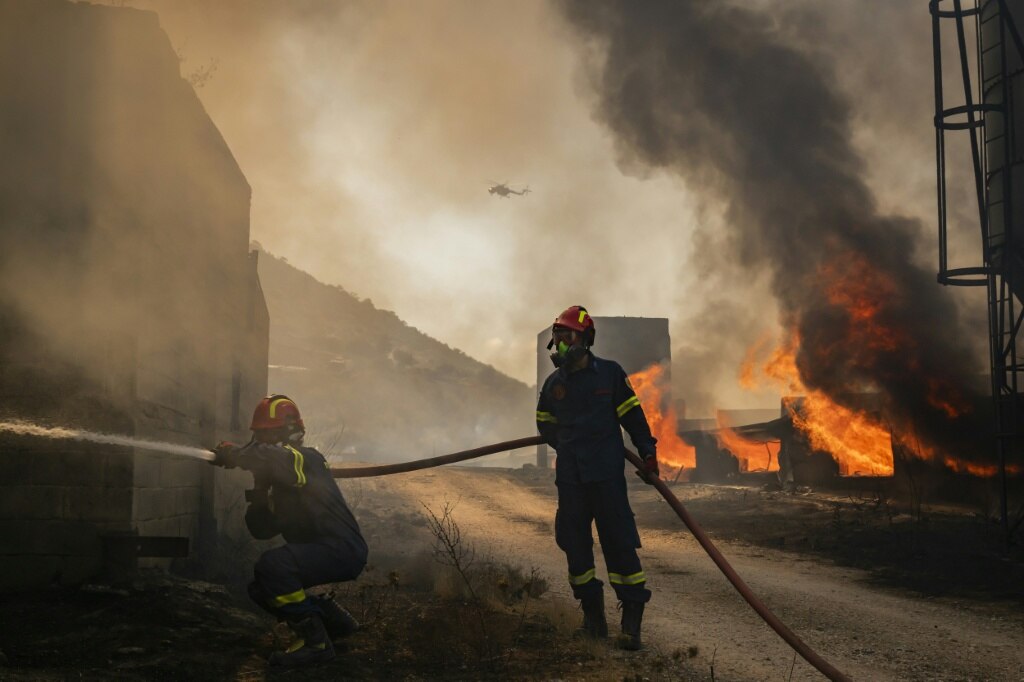
    As of Saturday morning, official data from the Canadian Wildland Fire Information System confirmed that more than 950 active wildfires were still burning uncontrolled across vast swathes of Canadian territory. The persistent wind patterns pushed plumes of toxic smoke across the U.S.-Canada border, triggering public health alerts from New England down to the Mid-Atlantic and into parts of the Midwest. By midday Saturday, global air quality tracker IQAir recorded that New York City had topped its list of the world’s most polluted major cities, with neighboring Toronto and Washington, D.C. ranking just behind the U.S. megacity.

    At MetLife Stadium, the venue for the highly anticipated final between Argentina and Spain, tournament officials confirmed they are closely monitoring the evolving air quality situation. Andrew Giuliani, executive director of the White House World Cup task force, shared the update during a press briefing Saturday. Across the river in New York City, the iconic skyline was completely obscured by dense grey haze, and most people venturing outdoors wore protective face masks to avoid inhaling the toxic fumes.

    Public officials across the region have issued urgent advisories urging residents to limit outdoor activity. New York City Mayor Zohran Mamdani called on locals to stay indoors and avoid unnecessary travel, warning that incoming weather systems bring both a potential end to the haze and new hazards. “Thunderstorms are expected to bring damaging winds strong enough to down trees and power lines, along with heavy rainfall that could cause flash flooding,” Mamdani posted on the social platform X. The U.S. National Weather Service echoed that warning, noting that the smoky conditions would persist across the region through Saturday afternoon, with the heavy storm system only expected to clear the area by evening.

    In Washington, D.C., the Department of Homeland Security and Emergency Management warned that air quality levels remained “unhealthy for at-risk groups” including children, the elderly and people with preexisting respiratory conditions, urging residents in the capital to cut down on extended time outdoors.

    Meteorologists noted that the incoming Saturday evening storms could deliver a partial reprieve: the heavy rainfall is expected to pull much of the suspended smoke particles out of the atmosphere, clearing the haze in time for Sunday’s match. But the same storm system carries significant risks of flash flooding and dangerous wind gusts that have already prompted flash flood warnings across the Northeast.

    The crisis has already sparked political controversy, with U.S. President Donald Trump placing full blame on Canadian authorities for the cross-border pollution. Trump accused Canada of “willful negligence” for “not properly maintaining” its forested lands, and threatened to impose new additional tariffs on Canadian imports in response to the crisis.

    Climate policy and public health advocates, however, have emphasized a broader root cause: repeated transboundary wildfire smoke events across North America are directly linked to human-caused climate change, which has created hotter, drier conditions across the Canadian boreal forest that increase the frequency and severity of extreme wildfire seasons.

  • What this desert city can teach the world about tackling heat deaths

    What this desert city can teach the world about tackling heat deaths

    Across vast swathes of the United States and Western Europe, summer 2026 has brought record-shattering, blistering heat that has already claimed hundreds of lives, and climate scientists are clear: this extreme warmth is not an anomaly, but the new normal for communities worldwide.

    The human cost of this year’s heatwaves has already been staggering. France reported more than 2,000 excess deaths during its late-June heat event. In England and Wales, researchers estimate over 2,700 people have died from heat-related causes across a string of extreme heat events starting in May. During the 4 July holiday weekend alone, the U.S. recorded at least 44 confirmed heat-linked deaths.

    Unlike decades past, today’s extreme heat carries a uniquely dangerous twist: overnight temperatures no longer drop enough to let human bodies recover from daytime heat stress, explained Jennifer Marlon, a Yale University climate researcher specializing in extreme heat impacts. “People don’t realise this is not the same heat that we were experiencing 10 years ago, it is actually worse, because in many cases nighttime temperatures are not cooling off,” Marlon told the BBC. With core body temperatures unable to reset during cool nights, even healthy people face elevated risk of heat exhaustion and fatal heat stroke.

    While most newly heat-stricken regions are scrambling to adapt, one U.S. city has been preparing for this future for years: Phoenix, Arizona, located in the always-warm Maricopa County. For decades, local officials have built targeted programs to cut heat deaths, and their efforts have yielded measurable results that experts say could act as a global blueprint for heat resilience.

    As one of the consistently hottest regions in the U.S., Maricopa County has long prioritized heat safety, launching widespread initiatives ranging from expanded cooling center access to free air conditioning support for low-income residents. In a pioneering move in 2021, Phoenix became the first city in the world to appoint a dedicated municipal heat officer, a role focused on coordinating cross-government action on heat risks.

    “We’ve had the relative benefit of knowing that this is going to be a problem every year, but it appears to be more and more of a problem or more of a predictable event in communities across the globe,” said Nicholas Staab, Maricopa County’s chief medical officer.

    The county’s proactive strategy has already driven a notable decline in heat mortality. After peaking at 645 heat-related deaths in 2023, the annual count dropped to 405 in 2025, a reduction many public health experts attribute directly to targeted policy interventions. Much of the county’s work centers on expanding access to cooling for the groups most at risk: low-income households and unhoused residents. Cooling centers have extended operating hours, with many now open 24/7 to pull people off overheated streets, and a dedicated program provides free air conditioning repairs or replacements for eligible low-income residents.

    “The world has a lot to learn from Maricopa County,” Marlon said.

    Despite these successes, the downward trend in mortality is not guaranteed. As of 11 July this year, Maricopa County has already recorded 23 confirmed heat-related deaths, with another 282 cases still under investigation. If all pending cases are confirmed as heat-linked, 2026’s death toll will outpace last year’s count, a reminder of the growing pressure rising temperatures place even on well-prepared communities.

    Ladd Keith, director of the Heat Resilience Initiative at the University of Arizona, noted that the simplest step other regions can replicate is appointing a dedicated heat officer to coordinate cross-department action and cut through bureaucratic gridlock. “It’s incredibly important to make someone responsible for heat because the problem is, if it’s no one’s responsibility, then no one will address it,” he said.

    Marlon added that even regions unaccustomed to extreme heat can quickly stand up coordinated cooling center networks with proper cross-agency communication – but that progress first requires widespread recognition that extreme heat is not a temporary, one-off event.

    Driven by human-caused climate change, the global average temperature has already risen more than 1.1°C above pre-industrial levels, and temperatures will continue to climb for years even if nations implement steep, immediate cuts to greenhouse gas emissions. Experts emphasize that heat adaptation is no longer optional for communities worldwide, and that heat risks extend far beyond public health: it threatens critical infrastructure and economic stability too, buckling paved roads and causing widespread flight delays during heat peaks.

    Most critically, Keith said, communities must abandon outdated planning based on historical temperature records and prepare for a hotter future. “We have to shift away from planning for the historic heat we’ve experienced and start to plan for the heat we’re going to experience in the next five to 10 years,” he said. “If people think it’s bad now, it’s going to be hotter, and it’s going to be hotter longer. The records are going to be broken, you can almost guarantee, year after year across the world.”

  • EU proposes slowing down cuts to carbon emissions for businesses

    EU proposes slowing down cuts to carbon emissions for businesses

    The European Union has put forward a revised set of climate policy changes that would ease the pace of emissions reductions required for industrial operators under the bloc’s signature cap-and-trade program, the Emissions Trading System (ETS). First launched in 2005, the ETS has stood as the EU’s core regulatory mechanism for cutting greenhouse gas output for nearly two decades, creating a financial incentive for heavy emitters to shift to cleaner energy by requiring permits for every tonne of carbon dioxide released.

    Under the newly proposed reforms, the annual rate at which the ETS’s total cap on emissions is lowered will be reduced. Currently, the cap shrinks by 4.3% each year; starting in 2031, that rate would drop to 3.7%, and fall further to 1.7% by 2036. The reforms also extend the availability of free emission allowances for qualifying industries by four years, from the previously scheduled phase-out date of 2034 to 2038. For companies that formalize decarbonization investment plans within the EU, 80% of these free allowances will be allocated upfront, with the remaining 20% released only after the committed upgrades are completed. A carbon border adjustment mechanism on carbon-intensive imports, originally set to replace free permits in 2034, will also be delayed to match the new timeline.

    EU Climate Commissioner Wopke Hoekstra framed the adjusted rules as a pragmatic, business-friendly approach that remains aligned with the bloc’s broader climate target of cutting total emissions by 90% from 1990 levels by 2040. The proposal comes after years of criticism from several member states, most notably Italy, which has argued that the ETS acts as an implicit tax that has driven up energy costs for businesses and consumers alike.

    Reaction to the plan has been sharply divided along political and national lines. Polish Climate Minister Paulina Hennig-Kloska celebrated the proposal as a breakthrough, noting it marks the first time the EU has softened rather than tightened ETS rules, and committed Poland to pushing for even further concessions. On the opposite side, green lawmakers have decried the reforms as a major step backward for climate action. German Member of the European Parliament Michael Bloss argued the changes will lock in decades of “gigantic climate pollution” and erode quality of life for future generations.

    Before the reforms can take effect, they must gain formal approval from all EU member states and the European Parliament, a legislative process that is expected to take approximately one year to complete.

  • Timelapse shows World Cup final stadium nearly vanish in smoky haze

    Timelapse shows World Cup final stadium nearly vanish in smoky haze

    Striking time-lapse footage has captured a startling visual shift at New Jersey’s MetLife Stadium, the chosen venue for the 2026 FIFA World Cup final, as thick haze from hundreds of ongoing Canadian wildfires swept across the region and nearly obscured the massive sports arena from view.

    The haze, which has been an ongoing issue for the Northeastern United States through multiple waves of wildfire activity this year, drifted southward from Canada, where hundreds of uncontrolled blazes have been burning across vast swathes of boreal forest in recent months. Climate researchers have linked the increased frequency and intensity of these wildfires to rising global temperatures and prolonged drought conditions across much of Canada, creating ideal conditions for large, fast-spreading fires that send plumes of smoke hundreds of miles across international borders.

    For residents and visitors in the New York City metropolitan area, where MetLife Stadium is located just across the Hudson River from Manhattan, the hazy conditions have not only created dramatic and concerning visuals like the timelapse of the vanishing stadium, but have also sparked ongoing public health concerns over poor air quality. The timelapse, which spread rapidly across social media after being shared, has served as a stark visual reminder of how far-reaching the impacts of climate change and large-scale wildfires have become, even for major population centers far from the actual fire lines.

    Officials have repeatedly issued air quality alerts across the region during periods of heavy haze, urging vulnerable populations to limit outdoor activity. As wildfire seasons continue to lengthen across North America, episodes of cross-border haze like this are expected to become more common in coming years, raising questions about how major public events like the World Cup will need to adapt to changing air quality conditions moving forward.

  • Wildfire smoke engulfs millions in US ahead of World Cup final

    Wildfire smoke engulfs millions in US ahead of World Cup final

    A thick, choking plume of wildfire smoke drifting south from Canada has triggered widespread unhealthy air quality alerts across a large swath of the United States, stirring last-minute uncertainty just two days before the 2026 World Cup final kicks off in an open-air stadium outside New York City. The toxic haze has already pushed major metropolitan areas across the Midwest and Northeast into some of the worst air pollution levels on the planet, raising public health alarms for millions of residents and forcing questions about potential impacts on Sunday’s high-profile match.

    By Friday, Detroit and Chicago posted Air Quality Index (AQI) readings that fell into the official “hazardous” category, global air quality tracker IQAir ranked the two cities as the most polluted urban centers on Earth. Washington D.C., also caught in the southward drift of wildfire emissions, recorded “very unhealthy” AQI levels, prompting local officials to urge all residents to skip non-essential outdoor activity to avoid exposure to fine particulate matter linked to respiratory and cardiovascular harm.

    In the New York City metro area and neighboring New Jersey, home to the stadium that will host Sunday’s final, regional air quality fell into the “unhealthy” range Thursday, with smog obscuring the iconic Manhattan skyline so thoroughly that landmarks were barely visible from across the Hudson River. Forecasters with the U.S. National Weather Service (NWS) warned that smoke concentrations could rise again overnight heading into Saturday, as shifting wind patterns carry additional Canadian wildfire emissions into the Northeast.

    “What we should start to see is a return of northwesterly winds over the Great Lakes, and that’s going to pick up some of that smoke and push it over the Northeast,” Peter Mullinax, an NWS meteorologist, told Agence France-Presse. While hazy skies are expected to persist through match day on Sunday, Mullinax added that forecasters do not anticipate pollution levels will reach the dangerous highs recorded earlier in the week.

    “I don’t believe that this should be as impactful as if you might be playing a game today,” he said. Mark Parrington, a senior scientist with the European Union’s Copernicus Atmosphere Monitoring Service, noted that forecast rain across the Northeast this weekend could also help clear the worst of the smoke from populated areas, though the long-term situation depends on whether Canadian wildfire activity continues at its current pace.

    Across affected regions, millions of residents are already adapting to the hazardous conditions: people are donning protective filtering masks for any outdoor trips, and public facilities including New York City libraries and train stations have been distributing free masks to help at-risk communities. The upper Midwest, which lies closest to the active Canadian fire zones, has borne the brunt of the pollution, with large parts of Michigan, Minnesota, and Wisconsin recording “hazardous” AQI readings for multiple consecutive days. The NWS has extended its air quality alert for Chicago through Friday, noting that additional smoke could return to the area Saturday evening and persist through Sunday.

    Climate and environmental advocates have highlighted this repeated wave of cross-border wildfire smoke as clear evidence of the link between accelerating climate change and worsening extreme wildfire risk. “Increasingly smoky skies underscore the importance of a rapid transition to clean energy rather than building more polluting fossil fuel infrastructure that further contributes to climate change,” said Paul Mathewson, science program director for Clean Wisconsin, an environmental advocacy group. Wisconsin has recorded a sharp rise in the number of smoky days annually in recent years, mirroring trends across much of North America.

    Parrington confirmed that climate change has created far more favorable conditions for intense, long-lasting wildfire seasons across Canada, driving higher surface air temperatures and drying out soil and vegetation across vast regions. “When there’s an ignition we see these really large-scale, persistent burning where these fires can burn for weeks and weeks at a time through summer,” he explained.

    As of Friday, Canadian authorities reported that more than 200 blazes were burning out of control across the country, with the most intense activity concentrated in Ontario. While the 2026 season has so far burned far less total area than 2023 — Canada’s worst wildfire season on record, which saw nearly 18 million hectares consumed — fire activity has escalated dramatically over the past seven days. Latest government data shows roughly 2.8 million hectares have burned across Canada since the start of 2026, up from just 1.6 million hectares a week earlier. No casualties have been reported from Ontario’s wildfires, but multiple remote indigenous and rural communities have already been evacuated to safer locations as blazes advance.

  • Latin American governments prepare for El Nino as drought, floods and heat loom

    Latin American governments prepare for El Nino as drought, floods and heat loom

    As a strengthening El Niño builds across the Pacific Ocean, governments throughout Latin America have begun mobilizing emergency resources and activating contingency frameworks to brace for a wave of coming climate disruptions, from crippling drought and extreme heat to devastating floods and landslides. Meteorologists have confirmed the climate phenomenon is already active, with projections indicating it will continue to gain intensity through the final months of 2024. Unlike sudden natural disasters such as hurricanes or earthquakes, El Niño develops gradually over months, offering governments a critical window of preparation before its most severe impacts hit. However, climate experts warn regional authorities have a long track record of failing to translate early scientific forecasts into actionable, proactive measures, leaving open questions about whether the region will avoid the widespread damage that marked past major El Niño events.
    Past strong El Niño cycles inflicted billions of dollars in economic damage across Latin America. The climate system shifts bring uneven impacts: some regions face extreme, long-lasting drought, while others get pounded by excessive rainfall that triggers floods and deadly landslides. In previous events, El Niño disrupted regional agricultural production, strained already limited drinking water supplies, fueled large-scale out-of-control wildfires, and cut hydroelectric power output in hydrology-dependent nations, leading to widespread energy shortages. The World Meteorological Organization’s representative for North America, Central America and the Caribbean, Rodney Martinez, emphasized that the confirmed, ongoing event requires urgent action now, not delayed planning. “El Niño is confirmed. El Nino is ongoing. It’s not simply a possibility,” Martinez said. “Now is the time for decisions, for effective preparedness and the political consistency to really be proactive this time.”
    Martinez urged countries to use the remaining window before impacts peak to shore up alternative energy supplies, protect high-vulnerability communities, and pre-position resources to handle strain on critical public services. For nations heavily reliant on hydropower such as Ecuador, this means activating thermal power generation capacity to offset falling reservoir levels during extended dry periods, and completing all required maintenance and procurement well ahead of potential shortages. He pointed to 2023’s widespread energy crisis in Ecuador, where severe drought drained hydroelectric reservoirs and left millions without power for days, as a clear warning of what could come this year.
    According to WMO data, Central America, parts of the Caribbean and northern South America are already recording far drier conditions than the historical average, changes directly linked to the developing El Niño. These dry conditions are projected to spread into large swathes of the Amazon basin, stoking urgent concerns over drinking water access, agricultural productivity, and elevated wildfire risk. Threat levels and types vary dramatically across the region, leading to targeted preparation efforts:
    In Brazil, Colombia and much of Central America, the top priorities are preparing for drought, potable water shortages, and an unusually intense wildfire season. Brazil has already deployed more than 4,600 federal personnel to support wildfire prevention and response, expanded professional firefighting brigades, and pre-positioned aerial firefighting aircraft ahead of what officials warn could be one of the worst fire seasons on record. Colombia, for its part, has activated continuous national water level monitoring systems, upgraded wildfire response preparedness, and issued guidance to local governments to pre-plan for potential water shortages.
    In other parts of the region, governments are gearing up for catastrophic flooding. Historically, strong El Niño events bring intense, damaging rainfall to Ecuador’s Pacific coast, prompting the national government to order local authorities to draft tailored contingency plans and allocate millions of dollars for flood mitigation infrastructure, emergency response deployments, and post-disaster agricultural recovery. Local teams have already begun clearing blocked drainage channels, stabilizing landslide-prone hillsides, and setting up stocked emergency shelters for displaced residents. Costa Rica has rolled out more than 200 separate actions under a national contingency plan, ranging from protecting drinking water reserves to expanding backup renewable energy capacity to prepping for severe wildfires. Peru has upgraded its national monitoring and early warning systems and expanded its on-the-ground meteorological observation network to track changing conditions in real time. Panamanian officials have also developed specific contingency plans to protect operations at the Panama Canal, one of the world’s busiest and most economically critical trade routes, where reduced rainfall can lower water levels enough to disrupt shipping transits.
    The WMO warns that El Niño’s impacts will stretch beyond immediate environmental disruption: prolonged drought and extreme heat threaten food security across Central America’s Dry Corridor, while excessive rainfall and flooding in other regions can damage critical infrastructure, contaminate drinking water supplies, and increase the risk of widespread infectious disease outbreaks.
    Despite the months of early advance warning, experts warn preparation efforts remain deeply uneven across the region. Martinez noted that many authorities still delay critical planning and investment, even as scientific forecasts grow more certain about El Niño’s intensity. Some officials wait for additional confirmation of the event’s track, while others wrongly assume their countries will avoid the worst impacts. “The reality is that this preparation doesn’t happen until they have the emergency,” he said. Postponing action, he warned, will leave governments scrambling to respond once droughts, floods and heat waves reach their peak intensity.
    Colombia’s Environment Minister Irene Vélez told the Associated Press that while El Niño is a recurring climate event, its current intensity is unprecedented, bringing new risks of longer duration and a broader geographic reach than past events. Research on past major El Niño events has found the economic damage can linger for years, with the most severe cycles ultimately costing the global economy trillions of dollars in cumulative losses. For governments that have not yet acted, Martinez’s message is clear: “Be prepared in advance, in a serious way. The information is there. Now is the time for decisions.”
    Vélez added that the challenge goes far beyond responding to a single extreme climate event, arguing that governments across the region must implement long-term systemic adaptation to address increasingly frequent and intense extreme conditions driven by human-caused climate change. “Climate change is here to stay,” she said.

  • A Brazilian bay’s surprise shark nursery sparks conservation project

    A Brazilian bay’s surprise shark nursery sparks conservation project

    Nestled along the sparkling emerald waters of southeastern Brazil’s Ilha Grande Bay, a small fishing community has undergone a profound shift in its relationship with one of the ocean’s most misunderstood predators: the blacktip shark. Where locals once viewed these sharks as a readily available source of food, a groundbreaking scientific discovery has transformed the region into a unexpected hub for global shark conservation efforts.

    The turning point came when a team of researchers uncovered that Piraquara de Fora, a sheltered local cove, serves as a regular gathering ground for dozens of pregnant blacktip sharks. This finding launched the Sharks of Ilha Grande Bay project, run under the Brazilian Institute for Nature Conservation, which is working to turn community attitudes toward shark protection.

    Brazil holds a uniquely important position in global shark conservation: it boasts the highest national shark meat consumption in the world, while its extensive coastline supports an extraordinary diversity of shark species and hosts critical habitats for many populations already classified as threatened. The International Union for Conservation of Nature (IUCN) warns that sharks rank among the most at-risk groups of vertebrates on the planet, with more than one-third of all species facing extinction due to overfishing, habitat destruction, and climate change. That makes protecting Brazilian shark habitats a global priority.

    Experts leading the project emphasize that identifying and safeguarding shark nurseries is the backbone of effective long-term conservation. Unlike most bony fish, sharks have extremely slow reproductive rates, producing far fewer offspring per breeding cycle, which leaves their populations especially vulnerable to population collapse. “Breeding areas are fundamental to ensuring the species survives throughout this Atlantic ecoregion,” explains Leonardo Mitrano Neves, who leads the project’s scientific team. To build robust data to support protection efforts, Neves and his team recently conducted on-site monitoring, submerging camera-equipped monitoring devices across the cove, baited to attract sharks, before analyzing collected footage and drone imagery in a laboratory.

    While blacktip sharks are the most common species in the cove, the project also extends conservation work to other at-risk local species, including sand tiger sharks and hammerhead sharks. Beyond scientific research, the initiative focuses on deep, community-centered engagement, including rolling out environmental education programs in local schools to reframe sharks as a valued part of the region’s natural heritage, rather than prey. Outreach materials also stress that local shark species pose no threat to humans, noting that no unprovoked shark attacks have ever been recorded in the area.

    The project also addresses a key regulatory gap that continues to threaten shark populations across Brazil. While Brazilian law bans targeted fishing of protected shark species, incidental bycatch of non-protected sharks is still permitted, and loose labeling rules allow unregulated shark meat to be sold under the generic market name “cação”, making it almost impossible for consumers to identify what they are buying. Conservation teams are working to educate locals about the dual risks of eating shark meat: the harm it causes to already endangered populations, and the direct health hazards for consumers. As apex predators, sharks accumulate dangerous levels of toxic heavy metals including mercury, arsenic, and lead in their tissues over their lifetimes; a 2024 study even detected traces of cocaine in some Brazilian sharpnose sharks tested off the country’s coast.

    Project coordinator José Truda Palazzo reports that these community outreach efforts are already delivering tangible results. “We hope that more and more people come to understand that cação is shark, and shark meat is toxic, in addition to the fact that sharks are endangered animals,” he said.

    Beyond conservation, the project is opening up new economic opportunities for the remote, resource-limited local community. Conservation leaders predict that shark watching—from coastal vantage points on forested mountains, from boats, or even for underwater diving excursions—could grow into a sustainable ecotourism industry that provides consistent alternative income for residents.

    Marlene Fernanda do Nascimento Martins, a 35-year-old local community leader who currently fishes and sells ice to support her three children, said the prospect of ecotourism is a welcome development for the area. “We’re a remote community with very limited resources. So anything that comes along that can help us preserve our village is a good thing,” she explained.

    For long-time locals, the shift in attitudes has become intergenerational. Reinaldo Dias da Rocha, another resident of the community, noted that his father already encouraged him to avoid hunting sharks, but the project has reinforced the importance of protecting the animals. “We pass the information on to our nephews, to tourists who come to discover this place and enjoy our beautiful beaches, and further labor the point that what we call cação isn’t to be eaten,” he said.

  • US Republicans accuse Canada of wildfire inaction

    US Republicans accuse Canada of wildfire inaction

    A devastating season of Canadian wildfires has triggered a sharp diplomatic standoff between U.S. lawmakers and Canadian officials, as hazardous smoke continues to blanket large swathes of the United States, triggering public health emergencies and disrupting daily life.

    As of last Friday, official data from the Canadian Wildland Fire Information System recorded more than 890 active wildfires burning across Canada, with over half of these blazes classified as out of control. To date, the infernos have consumed nearly 3 million hectares of Canadian land, making this one of the most destructive wildfire seasons on record for the North American nation.

    The far-reaching impact of the blazes has crossed international borders, with a dense, toxic blanket of smoke spreading south into multiple U.S. states, stretching from Minnesota and Michigan in the Midwest to Pennsylvania, Ohio and New York on the East Coast. Hazardous air quality warnings have been activated across the entire affected region, forcing the cancellation of dozens of outdoor public events and forcing residents indoors to avoid exposure.

    On Friday, global air quality tracker IQAir ranked Chicago, Illinois as the city with the worst air quality on the planet, with Detroit, Michigan — one of the U.S. cities hardest hit by the pollution — claiming second place, followed by Washington D.C., Toronto and New York City. On Thursday last week, thick smog completely obscured iconic New York City landmarks including the Empire State Building and the Statue of Liberty, prompting city officials to extend existing heat emergencies and activate full air quality emergency protocols. Hundreds of cooling centers have been opened across the five boroughs, and free KN95 masks are being distributed to residents to help reduce smoke inhalation.

    The poor air quality has sparked fierce criticism from four Republican members of the U.S. Congress representing districts in Michigan. In a joint open letter addressed to Canadian Prime Minister Mark Carney, the lawmakers — John James, John Moolenaar, Jack Bergman and Lisa McClain — said their patience with Canadian inaction on the wildfire crisis has run out.

    “We are done accepting apologies in place of action,” the letter read, adding that the delegation warned the U.S. could move forward with direct cross-border intervention for wildfire management and firefighting operations if Canada failed to take meaningful steps to address the root of the crisis. The lawmakers accused Canada of failing to follow through on 2023 promises to treat the wildfire risk with urgency, claiming that “American lungs are paying the price for Canadian inaction, year after year.” They specifically cited unaddressed issues including chronic underinvestment in preventative measures such as forest thinning, fuel load reduction and controlled prescribed burns, as well as insufficient enforcement to prevent arson.

    Prime Minister Carney did not directly respond to the specific accusations in the letter, but used a recent Ontario press conference to push back on the framing of the crisis. Speaking in French, Carney emphasized that “Climate change is everyone’s responsibility — truly everyone’s — including the United States.” He added that his federal government maintains constant close communication with provincial authorities and local affected communities to coordinate response efforts.

    Ontario Premier Doug Ford also dismissed criticism of his provincial government’s wildfire response, noting that more than 150 fire crews are already deployed on the ground battling active blazes. “We will spend whatever it takes,” Ford stated, to bring the fires under control and support affected communities.

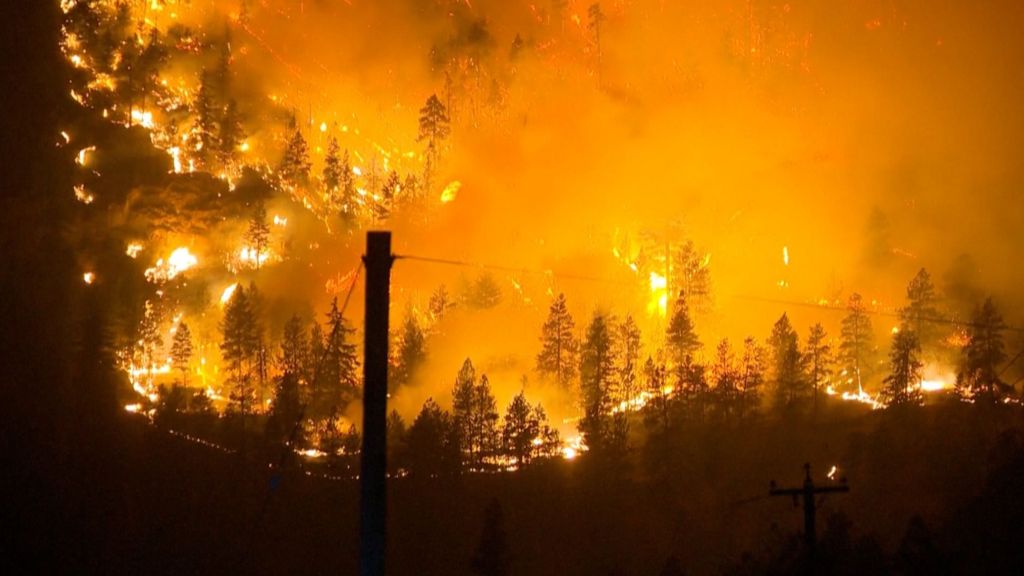
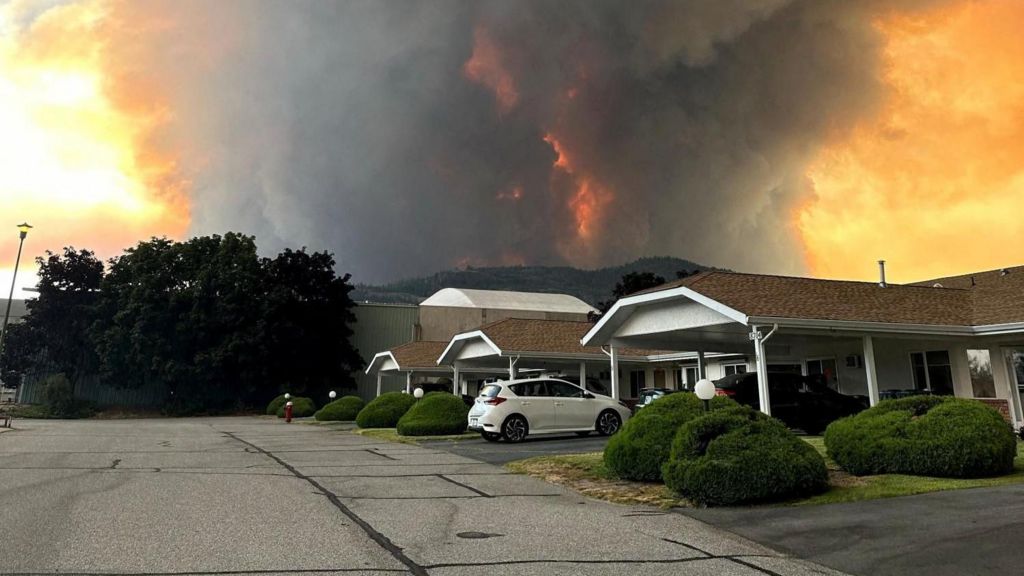
    A large cluster of active blazes in northwestern Ontario is the primary source of the smoke drifting south into the U.S. Thick plumes of toxic smoke have already rendered air quality unsafe across Thunder Bay and Toronto in Ontario, before spreading over the Great Lakes and settling over the Northeastern U.S., creating persistent hazy conditions as far south as New York. Beyond the cross-border smoke impacts, the wildfires have already displaced dozens of Indigenous residents from First Nations communities in northern Ontario. Some communities have been forced to evacuate the remote region by boat, and Namaygoosisagagun First Nation Chief Helen Paavola told local outlet CityNews that an aerial survey of her community confirmed it has been “burnt to ashes.”

    Data from Canada’s National Forestry Database shows that roughly half of all annual Canadian wildfires are ignited by lightning strikes, while the remaining half are caused by human activity. Climate experts from both Canada and the U.S. have previously warned that rising global temperatures driven by climate change are drying out forest landscapes across North America, creating far more flammable conditions that increase the frequency and severity of major wildfire seasons. When asked by the BBC earlier this year whether Canada could be doing more to curb wildfire risk and resulting smoke pollution, cross-border expert consensus concluded that there is little more Canada could do to stop the large-scale blazes driven by current climate conditions.

  • India launches first hydrogen-powered train built in the country to expand clean energy on railways

    India launches first hydrogen-powered train built in the country to expand clean energy on railways

    NEW DELHI – In a landmark step toward decarbonizing one of the world’s largest rail networks and advancing domestic clean energy manufacturing, India debuted its first indigenously developed hydrogen-powered train this Friday. The inaugural service, named “NaMo Green Rail” in a nod to Prime Minister Narendra Modi, was officially inaugurated by Modi at Jind Railway Station in the northern state of Haryana, where it will begin regular operations.

    The new train consists of two hydrogen-fueled driving units paired with eight passenger coaches. According to Indian Railway officials, it boasts a top operating speed of 75 kilometers per hour (roughly 47 miles per hour) and can accommodate up to 2,600 passengers per trip. Unlike traditional diesel locomotives that spew greenhouse gases and local air pollutants, hydrogen fuel cell-powered trains produce no harmful direct emissions—their only byproduct from energy generation is water vapor, making them a zero-emission alternative for non-electrified rail routes.

    This launch is not just a one-off demonstration; it forms the core of a pilot project designed to test the real-world feasibility of hydrogen technology for Indian Railways. The initiative includes purpose-built hydrogen storage and refueling infrastructure built alongside the route, allowing engineers and policymakers to gather operational data ahead of potential wider rollouts across the country’s vast 68,000-kilometer rail network.

    In a social media post on X following the inauguration, Modi emphasized the milestone’s dual importance for India’s national development. He framed the rollout as a critical leap forward for both the country’s goal of building a self-reliant industrial economy and its global commitment to sustainable, low-carbon development.

    Globally, hydrogen trains have emerged as a leading solution for rail networks aiming to phase out polluting diesel locomotives on routes where full electrification is not economically or logistically practical. A number of other countries have already begun deploying hydrogen-powered passenger services in recent years, creating a growing global market for the technology.

    For India, this launch aligns with much broader national climate and energy strategies. The country has pledged to reach net-zero carbon emissions by 2070, and Indian Railways has identified green hydrogen as a key alternative to diesel for its non-electrified routes. The government has also prioritized scaling up domestic green hydrogen production as part of its national clean energy transition, positioning the country as a growing player in the global hydrogen economy.

  • Hazardous Canadian wildfire smoke choking millions in US

    Hazardous Canadian wildfire smoke choking millions in US

    Uncontrolled wildfires raging across Canada have sent a thick wave of toxic smoke south into the United States, leaving millions of people across multiple regions grappling with dangerously poor air quality and forcing widespread disruptions to daily life this Thursday. From the iconic Manhattan skyline, which vanished under a dense haze, to the shores of Lake Michigan where Chicago ordered all public beaches closed, the impact of the cross-border smoke has been felt across the Northeast and Upper Midwest. States adjacent to the Canadian border—including Minnesota, Wisconsin, Michigan, and Illinois—have borne the brunt of the pollution, with air quality in major population centers plummeting to unprecedented levels. By Thursday evening, global air quality tracker IQAir ranked Chicago and Detroit as the two most polluted cities on Earth, with New York City trailing just a few spots behind. Across New York’s entire metropolitan region and Long Island, state officials confirmed the smoke carries fine particulate matter that is harmful to all groups, regardless of age or pre-existing health conditions. Conditions are even more severe in central and western parts of the state. Local authorities have urged residents to limit outdoor activity as much as possible, with New York City Mayor Zohran Mamdani warning the combination of extreme heat and toxic air poses a “serious threat” to public health. To support vulnerable communities, the city has opened hundreds of cooling centers for residents without access to home air conditioning, and distributed free masks at public libraries and train stations. New York City’s Department of Emergency Management noted this event could become the most severe smoke incident the city has faced since the record-breaking event of 2023, when city skies turned a surreal orange and the air quality index (AQI) hit a hazardous 465. Officials added they are continuing to monitor conditions closely for any further deterioration. Across the Upper Midwest, air quality readings on Thursday have already far outpaced the 2023 New York peak, according to U.S. Environmental Protection Agency data. By mid-afternoon, Chicago, Toledo, Ohio, and parts of Minnesota close to the Canadian fire lines recorded AQI scores exceeding 700, placing them firmly in the “hazardous” category—the worst possible ranking for air quality. A Major League Soccer fixture in Chicago was postponed, and dozens of local governments across the region have scrapped all scheduled outdoor events to avoid putting attendees at risk. Erin Lucey, a 38-year-old organic vegetable farmer in south-central Wisconsin, told AFP she and her farm crew spent Thursday morning harvesting crops while wearing protective masks to filter out the haze, even in sweltering humid conditions. “Our chests feel tight,” Lucey said, describing the combination of wildfire smoke, recent extreme heat, and drought-parched fields as “eerie.” “We are all thinking of the delicate balance of growing food in this type of future, and remarking how we can’t imagine what it will be like here in 100 years,” she added. “If people were outside like us working and seeing how everything looks, if they didn’t have the convenience of air conditioning, we would be making much faster changes to address the climate crisis.” The Michigan Department of Environment, Great Lakes, and Energy expects hazardous conditions to persist through Friday, noting that official smoke models only produce reliable forecasts 48 hours in advance. “That model is currently showing improvements on Saturday, but it is likely that smoke will linger and recirculate for a while,” the agency stated. On the Canadian side of the border, the situation remains equally critical. Toronto is also struggling with dangerous air quality, and latest official data shows more than 130 active wildfires burning across northwestern Ontario, with at least 60 classified as out of control. Provincial authorities have formally requested additional support from the Canadian federal government, specifically asking for air assets to help evacuate remote, fire-threatened communities. Ontario Provincial Police confirmed that 15 communities and their surrounding areas have already been fully evacuated. “More than 150 fire crews and nearly 50 firefighting aircraft are working around the clock to protect communities from the fires in northern Ontario,” Ontario Premier Doug Ford announced in a post on X. So far in 2026, Canadian wildfires have burned at least 1.9 million hectares (4.7 million acres) of land—an area nearly the size of the European country of Slovenia. While this year’s total burn area remains far below the record set in 2023, when almost 18 million hectares burned across Canada during the nation’s worst wildfire season on record, the cross-border impact of this latest event has already been extreme.