Three decades after the last devastating hurricane struck the Hawaiian archipelago, the entire state is on high alert as Category 1 Hurricane Lala churns toward its shores, poised to deliver the first direct hurricane landfall the region has seen since 1992.
After intensifying from a tropical system to reach hurricane strength on Saturday, Lala currently carries sustained maximum winds of 75 miles per hour (120 kilometers per hour), according to official meteorological assessments. Forecasters warn that the storm could bring catastrophic impacts to the state’s largest island, the Big Island, if its worst-case trajectory plays out: extreme rainfall totaling up to 25 inches (63 centimeters) and a dangerous 3-foot storm surge that threatens coastal communities.
The National Weather Service (NWS) has issued a full hurricane warning for the entire Big Island, while neighboring Maui County, Oahu, Kauai, and Niihau remain under active tropical storm warnings as the system progresses. State and local officials have emphasized that Lala brings potential life-threatening hazards, including fast-moving flash floods and destructive mudslides across sloped and low-lying areas. The storm is projected to either make landfall along the southern tip of the Big Island on Saturday or pass within just a few miles of the coast, before continuing its westward track across the Pacific. Notably, historical records cited by the Associated Press show that no hurricane has made direct landfall on the Big Island in the 155 years since modern record-keeping began.
As the weekend progresses, forecasters expect Lala to gradually weaken back to tropical storm strength after passing the Big Island, with its center tracking just south of Hawaii’s other major populated islands. Still, state officials are urging caution across all islands.
Hawaii Governor Josh Green issued an urgent alert to residents via the social platform X, warning that the archipelago should prepare for “an incredible amount of water” over the coming days. “Damaging winds, heavy rain, flash flooding and dangerous surf are possible across the state through the weekend,” Green’s statement read.
The approaching storm has already severely disrupted travel to and from the islands. Flight tracking data from flightaware.com shows widespread flight cancellations across Big Island’s two primary airports: 40 percent of all scheduled flights have been grounded at Ellison Onizuka Kona International, the island’s largest air hub, while 80 percent of flights have been called off at Hilo International.
For the southeastern region of the Big Island, the NWS has issued its most severe rainfall and flooding forecast. “Major rainfall flooding may prompt many evacuations and rescues,” the agency said, noting that rivers and small tributaries across the area “may rapidly overflow their banks in multiple places.”
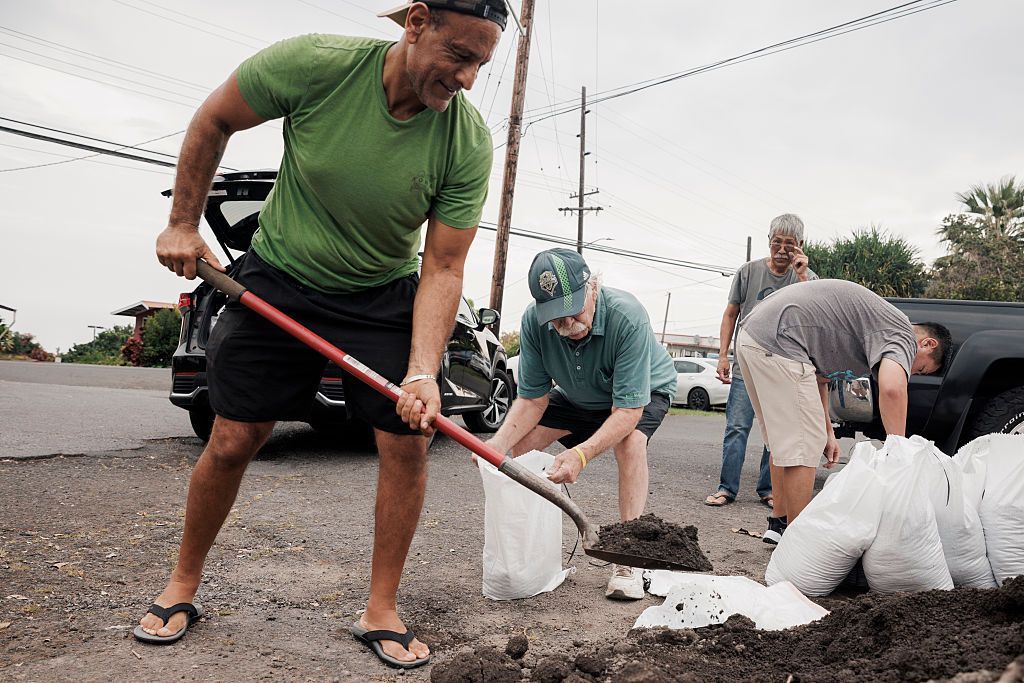
Officials have repeatedly urged residents to complete their emergency preparations well ahead of the storm’s arrival. Social media posts from local Facebook community boards show residents scrambling to stock up on supplies, fill sandbags to reinforce their homes against flooding, and confirm whether local grocery and hardware stores remained open in the early hours of Saturday.
Hawaii County’s Civil Defense Agency confirmed that public emergency shelters are available in every district across the Big Island, and urged residents to finalize their safety plans immediately. “At this time, you should have completed your storm-ready preparations and focusing on your Sheltering Plan,” the agency announced via X.
The last hurricane to directly strike Hawaii was Hurricane Iniki, a powerful Category 4 storm that made landfall on Kauai’s southern coast in 1992. Iniki left a devastating legacy: six fatalities and an estimated $3 billion in total damage across the state, a memory that has underscored state officials’ urgency as Lala approaches.