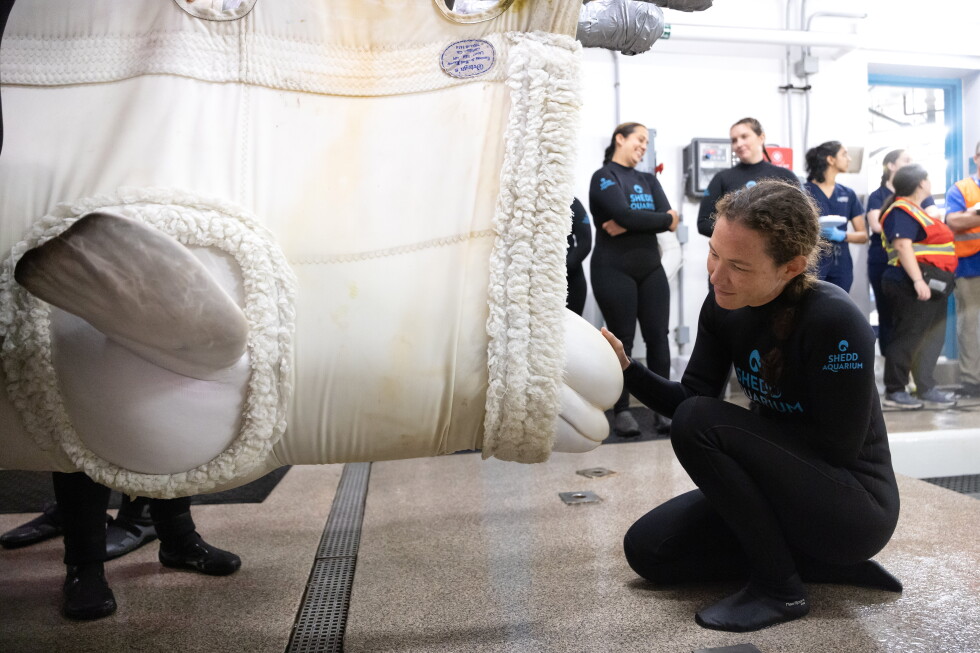
CHICAGO – A landmark cross-border animal rescue effort reached a new milestone this week as four more beluga whales completed their journey from a shuttered Canadian theme park to Chicago’s Shedd Aquarium, bringing the total number of relocated belugas at the facility to eight. This transfer marks the second group of whales moved from Ontario’s Marineland, an amusement park near Niagara Falls that permanently closed to the public in late 2024, following an initial batch of four belugas that arrived at Shedd last July.
The relocation is part of a broader, internationally coordinated rescue plan approved by the Canadian government that will eventually move all 30 whales and four dolphins remaining at Marineland to accredited aquariums and marine parks across the United States and Spain. Without the approval of this rescue effort, animal welfare experts warn the entire captive population would have faced mass euthanasia.
Marineland, which first announced it was up for sale in early 2023, has long faced scrutiny over the health and welfare of its marine mammal population. Data obtained through Canadian freedom-of-information laws and official public statements confirms that 20 marine mammals – 19 belugas and one killer whale – have died at the facility since 2019, raising urgent calls for a swift intervention to save the remaining animals.
The international transfer operation is unprecedented in scale and complexity, requiring months of meticulous advance planning to ensure the whales’ safety during travel. Each beluga is transported in custom-built supportive slings housed inside temperature-controlled shipping containers, designed to reduce stress and physical strain during the cross-border journey. Months before the first transfer, a team of veterinary and animal care experts from the receiving facilities traveled to Marineland to collaborate with the park’s former caretakers and review years of detailed health records for every whale, crafting personalized care plans for each animal.
“This is a very complex and unprecedented rescue effort. This has never been done before,” explained Charlie Jacobsma, Shedd Aquarium’s director of animal behavior and training. To support a smooth social transition for the highly social belugas, Jacobsma noted that the new arrivals were first introduced to the aquarium’s existing resident belugas through controlled gated interactions, allowing the animals to gradually select their own social groups before sharing a full habitat. Currently, the eight relocated belugas share space with three long-term resident belugas at Shedd, and caretakers have already observed positive social engagement, including affiliative behaviors and the iconic vocalizations belugas use to communicate.
“Belugas are very social animals,” Jacobsma said. “It was really special to be able to see some of our animals pairing up with these new animals.”
Veterinary staff at Shedd are providing round-the-clock care to help the new arrivals adjust to their new environment, monitoring the whales’ health and behavior constantly throughout the transition period. “All the belugas are taking the adjustment to their new home day by day,” said Dr. Karisa Tang, Shedd’s lead veterinarian. The care team tracks the whales’ food intake, social interactions, and physical comfort minute by minute, checking for signs of stress, soreness, or injury, and looking for indicators of well-being such as calm, relaxed swimming patterns.
Tang added that belugas’ distinct expressive faces and individual personalities make the work particularly rewarding for the Shedd team. “Every single day it is an absolute joy to work with belugas. There’s something about them that seems magical,” she said.
Once complete, the full rescue effort will disperse Marineland’s remaining belugas and dolphins across five partner facilities: Chicago’s Shedd Aquarium, Georgia Aquarium in Atlanta, SeaWorld parks in San Antonio and San Diego, and Oceanografic Valencia in Spain, giving each animal a permanent new home in accredited, welfare-focused facilities.