分类: culture

  • France reckons with Nazi-looted art in new Paris museum gallery

    France reckons with Nazi-looted art in new Paris museum gallery

    PARIS – Nearly 83 years after it was seized by Nazi agents in occupied Paris for Adolf Hitler’s personal collection, an 1891 Alfred Stevens painting of two children staring out over the Normandy coast has found a new, permanent public home at Paris’ Musée d’Orsay. More than that, it anchors a groundbreaking new exhibition space unlike any other in France: the first permanent gallery dedicated entirely to “orphaned” works of art looted during the Nazi era, pieces whose rightful pre-war owners have never been identified. For France, the opening marks a major step forward in the nation’s slow, decades-long reckoning with its own role in the mass plunder of Jewish property during the Holocaust.

    The Stevens canvas was one of hundreds of thousands of artworks swept up in the systematic Nazi seizure of property from Jewish families across occupied Europe. Acquired in Paris in 1942 specifically for Hitler, it was originally destined for the Führer’s planned grand cultural complex, the never-built Führermuseum in his hometown of Linz, Austria, before being reassigned to his private mountain retreat in Bavaria in 1943. After Germany’s defeat in World War II, the famous Monuments Men – the Allied recovery team later immortalized in George Clooney’s 2014 feature film – tracked the painting down and returned it to France. To this day, however, no heir has come forward to claim it, and no records confirm who owned it before its 1942 seizure.

    The Stevens work is far from alone. Across France, 2,200 unclaimed looted artworks are held under the designation MNR, short for *Musées Nationaux Récupération* (National Museums Recovery). These works, recovered from Germany and Austria in the aftermath of the war, were entrusted to French national museums in the early 1950s. The French state does not claim ownership of the pieces; instead, it holds them in permanent trust for any rightful heirs who may eventually come forward. The Musée d’Orsay currently holds 225 of these orphaned works, 13 of which are on display in the new gallery.

    What makes this exhibition space unique beyond its focus is its intentional design: every work is hung to allow visitors to examine the back of each canvas, where the original stamps, inventory marks, and transit labels trace the journey of each piece from stolen private property into Nazi hands. The museum has also launched a dedicated new research unit, staffed by six Franco-German provenance researchers led by the Orsay’s head of provenance research Ines Rotermund-Reynard, to systematically investigate each work’s history and track down potential heirs.

    The opening of the gallery caps more than half a century of growing public acknowledgement of France’s role in Nazi-era plunder. For decades after the war, France largely stayed silent about the collaboration of its wartime Vichy government, which not only assisted in the deportation of 80,000 French Jews to death camps but also oversaw a thriving Paris art market that profited from the sale of property seized from murdered and displaced Jewish families. It was not until 1995 that then-President Jacques Chirac formally acknowledged the French state’s own responsibility for crimes of the Vichy era, standing at the site of the 1942 Vél d’Hiv mass roundup of Jewish Parisians. A national inquiry into Nazi art looting launched two years later accelerated efforts to return works to their rightful owners.

    Of the roughly 100,000 cultural objects looted from France during the Nazi occupation, around 60,000 were recovered after the war, and 45,000 were returned to their owners. Roughly 15,000 works remained without a known owner, and the 2,200 MNR works were selected from that pool. For nearly 40 years, between 1954 and 1993, France returned only four MNR works to heirs. Since Chirac’s 1995 acknowledgement, the Orsay alone has returned 15 works, most recently two pieces by Alfred Sisley and Auguste Renoir that were handed over to the heirs of Jewish collector Grégoire Schusterman in 2024.

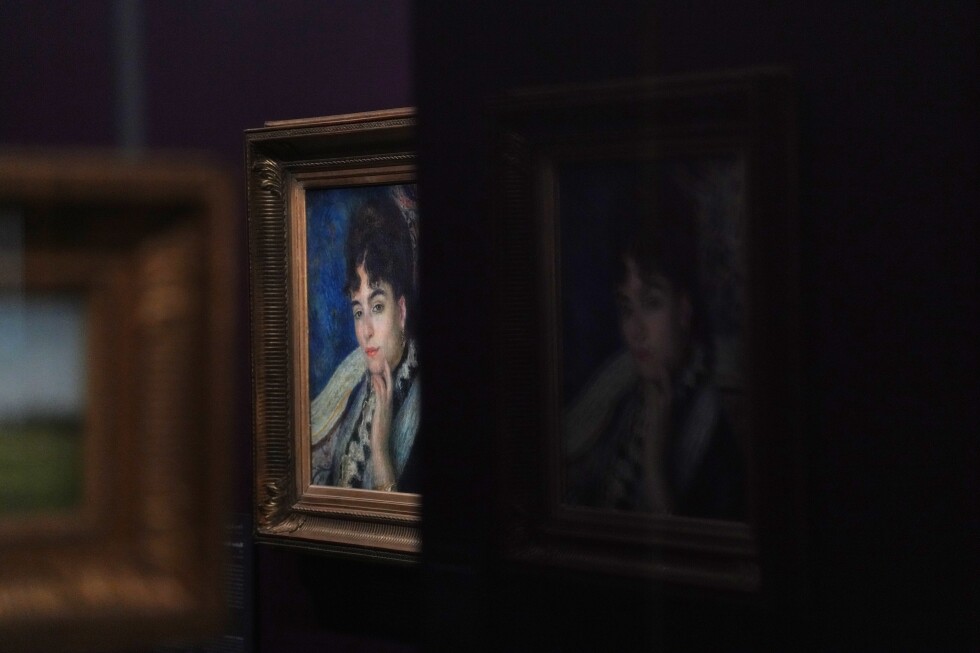
    The 13 works on display in the new gallery each carry the unmistakeable imprint of the Holocaust. A Degas copy of a 1879 Berlin ballroom scene was purchased by Jewish collector Fernand Ochsé in 1919; Ochsé was deported to Auschwitz and murdered during the occupation. A Renoir portrait of the wife of writer Alphonse Daudet was sold to a German museum in Cologne in 1941, with no record surviving of who sold the looted work. A Paul Cézanne canvas dismissed as a fake by a Louvre curator in the 1950s has recently been re-evaluated and may well be an authentic work by the Post-Impressionist master.

    Early visitors to the new gallery say the transparent display changes how they engage with the history of these works. Daniel Lévy, a software engineer from Strasbourg who visited on opening day, stopped to examine the Cézanne’s back marking. “You walk past these labels your whole life and you do not read them. Now I will read them,” he said. “My grandmother lost some of her family in the camps. Some of these paintings were probably hanging in homes like hers.” Another visitor, retired Lyon schoolteacher Marie Duboisse, noted she had seen the MNR designation on works at the Louvre for years without understanding what it meant, having previously assumed it marked a donor.

    Historians and curators emphasize that the mass looting of Jewish art could not have happened on the scale it did without the active participation of the Paris art world. In the early 20th century, Paris was the richest art hub in Western Europe, and the city’s central auction house Hôtel Drouot reopened just months after the Nazi occupation began in 1940, running continuous sales of looted and forced-sale property through the entire war. French art dealers acted as middlemen for German buyers, with Hitler’s agents taking the most coveted works for Hitler’s personal collection and Nazi officials.

    “Almost every museum in Nazi Germany sent buyers to Paris to expand its collections,” Rotermund-Reynard explained. “Hitler himself wanted to build the world’s largest museum, in Linz, the city in Austria where he grew up. Hermann Göring, Hitler’s deputy, traveled 21 times to Paris during the occupation to help himself to works taken from Jewish collectors. There was an enormous thirst both for the possessions of Jewish collectors, and for acquisitions to expand the German museums.” For Rotermund-Reynard, the looting cannot be separated from the broader genocide of Jewish people: “All of this is part of the history of the Shoah. When you try to understand this drive to take from Jewish families, it is part of the terrifying Nazi ideology to erase Jewish life.”

    While the gallery was not created specifically as a response to rising antisemitism in France, curators say its opening carries new weight amid a recent surge in anti-Jewish acts. According to the French Interior Ministry, antisemitic incidents reached near-record levels of 1,320 in 2025, following a sharp increase after the October 7, 2023, Hamas attack on Israel. “There is no statute of limitations on these crimes,” said François Blanchetière, the Orsay’s chief sculpture curator and co-curator of the new gallery. The mission of the space, he explained, is to bring the hidden history of these works into the open, and continue the work of repairing the harm of the Holocaust, one canvas at a time.
  • ‘No Irish need apply’ – New exhibit shows how Irish immigrants have fared in England

    ‘No Irish need apply’ – New exhibit shows how Irish immigrants have fared in England

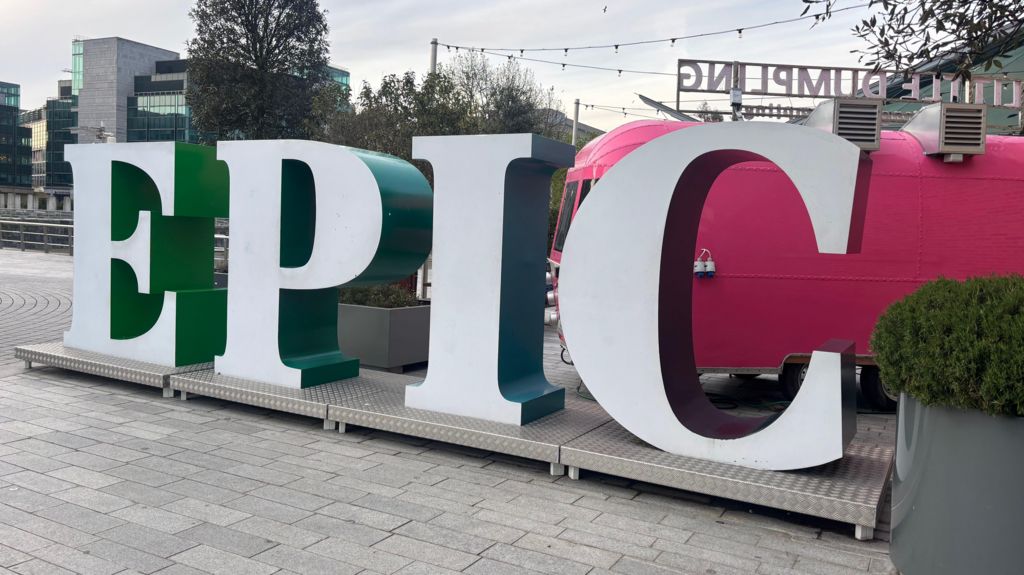
    For more than two centuries, the iconic and deeply hurtful phrase “No Irish need apply” hung over job postings across 19th and 20th century Britain and the United States, a public marker of systemic anti-Irish discrimination. Today, that phrase gives its name to a groundbreaking new exhibition at Dublin’s EPIC, the world’s only fully digital immigration museum, which unpacks the long, complex, and often painful history of Irish emigration to England across 200 years.

    Centuries of cross-channel migration have shaped demographic and cultural landscapes on both sides of the Irish Sea. Today, roughly 500,000 people born in Ireland call England home, with peak numbers hitting 900,000 in the 1970s, a legacy of the mass emigration wave that swept Ireland in the 1950s. Even before the catastrophic Great Famine of the 1840s, more than 400,000 Irish-born people already resided in England; that number grew by more than 50% in the decades following the famine, and migration has remained a constant feature of Irish life ever since. Since the formation of Northern Ireland, between 25% and 35% of all Irish emigrants heading to England have come from the region, many fleeing economic hardship or political violence during the decades of the Troubles.

    The exhibition draws on rigorous new research from the London School of Economics (LSE) that offers unprecedented insight into the socioeconomic conditions of Irish communities in England across generations. To build their dataset, LSE researchers analyzed more than 500,000 surnames from the 1911 United Kingdom Census to identify Irish family lineages, tracking outcomes for both first-generation immigrants and descendants born in England to Irish heritage. They also cross-referenced this data with core civil records including census returns, birth certificates, marriage registrations, and death records to measure living standards via infant mortality rates and life expectancy.

    The study’s findings paint a stark picture of long-term disadvantage. Across the 19th and 20th centuries, Irish households in England remained, on average, 50% poorer than their English neighbors, a gap that persisted across generations even as native English families gradually accumulated intergenerational wealth. Professor Neil Cummins, one of the lead researchers on the project, attributes this persistent gap to two key factors. First, for most of the modern era, migration from Ireland to England was overwhelmingly made up of working-class people with lower levels of formal education. Second, multiple lines of evidence — from anecdotal accounts to new LSE statistical analysis — confirm that systemic discrimination against Irish workers was widespread in English labor markets, creating what Cummins terms an “Irish penalty” that held back economic progress for generations.

    Despite this documented history of exclusion and hardship, the exhibition also highlights the dramatic social and economic transformation of Irish communities in England over the past 30 years. Cummins, who has lived in England for two decades, notes that modern London is a radically different space for Irish people than it was half a century ago. “It is a multicultural place where being Irish confers many advantages,” he explains.

    Curator Dr Christopher Kissane echoes that observation, noting that shifting economic tides in Ireland — particularly the growth of the Celtic Tiger economy from the 1990s onward — have transformed both migration patterns and outcomes. Mass emigration from Ireland is no longer the norm it once was, and the highly skilled Irish professionals who do move to England today are among the highest earning groups in the country, integrating seamlessly into English society. “The Irish have gone from being one of the poorest groups in England to one of the best off,” Kissane says.

    That personal experience of modern Irish migration to England is reflected in the stories woven through the exhibition, including that of Holly McGlynn, head of communications at EPIC. McGlynn moved to London with her partner following the 2008 Irish financial recession, lived there for 16 years, and raised three children in the city. Recounting her experience to BBC Northern Ireland, she said: “I had a very positive experience living in London. People were always very excited to hear that I was Irish.” The Covid-19 pandemic prompted her to re-evaluate her priorities and return to Ireland, but her experience reflects how far conditions have shifted for Irish people in England from the dark days of “No Irish need apply” job ads.

  • Chinese documentaries can boost international communication, experts say

    Chinese documentaries can boost international communication, experts say

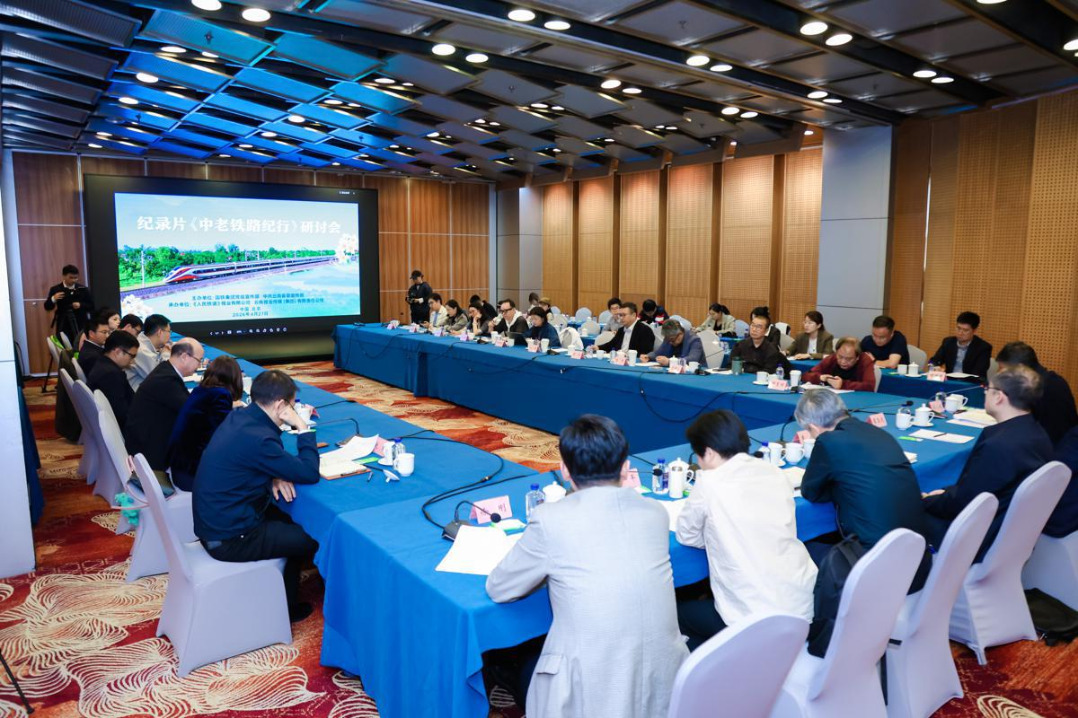
    On Monday, industry experts and scholars gathered in Beijing for a special seminar centered on the new Belt and Road Initiative documentary *Journey Across Jungle: The China-Laos Railway*, where they collectively argued that well-crafted Chinese documentaries have emerged as a powerful, accessible tool to advance people-to-people connectivity and more effective international communication between China and global audiences.

    As a flagship media project developed under the framework of the Belt and Road Initiative, *Journey Across Jungle: The China-Laos Railway* adopts a unique narrative perspective that follows well-known British photographer Thomas Heaton as he travels the full length of the cross-border railway between China and Laos. To capture authentic, grounded stories, the production crew completed three separate on-location filming trips across both countries, documenting the daily lives and personal experiences of railway builders, on-site operators, and local communities living alongside the rail line.

    Following its production, the documentary made its global premiere between April 14 and 16, airing simultaneously on China’s CCTV-9 documentary channel and the Lao National Television network. An English-language adaptation of the film has also been distributed to more than 100 countries and regions worldwide, bringing the story of the China-Laos Railway and the local communities it connects to a truly global viewership.

    During the seminar, participants focused on how the visual storytelling format used in documentaries helps break down cultural and language barriers that often hinder cross-cultural communication, allowing international audiences to engage with firsthand, human-centered stories rather than abstract information. Experts noted that this approach to storytelling, centered on ordinary people’s experiences, helps build greater mutual understanding and empathy between China and the rest of the world, positioning high-quality Chinese documentaries as a core asset for strengthening global cultural exchange.

  • Shanghai hosts dialogue to foster cultural and tech fusion

    Shanghai hosts dialogue to foster cultural and tech fusion

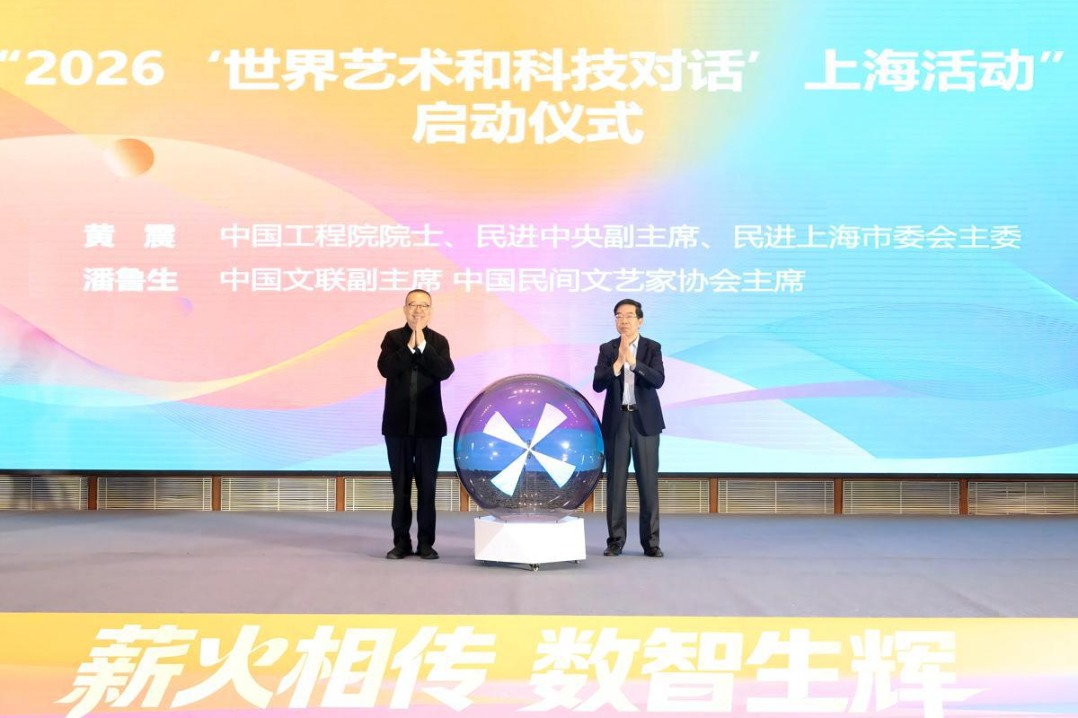
    On April 26, 2026, Shanghai played host to the Shanghai sub-forum of the 2026 World Dialogue on Art and Technology, a gathering that spotlights the coastal metropolis’ long-term ambition to carve out its status as a leading international cultural hub and global design capital. Held under the guidance of the China Federation of Literary and Art Circles and co-organized by Shanghai University and a cohort of partner institutions, the one-day event convened scholars, industry practitioners and educators from across the globe to unpack cross-cutting questions at the intersection of art, technology and cultural development. Centered on two core themes, the forum pooled international research insights and real-world case studies to investigate how cutting-edge digital tools can both supercharge innovation in folk arts and strengthen efforts to preserve centuries-old traditional cultural practices, while mapping out new collaborative pathways for integrating technology and creative design in the increasingly digital 21st century. Speaking at the opening of the forum, Hu Dawei, Deputy Party Secretary and Vice President of Shanghai University, underscored the institution’s longstanding dedication to breaking down silos between academic disciplines. The university, he noted, has prioritized combining strengths in science and engineering with expertise in humanities, social sciences and the arts to align with national development strategies and advance Shanghai’s ongoing urban transformation. “This gathering is more than an academic exchange—it is a starting point for boosting the revitalization of China’s outstanding traditional culture and expanding its global footprint through cross-civilizational dialogue and mutual learning,” Hu added. Over the course of the event, participants delved into rich, in-depth discussions across a range of high-priority topics, from the broader integration of science and art and digital innovation in folk arts to cultural heritage revitalization and the digitization of cultural and museum collections. Attendees also shared a diverse set of research outcomes that merge groundbreaking theoretical innovation with hands-on practical application, laying a foundation for future collaborative projects across sectors and borders. To cap off the forum, organizers also officially launched the Eighth China Creativity Festival for College Students. Organized by the Shanghai Municipal Education Commission, the annual festival is designed to establish a national platform for emerging creative talent from colleges and universities across the country to showcase their original work, while encouraging young innovators to contribute fresh perspectives and new energy to the creative expression and forward-thinking development of China’s vast and diverse cultural heritage.

  • Global influencers experience Chinese cultural charm in Qufu

    Global influencers experience Chinese cultural charm in Qufu

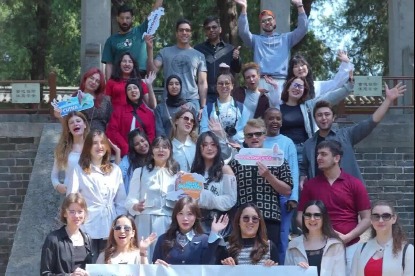
    From April 24 to 26, 28 influential global digital content creators gathered in Qufu, the birthplace of Confucius located in Jining, Shandong Province, for a three-day cultural immersion event titled “Nishan Sacred Land: A Vision Shared with the World”. The event, designed to showcase China’s profound traditional heritage to an international audience, brought the creators through a curated journey of historical sites and folk cultural experiences unique to the region.

    On the second day of the event, the group kicked off their exploration at the Nishan Confucian Temple, the cradle of Confucianism that has stood for centuries on the sacred Nishan Mountain. They walked through the sprawling temple complex, visiting iconic historic landmarks including the grand Dacheng Hall, the main ceremonial hall dedicated to Confucius, and the riverside Guanchuan Pavilion, where Confucius is said to have reflected on the passage of time. Throughout their tour, the influencers soaked in the quiet, contemplative atmosphere of the sacred site, gaining first-hand insight into the depth and nuance of 2,500-year-old Confucian culture that has shaped East Asian civilization for millennia.

    In the afternoon, the group traveled to the nearby Nishan Luyuan Village Scenic Area, a popular cultural tourism destination that seamlessly blends traditional rural Chinese heritage with modern leisure infrastructure. Stepping fully into the experience, the creators put on authentic hanfu, the traditional clothing of China’s Han ethnic group, before joining hands-on activities rooted in ancient Chinese culture. Among these activities was traditional archery, one of the Six Arts that formed the core of ancient Chinese scholar education system, allowing the influencers to gain personal experience of traditional cultural practices rather than just observing them from a distance.

    As evening drew over the scenic area, the group joined a vibrant festive fish lantern parade, winding through the stone-paved historic alleys of the village. The evening’s highlight came after the parade, when the crowd gathered to watch datiehwa, the centuries-old folk performance art also known as molten iron fireworks. Artisans flung thousand-degree molten iron into the night sky, where it shattered into thousands of sparkling, showering sparks that lit up the dark hillside, drawing gasps of amazement from the international guests.

    The event closed with a curated performance of traditional Chinese music and folk dance, wrapping up a three-day experience that gave the global creators a holistic, intimate introduction to both Confucian philosophy and vibrant northern Chinese folk culture. Organizers of the event noted that the gathering aims to build cross-cultural understanding, letting international audiences see and feel authentic Chinese culture through the perspectives of creators they trust.

  • A 17th Century ‘supercomputer’ once owned by Indian royalty heads for auction

    A 17th Century ‘supercomputer’ once owned by Indian royalty heads for auction

    A landmark piece of early modern scientific craftsmanship is set to hit the auction block next week at Sotheby’s London, offering collectors and cultural institutions a once-in-a-generation chance to own a historically significant 17th-century brass astrolabe with deep royal Indian roots.

    Described by auction house specialists as potentially the largest intact astrolabe surviving anywhere in the world, this hand-held astronomical device — often dubbed the “smartphone of the pre-modern era” — has never been displayed publicly before, after spending decades in a private collection.

    The astrolabe traces its origins back to early 17th-century Lahore, which was then the preeminent center of astrolabe manufacturing in the Mughal Empire. It was crafted collaboratively by Qa’im Muhammad and Muhammad Muqim, two master artisans from the legendary Lahore School of instrument making, where the closely guarded craft of precision instrument building was passed down through family lines. Only two joint works by the brother artisans are known to exist today; the second, a far smaller example, is held in a museum collection in Iraq.

    The massive instrument was commissioned by Aqa Afzal, a Mughal nobleman of Iranian descent who held senior administrative posts under emperors Jahangir and Shah Jahan and oversaw governance of Lahore. Its extraordinary scale and ornate craftsmanship were intentionally designed to reflect the high status of its patron. Weighing 8.2 kilograms, measuring 30 centimeters in diameter, and standing 46 centimeters tall, the astrolabe is nearly four times the size of a typical 17th-century Indian astrolabe.

    Beyond its size, the piece carries notable cross-cultural significance. Star markers on the device feature traditional Persian names paired with Sanskrit translations etched in Devanagari script, reflecting the multicultural intellectual landscape of Mughal South Asia. It also bears inscribed coordinates for 94 global cities, 38 individually detailed star pointers connected by intricate floral filigree, five precision-calibrated plates, and degree divisions subdivided to one-third of a degree — a level of technical precision unmatched by many earlier astrolabes from the Middle East, which prioritized function over artistic refinement.

    Historically, astrolabes functioned as versatile multi-purpose astronomical tools. First invented in ancient Greece in the 2nd century BCE, the design spread to the Islamic world by the 8th century, before spreading further across South Asia. These layered metallic devices allowed users to map stellar positions, calculate the direction of Mecca, track the movement of celestial bodies, tell time, measure the height of structures or depth of wells, and even calculate calendar dates for astrology. Dr. Federica Gigante, a researcher at the Oxford Centre for History of Science, Medicine and Technology, compares the astrolabe’s versatility to that of a modern smartphone, noting its ability to serve dozens of practical and intellectual functions.

    Gigante added that the Lahore astrolabe’s accuracy is extraordinary, capable of delivering precise measurements of celestial body altitudes that rival only the finest surviving historical instruments, including one built for Persian ruler Abbas II.

    After its creation, the astrolabe entered the royal collection of Jaipur’s Maharaja Sawai Man Singh II in western India. Following the maharaja’s death, it passed to his wife, Maharani Gayatri Devi — one of the most iconic public figures of 20th-century India — before being transferred to a private collection during her lifetime.

    Sotheby’s specialists say the astrolabe’s pristine condition, unbroken royal provenance, and one-of-a-kind scale and craftsmanship are expected to draw intense bidding interest from both global institutional collections and private collectors. The piece is valued at an estimated £1.5 million to £2.5 million, which would shatter the existing auction record for an astrolabe. The current record, set in 2014, was a much smaller Ottoman astrolabe made for Sultan Bayezid II, which sold for just under £1 million.

    Leading up to the 29 April auction, the astrolabe will be on public display for the first time in Sotheby’s London galleries from 24 to 29 April, giving visitors a rare chance to view a masterpiece of Mughal scientific art that has been hidden from public view for centuries.

  • Sinologists trace Su Dongpo’s footsteps in Yixing

    Sinologists trace Su Dongpo’s footsteps in Yixing

    Between April 21 and 22, a cohort of leading sinologists from North America, Europe and Latin America — including Canada, Italy and Mexico — embarked on a immersive cultural journey through Yixing, a scenic county-level city administered by Wuxi in eastern China’s Jiangsu province, to walk in the footsteps of one of China’s most celebrated literary giants, Su Dongpo.

    Better known by his courtesy name Su Dongpo, Su Shi (1037–1101) was a towering Song Dynasty poet, calligrapher, and statesman whose works remain a cornerstone of classical Chinese literature centuries after his lifetime. For Su, Yixing held a deeply personal significance: the city has long been hailed as the great writer’s “second hometown,” where he spent extended periods of time, drew profound creative inspiration from its misty mountains and winding waterways, and composed dozens of enduring poems that reflect his love for the region’s natural beauty and tranquil lifestyle.

    During their two-day visit, the international scholars engaged in a full schedule of cultural and academic activities: they joined in-depth literary exchanges centered on Su Dongpo’s legacy in Yixing, meandered through the sprawling, emerald Yixing Bamboo Sea that once stirred Su’s poetic imagination, explored the otherworldly geological formations of the famous Shanjuan Cave, and even gathered to recite some of the master’s most beloved classic poems firsthand. The trip offered these global experts on Chinese culture a rare, on-the-ground opportunity to connect with the historical settings that shaped one of China’s most iconic literary figures, deepening their understanding of Su Dongpo’s life, work, and enduring influence on Chinese cultural identity.

  • Museums and cultural institutions build bridges between China, US

    Museums and cultural institutions build bridges between China, US

    Against a backdrop of rising geopolitical friction between the world’s two largest economies, cultural and museum institutions on both sides are quietly working to sustain open lines of communication, building tangible connections that deepen mutual understanding between the Chinese and American people.

    The grassroots push for cross-border cultural exchange traces its origins to a deeply personal journey for Tina He, founder of the H Foundation for the Arts. As a university student, He traveled back to her ancestral hometown of Fuzhou, where a walk through the historic Three Lanes and Seven Alleys district — widely celebrated as an open-air museum of Ming and Qing dynasty architecture — left an indelible mark on her. Wandering the preserved lanes, she encountered the enduring legacies of Lin Zexu, Yan Fu, and Bing Xin, three iconic figures whose work and lives fundamentally shaped the course of modern China. That experience planted the seed for a career dedicated to sharing Chinese cultural heritage with global audiences.

    In 2016, that vision became a formal institution when He established the Cultural Foundations of Zhendai He, named in honor of her great-grandfather, a prominent 20th-century Chinese poet and classical scholar. Speaking at the foundation’s 10th anniversary forum earlier this year, He emphasized that the organization’s mission extends far beyond simply establishing an administrative body. “It is not merely about creating an institution, but rather about undertaking a legacy of continuity, carrying these cultural values forward into a new era,” she explained.

    Over the past decade, the foundation has pursued a two-way exchange model that benefits creative communities on both sides of the Pacific. It has supported emerging and established Chinese artists in securing exhibition opportunities at major American cultural institutions, including the Los Angeles County Museum of Art, bringing contemporary Chinese creative practice to mainstream US audiences. At the same time, it facilitates residencies and exhibitions that introduce contemporary American artists to cultural hubs in China, most notably Jingdezhen in Jiangxi province, the centuries-old historic center of Chinese porcelain production, where visiting creators can engage with local artisans and audiences.

    “By building this kind of bridge, we promote cultural exchange between China and the United States,” He noted.

    The critical role of museums and cultural institutions as neutral, accessible spaces for cross-cultural dialogue took center stage at a recent forum hosted by the foundation, which brought together leading scholars, museum administrators, and cultural leaders to explore how public and private cultural organizations can strengthen people-to-people ties between the two nations.

    Daryle Williams, dean of the College of Humanities, Arts and Social Sciences at the University of California, Riverside, noted that American public cultural and academic institutions are constantly evolving to reflect the changing makeup of the communities they serve. “We really want to look at how the Chinese American history is,” Williams said. “Now we’re considering Asian American, Pacific Islander experiences as an integral part of our community that’s evolved over time.”

    Leading curators from top American museums echoed the forum’s core theme, emphasizing that museums serve as global stewards of humanity’s shared cultural legacy, making them uniquely positioned to foster cross-cultural understanding.

    Jason Sun, curator of Chinese art at New York’s Metropolitan Museum of Art — the most visited art museum in the world — pointed out that Chinese art has occupied a central place in the Met’s narrative of global civilization for decades. Through landmark, carefully curated exhibitions, the Met has introduced millions of American audiences to defining chapters of Chinese history and artistic development. Sun explained that these exhibitions do more than showcase the depth and richness of Chinese civilization; they also illuminate the centuries-long history of exchange and interaction between East and West, demonstrating that all civilizations have grown and evolved through mutual learning. “Through museums, one can understand a country’s culture and history, and thereby understand the country itself,” Sun said.

    Similar perspectives were shared by Claire Lyons, curator of antiquities at the J. Paul Getty Museum in Los Angeles. Lyons noted that the Getty has maintained long-standing collaborative partnerships with Chinese cultural institutions, and her team sees enormous untapped potential for even deeper cooperative work in the coming years. The Getty’s China-focused programming has explored topics ranging from Qing Dynasty porcelain trade and export, highlighting hundreds of years of maritime and commercial exchange between China and global markets, to landmark exhibitions showcasing the ancient artistic heritage of the Mogao Caves in Gansu province. These projects do more than allow visitors to appreciate the artistic beauty of Chinese cultural treasures; they also draw attention to the painstaking work of cultural heritage preservation that sustains these sites for future generations.

    For Emily Zhang, program director of the H Foundation for the Arts, the work of building these cultural connections has grown even more important in an era defined by rapid technological change. As artificial intelligence and digital tools reshape nearly every aspect of daily life, Zhang argued that human connection and cross-cultural understanding have only grown in urgency, rather than becoming less important. “In a world where technology becomes more powerful, what matters more and more is our community,” she said. “It’s not just about what we can do, but how we understand each other and how we stay connected. That is exactly what arts and culture can do.”

  • For a moment, only the story matters

    For a moment, only the story matters

    Every April 23, readers around the globe mark World Book Day — a celebration that carries unique, layered meaning in China, where the practice of reading has long transcended a simple pastime to become a foundational part of cultural heritage.

    For countless generations of Chinese people, reading is not merely a leisure activity or a task tied to academic or professional advancement. Instead, it is a tradition rooted in the ancient wisdom of Chinese philosophers and embedded in the nation’s long-held noble ideals, woven tightly into the fabric of ordinary daily life across every region of the country. From hand-copied scrolls passed down through imperial dynasties to modern printed paperbacks and digital reading platforms accessible to millions today, this enduring tradition has nurtured generation after generation, shaping worldviews, fostering critical thinking, and strengthening cultural bonds between communities.

    As the nation marks this year’s World Book Day, the occasion invites readers of all ages and backgrounds to pause and reflect on their own personal journeys with literature. Whether the memory is a childhood picture book read by a grandparent by lamplight, a worn classic novel carried through years of schooling, or a quiet 10 minutes of reading snatched from a busy workday on a commuter train, these small, intimate moments with stories connect individual experiences to thousands of years of Chinese literary and cultural tradition. In those quiet moments when the page opens, nothing matters except the story itself — a universal experience that continues to bind readers across China together today.

    This year’s World Book Day observance also aligns with broader national cultural efforts centered on storytelling and cultural identity, framed as a key priority for public cultural engagement in recent special coverage from Chinese media outlets.

  • US student finds connection to China through classical poetry

    US student finds connection to China through classical poetry

    For many international learners of Chinese, the path to understanding the heart of Chinese culture rarely follows a straight line. For JongMay Urbonya, an American serving as an ambassador for the HSK Chinese Proficiency Test, that deep connection to China was unlocked through the concise, emotion-drenched lines of classical Chinese poetry. In a recent feature shared by China Daily, Urbonya opened up about her enduring love for this ancient literary art form, explaining how even the shortest poetic verses carry layers of profound feeling and timeless allure that resonate across cultural divides. A particular favorite of Urbonya’s is Li Qingzhao, the iconic Song Dynasty poet celebrated for her subtle, intimate explorations of love, loss, and everyday life. Urbonya notes that the delicate, deeply human emotions woven into Li’s works remain just as moving today as they were nearly a thousand years ago, holding power to touch readers regardless of their nationality or cultural background. For Urbonya, classical Chinese poetry is far more than just an academic subject or a language learning tool. It acts as a bridge that transcends the boundaries of time, cultural tradition, and national borders, offering her a uniquely intimate window into the values, perspectives, and soul of China. What began as a study of language has grown into a deeply personal connection to the country and its centuries-old cultural heritage, showing how art and literature can build unexpected bonds between people across the globe.