分类: culture

  • China launches national reading week

    China launches national reading week

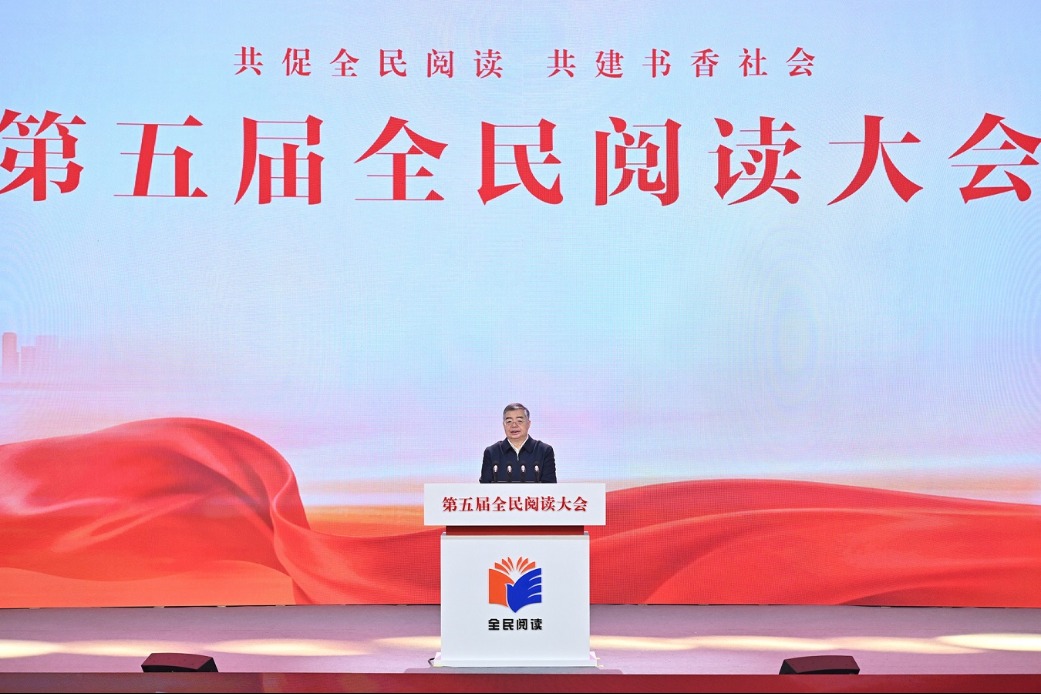
    China has officially launched its annual national reading week, kicking off the 2026 initiative during the fifth National Conference on Reading held Monday in Nanchang, the capital city of East China’s Jiangxi province.

    Li Shulei, a member of the Political Bureau of the Communist Party of China Central Committee and head of the CPC Central Committee’s Publicity Department, was in attendance at the opening event and delivered a keynote address to assembled participants.

    Event attendees united in a call for amplified action to popularize reading among all segments of the Chinese public and cultivate a pervasive, society-wide culture of regular reading. Stressing that reading forms the most foundational pillar of cultural advancement, participants emphasized that nationwide reading programs must be fully leveraged to support China’s broader national strategy to build itself into a leading global culture power.

    In addition to promoting public engagement with reading, attendees called for strengthened investment, development and regulatory oversight of public reading infrastructure, including libraries, community reading spaces and other public resources that make accessible reading materials available to all citizens.

    Running this week from Monday through Sunday, the 2026 National Reading Week will feature a diverse lineup of community and national events designed to reignite public passion for reading, spanning book fairs, author talks, reading clubs and youth engagement programs that reach across urban and rural communities to encourage people of all ages to pick up books and build regular reading habits.

  • Kites bridge cultures in Weifang

    Kites bridge cultures in Weifang

    On April 18, the skies above Weifang, the coastal city in East China’s Shandong province, filled with a dazzling array of colorful, innovative kites from every corner of the globe, marking the official opening of the 43rd Weifang International Kite Festival and 2026 Weifang Kite Carnival. Hosted at the city’s iconic World Kite Park, this year’s gathering drew nearly 260 dedicated kite teams hailing from 57 distinct countries and regions, turning the local event into a true global celebration of craft, connection, and shared passion.

    Long recognized internationally as the “World Capital of Kites”, Weifang carries a kite-making legacy that stretches back more than two millennia. Generations of local artisans have honed and refined this traditional craft over centuries, passing down techniques that have elevated Weifang kites to a globally celebrated art form. What began as a centuries-old cultural practice has grown into a thriving modern economic driver for the region: the city’s entire kite industry now posts more than 2 billion yuan, equivalent to roughly $29.24 million, in annual sales, with Weifang-made kites exported to more than 50 markets across the world.

    Beyond economic impact, the annual International Kite Festival has emerged as a powerful bridge connecting disparate cultures. Kite enthusiasts, master craftspeople, and hobbyists from around the world travel to Weifang each year to showcase their unique designs, exchange traditional techniques, and build cross-cultural connections that transcend geographic and political divides. For participants and attendees alike, the event highlights how a shared love of a simple, timeless pastime can bring global communities closer together, cementing Weifang’s reputation as a welcoming hub for international cultural exchange.

  • Chinese language education drives cross-cultural exchange

    Chinese language education drives cross-cultural exchange

    On the occasion of International Chinese Language Day 2026, industry experts and educational leaders gathered in Tianjin for a celebratory event, where they highlighted the growing global footprint of Chinese language education and its transformative role in fostering cross-cultural connection and opening new professional opportunities for international learners.

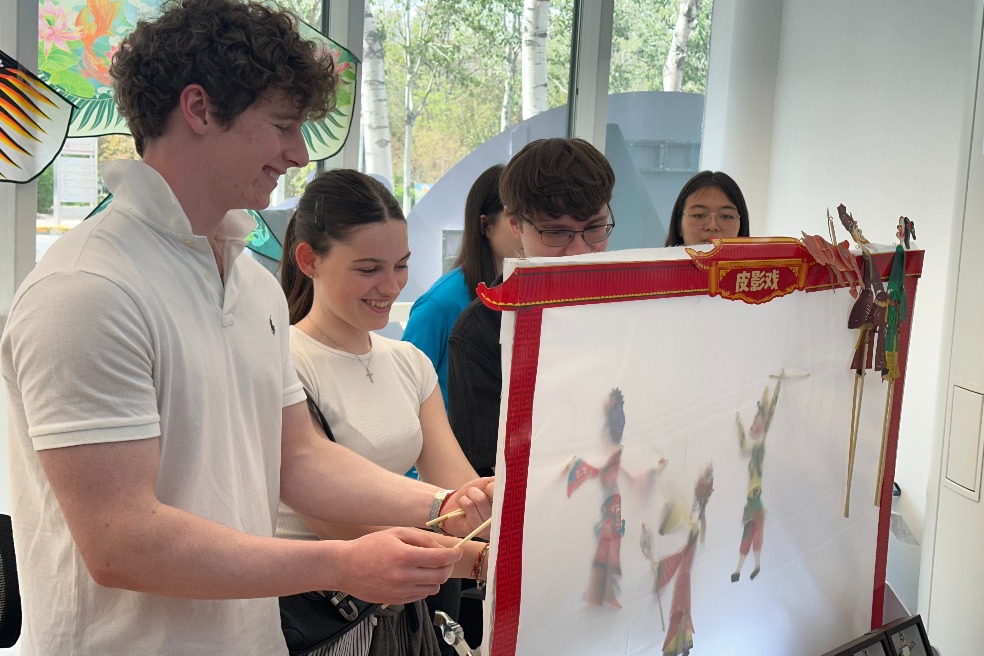
    During the event, international participants got a hands-on chance to experience China’s centuries-old intangible cultural heritage, turning the celebration into an immersive cultural exchange rather than just a ceremonial gathering. As more people around the world choose to study Chinese, the language has evolved far beyond a communication tool to become a foundational link connecting young people across China and the rest of the world, experts noted.

    Zhong Yinghua, president of the International Society for Chinese Language Teaching, emphasized that Chinese language proficiency acts as a critical key to unlocking access to an authentic, multidimensional portrait of modern China and the long-held philosophical wisdom of Eastern culture. ‘Too often, global audiences only see fragmented, one-sided narratives about China,’ Zhong explained. ‘Learning the language gives learners direct access to primary sources, local conversations and cultural contexts that allow them to build their own understanding of the country.’

    He also highlighted the outsized impact of the well-known ‘Chinese Bridge’ competition series, a global program for Chinese language learners. Far more than a simple academic contest, Zhong noted, the initiative serves as a dynamic people-to-people exchange platform that places international students in immersive, real-world social environments across China. Through these on-the-ground experiences, participants gain nuanced, first-hand insight into contemporary Chinese society and culture that cannot be gained from textbooks alone.

    Beyond cultural exchange, education leaders also pointed to the tangible professional benefits that Chinese language proficiency brings to international learners. As China continues to deepen economic and people-to-people ties with countries across the globe, demand for Chinese-speaking professionals has risen sharply across industries ranging from international trade and diplomacy to tourism and global education. For many young international students, adding Chinese to their skill set directly expands their career options and makes them more competitive in a globalized job market.

    The Tianjin event, which brought together educators, students and cultural leaders from multiple countries, underscores the growing recognition of Chinese language education as a cornerstone of global cultural dialogue. As participation continues to grow year over year, the language is increasingly serving its role as a bridge of understanding between China and the world.

  • Shanxi strengthens guarantees for intangible cultural heritage

    Shanxi strengthens guarantees for intangible cultural heritage

    China’s northern province of Shanxi has introduced a revised set of regulatory frameworks to strengthen protections and promote sustainable development of its rich intangible cultural heritage (ICH), authorities announced Wednesday at a press conference held in the provincial capital Taiyuan.

    Comprising 36 articles, the updated policy enshrines a core guiding principle: “protection first, priority on rescue, rational utilization, and continuous inheritance and development.” The new rules mandate that all county-level and higher regional governments establish dedicated cross-departmental coordination mechanisms, reinforcing systemic support for the conservation of the province’s centuries-old cultural assets.

    Shanxi first pioneered ICH protection legislation in China back in 2012, emerging as one of the first provincial-level administrations to roll out specialized local regulations for the sector. However, Wang Biao, deputy director of the education, science, culture, and health working committee of the Standing Committee of the Shanxi Provincial People’s Congress, noted that shifting economic and social landscapes have rendered the original regulatory framework outdated, unable to address the evolving demands of modern ICH preservation work. The 2026 revisions, he explained, codify the practical experience and progress accumulated across the province over the past 14 years, positioning Shanxi to develop into a vibrant, nationally recognized cultural tourism destination.

    Sun Jiangang, a member of the Standing Committee of the Shanxi Provincial People’s Congress, added that the revised rules place targeted focus on protecting ICH projects that encapsulate Shanxi’s unique cultural identity, including regional operas, traditional folk songs and dances, and local culinary traditions that have been passed down through generations.

    Zhang Zhiren, Party group member and deputy director of Shanxi’s Department of Culture and Tourism, outlined the sector-specific plans tied to the new regulations. Moving forward, the province will continue scaling up promotion of two flagship cultural tourism initiatives: the “Travel with Intangible Cultural Heritage” brand and the “Shanxi Intangible Cultural Heritage Good Products” program, which brings traditional handicrafts to wider domestic and global markets.

    The revised regulations were formally approved during the 27th meeting of the Standing Committee of the 14th Shanxi Provincial People’s Congress, and are scheduled to take legal effect starting June 1, 2026. Currently, Shanxi is home to 182 national-level representative ICH projects and 198 national-level recognized inheritors — both figures rank third among all provincial-level administrative regions in China, underscoring the province’s status as a major cradle of Chinese traditional culture.

  • Tibetan coffee wins praise at Paris Coffee Festival

    Tibetan coffee wins praise at Paris Coffee Festival

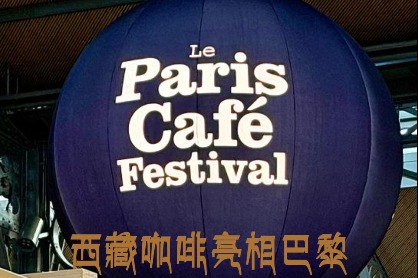
    Between April 11 and 13, 2026, one of China’s most promising emerging specialty coffee brands — Nindo Coffee, rooted in the Xizang Autonomous Region — marked its second showcasing at a major European industry event, taking center stage at the Paris Coffee Festival. The homegrown regional brand brought a one-of-a-kind experience to global attendees, pairing high-quality specialty coffee with a vivid display of the dynamic blend of time-honored tradition and cutting-edge modern energy that defines contemporary Xizang, quickly earning widespread international recognition for its unique offerings.

    Tsomo, founder and lead visionary behind Nindo Coffee, shared that the brand’s core mission extends far beyond selling specialty coffee. For her team, coffee acts as a accessible, approachable cultural medium to weave authentic Tibetan heritage into global cultural conversations, all to showcase a fresh, nuanced image of Xizang as a region where ancient traditions coexist and thrive alongside modern innovation. While the Tibetan specialty coffee sector remains in its early developmental stages, Tsomo and her team have prioritized three core goals: continuous product refinement, cultivation of distinct, terroir-driven flavor profiles unique to Xizang’s high-altitude growing conditions, and sharing the authentic essence of Tibetan culture alongside the forward-thinking worldview of today’s young Tibetan generation.

    By the end of the three-day industry gathering, Nindo Coffee’s Xizang-inspired specialty coffee creations had garnered overwhelmingly positive feedback from hundreds of general attendees. Industry veterans and coffee professionals also offered high praise for the brand’s consistent product quality and complex, memorable flavor profiles, marking a key milestone for Tibetan specialty coffee as it gains a foothold in global markets.

  • Paper-cutting pioneer fuses scissors with software

    Paper-cutting pioneer fuses scissors with software

    Centuries-old traditional Chinese crafts are finding new life in the 21st century, thanks to innovators willing to bridge time-honored skills and cutting-edge digital tools. For Hao Guifen, a 67-year-old inheritor of Yangliuqing paper-cutting, a 300-year-old folk craft rooted in northern China, that transformation has turned her work into a globally recognized cultural treasure. Today, her reimagined take on the art form even serves as a recurring national gift for international diplomatic exchange.

    Hao’s journey of artistic revolution began back in the 1990s, when she first stepped away from the monochromatic red paper that has long defined traditional Chinese paper-cutting, used most commonly for holiday window decorations. Over decades of refinement, she organized her evolved creative system into four core technical pillars, with multilayered and dyed paper-cutting emerging as the signature innovations that set her work apart.

    The biggest breakthrough came when Hao turned to technology to solve a persistent creative challenge. As she pushed the boundaries of her craft to create more intricate layered works, she found her naked eye could no longer accurately distinguish the subtle color gradients needed for seamless separation of layers. That barrier fell when a younger member of her family introduced her to computer-aided design, which now helps her precisely decompose patterns into individual layers. Today, her most complex pieces feature up to 18 stacked layers of hand-cut colored paper, creating a nuanced three-dimensional effect that mimics the depth of fine art painting.

    Walk into Hao’s Tianjin-based studio in Xiqing District, and visitors are immediately met with walls lined with paper-cutting works spanning every size and theme. While traditional motifs remain a core part of her practice—each carrying the symbolic meaning that has long anchored folk art—she has also expanded her subjects to fit modern tastes. A lush persimmon tree, for example, plays on the Chinese homophone for persimmon and “affairs” to convey the traditional wish “may all things go as you desire”, while a layered rolling mountain landscape symbolizes enduring prosperity and steady, long-lasting good fortune. Alongside these classic themes, she also creates designs of popular anime characters that resonate with younger audiences, bringing the ancient craft into the lived experience of modern generations.

    Many of her large-scale hanging works stretch more than two meters long, with intricate details and rich, vivid coloration that completely upend common expectations of paper-cutting. At first glance, many visitors mistake her finely layered works for oil paintings or delicate fine-brush Chinese watercolors—only on close inspection do they notice the precise, hand-cut edges that reveal the work’s true identity. Her giant panda design is a perfect example: every shade of the animal’s iconic black-and-white coat comes from a separate, individually cut layer of paper, stacked to create subtle light and shadow that gives the piece remarkable depth.

    Yangliuqing paper-cutting was first recognized as an intangible cultural heritage of Tianjin when it was added to the city’s second batch of protected heritage items back in 2009. Since then, Hao’s innovative fusion of traditional scissors work and modern digital design has elevated the craft far beyond its local roots, bringing it to a global audience and securing its place as a distinctive representative of Chinese traditional culture on the world stage. As she continues to teach the craft to a new generation of enthusiasts, her work proves that even centuries-old traditions can thrive when paired with creative adaptation and modern innovation.

  • Kiln it — porcelain hub pulls foreign artists

    Kiln it — porcelain hub pulls foreign artists

    Nestled in China’s Jiangxi province, Jingdezhen — a city whose name has been synonymous with porcelain craftsmanship for more than a millennium — is steadily building a new reputation as a welcoming crossroads for creative talent from across the globe. Blending centuries-old artisanal traditions with cutting-edge modern infrastructure and an open, inclusive creative culture, the city is drawing a growing stream of international artists, designers, and cultural explorers who find its unique duality irresistible.

    One of the many foreign creatives who have put down roots in Jingdezhen is Canadian artist Philip Read. In the center of his local studio sits a porcelain plate that stands as his most cherished work, and a quiet meditation on the city that inspires him. The hand-painted piece depicts a river cutting through Jingdezhen, splitting its landscape into two complementary worlds. One bank bustles with distinctly modern energy, dotted with recognizable global brand logos from popular chain restaurants KFC and McDonald’s. The opposite bank unfolds into a serene, timeless landscape of sloped tiled roofs, arched stone bridges, green fields, and still water — a slower, calmer existence that holds its own gentle power against the hurry of 21st-century life.

    For Read, the painted plate is far more than just an art object: it is a perfect reflection of Jingdezhen itself. “It is both modern and international, but if you look a little further, Jingdezhen is still calm, still able to make you focus,” he explained. “That is part of its charm.”

    This unique balance — an open, globally connected creative ecosystem that never loses the textured, quiet soul of its centuries-old craft heritage — is the core of Jingdezhen’s growing magnetic pull for artists from overseas. Long renowned globally as China’s unrivaled porcelain capital, the city earned international recognition for its cultural legacy when it was named a UNESCO Creative City of Crafts and Folk Art back in 2014. In recent years, targeted investments in artist residency programs, large-scale international ceramic art exhibitions, open-air creative markets, and cross-cultural exchange platforms have turned the city into a must-visit destination for ceramic artists and creatives of all disciplines. Photographs of international artists at work in Jingdezhen’s creative hubs, like Taoxichuan Ceramic Art Avenue, have showcased the city’s vibrant, inclusive creative scene to audiences around the world, cementing its rising status in the global contemporary art world.

  • Homeric hangover cure: Greek claim over ancient bovine belly broth stirs feud with rival Turks

    Homeric hangover cure: Greek claim over ancient bovine belly broth stirs feud with rival Turks

    A decades-long culinary rivalry between Greece and Turkey has reignited over a humble, hearty offal soup, with both nations staking competing claims to the dish as Greece pushes to have it recognized as an official intangible cultural heritage by UNESCO.

    In the northern Greek port city of Thessaloniki, Dimitris Tsarouhas, a third-generation restaurateur who has spent decades perfecting the recipe for what Greeks call patsa, is leading the charge for UNESCO registration. The dish, a slow-simmered broth made from bovine bellies and trotters, has long been a beloved staple in Greek culture — particularly as a soothing morning meal that locals swear eases the discomfort of hangovers and even treats chronic stomach ailments. Proponents of the Greek claim trace the dish’s origins all the way back to 8th century BCE, referencing a mention in Homer’s *Odyssey* that describes a similar preparation served at a feast for Penelope’s suitors, moments before Odysseus reveals his identity after 10 years of travel. According to Tsarouhas, the epic describes a dish of stuffed bovine belly mixed with suet and blood — a description he says matches the core of modern Greek patsa perfectly.

    Tsarouhas has not undertaken this effort alone. Working alongside a local Thessaloniki cultural association and Lena Oflidis, the only historian to have published a full book on the soup’s history, he has compiled a comprehensive dossier to submit to UNESCO outlining Greece’s historical and cultural connection to the dish. For the chefs who prepare patsa daily, the recipe’s lineage is clear: 22-year veteran patsa chef Pantazis Koukoumvris explains that ancient Greek cooks developed the preparation, which was later adopted by Byzantine chefs, passed to the Ottoman Empire, and preserved through generations in Greek cooking.

    Beyond its legendary roots, regular patrons and proponents point to the dish’s practical and cultural place in modern Greek life. Dozens of customers flock to Tsarouhas’ restaurant at all hours, starting at dawn, to enjoy a bowl, customized to preference with coarsely or finely chopped meat, topped with mustard, hot pepper flakes and sesame seeds. Tsarouhas, citing medical research, notes that the slow-cooked trotters contain nearly 33.4% consumable collagen, making it a popular remedy for joint pain after surgery, stomach ulcers and other digestive issues linked to alcohol consumption. Long-time patron Christos Mousoulis emphasizes that regardless of any similarities between the Greek and Turkish versions, patsa has been a fixture in Greek family life for generations. “We grew up with Greek patsa,” he explained. That shared cultural connection, he argues, is the foundation of Greece’s claim.

    But across the Aegean Sea, Turkish chefs, restaurateurs and members of the public are pushing back hard against the Greek bid, calling it an attempt to appropriate a dish that Turks have called iskembe çorbası, or simply iskembe, as a national staple for centuries. Unlike Greek patsa, which includes both tripe and trotters, Turkish iskembe is made exclusively with slow-cooked tripe, simmered for 8 to 9 hours overnight before being served in a rich garlicky broth.

    Ali Turkmen, a 59-year-old Istanbul restaurateur who has specialized in iskembe for decades, says the dish is inherently tied to Turkish cultural identity. “It’s been a staple in our culture for centuries. Tripe soup is something specific to Turks,” he said, echoing the long-running pattern of culinary disputes between the two neighbors that have already included competing claims to baklava, stuffed grape leaves, and Turkish coffee, all legacies of centuries of shared Ottoman history.

    Turkish historical evidence points to 17th-century writings from famed Ottoman traveler Evliya Celebi, who documented street vendors selling tripe and trotter soup in the streets of Istanbul in his *Book of Travels*, proving a 400-year recorded history of the dish in Turkish lands. Turkish media has widely framed the Greek bid as cultural appropriation, and members of the public are calling for official pushback. “Tripe soup is one of the dishes we should be promoting to the world,” said Murat Pajik, a regular customer at Istanbul’s iconic Alem Iskembe restaurant. “Measures need to be taken to protect our heritage.” Another patron, Engin Cakar, called the Greek claim futile: “This tripe dish is from our grandfathers, our mothers. It belongs to us.”

    Despite the public friction, Tsarouhas remains confident in Greece’s case, striking a conciliatory tone amid the dispute. “Nobody’s stopping them from making their own claim,” he said. “We believe that we have all the documentation to secure certification for patsa as Greek heritage. We don’t have anything to divide with our neighbors — rather the taste unites us.”

    The UNESCO registration process is expected to take months, leaving the question of which nation can lay claim to the beloved soup still very much up in the air.

  • Blooming Heze, more than blooms

    Blooming Heze, more than blooms

    Nestled in eastern China’s Shandong Province, the city of Heze has long been known as China’s peony capital, where sprawling fields of layered, fragrant blooms draw visitors every spring. But in mid-April 2026, the city proved it offers far more than just picturesque floral displays, when it played host to the 2026 Heze Peony International Communication Forum on April 11.

    The event drew a diverse crowd of guests from every corner of the globe, who traveled to Heze not just to admire the peonies in full spring bloom, but to engage in open, people-to-people cross-cultural exchange rooted in the shared connection of the city’s iconic flower. Attendees spanned multiple sectors and backgrounds: from international journalists and media professionals covering China’s cultural development, to foreign students and educators studying at Chinese institutions, all united by a curiosity to deepen their understanding of Chinese culture and people-to-people ties.

    Organized around the central theme of peony as a cultural bond, the forum created intentional space for informal dialogue and firsthand connection, allowing global guests to move beyond secondhand narratives and experience Heze’s unique cultural heritage directly. What began as a celebration of one of China’s most beloved traditional flowers has grown into a platform for building global mutual understanding, proving that floral culture can serve as a soft, accessible entry point for cross-border friendship and collaboration. For Heze, the forum marks another step in positioning the city as a welcoming hub for international exchange, where ancient cultural traditions meet modern global dialogue.

  • Intl forum discusses role of peony flowers in cultural exchange and mutual understanding

    Intl forum discusses role of peony flowers in cultural exchange and mutual understanding

    In the heart of China’s famed “Peony Capital” of Heze, Shandong province, global stakeholders from academia, government, and cultural institutions gathered on Saturday for the 2026 Heze Peony International Communication Forum, a landmark event designed to frame the iconic peony flower as a powerful cross-cultural bridge fostering global mutual understanding. Bringing together officials, scholars and industry specialists from nations including Russia and Italy, the forum builds on centuries of peony cultivation heritage in Heze to open new avenues for people-to-people connection across borders.

    This gathering marks a core component of the 2026 World Peony Conference, a 30-day global event that launched the previous day under the unifying theme “Blooming Across the World, Cultivating Shared Beauty”. The conference and accompanying forum shine a global spotlight on Heze’s unparalleled legacy as one of the world’s preeminent centers of peony cultivation: the region boasts more than 1,500 years of continuous peony growing history, with 1,308 officially registered varieties spanning nine distinct color groups and 10 unique flower forms. Beyond its cultural significance, Heze’s peony industry has grown into a major economic driver, with the total output value spanning from primary cultivation to high-value processed peony goods surpassing 13 billion yuan in 2025.

    The forum opened with a symbolic act of cross-cultural friendship, as Tatiana Bakurova, principal of Oryol State First High School in Russia, presented an original oil painting of peonies titled *Flower of Friendship* — a work created collectively by her school’s teachers and students. In return, the Publicity Department of Heze gifted the Russian delegation a traditional handcrafted peony paper-cut artwork, a tangible example of China’s intangible cultural heritage tied to the iconic bloom. This gift exchange set the collaborative tone for the day’s discussions.

    In his opening address, Zhang Lun, secretary of the Heze Municipal Committee of the Communist Party of China, emphasized the universal appeal of floral aesthetics. “Flowers are an aesthetic language that transcends national borders,” Zhang noted. He called for coordinated collective action to advance two complementary goals: expanding global access to Heze’s peony varieties and cultural products, while welcoming international floral expertise and cultural exchange to Heze. This dual approach, Zhang argued, would inject fresh momentum into global efforts to build a harmonious shared global community rooted in mutual respect and understanding.