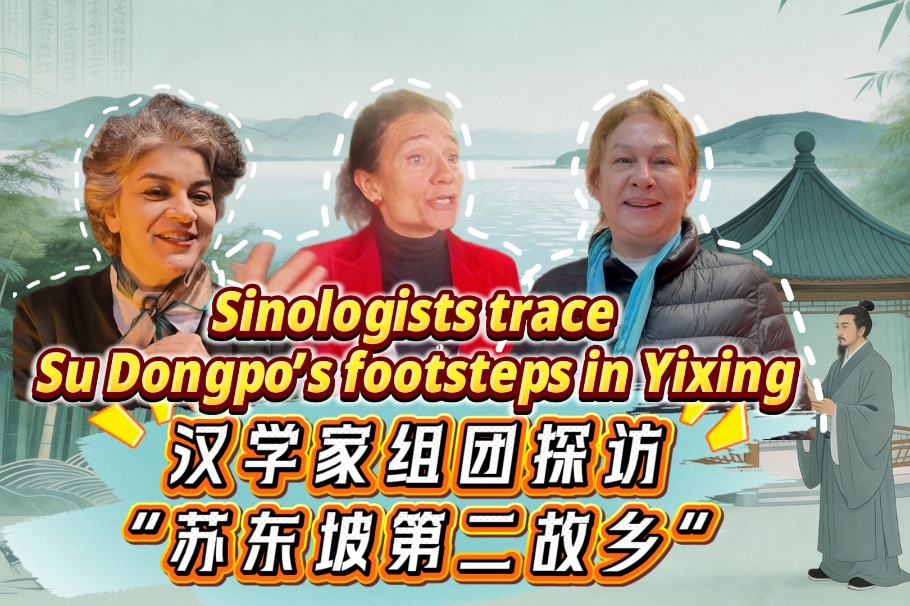
Between April 21 and 22, a cohort of leading sinologists from North America, Europe and Latin America — including Canada, Italy and Mexico — embarked on a immersive cultural journey through Yixing, a scenic county-level city administered by Wuxi in eastern China’s Jiangsu province, to walk in the footsteps of one of China’s most celebrated literary giants, Su Dongpo.
Better known by his courtesy name Su Dongpo, Su Shi (1037–1101) was a towering Song Dynasty poet, calligrapher, and statesman whose works remain a cornerstone of classical Chinese literature centuries after his lifetime. For Su, Yixing held a deeply personal significance: the city has long been hailed as the great writer’s “second hometown,” where he spent extended periods of time, drew profound creative inspiration from its misty mountains and winding waterways, and composed dozens of enduring poems that reflect his love for the region’s natural beauty and tranquil lifestyle.
During their two-day visit, the international scholars engaged in a full schedule of cultural and academic activities: they joined in-depth literary exchanges centered on Su Dongpo’s legacy in Yixing, meandered through the sprawling, emerald Yixing Bamboo Sea that once stirred Su’s poetic imagination, explored the otherworldly geological formations of the famous Shanjuan Cave, and even gathered to recite some of the master’s most beloved classic poems firsthand. The trip offered these global experts on Chinese culture a rare, on-the-ground opportunity to connect with the historical settings that shaped one of China’s most iconic literary figures, deepening their understanding of Su Dongpo’s life, work, and enduring influence on Chinese cultural identity.