分类: culture

  • Guangzhou airport unveils replica of China’s first airplane

    Guangzhou airport unveils replica of China’s first airplane

    On Friday, Guangzhou Baiyun International Airport, one of China’s busiest aviation hubs, held an unveiling ceremony for a full-scale replica of China’s first domestically built airplane at its Terminal 2. Named the “Wing Can”, this new installation honors the groundbreaking legacy of Feng Ru, a pioneering aviation engineer from Guangdong Province who designed and constructed the original aircraft in 1909.

    Feng Ru, who is widely recognized as the father of Chinese aviation, achieved the historic feat of building and flying China’s first powered airplane more than a century ago, laying the early ideological and technical groundwork for the country’s modern aviation industry. Born in 1884, Feng Ru passed away at a young age in 1912, but his contributions to Chinese aerospace innovation have never been forgotten.

    In an official statement released following the unveiling, airport officials framed the new replica as more than a historical monument. The installation is described as a lasting symbol of exploratory ambition, cross-continental connection, and forward momentum, carrying the auspicious cultural connotation of a nation reaching new heights and rising with opportunity. The statement added that the exhibit underscores the unwavering lofty aspirations and pioneering spirit of China’s broader aviation sector, which continues to pursue groundbreaking technological breakthroughs and chart new courses for global connectivity in the modern era. For passengers passing through one of China’s most central travel hubs, the replica offers a tangible connection to the 100-plus-year history of Chinese aviation innovation.

  • Doctoral defence in Tibetan Buddhism

    Doctoral defence in Tibetan Buddhism

    For practitioners of the Geluk school of Tibetan Buddhism, earning the tradition’s highest academic degree is no simple feat. It demands decades of dedicated, rigorous study of Buddhist scriptures, philosophy, and core doctrines, laying a deep foundational knowledge that candidates must draw on for their final, make-or-break evaluation.

    That final public test, known as the Geshe Lharampa defence, takes place at one of Tibetan Buddhism’s most sacred sites: Jokhang Temple in Lhasa, Xizang Autonomous Region. Unlike typical academic defences in secular higher education, this centuries-old ritual centres on structured, dynamic debate. Candidates must respond to probing, often challenging questions from senior monks and fellow scholar-practitioners, defending their interpretations of Buddhist teachings with sharp logical reasoning, quick critical thinking, and deep mastery of the tradition.

    This public event is far more than a degree requirement. It is a living showcase of the long-standing academic and spiritual traditions of Tibetan Buddhism, bringing together generations of practitioners to uphold centuries of knowledge transmission within the faith. Visible to onlookers, the passionate exchanges between debaters highlight the intellectual rigor that defines the path to earning the tradition’s highest honor, preserving a cultural and spiritual practice that has endured for hundreds of years.

  • Global guests gather for crabapple poetry party in Beijing

    Global guests gather for crabapple poetry party in Beijing

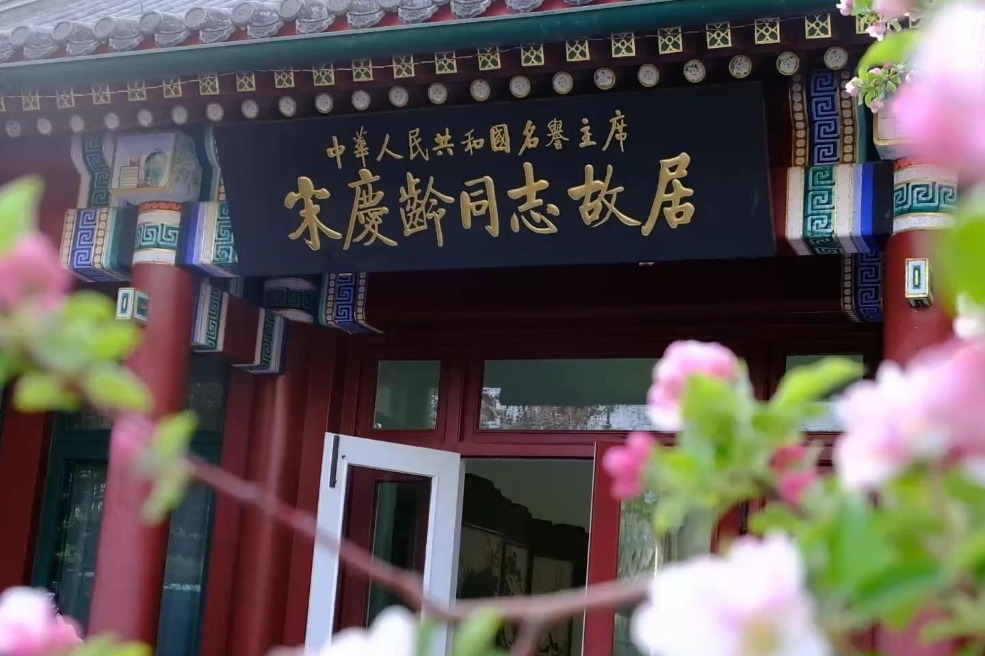
    Against the soft backdrop of blooming crabapple blossoms at Beijing’s Former Residence of Soong Ching Ling — a historic site that has welcomed visiting international figures for decades — more than 200 guests from nearly 40 nations came together on April 4, 2026 to mark the arrival of spring and celebrate the shared art of poetry. Organized by the China Soong Ching Ling Foundation with backing from the municipal government of Xicheng District, the 2026 Crabapple Gala and Poetry Party centered on cross-cultural literary exchange, blending recitations and performances that bridge Eastern and Western artistic traditions.

    Among the standout participants was Michael Crook, chair of the International Committee for the Promotion of Chinese Industrial Cooperatives, who stepped to the stage to deliver a recitation of *Crabapple Nook*, a classic work by Song Dynasty poet Yang Wanli. Crook, who grew up in China and comes from a pioneering family — his mother was one of the earliest educators to develop modern English language teaching curricula across the country — explained his choice of poem, noting that Yang’s vivid lines perfectly capture the delicate grace of crabapple blossoms following recent rainfall that swept through Beijing. To highlight the shared poetic imagery that connects global literary traditions, he also performed a recitation of A. E. Housman’s beloved British poem *The Loveliest of Trees*, pointing out that Housman’s iconic metaphor of snow-dusted cherry blossoms mirrors thematic and imagery patterns found throughout centuries of Chinese poetry.

    Against the backdrop of 2026 being designated the Year of China-Africa People-to-People Exchanges, event organizers extended special invitations to African diplomats and cultural representatives to take part in the gathering. Attendees were treated to a diverse lineup of performances that wove together Chinese and African cultural influences, including traditional Chinese opera, West African drumming, and collaborative dance pieces. In a multilingual highlight of the event, Chinese actor Du Ninglin joined international performing artists to recite original and classic poetry in five different languages, underscoring the event’s mission of breaking down linguistic barriers through shared appreciation of the arts.

    Alhaji Sarjoh Bah, permanent representative of the African Union to China, summed up the spirit of the gathering, noting that “There is no better way of starting the spring in China.” For his part, when asked about his personal connection to crabapple trees beyond poetry, Crook laughed and shared a lighthearted personal note: “I really like my self-made crabapple sauce.”

    Held in the historic gardens where Soong Ching Ling once hosted global guests amid flowering crabapple canopies, the event went beyond a simple celebration of spring, serving as a living example of how cultural and literary exchange can foster connection between people from every corner of the world.

  • English choirs seek to protect a musical tradition little changed since Queen Elizabeth I

    English choirs seek to protect a musical tradition little changed since Queen Elizabeth I

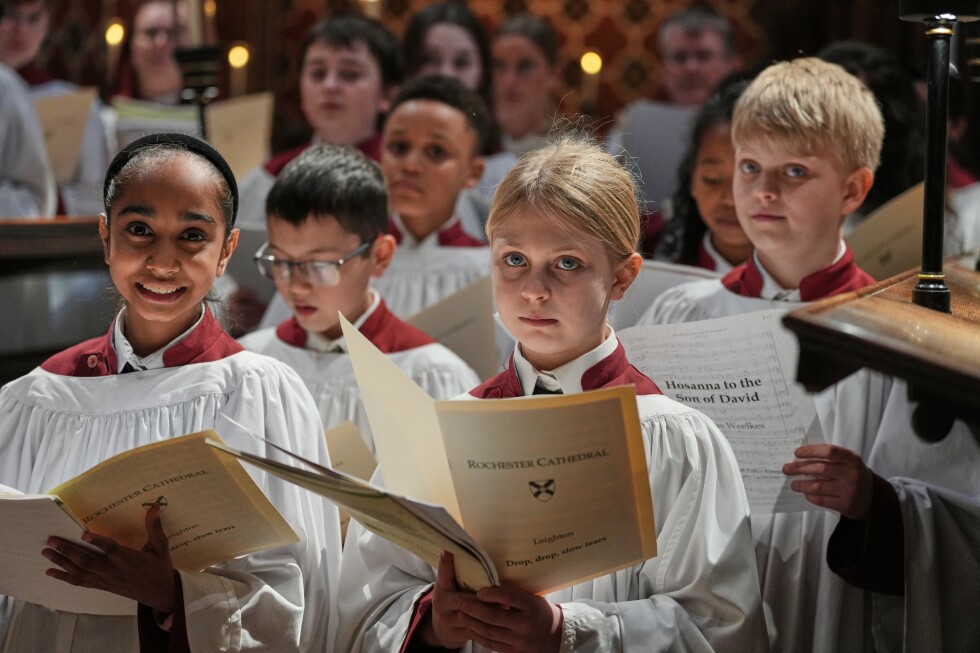
    On a muted overcast afternoon in the final days leading up to Easter 2026, a small group of schoolchildren wandered through the entrance of Rochester Cathedral’s auxiliary building, ready to step into one of Britain’s oldest unbroken cultural traditions. They set aside their everyday jackets and backpacks, slipping on the deep burgundy cassocks and crisp white surplices that have marked choristers for generations. Falling into orderly formation, they marched into the grand, vaulted main space of the cathedral, opened their mouths, and lifted their voices in unified song. What began as a casual gaggle of young students had transformed into a choir, carrying forward a choral music tradition of the Church of England that has remained largely unchanged for nearly 500 years.

    To Adrian Bawtree, Rochester Cathedral’s director of music, this centuries-old practice is more than just religious ceremony — it is a defining sound of the United Kingdom. “All of our cathedrals are beautiful, sacred spaces where you can come and just sit and be,” Bawtree explained, “and you can be immersed, bathed, nourished, sent out back into the world transformed by an experience in 30 minutes.”

    The beating heart of this tradition is Choral Evensong, an evening service of hymns, psalms, and quiet prayer first formalized in 1549 by Thomas Cranmer, the first Protestant Archbishop of the Church of England following the English Reformation. Unique to the tradition, the congregation takes on a quiet role, participating simply by listening to the choir’s performance. But for all its deep historical roots and cultural resonance, the beloved tradition now faces growing threats: shifting demands of modern life, plummeting church attendance across the country, and chronically tight budgets have made recruiting and training the next generation of choristers far more difficult than ever before.

    To reverse this decline, heritage advocates have launched a new campaign: they are pushing to have English choral services recognized as a critical part of British intangible cultural heritage under a United Nations protection program, a designation that would help secure support and funding for struggling choirs. This effort aligns with a broader UK government initiative to build a national inventory of at-risk cultural traditions — from Morris dancing to traditional dry stone wall craft — to preserve practices that strengthen community identity. The government notes that heritage tourism already generates billions of pounds in annual economic activity, making preservation a boon for both cultural identity and national prosperity.

    While most non-churchgoers are familiar with British choral music through the iconic performances of robed choristers at royal weddings and national Christmas carol services, daily Evensong services are held across the country in quiet, modest cathedral settings that rely entirely on local funding and community support. The Cathedral Music Trust, an organization founded in 1956 to halt the decline of church music after World War II, reports that most cathedral choirs are currently in a precarious financial position. Last year alone, the trust distributed £500,000 ($661,000) in grants to 28 cathedrals and churches across the UK to keep their choral programs running. Even with this support, the costs are substantial: Rochester Cathedral, a mid-sized provincial house of worship, spends roughly £250,000 ($330,000) annually on its choral program — a major expenditure that is smaller than what many larger cathedrals face.

    Trust leaders say UNESCO intangible cultural heritage recognition would draw much-needed public attention to the tradition and unlock new funding streams, beyond just supporting religious practice. The trust’s chief executive Jonathan Mayes notes that cathedral choral programs serve as a critical training ground for the next generation of professional musicians, both in religious and secular fields. “Whilst it happens every day, it is actually quite fragile,” Mayes said. “It takes an awful lot of work and it takes a lot of funding to actually make it happen, and that doesn’t come without effort.”

    Historians add that preserving Choral Evensong carries enormous historical significance beyond its musical and religious value, as the service played a pivotal role in shaping and spreading the modern English language. Diarmaid MacCulloch, emeritus professor of the history of the church at the University of Oxford and a leading expert on Christianity, explains that Evensong is rooted in Thomas Cranmer’s Book of Common Prayer, created after the Church of England split from Rome to replace Latin Catholic services with worship in the language of everyday English people. “It is very much a drama, and it is a drama which has been performed by the people of England from 1549 through to the present day,” MacCulloch said. “It’s far more a vehicle of public consciousness performance than any play of Shakespeare.” While the tradition has evolved modestly to include girls as well as boys in most choirs today, MacCulloch notes that the core service has remained remarkably consistent: “The service would be really quite recognizable to Queen Elizabeth I as much as Queen Elizabeth II, and that’s quite remarkable.”

    For Bawtree, the work of passing the tradition to a new generation is deeply personal. He first fell in love with church choral music at around 9 years old, when he first heard an organ paired with a live choir in a cathedral space. “When I heard it, it was like big octopus arms came and grabbed me and said, ‘You’ve got to be part of this,’” he recalled. Today, he oversees the Rochester program, training choristers ages 9 to 13 alongside an older youth choir, backed by a core of professional adult singers. Bawtree emphasizes that Evensong is open to anyone, regardless of religious belief, offering a rare space for quiet reflection and transformative connection in an increasingly chaotic modern world. “We talk in the world of mindfulness and the power of music to transform lives,” Bawtree said. “This is an extraordinary arena where that can happen. And because I had that experience, I would like to share that with future generations.”

  • Push to preserve language landscape

    Push to preserve language landscape

    For Wang Lining, a linguistics professor at Beijing Language and Culture University and a Guangxi native working far from home, a recent interaction with Doubao, a popular Chinese artificial intelligence chatbot, delivered far more than a technical demonstration. When she spoke to the platform in her native Cantonese dialect and received a seamless, natural response, the moment was less about cutting-edge processing power and more about a long-awaited emotional reconnection to her roots.

    “Living in Beijing, few people can talk with me using the hometown language,” she explained, describing the quiet joy of speaking a tongue that carries the memories and cultural identity of her childhood.

    This small, personal milestone is part of a much larger national initiative to safeguard China’s extraordinary linguistic diversity and revitalize fading local languages and dialects for the 21st century. Late last year, China’s Ministry of Education joined forces with six other national ministries to release a landmark policy notice focused on deepening the inheritance and innovative development of Chinese language culture, a framework that views regional dialects and ethnic minority languages not as outdated relics, but as living repositories of history, community identity and intangible cultural heritage that stretch from folk oral traditions to local social customs.

    Home to 56 ethnic groups, China boasts one of the world’s most linguistically diverse landscapes, encompassing between seven and 10 major dialect groups and more than 130 distinct languages. For decades, however, rapid urbanization and the widespread, necessary adoption of Mandarin as a national lingua franca left many local mother tongues at risk of fading into disuse, as younger generations grew up speaking primarily Mandarin and fewer opportunities remained to pass regional dialects down through families and communities.

    Officials from the Ministry of Education’s Department of Language and Writing Information Management note that the new policy aims to drive creative transformation and modern development of Chinese language culture, boost public linguistic and cultural literacy especially among young people, and support national goals of building global leadership in education, culture and talent development. For Wang, the multi-ministerial notice marks the end of more than a decade of exploratory work, turning a long-held vision for language preservation into an actionable, coordinated national strategy.

    Since 2012, China has released a series of policy documents guiding the inheritance and protection of Chinese language culture, with the latest framework building on early pilot programs to lay out clear, detailed roadmaps for future action. Wang emphasized that the initiative goes far beyond education alone, tying language preservation to broader economic and social development. “It plays a role not only in school education, but also in urban and rural production and livelihood, cultural tourism and cultural relics conservation. It can unleash great potential in socioeconomic development,” she said.

    A key strength of the new policy is its emphasis on cross-sector collaboration, Wang added. In the past, efforts by private enterprises, universities and independent language experts often operated in isolation, lacking coordination to scale successful projects. The participation of multiple national ministries will allow organizers to systematize the scattered successful initiatives from across the country, “stringing them together like beads, thereby ushering in a new era of systematic advancement,” she explained.

    The policy outlines seven core priorities for advancing the cause: strengthening scientific research and interpretation of linguistic heritage, expanding inclusive language education, protecting and developing existing language resources, leveraging digital empowerment, cultivating specialized talent, broadening public outreach, and deepening cultural exchange through language. For researchers like Rao Gaoqi, a linguistics researcher at Beijing Language and Culture University, the focus on digital innovation stands out as a game-changing shift.

    “Digital technology is extremely helpful for the development of language and culture. Conversely, the growth of language culture also serves as a driving force behind the advancement of digital technology,” Rao explained. Beyond academic research, this digital empowerment delivers tangible benefits for public safety and economic development, most notably in the creation of barrier-free emergency language services. During large-scale natural disasters such as earthquakes and floods, the National Language Service Corps partners with the Ministry of Emergency Management to ensure first responders can communicate effectively with elderly residents who may only speak their local dialect. This capability has even been extended internationally: when a devastating earthquake struck Turkiye in 2023, Chinese-developed large language models were deployed to provide real-time translation between Chinese, English and local Turkish languages to support rescue efforts.

    “Language and script are fundamental. We learn to write and speak not for their own sake, but to work, to love and to live our lives well. Language itself is a basic resource. The digitization of language is likewise a foundational endeavor that serves to empower everything else,” Rao said.

    For more than a decade, Wang has been a core participant in the national Project for the Protection of Language Resources of China, an initiative that originally focused on documenting and archiving fading dialects before shifting to a new, more dynamic goal: moving beyond “saving and recording” to “bringing them back to life and utilizing them” in daily life. Over the course of the project, teams of linguists traveled to nearly 1,800 locations across the country to systematically document local dialects through fieldwork and multimedia recording, building a comprehensive national digital archive of China’s vocal cultural heritage. Today, those collected materials are being transformed into accessible cultural products that are integrated into everyday life.

    Under the new policy, qualified local governments and institutions are encouraged to repurpose historic buildings and public spaces to create venues dedicated to preserving and promoting linguistic cultural heritage. Last year, for example, a dialect museum opened in Wuyi County, Zhejiang Province, housed in a restored historic traditional residence. Visitors can view traditional farming tools and vintage household items, and when they touch an exhibit, audio recordings of the local dialect terms for the object play, drawing on language materials collected by the project’s Zhejiang team to help local residents reconnect with their traditional way of life.

    Today, local dialects are increasingly appearing in pop culture, from original songs and television dramas to a growing range of creative consumer products. Wang says the goal of the movement is not limited to academic archives or static museum displays. “We want to create offerings that are part of everyday life — practical, engaging and fun — so that people willingly take part in keeping language culture alive and helping it grow,” she explained.

    Xing Biqian, a researcher at the China National Academy of Educational Sciences, echoed this focus on lived, daily practice as the key to long-term revitalization. “Language is the carrier of civilization and the root of culture, and practice is precisely the key to activating this root and enabling civilization to take hold,” Xing said. “When we lift the language culture from the pages of textbooks and make it part of everyday life, it begins to take root in hearts and minds. Through lived experience, it shapes not only how we learn and communicate, but also who we become: how we think, what we value, and what we find beautiful. That is where its true power lies.”
  • Lantern Festival lights bring the Dunhuang grottoes to life

    Lantern Festival lights bring the Dunhuang grottoes to life

    The ancient Buddhist cave art of Dunhuang is experiencing a spectacular revival through modern illumination technology as part of China’s Lantern Festival celebrations. Thousands of intricately designed lanterns are transforming the night sky into a living canvas, creating an immersive experience where historical mural artistry converges with contemporary light installations.

    This extraordinary visual spectacle offers visitors a multisensory journey through time, allowing them to witness how traditional motifs from the UNESCO World Heritage site can be reimagined through modern interpretive techniques. The event represents a innovative approach to cultural preservation, making ancient artistic traditions accessible to contemporary audiences through dramatic nighttime displays.

    China Daily is providing exclusive coverage of this cultural phenomenon, with a scheduled live broadcast set for Monday at 8 pm local time. The program promises to guide viewers through this unique fusion of historical artistry and modern illumination technology, showcasing how traditional Chinese festival customs can serve as a bridge between ancient cultural heritage and contemporary artistic expression.

    The Dunhuang caves, located along the historic Silk Road, contain some of China’s most significant Buddhist art spanning multiple dynasties. This Lantern Festival event represents a continuing effort to make this cultural treasure more engaging to both domestic and international audiences through innovative presentation methods.

  • China’s Hezhen Yimakan storytelling inscribed on UNESCO Representative List

    China’s Hezhen Yimakan storytelling inscribed on UNESCO Representative List

    In a landmark decision at its 20th regular session in New Delhi, UNESCO’s Intergovernmental Committee for the Safeguarding of the Intangible Cultural Heritage has granted dual recognition to China’s Hezhen Yimakan storytelling tradition. The ancient oral practice has been officially transferred from the List of Intangible Cultural Heritage in Need of Urgent Safeguarding to the prestigious Representative List of the Intangible Cultural Heritage of Humanity.

    The committee simultaneously inscribed the safeguarding program for Hezhen Yimakan storytelling into the Register of Good Safeguarding Practices, marking the first time any cultural element has achieved both distinctions concurrently. This unprecedented double recognition follows China’s successful transfer of three cultural elements in 2024, including Li textile techniques.

    Hezhen Yimakan represents the rich cultural tapestry of the Hezhe ethnic group, serving as a living repository of their history, heroic narratives, traditional fishing and hunting practices, ritual ceremonies, and moral codes. This unique art form blends prose and verse delivery in the Hezhe language, fulfilling multiple social functions including historical documentation, intergenerational education, and community entertainment.

    Since its initial inclusion on the Urgent Safeguarding List in 2011, collaborative efforts among tradition bearers, community organizations, research institutions, and government agencies have significantly strengthened the tradition’s viability. China’s community-centered preservation approach has enhanced both intergenerational transmission and global visibility of this cultural treasure.

    The successful transfer follows China’s submission of a comprehensive periodic report to UNESCO in December 2023, which detailed the remarkable recovery of the tradition. The committee’s examination and approval at its 19th session in December 2024 acknowledged China’s effective safeguarding measures while encouraging continued community engagement.

    This achievement brings China’s total representations across UNESCO’s Intangible Cultural Heritage lists to 45, comprising 40 on the Representative List, three on the Urgent Safeguarding List, and two on the Register of Good Safeguarding Practices.