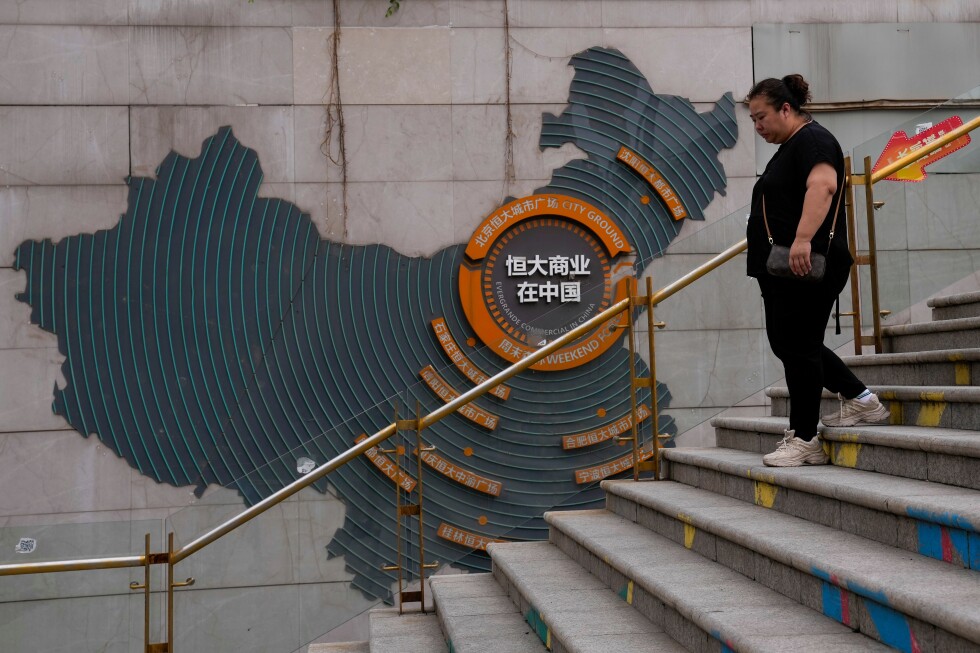
Global accounting leader PricewaterhouseCoopers (PwC) has agreed to pay HK$1.3 billion (equivalent to US$166 million) in combined regulatory fines and victim compensation in Hong Kong to resolve findings of professional misconduct tied to its audit work for insolvent Chinese real estate conglomerate China Evergrande, the collapsed developer whose massive overstatement of revenue triggered one of the biggest corporate failures in recent history.
Hong Kong’s Securities and Futures Commission (SFC) announced the punitive measures alongside separate sanctions from the city’s Accounting and Financial Reporting Council (AFRC) on Thursday. The penalties include a six-month suspension on PwC’s ability to take on new public interest clients in the jurisdiction, as well as public reprimands and HK$5 million individual fines for two former PwC partners found responsible for the audit failures.
The resolution marks the second major set of sanctions PwC has faced over its Evergrande audits, after mainland Chinese regulators imposed a 441 million yuan (US$62 million) fine and an identical six-month new client ban earlier in 2024 for issuing materially false audit conclusions and allowing critical flaws in the firm’s auditing protocols.
Once China’s second-largest property developer and widely considered systemically too large to fail, Evergrande first defaulted on its massive debt obligations in 2021. The company ultimately amassed roughly US$300 billion in total liabilities, making it the world’s most indebted insolvent developer. Its spectacular collapse became the centerpiece of a sweeping sector-wide liquidity crisis that began after Chinese regulators cracked down on reckless excessive borrowing across the real estate industry in 2020, prompting dozens of other major developers to default or enter debt restructuring proceedings.
Investigations into PwC’s audits of Evergrande’s 2019 and 2020 financial statements confirmed that the developer deliberately inflated its top and bottom line results through a fraudulent scheme of prematurely recognizing revenue from uncompleted property projects that had not yet been handed over to homebuyers. Over the two-year period, Evergrande overstated its total revenue by approximately 564 billion yuan (US$83 billion), a figure that aligns with conclusions reached by mainland Chinese authorities when they issued their penalties against PwC in September 2024.
Under the settlement agreement reached with the SFC, PwC has not admitted legal liability for its actions. The firm has agreed to allocate HK$1 billion of the total HK$1.3 billion penalty fund to compensate harmed minority shareholders of Evergrande. In its statement on Thursday, the AFRC labeled PwC’s audit deficiencies “particularly egregious”, noting that the firm knowingly permitted unsupported, unsubstantiated adjustments to Evergrande’s official financial statements.
In its own public response, PwC Hong Kong acknowledged the severe shortcomings of its Evergrande audit work. “We acknowledge that the work on the Evergrande audits fell well below our high expectations and the expectations of our stakeholders,” the firm said. “Resolving these regulatory matters is an important step for the firm.”
PwC has already suffered significant business disruptions since Evergrande’s downfall: the firm lost dozens of clients after a Hong Kong court ordered Evergrande’s liquidation in early 2024, and many senior audit staff have departed the practice in the months since. The liquidators overseeing Evergrande’s wind-down have also launched separate civil legal proceedings against PwC in Hong Kong, seeking to recover billions in losses to repay the developer’s thousands of creditors.
The fallout from the Evergrande collapse extends far beyond regulatory penalties for PwC. China’s once-booming property sector has yet to fully rebound from the 2021 liquidity crisis, with persistent downward pressure on national residential home prices, weakened consumer and business investment confidence, and a sustained drag on China’s overall economic growth that continues to worry global economic observers. In a parallel development this month, Evergrande founder Hui Ka Yan, once ranked among the wealthiest people in Asia, pleaded guilty to multiple charges including fraud and bribery in a mainland Chinese court, months after he was first detained by authorities.