分类: business

  • ASX hit by supermarket slump and oil price fears in eighth day of losses

    ASX hit by supermarket slump and oil price fears in eighth day of losses

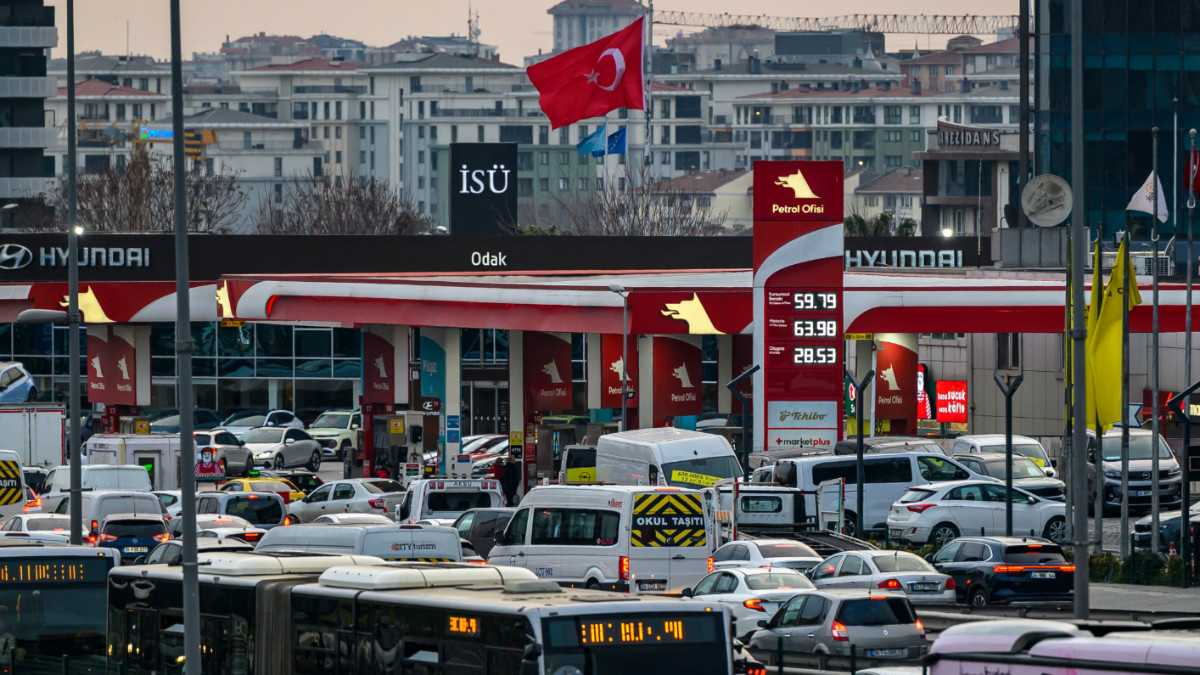
    The Australian Securities Exchange has booked its longest continuous losing streak in eight years, as skyrocketing global crude prices stoke fears of wider inflationary pressures that will erode household grocery budgets and cut into corporate profit margins. On Thursday, the benchmark ASX 200 declined 21.20 points, or 0.24%, to close at 8665.80, while the broader All Ordinaries index dropped 28.10 points, or 0.32%, to settle at 8887.60. This eighth consecutive day of declines marks the local bourse’s worst performance since 2018, with the Australian dollar also sliding 0.19% to trade at 71.14 U.S. cents by market close.

    Against the overall downward trend, eight out of 11 tracked market sectors finished the trading session in positive territory, with the broad market decline pulled down primarily by heavy losses in consumer staples and materials. The steepest drop in the consumer staples segment came from national supermarket giant Woolworths Group, whose shares plummeted 7.78% to $34.39. While the retailer reported a 4.5% year-over-year rise in sales to $18.1 billion, CEO Amanda Bardwell warned that spiking fuel costs driven by the global oil price surge are creating cascading pressure across the entire supply chain. Woolworths confirmed that multiple suppliers have already begun moving to pass higher energy-driven operational costs onto retailers, a shift that will eventually flow through to higher prices for consumers at checkout. Rival leading supermarket chain Coles followed suit, with shares falling 3.62% to $22.11, while other consumer-focused firms including A2 Milk and Endeavour Group also recorded moderate losses.

    Industry analysts say the current market downturn stems from a dual pressure of sky-high crude prices and growing expectations of another incoming interest rate hike from the Reserve Bank of Australia. Josh Gilbert, lead analyst at multi-asset trading platform eToro, explained that the current market shift is a direct reflection of how energy price shocks ripple through the entire economy. “When 20 per cent of the world’s oil supply is at risk, it doesn’t just impact energy prices, it flows through to everything from petrol at the pump to grocery bills, and Woolworths’ profit warning today is exactly that story playing out in real time,” Gilbert noted. As of Thursday, financial markets were pricing in a 77% probability that the RBA will raise interest rates at its next policy meeting, leaving Australian households caught between rising living costs and higher borrowing costs that squeeze disposable income.

    The global oil price surge that triggered the latest market jitters comes amid escalating geopolitical risk that has threatened key global shipping chokepoints. Brent Crude futures jumped to a fresh four-year high this week, briefly touching $US126 per barrel after U.S. officials warned they are bracing for an extended disruption to shipping through the Strait of Hormuz, a critical route that carries roughly a fifth of global oil supplies.

    The elevated oil prices pulled down share values for Australia’s big three iron ore miners: BHP fell 2.24% to $53.72, Rio Tinto declined 1.99% to $167.40, and Fortescue Metals dropped 2.82% to $19.61. Spot iron ore prices held steady at $US107.20 per tonne through the session. Gains in the energy sector partially offset these market declines, with top Australian oil and gas producers posting solid growth: Woodside Energy rose 1.51% to $33.55, Santos gained 2.96% to $8, and fuel retailer Ampol closed up 1.71% at $35.17.

    A handful of positive corporate announcements also delivered isolated gains in other segments. ASX Limited itself saw shares jump 5.10% to $60.80 after announcing Darren Yip as its new interim chief executive. Mineral Resources also climbed 2.96% to $63.71 after the mining firm upgraded its full-year production guidance for its Onslow iron ore project, as well as its Wodgina and Mount Marion lithium operations.

  • The Bank of England is expected to keep interest rates on hold as it weighs the impact of Iran war

    The Bank of England is expected to keep interest rates on hold as it weighs the impact of Iran war

    LONDON – As geopolitical turbulence from the Iran war ripples through global energy markets, the Bank of England’s Monetary Policy Committee is widely projected to hold its benchmark interest rate steady at 3.75% when it announces its latest policy decision on Thursday. Policymakers are treading carefully amid ongoing uncertainty over the conflict’s long-term economic fallout, particularly after Tehran effectively shut down the Strait of Hormuz – a critical global oil chokepoint through which roughly 20% of the world’s crude oil supplies flow during periods of peace.

    Before the outbreak of hostilities between the U.S.-Israel coalition and Iran on Feb. 28, financial markets had been pricing in a potential interest rate cut, with analysts forecasting that U.K. inflation would ease back to the central bank’s 2% target by spring. That outlook has been completely upended by the conflict, which has sent global energy prices surging and forced policymakers across major economies to rewrite their economic projections.

    While the majority of the nine-member policy panel is expected to back a rate hold, insiders and economists suggest one or two members could push for a 25-basis-point hike as a preemptive strike against mounting inflationary pressure. Economists also note the committee is likely to signal that future rate increases remain on the table if the Middle East conflict – currently held in check by a fragile ceasefire – fuels further upward pressure on U.K. consumer prices.

    Sandra Horsfield, a senior economist at global investment firm Investec, emphasized that the economic fallout from the conflict remains acute, with no clear path forward for geopolitical stability in the region. “The repercussions of the conflict are still keenly felt and uncertainty about how the situation could evolve also remains high,” Horsfield noted.

    Beyond the immediate rate decision, all eyes will be on the central bank’s quarterly economic forecast, released alongside the policy announcement, and the subsequent press conference led by Bank of England Governor Andrew Bailey. These projections will be the first published since the war began, and economists broadly expect the bank to upgrade its inflation forecasts while downgrading estimates for GDP growth.

    New official data released last week already underscored the inflation threat the conflict has brought to the U.K. Annual consumer price inflation rose to a three-month high of 3.3% in March, up from 3% in February, driven largely by a sharp spike in gasoline and diesel prices stemming from global energy supply disruptions. Economists warn inflation could climb even higher in coming months, potentially hitting 4% as elevated energy costs flow through to household utility bills and broader consumer prices.

    Unlike the energy price shock that followed Russia’s 2022 invasion of Ukraine – which pushed U.K. inflation to a four-decade peak above 11% – most analysts do not expect a return to those extreme levels this time around. Oil and gas prices have not seen the same dramatic spike, and interest rates are already far higher than they were two years ago, which acts as a brake on broad price growth.

    Even so, Bank of England policymakers are closely monitoring for secondary inflationary effects, such as wage increases as workers adjust to higher prices, which could lock in elevated inflation long after the immediate energy shock fades. They are also waiting to see what measures Britain’s Labour government will roll out to buffer households and businesses from rising costs.

    Treasury Chief Rachel Reeves has already acknowledged that the conflict has derailed the government’s progress on easing the cost of living for U.K. households. “This is not our war, but it is pushing up bills for families and businesses,” Reeves said, confirming that the Middle East crisis has thrown U.K. economic policymaking off its pre-war trajectory.

  • China’s factory activity expands for a second month despite shocks from the Iran war

    China’s factory activity expands for a second month despite shocks from the Iran war

    HONG KONG – For the second consecutive month in April, China’s manufacturing sector held onto expansion, defying widespread expectations that rising energy costs sparked by the Iran conflict would drag down industrial output, official data released Thursday shows.

    The National Bureau of Statistics reported that the official manufacturing purchasing managers’ index (PMI), a closely watched gauge of factory sector activity, edged down marginally to 50.3 in April from March’s 50.4 reading. On the 0–100 PMI scale, any reading above 50 signals that activity is expanding rather than contracting. This minor pullback still outperformed the consensus forecast from economists, painting a more resilient picture of Chinese manufacturing than many analysts predicted.

    Breaking down the sub-index components reveals a mixed performance across key metrics: the new orders sub-index slowed to 50.6, down from 51.6 in March, but the production sub-index inched up slightly to 51.4, signaling ongoing output growth amid steady demand.

    Leah Fahy, senior China economist at Capital Economics, noted in a recent research note that elevated global oil prices driven by Middle East tensions have so far failed to dampen China’s industrial momentum. She attributes the recent acceleration in factory output primarily to surprisingly strong export demand, which has continued to prop up manufacturing activity even as domestic headwinds persist.

    Fahy added that the global surge in oil prices has created an unexpected tailwind for China’s clean energy industry. As countries around the world accelerate their transition away from fossil fuels to offset volatile energy prices, demand for green technology has jumped. This benefits Chinese manufacturers, who hold a dominant global position in the production of solar panels, wind turbines, batteries and other clean energy equipment.

    A separate private-sector PMI, compiled by S&P Global in partnership with Chinese credit analysis firm RatingDog, offered an even more optimistic outlook. The survey, which over-samples smaller, export-focused private firms that are often underrepresented in the official reading, recorded a jump in factory activity to 52.2 in April, up from 50.8 in March.

    Additional factors are pointing to potential further strengthening of Chinese exports in the coming months. Earlier this year, a U.S. Supreme Court ruling struck down key parts of former President Donald Trump’s broad tariffs on Chinese goods, leading to a reduction in U.S. duties on many Chinese imports. Fahy notes that this policy shift could open the door to rising Chinese shipments to the U.S. in the second half of the year.

    Planned diplomatic progress may also support trade stability. A long-scheduled visit to Beijing by Trump to meet with Chinese President Xi Jinping is scheduled for next month, which could extend the one-year trade truce that the two leaders agreed to in late 2024.

    China’s broader economic performance also outperformed expectations in the first quarter of 2025, with gross domestic product expanding at an annual rate of 5%, up from the previous quarter’s growth rate and beating the consensus forecast from private-sector economists. Chinese policymakers have set a full-year growth target of 4.5% to 5% for 2025, the lowest annual target set since 1991, reflecting ongoing structural challenges in the world’s second-largest economy.

    One of the most persistent headwinds remains a years-long downturn in the country’s property sector, which has continued to weigh on domestic investment and consumer confidence. Even with soft domestic demand, however, exports have remained a strong pillar of growth: China recorded a record-breaking $1.2 trillion annual trade surplus in 2024, highlighting the global strength of its manufacturing exports.

  • The ‘Polar Bear Capital’ with Arctic gateway ambitions

    The ‘Polar Bear Capital’ with Arctic gateway ambitions

    Nestled in Canada’s sub-Arctic region, the Port of Churchill on the shores of Hudson Bay spends most of the year shrouded in snow and locked in ice, open to commercial shipping for just four to five months annually. For this remote Manitoba town of barely 1,000 residents, however, this long-overlooked Arctic deep-water port holds the promise of transformative economic opportunity — and national leaders are betting big on its potential to reshape Canada’s trade future.\n\nGeography is Churchill’s greatest asset. Positioned directly on Hudson Bay with an unobstructed path through the Labrador Sea to the North Atlantic, the port cuts days off shipping times for Canadian resources bound for Europe, Africa, and South America. Connected by rail to resource-rich western Canada, and already the country’s only Arctic deep-water port capable of accommodating ultra-large container vessels, oil tankers, and LNG carriers, the site has long been tied to Canadian Arctic maritime ambitions that never came to fruition.\n\nA century of unfulfilled plans\n\nOpened nearly 100 years ago, the Port of Churchill long served as an export route for prairie grain, until collapsing grain shipments in 2016 led producers to shift to cheaper southern routes. The port fell into severe disrepair under decades of poor private management by a Denver-based firm that took ownership in 1997, with no meaningful investment in port infrastructure or connecting rail lines. It reopened in 2019 after a 2018 ownership transfer to Arctic Gateway Group, a consortium of Indigenous and local community groups that sought to take control of the region’s economic destiny.\n\nSince the transfer, the Canadian federal government has invested C$320 million ($235 million) into maintenance, restoration, and modernization of the port and its connecting railway. The site notched its first milestone in 2024, when it delivered its inaugural shipment of critical minerals to Belgium. Today, it is being framed as a cornerstone project by Prime Minister Mark Carney’s government, which aims to double Canada’s non-U.S. exports over the next decade, reduce the country’s heavy trade reliance on its southern neighbor, and capitalize on shifting global market demands driven by three major forces: accelerating Arctic climate change, U.S. tariff pressures, and Europe’s ongoing energy shortage following global geopolitical conflicts.\n\n”Canada has an abundance of resources, and this port expansion will mean we can ship more to the world,” Carney said earlier this year, adding that the project has the potential to fundamentally transform Canada’s national economy. For local residents, the benefits are equally clear: expanding port operations could create hundreds of jobs in a region that has long relied exclusively on seasonal polar bear and northern lights tourism, Churchill’s signature industry that draws visitors from across the globe each late summer and autumn.\n\nBarriers to year-round operation\n\nThe biggest obstacle to unlocking the port’s full potential is its limited seasonal access, and the question of whether year-round operation is even feasible. Proponents have set an ambitious goal to launch LNG exports from Churchill by 2030, but climate researchers warn that ice-free year-round shipping will remain impossible in the region this century, even under the most aggressive global warming scenarios.\n\nDr. Alex Crawford, an Arctic climate systems researcher at the University of Manitoba leading a study of regional open-water shipping for Arctic Gateway Group, explained that inconsistent ice formation across Hudson Bay makes unescorted shipping nearly impossible for most of the year, and icebreaker escorts are prohibitively expensive. Unlike Russia, which operates a fleet of powerful nuclear-powered icebreakers to maintain year-round shipping along its Northern Sea Route, Canada’s icebreaker fleet is small and outdated, with decades of plans for new vessels derailed by bureaucratic delays and limited funding. While Ottawa has recently launched a program to build new icebreakers capable of cutting through 10-foot thick ice year-round, the technology needed to keep Hudson Bay open to shipping is not yet in place.\n\nEconomic and environmental questions also loom large. Maritime trade expert Jean-Paul Rodrigue, a professor at Texas A&M University’s Galveston campus, notes that Arctic shipping requires specialized, costly vessel modifications for frigid conditions, and constant demand for resources like LNG requires 12-month port operation. Even with shorter shipping times to Europe, Rodrigue questions whether companies will be willing to absorb the extra costs of operating at a seasonal Arctic port to shave just a few days off transit times.\n\nEnvironmental activists and local community members also warn that port expansion could threaten the fragile Arctic ecosystem that supports Churchill’s booming tourism industry, which draws visitors seeking beluga whales, caribou, polar bears, and the northern lights. Mayor Mike Spence, who also serves as co-chair of Arctic Gateway Group, acknowledges the concerns, saying ongoing community engagement will prioritize balancing economic development and environmental protection. He notes that climate change is already shifting polar bear migration patterns and tourism seasons, making economic diversification a necessity for the town’s long-term survival.\n\nA shifting geopolitical landscape creates new opportunity\n\nWhile the project remains a high-risk bet, shifting global politics have given Churchill’s ambitions new momentum. Spence points to major geopolitical shifts following Donald Trump’s return to the U.S. presidency, which has pushed Canada to actively diversify its trade partners beyond its southern neighbor. Rising U.S. tariffs have made southern trade routes more expensive, and Europe’s urgent search for new energy and critical mineral suppliers has created new demand for Canadian exports.\n\nThe port has already secured international backing: earlier this year, operators signed a collaboration agreement with Belgium’s Port of Antwerp-Bruges to work on infrastructure design, business development, and future trade routes. While the expansion project is not on the Canadian federal government’s immediate shortlist for new funding, meaning its future is not yet guaranteed, experts see a potential niche for the port even without full year-round operation.\n\nRodrigue argues that the Port of Churchill could serve as a critical hub for stockpiling and exporting strategic critical minerals mined in western Canada, meeting growing global demand for the materials needed for clean energy and technology manufacturing. Canada finds itself at an inflection point, Rodrigue says, where shifting geopolitical and economic conditions could finally turn this long-held national ambition into a reality that benefits both the small remote town and the entire country’s trade future.

  • Brazil prosecutors launch suit against meatpacking giant JBS over beef tied to slavery-like labor

    Brazil prosecutors launch suit against meatpacking giant JBS over beef tied to slavery-like labor

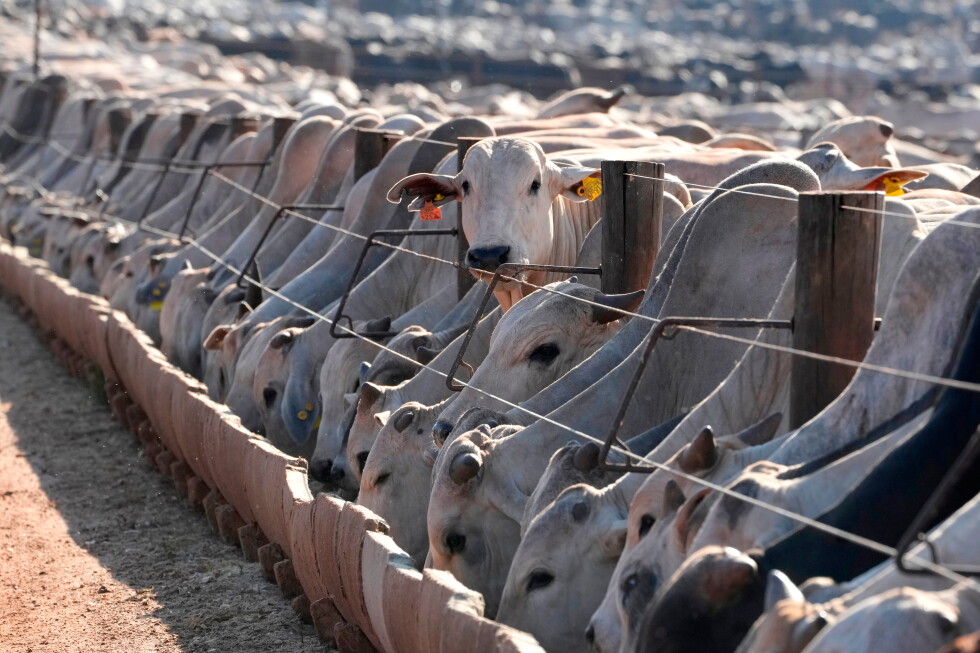
    SAO PAULO – In a landmark legal action that casts a fresh spotlight on labor abuses in global supply chains, Brazilian labor prosecutors have filed a civil suit against global meatpacking leader JBS, alleging the multinational knowingly purchased cattle from Amazon-region ranches where workers were trapped in slavery-like working conditions. The claim, filed before a labor court in Para — a northern Brazilian state that falls within the Amazon basin — seeks 119 million reais, equivalent to roughly $24 million in compensatory damages. Prosecutors note this figure matches the total value of all business dealings between JBS and the accused suppliers over the past decade.

    Court documents outline that between 2014 and 2025, authorities rescued 53 workers from properties controlled by seven JBS-supplied ranchers. All seven of these producers are already listed on Brazil’s official public registry of entities found to have forced workers into conditions analogous to chattel slavery, a designation reserved for cases of extreme exploitation, forced confinement and debt bondage.

    Prosecutors argue that JBS demonstrated a repeated, systematic pattern of negligence in its supply chain oversight, failing to conduct adequate due diligence to screen out suppliers with documented histories of labor abuse even though such records are publicly available. As of Thursday, JBS had not issued an immediate response to requests for comment from reporters on the allegations.

    This legal action comes against a backdrop of longstanding concerns about labor practices in Brazil’s massive beef sector. The country is currently the world’s top beef producer, contributing roughly 20% of total global output, after recently overtaking the United States which now holds a 19% global market share, per data from the U.S. Department of Agriculture. Brazilian labor officials confirm that cattle ranching consistently accounts for the highest number of rescued exploited workers across the country, and the industry is also a leading driver of deforestation in the Amazon rainforest, the world’s largest tropical ecosystem that plays a critical role in global climate regulation.

    Just months earlier, in March 2025, the Office of the United States Trade Representative added Brazil to a watchlist of 60 nations facing active investigation for ties to forced labor in exported goods. JBS, which boasts a global market capitalization of approximately $17 billion, already faced labor unrest this year at one of its U.S. facilities in Colorado, where workers conducted a three-week strike over pay and working conditions before reaching a negotiated settlement to raise wages.

    The Associated Press’ climate and environmental reporting for this story is supported by grants from multiple private foundations, with the AP retaining full editorial independence over all content produced.

  • The kelp producer who wants to get Americans eating seaweed

    The kelp producer who wants to get Americans eating seaweed

    Ten years ago, Suzie Flores sat behind a desk in a Manhattan academic publishing firm, commuting daily from Jersey City with an English degree and a life that left her questioning her purpose. Today, she is the founder of Stonington Kelp Company, a pioneering seaweed farm operating out of a converted Connecticut marina where she lives and works with her family, on a mission to convince American consumers that the next era of sustainable food grows beneath the ocean’s surface.

    On frigid February mornings, when most coastal New England residents stay hunkered indoors, Flores can often be found heading out from Stonington’s marina – one of the state’s last active commercial fishing ports – to check her sugar kelp lines, if conditions cooperate. The sea must be calm, boat hulls cleared of ice, and GPS buoys anchored where she left them. At this point in the growing season, only thin, tender fronds hang from the lines; by spring, they will stretch to a full meter long. She measures each growth stage, documents her findings with photos, and collects water samples for partner marine researchers before returning to shore.

    Flores’ career pivot came after a period of major life upheaval. Her husband Jay, a former combat photographer who covered conflicts in Iraq and Afghanistan, returned home struggling to adjust to civilian life and retrained as an engineer. Around the same time, the couple welcomed three children in quick succession, prompting Flores to reevaluate the fast-paced urban career she had built. She asked herself a simple but profound question: What would she want her children to remember her for at her funeral? The answer was certainly not drafting market research for higher education software.

    The family left New York City, purchased a dilapidated marina on the border of Connecticut and Rhode Island, and rooted themselves in coastal life. Flores went back to school to earn a degree in environmental science, reached out to Charlie Yarish, a University of Connecticut biologist widely recognized as the pioneer of American seaweed farming, who responded within the same day and connected her to GreenWave, a non-profit that helps new aquaculture farmers navigate complex permitting and regulatory processes. Flores recalls taking those early strategy calls with a newborn strapped to her chest, wondering if the risky transition could ever pay off. For her, everything felt aligned – almost too good to be true. That gut feeling held, except for one critical gap: when she harvested her first crop, thousands of pounds of sugar kelp sat with no market to absorb it.

    “Had Jay and I known how much work building a market would be, I don’t know if we would have gone into it,” Flores admitted. Undeterred, she set out to create demand from scratch. She cold-called farm-to-table restaurants across New England, walking chefs through the unique qualities of East Coast sugar kelp: a mild, briny flavor and delicate texture that stands in stark contrast to the thick, rubbery Pacific kelp most Americans are familiar with.

    Her grassroots pitch paid off. Today, Stonington Kelp Company sells out its entire harvest every season, supplying top-tier regional restaurants where chefs value both kelp’s culinary versatility and its local provenance. David Standridge, the 2026 James Beard Award finalist for Outstanding Chef and head of The Shipwright’s Daughter in Mystic, Connecticut, is one of Flores’ longest-standing customers. For Standridge, sugar kelp fills a unique seasonal gap: it is the first fresh local produce available in New England each year, ready to harvest weeks before any land-grown vegetable sprouts, giving him a bright green, local ingredient to feature when the winter lull leaves other options bare. “It’s just crunchy and light and salty and briny,” Standridge explained. “It doesn’t carry a lot of difficult flavours to pair. It kind of goes with a lot of things.” What draws him most, he added, is kelp’s ability to carry the character of the water it grows in – a quality analogous to wine’s terroir or oyster’s merroir. “There’s a lot of dishes where you might not taste the kelp, but it’ll just taste more like the ocean,” he said.

    Despite Flores’ individual success, her journey highlights a major systemic barrier to the growth of America’s domestic seaweed industry. More than 90% of the seaweed consumed in the U.S. is imported, mostly from Asian countries where seaweed cultivation has been practiced for centuries. North America produces only a tiny fraction of global supply, and while the number of domestic kelp farms has grown steadily in recent years, supporting infrastructure for processing, distribution, and mass consumer outreach has failed to keep pace. For new farmers, the biggest challenge is no longer growing kelp successfully – it is building a large enough market and supply chain to support sustained, scalable operations.

    Flores also faces the immediate, unpredictable risks of coastal farming. This past winter, repeated intense storms packing 70-mile-per-hour winds and deep freezes that locked surface gear in solid ice, combined with shifting underwater currents that tore cultivation lines apart, destroyed a huge portion of her harvest. She estimates she lost 40 to 50% of her crop, on top of the 30% loss that new kelp farmers are typically advised to budget for. Even with that major reduction, she still sold out her entire available stock, and is already adjusting her planning to account for more frequent extreme winter weather in coming years.

    What keeps Flores pushing forward is both the environmental and economic promise of kelp farming. As sugar kelp grows, it naturally absorbs excess nitrogen pollution from runoff, improving coastal water quality and creating critical habitat for wild marine life. In the years since she launched her farm, blue mussels have begun colonizing her cultivation lines, and schools of fish cluster beneath the fronds, drawing seabirds back to the area in greater numbers.

    For coastal communities like Stonington, kelp also offers a path to economic revitalization. The region’s once-dominant lobster industry has largely collapsed in recent decades, and the local commercial fishing fleet is rapidly aging. Flores’ vision is not to build a single large corporate kelp operation, but to grow a network of small, family-owned kelp farms – mirroring the successful, low-impact expansion of oyster aquaculture that has taken root across the New England coastline. Kelp can be grown in the off-season by existing fishermen who already own boats and gear, with far lower upfront costs than most new aquaculture operations, creating a new stream of income for coastal families.

    “It hasn’t grown at a massively rapid rate,” Flores said of her own business. “But it’s always growth. We’re always going in the right direction.” Beyond her work on the water, Flores also teaches courses on kelp farming and sustainable aquaculture at Yale University and the University of Massachusetts Boston, and runs educational seaweed programs for local culinary schools. She notes that the youngest students are often the most skeptical, until she incorporates kelp into familiar comfort foods like macaroni and cheese – after that, most become quick converts.

    Her three children have grown up with the farm as a backdrop to their daily lives, taking boat trips for lunch and helping with small chores as part of routine. Flores says she doesn’t necessarily expect them to take over the business; what she wants for them is the freedom to choose work that feels meaningful, rather than sticking to an unfulfilling path for stability. “There is nothing worse than not listening to yourself about what brings you joy,” she said. She learned that lesson in a Manhattan office, and hopes her children never have to learn it the same way.

    “Kelp is the lobster roll of the future,” Flores joked, before pausing to add somberly: “The lobster roll is gone. In large part because of us.” Out on the calm waters of Long Island Sound, the ocean remains. Flores is betting that seaweed farming can help build a more sustainable future for both the water and the coastal communities that depend on it, one harvest at a time.

  • A son overlooked and a jailed tycoon: Inside Samsung’s succession drama

    A son overlooked and a jailed tycoon: Inside Samsung’s succession drama

    For many global corporate giants, a changing of the guard at the C-suite rarely makes front-page news. As long as products reach consumers, services run smoothly and supply chains hold steady, public attention rarely turns to who sits in the boardroom. But for Samsung, South Korea’s largest and most influential family-owned chaebol, leadership transitions are never just internal business — they are national news that can shape the trajectory of an entire economy. The decades-long drama of Samsung’s royal family succession reached its long-awaited conclusion in July 2025, when the Seoul High Court upheld an acquittal for chairman Lee Jae-yong on fraud charges tied to the 2015 merger that secured his grip on the empire, closing a 10-year legal saga that once brought down a South Korean president and upended the future of the world’s biggest tech manufacturer.

  • Big US tech stocks swing as investors probe AI spend

    Big US tech stocks swing as investors probe AI spend

    On Wednesday, the four largest technology giants in the United States — Meta Platforms, Alphabet, Microsoft, and Amazon — dropped their first-quarter 2026 earnings reports simultaneously, triggering wild fluctuations in their share prices as investors weighed in on the companies’ combined half-trillion-dollar commitment to artificial intelligence development.

    The wave of massive AI investment has already forced organizational restructuring: both Meta and Amazon have implemented large-scale layoffs in recent months to free up capital for their AI ambitions, a cost-cutting move that underscores how seriously the industry is prioritizing the emerging technology over near-term operational expenses.

    Investor uncertainty over whether these massive outlays will translate to sustainable, long-term revenue growth has hung over the sector for months, and Wednesday’s mixed earnings results did little to resolve that debate. Meta, the parent company of Facebook, Instagram, and WhatsApp, framed the quarter as a milestone, pointing to rising user engagement across its apps and the launch of a breakthrough new generative AI model. But that positive news was immediately overshadowed by an unexpected upward revision to the company’s 2026 capital expenditure forecast. Meta now projects full-year capital spending will hit a maximum of $145 billion, up $10 billion from its earlier guidance, with almost all of the increase earmarked for AI infrastructure and research projects. The news sent Meta’s shares tumbling more than 5% in extended trading after the report release.

    Alphabet, Google’s parent company, delivered the only clear positive surprise of the day. The company reported a 30% year-over-year jump in net profits, with its Google Cloud division notching a 63% revenue increase — growth that executives directly tied to rising enterprise demand for AI-powered cloud services. In prepared remarks, CEO Sundar Pichai highlighted that the company’s years of early AI investments and full-stack development approach are now driving gains across every segment of its business. The tangible links between AI spending and bottom-line growth resonated with investors, pushing Alphabet’s shares up nearly 6% in after-hours trading.

    Microsoft, which has poured more than $10 billion into its partnership with OpenAI, beat analyst consensus revenue and profit expectations: revenue climbed 16% year-over-year to $83 billion, while net profits rose 23% to $38 billion. Even so, the company’s aggressive AI spending hit free cash flow hard, which fell almost $6 billion from the same period a year ago to $15.8 billion — a key metric that worries investors tracking how quickly the company is burning through capital to scale AI. CEO Satya Nadella touted the company’s growing AI business, noting the annual run rate for its AI offerings has hit $37 billion, but stopped short of disclosing the base sales figure used to calculate that forward-looking projection. Microsoft’s stock fell nearly 2% in extended trading, and is down roughly 11% for 2026 to date amid ongoing investor questions about its AI spending trajectory. Microsoft’s stock fell 2% after the release.

    Amazon’s shares slipped 1.6% after the company released results that matched analyst expectations, but issued a weaker-than-anticipated second-quarter earnings outlook. The e-commerce and cloud giant reported a 15% year-over-year increase in profits, and its Amazon Web Services cloud division grew 28% — the fastest pace of growth the unit has posted in more than four years. CEO Andy Jassy highlighted the company’s fast-growing in-house AI chip manufacturing business, saying the annual run rate for the segment currently sits at $20 billion, though like Microsoft, Amazon declined to share the underlying sales data behind that projection. Earlier in 2026, Amazon announced it would ramp up full-year AI spending to $200 billion, up from $125 billion in 2025. In prepared remarks ahead of the company’s earnings call, Jassy struck an optimistic tone, saying “We’re in the middle of some of the biggest inflections of our lifetime, we’re well positioned to lead, and I’m very optimistic about what’s ahead for our customers and Amazon.”

    Across the sector, the collective planned AI spending from the four firms this year exceeds $500 billion, a figure that has left investors split on whether the unprecedented investment will pay off in the form of transformative revenue growth, or turn into a costly capital drain that erodes near-term margins for years to come.

  • Decouple from China? Beijing now has a law against it

    Decouple from China? Beijing now has a law against it

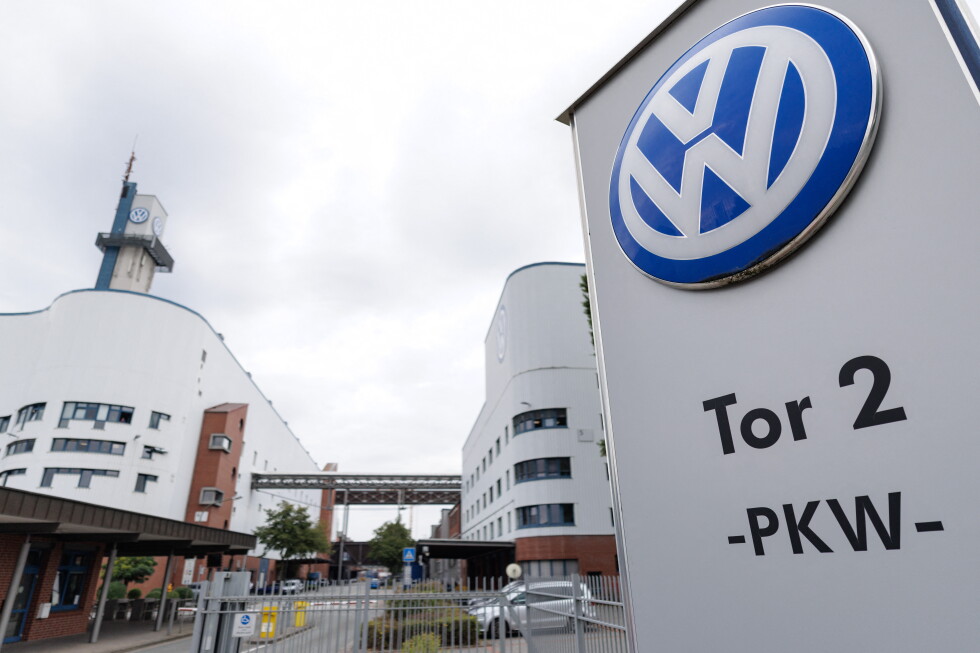
    When China’s groundbreaking Industrial and Supply Chain Security Law entered into force in early April, it established a sweeping new layer of regulatory oversight over cross-border industrial activity and global supply networks, with wide-ranging consequences for multinational corporations operating within the country’s borders. Framed as a policy tool to strengthen supply chain resilience and national economic security, the legislation represents a deliberate strategic response to rising global economic fragmentation, escalating geopolitical tensions, and the expanding network of foreign regulatory restrictions that increasingly shape global corporate decision-making. For European Union-based multinationals, which hold more than €140 billion ($164 billion) in cumulative direct investment in China, with heavy concentration in Germany’s automotive and chemical sectors, the law carries both immediate operational consequences and long-term structural impacts that are forcing a complete rethink of compliance frameworks and long-term investment roadmaps.

    At its core, the law expands regulatory scrutiny far beyond traditional oversight areas such as national security reviews and antitrust enforcement to cover a broad spectrum of commercial activities that could be interpreted as threats to China’s supply chain stability. This sweeping scope extends to core corporate decisions including raw material sourcing, global production allocation, technology transfer arrangements, and contractual partnerships with domestic Chinese entities. A defining feature of the new framework is the inherent ambiguity surrounding the definition of “supply chain stability”, which grants Chinese regulators wide discretionary authority to interpret corporate actions – a reality that has significantly elevated legal uncertainty for foreign firms operating in the market. What were once considered routine commercial adjustments, such as diversifying supplier bases, shifting production capacity to alternative regional markets, or scaling down local operations, can now trigger official regulatory scrutiny if they are deemed to contribute to supply chain disruption in China.

    This new regulatory landscape has created a particularly acute compliance dilemma for EU multinationals. On one side, European firms are legally obligated to adhere to EU-wide regulations including binding sanctions regimes, strict export controls, and mandatory supply chain due diligence requirements, all of which may require firms to reduce their market exposure to China or limit business engagement with specific Chinese entities. On the other side, China’s new law explicitly discourages and penalizes such strategic adjustments when they are deemed to be externally driven or politically motivated. The result is a direct regulatory conflict: compliance with the legal requirements of one jurisdiction automatically exposes firms to enforcement risk in the other.

    German automotive manufacturers and chemical producers, which have built deep, integrated ties to Chinese supply chains and rely heavily on local production ecosystems, are among the most vulnerable to this growing tension. The automotive sector offers a clear illustration of the challenges at hand: European carmakers have spent decades building large-scale investments in China, treating the country not just as a major end market but as a global hub for production and electric vehicle innovation, particularly for battery technologies. The new law directly constrains firms’ ability to shift segments of their supply chain to other regions, even when these moves are mandated by EU industrial policy designed to reduce strategic dependency on Chinese inputs. For example, ongoing efforts to localize battery production within the European Union or source critical raw minerals from non-Chinese suppliers could be interpreted as actions that destabilize Chinese supply networks, leaving firms open to heightened regulatory scrutiny, administrative barriers, and informal political pressure that derail planned strategic realignment.

    A similar dynamic plays out in Germany’s chemical sector, where leading firms have built large, fully integrated production facilities embedded within local Chinese industrial clusters, dependent on long-standing collaborative relationships with domestic Chinese suppliers and customers. The new regulatory environment raises both the financial cost and risk profile of adjusting these deeply entrenched networks, even when changes are driven by legitimate commercial goals such as risk diversification or meeting corporate sustainability targets. Beyond operational costs, the reclassification of routine business decisions as politically sensitive actions introduces significant new reputational and legal risks that did not exist prior to the law’s passage.

    Beyond direct compliance challenges, the legislation has already created a measurable chilling effect on global corporate governance and strategic decision-making. Multinational firms are growing far more cautious about rolling out global corporate policies that impact their Chinese operations, particularly policies designed to ensure compliance with foreign regulatory requirements. Many firms are already restructuring internal governance processes to add mandatory China-specific risk assessments, and decision-making authority is increasingly shifting to localized Chinese management teams that have greater experience navigating the country’s complex regulatory landscape. Over time, this shift could lead to a fragmentation of global corporate governance models, eroding the high degree of centralized global integration that has defined multinational corporate operations for decades.

    The law also introduces new uncertainty for contractual relationships and cross-border commercial dispute resolution. Chinese counterparties can now leverage the new regulatory framework to renegotiate existing contract terms or block changes initiated by foreign partners. The prospect of Chinese regulators intervening in private commercial disputes on the grounds of protecting supply chain stability adds an unprecedented layer of uncertainty to contract enforcement in China. As a result, many EU firms are already re-evaluating the structure of their joint ventures, supplier contracts, and investment vehicles in China, with a growing preference for arrangements that offer greater operational flexibility and stronger legal protections against regulatory intervention.

    Viewed from a broader strategic perspective, the law forms part of a deliberate Chinese effort to shape the behavior of foreign firms to align with Beijing’s core economic and political priorities. By embedding geopolitical considerations into the commercial regulatory framework, Beijing is sending a clear signal that corporate business decisions cannot be separated from the wider geopolitical context of international relations. For EU multinationals, this reality underscores the urgent need to integrate systematic geopolitical risk analysis into core business strategy, rather than treating it as a peripheral afterthought.

    At the same time, the law carries potentially unintended consequences for China’s long-term attractiveness as a foreign investment destination. While the legislation is explicitly designed to deter supply chain decoupling and reinforce China’s central role in global manufacturing, it has also increased the perceived risk of operating in the country for foreign firms. In response, many companies are expected to adopt a more deliberate, cautious approach to the popular “China-plus-one” strategy, which involves maintaining existing market presence in China while gradually building alternative production and supply capacity in other regional markets. Over the long term, this shift could lead to a more segmented global supply chain landscape, where firms prioritize redundancy and resilience over the cost efficiency that defined global supply networks for decades.

    For the European Union, the implications of the new law extend far beyond individual corporate actors to shape the broader EU-China economic relationship. The legislation highlights the growing divergence between the two blocs in regulatory philosophy and core strategic objectives, complicating ongoing efforts to maintain a stable, mutually beneficial economic partnership. EU policymakers are expected to face growing pressure from European industry to provide clearer regulatory guidance, targeted support mechanisms, and high-level diplomatic engagement to address the challenges posed by China’s new regulatory framework.

    Ultimately, China’s new Industrial and Supply Chain Security Law represents a significant shift in the governance of cross-border industrial activity, taking effect against a shifting global order where economic interdependence is increasingly structured by geopolitical competition. For global firms, the new framework requires navigating an increasingly intricate and uncertain global operating environment, where compliance with competing regulatory demands has become one of the core challenges of multinational operations. This analysis is contributed by Bob Savic, a geopolitical risk advisor focused on sanctions and supply chain issues and co-author of *Multipolarity and the Changing Global Order*, published by Springer.

  • Ferragamo expands leather mapping efforts as EU sustainability rules take shape

    Ferragamo expands leather mapping efforts as EU sustainability rules take shape

    MILAN – Iconic Italian luxury fashion house Ferragamo has announced a landmark progress for the global fashion industry: it has successfully mapped the country of origin for more than 80% of the leather used in its signature footwear and handbag lines, marking one of the most ambitious early moves toward full material traceability amid incoming European Union sustainability regulations.

    The milestone, detailed in the brand’s 2025 sustainability report released on March 31, represents the first time Ferragamo has published formal traceability data for its core material – a particularly challenging resource to track compared to common textile fibers like cotton, according to industry experts. The development comes as a growing wave of EU sustainability legislation is ratcheting up pressure on all fashion brands to map every step of their supply chains, from raw material extraction to end-of-life product disposal.

    A century-old family legacy of innovation
    Founded in Florence in 1927 by Salvatore Ferragamo, who built his reputation as a shoemaker for A-list Hollywood stars including Marilyn Monroe and Judy Garland after years working in the United States, the brand has long adapted to material constraints. During World War II, widespread leather shortages pushed the founder to experiment with unconventional alternatives, using wicker as a leather substitute and cork for shoe soles, notes James Ferragamo, the founder’s grandson and the brand’s current chief transformation and sustainability officer.

    Today, leather goods and footwear remain Ferragamo’s core business, accounting for 86% of the company’s 2025 total sales of €976.5 million ($1.1 billion). The brand first launched its leather traceability pilot in 2024, starting with the calf leather used for its iconic Fiamma handbag, tracking the material all the way from cattle breeding to final product assembly.

    Building traceability to meet upcoming regulatory demands
    For 2025, Ferragamo partnered with its key strategic tanneries – which collectively supply 80% of the hides the brand purchases – to roll out the origin mapping project, relying on standardized supplier declarations to document where raw materials are sourced. Across all materials, including cotton, silk and nylon, 81% of Ferragamo’s inputs are already third-party certified under global sustainability standards. The vast majority of the brand’s traced leather originates in Europe, and the company’s approach has already brought it further along the compliance path than many peers in the luxury sector.

    “Currently, there is no one-size-fits-all technological solution that can trace every single piece of leather all the way back to the individual birth farm of the cow,” explained Davide Triacca, Ferragamo’s sustainability director. “We achieved this result through a consistent, highly targeted effort, and today we can trace the origin of more than 80% of all the leather we source.”

    James Ferragamo emphasized that leather, when sourced responsibly, can be a leading sustainable material for fashion. “Most of our partner tanneries already manage water use responsibly, maintain fair labor practices, audit their own upstream suppliers to avoid sourcing from regions impacted by deforestation, and adhere to strict standards for animal welfare and responsible cattle breeding,” he said.

    Industry context: Traceability as the foundation of circular fashion
    Sustainability experts frame traceability as the non-negotiable first step for the fashion industry as it adapts to the EU’s upcoming sweeping sustainability framework, which will eventually require brands to prove their products are sustainable across every stage of their lifecycle, with compliance phased in over the coming years. Full implementation of the new rules will eventually require the industry to shift to a fully circular economy, with mandates to extend product lifespans through repair services, improve end-of-life management via recycling and upcycling, and ban the destruction of unsold inventory for large companies generating more than €40 million in annual revenue.

    “Traceability is an absolutely essential factor, but it is not the end goal on its own,” explained Francesca Rinaldi, a sustainability scholar at Milan’s Bocconi University and director of the Monitor for Circular Fashion. “It is the foundational requirement that makes broader sustainability and circularity practices possible. Any company that cannot trace its materials does not truly understand its own supply chain, and opens itself up to valid criticism of greenwashing.”

    Experts note that Ferragamo’s country-level origin mapping is an early-stage milestone, not full chain-of-custody traceability that the EU may eventually require, and the bloc does not currently mandate leather traceability at all. Still, the move positions Ferragamo ahead of regulatory deadlines and industry trends.

    Continuing experimentation for future sustainable materials
    Ferragamo’s traceability project is just the latest step in the brand’s decade-plus work on sustainability, which has included annual sustainability reporting for more than 10 years and ongoing experimentation with alternative materials. Past innovations include a 2017 capsule collection using silky textiles derived from orange citrus fibers, the Nova men’s tote crafted from nylon made from castor oil rather than fossil fuels, and the Back to Earth collection, which features the brand’s popular Hug handbag dyed with plant-based vegetable dyes.

    “Our research and development work is ongoing – it’s a constant process that never stops,” James Ferragamo said. “We are always testing new approaches and new materials, and not every experimental material will be ready for commercial release right away. But that doesn’t mean we stop experimenting.”