分类: business

  • Oil steady after wild swing, stocks diverge in thin trading

    Oil steady after wild swing, stocks diverge in thin trading

    Global financial markets saw mixed movements on Friday as thin holiday trading amplified existing uncertainty, driven by simmering geopolitical tensions in the Middle East and ongoing digestion of the latest batch of corporate earnings results.

    Many of the world’s major financial centers remained closed for the May 1 international labor holiday, including key markets across mainland China, Hong Kong, France, and Germany, leaving thinner-than-usual trading volumes to amplify price swings across open venues. Among active exchanges, Japan’s Nikkei 225 closed up 0.4% at 59,513.12, while London’s FTSE 100 slipped 0.6% to 10,313.70, dragged down by NatWest. The British bank reported higher quarterly net profit but issued a cautionary note that domestic economic conditions are on track to deteriorate in coming months.

    Energy markets were the focal point of investor attention after a day of extreme volatility the previous session, with oil prices eventually stabilizing around $111 a barrel for international benchmark Brent crude. The wild swing was triggered by escalating fears of renewed hostilities between the United States and Iran, with no visible progress toward a diplomatic deal to de-escalate tensions. Investors are particularly concerned about the potential for a prolonged disruption to shipping through the Strait of Hormuz, a critical chokepoint that carries roughly one-fifth of the world’s daily global oil supplies.

    Earlier this week, Brent surged to a four-year high above $126 per barrel after Axios reported that former U.S. President Donald Trump would receive a briefing on potential new military strikes against Iran, compounding existing anxiety following warnings that a blockade of Iranian ports could last for months. This latest energy market shock has stoked broader fears of persistent global inflation, prompting major central banks around the world to hold interest rates steady this week as they monitor evolving economic risks. Both the European Central Bank and Bank of England kept borrowing costs unchanged on Thursday but left the door open for future rate hikes if inflation pressures do not abate, matching the cautious stance adopted this week by the U.S. Federal Reserve and Bank of Japan.

    Despite geopolitical headwinds, U.S. markets closed out Thursday at fresh record highs, with both the S&P 500 and Nasdaq notching new closing records, supported by stronger-than-expected corporate earnings and continued resilience in U.S. economic growth. “The latest U.S. earnings season has been robust, which has helped prevent global markets from suffering big losses despite the impact of the Iran conflict,” noted Russ Mould, investment director at AJ Bell. Big tech led the positive earnings momentum: Alphabet, Google’s parent company, jumped 10% after posting forecast-beating profits and solid revenue growth across all its core business units Wednesday, while Apple beat analyst expectations after Thursday’s market close, driven by surprisingly strong iPhone demand.

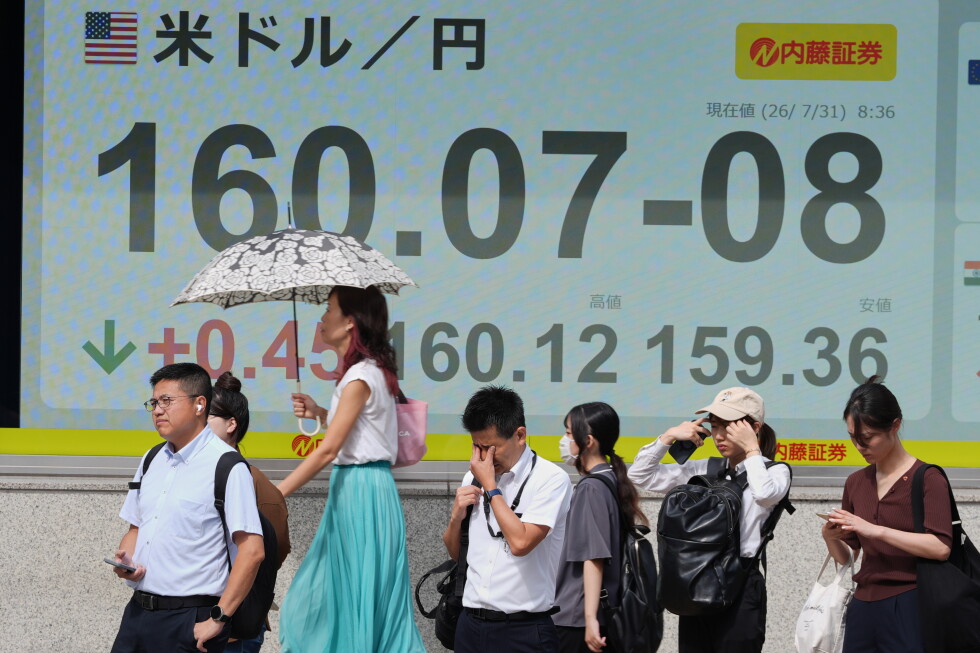
    In currency markets, the yen saw a slight weakening against the U.S. dollar one day after a sharp rally fueled by speculation that Japanese financial authorities had intervened in foreign exchange markets to prop up the slumping currency. Japanese officials have issued repeated public warnings in recent weeks about excessive yen depreciation, signaling their willingness to step in to stabilize valuations. As of 1025 GMT, Brent crude traded up 0.7% at $111.20 per barrel, while U.S. West Texas Intermediate crude gained 0.3% to hit $105.39 a barrel. The Dow Jones Industrial Average closed Thursday up 1.6% at 49,652.14, and the dollar traded at 156.50 yen, down slightly from 156.60 yen a day earlier.

    Analysts note that while near-term volatility is likely to continue as geopolitical risks unfold, strong corporate earnings have so far acted as a buffer for global equities. “If oil stays in the $100-a-barrel range for an extended period, the broader economic costs will eventually be harder to ignore,” said Matt Britzman, senior equity analyst at Hargreaves Lansdown. “But for now, earnings are the bigger fish, and markets are happy to keep swimming with the current.”

  • Trump to remove whisky tariffs after King’s visit

    Trump to remove whisky tariffs after King’s visit

    A surprise policy announcement has upended transatlantic spirits trade relations, as US President Donald Trump has confirmed he will eliminate all existing tariffs and trade restrictions on whisky imports into the United States, a decision timed explicitly to honor King Charles III and Queen Camilla’s recent four-day state visit to the US. The move clears the way for restored full collaboration between Scottish whisky producers and Kentucky’s bourbon industry, a cross-border partnership that has been constrained by trade barriers for years, and the policy change extends to all imported whiskies, including Irish whiskey, UK government officials have confirmed.

    King Charles and Queen Camilla wrapped up their state visit on Thursday, which included stops in Washington D.C., New York, and Virginia, and ended with a warm handshake between the British monarch and the US president ahead of the royal party’s departure. In comments to reporters following the visit, Trump framed the tariff elimination as an unexpected outcome of the royal trip, noting, “The Royal visit got me to do something that nobody else was able to do, without hardly even asking.”

    In a public post to his Truth Social platform, Trump expanded on the decision, writing that the action was taken “in honour of the King and Queen of the United Kingdom, who have just left the White House, soon headed back to their wonderful country.” He highlighted the deep historic and economic ties between the Scottish whisky and Kentucky bourbon sectors, particularly the longstanding trade of used bourbon barrels. Today, the Scottish whisky industry is the single largest buyer of Kentucky’s used bourbon barrels, importing approximately £200 million worth of the casks annually, a flow of goods that has been disrupted by existing trade restrictions.

    Buckingham Palace confirmed the King’s response to the announcement in a statement, saying the monarch extended his “sincere gratitude” to President Trump and added that he “will be raising a dram to the President’s thoughtfulness.”

    Political leaders across the United Kingdom have widely praised the decision. Scotland’s First Minister John Swinney called the development “tremendous news for Scotland,” crediting King Charles with playing a pivotal role in pushing the agreement across the finish line. Swinney noted that the tariffs had inflicted severe ongoing damage on Scotland’s economy, saying “Millions of pounds were being lost every month from the Scottish economy.”

    UK Business and Trade Secretary Peter Kyle echoed that enthusiasm, noting that Scotch whisky exports to the US are valued at nearly £1 billion annually and support tens of thousands of jobs across the United Kingdom. The 10% across-the-board tariff on whisky imports was first introduced by the Trump administration during an earlier trade dispute, and the levy hit the US market — which is the largest export market for Scotch whisky by value — particularly hard. Compounding that pressure, a suspended 25% tariff on premium single malt Scotch, which had been put on hold four years ago, was scheduled to go back into effect this spring. A last-minute deal with the Trump administration had been the only way to avoid the additional cost that would have crippled premium single malt sales in the key US market.

    Industry leaders say the elimination of all tariffs comes as a massive relief to a sector that has been operating under sustained financial pressure for years. Graeme Littlejohn, strategy director for the Scotch Whisky Association, told reporters that his organization was “delighted” by the announcement. “The industry’s been losing around £4m a week in lost exports to the United States – £150m over the course of the last year while tariffs have been in place,” Littlejohn explained. “This is a real boost for the industry and distillers will breathe a sigh of relief now that these tariffs are off.”

    Littlejohn credited years of high-level diplomatic negotiation for laying the groundwork for the deal, but acknowledged that the royal state visit provided the critical catalyst to finalize the agreement. “Perhaps the state visit has been the catalyst for getting this over the line and the King’s added that little bit of royal sparkle to make the deal work,” he said. Industry representatives across the UK and Ireland have noted that the elimination of tariffs will allow distillers of all sizes to operate with far more stability amid a period of ongoing global economic pressure on consumer goods sectors.

  • ASX 200 snaps losing streak as mining giants and Coles sales surge

    ASX 200 snaps losing streak as mining giants and Coles sales surge

    After eight consecutive days of declines — its longest losing stretch since 2018 — Australia’s benchmark ASX 200 notched a welcome rebound on Friday, driven by sharp gains across major mining stocks and a robust sales update from national supermarket chain Coles. The leading index climbed 64 points, or 0.74%, to close at 8729.80, while the wider All Ordinaries index followed suit, rising 67 points (0.75%) to settle at 8954.60.

    The Australian dollar edged slightly lower over the session, dipping 0.15% to trade at 71.89 US cents. Ten of the ASX 200’s 11 industry sectors finished the day in positive territory, with the materials sector leading the charge. Global oil prices pulled back from a recent four-year high of $US126 per barrel to $US111 per barrel, easing cost pressure on resource operations and lifting investor sentiment for major miners. BHP Group rose 2.27% to $54.94, Rio Tinto jumped 2.73% to $171.97, and Fortescue Metals closed up 1.83% at $20.01.

    Despite the near-term market bounce, AMP’s deputy chief economist Diana Mousina cautioned that geopolitical risks remain underpriced by markets, particularly in the global energy sector. While peace talks had previously showed tentative progress, negotiations have now stalled, leaving the region in a tense geopolitical standstill. “Markets clearly expect some sort of resolution will eventually be reached, especially as missile strikes have slowed in recent weeks,” Mousina explained. “However, we believe markets are underestimating the lingering risks, especially within the oil market.”

    The consumer staples sector also turned in a strong performance, almost entirely thanks to Coles’ upbeat trading update. The supermarket giant reported group sales revenue of $10.7 billion for the 12-week period ending March 29, sending its shares surging 3.66% to $22.92. Other consumer-facing stocks also posted gains: Endeavour Group climbed 2.09% to $3.42, while A2 Milk rose 2.68% to $7.27. Coles’ main rival Woolworths bucked the trend, however, slipping 0.70% to $34.15.

    Financials was the only sector to close the session in negative territory. ANZ Banking Group recorded a 9% half-year profit increase to $3.65 billion, but shares still slumped 2.84% to $35.61 after chief executive Nuno Matos warned that the ongoing geopolitical conflict would create greater economic headwinds for Australia. Matos noted that lower national growth, persistently high inflation, and ongoing interest rate hikes will create growing financial pressure for many Australian customers. “As Australia’s most international bank, we have a front-row seat to global developments,” Matos said. “Much of the potential impact of this crisis remains ahead of us, but the longer oil supplies remain constrained, the greater the chance the crisis shifts from primarily an inflation challenge to a much more serious supply and growth challenge.” Other major banks also posted small declines: Commonwealth Bank fell 0.36% to $173.04, Westpac dipped 0.13% to $38.45, and NAB slipped 0.13% to $39.83.

    In other corporate news, Qantas Airways gained 0.83% to $8.48 after announcing it would extend flight capacity cuts through to 2026-2027 in response to ongoing disruption from the Middle East conflict. Sleep and respiratory treatment manufacturer ResMed dropped 3.53% to $28.73 despite reporting an 11% year-over-year revenue increase to $US1.4 billion for its latest reporting period.

  • Australia faces 1970s-style stagflation threat as oil shock pushes inflation higher

    Australia faces 1970s-style stagflation threat as oil shock pushes inflation higher

    Fears of a return to the crippling 1970s-era stagflation are mounting among Australia’s leading economic experts, as skyrocketing oil prices driven by Middle East tensions push inflation to multi-year highs and threaten to push unemployment sharply upward. The core risk stems from ongoing disruptions to global energy supplies, centered on potential extended disruptions to the Strait of Hormuz, the strategic chokepoint through which roughly 20% of the world’s daily oil shipments pass.

    In a stark analysis published in an investment note, Bob Cunneen, senior economist at MLC, warned that the ongoing conflict in Iran has created a dangerous dual threat of simultaneously rising inflation and rising unemployment — the toxic combination that defines stagflation. “The global economy currently confronts the prospect of both rising inflation and unemployment because of this Iran war,” Cunneen explained. “This stagflation mix of both higher inflation and unemployment creates a major policy dilemma for central banks, which are forced to choose between taming sky-high prices and preventing further job losses.”

    Stagflation is widely regarded as one of the worst possible scenarios for any modern economy, as it combines stagnant consumer spending and slowing growth with persistent accelerating inflation — a combination that leaves policymakers with few effective tools to address both crises at once. Australia last experienced a full stagflationary crisis in the mid-1970s, which was also triggered by a major global oil price shock.

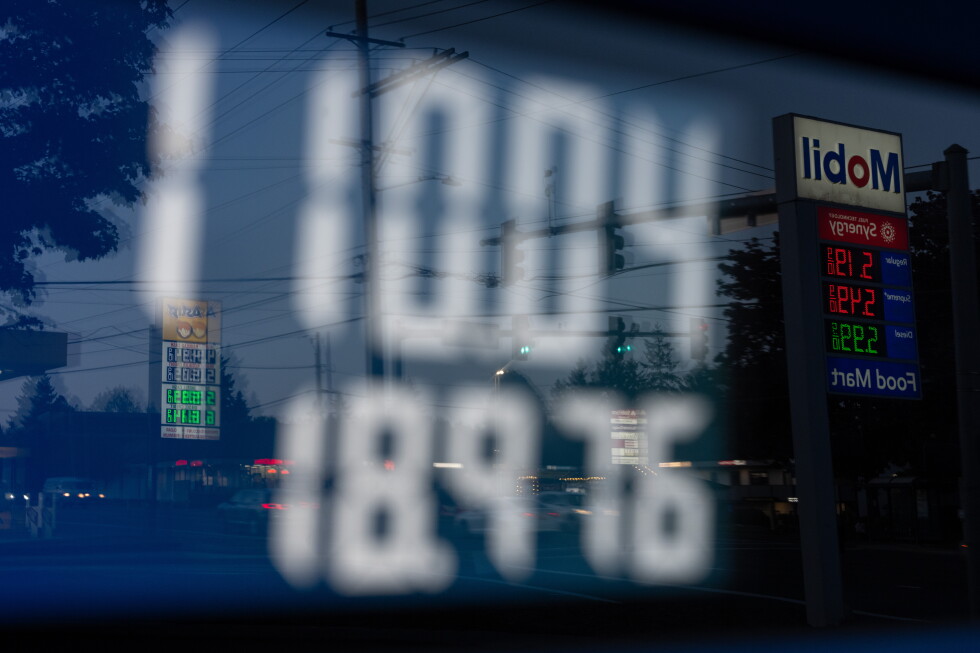
    Before the escalation of Middle East tensions, global benchmark oil traded at roughly $US56 per barrel. In the weeks following the outbreak of conflict, prices spiked as high as $US120 per barrel, marking a 97% jump in crude prices in US dollar terms for the year to date. For Australian motorists, this translates to an extra 10 cents per litre at the fuel pump for every $10 per barrel rise in crude costs. While the Australian government has partially offset this pain by cutting fuel excise in half and returning GST windfall gains to consumers, the broader inflationary shock has already flowed through the entire national economy.

    Cunneen’s warning echoes a growing consensus among leading economic analysts. HSBC chief economist Paul Bloxham has projected that Australia will enter a stagflationary period for two of the next three quarters. “As we see it, a stagflationary shock has arrived,” Bloxham wrote in a note to clients. When asked whether this would mirror the extreme stagflation of the 1970s, Bloxham noted that the outcome depends heavily on the persistence of the energy shock and the policy choices made by Australian regulators. He added that outright stagflation is a growing risk, and policymakers should prioritize keeping the episode as short as possible through optimal policy settings.
    Bloxham pointed out that Australia entered this crisis already vulnerable, with inflation running above the Reserve Bank of Australia’s (RBA) target range at 3.7% even before the Middle East conflict escalated. “Because Australia’s economy has little or no spare capacity, there is a higher risk than in many other countries that the sharp fuel-related rise in inflation will more quickly end up in higher inflation expectations,” he explained.
    AMP chief economist Shane Oliver echoed that assessment, confirming that Australia is already experiencing a mild stagflationary environment, far less severe than the 1970s crisis but still damaging for households. “At this stage we are only expecting a mild form of stagflation with only slightly higher unemployment,” Oliver said. He did, however, warn that the risks grow sharply if the Strait of Hormuz remains disrupted for an extended period: prolonged closure could push oil prices even higher, trigger fuel supply restrictions, and lead to a full recession with a significant jump in unemployment. If that scenario plays out, Oliver added, it would also create major headwinds for Australia’s already fragile property market.

    Official data released Wednesday by the Australian Bureau of Statistics (ABS) confirms the severity of Australia’s inflation challenge. Headline inflation rose 1.1% in the March quarter, driven overwhelmingly by surging fuel prices, pushing annual inflation to 4.6% — the highest reading recorded since September 2023, when the Australian economy was still rebounding from post-Covid-19 disruptions. Even before the government cut fuel excise, national fuel prices rose 32.8% in the month leading up to the ABS survey.
    Morningstar market strategist Lochlan Halloway noted that Australia’s inflation problem is not just driven by global energy shocks — it is also deeply entrenched in the domestic economy. Even when stripping out the impact of the oil price jump, Australia’s trimmed mean core inflation rate still came in at 3.3%, well above the RBA’s target range. “That is still too high. And the fact that it held firm despite a significant external shock to household budgets tells you something about the persistence of the underlying problem,” Halloway said. He added that beyond energy prices, Australia urgently needs to boost lagging productivity growth to ease pressure on the economy: “Until we either lift productivity growth such that the economy gets a little breathing room, or, the more depressing outcome, squash demand back down again, this problem will keep re-emerging.”

    Westpac chief economist Luci Ellis has projected that inflation will peak at 5.4% in the June quarter, bringing even more cost-of-living pain for Australian households. In response to persistent inflation, she now expects the RBA to implement three consecutive 25-basis-point interest rate hikes at its May, June, and August policy meetings, up from earlier projections of a single hike. These higher rates are expected to slow economic growth, particularly household spending, and lead to net job losses across the country. Ellis now projects that Australia’s unemployment rate will peak around 5%, up from her earlier forecast of 4.7%, and warned that cost-of-living pressures will remain persistent until 2028, when inflation is finally expected to return to the RBA’s 2-3% target range.

  • EU-Mercosur trade deal takes provisional effect, boosting hopes and concerns for millions

    EU-Mercosur trade deal takes provisional effect, boosting hopes and concerns for millions

    After 25 years of grueling negotiations, the landmark trade agreement between the European Union and South American trade bloc Mercosur has entered into provisional force, marking a historic step toward creating one of the world’s largest trans-Atlantic commercial blocs – though its long-term future remains uncertain due to ongoing legal challenges. The initiative will build a combined market valued at an estimated $22 trillion, serving more than 720 million consumers across two continents. Full implementation by 2038 is projected to lift total exports from participating nations by over 10% compared to current levels. The agreement was formally signed by member states in January this year during a Mercosur leadership summit, but the path to entry into force has been fraught with political friction. European Commission President Ursula von der Leyen’s decision to enact the deal on a provisional basis, bypassing the European Parliament for immediate implementation, has drawn fierce pushback from EU lawmakers, who have brought a challenge against the move to the European Court of Justice. If the court rules in favor of the challengers, the entire agreement will be halted immediately. Ahead of the provisional entry into force, von der Leyen defended the policy in a Thursday statement, framing it as a win for multiple stakeholders across the EU. “This is good news for EU businesses of all sizes, good news for our consumers and good news for our farmers, who will gain valuable new export opportunities, with full protection for sensitive sectors,” she said. On Friday, von der Leyen is scheduled to host a virtual celebration with the heads of government of Mercosur’s four full member states: Brazil, Argentina, Uruguay, and Paraguay. In Brazil, Mercosur’s largest and most influential economy by a wide margin, President Luiz Inácio Lula da Silva – one of the deal’s most prominent backers – signed a national decree earlier this week to formally validate the agreement within Brazilian law. Lula framed the agreement as a deliberate pushback against the unilateral trade tariffs imposed by former U.S. President Donald Trump in 2023, positioning the deal as a powerful reaffirmation of multilateral global cooperation. “Nothing better than believing in the exercise of democracy, in multilateralism, and in cordial relations between nations,” Lula remarked during a celebratory ceremony in Brasilia, marking the end of a quarter-century of on-again, off-again negotiations. Speaking to the Associated Press and other international news outlets last week, Brazilian Vice President Geraldo Alckmin, who has served as one of the lead negotiators for the bloc, warned that rejecting the deal would have condemned Mercosur to economic stagnation as competitor blocs around the world advanced their own preferential trade agreements. “Staying out of this agreement would have meant falling behind, as other nations locked in better access to key global markets,” Alckmin implied. With a projected 2025 GDP of more than $2.3 trillion, Brazil accounts for the vast majority of Mercosur’s total economic output. Lia Valls, an associate researcher at Rio de Janeiro-based leading think tank Fundacao Getulio Vargas, shares Lula’s view that the deal sends a critical signal in an era of rising global unilateralism. “The EU and Mercosur are showing that it is possible for big blocs to reach a deal in this world where that multilateral system is being very weakened and where the U.S. clearly operates to do that,” Valls told the Associated Press. “It is a very positive sign.” For years, the agreement has faced fierce opposition from European farming unions and environmental advocacy groups, which led to a delay in talks last December before the deal was referred to the EU’s top judicial body. Stakeholders on both sides have high hopes for expanded trade, but also harbor lingering concerns about increased competition. South American agribusiness sectors, including beef producers, fruit growers, and mining firms, expect significant export gains to the EU market, while European automakers, pharmaceutical manufacturers, and technology companies anticipate greater access to the fast-growing consumer markets of Mercosur. That said, concerns are widespread on both sides of the Atlantic: Mercosur-based technology and advanced manufacturing firms worry they will be unable to compete with more established, efficient European competitors, while European farmers have raised alarms about downward price pressure and imports produced under weaker environmental and labor regulations than those enforced in the EU. French President Emmanuel Macron, one of the most high-profile European critics of the deal, has long pushed for stricter safeguards to prevent widespread economic disruption to EU domestic sectors, tighter environmental regulations for Mercosur exports (including strict limits on pesticide use), and enhanced customs inspections for goods entering EU ports. To address these concerns, the agreement includes built-in protections: while it will gradually phase out most tariffs and trade barriers between the two blocs, it retains binding economic safeguard clauses that allow European nations to protect sensitive domestic sectors including poultry, beef, sugar, and fruit from excessive import competition.

  • Iran war redraws sea routes with Africa as the pivot

    Iran war redraws sea routes with Africa as the pivot

    Geopolitical instability centered on conflict in Iran has triggered a sweeping restructuring of global maritime trade networks, pushing Africa into an unexpected central role as container shipping giants reroute major cargo flows away from historically critical chokepoints, logistics and maritime industry sources confirm. The dual pressures of Strait of Hormuz disruptions and escalating tensions in the Red Sea have forced shipping companies to overhaul decades-old supply chains, leaving land transport alternatives as the only reliable option for delivering goods to Gulf Cooperation Council nations.Over the past two months, widespread blockades of key sea lanes have cut off direct maritime access to most coastal Gulf states, prompting shipowners to develop overland trucking corridors to move food, consumer goods and industrial products from new regional entry points to end markets. The Saudi Red Sea port of Jeddah has emerged as the primary temporary hub for this reconfigured trade, with the world’s largest container lines—including Mediterranean Shipping Company, CMA CGM, Maersk and Cosco—diverting all Gulf-bound cargo through the port via the Suez Canal. Once unloaded, cargo is transported overland along desert highways to final destinations across the UAE, Bahrain and Kuwait, markets that have been cut off from direct sea service for two months.Despite its new role as a critical trade gateway, Jeddah was never designed to handle the sudden surge in cargo volumes, and port congestion is now worsening by the week. Arthur Barillas de The, co-founder of global freight forwarder Ovrsea, shared these observations with Agence France-Presse, noting that infrastructure constraints have created significant bottlenecks. Data from maritime analytics firm Kpler Marine Traffic underscores the growing strain: as of last Thursday, 11 container vessels were docked at Jeddah, nine more were anchored waiting for berth access, and the average waiting time for unloading climbed to 36 hours, up from 17 hours just one week prior.Beyond regional reconfiguration for Gulf-bound cargo, shipping lines have also established alternative port bases outside the Strait of Hormuz. Three key terminals—Oman’s Sohar Port and the UAE’s Khorfakkan and Fujairah ports—now serve as entry points for cargo that is moved overland across the Emirates to inland Gulf markets. Jordan’s Port of Aqaba has become the primary hub for cargo bound for Baghdad and Basra in Iraq, while a cross-border corridor through Turkey also supports deliveries to northern Iraq. The most dramatic shift, however, is playing out on long-haul Asia-Europe trade routes, where systematic diversion around the African continent has become the new norm.Shipping lines began diverting away from the Red Sea and Suez Canal long before the current outbreak of conflict in Iran, but the crisis has accelerated the trend dramatically. According to CyclOpe, a leading French commodities industry publication, the shift started on November 19, 2023, when Iran-backed Houthi militias based on Yemen’s Red Sea coast launched the first attack on a commercial container transiting the route. Since that time, rerouting has become standard practice for most major carriers, says Ronan Boudet, head of container intelligence at Kpler.Instead of transiting the Bab al-Mandeb Strait into the Red Sea and on to the Suez Canal, container ships now sail south along Africa’s entire east coast, round the Cape of Good Hope at the southern tip of South Africa, and then turn north to reach European and Mediterranean ports. Edouard Louis-Dreyfus, chairman of French shipping giant Louis Dreyfus Armateurs, told AFP that the latest escalation of tensions in the Gulf has only worsen supply chain disruptions, with no near-term improvement in sight. Yves Guillo, a supply chain expert at Paris-based management consultancy Efeso, estimates that 70 percent of all freight traffic that previously transited the Red Sea in 2023 is now rerouted via the Cape of Good Hope.Data from the International Monetary Fund’s PortWatch platform, which tracks vessel movements via GPS signals, confirms the scale of this shift. Commercial vessel traffic through the Cape of Good Hope has more than tripled in three years, while traffic through the Bab al-Mandeb Strait has plummeted by more than 50 percent. Between March 1 and April 24 this year, an average of 20 commercial vessels rounded the Cape of Good Hope every day, compared to just six vessels per day in the same period in 2023. By contrast, average daily transits through the Bab al-Mandeb Strait fell from 18 in March-April 2023 to just five this year.The restructuring of global shipping lanes has created a mix of winners and losers across the global economy, with tangible impacts on shipping costs and delivery times. Guillo explains that longer routes have stretched Asia-Europe transit times by an average of two weeks, while costs have spiked dramatically: the longer journey requires 30 to 50 percent more fuel, and carriers need 10 to 20 percent additional vessels to maintain the same service frequency. Citing data from the Drewry World Container Index, Guillo adds that the average cost to ship a standard 40-foot container on major trade routes rose 14 percent in April compared to the same period last year.Some African ports have seen unexpected gains from the new routing structure. The Tanger Med Port Authority in Morocco reported it handled 11 million standard containers in 2025, an 8.4 percent increase year-over-year, driven by increased traffic from rerouted vessels. But other economies have suffered severe losses: Egypt, which relies heavily on Suez Canal toll revenues for a large share of its national income, lost an estimated $7 billion in toll revenues in 2024, a drop of more than 60 percent compared to 2023, according to CyclOpe. As long as geopolitical tensions persist in the Middle East, industry analysts expect this reshaped trade landscape to remain in place, with Africa continuing to anchor the new core of global container shipping.

  • Aldi claims Roy Morgan’s ‘supermarket of the year’ award for sixth time in a row

    Aldi claims Roy Morgan’s ‘supermarket of the year’ award for sixth time in a row

    In a historic showing for Australia’s grocery sector, German-founded retail giant Aldi has claimed the 2025 Supermarket of the Year crown in Roy Morgan’s annual Customer Satisfaction Awards – marking its sixth straight win and its ninth overall victory, a record no other domestic supermarket has matched.

    The discount chain secured an average customer satisfaction score of 87.6% to top the rankings, extending an unbroken winning streak that dates back to 2021, now hitting 55 consecutive months of leading customer satisfaction, according to independent consumer researcher Roy Morgan.

    As Australia’s third-largest grocery chain by market value and the nation’s second-most trusted brand, Aldi has built its reputation on low pricing at a time when Australian households are grappling with persistent cost-of-living pressures. Simon Padovani-Ginies, group director of Aldi Australia, said the company was deeply proud to retain the top honor.

    “With cost of living pressures continuing to stretch household budgets, Australians are prioritizing value more than ever before,” Padovani-Ginies said. “Nearly 70% of our high-quality, award-winning product range is priced under $5, and we’re proud our commitment to the lowest possible prices is consistently verified by independent research. That gives our customers full confidence that every time they shop with us, they’re getting premium goods at unbeatable Aldi prices.”

    Independent analysis estimates the average Australian household saves more than $3,000 per year on grocery costs by choosing to shop at Aldi compared to competing major supermarket chains.

    Michele Levine, CEO of Roy Morgan, congratulated Aldi on its record-breaking run of awards, noting the retailer has carved out a distinct, compelling position in the highly competitive Australian grocery market. “This ‘Good Different’ supermarket offers a compelling alternative to its larger domestic rivals, and its consistent performance through shifting economic and political conditions speaks to its strong connection with customers,” Levine said. “Aldi has ranked among Australia’s top five most trusted brands for more than six years running, a milestone that has held steady through all kinds of market and economic upheaval, and millions of Australian shoppers consistently rank it as their top choice for satisfaction.”

    The award win cements Aldi’s ongoing position as a major disruptor in Australia’s $100 billion-plus annual grocery market, where it continues to gain market share from long-established incumbents by focusing on low pricing and curated private-label ranges.

  • Mortgage holders warned to brace for more pain as interest rate rise looms

    Mortgage holders warned to brace for more pain as interest rate rise looms

    Ahead of the Reserve Bank of Australia’s (RBA) upcoming May policy meeting, three-quarters of leading Australian economists and financial industry experts are sounding the alarm: mortgage-holding households across the country are set to face another round of interest rate increases that will stretch household budgets even further.

    A recent nationwide poll conducted by comparison platform Finder, which surveyed 36 financial experts and economists, found 27 respondents are convinced RBA Governor Michele Bullock will have no alternative but to greenlight another cash rate hike when the board meets next Tuesday. If this prediction holds, the increase will mark the RBA’s third consecutive rate rise following hikes in February and March, undoing the temporary cash rate relief Australian borrowers enjoyed in 2025.

    The RBA already lifted the cash rate by a combined 50 basis points across its first two meetings of 2026, pushing the benchmark rate up to 4.10%. Should policymakers opt for a further 25 basis point increase in May, Australians holding the country’s average $736,259 home loan will see their annual mortgage repayments jump by an extra $2,657, according to Finder’s calculations.

    The calls for another rate hike come after hotter-than-expected March quarter inflation data released this week gave policymakers more justification to tighten monetary policy. New figures from the Australian Bureau of Statistics (ABS) show headline inflation climbed 1.1% over the three months to March, driven largely by skyrocketing global oil prices that have hit Australian motorists hard for months. Annual inflation hit 4.6% in the 12 months ending March 2026, marking the highest annual inflation rate Australia has seen since September 2023, when the national economy was in its post-COVID-19 rebound phase.

    Petrol costs alone surged 32.8% in March, pushing the broader transportation category up 9.2% month-on-month. Even the RBA’s preferred core inflation measure, the trimmed mean — which strips out volatile price swings to give a clearer view of underlying inflation pressures — came in at 3.3% over the 12 months to March, holding steady at the same level recorded in previous readings.

    Wealth Within Group chief investment analyst Dale Gillham, one of the experts predicting a hike, said stubbornly rising inflation leaves the RBA with little room to hold rates steady. “I don’t think they have much choice, given inflation is still rising,” he noted, though he added he does not support the move, arguing that government overspending is the root cause of Australia’s persistent inflation.

    AMP chief economist Shane Oliver echoed that view, pointing out that core inflation already sits well above the RBA’s 2-3% target range, even before the full flow-on effects of higher oil prices filter through to other sectors of the economy, including airfares, fertiliser, plastics and broader retail transport costs. “And there is a rising risk that inflation expectations are rising again impacting wage claims,” Oliver said. “So the RBA is likely to hike again to improve its confidence that inflation will fall back to target on a reasonable timeframe.”

    Not all experts are convinced a hike is on the cards, however. Queensland University of Technology adjunct professor and personal finance specialist Noel Whittaker argues the RBA will choose to hold rates steady, pointing to the extreme financial pressure already crushing Australian households. “To me, it would be economic madness to raise rates in this time of uncertainty,” Whittaker said, noting that while a recession has been forecast for months, it has not yet materialized, meaning the central bank also has no reason to cut rates in the near term.

  • China scraps tariffs for all but one African nation

    China scraps tariffs for all but one African nation

    Starting this Friday, China will roll out a sweeping unilateral zero-tariff policy that covers 53 African countries — all but the landlocked southern African nation of Eswatini, which retains official diplomatic ties with Taiwan. Prior to this expansion, as of December 2024, China had already eliminated tariffs on imports from 33 least-developed African economies; the updated framework will remain in effect through April 30, 2028, with no clarification yet on terms beyond that date.

    Beijing has positioned the policy as a landmark milestone, framing itself as the first major global economy to extend full unilateral duty-free treatment to nearly the entire African continent. While the move is widely recognized as a strategic step to boost China’s soft power across Africa, industry analysts and economists note that tariff barriers are rarely the primary challenge holding back African exporters, even as the region struggles with a rapidly widening trade deficit with China.

    Lauren Johnston, senior research fellow at the AustChina Institute, points out that this initiative also creates a clear contrast between China’s self-styled image as an Africa-friendly advocate of trade liberalization and the trade policies pursued by former U.S. President Donald Trump. Just last August, the U.S. imposed tariffs as high as 30% on goods from several African nations; most of those duties were later struck down by the U.S. Supreme Court, leaving a 10% tariff in place for most affected imports.

    Johnston argues that the expanded zero-tariff regime holds tangible potential to boost African agricultural exports, which could in turn raise rural household incomes, lift agricultural productivity, and make incremental progress toward reducing hunger and poverty across the continent. However, the core structural challenge of Sino-African trade remains the growing imbalance heavily tilted in China’s favor: Chinese exports to Africa far outpace African shipments to China, and that gap is accelerating at a rapid pace. In 2025 alone, Africa’s trade deficit with China surged 65% to reach approximately $102 billion.

    Currently, African exports to China are overwhelmingly dominated by unprocessed minerals and raw commodities, including crude oil and metallic ores. China’s top three trading partners on the continent are Angola, whose bilateral trade is driven almost entirely by oil exports, the Democratic Republic of Congo, a major source of critical minerals, and South Africa, the region’s most industrialized economy.

    Johnston cautions that uniform zero-tariff access across the economically diverse African continent will not deliver equal benefits. More developed, diversified economies such as South Africa and Morocco already have the export capacity and infrastructure to take advantage of expanded market access, while smaller, less developed nations will struggle to compete. Other experts echo this view, noting that tariff elimination alone cannot address the widespread structural barriers holding back African economic transformation.

    “Many African economies still face deep structural constraints, such as limited industrial capacity, underdeveloped logistics networks, and an overreliance on raw commodity exports, which tariff reductions alone cannot fix,” explained Jervin Naidoo, a political analyst at Oxford Economics Africa.

    Alfred Schipke, director of the East Asian Institute in Singapore, shares this assessment, noting that the short-term economic impact of the policy “will likely be modest and concentrated in African countries that already have established export capacity.” Still, he adds, the long-term potential could be far more significant if African governments use this opening to expand domestic production, diversify their export portfolios, and move up global value chains.

    Other analysts point to shifting consumer demand in China as an underrecognized opportunity for African producers. Amit Jain, a Singapore-based expert on China-Africa relations, notes that Chinese consumer demand for high-value agricultural goods such as coffee and tree nuts has grown dramatically over the past two decades, creating new, untapped markets for African exporters.

    Ken Gichinga, an economist based in East Africa, echoed that optimism, telling reporters that “these new measures will improve access to Chinese markets, help close that trade deficit and expand opportunities for African companies to prosper. For Kenya, it will be a big boost to certain subsectors such as avocado. The agriculture sector will benefit the most — macadamia nuts, coffee, tea and leather.”

    Wangari Kebuchi, an Africa fiscal policy economist, welcomed the short-term benefits of the policy, including potential gains in foreign exchange earnings and a modest lift to the agriculture, mining and logistics sectors, but warned that medium and long-term fiscal growth cannot be achieved through expanded market access alone. “The structural problem has not changed. Africa continues to export raw materials and import manufactured goods. That asymmetry drives persistent trade deficits, constrains domestic revenue mobilization, and limits the jobs and tax base that governments need to fund public services,” Kebuchi explained. “Zero tariffs on commodities that have already left our shores unprocessed do not solve that problem. They can entrench it. African governments must now ask the harder questions: How do we use improved market access as leverage for industrial policy?”

    Turning to the exclusion of Eswatini, analysts broadly agree that the move is a deliberate political gesture with minimal direct economic impact. In fact, Jain suggests that the exclusion may even backhandedly benefit Eswatini by prompting Taiwan to offer additional economic concessions to maintain the diplomatic relationship.

    Eswatini is one of only 12 countries worldwide that still maintain official diplomatic relations with Taiwan. Beijing claims Taiwan as an inalienable part of Chinese territory, while Taiwan’s self-governing authorities widely view the island as a sovereign independent state. The issue made headlines just last month, when Taiwanese leader Lai Ching-te was forced to cancel a planned trip to Eswatini after three other African nations — Seychelles, Mauritius and Madagascar — denied his aircraft permission to fly through their airspace. Taiwan has accused the three countries of acting under intense economic and political pressure from Beijing.

    Wen-Ti Sung, a political scientist at the Australian National University’s Taiwan Centre, argues that the exclusion of Eswatini from the zero-tariff policy sends a deliberate political message. By sidelining Eswatini, China is “weaponising its ties with African countries, and showing how relations with China comes up with strings attached,” Sung said. “China wants to show the world how it treats its friends, versus Taiwan’s friends.”

  • Qantas and Jetstar extend flight schedule changes into first quarter FY27 amid fuel price pressures

    Qantas and Jetstar extend flight schedule changes into first quarter FY27 amid fuel price pressures

    The global aviation sector is facing mounting systemic pressures that are forcing major carriers to reshuffle their operational plans well into the next financial year, and Australia’s Qantas Group — which owns both Qantas and budget subsidiary Jetstar — is the latest airline to extend network adjustments to navigate ongoing headwinds. The two biggest challenges driving the changes are persistently sky-high jet fuel prices and ongoing travel market disruption stemming from conflict in the Middle East, which have combined to reshape international travel demand across the Asia-Pacific region.

    In an official statement, Qantas Group confirmed it is continuing to reconfigure its route network to two key ends: first, to mitigate the financial and operational fallout of Middle East tensions and sustained elevated fuel costs, and second, to capitalize on the unbroken strong consumer demand for travel between Australia and Europe.

    The carrier group has chosen to extend the network adjustments it first announced earlier, rolling the changes through the July-to-September period of 2026 and into the first quarter of fiscal year 2027. A core part of the international reshuffle is the redeployment of existing aircraft to boost capacity on Australian-European routes, an adjustment that also gives customers booked with Qantas’ partner airlines greater flexibility to rebook onto alternative services if their original plans are disrupted.

    A key addition to the expanded capacity is the extension of extra Perth-Rome return services through the end of October 2026. By contrast, Sydney-to-Paris services will scale back to three weekly return trips starting in August 2026, as previously scheduled; all Paris services will continue to operate out of Sydney with a stopover in Singapore. Overall, the combined adjustments add approximately 2,000 additional seats per week for travel between Australia and Europe, matching the ongoing robust demand on the corridor.

    Not all routes are seeing growth, however. Qantas will temporarily suspend its direct Sydney-Bengaluru service starting in August 2026, with a planned resumption of operations at the end of October. Both Qantas and Jetstar have also cut available capacity on trans-Tasman routes connecting Australia and New Zealand. Altogether, the changes reduce the Qantas Group’s previously planned international capacity by 2% for the first quarter of FY27.

    On the domestic front, the group is extending a previously announced 5% cut to overall domestic capacity through the end of September 2026, with the reductions largely concentrated on high-volume routes between major Australian capital cities. Qantas Group noted that all customers whose bookings are affected by the schedule changes are being contacted directly, with options to rebook onto alternative flights or receive a full refund for their tickets.

    Industry analysts note that this latest round of extended schedule adjustments underscores how the lingering impacts of post-pandemic supply chain disruptions, combined with new geopolitical and commodity price shocks, continue to create uncertainty for airline profitability and planning across the globe.