分类: business

  • Taiwan’s chipmaker TSMC reports 58% jump in profit, warns about Iran war impacts

    Taiwan’s chipmaker TSMC reports 58% jump in profit, warns about Iran war impacts

    The world’s largest contract chipmaker and a critical supply chain partner for major tech firms including Apple and Nvidia, Taiwan Semiconductor Manufacturing Company (TSMC), has delivered blowout first-quarter financial results, with profit surging nearly 60% year-over-year amid an unrelenting global boom in artificial intelligence that has sent demand for advanced semiconductors soaring.

    Reporting its Q1 2025 earnings on Thursday from its Hong Kong-based press update, TSMC announced a record net quarterly profit of 572.5 billion new Taiwan dollars, equal to approximately $18.1 billion. This figure far outpaced the consensus forecasts from industry analysts, marking a 58.3% increase from the 361.6 billion new Taiwan dollars ($11.5 billion) profit the firm posted in the same quarter one year prior. Sequentially, the result also represented a 13.2% gain compared to TSMC’s final quarter 2024 performance. Revenue for the first three months of the year hit $35.9 billion, an increase of 8.4% from the prior quarter. Looking ahead to the ongoing April-June second quarter, the chipmaker projects revenue will grow further, landing in a range between $39 billion and $40.2 billion.

    The explosive profit growth comes as demand for AI-capable semiconductors continues its upward trajectory across the global tech industry. TSMC, which dominates the market for cutting-edge advanced chips, has responded by ramping up expansion of its manufacturing footprint across three regions: Taiwan, the United States, and Japan. The company’s expansion efforts center on ramping up output of 3-nanometer semiconductors, the most advanced commercial chip node currently available that powers everything from high-end smartphones to AI data center accelerators.

    “AI-related demand continues to be extremely robust,” TSMC Chief Executive Officer and Chairman C.C. Wei stated during the company’s post-earnings press conference Thursday. “Our conviction in the multi-year AI megatrend remains high, and we believe the demand for semiconductors will continue to be very fundamental.”

    To meet this sustained projected demand, TSMC has locked in massive expansion commitments, including a $165 billion plan to build new fabrication facilities in Arizona. On Thursday, the company confirmed that its total capital spending over the next three years will be “significantly higher” than spending over the past three years as it scales up capacity. Earlier, the firm already announced it would raise its 2025 capital expenditure budget to a range of $52 billion to $56 billion, up from roughly $40 billion in 2024. Officials now expect 2026 capital spending will land toward the upper end of that annual range.

    Even with the strong results and optimistic outlook for AI demand, TSMC did flag growing risks stemming from the ongoing Iran war, which has roiled global energy and commodity markets. The conflict has pushed up input costs across global supply chains, and disrupted global supplies of critical manufacturing inputs including specialty chemicals and helium, a rare gas that is essential to multiple chipmaking processes.

    Wendell Huang, TSMC’s Chief Financial Officer, noted that while rising costs tied to the Iran conflict could put downward pressure on profit margins in coming quarters, the company has proactively built up safety stock of key materials including helium. Huang added that the firm does not expect any immediate disruption to its manufacturing operations as a result of the ongoing market volatility.

  • Plastic packaging runs short in Asia amid conflict

    Plastic packaging runs short in Asia amid conflict

    The ongoing Iran conflict has triggered an unexpected shake-up in Asia’s $200 billion packaging industry, disrupting critical plastic raw material supplies, sending polymer prices soaring to four-year highs, and accelerating a long-discussed shift toward eco-friendly paper-based alternatives that environmental campaigners have pushed for decades.

    The disruption traces back to the conflict’s impact on Middle Eastern energy and petrochemical exports—supply chains that Asia, the world’s largest plastic consuming and producing region, is deeply dependent on for raw feedstock. With oil and petrochemical flows choked off, plastic input costs have skyrocketed, forcing businesses across multiple sectors to reevaluate their reliance on conventional single-use plastic packaging.

    South Korean cosmetic packaging manufacturer Yonwoo, which has long offered a line of sustainable paper-based tubes and pouches, has emerged as an early beneficiary of the market shift. Senior manager Kim Min-sang, who works at parent company Kolmar Korea—a supplier to global beauty giant L’Oreal—told reporters that inquiries for the firm’s paper packaging options have tripled since the conflict escalated. Unlike traditional plastic packaging, Yonwoo’s paper tubes for products such as sunscreen and body lotion use just 20% of the plastic found in conventional alternatives. While initial demand for these options came almost exclusively from brands prioritizing sustainability goals, Kim says growing interest is now being driven entirely by plastic supply uncertainty, with further demand growth expected if supply chain disruptions drag on.

    Across the region, the crisis is exposing just how deeply reliant Asian economies have become on plastic, even as the region grapples with a global plastic pollution crisis that it contributes to disproportionately. According to a 2025 study published in *Nature* by researchers from Tsinghua University, Asia accounts for more than one-third of all plastic waste that leaks into global ecosystems, driven by inadequate waste management infrastructure in many low-income Southeast Asian nations. Per capita, Japan ranks second only to the United States in plastic production and consumption, making the country particularly vulnerable to current supply disruptions.

    Japanese retailers are already sounding alarm bells over impending shortages of core plastic products including food trays and shopping bags. Kensuke Takahashi, product manager at Marutake Supermarket located in Saitama, just outside Tokyo, says industry wholesalers have repeatedly warned of incoming supply gaps. “We now have to discuss how to sell our products if trays are no longer supplied at all,” Takahashi said. “I’m very worried. We really don’t know what will happen.” Major Japanese plastic manufacturers including Mitsubishi Chemical and Sanipak, which produce plastic bags and food cling wrap, have announced that they will hike prices for selected products by roughly 30% in the coming weeks to offset spiking raw material costs.

    The disruption has already pushed some companies to make abrupt switches to alternative packaging. In Malaysia, leading dairy producer Farm Fresh has confirmed it has temporarily transitioned to paper-based milk cartons to avoid production halts. But for many small and medium-sized manufacturing firms, switching to alternatives is not a quick or simple option.

    Gaone, a 20-year-old South Korean firm that produces plastic packaging for face masks, is already facing extended order delays. Sales team manager Han Kyung-hun says the company is now warning clients of order lead times stretching to eight weeks, and projects that the supply crunch will hit its annual revenue significantly. “I hope things return to normal as soon as possible,” Han said, noting that even if the Iran conflict ends immediately, full supply chain recovery could still take up to two months.

    The current crisis comes as global progress on curbing plastic production remains stalled. Negotiations for a binding global treaty to address plastic pollution broke down last year, after the United States and major plastic-producing nations rejected a proposal led by the European Union to implement mandatory caps on new plastic production. While the current market-driven shift to paper alternatives has moved faster than years of policy negotiations, many industry analysts note that the transition is still largely a reactive short-term fix, rather than a permanent, structured shift toward sustainable packaging.

  • Newly revamped train offers travelers luxury of a star-rated hotel

    Newly revamped train offers travelers luxury of a star-rated hotel

    A groundbreaking new luxury tourism offering hit China’s rail network on Wednesday night, as a newly renovated five-star tourist train departed Wuhan, Hubei Province, on its inaugural 12-day cross-regional journey. Designed to redefine slow travel by blending on-board comfort with curated cultural exploration, the train is already seeing strong market demand, with 70 percent of its 2026 scheduled berths sold months ahead of peak travel season.

    Developed by China Railway Wuhan Group, the pioneering service is the first of its kind in the region, converted from a classic low-speed green-carriage train once known for cramped, budget-friendly travel. The full overhaul has transformed the once utilitarian rolling stock into a mobile five-star hotel, replacing narrow seats and cramped bunk beds with a range of accommodation options to suit different group sizes and budget preferences.

    Travelers can choose from shared three- or four-person cabins, all the way up to deluxe private double rooms, with pricing starting at 10,999 yuan ($1,600) per person for an upper shared berth and climbing to 26,999 yuan per person for a premium private double. The all-inclusive fare covers every element of the journey: rail transport, entrance fees to all scenic spots, pre-trip and on-land accommodation, local transfers between destinations, all meals, and full access to on-board amenities and activities.

    Every cabin is equipped with modern conveniences that match the comfort of a star-rated hotel, including en-suite bathrooms, non-slip flooring, safety handrails for travelers with limited mobility, and instant-access emergency call buttons connected directly to the on-board service team. Each room also features a smart display screen that shares real-time weather updates, daily itinerary information, and customizable meal options for passengers. Beyond accommodation, the train features dedicated multifunctional carriages outfitted with KTV lounges, chess and card rooms, and space for group activities.

    To deliver a seamless, high-end travel experience, the train employs three specialized service teams: a 24/7 on-board medical staff to address health concerns, a team of professional tour guides to provide cultural context for each destination, and personal butlers assigned to handle one-on-one guest requests. “Our train is essentially a mobile star-rated hotel — we have every facility you would expect to find at a fixed luxury hotel,” explained Zhong Hao, a senior service steward on the train. He added that room cleaning is scheduled while guests disembark for sightseeing, so cabins are refreshed and tidy by the time passengers return after a day of exploring. All complimentary extra activities, including traditional tea tastings, healthy lifestyle salons, and hands-on intangible cultural heritage handicraft workshops, are included in the fare to enhance the travel experience.

    For its maiden voyage, 172 passengers are on board to visit a curated route of top scenic and cultural destinations across Yunnan and Guizhou provinces, including the iconic Erhai Lake, Huangguoshu Waterfall, Cangshan Mountain, and Yulong Snow Mountain. The itinerary includes immersive local experiences: guests will try their hand at traditional Yunnan tie-dye, relax in natural hot springs, watch authentic ethnic singing and dancing performances, and sample iconic local cuisines ranging from Yunnan flower banquets to Guizhou’s famous sour soup beef hotpot.

    Building on the success of the launch, the company has already planned 15 total itineraries for 2026, including longer 17-day group tours to the Xinjiang Uygur Autonomous Region that will run one to two times per month between May and September, with pricing reaching up to 58,999 yuan per person. The train has a total capacity of 231 berths, and as of the launch, roughly 70 percent of all 2026 berths have already been booked by travelers.

    Hu Shujun, deputy general manager of Wuhan Wutie Travel Service Media Co, a subsidiary of China Railway Wuhan Group, noted that the new service was developed to align with national policy goals to grow the “silver economy” — catering to the growing demand for high-quality, comfortable leisure travel among older adults, a demographic that values slow-paced, low-stress travel that avoids the hassle of repeated hotel check-ins and luggage transfers. A 68-year-old traveler from Wuhan who participated in an earlier trial run in mid-April echoed this positive feedback, saying, “When you travel on this train, you get a comfortable place to rest every night, and you get to enjoy all the beautiful scenery along the way. All the facilities are exactly what you would find in a high-end hotel.”

    Industry observers note that the strong pre-booking numbers for the new luxury train reflect a broader shift in China’s tourism market toward higher-end, experience-focused travel, as travelers increasingly prioritize comfort and curated cultural immersion over rushed, budget-focused itineraries.

  • Australian shares fall as strong jobs data and China fears hit banks

    Australian shares fall as strong jobs data and China fears hit banks

    On Thursday, Australia’s benchmark stock index closed in negative territory, dragged down by investor anxiety triggered by two key macroeconomic factors: stronger-than-forecast domestic employment data and deepening instability in China’s struggling housing sector. Even a dramatic, market-leading rebound in the battered technology sector was not enough to offset losses across financial and mining industries.

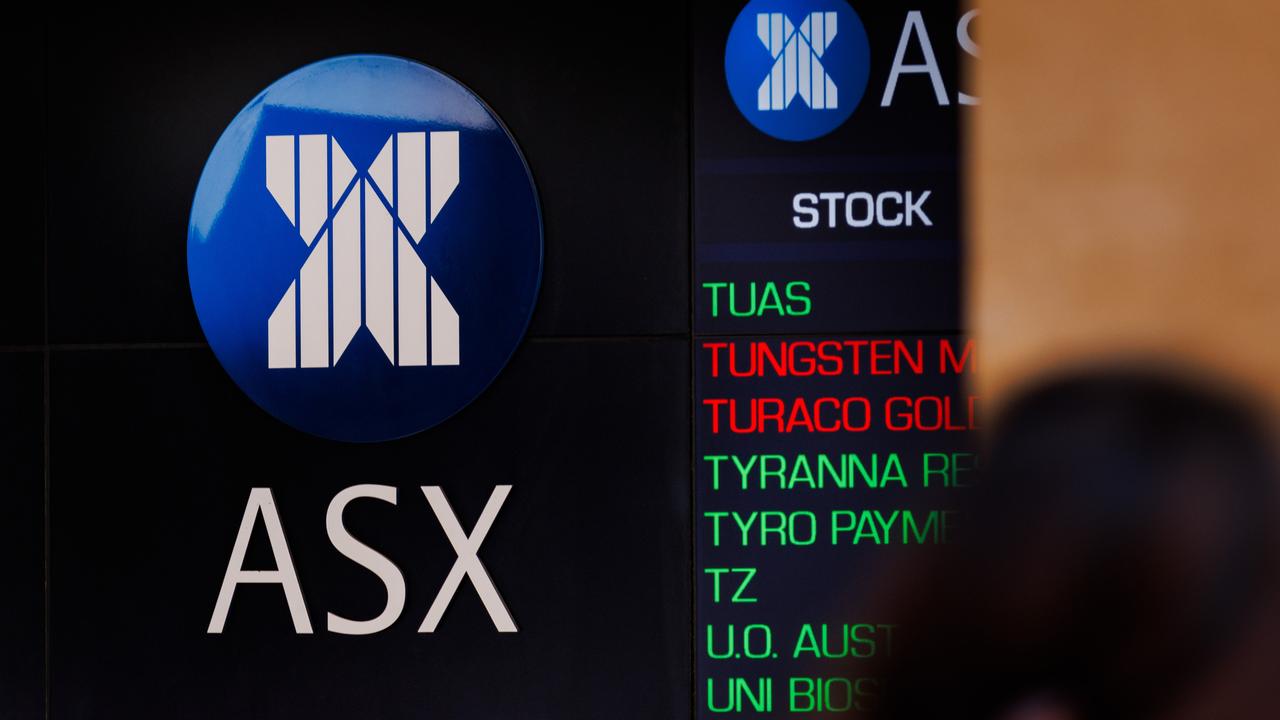
    The ASX 200 shed 23.70 points, or 0.26 percent, to settle at 8955, while the wider All Ordinaries index slipped 0.08 percent to 9173.60. In currency markets, the Australian dollar strengthened against the U.S. dollar, rising to 71.80 U.S. cents. Of the 11 tracked market sectors, six finished the trading day in positive territory, but gains were far outstripped by declines in heavyweight industries.

    Leading the day’s gains, the technology sector jumped 7.40 percent, marking a sharp recovery from recent downturns. Standout performers included logistics software firm WiseTech Global, which surged 12.36 percent to close at $44.90, cloud accounting platform Xero, which climbed 9 percent to $81.86, and lifestyle technology company Life360, which rose 12.45 percent to $21.31.

    However, solid upward momentum in tech was completely offset by steep sell-offs among Australia’s big four banks and major mining conglomerates. Commonwealth Bank of Australia, the country’s largest listed company, dropped 2.77 percent to $178.11. Westpac fell 1.65 percent to $40.02, National Australia Bank declined 2.49 percent to $43.41, and ANZ slipped 1.28 percent to $37.73.

    IG market analyst Tony Sycamore explained that bank investors reacted negatively to the stronger-than-expected jobs report, which showed the Australian economy added nearly 18,000 new positions in the latest period. The resilient labor market has reinforced expectations that the Reserve Bank of Australia will continue its fight against inflation with additional interest rate hikes. Currently, markets are pricing in an 18-basis-point rate increase at the RBA’s next policy meeting in less than three weeks. A third rate hike this year would push the cash rate even higher, further reducing consumer and business credit demand and creating a major headwind for bank profitability. The RBA already raised rates by a cumulative 50 basis points in February and March, bringing the current cash rate to 4.10 percent.

    Beyond banking, the mining sector also dragged the overall index lower, pressured by new data showing the ongoing slowdown in China’s housing market, a key driver of global commodity demand. BHP Group shares slipped 0.34 percent to $55.92, Rio Tinto fell 0.7 percent to $172.60, and building materials manufacturer James Hardie Industries plummeted 4.27 percent to $28. Only Fortescue Metals Group bucked the trend, climbing 1.01 percent to $20.98.

    While China’s full-year economic growth of 5 percent beat market forecasts, the housing sector continues to show deep weakness. New home prices in China fell 3.4 percent year-over-year in March 2026, marking the 33rd consecutive monthly contraction and the sharpest decline since May 2025. This persistent downturn underscores the ongoing challenges Chinese authorities face in stabilizing the crucial property sector.

    In individual company news, Viva Energy requested a trading halt for its shares following an outburst of fire at its Geelong refinery facility. On a positive note, financial services firm AMP saw its shares rise 3.58 percent to $1.44 after releasing an upbeat trading update that showed platform growth accelerated 45 percent to $1.1 billion. The company also announced a $150 million share buyback program to return capital to shareholders. Wealth management firm Netwealth also enjoyed gains, with shares climbing 5.88 percent to $25.22 after reporting that funds under administration rose to $125.8 billion.

  • Refinery fire risks Australia’s oil supply amid Iran war fuel crisis

    Refinery fire risks Australia’s oil supply amid Iran war fuel crisis

    Already grappling with skyrocketing fuel prices spurred by the ongoing Iran war, Australian motorists are now facing fresh fears of further cost hikes after a destructive fire broke out at one of the nation’s only two operating oil refineries.

    Emergency response teams were dispatched to Viva Energy’s Corio refinery, located in Geelong roughly 75 kilometers southwest of Melbourne, in the late hours of Wednesday. Calls came in just before midnight reporting multiple explosions followed by large flames breaking out at the site. Firefighters worked tirelessly through the night and into the next day, finally containing and extinguishing the blaze 13 hours after it first ignited.

    According to local rescue authorities, the incident has been confirmed to stem from unexpected equipment failure at the facility. The Corio refinery plays an outsize role in Australia’s domestic fuel supply chain: it accounts for half of all fuel production for the state of Victoria, the country’s second-most populous state, and 10 percent of total national fuel output. While the site remains partially operational following the fire, federal and state officials have issued clear warnings that the incident will almost certainly disrupt domestic petrol production in the coming weeks.

    Industry analysts note that the timing of this disruption could not be worse. Australian fuel prices have already climbed steeply in recent weeks following the escalation of conflict in Iran, which has roiled global crude oil markets and pushed up input costs for refiners. With domestic supply already strained by the market shocks from the war, the partial shutdown of a key refinery creates additional supply tightness that is likely to pass through to consumers at the gas pump. BBC correspondent Simon Atkinson reports from Melbourne that industry groups are already bracing for noticeable price increases in the short term, with Victorian motorists expected to see the most immediate impact.

  • Sri Lankan buyer paid $286 for barrel of oil, as actual prices diverge from markets

    Sri Lankan buyer paid $286 for barrel of oil, as actual prices diverge from markets

    Speaking at a Hong Kong investment forum on Tuesday, HSBC Group CEO Georges Elhedery drew attention to a stark gap between widely cited Western oil benchmark prices and the exorbitant actual costs that Asian buyers are currently facing, triggered by escalating geopolitical tensions between the United States, Israel and Iran.

    Against a backdrop of intensifying conflict in the Middle East, global headline oil prices have already climbed above $100 per barrel, but Elhedery warned these public figures do not capture the full extent of the market disruption.

    “What worries me is not the headlines. I mean, oil headline is above $100, $110,” Elhedery stated in comments recorded by Bloomberg and obtained by independent news outlet Sherwood. “Realistically, if you are now trying to get oil from the Middle East, you may be paying $140, $150.”

    The most extreme recorded case he cited saw a single barrel of oil reach $286 for buyers in Sri Lanka, a small South Asian island nation heavily dependent on imported Middle Eastern energy supplies.

    Current benchmark prices paint a far rosier picture than on-ground market conditions. As of this week, U.S.-based West Texas Intermediate trades around $91 per barrel, while the global benchmark Brent hovers near $95. The Omani benchmark, which is most closely aligned to Asian trade flows, sits around $100 per barrel – still less than two-thirds of the $150 price tag Elhedery says most Asian importers now pay.

    The root of this gap lies in rapidly tightening energy supplies driven by geopolitical escalation. Iran has taken control of the Strait of Hormuz, the critical chokepoint through which roughly a fifth of global oil supplies pass, halting most oil exports from Gulf nations. In response, the U.S. has implemented its own full blockade of Iranian oil exports this week, further squeezing available supply. Oil shipments through the strait have slowed to a fraction of normal volumes, leaving importers scrambling to secure alternative cargoes.

    While Saudi Arabia has stepped in as the region’s largest remaining exporter, moving roughly five million barrels of crude daily through its Red Sea port of Yanbu, this shift has brought new layers of cost that are not reflected in standard benchmark pricing. Shipping costs for cargo pulled from the Red Sea now run between $30 and $40 per barrel, a massive jump from pre-crisis levels. Meanwhile, insurance premiums have exploded: what previously cost importers 25 basis points of the cargo value now hits 5 percent, and most underwriters have pulled all war risk coverage entirely, leaving buyers to shoulder that risk at the elevated 5 percent rate.

    Geopolitical risks have continued to escalate in the days following Elhedery’s remarks. Iran-aligned Houthi forces in Yemen have already disrupted traffic through the Bab el-Mandeb Strait, another key Red Sea chokepoint, via repeated attacks on international commercial shipping. On Wednesday, a senior Iranian military commander issued a new threat to shut down all shipping across the Red Sea, Persian Gulf and Sea of Oman unless the U.S. withdraws its blockade on Iranian oil exports. “Iran’s powerful armed forces will not allow any exports or imports to continue in the Persian Gulf, the Sea of Oman, or the Red Sea,” stated Major General Ali Abdollahi, head of Iran’s military joint command.

    This report was originally published by Middle East Eye, an independent outlet focused on coverage of the Middle East, North Africa and global affairs connected to the region.

  • Threat of grounded planes nears as jet fuel supplies dwindle

    Threat of grounded planes nears as jet fuel supplies dwindle

    The global aviation industry is facing growing uncertainty over imminent flight disruptions, as a prolonged blockade of the Strait of Hormuz continues to erode jet fuel supplies across key markets in Asia and Europe. Since the closure of the critical chokepoint on February 28 following the start of US and Israeli airstrikes on Iran, nearly 20% of the world’s daily crude oil and liquefied natural gas shipments – the core input for jet fuel production – have been cut off from global markets, raising urgent alarms about looming shortages.

  • Asian stocks mostly higher after Wall Street hits record and oil steadies

    Asian stocks mostly higher after Wall Street hits record and oil steadies

    Global financial markets kicked off Thursday with broad gains across most Asian equity benchmarks and stable oil prices, driven growing investor optimism that a temporary ceasefire between the U.S. and Iran will be extended and new diplomatic negotiations will move forward. The conflict, which began in late February, has roiled energy markets and raised widespread concerns over global supply chains, making any signs of de-escalation a major catalyst for risk assets.

    In Tokyo, the Nikkei 225 surged 2.4% to close at 59,549.59, while South Korea’s Kospi climbed 2% to 6,215.38. Hong Kong’s Hang Seng index recorded a 1.2% uptick to 26,269.99, and mainland China’s Shanghai Composite edged 0.6% higher to 4,050.42. China’s latest quarterly economic data released Thursday showed 5% year-over-year growth for the first three months of the year, an acceleration from the final quarter of 2023. While most economists note that China’s economy has so far absorbed the initial spillover effects of the Iran conflict relatively well, some caution that the country’s large export-driven manufacturing sector could face more substantial headwinds in coming months as broader global economic growth slows. Elsewhere in the region, Taiwan’s Taiex gained 0.9% in midday trading, while Australia’s S&P/ASX 200 bucked the upward trend to edge 0.1% lower.

    The optimism around diplomacy stems from anonymous regional officials who told the Associated Press on Wednesday that Washington and Tehran have reached an “in principle” agreement to extend their existing two-week ceasefire, which is set to expire next week. The two sides are also reportedly making progress toward organizing a second round of formal negotiations. Additional diplomatic efforts are underway, with Pakistani army chief currently visiting Tehran to help broker further talks between the two parties.

    Even as hopes for peace grow, the U.S. is moving ahead with plans to increase economic pressure on Iran. U.S. Treasury Secretary Scott Bessent issued a warning this week that Washington is preparing to implement new secondary sanctions targeting any entities that continue business with Iran, including potentially Chinese companies that purchase Iranian crude oil.

    Global oil markets held steady on Thursday after months of extreme volatility tied to the conflict. Brent crude, the global benchmark for oil prices, ticked up less than 0.1% to settle at $94.94 per barrel, while U.S. benchmark West Texas Intermediate crude rose 0.4% to $91.66 per barrel. Oil prices spiked sharply immediately after the war began in late February, after the Strait of Hormuz — a critical global shipping chokepoint through which roughly 20% of the world’s daily oil supply passes — was effectively closed to commercial traffic. The U.S. implemented a new naval blockade of Iranian ports this week, aiming to force Tehran to reopen the strait as part of any negotiated ceasefire deal.

    Strategists at ING Bank warned in a client note Thursday that significant uncertainty remains for energy markets. “The key upside risk for the market is that peace talks between the US and Iran break down,” wrote analysts Warren Patterson and Ewa Manthey. “This isn’t an unrealistic scenario, given that US and Iranian demands remain fairly wide apart.”

    The positive momentum for risk assets already spilled over to U.S. markets on Wednesday, with Wall Street hitting new record highs on the ceasefire optimism. The benchmark S&P 500 climbed 0.8% to close at 7,022.95, surpassing its previous all-time high set back in January. The tech-heavy Nasdaq composite jumped 1.6% to 24,016.02, though the Dow Jones Industrial Average bucked the trend to dip 0.2% to 48,463.72.

    Several major U.S. banks outperformed the broader market after releasing stronger-than-expected first quarter earnings results. Bank of America shares rose 1.8%, with CEO Brian Moynihan noting ongoing signs of a resilient U.S. economy, including steady consumer spending. Morgan Stanley followed a similar trajectory, with shares gaining 4.5% after its own positive earnings report. In one of the most notable individual stock moves of the day, San Francisco-based footwear brand Allbirds saw its share price skyrocket 582% to nearly $17 per share after the company announced it would pivot its core business focus to artificial intelligence and rebrand as NewBird AI.

    In other commodity trading, safe-haven assets gold and silver both posted gains on Thursday. Gold climbed 0.5% to $4,846.40 per ounce, while silver rose 1.3% to $80.62 per ounce. In currency markets, the U.S. dollar weakened slightly against the Japanese yen, falling to 158.58 yen from 159 yen in the prior session. The euro also ticked higher, trading at $1.1814 up from $1.1799 on Wednesday.

  • Saudi Arabia on cusp of severing ties with LIV Golf: Report

    Saudi Arabia on cusp of severing ties with LIV Golf: Report

    Saudi Arabia’s $1 trillion sovereign wealth vehicle, the Public Investment Fund (PIF), is poised to end its financial backing of the breakaway LIV Golf league, according to multiple industry and media reports, as shifting geopolitical risks and delayed domestic megaprojects force a broad re-evaluation of the fund’s global investment priorities.

    The Financial Times first reported Wednesday that PIF could formally announce its withdrawal from LIV Golf as early as Thursday, a move that would force the fund to absorb a full write-down on its $5 billion commitment to the upstart circuit. PIF has served as LIV Golf’s sole primary financial backer since the league launched in 2021, and insiders widely view an exit as a fatal blow to the tournament series, which has accumulated steep operating losses since its founding.

    The LIV Golf investment was a core component of Saudi Arabia’s broader economic diversification strategy, which aims to reduce the kingdom’s long-term dependence on oil and gas exports by expanding its footprint in global sports and entertainment. The league was designed to compete directly with the established PGA Tour, shaking up the global golf landscape and drawing dozens of top players with unprecedented multi-year contract offers.

    PIF leadership had already been considering an exit from the golf project months before the outbreak of the US-Israeli war on Iran, but the conflict has accelerated the fund’s push to consolidate capital and refocus on domestic priorities, industry analysts note. The shift is already sending ripples through global sports and business circles, as many organizations that have grown reliant on large infusions of capital from Gulf sovereign wealth funds now face uncertainty about future funding.

    The pullback from LIV Golf is just one part of a broader scaling back of ambitious PIF projects that predates the current geopolitical crisis. Earlier this year, Saudi authorities paused construction on the Mukaab, a massive 400-meter cubic megastructure planned for central Riyadh, and shelved proposals for a desert indoor ski resort and a large artificial lake dam project. In a December 2025 address, Saudi Finance Minister Mohammed al-Jadaan emphasized that the government had “no ego” blocking necessary project reassessments as budget priorities shift.

    While Saudi Arabia has emerged as a rare beneficiary of the current conflict, able to export oil independently of Iranian control over the Strait of Hormuz via its East-West pipeline connecting the Persian Gulf to the Red Sea, and has profited from sustained elevated global crude prices, the war has created new headwinds for the kingdom’s economic agenda. The conflict has undermined efforts to position Gulf states as stable, secure hubs for international tourism and foreign direct investment, adding new fiscal pressure to reorient spending.

    In an interview with Al Arabiya Business published Wednesday, PIF Governor Yasir al-Rumayyan explicitly confirmed that the war on Iran has altered the fund’s strategic planning. “The war would add more pressure to reposition some priorities,” he told the outlet. He also confirmed for the first time that The Line, the iconic 170-kilometer car-free linear city that was the centerpiece of the $500 billion Neom futuristic development project, is no longer a near-term priority.

    “Everyone thinks The Line is NEOM, but The Line is one project in NEOM,” Rumayyan said. “Is it necessary to have The Line by 2030? I think no. It’s good to have, but not a must-have.”

    The exit from LIV Golf aligns with PIF’s new target to allocate 80 percent of its investment capital to domestic projects, with just 20 percent deployed to international holdings. That marks a sharp reduction from the 30 percent foreign investment share the fund held in recent years, as the kingdom prioritizes shoring up domestic economic activity amid growing regional uncertainty.

  • Fuel supply fears after blaze tears through crucial Australian refinery

    Fuel supply fears after blaze tears through crucial Australian refinery

    A devastating chain of explosions sparked by a gas leak has torn through one of Australia’s only two operating oil refineries, leaving authorities warning of imminent domestic fuel supply disruptions just months after regional conflict upended global energy markets. The blaze broke out late Wednesday at Viva Energy’s Geelong refinery, located roughly an hour’s drive southwest of Melbourne in Victoria state. At its peak, flames reached 60 meters into the sky, turning the sky over the industrial hub thick with acrid black smoke.

    Fire Rescue Victoria confirmed Thursday that the inferno had been contained, though emergency officials cautioned hotspots could continue to smolder for the rest of the day. Initial assessments confirm the fire was concentrated in the section of the facility dedicated to high-octane petrol production, Energy Minister Chris Bowen confirmed to reporters. Rapid action by plant personnel to trigger emergency isolation valves prevented the fire from spreading to adjacent units that produce jet fuel and diesel, sparing those critical operations from major damage.

    Owned by energy firm Viva Energy, the Geelong plant accounts for roughly 10% of Australia’s total domestic fuel output, with a maximum processing capacity of 120,000 barrels of crude oil per day. Combined with the only other operating refinery, Ampol’s Brisbane facility, the two plants produce just 10 to 20% of the nation’s total fuel demand, leaving Australia heavily dependent on imports to cover the gap. This geographic isolation and limited domestic refining capacity leaves the country uniquely vulnerable to global supply shocks, a risk that has been amplified by ongoing conflict in the Middle East.

    Incident controller Mark McGuinness described the blaze as unusually intense, saying “It was quite ferocious. It went from a small fire through several explosions to a large, intense fire” in short order. Viva Energy CEO Scott Wyatt emphasized that safety remained the company’s top priority in the aftermath of the incident, noting “Production is not our primary priority today. Today it is getting the site safe.” No casualties have been reported as of Thursday, but full assessments of damage and production shutdown timelines are still underway.

    Already strained by the halt of shipping traffic through the Strait of Hormuz—an artery that carries one-fifth of the world’s global oil and gas supply, which has been effectively closed since U.S. and Israeli strikes against Iran on February 28—Australia’s fuel markets are now facing a second major shock. Government data shows Australia currently holds just 38 days of petrol reserves, far below the 90-day minimum stockpile requirement set by the International Energy Agency. The federal government has not yet activated fuel rationing, but has urged motorists to conserve fuel where possible and switch to public transit for routine travel when they can.

    In a public address Thursday, Minister Bowen urged Australians to avoid panic buying that would exacerbate existing supply strains. “It’s important that people buy as much fuel as they need. But no more, no less,” he said, adding that the timing of the incident was particularly unfavorable given already tight market conditions. “It’s not great. It’s not great timing, is it?”