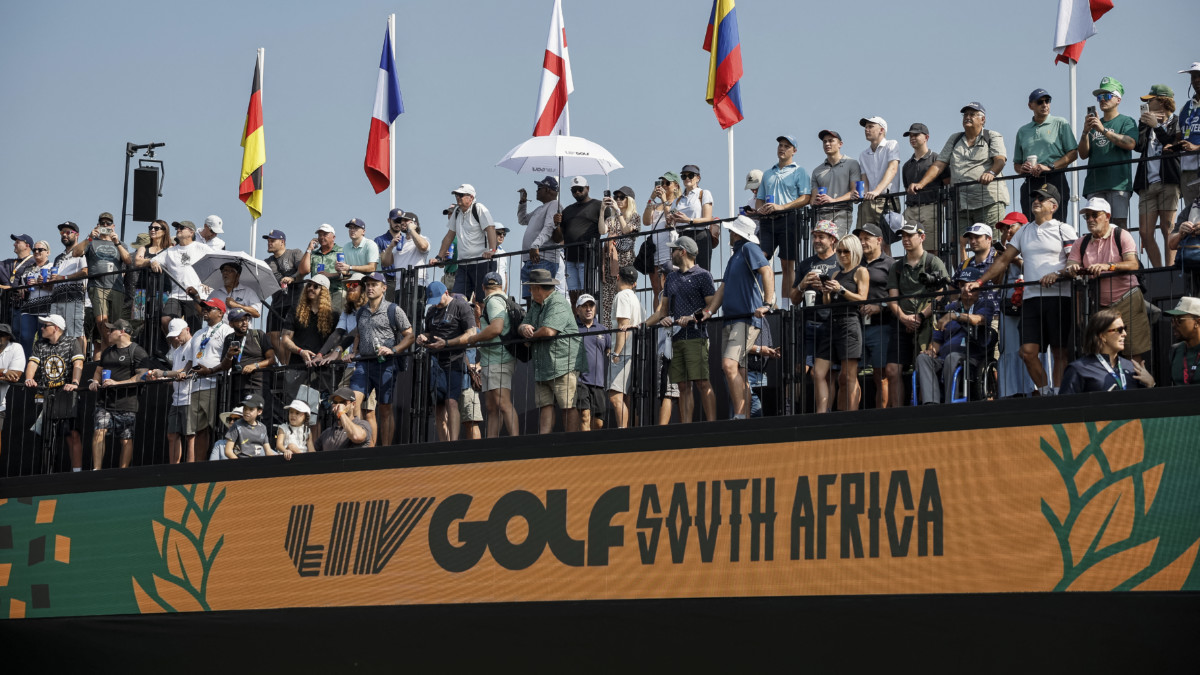
Saudi Arabia’s $1 trillion sovereign wealth vehicle, the Public Investment Fund (PIF), is poised to end its financial backing of the breakaway LIV Golf league, according to multiple industry and media reports, as shifting geopolitical risks and delayed domestic megaprojects force a broad re-evaluation of the fund’s global investment priorities.
The Financial Times first reported Wednesday that PIF could formally announce its withdrawal from LIV Golf as early as Thursday, a move that would force the fund to absorb a full write-down on its $5 billion commitment to the upstart circuit. PIF has served as LIV Golf’s sole primary financial backer since the league launched in 2021, and insiders widely view an exit as a fatal blow to the tournament series, which has accumulated steep operating losses since its founding.
The LIV Golf investment was a core component of Saudi Arabia’s broader economic diversification strategy, which aims to reduce the kingdom’s long-term dependence on oil and gas exports by expanding its footprint in global sports and entertainment. The league was designed to compete directly with the established PGA Tour, shaking up the global golf landscape and drawing dozens of top players with unprecedented multi-year contract offers.
PIF leadership had already been considering an exit from the golf project months before the outbreak of the US-Israeli war on Iran, but the conflict has accelerated the fund’s push to consolidate capital and refocus on domestic priorities, industry analysts note. The shift is already sending ripples through global sports and business circles, as many organizations that have grown reliant on large infusions of capital from Gulf sovereign wealth funds now face uncertainty about future funding.
The pullback from LIV Golf is just one part of a broader scaling back of ambitious PIF projects that predates the current geopolitical crisis. Earlier this year, Saudi authorities paused construction on the Mukaab, a massive 400-meter cubic megastructure planned for central Riyadh, and shelved proposals for a desert indoor ski resort and a large artificial lake dam project. In a December 2025 address, Saudi Finance Minister Mohammed al-Jadaan emphasized that the government had “no ego” blocking necessary project reassessments as budget priorities shift.
While Saudi Arabia has emerged as a rare beneficiary of the current conflict, able to export oil independently of Iranian control over the Strait of Hormuz via its East-West pipeline connecting the Persian Gulf to the Red Sea, and has profited from sustained elevated global crude prices, the war has created new headwinds for the kingdom’s economic agenda. The conflict has undermined efforts to position Gulf states as stable, secure hubs for international tourism and foreign direct investment, adding new fiscal pressure to reorient spending.
In an interview with Al Arabiya Business published Wednesday, PIF Governor Yasir al-Rumayyan explicitly confirmed that the war on Iran has altered the fund’s strategic planning. “The war would add more pressure to reposition some priorities,” he told the outlet. He also confirmed for the first time that The Line, the iconic 170-kilometer car-free linear city that was the centerpiece of the $500 billion Neom futuristic development project, is no longer a near-term priority.
“Everyone thinks The Line is NEOM, but The Line is one project in NEOM,” Rumayyan said. “Is it necessary to have The Line by 2030? I think no. It’s good to have, but not a must-have.”
The exit from LIV Golf aligns with PIF’s new target to allocate 80 percent of its investment capital to domestic projects, with just 20 percent deployed to international holdings. That marks a sharp reduction from the 30 percent foreign investment share the fund held in recent years, as the kingdom prioritizes shoring up domestic economic activity amid growing regional uncertainty.