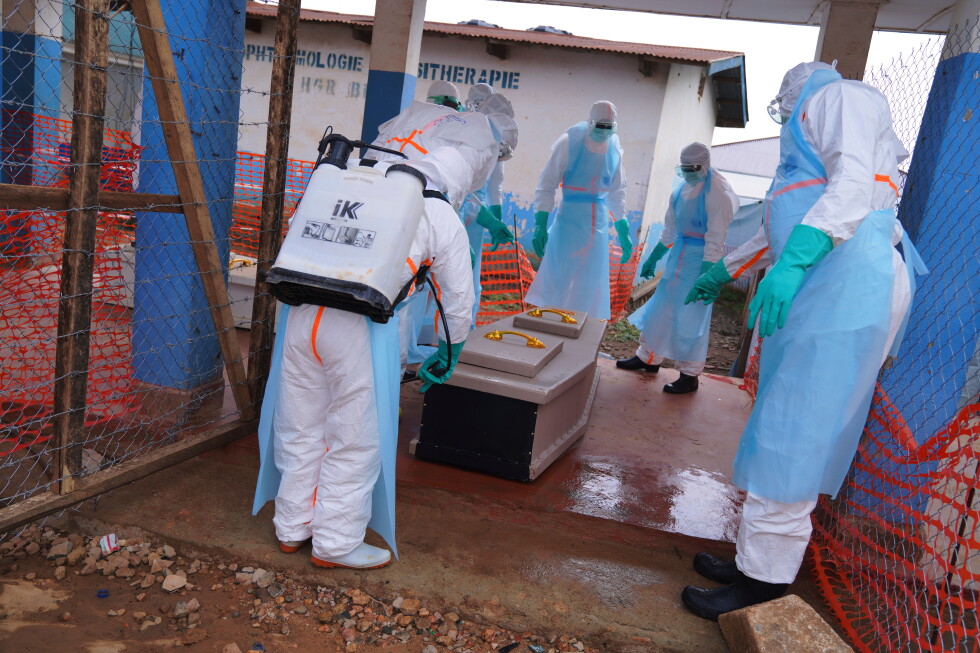
The eastern Democratic Republic of Congo is facing an unprecedented Ebola outbreak that has just reached a devastating public health milestone: 1,033 confirmed deaths just over two months after the outbreak was first officially declared on May 15. New data released by Congo’s Ministry of Health puts total confirmed infections at 2,536 as of this week, marking a worrying acceleration of transmission that outpaces any previous recorded Ebola event in modern history.
To put this speed in context, the 2014-2016 West African Ebola epidemic — long cited as the worst Ebola outbreak on record — took eight months to reach the 1,000-death threshold, three times longer than the current outbreak. That historic epidemic, which ultimately spread across three West African nations and beyond, recorded more than 28,000 total cases and over 11,000 deaths over its three-year duration. The current outbreak, by contrast, has already recorded 2,500 cases at a pace nearly three times faster than the 2014-2016 event.
Public health experts warn that key differences between the two outbreaks explain the rapid spread, starting with the viral strain behind each event. According to the World Health Organization, three strains of the Ebola virus family are known to cause large-scale outbreaks: Ebola virus, Sudan virus, and Bundibugyo virus. The 2014-2016 epidemic was driven by the more common Ebola virus strain, for which targeted vaccines and treatments have been developed. The current outbreak, however, is caused by the rare Bundibugyo variant — a strain with no currently approved vaccines or specific antiviral treatments available to curb transmission or improve patient outcomes.
Geographically, the current outbreak remains largely contained for now, unlike the 2014-2016 event that spread widely across Guinea, Liberia, and Sierra Leone before spilling over to the United States and Europe. Almost all cases of the current outbreak are limited to five eastern provinces of Congo, near the Ugandan border, with only a small number of cases detected in neighboring Uganda. That geographic confinement has so far prevented wider global spread, but public health officials warn the situation remains fragile.
Another key contrast between the two outbreaks is their case fatality rates. The current Bundibugyo outbreak has recorded a 40% fatality rate so far, with health officials attributing most deaths to delayed care-seeking by infected patients. By comparison, the 2014-2016 Ebola virus outbreak had a far higher 66% overall fatality rate, which overwhelmed fragile public health systems across three West African nations. U.S. Centers for Disease Control and Prevention data notes that the Ebola virus strain is the deadliest of the known Ebola variants, with untreated cases carrying a fatality risk as high as 90%.
Despite the lower fatality rate, officials warn the worst of the current outbreak may still lie ahead. Multiple challenges continue to hinder containment efforts: patient zero of the current outbreak has not yet been identified, a majority of new infections are being detected in community members not on monitored contact lists, and public health teams faced critical delays in identifying the specific viral variant causing the first wave of cases. These gaps have allowed the virus to spread faster than containment measures can respond, creating a growing public health emergency for central Africa.