For centuries, the name Vlad the Impaler has been synonymous with brutal violence and legendary cruelty, thanks in no small part to his infamous signature execution method that gave him his haunting nickname. For historians, enthusiasts of medieval history, and casual curious readers alike, one persistent question has outlasted the centuries: exactly how many people did Vlad actually impale? This query is far more than just a morbid thought experiment; it sits at the intersection of medieval historical record, propaganda, and mythmaking that has grown up around one of Wallachia’s most controversial rulers. Vlad III, better known by his moniker, ruled the 15th-century Romanian principality of Wallachia multiple times during a turbulent political era marked by ongoing conflict between the Ottoman Empire and Christian European states. Contemporary accounts from the period often wildly inflated his death toll, with some chronicles claiming he slaughtered tens of thousands, even hundreds of thousands of people, many via impalement. Modern historians have pushed back against these inflated numbers, noting that many contemporary records were written by political enemies or foreign propagandists seeking to frame Vlad as a monstrous tyrant to justify their own political claims to the region. Verifiable archival evidence is sparse, making it difficult to pin down an exact count that separates fact from exaggerated myth. Some recent scholarly analyses suggest the actual number is likely far lower than the legendary claims, falling somewhere in the thousands rather than tens or hundreds of thousands. Even so, the lack of surviving definitive records means the question of how many people he actually impaled will likely remain a topic of ongoing debate among historians and history enthusiasts for years to come.
作者: admin
-

Cheaper Doritos and Lays helps PepsiCo win back struggling snackers
Global food and beverage conglomerate PepsiCo has delivered a robust first-quarter financial performance, driven by strategic price cuts on popular snack lines including Doritos and Lay’s that reversed declining consumer sentiment after years of controversial price hikes. The company announced its results Thursday, reporting that total quarterly sales climbed 8.5% year-over-year to hit $19.4 billion (£14.4 billion), far outpacing many analyst expectations.
The aggressive pricing moves, which rolled out in advance of this year’s Super Bowl in early February, trimmed prices by as much as 15% on a range of core snack products: along with Doritos and Lay’s (sold under the Walkers brand in the UK), Tostitos and Cheetos also saw price adjustments. For the snack industry, the Super Bowl is one of the highest-revenue annual events, as millions of consumers stock up on snacks for watch parties, making the timing of the cuts particularly strategic.
This reversal came after PepsiCo faced significant consumer backlash starting in 2022, when the company imposed repeated price increases to offset its own soaring input and production costs. Those hikes pushed many price-conscious shoppers to switch to cheaper store-brand alternatives, cutting into PepsiCo’s market share. In a statement accompanying the earnings release, PepsiCo Chairman and Chief Executive Ramon Laguarta credited the targeted “affordability initiatives” for turning around the company’s performance and winning back lapsed customers.
Beyond the top-line sales growth, PepsiCo also reported a 25% jump in operating profit, which reached $3.2 billion for the quarter. Markets reacted positively to the strong results, with the company’s share price rising 2% in early morning trading following the announcement.
Even as the pricing strategy delivers short-term growth, PepsiCo is navigating longer-term shifts in consumer behavior, most notably the rising popularity of appetite-suppressing weight loss jabs that have reduced overall food consumption and shifted demand toward smaller, portion-controlled servings. Many patients who start using these injectable medications report a sharp drop in hunger, leading to significant decreases in their overall grocery and snack spending.
To adapt to this trend, Laguarta noted that PepsiCo is not only focusing on affordable pricing but also “betting a lot on portion control.” The company has increasingly prioritized multipack offerings of single-serve snacks, which align with changing consumption patterns; currently, more than 70% of PepsiCo’s food products sold in the United States are single-serve portions.
Looking ahead to the second half of 2026, Laguarta is also counting on the upcoming men’s FIFA World Cup — co-hosted by the United States, Mexico and Canada — to drive further sales growth. The company, a major tournament sponsor, plans to roll out targeted “Fan of the Match” promotions centered on its Lay’s chip brand to capture consumer attention during the global sporting event.
-

AFL 2026: Carlton coach Michael Voss has addressed a ‘shattered’ Elijah Hollands
In a tense Australian Football League clash that ended in a narrow defeat for Carlton at the hands of Collingwood on Thursday night, 22-year-old young talent Elijah Hollands emerged as an unexpected talking point after a match that left him struggling for any meaningful on-field impact, prompting public displays of disappointment and a supportive intervention from senior coach Michael Voss.
Hollands, who had earned 75% of game time through the first three quarters, failed to register a single disposals or statistical contribution for the entire match, a rare outcome for a player with that much on-field involvement. He was ultimately benched for the majority of the final quarter as Collingwood clawed back to secure the win over the Blues. Footage of Hollands drifting out of play and failing to impact contests circulated widely online on social media immediately after the final siren, amplifying scrutiny of his off-night.
Following the final whistle, Voss found a visibly distraught Hollands, who described the young midfielder as “shattered” and “pretty emotional” in post-game press comments. “I spoke to him after the game, he was really disappointed with how he started the game, really upset, he feels like he’s let me down,” Voss shared. The coach confirmed he held an extended supportive conversation with the young player, noting that Hollands carried strong disappointment over his inability to work his way into the flow of the high-stakes match.
Addressing the decision to bench Hollands in the final minutes of the game, Voss explained the tactical call was made to adjust the team’s on-field mix for the closing stretch. “It comes to the last quarter, you obviously have to work out what mix you want out on the field with five minutes to go. He wasn’t having a great night, so (we had) conversations with him, but we obviously thought the best mix was not have him out there,” Voss said.
Late drama unfolded after the siren when a review gave Carlton a last-gasp chance to force a draw, with fourth-year player Talor Byrne stepping up for the decisive kick that ultimately skewed wide. Voss emphasized that blame for the loss does not rest solely on the shoulders of young players like Hollands and Byrne, pointing to the team-first culture the club has built.
“It’s understanding it’s not all on the young man’s shoulders,” Voss said. “He’s probably rehearsed that 2000 times… he didn’t quite obviously get the job done but the boys rallied. You win together, you lose together.” The coach added that the club would continue to support Hollands through the tough moment, rejecting any concerns over the young player’s effort on the night, and confirming the program would stand by him as he works to bounce back from the off-night.
-

WADA is challenging India to clean up doping issues
NEW DELHI — As India prepares to host the 2030 Commonwealth Games and vies for the right to hold the 2036 Olympic Games, the World Anti-Doping Agency (WADA) has announced tangible progress in its coordinated effort to address India’s persistent and high-profile doping crisis, which has seen the country top WADA’s global list of doping violations for three straight years.
India currently holds the unenviable title of reporting the highest rate of positive doping tests among all major sporting nations, a status that has cast a shadow over its aspirations to lead major international competitions. Speaking Thursday at a press conference for WADA’s global anti-doping intelligence and investigations network, WADA President Witold Bańka laid out the scale of the challenge the country faces. “Performance-enhancing drugs and steroids are readily accessible across India, and the country stands as one of the world’s largest manufacturers of these substances. This is a deeply serious problem,” Bańka stated.
Despite the gravity of the issue, Bańka emphasized that recent dialogues with Indian stakeholders have opened a path for meaningful collaboration. He noted that his talks with India’s national sports minister, the country’s National Anti-Doping Agency (NADA), and the Central Bureau of Investigation (CBI) have been productive, with all parties agreeing to strengthen joint efforts to dismantle transnational doping supply networks operating within India.
Anant Kumar, director of NADA, outlined the Indian agency’s new two-pronged approach to tackling the doping menace. The strategy focuses first on upgrading national doping detection and testing infrastructure, and second on building greater trust among Indian athletes by boosting the transparency and efficiency of anti-doping processes.
Under this new framework, NADA has doubled its annual testing volume from roughly 4,000 samples collected in 2019 to a projected 8,000 samples by 2025. Even with this increase, India’s testing scale remains lower than that of many peer nations: for example, China conducts more than 15,000 athlete tests each year. Even so, Bańka argued that a growing number of positive doping outcomes should be interpreted as a sign of improving system effectiveness, not a worsening crisis.
“I would actually be pleased to see that number rise, because it tells us our detection systems are working better, and that we are carrying out more targeted, effective enforcement,” Bañka explained. “A lower number of positive cases does not mean success — it often means systems are failing. A sharp drop in detected violations can signal weak testing or poor oversight.”
Another key shift in anti-doping strategy in India is a move away from penalizing athletes as the primary target of enforcement, with greater focus placed on holding suppliers and enabling actors such as coaches and team managers accountable. Gunter Younger, WADA’s director of intelligence and investigations, noted that athletes are often manipulated into doping, rather than acting as masterminds of the scheme. “Athletes are sometimes victims in this whole process. You will always have isolated individuals who choose to cheat and gain an unfair advantage, but we do not believe most athletes should be charged with criminal intent,” Younger said.
Bańka echoed this framing, adding that modern doping is a transnational, increasingly sophisticated criminal enterprise. “We do not want to see athletes jailed. Only the people who supply these drugs and destroy athletic careers deserve to face serious legal consequences,” he emphasized.
When asked about expanded testing for cricketers, following the announcement that cricket will return to the Olympic program for the 2028 Los Angeles Games, both WADA and NADA officials pushed back against the idea of targeting the sport specifically. Bańka noted that WADA’s work covers all Olympic sports, and it would be inappropriate to single out cricket for extra scrutiny despite its massive popularity in India. Kumar added that cricket is classified as a low-risk sport for doping within India’s current framework, and that NADA’s focus remains on targeting high-risk disciplines across all sports, while continuing collaborative work with the International Cricket Council.
-

Europe has ‘maybe 6 weeks of jet fuel left’, energy boss warns
A stark warning has emerged from the head of the International Energy Agency (IEA): Europe may only have six weeks of jet fuel reserves remaining if disruptions to Middle Eastern fuel supplies persist. For over six weeks, the Strait of Hormuz, the world’s most critical chokepoint for Gulf region jet fuel exports, has been effectively closed by Iran, a move taken in response to recent attacks from the U.S. and Israel. The closure has sent global jet fuel prices skyrocketing and ignited widespread fears of crippling supply shortages across Europe.
In its latest monthly oil market report published this week, the IEA, which advises 32 member nations on energy security and supply strategy, outlined the fragile state of global aviation fuel networks. The organization notes that Gulf region exports represent the single largest source of jet fuel for the global market, and even major refining hubs in exporting countries including South Korea, India and China rely heavily on crude oil imports from the same Middle Eastern region. This interconnected dependency means the ongoing closure has severely disrupted the fundamental operations of international jet fuel markets, the report says.
Historically, Europe has sourced roughly 75% of its total jet fuel imports from the Middle East, leaving the continent uniquely vulnerable to the current supply shock. In response, European nations have launched urgent efforts to source replacement supplies from alternative export markets, with the IA confirming that U.S. jet fuel exports to the region have ramped up dramatically in recent weeks. Even if every available U.S. shipment were redirected to Europe, however, the increased exports would only replace slightly more than half of the lost Middle Eastern supplies, the agency warns.
The IEA’s scenario analysis paints a grim timeline for potential shortages. If Europe fails to replace more than 50% of its missing Middle Eastern imports, physical stock shortages will hit select airports as early as June, leading to immediate flight cancellations and reduced consumer demand for air travel. Even if the continent manages to replace three-quarters of the lost supplies, shortages and cancellations will still occur, just pushed back to August. To maintain sufficient inventory levels through the peak summer travel season, European energy markets must ramp up efforts to attract additional replacement cargoes from non-Middle Eastern sources, the report concludes.
The price shock from the supply disruption has already forced airlines across the globe to implement emergency cost-mitigation measures, as jet fuel typically accounts for 20% to 40% of a commercial airline’s total operating costs. At the start of April, the benchmark European jet fuel price hit an all-time record of $1,838 per tonne — more than double the $831 per tonne price recorded before the outbreak of the current conflict.
European Union officials have attempted to downplay immediate risks, stating earlier this week that there is currently no evidence of widespread jet fuel shortages across the bloc, while acknowledging that supply issues could emerge in the near future. A European Commission spokesperson told reporters that crude oil supplies to EU refineries remain stable for now, with no immediate need to release additional strategic fuel reserves. The Commission’s oil and gas coordination groups are now meeting weekly to address the crisis, and a full package of emergency energy measures is set to be announced by the Commission president next week.
The warning from the IEA aligns with earlier concerns raised by Europe’s airport industry. Last week, Airports Council International, the leading trade body for European aviation hubs, sent an open letter to the European Commission warning that widespread jet fuel shortages would hit the continent if the Strait of Hormuz remains closed for more than three more weeks. Budget airline EasyJet became one of the first major carriers to publicly disclose the financial impact of the crisis in a trading update released Thursday, reporting an extra £25 million in unexpected fuel costs during March alone. This impact came even though the airline had already hedged more than 75% of its jet fuel needs at fixed prices before the conflict drove up costs. The company noted that the ongoing conflict has created significant short-term uncertainty around both fuel prices and consumer travel demand.
-

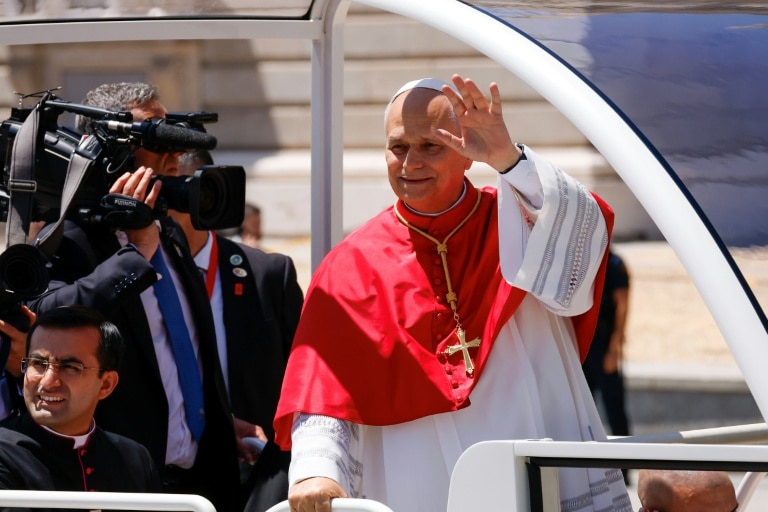
Pope criticises ‘tyrants’ who spend billions on wars, days after Trump spat
In an extraordinary departure from typical diplomatic Vatican rhetoric, Pope Leo has issued a blistering rebuke of global leaders who pour billions of dollars into military conflicts, arguing that the entire global order is currently being exploited and destabilized by a small group of authoritarian rulers. The unusually harsh comments came during the pontiff’s tour of Cameroon’s Northwest region, an area that has been torn apart by a nearly 10-year-long separatist insurgency that has claimed thousands of lives and displaced hundreds of thousands of residents.
Standing before crowds gathered at a cathedral in Bamenda, the heart of Cameroon’s conflict zone, Pope Leo called out actors who fuel the region’s ongoing violence, noting that external and local groups that extract natural resources from the affected land often funnel a large share of their profits into weapons, prolonging a never-ending cycle of violence and collapse. “Those who rob your land of its resources generally invest much of the profit in weapons, thus perpetuating an endless cycle of destabilisation and death,” he told the assembled audience of community members, clergy and displaced residents.
The pontiff expanded his critique beyond Cameroon’s local conflict to the global stage, condemning the misplaced global priorities that prioritize destruction over human development. “The masters of war pretend not to know that it takes only a moment to destroy, yet often a lifetime is not enough to rebuild,” he said. He added that it is a moral travesty that leaders “turn a blind eye to the fact that billions of dollars are spent on killing and devastation, yet the resources needed for healing, education and restoration are nowhere to be found.” He also called out actors who “manipulate the very name of God” to justify their violent, self-serving actions.
Pope Leo’s comments come just days after a high-profile public conflict with former U.S. President Donald Trump, sparked by the pontiff’s vocal opposition to the joint U.S.-Israeli military operation in Iran. Pope Leo had previously raised alarm over Trump’s stark threat that “a whole civilisation will die” if Iran refused to meet U.S. demands to end the war and reopen the strategically critical Strait of Hormuz. This is not the first public disagreement between the two men: since his election as the first U.S.-born pope in history last year, Pope Leo has repeatedly criticized the Trump administration’s hardline approach to immigration policy, prompting a sharp rebuke from Trump on his TruthSocial platform, where the former president wrote “Leo should get his act together as Pope.”
The Cameroon visit is a key stop on Pope Leo’s multi-country African tour, which will include 11 stops across four nations. This marks only his second major international visit since taking office last year, a schedule that underscores the growing strategic and demographic importance of the Catholic Church in Africa. Recent 2024 demographic data shows that Africa is home to roughly 288 million Catholics, accounting for more than one-fifth of the entire global Catholic population – a share that continues to grow steadily year over year.
-

What to know about Cameroon’s separatist violence that the pope seeks to end
BAMENDA, CAMEROON – On Thursday, Pope Leo XIV touched down in Bamenda, the northwestern hub of Cameroon, to convene a landmark peace gathering in a region scarred by nearly 10 years of separatist violence that has left thousands dead and hundreds of thousands displaced. The summit forms a core part of the pontiff’s four-nation African tour, designed to center grassroots interfaith efforts that have long worked to de-escalate tensions and support conflict survivors navigating deep psychological trauma.
-

Indonesia reviews US proposal for airspace overflight access
JAKARTA, Indonesia – In the wake of a newly announced high-profile defense agreement between Washington and Jakarta, Indonesian authorities are currently conducting a careful internal review of a United States proposal to secure expanded overflight access through the country’s sovereign airspace, the nation’s Foreign Ministry confirmed Thursday. The American overflight request first entered public discourse via local Indonesian media outlets, emerging just days after the two nations formally established the Major Defense Cooperation Partnership. That landmark agreement was unveiled Monday at the Pentagon by United States Defense Secretary Pete Hegseth, marking a visible deepening of bilateral defense ties between the two countries.
Speaking to reporters on Thursday, Foreign Ministry spokesperson Yvonne Mewengkang outlined the parameters of the ongoing review process, noting that the proposal remains in the early stages of internal government evaluation. She emphasized that every aspect of the request is being scrutinized through the country’s existing regulatory framework, with three non-negotiable principles guiding the deliberation: Indonesia’s core national interests, the inviolability of its airspace sovereignty, and the country’s long-held independent and active foreign policy doctrine.
The Indonesian Defense Ministry echoed this update earlier this week, formally confirming that the U.S. had formally submitted the overflight clearance request and that negotiations are still ongoing. In an official statement shared with the public, the Defense Ministry added that Indonesian negotiators have already pushed through several key adjustments to the draft proposal. A central point of revision is the explicit framing of the draft document as non-binding, meaning it will not enter into force automatically. Instead, any final agreement will still need to pass through additional rounds of discussion via relevant technical working groups and formal national legislative and executive approval procedures before it can be finalized.
-

Indonesia to supply 250,000 tonnes of urea for Australian farmers
Global fertilizer supply chains already strained by geopolitical tension have faced a fresh shock following the de facto closure of the Strait of Hormuz, a key global trade chokepoint, after the escalation of conflict between Israel, the U.S. and Iran in late February. For Australian agriculture, which relies on consistent access to nitrogen fertilizer to maintain output, the disruption created an urgent supply gap that has now been resolved through a bilateral government-backed deal with regional partner Indonesia.
The agreement, finalized Thursday between Australia’s largest domestic fertilizer producer, New South Wales-based Incitec Pivot Fertilisers, and Indonesian state-run fertilizer giant PT Pupuk Indonesia, will deliver 250,000 tonnes of urea – the world’s most widely used nitrogen fertilizer – to cover the final 20% of Australian farmers’ total demand for the 2025-2026 growing season running from November 2025 through October 2026. Shipments of the additional fertilizer, which will be sold at prevailing global market prices, are scheduled for delivery between May and December 2025.
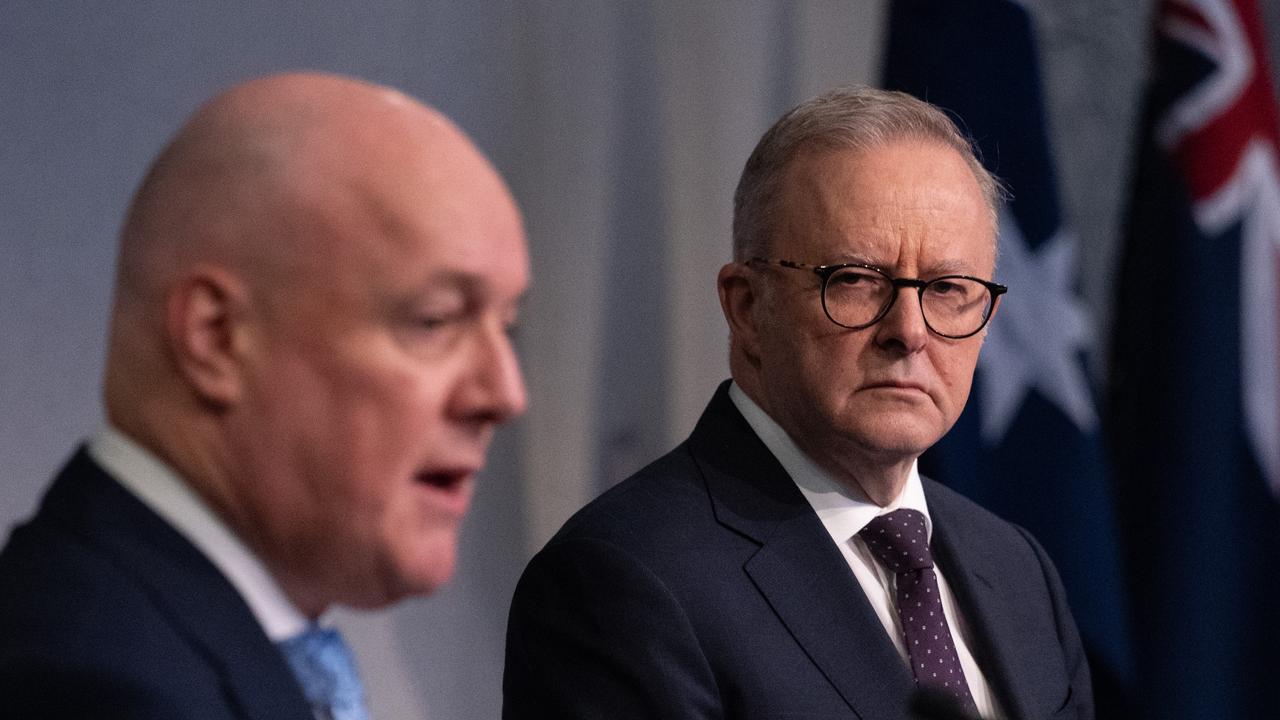
Prime Minister Anthony Albanese framed the deal as a landmark outcome for both Australian agricultural producers and regional food security. “We understand how critical fertilizer is for Australian farmers, for our domestic food production system and the food security of our entire region,” he said. “This deal also demonstrates why maintaining strong, mutually beneficial relationships with our immediate regional partners is so critically important when global supply chains face disruption.”
The conflict-driven disruption of the Strait of Hormuz has rippled far beyond energy markets, which have borne the brunt of the closure. Around 30% of all global nitrogen and phosphate fertilizer trade transits the strait annually, leaving major importers like Australia scrambling to source alternative supplies to avoid planting season shortages. Albanese emphasized that the interdependence of regional economies makes coordinated action essential to weathering global uncertainty: nearly 60% of Malaysia’s wheat and 75% of its lamb and beef originate from Australian farms, while Indonesia and other regional neighbors supply key inputs that keep Australian agriculture running.
Australian Agriculture Minister Julie Collins said she had worked around the clock alongside industry stakeholders to lock in alternative supply after the Hormuz disruption, and expressed deep gratitude for Indonesian government cooperation. “This guarantees supply of fertilizer to Australian farmers at this critical time,” Collins said. “It also means Australia can continue to play its important role supporting food security in Indonesia and the broader region at a moment of widespread global uncertainty.”
The fertilizer deal announcement caps two back-to-back multi-day diplomatic trips by Albanese to Southeast Asia, aimed at deepening regional economic and food security cooperation. Most recently, during a visit to Kuala Lumpur, Albanese and Malaysian Prime Minister Anwar Ibrahim signed agreements to expand collaboration on sustainable food production, including shared expertise in agricultural production techniques and irrigation infrastructure. Anwar noted that these bilateral supply agreements have a far more direct impact on ordinary people than many voters realize. “When supply chains are disrupted and food prices are rising, agreements like this have a direct impact on people’s lives,” he said. “The distance between a signed agreement and a family’s dinner table is shorter than most people imagine.”
Alongside the fertilizer deal, Australia and Malaysia also agreed to a new partnership focused on red meat processing and trade expansion. For Australian industry, the new urea supply from Indonesia marks a major step forward in shoring up critical inputs for the upcoming growing season, though industry leaders note work remains to fully meet long-term demand. Scott Bowman, president of Incitec Pivot Limited, said the additional volume “is another critical plank in servicing the needs of Australian farmers.” “Whilst there is more work to do to ensure farmers’ requirements can be fully met this upcoming season, this additional volume will go a long way to shoring up critical supplies to Australian growers,” Bowman said.
-

Malala’s brother Khushal on fleeing the Taliban and facing the manosphere
More than 11 years after the Taliban shooting that forever altered his family’s path, 25-year-old Khushal Yousafzai has broken his silence about the lingering psychological trauma, mental health battles, and unexpected entanglement with online manosphere communities that followed the attack on his older sister, global girls’ education advocate Malala Yousafzai. In a raw, vulnerable new interview with BBC Asian Network’s Amber Haque, Khushal recounts the day that destroyed his childhood and shaped every year that followed.
It was 2012, when Khushal was just 12 years old, and Malala — then 15 — was shot in the head by a Taliban gunman while riding home from school on a bus in Pakistan’s Swat Valley. Malala had long drawn the militant group’s anger for her outspoken activism demanding equal access to education for girls. On the day of the attack, Khushal was playing video games at home when his cousin delivered the first terrible news that his sister had been injured; minutes later, the family learned the bullet had struck her head. “I remember going into my sister’s room where you can see all the trophies. I felt like I was going to pass out,” he told Haque. “Seconds felt like minutes, minutes were hours and hours were days.”
The attack that didn’t kill Malala would go on to launch her global advocacy work, which earned her a Nobel Peace Prize just three years later. She was immediately evacuated to the United Kingdom for urgent life-saving treatment, and Khushal and the rest of the Yousafzai family eventually resettled in the country alongside her. But for the 12-year-old Khushal, the chaos of the attack and sudden uprooting left a void of rage and grief that would fester for more than a decade. “It left me with so much hate and anger in my heart,” he said. “When I was in the UK, my life mission was like: ‘I’m going to build myself, go back and take revenge.’”
Over the years, Khushal navigated life in the public eye surrounded by family members celebrated globally for turning their pain into transformative, world-changing good. While he rejects the narrative that he lived in his sister’s shadow, he carried a quiet pressure: watching Malala and their father Ziauddin turn their trauma into progress left him grappling with deep feelings of inadequacy. “I just thought, if I’m not bringing positive change into the world, then I’m not doing enough,” he explained. It was only a few months ago that he finally acknowledged he had spent years in denial about how unprocessed that pressure and trauma truly were. “I pretended my [own] expectations are bigger than what the world expects of me,” he said. At his lowest, he recalled feeling like a burden as the world focused its attention and support on Malala’s recovery, asking himself, “Everyone around me is helping my sister. What am I doing? I didn’t see a point in my existence.”
That persistent sense of not being good enough left Khushal vulnerable to the toxic pull of online manosphere spaces, a network of forums, social media accounts, and influencers that promote a rigid, traditionalist vision of masculinity where men hold dominant power over women. What first drew him in, he said, was the community’s outward focus on self-improvement — a message that filled a gap when he needed it most. “Go to the gym, work on yourself. So that message really drew me in,” he said.
But the harmful underbelly of the movement quickly trapped him in a destructive cycle. As influencers began selling harsh life lessons that framed any struggle as a personal failure, Khushal — who had spent years battling undiagnosed post-traumatic stress disorder, depression, and cannabis addiction — began to see his own mental health challenges as proof he was a “loser”. The resulting shame only fueled his unhealthy coping mechanisms, creating an unbreakable loop: “What happens is that you get into a shame cycle. So you feel like you’re a horrible human. Whenever I smoked weed, I felt like a horrible human being. You want to escape that feeling, so you fall back to that bad habit. It becomes a loop.”
Khushal ultimately broke free from the influence of manosphere ideology after confronting its misogynistic core, a worldview that directly contradicted everything his family stands for. “My sister took a bullet for education,” he said. “They might as well be speaking about my mother and my sister. And when I started putting [things] into perspective, I started to draw myself away from those spaces.” He also credits his father’s compassion and the grace he extended when the manosphere teaches that vulnerability is unforgivable for helping him begin to heal.
Today, Khushal is speaking out to help other people who may be struggling with unprocessed trauma and vulnerability to toxic online ideologies. He emphasizes that radicalization and harmful indoctrination do not happen in a vacuum: even he acknowledges that his own privilege of a supportive family committed to gender equality kept him from falling prey to far more dangerous extremist groups like the Taliban. “If I was born in another household where my parents were poor, couldn’t afford my education, I could have also become easily radicalised and indoctrinated by the Taliban,” he said.
His core message for people navigating similar battles is that vulnerability is not weakness, and shame is the biggest barrier to healing. “We need to change the narrative that if you are vulnerable about your struggles, it’s a sign of weakness,” he said. For him, breaking the shame cycle required allowing himself to finally grieve and break down: “When I hit rock bottom, when it was really tough and I’d taken pride that I hadn’t cried for six months – then I broke down. I had the best cry of my life. I felt so healed and relieved after.” Access to a trusted support system of family and friends who will hold space for honest, difficult conversations, he says, is the greatest source of strength for anyone working through trauma.
For anyone affected by the mental health issues discussed in this interview, support and resources are available via BBC Action Line. The full conversation with Khushal Yousafzai is available to listen to on BBC Asian Network Trending.