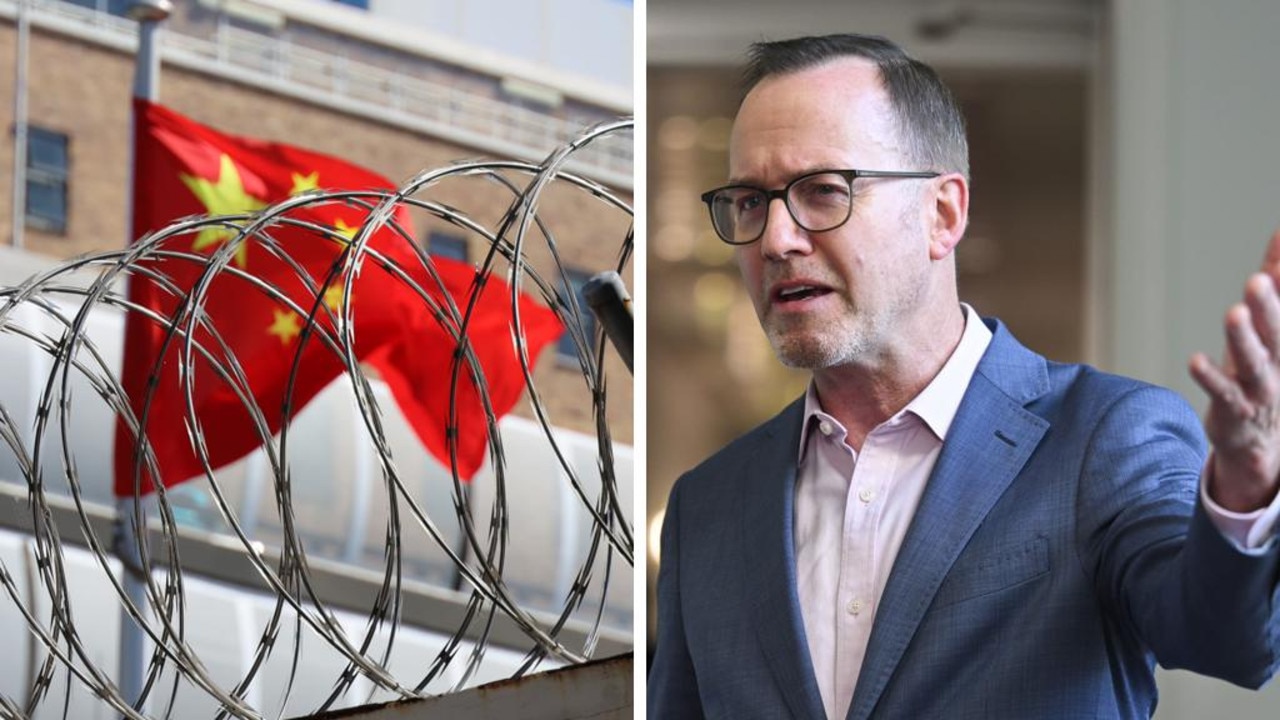
As debate over the future of the trilateral AUKUS security pact intensifies, a senior Australian Greens lawmaker has publicly cast doubt on official narratives surrounding the perceived military threat from China, while pushing back against Canberra’s deepening alignment with Washington’s Indo-Pacific strategy. The controversial submarine component of the agreement has come under fresh pressure this week, following the revelation that the United States will supply Australia with three second-hand Virginia-class nuclear-powered submarines, a departure from earlier plans that included one newly built vessel alongside two used models.
Greens Senator David Shoebridge, a longstanding vocal critic of AUKUS, used a Sunday interview with the Australian Broadcasting Corporation to call for a pragmatic, balanced approach to China that rejects what he frames as an unnecessary march toward a confrontational foreign policy aligned exclusively with U.S. interests. Acknowledging Beijing’s military expansion in the South China Sea, Shoebridge argued that aligning fully with Washington’s regional agenda represents one of the riskiest possible responses to the rise of China as a major regional power.
“Our region is actively pursuing a balanced approach to China, and Australia should follow that lead instead of walking down a warpath with Washington,” Shoebridge said. “We can maintain a complex, functional relationship with China without letting that entire relationship be dictated by Washington’s priorities.”
When pressed on widespread claims that China could pose a threat to the critical trade sea lanes that Australia relies on for economic survival, Shoebridge questioned the logical basis of that fear. While he acknowledged that any major military power can deploy its forces to advance its national interests, he pointed out that blocking Australian sea lanes would directly damage China’s own economy, which depends on steady inflows of critical raw materials from Australia. “Why would China shut down the shipping routes that deliver essential resources to its own factories and markets?” he asked.
Shoebridge did concede that a direct military conflict between the United States and China would put global trade, regional stability, and the entire world economy at severe risk, noting that sea lanes would be vulnerable in that scenario. But he argued that AUKUS, far from insulating Australia from that risk, makes Australia more likely to be drawn into a great power conflict that is not in the nation’s interest.
On Australia’s broader defense needs, Shoebridge agreed that the country must retain the ability to defend its territorial waters, airspace, and continental borders, as well as its surrounding maritime approaches. But he rejected the idea that Australia, with its mid-sized economy, should take on a global policing role for international sea lanes. When asked about the necessity of submarines for Australian defense, he described crewed submarines as just one possible option, arguing that Australia should instead pursue a mixed fleet of both manned and unmanned maritime defense platforms, including autonomous systems like the Ghost Shark underwater drone.
The high cost and inherent vulnerability of large crewed nuclear submarines remain open to debate even within mainstream defense circles, Shoebridge added, describing nuclear-powered submarines as “a disaster on pretty much every front.” “Why are we inviting ourselves into a U.S. war with China?” he asked, declining to outline a full alternative defense procurement plan, noting that detailed portfolio planning falls outside his role as a crossbench senator.
Shoebridge’s critique is part of a growing wave of dissent over AUKUS that has spread even into the ruling Australian Labor Party. This week, former Labor cabinet minister Peter Garrett called for a full public inquiry into the decade-long agreement, while serving Labor backbencher and former minister Ed Husic publicly joined calls for a full rethink of the pact.
Longstanding questions continue to hover over the agreement beyond the revised submarine delivery plan. Analysts and critics have raised repeated concerns about shipbuilding capacity constraints in both the U.S. and the U.K., as well as uncertainty over whether Washington will ultimately follow through on submarine deliveries amid shifting regional threat perceptions. Additional questions have been raised about Australia’s ability to maintain full sovereign control over the nuclear-powered vessels, particularly in the event that the U.S. chooses to go to war with China.