作者: admin

  • Indonesia reviews US proposal for airspace overflight access

    Indonesia reviews US proposal for airspace overflight access

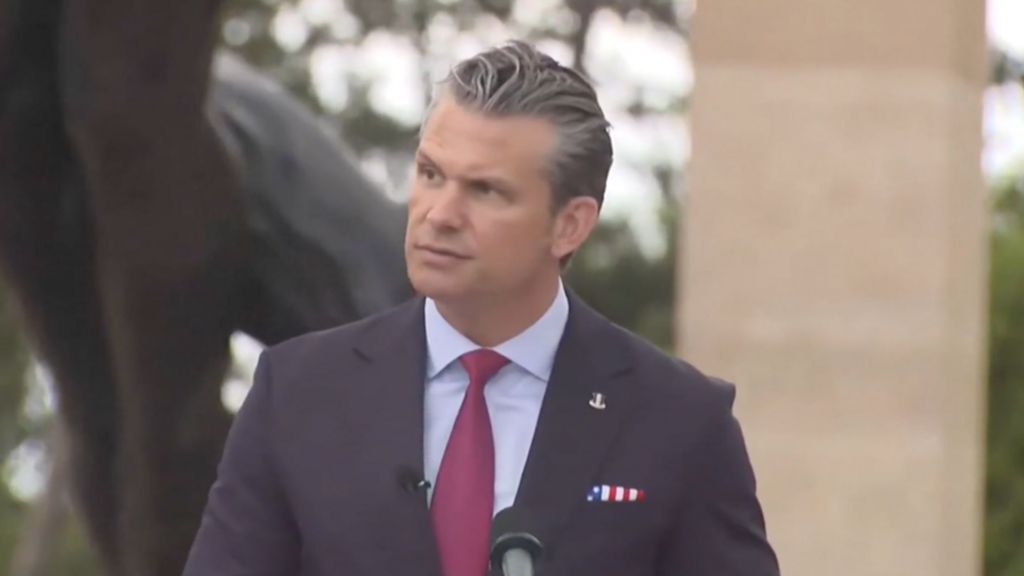
    JAKARTA, Indonesia – In the wake of a newly announced high-profile defense agreement between Washington and Jakarta, Indonesian authorities are currently conducting a careful internal review of a United States proposal to secure expanded overflight access through the country’s sovereign airspace, the nation’s Foreign Ministry confirmed Thursday. The American overflight request first entered public discourse via local Indonesian media outlets, emerging just days after the two nations formally established the Major Defense Cooperation Partnership. That landmark agreement was unveiled Monday at the Pentagon by United States Defense Secretary Pete Hegseth, marking a visible deepening of bilateral defense ties between the two countries.

    Speaking to reporters on Thursday, Foreign Ministry spokesperson Yvonne Mewengkang outlined the parameters of the ongoing review process, noting that the proposal remains in the early stages of internal government evaluation. She emphasized that every aspect of the request is being scrutinized through the country’s existing regulatory framework, with three non-negotiable principles guiding the deliberation: Indonesia’s core national interests, the inviolability of its airspace sovereignty, and the country’s long-held independent and active foreign policy doctrine.

    The Indonesian Defense Ministry echoed this update earlier this week, formally confirming that the U.S. had formally submitted the overflight clearance request and that negotiations are still ongoing. In an official statement shared with the public, the Defense Ministry added that Indonesian negotiators have already pushed through several key adjustments to the draft proposal. A central point of revision is the explicit framing of the draft document as non-binding, meaning it will not enter into force automatically. Instead, any final agreement will still need to pass through additional rounds of discussion via relevant technical working groups and formal national legislative and executive approval procedures before it can be finalized.

  • Indonesia to supply 250,000 tonnes of urea for Australian farmers

    Indonesia to supply 250,000 tonnes of urea for Australian farmers

    Global fertilizer supply chains already strained by geopolitical tension have faced a fresh shock following the de facto closure of the Strait of Hormuz, a key global trade chokepoint, after the escalation of conflict between Israel, the U.S. and Iran in late February. For Australian agriculture, which relies on consistent access to nitrogen fertilizer to maintain output, the disruption created an urgent supply gap that has now been resolved through a bilateral government-backed deal with regional partner Indonesia.

    The agreement, finalized Thursday between Australia’s largest domestic fertilizer producer, New South Wales-based Incitec Pivot Fertilisers, and Indonesian state-run fertilizer giant PT Pupuk Indonesia, will deliver 250,000 tonnes of urea – the world’s most widely used nitrogen fertilizer – to cover the final 20% of Australian farmers’ total demand for the 2025-2026 growing season running from November 2025 through October 2026. Shipments of the additional fertilizer, which will be sold at prevailing global market prices, are scheduled for delivery between May and December 2025.

    Prime Minister Anthony Albanese framed the deal as a landmark outcome for both Australian agricultural producers and regional food security. “We understand how critical fertilizer is for Australian farmers, for our domestic food production system and the food security of our entire region,” he said. “This deal also demonstrates why maintaining strong, mutually beneficial relationships with our immediate regional partners is so critically important when global supply chains face disruption.”

    The conflict-driven disruption of the Strait of Hormuz has rippled far beyond energy markets, which have borne the brunt of the closure. Around 30% of all global nitrogen and phosphate fertilizer trade transits the strait annually, leaving major importers like Australia scrambling to source alternative supplies to avoid planting season shortages. Albanese emphasized that the interdependence of regional economies makes coordinated action essential to weathering global uncertainty: nearly 60% of Malaysia’s wheat and 75% of its lamb and beef originate from Australian farms, while Indonesia and other regional neighbors supply key inputs that keep Australian agriculture running.

    Australian Agriculture Minister Julie Collins said she had worked around the clock alongside industry stakeholders to lock in alternative supply after the Hormuz disruption, and expressed deep gratitude for Indonesian government cooperation. “This guarantees supply of fertilizer to Australian farmers at this critical time,” Collins said. “It also means Australia can continue to play its important role supporting food security in Indonesia and the broader region at a moment of widespread global uncertainty.”

    The fertilizer deal announcement caps two back-to-back multi-day diplomatic trips by Albanese to Southeast Asia, aimed at deepening regional economic and food security cooperation. Most recently, during a visit to Kuala Lumpur, Albanese and Malaysian Prime Minister Anwar Ibrahim signed agreements to expand collaboration on sustainable food production, including shared expertise in agricultural production techniques and irrigation infrastructure. Anwar noted that these bilateral supply agreements have a far more direct impact on ordinary people than many voters realize. “When supply chains are disrupted and food prices are rising, agreements like this have a direct impact on people’s lives,” he said. “The distance between a signed agreement and a family’s dinner table is shorter than most people imagine.”

    Alongside the fertilizer deal, Australia and Malaysia also agreed to a new partnership focused on red meat processing and trade expansion. For Australian industry, the new urea supply from Indonesia marks a major step forward in shoring up critical inputs for the upcoming growing season, though industry leaders note work remains to fully meet long-term demand. Scott Bowman, president of Incitec Pivot Limited, said the additional volume “is another critical plank in servicing the needs of Australian farmers.” “Whilst there is more work to do to ensure farmers’ requirements can be fully met this upcoming season, this additional volume will go a long way to shoring up critical supplies to Australian growers,” Bowman said.

  • Malala’s brother Khushal on fleeing the Taliban and facing the manosphere

    Malala’s brother Khushal on fleeing the Taliban and facing the manosphere

    More than 11 years after the Taliban shooting that forever altered his family’s path, 25-year-old Khushal Yousafzai has broken his silence about the lingering psychological trauma, mental health battles, and unexpected entanglement with online manosphere communities that followed the attack on his older sister, global girls’ education advocate Malala Yousafzai. In a raw, vulnerable new interview with BBC Asian Network’s Amber Haque, Khushal recounts the day that destroyed his childhood and shaped every year that followed.

    It was 2012, when Khushal was just 12 years old, and Malala — then 15 — was shot in the head by a Taliban gunman while riding home from school on a bus in Pakistan’s Swat Valley. Malala had long drawn the militant group’s anger for her outspoken activism demanding equal access to education for girls. On the day of the attack, Khushal was playing video games at home when his cousin delivered the first terrible news that his sister had been injured; minutes later, the family learned the bullet had struck her head. “I remember going into my sister’s room where you can see all the trophies. I felt like I was going to pass out,” he told Haque. “Seconds felt like minutes, minutes were hours and hours were days.”

    The attack that didn’t kill Malala would go on to launch her global advocacy work, which earned her a Nobel Peace Prize just three years later. She was immediately evacuated to the United Kingdom for urgent life-saving treatment, and Khushal and the rest of the Yousafzai family eventually resettled in the country alongside her. But for the 12-year-old Khushal, the chaos of the attack and sudden uprooting left a void of rage and grief that would fester for more than a decade. “It left me with so much hate and anger in my heart,” he said. “When I was in the UK, my life mission was like: ‘I’m going to build myself, go back and take revenge.’”

    Over the years, Khushal navigated life in the public eye surrounded by family members celebrated globally for turning their pain into transformative, world-changing good. While he rejects the narrative that he lived in his sister’s shadow, he carried a quiet pressure: watching Malala and their father Ziauddin turn their trauma into progress left him grappling with deep feelings of inadequacy. “I just thought, if I’m not bringing positive change into the world, then I’m not doing enough,” he explained. It was only a few months ago that he finally acknowledged he had spent years in denial about how unprocessed that pressure and trauma truly were. “I pretended my [own] expectations are bigger than what the world expects of me,” he said. At his lowest, he recalled feeling like a burden as the world focused its attention and support on Malala’s recovery, asking himself, “Everyone around me is helping my sister. What am I doing? I didn’t see a point in my existence.”

    That persistent sense of not being good enough left Khushal vulnerable to the toxic pull of online manosphere spaces, a network of forums, social media accounts, and influencers that promote a rigid, traditionalist vision of masculinity where men hold dominant power over women. What first drew him in, he said, was the community’s outward focus on self-improvement — a message that filled a gap when he needed it most. “Go to the gym, work on yourself. So that message really drew me in,” he said.

    But the harmful underbelly of the movement quickly trapped him in a destructive cycle. As influencers began selling harsh life lessons that framed any struggle as a personal failure, Khushal — who had spent years battling undiagnosed post-traumatic stress disorder, depression, and cannabis addiction — began to see his own mental health challenges as proof he was a “loser”. The resulting shame only fueled his unhealthy coping mechanisms, creating an unbreakable loop: “What happens is that you get into a shame cycle. So you feel like you’re a horrible human. Whenever I smoked weed, I felt like a horrible human being. You want to escape that feeling, so you fall back to that bad habit. It becomes a loop.”

    Khushal ultimately broke free from the influence of manosphere ideology after confronting its misogynistic core, a worldview that directly contradicted everything his family stands for. “My sister took a bullet for education,” he said. “They might as well be speaking about my mother and my sister. And when I started putting [things] into perspective, I started to draw myself away from those spaces.” He also credits his father’s compassion and the grace he extended when the manosphere teaches that vulnerability is unforgivable for helping him begin to heal.

    Today, Khushal is speaking out to help other people who may be struggling with unprocessed trauma and vulnerability to toxic online ideologies. He emphasizes that radicalization and harmful indoctrination do not happen in a vacuum: even he acknowledges that his own privilege of a supportive family committed to gender equality kept him from falling prey to far more dangerous extremist groups like the Taliban. “If I was born in another household where my parents were poor, couldn’t afford my education, I could have also become easily radicalised and indoctrinated by the Taliban,” he said.

    His core message for people navigating similar battles is that vulnerability is not weakness, and shame is the biggest barrier to healing. “We need to change the narrative that if you are vulnerable about your struggles, it’s a sign of weakness,” he said. For him, breaking the shame cycle required allowing himself to finally grieve and break down: “When I hit rock bottom, when it was really tough and I’d taken pride that I hadn’t cried for six months – then I broke down. I had the best cry of my life. I felt so healed and relieved after.” Access to a trusted support system of family and friends who will hold space for honest, difficult conversations, he says, is the greatest source of strength for anyone working through trauma.

    For anyone affected by the mental health issues discussed in this interview, support and resources are available via BBC Action Line. The full conversation with Khushal Yousafzai is available to listen to on BBC Asian Network Trending.

  • Chatty gibbon has fun with caretaker in Yunnan

    Chatty gibbon has fun with caretaker in Yunnan

    A sweet, playful moment between a protected white-browed gibbon and his human caretaker at Yunnan’s Taiyanghe National Forest Park has won over thousands of social media users across China, after footage of their friendly exchange spread widely online earlier this month.

    The young gibbon, known to park staff as Dingding, formed the adorable bond during a routine walk through the reserve’s protected green spaces. As caretaker Xu Yanfang made her way through the park to her next scheduled task, Dingding wrapped his long arms tightly around her wrist, chattering constantly in a playful call-and-response exchange that mirrored casual conversation with a close friend. The warm, unscripted moment was captured on camera and quickly circulated among netizens, who praised the gentle connection between the human caretaker and the wild animal.

    As a national first-class protected species in China, white-browed gibbons are one of the country’s most vulnerable wild primate populations, and Taiyanghe National Forest Park has emerged as a key hub for conservation and care for these rare animals. For Dingding, daily life at the Pu’er-based reserve is filled with low-stakes adventure and companionship beyond his interactions with human staff. He shares the sprawling, biodiverse park with a host of other native species, including red pandas, Sumatran rhinoceroses, and Asian bearcats, and regularly spends his days playing and roaming through the forest alongside his wild neighbors.

    Conservation efforts across Yunnan have expanded steadily in recent years, expanding protected habitats and boosting populations of once-declining native species. This viral moment has drawn new public attention to the work of park caretakers and conservationists, who dedicate their work to protecting vulnerable wildlife and fostering safe, sustainable environments for rare species to thrive.

  • Xiong’an-Shangqiu high-speed rail section enters testing phase

    Xiong’an-Shangqiu high-speed rail section enters testing phase

    China’s expanding national high-speed rail network hit a major milestone this week, as the Xiong’an-Shangqiu section of the strategic Beijing-Hong Kong High-Speed Railway kicked off its official commissioning and testing phase on Wednesday, according to China Railway Beijing Group.

    The 552-kilometer new corridor, engineered to support maximum operating speeds of 350 kilometers per hour, links Xiong’an New Area — a nationally significant development zone in Hebei province — with Shangqiu, a key transport hub in central China’s Henan province. As a core segment of the Beijing-Hong Kong high-speed rail corridor, this line forms a critical part of China’s national “eight vertical and eight horizontal” high-speed rail network blueprint, which is designed to create a cohesive, efficient nationwide transport system.

    Local and national transport authorities note that once operational, the new line will strengthen connectivity across the integrated Beijing-Tianjin-Hebei region, expand and optimize the regional rail network, and provide targeted infrastructure support to drive the ongoing growth and development of Xiong’an New Area.

    Construction work on the Hebei portion of the line first got underway in September 2022. The testing phase officially launched at 2 p.m. Wednesday, when an inspection and test train departed from Xiong’an Railway Station to begin the three-month trial process that will run for 80 days total.

    Throughout the commissioning period, specialized test rolling stock and precision monitoring equipment will conduct comprehensive evaluations of every critical system across the route. This includes assessments of the line’s power supply infrastructure, communication networks, signaling systems, disaster monitoring mechanisms, as well as the structural integrity of tracks, bridges and other civil engineering works. These rigorous tests are designed to verify that all infrastructure meets safety and operational standards ahead of the line’s full commercial opening to passengers.

  • Lyon needs the best of Endrick as Ligue 1 race for a Champions League place heats up

    Lyon needs the best of Endrick as Ligue 1 race for a Champions League place heats up

    As the French Ligue 1 season enters its final stretch, the race for both the domestic title and automatic Champions League qualification has reached a fever pitch, with a high-stakes Sunday matchup pitting fifth-placed Lyon against league leader Paris Saint-Germain set to shape the final standings. At the center of attention for this blockbuster encounter is 19-year-old Brazilian forward Endrick, who is looking to build on his first promising performance in months amid inconsistent form and public criticism from his manager Paulo Fonseca.\n\nThe teen, currently on loan to Lyon from Real Madrid, enjoyed a breakout start to his Ligue 1 spell, notching five goals in his opening five appearances. But a sharp slump followed, with the forward managing just one goal across his last 10 outings, leading to growing scrutiny from the coaching staff and fans alike. Last weekend, however, Endrick turned a corner: he set up one goal and contributed to a second, helping Lyon end a demoralizing nine-match winless streak and reignite the club’s push to secure a top-three finish that guarantees automatic Champions League group stage access. With only five matches remaining in the season and Lyon sitting just outside the qualification spots in fifth, Endrick’s form in the closing fixtures will prove decisive to the club’s ambitions. For the young Brazilian, there is extra incentive at play: with the upcoming FIFA World Cup drawing near, a standout performance against PSG could go a long way to securing his spot in Brazil’s final tournament squad.\n\nBeyond the headline Lyon-PSG clash, the full matchweek brings multiple critical matchups that will sort out the final top-three positions. Second-placed Lens, which holds a four-point deficit to PSG despite having played one extra match, faces Toulouse at home on Friday and will need all three points to stay in the title hunt. On Saturday, fourth-placed Marseille travels to face Lorient, before third-placed Lille hosts out-of-form Nice. Sunday will see two more sides chasing Champions League spots in action: Monaco, which sits just one spot behind Lyon, welcomes low-ranked Auxerre, while Rennes faces a challenging away fixture against Strasbourg, with both clubs level on points with Monaco in the tight race.\n\nFor PSG, the matchup against Lyon also features several key players to watch. Russian goalkeeper Matvei Safonov turned in a standout performance in the club’s Champions League victory over Liverpool on Tuesday, cementing his status as a critical starter for the Parisian side. Meanwhile, winger Ousmane Dembélé has entered peak form at the perfect time: the Ballon d’Or winner’s two clinical goals against Liverpool pushed his seasonal tally to 16 goals, an impressive return for a campaign that has been repeatedly interrupted by injury issues. Elsewhere in the league, Monaco’s American striker Folarin Balogun will look to add to his 17-goal seasonal total, with the mobile forward earning praise for his intelligent link-up play as a consistent starting center forward for the club.\n\nInjury updates have brought several key absences for top sides ahead of the matchweek. PSG is expected to rest left-back Nuno Mendes and young forward Désiré Doué, both of whom picked up minor knocks against Liverpool. Mendes came off early with a right thigh problem, while Doué suffered a right knee injury after falling into advertising hoardings following a touchline tangle with Liverpool’s Dominik Szoboszlai. For Lyon, attacking midfielder Pavel Šulc will almost certainly miss the matchup with PSG.\n\nOff the pitch, Olympique de Marseille has entered a new era following recent off-season upheaval, with newly appointed club president Stéphane Richard vowing to bring long-term stability to the perennially inconsistent French side. Richard stepped into the role last month after the club parted ways with former president Pablo Longoria, a change that followed the early departure of head coach Roberto De Zerbi. Marseille, which has not lifted a major trophy since 2012 and exited the Champions League at the group stage earlier this season, has been plagued by frequent turnover in recent years. In a recent interview with RTL radio, Richard emphasized the club has all the resources to compete among Europe’s elite, but needs consistency to unlock its potential. “Marseille has absolutely everything it takes to be among the top 20 European clubs,” he said. “There has been too much instability at this club in recent years, between the coaches and even the squad itself.” Longoria’s tenure was defined by massive annual squad turnover, with dozens of players bought and sold each transfer window. Richard argued that constant change makes cohesive performance impossible: “It’s incredibly difficult to get a team playing well when a third or half of the squad changes every year. It’s practically impossible. I think the first thing this club needs is a certain stability.”

  • US Big Oil earning $30 million per hour from Iran war

    US Big Oil earning $30 million per hour from Iran war

    A new analysis from climate advocacy group Global Witness, published via The Guardian, has laid bare the massive windfall profits flowing to the world’s largest oil and gas companies following the unauthorized U.S. military engagement in Iran initiated by former President Donald Trump. The report, which draws on market data from energy intelligence firm Rystad Energy, calculates that the 100 biggest fossil fuel producers have collectively added an extra $30 million in profits *every single hour* since military operations began in late February – profits that would not exist without the conflict-driven spike in global crude prices.

    In the first 30 days of hostilities alone, the global oil industry accumulated $23 billion in excess unearned profits. If oil prices hold steady around the $100 per barrel mark through the end of the year, that total will surge to an unprecedented $257 billion in windfall gains, according to the analysis.

    The largest beneficiaries of the market volatility are some of the world’s most valuable energy firms: Saudi Aramco tops the list with a projected $25.5 billion in extra profits by year’s end, followed by Kuwait Petroleum Corp. at $12.1 billion and U.S. energy giant ExxonMobil at $11 billion.

    These windfalls are not generated through innovation or increased production, the report emphasizes – they are pulled directly from the pockets of everyday households and small businesses. Consumers around the world are already paying steep premiums at the gas pump and for home energy bills, while businesses across all sectors are grappling with spiking operational costs that are often passed on to customers in the form of higher prices for goods and services.

    To soften the blow for their citizens, dozens of governments have been forced to cut fuel taxes, a move that drains public funding earmarked for critical services including healthcare, education, and infrastructure. Nations including Australia, South Africa, Italy, Brazil, and Zambia have all seen public revenue shrink as a result of these emergency tax cuts, the report notes.

    Climate and energy advocates warn the outcome of the Iran conflict is a stark warning about the global economy’s continued dependence on fossil fuels. Patrick Galey, head of news investigations at Global Witness, argued that geopolitical crises repeatedly translate to record gains for major oil producers while ordinary communities absorb all the risk and cost. “Until governments kick their fossil fuel addiction, all of our spending power will be held hostage to the whims of strongmen,” Galey said.

    For months, climate campaigners have pushed for governments to implement a targeted windfall profits tax on major fossil fuel companies to recoup a portion of these excess gains and deliver relief to struggling consumers. Leading climate action group 350.org recently reiterated this call, arguing that revenue from the tax should be directed toward expanding renewable energy infrastructure to build long-term energy security and lower costs for households.

    Beth Walker, an energy policy analyst with climate think tank E3G, echoed this recommendation, noting that taxing excess oil profits offers a pathway to accelerate the global transition away from fossil fuels. “Governments should use taxes on windfall profits to accelerate the transition to green energy, rather than deepen dependence on fossil fuels,” Walker said.

  • Teen, 15, charged over alleged horror machete attack on Sydney light rail

    Teen, 15, charged over alleged horror machete attack on Sydney light rail

    A violent, unprovoked assault on a Sydney light rail service has left a 15-year-old boy injured and resulted in criminal charges against one teenage suspect, with police still searching for a second person involved in the attack.

    On Tuesday night at approximately 10:30 p.m., New South Wales Police received urgent calls reporting an assault unfolding on a light rail tram stopped at the Town Hall station along George Street, located in the heart of Sydney’s central business district. Initial police accounts confirm that two male teenagers allegedly attacked a third 15-year-old boy while the tram was in service, before both suspects fled the scene before officers could arrive to intervene.

    Emergency medical responders from local paramedic services quickly attended to the victim, who had suffered a stab wound to his left arm. The teenager was transported to a nearby local hospital for treatment, and as of the latest update, he remains in a stable condition, with no immediate life-threatening injuries reported.

    Following the attack, the entire light rail tram was cordoned off and declared an official crime scene, per standard police investigative protocol. It was later transported to the Randwick light rail depot, where specialist forensic officers conducted a thorough examination to collect physical evidence connected to the incident.

    Two days after the assault, on Thursday morning, plainclothes uniformed officers executed an arrest at a residential property in Sydney’s inner south, taking a second 15-year-old teenager into custody. During a search of the home, investigators also recovered a knife sheath, which was seized as evidence and will undergo forensic testing to confirm any connection to the attack.

    The arrested teenager has been formally charged with one count of wounding a person with intent to cause grievous bodily harm, a serious criminal offense under New South Wales law. He remains in juvenile custody as of Friday morning and is scheduled to make his first court appearance at a local children’s court later today.

    Investigations remain ongoing, however, as NSW Police have confirmed they are still actively searching for the second teenage suspect believed to have participated in the alleged attack. Authorities have not released any additional details about the second suspect’s identity or potential whereabouts at this time, and have urged any members of the public who were on the light rail service the night of the attack or who have information about the incident to contact local police immediately.

  • Gabon’s former prime minister, a critic of the junta, has been arrested

    Gabon’s former prime minister, a critic of the junta, has been arrested

    LIBREVILLE, Gabon — A major political development has shaken Gabon’s post-coup democratic landscape, as the country’s top opposition leader and former prime minister Alain-Claude Bilie-By-Nze has been taken into custody by state security forces. The opposition grouping Ensemble pour le Gabon (EPG), which Bilie-By-Nze leads, confirmed the arrest in an official public statement released to media outlets on Thursday.

    Per details shared by EPG, the arrest operation was carried out at the 58-year-old politician’s private residence on Wednesday by officers from the General Directorate of Investigations (DGR), Gabon’s national intelligence agency. The party has issued harsh condemnation of the detention, characterizing it as arbitrary, unnecessarily violent, and a clear violation of the core legal principles that underpin a functional rule of law.

    The official justification cited for the arrest ties to an unresolved 5 million Central African franc debt, equivalent to roughly $8,999, that dates back to 2008. At that time, Bilie-By-Nze served as one of the lead organizers of the National Cultural Festival, a state-run event created to highlight and celebrate Gabon’s rich cultural heritage. The outstanding sum stems from an unpaid bill to a private service provider that has continued to pursue the debt for more than 15 years.

    This arrest carries added political weight given Bilie-By-Nze’s prominent career in Gabonese politics. He most recently held the position of prime minister under former president Ali Bongo Ondimba, who was removed from power in a military coup that took place in August 2023. Following the coup, the transitional junta oversaw new presidential elections in 2024, the first national election since the overthrow of the Bongo administration. In that vote, Bilie-By-Nze emerged as the top challenger to junta leader Brice Oligui Nguema, ultimately finishing second in the final results.

    In its statement, EPG has called on Gabon’s current transitional authorities to uphold their responsibilities. The party is pushing state leaders to respect the commitments to democratic governance that Gabon has made both domestically and on the international stage, and to guarantee a peaceful, inclusive framework for political dialogue and democratic process moving forward.

  • PLA Navy to mark 77th  anniversary with open-house events

    PLA Navy to mark 77th anniversary with open-house events

    China’s People’s Liberation Army (PLA) Navy is preparing to open its military facilities to civilian visitors next week, launching a series of public open-house events to commemorate the 77th anniversary of its founding. All three of the PLA Navy’s major fleets — the North Sea Fleet, East Sea Fleet, and South Sea Fleet — have confirmed that they will offer rare public access to active warships across multiple coastal cities, in a move designed to strengthen bonds between the military and the general public and showcase the service’s decades of modernization advancement.

    The founding date of the PLA Navy traces back to April 23, 1949, when the force was established in Baimamiao township, Jiangsu province. This historical date was officially designated as the service’s annual anniversary in 1989, making 2026 the 77th year since the navy’s founding.

    The North Sea Fleet will host public visits in two northern coastal cities: Qingdao, Shandong province and Dalian, Liaoning province. In Qingdao, events will run from April 22 to 26 across two venues, Qingdao Port and the Qingdao Olympic Sailing Center Dock, while open days in Dalian are scheduled for April 25 and 26. A diverse lineup of active naval vessels will be on display for visitors, including the advanced Type 052D guided-missile destroyer, Type 054A guided-missile frigate, and Type 903 integrated supply ship, covering major frontline vessel classes in the PLA Navy’s current fleet.

    For the South Sea Fleet, public events will be held from April 23 to 26 across five locations in southern China: Guangzhou and Zhanjiang in Guangdong province, Sanya and Danzhou in Hainan province, and Beihai in the Guangxi Zhuang Autonomous Region. Attendees at these southern venues will have the opportunity to tour guided-missile destroyers and amphibious transport ships.

    Covering eastern and southeastern coastal regions, the East Sea Fleet will open its facilities to the public from April 21 to 26 across seven cities: Ningbo, Shanghai, Zhoushan, Taizhou, Nantong, Xiamen, and Shantou.

    To manage visitor numbers and ensure a smooth experience, all public spots for the open-house events are allocated through a first-come, first-served reservation system. Interested members of the public can book their visits through officially designated WeChat public accounts and dedicated event websites.

    The public outreach initiative marks one of the most extensive nationwide open-house events held by the PLA Navy in recent years, reflecting the service’s growing transparency and its commitment to building public understanding of national maritime defense.