As diplomatic attention shifts to Northeast Asia ahead of a high-profile Chinese visit to Pyongyang, a top senior North Korean official has publicly rejected longstanding U.S. calls for North Korean denuclearization, calling the goal an outdated, impossible dream while reaffirming Pyongyang’s plan to steadily grow its nuclear weapons arsenal in response to what it frames as American-led aggression.
Kim Yo Jong, the influential younger sister of North Korean leader Kim Jong Un and a key policy advisor within the Pyongyang government, issued the blunt statement on Sunday — just 24 hours before Chinese President Xi Jinping arrived in North Korea for his first summit with Kim Jong Un in Pyongyang in seven years.
In her official remarks, carried by North Korean state media, Kim Yo Jong pushed back against U.S. claims that Washington’s characterization of North Korea’s nuclear status holds any global weight. “The U.S. assertion to backbite the status of the DPRK as a nuclear weapons state has no legally binding force and no one will be bound by the U.S. unilateral rhetoric,” she said, referring to North Korea by its official name, the Democratic People’s Republic of Korea.
She also outright refuted a U.S. announcement that former U.S. President Donald Trump and Xi Jinping had reconfirmed their shared commitment to North Korean denuclearization during a Beijing summit held last month, labeling the claim completely fabricated false information. “Some officials in the United States have failed to wake from their escapist and anachronistic dream,” Kim Yo Jong added.
Pyongyang’s accelerating push to expand its nuclear capabilities dates back to 2019, when high-stakes denuclearization negotiations between Kim Jong Un and former U.S. President Donald Trump collapsed without a breakthrough agreement. Regional security analysts widely agree that Kim Jong Un’s core strategic goal is to secure formal international recognition of North Korea as a legitimate nuclear-armed state, a status that would allow him to negotiate for the full lifting of crippling international economic sanctions that have been in place for decades.
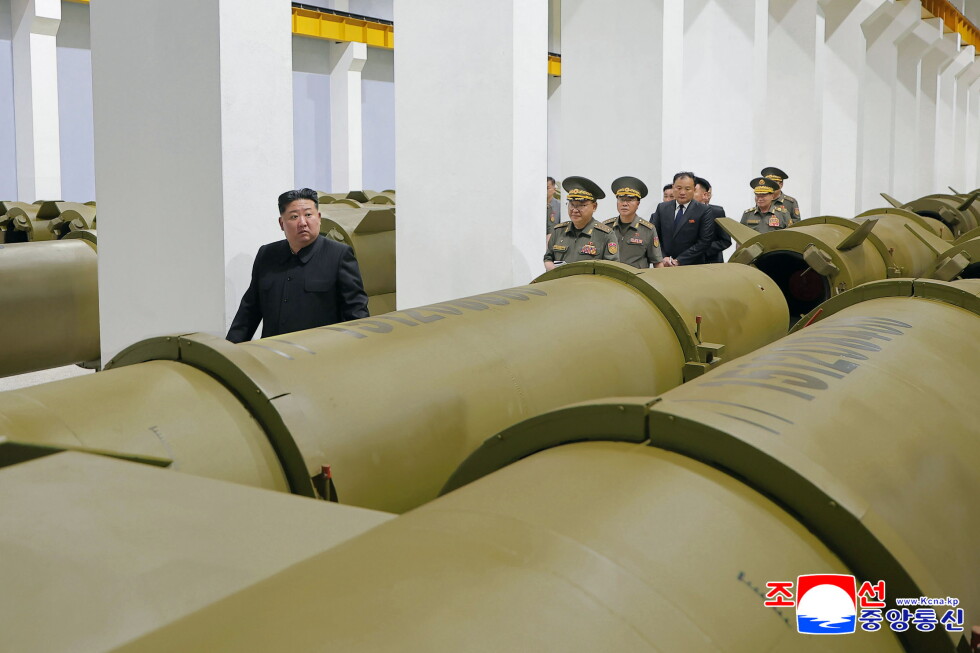
Just last week, Kim Jong Un reaffirmed this aggressive expansion trajectory during an inspection of a new North Korean nuclear materials production facility, where he stated that Pyongyang would boost its nuclear force “at an exponential rate.” On Sunday, state media released additional updates: Kim Jong Un had visited a key weapons manufacturing facility one day prior, ordering that the country’s missile production capacity be increased 2.5-fold over the course of the country’s current five-year development plan.
Kim Yo Jong framed Pyongyang’s military buildup as a purely defensive response to joint military posturing from the United States and South Korea. She emphasized that her brother’s push for “steadily beefing up the nuclear war deterrent for self-defense” is “an irreversible final conclusion to be carried out unconditionally,” pointing to what she called “ceaseless arms build-ups” from Washington and Seoul that threaten North Korean security.
Xi Jinping’s upcoming visit carries major regional geopolitical significance. Analysts note that the trip is largely aimed at reaffirming China’s traditional influence over Pyongyang, as North Korea has increasingly shifted its foreign policy alignment toward Russia in recent years. Observers expect Xi will avoid directly pressing Kim on the denuclearization issue during their talks, and instead will focus on offering new economic assistance packages to strengthen bilateral ties.
In recent months, Pyongyang has provided conventional weapons and thousands of troops to Russia to support its full-scale invasion of Ukraine, according to assessments from South Korean and U.S. officials. In exchange, those officials say, North Korea has received critical economic and military assistance from Moscow to shore up its own struggling economy and defense programs.