作者: admin

  • Ontario Premier Doug Ford criticised for $21m private jet purchase

    Ontario Premier Doug Ford criticised for $21m private jet purchase

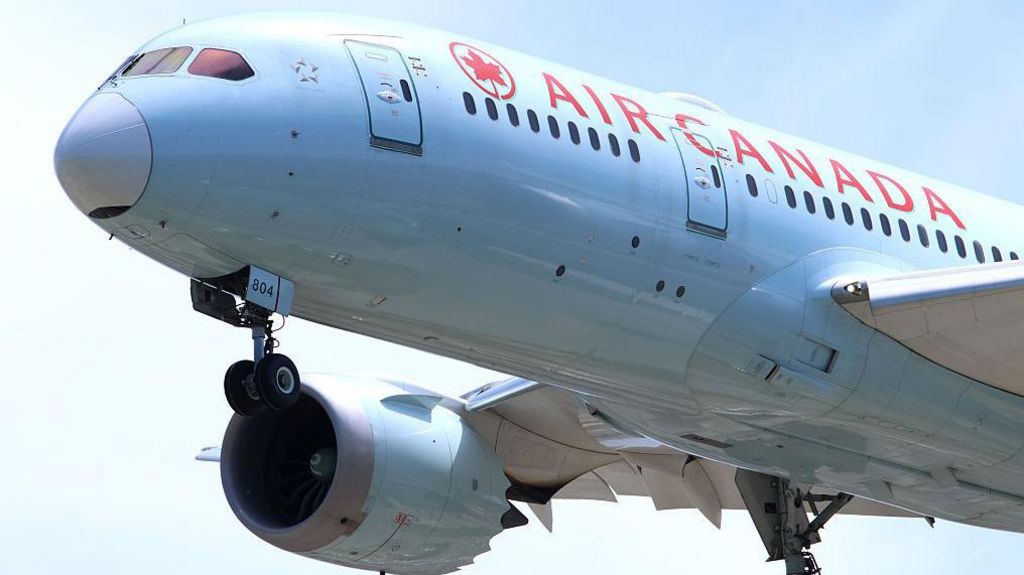
    A planned C$28.9 million ($21 million) acquisition of a pre-owned private jet by Ontario Premier Doug Ford’s provincial government has sparked fierce public and political criticism across Canada, with opponents labeling the aircraft a symbol of elite entitlement disconnected from everyday Ontarians’ struggles.

    Breaking news of the deal first in Friday reporting, the Toronto Star confirmed the purchase of the 2016 Bombardier Challenger 650, an executive jet manufactured right here in Canada, which Ford’s office later formally acknowledged in an official media statement. In its defense of the expenditure, Ford’s administration argued the jet is a necessary investment for the premier’s official travel needs, highlighting that Ontario covers more than twice the land area of the U.S. state of Texas. The aircraft, they said, will enable more reliable, flexible, secure and private travel for the premier across the province, as well as for his frequent out-of-province and cross-border trips.

    A key stated mission for the jet, according to Ford’s office, is supporting the premier’s ongoing lobbying campaign in the United States to push for the removal of Donald Trump’s tariffs on Canadian goods. Ford has made this anti-tariff effort a centerpiece of his cross-border outreach, making regular appearances on U.S. news networks and funding anti-tariff advertising that has already drawn the ire of the former president – Trump once temporarily paused U.S.-Canada trade negotiations over an Ontario ad that featured former U.S. President Ronald Reagan. Just last week, the premier traveled to Texas to meet with automotive industry leaders and Texas Governor Greg Abbott as part of this work. Prior to this purchase, Ford relied on chartered private aircraft for his official travel.

    The purchase has drawn intense pushback from across the political spectrum and advocacy groups. Marit Stiles, leader of the Ontario New Democratic Party, the province’s official opposition, condemned the deal in a post on X, arguing Ford should fly commercial economy class just like ordinary Ontario residents. Appearing later on a morning breakfast television program, Stiles emphasized that many households across the province are currently struggling to cover basic living costs, including rent and grocery bills, calling the timing of the luxury purchase “terrible”.

    The Canadian Taxpayers Federation, a non-partisan advocacy group that monitors government spending on behalf of Canadian taxpayers, has also called on Ford to cancel the purchase and commit to continuing commercial air travel for official trips.

    In pushing back against criticism, Ford’s office has attempted to frame the purchase as a cost-saving measure compared to other recent government jet acquisitions across Canada. The statement noted that Ontario’s C$28.9 million price tag is far lower than the C$107 million the province of Quebec paid for a fleet of three Challenger 650 jets – one pre-owned and two new – purchased for the province’s air ambulance service. It also referenced the federal Canadian government’s late December 2025 announcement of a C$753 million purchase of six new Bombardier Global 6500 jets, which are set to replace aging Royal Canadian Air Force aircraft used to transport the prime minister, other senior officials, and support military operations.

    This controversy is not without historical precedent in Ontario. Back in 1981, then-Premier Bill Davis faced massive public outcry over his own government’s purchase of a multi-million-dollar Challenger jet. The mounting criticism ultimately forced the Davis administration to retrofit the jet to serve as an air ambulance, and Davis eventually backed down and sold the aircraft, replacing it with two water bombers designed for fighting forest fires.

    For Ford, who won a historic third consecutive majority government in Ontario last year after holding office since 2018, the controversy comes as his public approval rating remains among the lowest of any provincial premier in Canada. An Angus Reid poll conducted earlier this year placed Ford’s approval at just 31%, a weak standing that leaves the premier particularly vulnerable to criticism over high-profile, costly government spending.

  • What next for South African opposition firebrand Malema after his five-year prison sentence?

    What next for South African opposition firebrand Malema after his five-year prison sentence?

    South African opposition leader Julius Malema, the firebrand head of the Economic Freedom Fighters (EFF), is facing a five-year prison term after being convicted on weapons charges — but legal complexities and ongoing appeals mean he remains free to lead his party into the country’s upcoming local government elections this year. The 45-year-old politician was found guilty on five separate criminal offenses, including unlawful possession of a firearm, discharging the weapon in a public space, and reckless endangerment, following a trial held in KuGompo, the newly renamed former East London in Eastern Cape province. During court proceedings, Malema testified that he fired the weapon as part of a celebratory gathering.

    Malema, a polarizing figure in South African politics, has built his political brand around unapologetic criticism of what he frames as Western imperialism, and calls for the full nationalization of land currently owned by white South African descendants — a policy designed to redress decades of harm caused by colonial rule and the apartheid system. His anti-establishment rhetoric has earned him a fervent base of support, particularly among young South Africans frustrated by slow economic transformation and persistent inequality. But the EFF leader has also drawn widespread condemnation across the political spectrum, from women’s rights advocacy groups to white agricultural communities, and has faced repeated legal troubles: he has been convicted of hate speech on multiple occasions, and was denied entry to the United Kingdom twice in 2025. Known colloquially as the “Red Berets” for the red overalls party members wear in parliament — a symbolic gesture of solidarity with the country’s working class — the EFF has emerged as one of South Africa’s most high-profile opposition groups since its founding.

    Following his conviction and sentencing, the court granted Malema permission to appeal his sentence, though not the initial guilty verdict. The EFF has pushed back aggressively against the ruling, with Malema’s legal team confirming they will challenge both the conviction and the five-year term in higher courts. According to Ulrich Roux, a South African legal expert interviewed by the BBC, the appeal process will require Malema to first secure approval from the Eastern Cape High Court to challenge his conviction. Roux noted that state prosecutors are almost certain to oppose the appeal application. Malema has publicly vowed to escalate his challenge all the way to South Africa’s highest judicial body, the Constitutional Court, if needed. If the case follows that full legal path, Roux projects a final ruling could take four to five years to reach.

    Under South Africa’s constitution, any person sentenced to more than 12 months in prison without the option of a fine is disqualified from serving as a Member of Parliament. However, this disqualification does not take effect until all appeal processes have been exhausted and a sentence is considered final. Because Malema’s appeal is still pending, he retains his parliamentary seat and is eligible to lead his party’s campaign in the upcoming local elections. Political analysts say this timeline could even allow Malema to run for re-election to parliament in the 2029 national elections, even if his appeal ultimately fails. Even in the worst-case scenario for Malema — a failed appeal that results in prison time — the sentence would only bar him from office for five years after his release, leaving the door open for a future political return.

    This precedent already exists in recent South African political history: former President Jacob Zuma was sentenced to 15 months in prison in 2021, which barred him from serving as an MP. Despite that, Zuma launched a new political party, uMkhonto weSizwe, in 2024, and led the party to a third-place finish in that year’s national elections — outperforming Malema’s EFF, which lost significant vote share to Zuma’s new movement.

    Some political analysts argue that the conviction could actually benefit Malema’s campaign. Khanyi Magubane, a South Africa-based political analyst, told the BBC that the sentence may be the “trump card” Malema needs ahead of the local elections. “I believe this will position the EFF and Malema well. It’s actually going to have unintended consequences… because he will play on the public sympathy and use this opportunity to continue standing his ground,” Magubane explained. For Malema, the timing comes as he seeks to reverse the EFF’s recent electoral decline: the party lost significant support to Zuma’s uMkhonto weSizwe in 2024, and saw a number of high-profile departures after the election, including that of deputy leader and party co-founder Floyd Shivambu. In the wake of the sentencing, thousands of Malema’s supporters have already rallied behind their leader, signaling continued loyalty to the polarizing politician.

  • A son of ex-Zimbabwe President Mugabe enters a plea deal to avoid attempted murder charge

    A son of ex-Zimbabwe President Mugabe enters a plea deal to avoid attempted murder charge

    JOHANNESBURG – In a high-profile legal development that echoes the long controversial legacy of Zimbabwe’s former authoritarian leader Robert Mugabe, Bellarmine Chatunga Mugabe, the 28-year-old youngest son of the late president and his second wife Grace Mugabe, has avoided a serious attempted murder charge through a last-minute plea deal with South African prosecutors. Chatunga Mugabe and his cousin and co-accused Tobias Mugabe Matonhodze have been held in custody since mid-February, after the two were linked to a shooting that left Sipho Mahlangu, a domestic employee at a private residence, injured and hospitalized.

    Under the terms of the agreement finalized in court on Friday, Chatunga Mugabe entered guilty pleas to two lesser charges: pointing an object that led another person to reasonably believe it was a loaded firearm in a separate incident unrelated to the shooting, and violating South African immigration law by entering and remaining in the country without valid documentation. Matonhodze, by contrast, pleaded guilty to five total charges, including the original count of attempted murder, along with unlawful possession of a firearm and ammunition, obstructing the course of justice, and illegal immigration.

    The pair’s legal representative Sinenhlanhla Mnguni confirmed to reporters outside the Johannesburg courthouse that the Section 112 plea deal under South Africa’s Criminal Procedure Act was reached after initial rounds of plea and sentencing negotiations fell apart. This legal mechanism allows defendants to avoid a lengthy, public full jury trial, streamlining the conclusion of the case. Defense attorney Advocate Laurence Hodes pushed the court for leniency during sentencing arguments, noting that neither man had prior criminal convictions. Hodes added that the pair had already reached a private financial settlement with the shooting victim Mahlangu, and confirmed they were prepared to pay any fine the court hand down.

    However, the case remains marked by unresolved questions around the shooting itself. Lead police witness Lieutenant Colonel Raj Ramchunder testified to the court that investigators have yet to recover the weapon used to shoot Mahlangu, and that the two accused have refused to cooperate with authorities to locate the firearm. Ramchunder emphasized that the pair were present at the scene when the shot was fired that injured Mahlangu, and have clear knowledge of where the weapon is hidden. “The accused shows no remorse in assisting the police in any way to point out the firearm,” Ramchunder told the court.

    The judge accepted the guilty pleas from both defendants and has scheduled sentencing for April 24, leaving the final legal outcome pending. This case is not the first time a member of the Mugabe family has faced legal controversy in South Africa. In 2017, Grace Mugabe was accused of assaulting a young South African model named Gabriella Engels, striking her in the forehead with an extension cord during an altercation at a Johannesburg hotel. The South African government granted Grace Mugabe diplomatic immunity amid widespread public outcry from opposition parties and human rights groups, allowing her to leave the country without facing prosecution.

  • France, UK to lead ‘defensive’ force for Hormuz

    France, UK to lead ‘defensive’ force for Hormuz

    A new chapter in diplomatic efforts to stabilize the Middle East emerged Friday, as France and the United Kingdom announced they would spearhead a strictly defensive multinational task force to safeguard unimpeded navigation through the strategically critical Strait of Hormuz — a deployment that will only move forward once a durable regional ceasefire is finalized.

    The joint confirmation came as British Prime Minister Keir Starmer and French President Emmanuel Macron co-chaired a high-level international conference in Paris, convened specifically to address threats to global trade passing through the key shipping chokepoint. Hosted primarily via video conference, the gathering drew participation from 49 countries across Europe and Asia, with representation ranging from senior diplomatic envoys to dozens of heads of state and government. Notably, neither the United States nor Iran, the two primary opposing actors in the ongoing regional conflict, took part in the discussions.

    The crisis that prompted the conference began on February 28, when Iran implemented a shipping blockade of the strait immediately after the U.S. and Israel launched military operations against the Islamic republic. The disruption sent immediate economic shockwaves across the globe, stoking widespread fears of renewed global inflation, disrupting global fuel supply chains, and raising alarms over potential worldwide food shortages.

    Tensions eased somewhat during the Paris talks, however, when Iranian Foreign Minister Abbas Araghchi announced via a post on X that the Strait of Hormuz would remain open to all commercial vessels for the duration of any Middle East ceasefire. The announcement was met with a measured positive response from global markets.

    In his remarks following the conference, Starmer emphasized that the multinational mission would only activate once conditions on the ground allow for a stable deployment. “This will be strictly peaceful and defensive as a mission to reassure commercial shipping and support mine clearance,” Starmer stated, noting that more than 12 nations have already committed to contributing military assets to the effort.

    Macron echoed the call for a permanent end to hostilities, saying that while leaders welcomed Iran’s temporary reopening announcement, they continued to push for “a full, unconditional reopening by all the parties.” The French president added that the verified opening of the strait makes the multinational mission even more critical: it will serve to consolidate recent diplomatic gains in the short term, and lay the groundwork for long-term stability in the corridor.

    Macron stressed that the task force is explicitly neutral, and operates completely independent of the belligerent parties currently engaged in the regional conflict. Multiple European nations have already signaled their willingness to join the effort: Italian Prime Minister Giorgia Meloni, who attended the conference in person, confirmed Italy stands ready to participate, joining Macron and Starmer in emphasizing that a full ceasefire must precede any deployment. German Chancellor Friedrich Merz, also present in Paris, noted that it would be desirable for the United States to join the mission at a later date.

    The conference marked a key moment for European diplomatic and security leadership, coming after European powers were largely sidelined from earlier U.S.-led diplomatic efforts to end the conflict. The U.S. response has been guarded so far: in a post-conference social media statement, U.S. President Donald Trump said he had rejected an offer from NATO to assist with securing the strait, telling the transatlantic alliance to “STAY AWAY”. It remains unclear whether Trump’s comment referenced the Paris-led initiative, as NATO was not invited to or represented at Friday’s talks.

    Starmer framed the mission as a critical step to protect the global economy, noting that “the world needs the Strait of Hormuz fully open because that is how we keep prices down for our people and stop the global economic damage” caused by the blockade. While he welcomed Iran’s announcement of a temporary opening during a ceasefire, he underscored that the international community must work to guarantee the opening is lasting and functional.

    According to a statement from Starmer’s office, senior military commanders from participating nations will gather next week at the UK’s Northwood military command headquarters outside London to work out operational details for the proposed task force.

  • Tens of thousands return to south Lebanon after ceasefire, defying Israeli warnings

    Tens of thousands return to south Lebanon after ceasefire, defying Israeli warnings

    A fragile 10-day ceasefire between Israel and Lebanon came into force at midnight on Thursday, and within hours, tens of thousands of people displaced by six weeks of Israeli military operations defied repeated safety warnings from all sides to begin journeying back to their home communities in southern Lebanon early Friday.

    The truce, announced publicly by former U.S. President Donald Trump on Thursday afternoon, brought an end to active large-scale combat, but it did not calm the deep-seated tensions on the ground. Even after the ceasefire officially commenced, the Israeli military carried out continued shelling of southern Lebanese areas, though violence had decreased significantly by Friday morning. In an official statement, the Lebanese armed group Hezbollah confirmed it would maintain a high state of alert, noting it was keeping its “finger on the trigger” to respond to any Israeli breach of the truce.

    Mere hours before the ceasefire took effect, Israeli warplanes targeted a residential complex in the southern Lebanese coastal city of Sour, leaving 11 people dead and 35 others injured, according to Lebanon’s Civil Defence. As of Friday morning, search and rescue teams were still working to extract survivors and recover remains from the rubble of the destroyed building.

    Despite urgent calls for caution from multiple parties—including the Israeli military, the Lebanese national army, Hezbollah, and Hezbollah’s political ally the Amal Movement—displaced families began packing their belongings and heading south within minutes of the ceasefire announcement. Israel had explicitly warned residents against returning to communities located south of the Litani River, noting that Israeli military forces would remain deployed in the region to monitor Hezbollah activities. Lebanese authorities and armed groups also urged residents to delay their return for several days to allow for demining and safety inspections, but their appeals did little to stem the flow of people eager to return to their homes after more than a month of displacement.

    By early Friday, the major highway connecting the southern Lebanese cities of Saida and Sour was completely gridlocked, with tens of thousands of vehicles crammed full of people and their personal possessions—many piled high with mattresses and household goods—snaking slowly toward the border region.

    During the six weeks of Israeli bombing and ground incursion, all permanent bridges crossing the Litani River, which spans nearly the entire width of southern Lebanon, were destroyed. The last of these, the critical Qasmiyeh Bridge connecting southern Lebanon to the rest of the country, was blown up by Israeli forces just one day before the ceasefire, cutting off the only remaining overland route to the region. In anticipation of the mass influx of returning residents, Lebanese military engineering teams rushed to build a makeshift crossing at Qasmiyeh, filling the massive crater left by the Israeli bombing with earth and compacting it to create a single-lane passage. By dawn Friday, the temporary crossing was open, with cars and motorcycles crossing in single file under the supervision of the Lebanese army. Further inland, local authorities opened a secondary paved route between Zrarieh and Tayr Filsey to help ease congestion, while the main crossing at the February 6 Bridge, destroyed by Israeli strikes in March, remained closed to all traffic. The Lebanese army also partially reopened a handful of other damaged bridge crossings across the river to accommodate returning traffic.

    Official data released by the Lebanese government puts the human cost of the six-week conflict at more than 2,200 people killed across the country since hostilities erupted on March 2. More than 1.2 million Lebanese people have been forced to flee their homes, making the sudden wave of returns one of the largest mass population movements in the region in recent years.

  • Thousands celebrate open-air Mass with Pope Leo in Cameroon – in pictures

    Thousands celebrate open-air Mass with Pope Leo in Cameroon – in pictures

    An estimated 120,000 worshippers and onlookers packed into Douala’s Japoma Stadium on Friday to join Pope Leo XIV for an open-air Mass, marking the largest gathering of his 11-day pan-African apostolic journey. The event comes on the heels of the pontiff’s Thursday visit to Cameroon’s restive Anglophone region, where a separatist insurgency has gripped the area for more than a decade.

    Jubilant crowds lined the route to the stadium as Pope Leo XIV traveled through the crowd in the Popemobile, greeting the throngs of waiting devotees with warm waves. Many attendees had gone to extraordinary lengths to secure a good vantage point, with some camping outside the stadium grounds as early as Thursday night – waiting more than 24 hours in total to see the pontiff. Despite sweltering tropical temperatures, devotees of all generations, including dozens of local clergy, turned out to participate in the historic occasion.

    During his address at the Mass, Pope Leo centered his remarks on spiritual guidance for Cameroon’s youth, urging young people to nurture diverse talents and invest in the well-being of their local communities. “Reject every form of abuse or violence, which deceives by promising easy gains but hardens the heart and makes it insensitive,” he told the crowd. “Do not let yourselves be corrupted by temptations that waste your energies and do not serve the progress of society,” he added.

    Many attendees who spoke to media after the service shared that they felt profound joy at the opportunity to see and hear from the Pope, reflecting widespread hope among Cameroonians that his visit will help advance peace efforts across the conflict-affected nation. Photographs from the event show worshippers adapting to the harsh heat: some held up umbrellas or books to block the harsh sun, while others wiped sweat from their brows throughout the service. Devotion took many forms across the packed crowd, with some clasping hands in quiet prayer and others prostrating themselves to honor the pontiff’s visit.

    The Douala Mass falls on the fifth day of Pope Leo’s 11-day Africa tour, and his third full day in Cameroon. Before arriving in the Central African nation, the Pope launched his journey in Algeria, marking the first time any sitting Pope has visited the majority-Muslim North African country. Following his time in Cameroon, Pope Leo will travel to Angola on Saturday, before concluding his continental trip in Equatorial Guinea. Beyond the public Mass, the pontiff also made a pastoral visit to Douala’s St Paul Catholic Hospital during his time in the coastal economic hub.

  • International students bridge China and world

    International students bridge China and world

    Against the backdrop of deepening global people-to-people exchanges, a rising cohort of international students studying across China have developed deep personal connections to the country, many describing it as a welcoming “home away from home” that has exceeded their initial expectations.

    Many of these students have highlighted the seamless integration of digital innovation into daily Chinese life as one of their most striking positive experiences. From quick in-store purchases to transit fare payments, the widespread accessibility and convenience of mobile payment systems have left a lasting impression on visitors accustomed to different financial infrastructure.

    What began as a period of immersive personal experience in China has evolved into a mission for many of these international learners. Leveraging their firsthand insights, unique cross-cultural perspectives, professional expertise and genuine enthusiasm for the country, they are taking active steps to share authentic stories of modern China with their home communities and global networks.

    In an era often marked by misinformation and cultural divides, these international students serve as informal, trusted bridges that connect China with the rest of the world, fostering mutual understanding, breaking down long-held stereotypes, and building people-to-people ties that complement formal diplomatic and economic cooperation.

  • Free health checkups reach high-altitude communities in Xizang

    Free health checkups reach high-altitude communities in Xizang

    On a clear, cool morning in mid-April, residents and religious practitioners in Namling County of the Xizang Autonomous Region came together at their local community activity center, ready to take part in a routine health screening that has become a cornerstone of public care across the region’s high-altitude landscapes. Standing at over 4,100 meters above sea level, this remote gathering is just one of hundreds of stopovers for the mobile medical teams that traverse Xizang’s rugged terrain each year, delivering a full suite of preventive care services that include blood pressure monitoring, ultrasound diagnostics, and comprehensive chronic disease screenings that would otherwise be out of reach for many isolated communities.

    This groundbreaking free health checkup initiative, first rolled out region-wide in 2013, has grown from a targeted pilot project to a near-universal public health infrastructure that prioritizes equity for all residents of Xizang, regardless of their geographic location. Funded through annual government per-capita subsidies, the program began with an allocation of 100 yuan (approximately 14 USD) per resident, and over more than a decade of operation, has facilitated a total of 22.41 million free checkups that cover nearly the entire population of the region.

    By 2025, growing policy commitment and increased public investment have lifted the annual per-capita subsidy to 164 yuan, with additional earmarked funding to expand the fleet of mobile diagnostic vehicles and upgrade local clinic facilities in the most hard-to-reach mountainous and high-altitude areas. To address the greater health needs of aging residents, the subsidy for adults aged 65 and older is even higher, reaching 200 yuan per person annually to support more comprehensive, detailed screenings.

    At its core, the program is designed to prioritize early detection and proactive management of common health conditions that disproportionately affect high-altitude populations, including hypertension, diabetes, and a range of altitude-related illnesses. Tailored screening and care pathways for vulnerable groups — including the elderly, women of reproductive age, and children — have already delivered measurable public health gains: regional data shows consistent reductions in maternal mortality, alongside marked improvements in long-term management of chronic conditions across communities.

    The reach of the initiative extends beyond rural villages to include religious communities, with mobile teams regularly conducting checkups at local monasteries. For Phurbu, a monk at Dragkar Monastery, the program has transformed his approach to personal health. “Regular screenings allowed me to detect and manage hypertension early,” he explained, noting that consistent access to free preventive care has significantly improved his overall quality of life.

    Health policy experts note that Xizang’s decade-long investment in this proactive, community-focused public health program underscores the regional government’s sustained commitment to delivering equitable, accessible healthcare to all residents, even in the world’s most challenging high-altitude environments. As subsidies and infrastructure continue to expand, the program is set to further reduce health disparities and improve long-term well-being for millions across the region.

  • Trump signals Iran deal near, hails ‘brilliant day for world’

    Trump signals Iran deal near, hails ‘brilliant day for world’

    In a flurry of posts on his Truth Social platform Friday, former and current U.S. President Donald Trump sent a clear signal that a landmark peace deal with Iran is within reach, celebrating breakthrough agreements on two critical sticking points: the status of the Strait of Hormuz and Iran’s nuclear program.

    Without formally issuing a formal announcement of a finalized accord, Trump opened his series of posts by declaring the day a “GREAT AND BRILLIANT DAY FOR THE WORLD!” He extended public gratitude to Pakistan, the neutral broker that hosted U.S.-Iran talks last weekend, as well as key Gulf Cooperation Council allies that have supported the negotiations, while launching a sharp public rebuke of NATO, telling the alliance to “STAY AWAY” after it offered assistance to secure the strategically vital waterway.

    The latest flurry of optimism comes after Iran confirmed earlier this week it would reopen the Strait of Hormuz—a critical global oil chokepoint through which roughly 20% of the world’s daily oil supplies transited—for the duration of a wider Middle East ceasefire. In his post, Trump went further, asserting Iran has committed to permanently keeping the strait open, ending its history of using closure threats as a geopolitical tool. “Iran has agreed to never close the Strait of Hormuz again. It will no longer be used as a weapon against the World,” he wrote. He added that Tehran is already in the process of clearing sea mines from the strait, with technical support from the United States, while noting that the existing American naval blockade of Iranian ports will remain fully in place until a final deal is signed.

    Negotiations have progressed rapidly following an initial round of talks led by U.S. Vice President JD Vance in Islamabad last weekend. While that first round of negotiations did not yield a final agreement, Trump has steadily leaked details of breakthroughs in recent days. On Thursday, he confirmed Iran had agreed to surrender its entire stockpile of enriched uranium, and announced a second round of talks would be held in the Pakistani capital, adding he may travel to Islamabad personally to sign the final accord if negotiations hold.

    On Friday, he pushed back against a recent Axios report that claimed the U.S. was offering $20 billion in unfrozen Iranian assets in exchange for Tehran’s uranium stockpile, explicitly denying any financial transfer would take place. “The U.S.A. will get all Nuclear ‘Dust,’ created by our great B2 Bombers – No money will exchange hands in any way, shape, or form,” he wrote, contradicting reporting that outlined a cash-for-uranium swap that would see Washington release billions in assets held in foreign banks.

    Beyond the nuclear and strait agreements, Trump also doubled down on his announcement of a 10-day ceasefire between Israel and Lebanon, saying the U.S. has formally prohibited Israel from conducting further airstrikes on Lebanese territory. The cross-border conflict erupted after the Iran-backed militant group Hezbollah launched strikes on Israel in response to the U.S.-Israeli military operation against Iran that began on February 28, and it had been widely seen as a major barrier to advancing any broader Iran peace deal. Trump emphasized that while the ceasefire is not formally linked to the Iran negotiations, he is committed to stabilizing the small Middle Eastern nation. “This deal is not tied, in any way, to Lebanon, but we will, MAKE LEBANON GREAT AGAIN!” he wrote.

    Trump reserved special praise for Pakistan’s leadership, thanking Prime Minister Shehbaz Sharif, whom he called “fantastic,” and army chief Asim Munir for their work brokering the backchannel negotiations between Washington and Tehran. He also extended gratitude to Saudi Arabia, the United Arab Emirates, and Qatar for their cooperation amid Iranian strikes on the region that followed the launch of the U.S.-Israeli operation.

    The sharpest criticism of the day was reserved for NATO, which has refused to join the U.S.-led conflict against Iran or deploy forces to the Strait of Hormuz while active hostilities continued. Trump said he received a formal request from the alliance to assist with securing the strait following the reopening, and he rejected the offer outright. “Now that the Hormuz Strait situation is over, I received a call from NATO asking if we would need some help. I TOLD THEM TO STAY AWAY, UNLESS THEY JUST WANT TO LOAD UP THEIR SHIPS WITH OIL,” he wrote. “They were useless when needed, a Paper Tiger!”

    Trump’s rejection of NATO assistance comes shortly after British Prime Minister Keir Starmer and French President Emmanuel Macron announced following a bilateral meeting that the two European powers would lead a multinational naval mission to the strait as soon as security conditions permit.

  • India Parliament blocks Modi’s bid to redraw voting boundaries alongside seat quota for women

    India Parliament blocks Modi’s bid to redraw voting boundaries alongside seat quota for women

    NEW DELHI – A sweeping, decades-in-the-making proposal to reshape India’s political landscape by guaranteeing 33 percent female representation in national and state legislatures collapsed Friday in the country’s parliamentary lower house, derailed by bitter partisan conflict over a tied constituency redrawing plan that critics argued would skew power toward Prime Minister Narendra Modi’s ruling party. The defeat of the bill marked a stunning end to two days of tense debate during a special three-day parliamentary session called by the Modi government, and left one of the most ambitious proposed political reforms since India’s 1947 independence from British colonial rule deadlocked for the foreseeable future.

    The core of the legislation was designed to address a longstanding gender gap in India’s political institutions, where women have remained drastically underrepresented despite making up nearly half of the country’s population. By mandating that one out of every three seats in Parliament and state legislative assemblies be reserved for female candidates, supporters framed the bill as a transformative step toward equal political participation for women across India. But from its introduction, the gender quota was inextricably linked to a separate, highly contentious proposal to redraw national voting boundaries, known as delimitation, and expand the total size of the lower house of Parliament.

    Under the delimitation plan, the number of lower house seats would have jumped from the current 543 to roughly 850 ahead of the 2029 national elections, with boundaries redrawn using 2011 population census data. This framework sparked immediate pushback from opposition parties, which raised two overlapping sets of objections. First, opposition leaders argued that basing seat allocations on 2011 population figures would shift political power away from India’s southern states, which have seen slower population growth in recent decades, toward the faster-growing northern states where the ruling Bharatiya Janata Party (BJP) maintains its strongest base of support. Second, opponents warned that the entire restructuring would alter the national political balance to deliver a structural advantage to the BJP, a claim the government has forcefully denied.

    To secure passage, both bills were required to win approval from a two-thirds majority of sitting lawmakers. When the votes were counted, the linked legislation failed to hit that threshold, prompting the Modi government to withdraw the delimitation proposal entirely and leaving the women’s quota bill without the tied provision it was paired with, resulting in its defeat.

    Modi defended the government’s proposal in a post on X hours ahead of the vote, claiming that all stakeholder concerns had been addressed and that “misconceptions surrounding the legislation” had been debunked with factual evidence and logical reasoning. The government also sought to ease opposition worries by stating the plan would mandate a uniform 50 percent increase in seats across all Indian states to preserve proportional representation at the national level. But critics quickly pointed out that this guarantee was not explicitly written into the draft legislation, leaving it unenforceable.

    Top opposition leaders remained steadfast in their rejection of the paired bills in the lead-up to the vote. Rahul Gandhi, leader of the main opposition Congress party, characterized the entire proposal as “an attempt to change the electoral map of India” to benefit the ruling party. While there was broad cross-party consensus in favor of increasing women’s political representation, the deep partisan divisions over the delimitation provision ultimately derailed the entire reform package, leaving the future of gender quota reform in India uncertain as the country heads into a national election cycle.