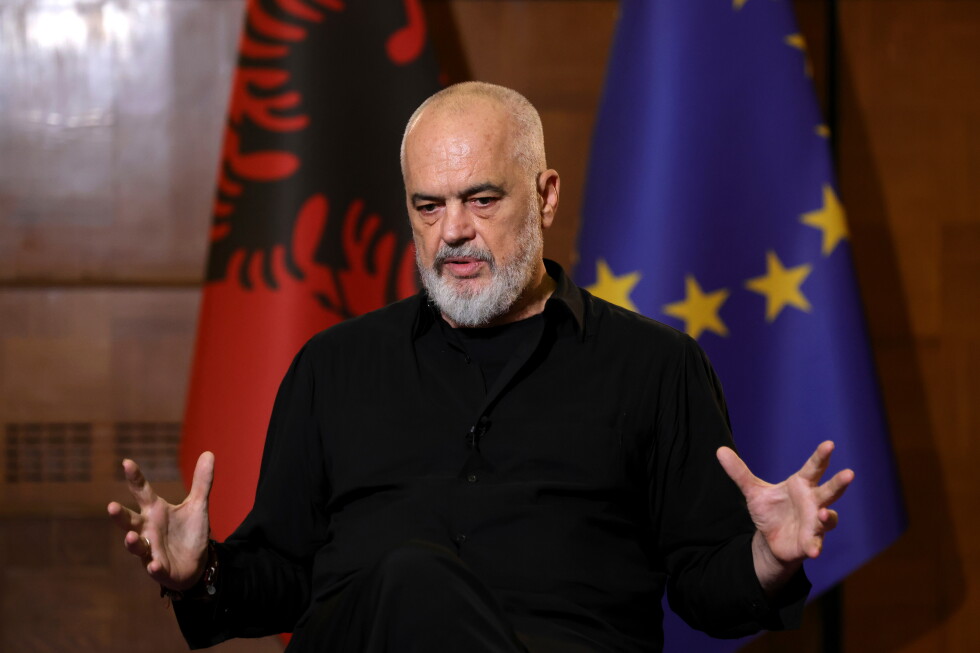
Mass public demonstrations and competing investigations have failed to shift the Albanian government’s commitment to a high-end coastal development project tied to Jared Kushner, son-in-law of former U.S. President Donald Trump, Albanian Prime Minister Edi Rama confirmed in an exclusive interview with the Associated Press this week.
The controversial multi-component project, which plans to build luxury hotels, private apartments, upscale villas, and a superyacht marina, has drawn thousands of daily protesters to the streets outside the prime minister’s office in central Tirana. Critics have raised urgent red flags over the project’s planned footprint: one section sits on the protected Narta Lagoon, a critical nature reserve for migratory wild birds, while the second smaller resort component is earmarked for Sazan, an uninhabited former Cold War-era communist military base untouched by large-scale development.
Rama has pushed back hard against environmental and public backlash, framing widespread opposition as a product of amplified misinformation and manipulated half-truths. He noted that the project originated from an unexpected chance encounter: Kushner and his wife Ivanka Trump stopped to refuel their yacht in the Albanian port of Durres during a trip to Montenegro, where they praised the nation’s natural scenery at a dinner with Rama. Months later, the pair reconnected at the World Economic Forum in Davos, where Kushner formally expressed interest in investing in Albania’s growing tourism sector. An investment firm affiliated with Kushner has since been granted special investor status by Albanian regulators.
Despite heavy machinery already arriving on site to clear vegetation, build access roads, and install fencing in the protected reserve starting in late May, Rama maintains the project remains in the preliminary planning stage. He stressed that no formal environmental impact assessment has been launched because the final blueprints are still being refined by international architects and environmental specialists. The prime minister pushed back on claims the government is disregarding ecological protections, pointing to his administration’s existing conservation wins including a 10-year national hunting moratorium that helped restore flamboyingo populations and other native wildlife across the country.
For the Albanian government, the project represents far more than a private investment: it is framed as a transformative step for the small former communist nation, which has spent decades working to raise its international profile, attract high-value foreign capital, and expand its nascent luxury tourism sector as it pursues official European Union membership. Rama argued the project signals a landmark shift for Albania, moving it from a nation largely overlooked by global investors to a top destination for large-scale international capital.
When asked directly if he would consider stepping back from the controversial plan, Rama rejected the possibility outright, responding simply, “Step back from what?” Critics have raised multiple red flags beyond environmental harm, however: Albania’s national anti-corruption agency has already opened an investigation into the project, amid competing legal claims over the privatization of the project’s land. While the government asserts the acreage is now privately owned, opposing parties have challenged the legitimacy of the original privatization process.
Rama acknowledged that much of the current backlash has been amplified by outside influences, pointing to a long-running pattern of cyber interference from Iran, which Albania has repeatedly accused of orchestrating hacking campaigns against the country’s digital infrastructure in retaliation for Albania hosting a major Iranian opposition group. Tehran has consistently denied these allegations. The prime minister was careful to clarify that he does not accuse individual, grassroots protesters of being foreign agents, but said bad-faith foreign manipulation has inflated public anger and spread distorted claims about the project.