作者: admin

  • New figures revealing Aussie bosses are offering the fastest pay rises in years but wage acceleration unlikely to help most workers

    New figures revealing Aussie bosses are offering the fastest pay rises in years but wage acceleration unlikely to help most workers

    Australia’s labor market is facing a stark new divide: employers are ramping up advertised salaries at the fastest pace in nearly a year, but the benefits of this pay growth are out of reach for most of the country’s workforce. Fresh data from leading employment platform Seek reveals that advertised salary growth re-accelerated to 0.4% month-on-month in March, bringing annual growth in advertised pay to 4.1% — the highest annual increase recorded since July 2022.

    Despite this seemingly positive trend, Seek’s chief economist Blair Chapman notes that the wage bump will do little to ease cost-of-living pressures for the vast majority of Australian households. Most workers are unable to immediately switch jobs to capitalize on the higher advertised salaries, leaving them stuck with stagnant wages even as they grapple with soaring fuel costs, rising mortgage repayments, a cooling national economy, and growing anxiety over job stability.

    The latest employment figures also signal a softening overall labor market: the total volume of job advertisements fell by an additional 0.4% in March compared to February, marking a 2.9% decline year-on-year. Applications per new job posting also dipped 0.5% during the month, even though the share of active workers seeking new roles remains far above pre-pandemic levels.

    Alongside rising pay offers, a clear shift in hiring requirements is emerging across all industries: employers are increasingly prioritizing candidates with artificial intelligence skills. Seek’s data shows that job advertisements referencing AI skills have surged 75.2% over the past 12 months. The trend is most pronounced in information and communications technology, where AI mentions in ads have jumped 11.4%, followed by marketing and communications (5.5% growth) and science and technology (4.7% growth). Even industries with historically low AI integration have seen a 1.3% rise in demand for AI skills this year.

    Chapman points out that AI-referencing jobs still make up less than 2% of all Australian job advertisements, and recent global economic uncertainty around AI development has led to a slight slowdown in growth. “We can expect this increased uncertainty to have employers feeling a little more cautious in the near term until a clearer view of the situation emerges,” he explained.

    But new analysis from Australia’s national science agency CSIRO eases fears of mass AI-driven job displacement, even amid recent high-profile layoffs at major Australian tech and telecom firms including Atlassian, WiseTech, and Telstra. The agency’s multi-year study of hiring patterns across thousands of Australian companies found that firms that have adopted AI are actually advertising more new roles than companies without an AI strategy, with these positions requiring a broader mix of skills rather than fewer.

    Dr Claire Mason, lead of the CSIRO’s workforce and productivity research team, said the data reshapes common narratives around AI and work. “AI isn’t replacing workers,” she explained. “Australians need to be working with and harnessing AI, and learning how to use technology to augment their human intelligence. The big shift is not that jobs are disappearing — it is that jobs are changing.”

  • French-Algerian author Kamel Daoud says Algeria sentenced him to 3 years for award-winning novel

    French-Algerian author Kamel Daoud says Algeria sentenced him to 3 years for award-winning novel

    In a high-profile ruling that has reignited debates over free expression in Algeria, exiled French-Algerian writer Kamel Daoud announced Wednesday that an Algerian court has sentenced him to three years in prison and imposed a $38,000 fine over his 2024 Goncourt Prize-winning novel *Houris*. Daoud, who resides permanently in France, shared the news of Tuesday’s conviction via the social platform X, revealing the legal penalty handed down by a court in the coastal Algerian city of Oran.

    Daoud’s acclaimed work centers on the forgotten victims of Algeria’s brutal 1990s internal conflict, widely known as the “Black Decade.” The decade-long violence erupted in 1991, when the military-backed Algerian government canceled the second round of national legislative elections after an Islamist party won a clear majority in the first round. The ensuing insurgency and government crackdown killed an estimated 200,000 people over 10 years of conflict.

    The conviction was rooted in the 2005 Charter for Peace and National Reconciliation, a national policy approved via public referendum that granted blanket amnesty to both Islamist insurgents and state security forces involved in the civil war. Daoud sharply criticized the law and its application in his case, noting that the charter effectively criminalizes any open public discussion of the civil war and its legacy. “Ten years of war, nearly 200,000 dead according to estimates, thousands of terrorists granted amnesty … and only one guilty party: a writer,” Daoud said in his statement.

    This is not the only legal pressure facing Daoud. Since May 2025, Algerian authorities have issued two international arrest warrants for the author, and they are also moving to revoke his Algerian citizenship. The case is not an isolated incident: another prominent French-Algerian critic of the Algerian government, author Boualem Sansal, faced similar legal repercussions in recent years. Sansal, whose work critiques political Islam, French colonialism, and current Algerian leadership, was convicted of undermining national unity and insulting public institutions, receiving a five-year prison sentence under Algeria’s anti-terrorism legislation. After serving one year in prison, he was granted a humanitarian pardon following a diplomatic appeal from Germany’s president, and returned to his residence in France in 2024.

    The conviction has drawn new attention to longstanding concerns about restrictions on free speech and historical memory in Algeria, as writers and activists continue to push for open discussion of the legacy of the Black Decade decades after the conflict ended.

  • New study helps deepen understanding of Qinghai-Tibet Plateau carbon cycling mechanisms

    New study helps deepen understanding of Qinghai-Tibet Plateau carbon cycling mechanisms

    Situated on the Qinghai-Tibet Plateau, the source region of China’s Yellow River holds outsized ecological importance as a core component of the “Asian Water Tower,” a vast high-altitude system that feeds water to billions across Asia. Dense with glaciers and permafrost, this fragile cryospheric landscape is disproportionately sensitive to global climate shifts, with rising temperatures steadily accelerating glacial retreat and permafrost thaw. As this thaw progresses, massive volumes of organic carbon that have been locked away as solid sequestration for centuries are being released into surrounding watersheds, creating ripple effects that alter regional carbon and nitrogen cycles and threaten downstream ecological stability.

    Against this backdrop, a team of Chinese researchers from the Northwest Institute of Eco-Environment and Resources (NIEER) under the Chinese Academy of Sciences has completed a groundbreaking new study focused on untangling the dynamics of dissolved organic matter in this critical high-altitude basin, filling long-standing gaps in global biogeochemical data for cold mountain regions.

    Led by NIEER researcher Niu Hewen, the project carried out three years of continuous in-situ observations between 2019 and 2022, compiling one of the most comprehensive datasets to date on dissolved organic carbon, dissolved organic nitrogen, and total dissolved nitrogen across rainfall, river, and groundwater systems in the Yellow River’s source zone.

    The team’s analysis yielded several key findings that challenge previous broad assumptions about alpine river carbon dynamics on the Qinghai-Tibet Plateau. The study confirmed that dissolved organic carbon concentrations in the Yellow River’s alpine headwaters are significantly lower than the regional average for other alpine rivers across the plateau, with clear and pronounced seasonal fluctuations tied to temperature patterns. Concentrations reach their annual peak during the summer glacial and permafrost ablation period, when 72% of dissolved organic matter in river waters consists of terrestrial humic-like substances eroded from thawed permafrost and glacial deposits. By contrast, groundwater in the region is dominated by microbial protein-like substances, which make up 82% of its dissolved organic matter profile.

    Further calculations from the research show that the Yellow River source region transports more than 100,000 metric tonnes of dissolved organic carbon downstream to lower basin areas every year, with 56% of this annual export occurring between May and October, aligned with warmer summer temperatures and peak ablation.

    According to Niu, the study confirms that ongoing climate warming is driving a fundamental shift in the region’s carbon cycle, transforming cryospheric organic carbon from long-term solid sequestration to active, dynamic output that increases the volume of carbon and nitrogen exported through the river system dramatically.

    The research team notes that these new findings do more than just advance scientific understanding of carbon cycling mechanisms on the Qinghai-Tibet Plateau, one of the world’s most important high-altitude carbon sinks. The compiled dataset and observed dynamics also provide a robust, evidence-based foundation to guide ecological conservation, sustainable water resource management, and climate change adaptation planning across the entire Yellow River basin, supporting long-term ecological and water security for communities that depend on the river system.

  • Why US, Israel and Iran are headed for a frozen conflict

    Why US, Israel and Iran are headed for a frozen conflict

    A fragile ceasefire currently holds between the United States, Israel and Iran, but diplomatic efforts to resolve the deep-rooted disputes fueling the conflict have stalled, leaving the international community grappling with a critical question: where will this confrontation go from here? According to analysis from two international relations scholars, the most probable trajectory is not a comprehensive, lasting peace deal, but a frozen conflict — a state of unresolved, low-scale hostility that falls far short of full-scale open war but never reaches a formal political resolution.

    Frozen conflicts are far from static; they linger for years or even decades with persistent underlying tensions that can erupt into renewed violence at any time. This pattern typically emerges when no overarching political agreement can be reached between warring parties. One well-documented example is the conflict in eastern Ukraine that persisted from 2014 until Russia’s full-scale invasion in 2022. Despite an estimated 14,000 deaths among military personnel and civilians, and constant covert cyber and information operations between the two sides, the conflict was widely categorized as frozen for eight years.

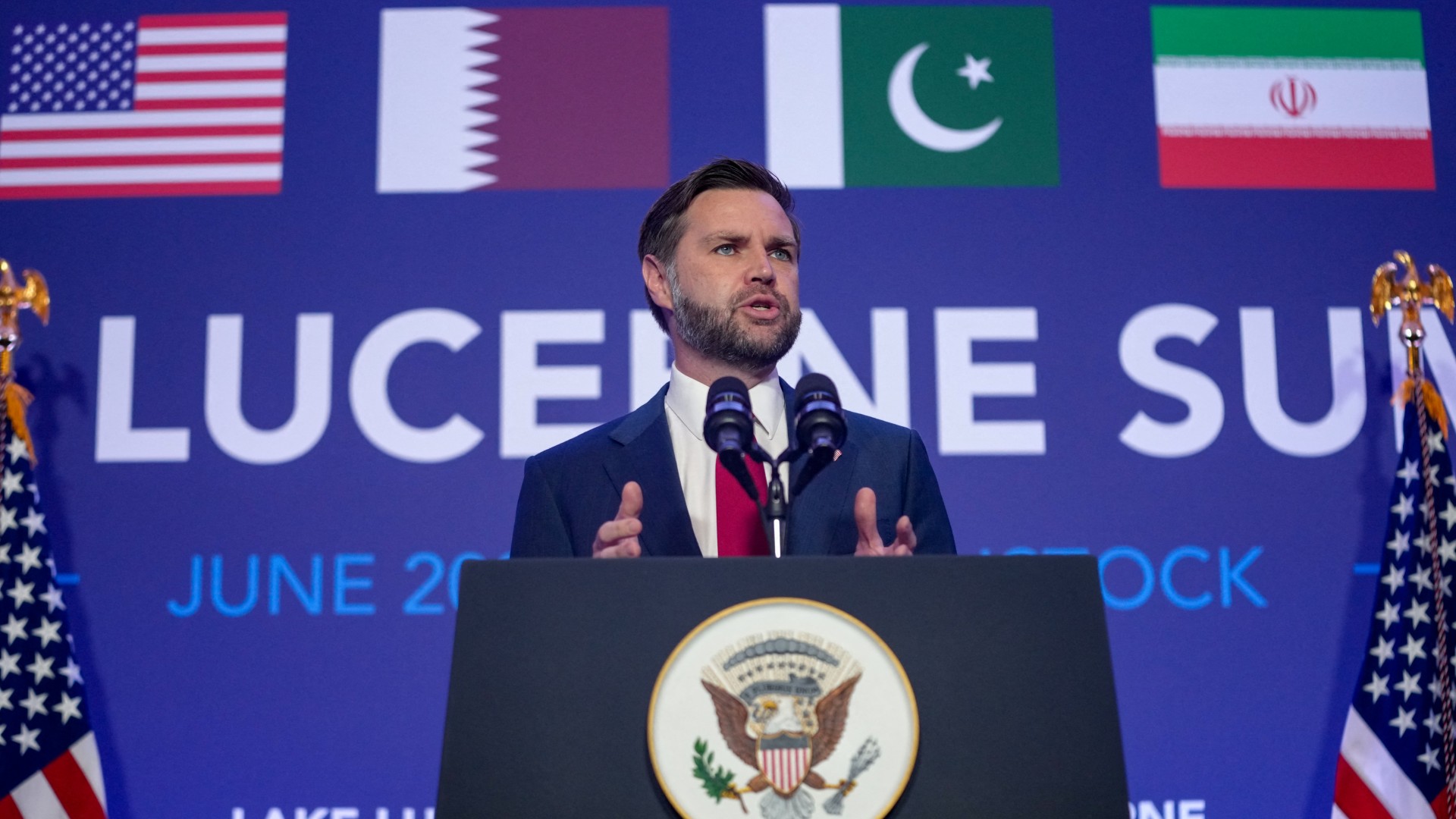
    Even if new negotiations, scheduled to resume in Pakistan, eventually produce a tentative agreement, three core factors point strongly toward a frozen conflict rather than durable peace, the analysts argue.

    First, U.S. President Donald Trump’s foreign policy approach frames ceasefires as an end to conflict in themselves, rather than a temporary pause to negotiate substantive political solutions. Trump has publicly claimed credit for ending ten separate conflicts, including the current US-Iran confrontation and Israel’s war in Lebanon. Closer examination of his track record reveals that most of these claimed successes amount to nothing more than fragile ceasefires, with core disputes still completely unresolved. This pattern has already left multiple frozen conflict hotspots around the globe with persistent high tensions: for example, a 2025 brief armed clash between India and Pakistan remains unresolved, with repeated risk of renewed fighting, while a lasting peace agreement to resolve 2025 border disputes between Thailand and Cambodia remains out of reach. In every case, Trump has declared victory and shifted focus to other global priorities as soon as major open fighting stops, leaving core issues unaddressed.

    Second, the inherent dynamics of asymmetric conflicts make lasting political settlements far less likely than frozen outcomes. This current confrontation is distinctly asymmetric: the US and Israel hold overwhelming military superiority over Iran, pushing Iran to rely on unconventional tactics to counterbalance US power. These tactics have included targeting critical infrastructure in non-belligerent Persian Gulf states and closing the Strait of Hormuz to global commercial shipping, a move that disrupts international energy markets and the broader global economy. Academic research consistently shows asymmetric conflicts are inherently protracted and often open-ended, making frozen conflict far more likely than a lasting negotiated resolution. The dynamic is simple: the weaker side cannot win a conventional military victory against a much stronger opponent, so it instead relies on political, economic and psychological pressure to wear down the stronger power, forcing a withdrawal and ceasefire rather than surrender. This is exactly the dynamic playing out in the current conflict: Trump is facing mounting domestic and international pressure to end open hostilities, pushing him to pursue a ceasefire that he can frame as a US victory, while Iran has accepted the ceasefire as a survival tactic as the weaker party, not as a commitment to long-term conflict resolution. This echoes the decades-long frozen conflict between the US and the Taliban in Afghanistan, where the militant group survived 20 years of low-intensity conflict before retaking full control of the country after US withdrawal.

    Third, neither party has shown any meaningful commitment to addressing the complex, core disputes that triggered the conflict in the first place, most notably the long-standing standoff over Iran’s nuclear program. The first round of peace talks held in Pakistan on April 11–12 collapsed entirely after Iran refused to make concessions on its nuclear activities, which Iran has repeatedly described as an inalienable right for civilian energy and medical purposes. It is worth noting that the 2015 multilateral Joint Comprehensive Plan of Action (JCPOA), the landmark nuclear deal with Iran, took 20 months of intensive negotiation to finalize. Just three years after the agreement was reached, Trump withdrew the US from the JCPOA, calling it a “horrible one-sided deal” that favored Iran. Given this troubled history, a quick resolution to this deeply complex dispute is effectively impossible. Some analysts have floated the possibility of a partial, surface-level agreement that delays negotiations on the most technical and contentious details to a later date, but Iran has shown no willingness to back down from its long-stated claims to sovereign nuclear rights, and has already demonstrated its geostrategic resolve by following through on threats to close the Strait of Hormuz and disrupt global commerce.

    What would a frozen conflict mean for the Middle East? Even if the current ceasefire holds and a partial agreement is reached, unresolved underlying tensions will leave the region in a permanent state of instability, with regular threats exchanged over Iran’s nuclear program and periodic violent flare-ups between Iran and Israel, Iran and the US, or both. This mirrors the current frozen conflict in Gaza: in October 2025, Israel and Hamas agreed to a ceasefire under Trump’s 20-point peace plan, and the first phase was largely implemented, leading to a hostage and prisoner exchange, a reduction in heavy Israeli bombardment, and a resumption of humanitarian aid into the strip. But no progress has been made on the core complex questions of post-war Gaza governance, large-scale reconstruction of the enclave, and the critical issue of Hamas disarmament. As a result, Israeli troops have refused to fully withdraw from Gaza, and low-level violence continues to this day.

    Historical precedent further underscores the risks of this outcome. The 1953 armistice that ended the Korean War was never followed by a formal peace treaty, leaving North and South Korea technically at war for more than 70 years. This decades-long frozen conflict directly pushed North Korea to pursue an underground nuclear weapons program that remains a major global threat decades later. Similarly, the 75-year frozen conflict between India and Pakistan has spurred a regional nuclear arms race, constant instability across South Asia, and repeated outbreaks of deadly violence.

    Following this historical pattern, a frozen conflict between the US, Israel and Iran will almost certainly generate similar long-term instability across the Middle East. It would likely fuel a new regional arms race, increase the risk of irregular and cyber conflict, and create repeated disruptions to global energy supplies through periodic flare-ups over control of the critical Strait of Hormuz.

    This analysis comes from Jessica Genauer, Academic Director at the Public Policy Institute of UNSW Sydney, and Benedict Moleta, a PhD candidate in the Department of International Relations at the Australian National University, originally published in *The Conversation* under a Creative Commons license.

  • France to host men’s basketball World Cup in 2031. Japan gets 2030 women’s tournament

    France to host men’s basketball World Cup in 2031. Japan gets 2030 women’s tournament

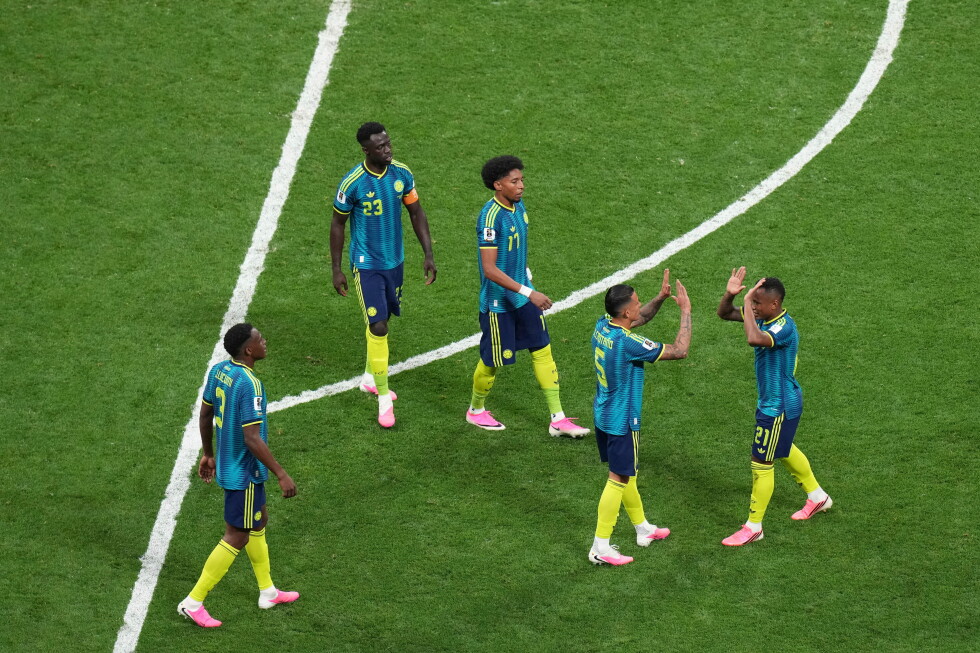
    BERLIN – International Basketball Federation (FIBA) announced landmark hosting decisions this Wednesday, granting France the right to stage the 2031 FIBA Men’s Basketball World Cup, while Japan will welcome the world’s top women’s basketball teams for the 2030 Women’s World Cup. The announcement positions emerging basketball superstar Victor Wembanyama to potentially compete for a world title on home soil in eight years’ time. In its official statement, FIBA highlighted that both nations boast a proven track record of delivering world-class international sporting events, having successfully hosted the last two Summer Olympic Games: Tokyo 2020 for Japan and Paris 2024 for France. Wembanyama, the rising San Antonio Spurs star, emerged as one of the biggest breakout names of the 2024 Paris Olympics, where he carried the French men’s national team to a silver medal finish, putting up an impressive 26-point performance in the gold medal match against the dominant United States squad. For the 2031 men’s tournament, three French cities will serve as host venues: Lyon, Lille, and Paris. The 17-day competition is scheduled to run from August 29 to September 14, with all knockout round matches and the final itself set to be held in the French capital Paris. This will mark the first time France has ever hosted the FIBA Men’s World Cup as the sole host nation. For Japan’s 2030 women’s tournament, the entire 13-day event will be centered in Tokyo, running from November 26 to December 8. Similar to France’s men’s team at Paris 2024, Japan’s women’s national team claimed a silver medal on home court at the 2020 Tokyo Olympics, adding extra local excitement to their upcoming hosting role. Japan is no stranger to FIBA’s flagship events, having previously hosted the men’s world championship (the tournament’s former name) back in 2006, and served as a co-host for the 2023 Men’s World Cup alongside the Philippines and Indonesia. Looking ahead to the near future, the next edition of the Women’s World Cup is set to tip off this coming September in Berlin, Germany, while the 2027 Men’s World Cup has already been assigned to Qatar, continuing FIBA’s rotation of global hosting across different regions of the world.

  • China’s foreign and defense ministers meet with Cambodian counterparts in joint ‘2+2′ dialogue

    China’s foreign and defense ministers meet with Cambodian counterparts in joint ‘2+2′ dialogue

    In a landmark step forward for bilateral cooperation, Cambodia and China launched their inaugural “2+2” Strategic Dialogue Mechanism on Wednesday, bringing the top foreign policy and defense leaders of both nations together in Phnom Penh to advance mutual political and security alignment.

    The high-level gathering drew Chinese Foreign Minister Wang Yi and Defense Minister Dong Jun to the Cambodian capital, where they met with their respective Cambodian counterparts: Foreign Minister Prak Sokhonn and Defense Minister Tea Seiha. The dialogue initiative was first proposed by Chinese President Xi Jinping during his state visit to Cambodia in April 2023, designed to strengthen the two countries’ existing comprehensive strategic partnership. This new ministerial-level dialogue format marks China’s second such framework in Southeast Asia, following a similar arrangement launched with Indonesia last year, as Beijing continues expanding its diplomatic and security influence across the region.

    Beyond the joint dialogue session, the two visiting Chinese ministers are scheduled to hold separate bilateral meetings with Cambodia’s Senate President Hun Sen and Prime Minister Hun Manet during their trip. After the conclusion of the inaugural “2+2” talks, Wang Yi will hold in-depth one-on-one discussions with Prak Sokhonn on Thursday to review progress on implementing existing bilateral cooperation agreements and explore shared efforts to advance peace, security and stability across Southeast Asia.

    Following his engagement in Cambodia, China’s foreign ministry confirmed Tuesday that Wang Yi will continue his Southeast Asian tour with official visits to Thailand and Myanmar.

    As of Wednesday, Cambodian officials have not released immediate details on the content or outcomes of the closed-door talks.

    Longstanding close ties bind the two nations: China is Cambodia’s largest source of foreign direct investment and top international aid donor, and Cambodia is widely recognized as Beijing’s closest political ally in Southeast Asia. Bilateral trade between the two countries hit $19.73 billion in 2023, with a significant trade imbalance tilted heavily in China’s favor.

    This deep strategic partnership has sparked persistent scrutiny from Western governments and independent analysts, particularly centered on a Chinese-funded upgrade of Cambodia’s Ream Naval Base, located on the Gulf of Thailand. Skeptics have raised repeated suspicions that the renovated facility will ultimately function as a forward strategic military outpost for the Chinese People’s Liberation Army Navy. Construction on the base completed major upgrades last year, including a new longer pier capable of accommodating larger naval vessels, a fully functional dry dock for ship repairs, and additional supporting infrastructure.

    The U.S. government has publicly stated its concern that Cambodia has secretly granted China exclusive access to portions of the base, claims Cambodian officials have repeatedly and forcefully denied. During a public opening event for the base expansion in April 2023, Prime Minister Hun Manet explicitly rejected the allegations, emphasizing that all construction and expansion work was carried out transparently and no secret agreements had been struck with Beijing.

    In a notable development three months ago, the USS Cincinnati, a U.S. Navy warship carrying a crew of roughly 100 service members, became the first American naval vessel to dock at Ream Naval Base following the completion of the Chinese-funded renovation, marking a small but symbolic step in U.S. engagement with the facility.

  • EU nears approval of Ukraine loan after Hungary pipeline row

    EU nears approval of Ukraine loan after Hungary pipeline row

    After months of tense diplomatic gridlock tied to a damaged oil pipeline dispute between Kyiv and Budapest, the European Union has moved a step closer to unblocking a critical 90-billion-euro ($106-billion) loan package for Ukraine, officials confirmed Wednesday. The bitter standoff between Ukrainian President Volodymyr Zelenskyy and Hungarian nationalist Prime Minister Viktor Orbán had held up the much-needed budget support that Ukraine requires to cover its core spending four years into Russia’s full-scale invasion.

    Diplomatic sources told reporters that Budapest has been granted a 24-hour window to issue its final formal approval, with Hungarian authorities holding out to confirm that Russian crude shipments would resume through the Druzhba (Friendship) pipeline after Ukraine completed repairs. Earlier this week, Zelenskyy announced that repairs to the section of the pipeline damaged in a Russian strike were finished, and Ukraine restarted pumping oil to Hungary and neighboring Slovakia on Wednesday.

    Hungarian energy major MOL announced in a statement that it expects the first post-repair crude deliveries to reach both Hungary and Slovakia no later than Thursday. Slovakia’s Economy Minister Denisa Sakova echoed that timeline in a Facebook post, noting that the first shipments would arrive in the early hours of Thursday.

    Orbán, a long-standing Kremlin ally who suffered a decisive electoral defeat earlier this month that ended his 16-year hold on power, had refused to drop his opposition to the loan until the pipeline was fully repaired and flows resumed. Hungary and Slovakia, two EU member states that have maintained close energy ties to Russia despite bloc-wide sanctions, had previously accused Kyiv of deliberately delaying repair work to pressure them over their continued imports of Russian energy. Zelenskyy has been open about his opposition to any EU member states purchasing Russian oil and gas, which remain a top source of revenue for Moscow to fund its war effort.

    The resolution of the pipeline dispute has cleared the way for approval of both the loan and a long-stalled 20th package of EU sanctions on Russia, which targets Russia’s energy, banking, and trade sectors. Prior to the breakthrough, EU officials had warned that the approval might not come until Orbán’s pro-EU successor Péter Magyar takes office in May, raising hopes that a new Hungarian government would unlock the funds. The 90-billion-euro loan is expected to begin disbursement to Kyiv in the coming months to cover Ukraine’s growing budget gap, at a time when the United States has cut off most military and economic aid to Ukraine and relaxed sanctions on Russian crude amid escalating tensions in the Middle East.

    Zelenskyy reiterated his call for the EU to move forward with new sanctions on Moscow Tuesday, as U.S. President Donald Trump has pulled back pressure on the Kremlin. Even as the loan appears set to move forward, some pro-Kremlin European leaders have remained skeptical. Slovak Prime Minister Robert Fico, who has repeatedly clashed with both Kyiv and Brussels over policy toward Russia and Ukraine, warned Wednesday that he “would not be surprised if the 90 billion loan were unblocked and then oil supplies were cut off again.”

  • ‘I cried so hard’ – the Kenyan WNBA star who beat US visa heartbreak

    ‘I cried so hard’ – the Kenyan WNBA star who beat US visa heartbreak

    Against all odds, 21-year-old Kenyan basketball prodigy Madina Okot has etched her name into history as the highest-drafted Kenyan player in WNBA history, earning a first-round 13th overall selection by the Atlanta Dream in the April 13 draft held in New York. What makes her fairytale ascent even more extraordinary is that she has reached the pinnacle of women’s professional basketball just six years after picking up a basketball for the very first time.

    Okot’s journey to the WNBA started in humble surroundings, in the western Kenyan town of Mumias, where she grew up as the fifth of eight children. She first found athletic success on the volleyball court at Kakamega County’s Bishop Sulumeti High School, before a life-changing opportunity in 2020 pulled her toward basketball: an invitation to join Kaya Tiwi Secondary, a renowned coastal basketball academy near Mombasa that has spawned many of Kenya’s top basketball talents. “I was almost scared to try basketball at first,” Okot shared in an interview with BBC Sport Africa. “But the second I started playing, I fell in love with the game instantly.”

    Her raw, unpolished talent quickly caught the attention of national selectors, and she worked her way up through Kenya’s youth national team ranks. A breakout performance at the 2022 Birmingham Commonwealth Games 3×3 basketball tournament put her on the radar of U.S. college scouts, opening the door for a move stateside. But that next step would test Okot’s mental resilience like never before: she faced four consecutive visa rejections when applying to study and play at Troy University in Alabama and later Eastern Michigan University, a stretch that left her on the brink of walking away from her dream.

    “It was unbelievably tough. There were so many moments I felt like just giving up,” Okot recalled. “After the second, third, and fourth rejections, I cried so hard. I walked out of the interview with a security guard escorting me to my taxi, and I just felt completely defeated.” It was unwavering support from her family and her own quiet determination that kept her going. In a moment that feels straight out of a Hollywood script, Okot finally received her visa approval on her birthday in August 2024. “That was without a doubt the best birthday gift I have ever received,” she said, grinning. “I’m so grateful to my parents and everyone who kept telling me to keep trying.”

    Fifth time lucky, Okot finally made it to the U.S., first joining Mississippi State for the 2024-25 season before transferring to the University of South Carolina last April. This past collegiate season, she dominated the paint, leading her conference in rebounds with an average of 10.6 per game, and was a key anchor for the Gamecocks as they fought their way to the NCAA national championship final in Phoenix earlier this month, where they fell to UCLA in front of nearly 16,000 fans.

    Now, Okot is preparing to make her professional debut with the Atlanta Dream when the new WNBA season tips off on May 8, where she will share the court with star players including two-time All-Star Angel Reese. “I’ve watched Angel play since I was in high school,” Okot said. “I know she’ll be like a big sister to me, and I can’t wait to learn everything from her. My main goal right now is just to keep growing my game and absorb as much as I can from the more experienced players on the team.” She will also have the support of another African player on the roster: Malian center Sika Kone, who is entering her fourth WNBA season.

    Standing 6-foot-6, Okot brings elite size, physicality, and strong defensive instincts to the professional league, and she is under no illusions about the steep learning curve that comes with competing at the sport’s highest level. But beyond her on-court contributions, Okot is acutely aware of the role she can play as a trailblazer for young female athletes across the African continent. “It’s such a huge honor to get to represent everyone back home,” she said. “I just want to show young African women that we belong on every single stage. If you put in the work and keep believing, your dream can come true.”

    Okot is the third Kenyan player ever to be drafted into the WNBA, following Josephine Owino’s third-round selection in 2009 and Olivia Nelson-Ododa’s second-round pick in 2022, making her the highest-ranked draft pick from the East African nation to date. Off the court, the soft-spoken 21-year-old still holds tight to her Kenyan roots: she loves the traditional East African staple ugali, favors the colors pink and white, listens to gospel music, and still can’t quite believe her journey from a small-town volleyball player to a WNBA first-round pick.

    Her breakthrough comes at a time of global growth for women’s sport, but barriers around access to resources and opportunities still remain disproportionately high for female athletes in Africa. For Okot, that makes her story even more important as a message of hope for young girls starting out with limited resources. “You don’t need perfect facilities to start chasing your dream,” she said. “Just stay focused and never stop chasing. I want to be the kind of player that young girls look at and think, ‘If she can do it, I can too.’ Opportunities come when you put in the work — there’s always someone watching, and that’s how dreams come true.”

  • Duterte jurisdiction appeal quashed at ICC

    Duterte jurisdiction appeal quashed at ICC

    In a landmark ruling that clears the way for what would be the first trial of a former Asian head of state at the International Criminal Court, ICC appeals judges have formally dismissed Rodrigo Duterte’s legal challenge to the court’s authority to hear his alleged crimes against humanity case connected to his brutal anti-drug campaign.

    The 81-year-old former Philippine president stands accused of three counts of crimes against humanity, stemming from thousands of extrajudicial killings carried out during his crackdown on illegal drug users and traffickers. The allegations cover two periods of his public service: his tenure as mayor of Davao City from 2013 to 2016, and his term as Philippine president up until March 2019, when the Philippines officially withdrew its membership from the ICC.

    Duterte’s legal team had long argued that the court held no jurisdiction over crimes allegedly committed on Philippine soil, arguing that the nation’s exit from the Rome Statute – the ICC’s founding governing treaty – removed all judicial authority over the country. Prosecutors pushed back against this claim, noting that all the alleged abuses occurred while the Philippines remained an active ICC member, and that the court had opened its investigation into Duterte’s campaign well before the nation’s withdrawal took effect.

    An ICC pre-trial chamber first upheld the prosecution’s position in an initial October ruling, prompting Duterte’s defence to file the appeal that was dismissed this week. Presiding judge Luz del Carmen Ibañez Carranza confirmed Wednesday that the court rejected all four legal grounds laid out in Duterte’s appeal. With the full appeal thrown out, she added, the defence’s request for the immediate and unconditional discharge of Duterte from the court’s process is now moot.

    Nicholas Kaufman, lead defence counsel for Duterte, noted the outcome came as no surprise. He pointed out that Duterte’s case is the only high-profile matter remaining on the ICC’s active docket, saying that allowing the appeal would have effectively cleared the court’s entire schedule of major cases.

    The ruling now moves the process to the next critical phase: judges are currently weighing whether to confirm the three charges against Duterte, a final procedural step that must be completed before a full trial can begin. If confirmed, the trial will mark a historic first for the ICC, as it would be the first time the court has tried a former head of state from Asia.

    During February pre-trial hearings, prosecutors laid out their core case, arguing Duterte bears direct responsibility for the thousands of deaths that occurred throughout his years-long war on drugs. Defence lawyers countered that there is no conclusive “smoking gun” evidence linking Duterte’s incendiary public rhetoric and threats against drug-related suspects to the actual killings that took place.

    Despite the procedural progress, it remains highly unlikely that Duterte will ever appear in person at the ICC’s The Hague courtroom. The court already granted his request to skip in-person attendance at February’s hearings, with his legal team citing poor mental fitness to participate. Duterte has only appeared once before the court since his initial process began, during a remote videolink initial appearance where observers described him as confused and visibly exhausted. He was also absent for Wednesday’s public reading of the appeal ruling.

  • One-China principle remains widely recognized as countries revoke overflight permits, says spokesperson

    One-China principle remains widely recognized as countries revoke overflight permits, says spokesperson

    A recent diplomatic development has underscored the broad global consensus on the one-China principle, after three African countries withdrew overflight clearances for Taiwan regional leader Lai Ching-te’s canceled trip to Eswatini, a Chinese mainland spokesperson confirmed Wednesday. Zhang Han, spokeswoman for the State Council Taiwan Affairs Office, emphasized at a regular press briefing that the Chinese government greatly values the commitment of the involved nations to upholding the one-China principle. This incident, Zhang noted, offers clear, renewed proof that the one-China principle stands as a fundamental norm governing modern international relations, and a consensus embraced overwhelmingly across the global community. It aligns with the broader trend of the times, the greater good of the international order, and the shared will of most countries, she added. Lai had scheduled a five-day visit to Eswatini, which remains the only African nation that maintains unofficial so-called diplomatic ties with Taiwan, running from Wednesday to Sunday. However, Lai’s own office announced Tuesday that Seychelles, Mauritius, and Madagascar had all revoked prior approvals for Lai’s aircraft to traverse their airspace. Without the required overflight permissions, the planned trip was called off entirely. In responding to unsubstantiated claims from the Democratic Progressive Party (DPP) authorities in Taiwan that the Chinese mainland had coerced the three African nations into reversing their permits, Zhang dismissed the accusations as baseless rumor-mongering designed to distract from the reality of widespread international recognition of the one-China principle. The DPP’s narrative, analysts note, fails to account for the consistent position of most United Nations member states, which have repeatedly reaffirmed their commitment to the one-China principle as the foundation for diplomatic relations with the People’s Republic of China.