作者: admin

  • Pope Leo criticises Equatorial Guinea prisons as he winds up Africa tour

    Pope Leo criticises Equatorial Guinea prisons as he winds up Africa tour

    On the final leg of his four-nation African pilgrimage, Pope Francis (correction: Pope Leo as referenced) has delivered a pointed rebuke of systemic injustice in Equatorial Guinea, calling out inhumane prison conditions, endemic corruption, and extreme wealth gaps that have left millions in poverty despite the small nation’s vast oil reserves.

    The Pope’s public address came during a heavily attended open-air Mass in the city of Mongomo on Wednesday, where an estimated crowd of 100,000 gathered to greet him — including long-ruling President Teodoro Obiang Nguema Mbasogo, who seized power in a 1979 coup and currently holds the title of the world’s longest-serving incumbent head of state.

    Opening his remarks with a call for compassion for marginalized groups, Pope Leo drew direct attention to the grim reality of incarceration in the country, ahead of a scheduled visit to Bata Prison, the notoriously overcrowded and abusive correctional facility in Equatorial Guinea’s economic capital. “My thoughts go to the poorest, to families experiencing difficulty and to prisoners who are often forced to live in troubling hygienic and sanitary conditions,” he told the gathered crowd.

    Human rights watchdog Amnesty International has documented widespread abuse inside Bata Prison for years, reporting that inmates are subjected to routine brutal beatings as disciplinary punishment, and that dozens of detainees have been held incommunicado, leaving their families with no information about whether their loved ones are alive or dead.

    Beyond prison conditions, the Pope used the high-profile visit to challenge deep-rooted inequality in the oil-rich nation, where decades of rule under Obiang have been marred by accusations of systemic corruption, widespread human rights abuses, and the diversion of national resource wealth to a tiny ruling elite. He urged Equatoguinean leaders and citizens alike to prioritize collective prosperity over private gain, saying: “The Creator has endowed you with great natural wealth. I urge you to work together so that it may be a blessing for all.”

    Pope Leo specifically called for the country’s massive oil revenues to be invested in lifting up the broader population, rather than enriching a small circle of connected elites — a direct reference to longstanding accusations that Obiang’s government has siphoned off public funds for the personal gain of ruling family members. In 2020, Obiang’s son, current Vice President Teodoro Nguema Obiang Mangue, was convicted by a French court of embezzling hundreds of millions of dollars in public funds to fund a lavish lifestyle in Paris, resulting in fines and the seizure of his French assets. Obiang’s government has repeatedly denied all allegations of corruption.

    Global corruption watchdog Transparency International currently ranks Equatorial Guinea among the most corrupt countries in the world, while World Bank data confirms that despite the country’s high per-capita GDP driven by oil exports, more than half of its population lives in extreme poverty. Political opposition is effectively banned, independent journalism is nonexistent, as all domestic broadcast media is controlled directly by the state or allies of the ruling regime. In a clear call for greater political openness, Pope Leo added: “May there be greater room for freedom and may the dignity of the human person always be safeguarded.”

    The Mass came one day after Pope Leo held a closed-door private meeting with President Obiang, ahead of his scheduled visit to Bata Prison on Wednesday evening, the final full day of his 4-country tour that also included stops in Algeria, Cameroon, and Angola. Throughout the tour, the Pope has spoken bluntly about historical and ongoing exploitation of the African continent, condemning neocolonial extraction of African mineral resources and blasting authoritarian leaders who divert billions of public funds into war instead of supporting vulnerable populations.

    This outspoken tone has already drawn international pushback: shortly before departing for the African trip, Pope Leo criticized former U.S. President Donald Trump over aggressive rhetoric threatening military action against Iran, prompting Trump to respond that the pontiff was “bad for foreign policy.”

  • Expats spellbound by Huangshan’s cultural heritage

    Expats spellbound by Huangshan’s cultural heritage

    On April 20, a diverse delegation of international social media influencers hailing from nations across North America, Europe, Latin America, and Africa – including the United States, the United Kingdom, Russia, Mexico, and Nigeria – kicked off a curated cultural tour of East China’s Anhui Province, centering their exploration on the culturally rich city of Huangshan.

    The group launched their journey at Tunxi Old Street, a centuries-old pedestrian thoroughfare that stands as one of the most well-preserved hubs of traditional Huizhou culture, the historic regional civilization that gives Huangshan its deep cultural roots. Walking past wooden storefronts that have stood for hundreds of years, the influencers wove through bustling lanes to unpack the layered, vibrant cultural tapestry that has defined the region for millennia.

    Two participants, UK-based creator Joe Burns and Nigerian influencer Oluwabunmi Jimoh, dove deeper into hands-on cultural experiences during the tour. The pair first sampled a full spread of authentic Huizhou cuisine, sampling iconic local dishes that reflect the region’s emphasis on fresh, seasonal ingredients and meticulous cooking techniques passed down through generations. They also gained exclusive, first-hand insight into the ancient craftsmanship behind Huangshan’s most famous cultural treasures, from intricately carved hand-made lacquerware to the sought-after traditional Huizhou writing brushes and highly prized She inkstones – core tools of Chinese calligraphy with centuries of history rooted in this region.

    Beyond handicrafts and cuisine, the two influencers also explored the distinct practices of Xin’an medicine, a specialized branch of traditional Chinese medicine that developed indigenously in the region, shaped by Huangshan’s unique geography and centuries of local medical knowledge. This on-the-ground visit gave the international creators an opportunity to connect with living cultural traditions that remain vibrant in Huangshan today, far beyond the better-known fame of the region’s iconic mountain scenery.

    As the delegation continues their tour, their firsthand experiences and social media content are set to share the lesser-known cultural depth of Huangshan and Huizhou with global audiences, building new people-to-people connections between China and communities around the world.

  • War in the Middle East: latest developments

    War in the Middle East: latest developments

    As the ongoing conflict in the Middle East enters a tense new phase, a series of interlinked developments have shifted the trajectory of regional tensions, mixing faint diplomatic openings with continued violence and economic volatility.

    On the diplomatic front, hints have emerged of a second round of indirect talks between the United States and Iran, with the discussions set to unfold as soon as the next 72 hours. The New York Post reported Wednesday, citing unnamed Pakistani mediators who facilitated the first round of negotiations, that the new talks are expected to be hosted in Islamabad within a 36 to 72-hour window. When asked to confirm the report, former U.S. President Donald Trump replied via text message, “It’s possible!” The announcement comes one day after Trump extended an existing two-week ceasefire between the two nations just hours before it was set to expire, marking a temporary halt to large-scale hostilities. Pakistani digital outlet News Post first reported the three-day timeline for new talks, though the publication did not name any sources or provide additional details about the planned agenda.

    Even as ceasefires hold in most areas, sporadic violence has continued to claim lives across Lebanon. Ten days into a bilateral truce between Israel and Hezbollah, Lebanese state media confirmed that recent Israeli airstrikes have killed three civilians inside Lebanese territory. In response, Lebanese officials have announced they will formally request an extension of the current ceasefire during upcoming negotiations with Israeli representatives set to take place in Washington. Since Hezbollah brought Lebanon into the broader conflict on March 2, the humanitarian toll has grown staggering: official data puts the death toll above 2,400, with more than one million Lebanese residents displaced from their homes. A recent government assessment also found that Israeli strikes have damaged or destroyed more than 62,000 residential units across the country, creating a massive housing crisis for displaced populations.

    In Iran, domestic security operations have continued alongside regional tensions. The Iranian judiciary confirmed this week that authorities have executed a man convicted of maintaining secret ties to Israel’s Mossad intelligence agency. Two non-governmental organizations based outside of Iran have since confirmed that the man was previously employed by Iran’s Atomic Energy Organization, adding a new layer of sensitivity to the case.

    Maritime tensions in the Persian Gulf have also escalated sharply in recent days. Iran’s Islamic Revolutionary Guard Corps (IRGC) confirmed that Iranian security forces intercepted three commercial container ships passing through the region, seizing control of two vessels and opening fire on the third. Tehran has recently implemented a new requirement that all commercial vessels obtain explicit official permission before entering or exiting the Gulf via the Strait of Hormuz, a strategic chokepoint that handles roughly 20 percent of global oil and gas exports, alongside billions of dollars in other critical commodities in peacetime. Just days after this interception, the United Kingdom Maritime Trade Operations (UKMTO) confirmed that another Iranian-flagged cargo vessel, the Touska, was fired on while transiting the Arabian Sea while outbound from Iran. A U.S. Navy handout image, released April 21 by U.S. Central Command Public Affairs, shows U.S. forces conducting a patrol alongside the stopped vessel on April 20. UKMTO reported that all crew members are safe and accounted for, with no reported structural damage to the ship. The interception comes as the U.S. continues to enforce a naval blockade of Iranian ports.

    In a separate economic and diplomatic move, the U.S. has blocked an aircraft carrying nearly $500 million in cash from delivering the currency to Iraqi central banks, U.S. media confirmed this week. The Wall Street Journal reported that Washington has suspended all cash shipments to Iraq and frozen funding for Iraqi security programs, a move designed to increase pressure on the Iraqi government to crack down on Iran-aligned militant groups operating within its borders. The measures were implemented after a series of attacks targeting U.S. personnel and interests in Iraq carried out by groups expressing solidarity with Iran.

    Global energy markets have reacted sharply to the mixed signals of ceasefire extension and ongoing regional tension. While oil prices saw a three percent jump on Tuesday following the extension of the U.S.-Iran truce, prices edged only slightly higher on Wednesday, with Brent Crude approaching the $100 per barrel mark and U.S. West Texas Intermediate climbing back above $90 per barrel. Meanwhile, major European stock markets pulled back slightly, as investors remained cautious amid uncertainty over whether the planned new diplomatic talks will lead to a lasting de-escalation of hostilities.

  • Some who fled abuses in Equatorial Guinea fear pope’s visit might legitimize longtime ruler

    Some who fled abuses in Equatorial Guinea fear pope’s visit might legitimize longtime ruler

    LAGOS, Nigeria — For exiled Equatorial Guineans who fled systemic political repression, Pope Leo XIV’s high-profile visit to their West-Central African homeland is not a cause for celebration — it is a public relations opportunity that longtime authoritarian ruler Teodoro Obiang Nguema Mbasogo will weaponize to whitewash his regime’s global image.

    Guti Bae Tongala, a 59-year-old former cook from the remote Annobon Island who sought asylum in Spain in 2002 after escaping what he describes as targeted abuse of minority communities by the government, is among the critics speaking out against the trip. The visit marks the final stop on Pope Leo’s four-nation African tour, following stops in Algeria, Cameroon, and Angola. Vatican data shows Equatorial Guinea boasts one of the highest Catholic population shares on the continent, with roughly 75% of citizens identifying as Catholic, a legacy of decades of Spanish colonial rule.

    During his time in the country, Pope Leo has publicly condemned the neocolonial extraction of Africa’s mineral resources, decried global political leaders’ “lust for power”, and publicly called on Equatorial Guinea’s government to advance greater justice and close the stark economic divide between the country’s tiny ruling elite and its majority disadvantaged population. But exiled dissidents and human rights activists argue these calls for reform will ultimately work to Obiang’s advantage.

    Obiang, Africa’s longest-serving sitting head of state who has held uninterrupted power since seizing control in a 1979 coup, stands accused by global rights organizations of running one of the world’s most repressive regimes. For exiles like Tongala, the papal visit is a perfect gift for a leader eager to gain international legitimacy. “Obiang knows very well that the pope’s visit comes like a ring on his finger,” Tongala told the Associated Press in an interview from Spain. “Obiang will use the pope’s presence to clean up his image.”

    Tutu Alicante, executive director of U.S.-based human rights organization EG Justice, notes that papal outreach is just the latest in Obiang’s long-running strategy to polish his global standing through high-profile international events. The Equatorial Guinean leader has already hosted two editions of the continent’s top football tournament, the Africa Cup of Nations, in 2012 and 2015, in a similar push to gain global acceptance.

    Though Equatorial Guinea is legally a secular state, the Catholic Church remains deeply embedded in the nation’s political and social fabric, a holdover from Spanish colonial rule. Churches run much of the country’s educational and healthcare infrastructure for its population of nearly 1.9 million, and all major state events — from presidential inaugurations to Independence Day celebrations — open with a Catholic Mass. In 2011, Obiang was even inaugurated for another term at the sprawling neo-Gothic Basilica of Immaculate Conception in his hometown of Mongomo, a structure modeled after Vatican City’s St. Peter’s Basilica that ranks as the second-largest religious building in all of Africa, second only to the Basilica of Our Lady of Peace in Côte d’Ivoire.

    Alicante argues that the relationship between church hierarchy and the Obiang regime is deeply intertwined. “The church leaders are very much interconnected intrinsically with the government,” he explained. “Part of it is the fear the government has instilled in everyone, including the church, and part of it is the monetary gains that the church derives from this government.” Neither local Catholic officials nor the Equatorial Guinean government responded to AP requests for comment on allegations of ongoing human rights abuses in the country.

    Vatican representatives, however, defend the church’s approach to engaging with controversial political regimes. The Rev. Fortunatus Nwachukwu, second-in-command at the Vatican’s missionary evangelization office, told the AP that the church must navigate fraught civic spaces rather than withdraw or enter outright conflict. “Should the church go to war against the government? Surely no,” Nwachukwu said. “Should the church swallow everything as if it were normal? No. The church has to continue preaching justice, always in defense of life, human dignity and the common good.”

    The Catholic Church’s relationship with political power in Equatorial Guinea has long been complicated. Former ruler Francisco Macias Nguema — Obiang’s uncle, whom he overthrew in 1979 — brutally persecuted Catholics, shuttered houses of worship, and banned the church entirely in 1978 in a push to sever remaining ties to former colonial power Spain. After seizing power, Obiang immediately reversed the ban, transitioned to civilian rule in 1982, and hosted Pope St. John Paul II on a visit the same year. He has remained in power ever since, winning six consecutive widely disputed elections marred by allegations of fraud and voter intimidation.

    Global rights and economic data back up dissidents’ claims of systemic inequality and abuse. The World Bank estimates that more than half of Equatorial Guinea’s population lives in poverty, despite the country’s vast oil and mineral wealth, which rights groups say is almost exclusively siphoned off to enrich Obiang’s extended family. One of the president’s sons, current Vice President Teodoro Nguema Obiang Mangue, was convicted of money laundering and embezzlement by French courts and sanctioned by the United Kingdom for similar corrupt activities. A second son, Carmelo Ovono Obiang, was opened for investigation by Spain’s High Court in 2024 over allegations he ordered the kidnapping and torture of two opposition leaders holding Spanish citizenship. A 2024 Amnesty International report documented widespread, routine arbitrary arrests, torture, and other cruel treatment of political dissidents across the country.

    In 2023, the AP confirmed that the Obiang government imposed a months-long total internet shutdown on Annobon Island to suppress protests against abusive practices by a state-linked construction company. The country has also been accused of accepting millions of dollars in under-the-table payments from the U.S. to accept deported migrants who are not citizens of Equatorial Guinea, in a controversial deal that has drawn widespread global criticism.

    Many exiled Equatorial Guineans are calling on Pope Leo to use his global platform to explicitly condemn the Obiang regime’s ongoing human rights violations. “I would like the pope to speak out in defense of the Christians who live in Equatorial Guinea and who have to endure the abuses of human rights that occur day by day at the orders of Obiang Nguema,” said Jorge Awal, a 27-year-old exiled Equatorial Guinean now working in Spain’s private sector.

    This reporting is part of the Associated Press’ ongoing religion coverage, supported through a collaboration with The Conversation US via funding from the Lilly Endowment Inc. The AP retains full editorial control over all content.

  • Trump family’s crypto firm sued over alleged ‘extortion’

    Trump family’s crypto firm sued over alleged ‘extortion’

    A high-stakes legal dispute has erupted in the cryptocurrency space, as crypto billionaire Justin Sun has filed a federal lawsuit against World Liberty Financial (WLFI), the crypto venture co-founded by U.S. President Donald Trump and his son Eric Trump. Sun, one of the project’s largest early backers and a long-time public supporter of Trump’s crypto-friendly policies, accuses the venture of running an illegal scheme to improperly seize his stake in the company.

    In his complaint filed Tuesday in San Francisco federal court, Sun details a series of damaging actions WLFI leadership has taken against his holdings. The crypto entrepreneur, founder of the multi-billion dollar TRON blockchain project, alleges that unnamed individuals tied to the company – including co-founder Chase Herro – have frozen all of his WLFI tokens, revoked his governance voting rights, and threatened to permanently destroy his holdings by “burning” them, all without any formal justification. Sun claims this action is inconsistent with the pro-crypto values Donald Trump has publicly promoted, framing the current leadership’s actions as an exploitative fraud leveraging the Trump family name for private gain.

    Sun’s initial investment in World Liberty dates back to the project’s early days, when he poured $45 million into the venture. At its peak, his holdings of WLFI tokens were valued at more than $1 billion. He also demonstrated his broader support for Trump-aligned crypto projects by purchasing $100 million worth of Trump-branded meme coins in July 2025. Like many crypto assets, WLFI has seen a steep market decline since last September: its per-token price has plummeted from 31 cents to less than 8 cents, eroding billions in total market value and leaving many smaller investors concerned about the project’s trajectory.

    In his legal filing, Sun also pushes back on the project’s original promises to investors. He argues that initial commitments to allow all token holders to trade their assets on public markets were deliberately false and misleading. While most WLFI tokens were unlocked for public trading earlier this year, Sun says the company has specifically blocked him from selling even a single one of his tokens, leaving his nine-figure investment effectively worthless.

    World Liberty has swiftly rejected all of Sun’s allegations, pushing back against his claims by accusing him of manufacturing a victim narrative to distract from his own alleged misconduct. The company has not yet released further details about what misconduct it claims Sun engaged in.

    Beyond the immediate legal fight, the dispute has also sparked broader political and regulatory questions. Just weeks before the lawsuit was filed, the U.S. Securities and Exchange Commission (SEC) announced it was dropping a years-long investigation into Sun. The entrepreneur had previously faced allegations that he paid high-profile social media influencers to promote his crypto projects without disclosing these paid partnerships, a violation of U.S. securities disclosure rules. Top Democratic Senator Elizabeth Warren has publicly questioned whether the SEC’s decision to close the investigation was tied to Sun’s massive investments in Trump-linked crypto ventures, raising new ethics concerns about regulatory independence.

    The BBC has reached out to both Donald Trump and World Liberty Financial for additional comment on the lawsuit, but has not yet received a response as of press time. Investors are also growing increasingly wary of World Liberty’s financial practices, particularly the company’s strategy of taking out large loans secured by the value of its own tokens, a move that many analysts say carries significant downsize risk if token prices continue to slide.

  • Chinese team pioneers scar-free, single-operation breast cancer removal

    Chinese team pioneers scar-free, single-operation breast cancer removal

    Breast cancer patients globally may soon access a revolutionary new treatment option, developed by a surgical team based in southern China, that eliminates the need for secondary follow-up operations and leaves no visible scarring on the breast — addressing two of the most distressing drawbacks of conventional breast cancer care.

    The innovative procedure was created by Liao Ning, lead of the breast surgery department at Guangdong Provincial People’s Hospital, and integrates three cutting-edge medical tools into one streamlined workflow: real-time ultrasound imaging, a fluorescent contrast dye that clearly demarcates tumor tissue from healthy breast cells, and a high-precision robotic surgical system. Peer-reviewed findings from the team’s clinical trials were recently published online in the *European Journal of Surgical Oncology*, marking international recognition of the technique’s safety and efficacy.

    In standard breast-conserving surgery, between 10% and 15% of patients require a second procedure to remove residual cancerous tissue that is not detected or excised during the initial operation. Early clinical results for the new Chinese method show a 98.4% rate of complete tumor removal with clear, cancer-free margins, and no patients in the trial cohort required a follow-up surgery to address leftover malignant tissue.

    The procedure demands close coordination among the surgical team: after the fluorescent dye is injected directly into the tumor under ultrasound guidance, the team has just five minutes to excise the highlighted tissue before the dye loses its visibility. The robotic system’s high-definition camera translates the invisible tumor boundary into a clear green visualization on the operating screen, while the device’s articulated mechanical arms perform excisions with precision between one and two millimeters — an accuracy that far outperforms manual surgical techniques.

    Artificial intelligence also contributes to the procedure’s success before the first incision is made. AI algorithms process pre-operative scans and patient clinical data to construct a detailed 3D model of the tumor, map exact safe cutting margins, and generate a prediction of the breast’s final appearance after resection. This allows surgeons to plan both tumor removal and breast reshaping well in advance, reducing the risk of intra-operative error and suboptimal cosmetic outcomes.

    Unlike conventional procedures that require incisions on the breast surface, all tumor removal work for the new method is done through a single small incision hidden in the armpit, leaving the outer breast completely free of visible scarring. For patients who previously faced an agonizing trade-off between cancer survival and preserving their body image and personal dignity, this breakthrough addresses both physical and psychological harms associated with traditional breast cancer treatment.

  • Alleged coup plotters in Nigeria plead not guilty to treason and terrorism

    Alleged coup plotters in Nigeria plead not guilty to treason and terrorism

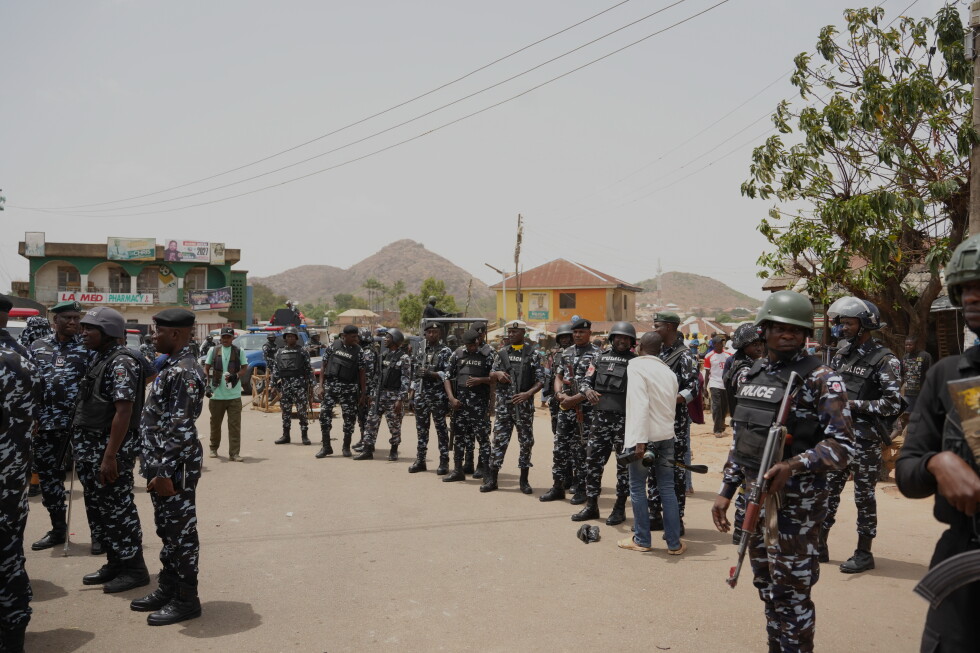
    ABUJA, Nigeria — In a high-stakes legal proceeding that underscores the stability of Nigeria’s democratic system, six individuals charged with conspiring to overthrow President Bola Tinubu appeared in federal court this Wednesday to face multiple counts of treason and terrorism. All six defendants formally entered not guilty pleas across all 13 criminal charges, which were officially made public a day earlier on Tuesday. The accused have been held in the custody of Nigeria’s secret police for several months following their arrest after the coup plot was uncovered. Among the six detainees are a retired army major general and an active-duty police inspector, revealing the alleged plot’s connections to current and former Nigerian security personnel. Authorities also named a seventh co-conspirator: Timipre Sylva, the former governor of Bayelsa State, who faces allegations of aiding the group by concealing their plans. As of Wednesday’s court session, Sylva remains at large and has not been taken into custody. Following the initial arraignment, the presiding judge adjourned proceedings until April 27, when the court is scheduled to review and hear arguments on bail applications filed by the defense teams for the six detained suspects. The official charge sheet details that the defendants “conspired with one another to levy war against the state to overawe the president of the Federal Republic of Nigeria,” laying out the core of the treason allegations against the group. Nigerian federal authorities first publicly announced they had foiled the attempted coup back in January, when officials confirmed that a number of military personnel would face trial for their alleged involvement. If the plot had succeeded, it would have brought an end to nearly 30 years of uninterrupted democratic governance in Nigeria, Africa’s most populous nation, which transitioned back to democratic rule back in 1999 after decades of military dictatorship.

  • Hubei adds international routes as foreign arrivals surge

    Hubei adds international routes as foreign arrivals surge

    Central China’s Hubei Province is experiencing a notable surge in international inbound travelers this year, driven by expanded air connectivity and streamlined cross-border entry processes that have attracted a new wave of overseas visitors, local border inspection authorities confirmed.

    According to official data released by the Hubei General Station of Exit and Entry Frontier Inspection, the province has rolled out major upgrades to its international aviation network since March 29. Airports across the province have added 13 new international and regional routes over this period, pushing the total number of active international and regional routes to 96. These routes now connect Hubei with 28 countries and regions across the globe, marking a significant expansion of the province’s global reach.

    Among the expanding regional airports, Yichang Sanxia International Airport has emerged as a key contributor to this growth, launching four new international routes since the end of March. The new connections link Yichang directly to major destinations across Asia: Hanoi (Vietnam), Vientiane (Laos), Incheon (South Korea), and Kuching (Malaysia).

    The growth in new routes comes as airports across Hubei have recorded consistent increases in international passenger volumes through the early months of 2026. Industry analysts note that the expansion of Hubei’s international air network is designed to match growing demand for cross-border travel, trade, tourism and cultural exchange, as the province continues to strengthen its ties with global markets. Streamlined border inspection processes have also cut wait times for incoming international travelers, further boosting the province’s appeal as a destination for overseas visitors.

  • Chinese PLA Navy opens barracks to public to mark 77th anniversary

    Chinese PLA Navy opens barracks to public to mark 77th anniversary

    To mark the 77th founding anniversary of the Chinese People’s Liberation Army (PLA) Navy, the service opened its military barracks and active-duty naval vessels to members of the general public in Shanghai on Tuesday, April 21, 2026. The public open day event, reported by China’s official news agency Xinhua in an update published April 22, offered ordinary citizens a rare, up-close opportunity to tour operating naval platforms, including the PLA Navy frigate Fuyang. Photographs from the event captured members of the public exploring the vessel, as the Navy sought to bridge the gap between military personnel and civilian communities and build public understanding of its mission. This anniversary event forms part of a broader regular initiative by the PLA to increase transparency around its work and foster national pride among the Chinese public by opening military facilities to civilian visitors. The 77th anniversary commemoration comes as the PLA Navy continues to evolve as a modern, blue-water naval force, and the open house event creates an accessible space for citizens to connect with the service’s 77-year history and contemporary operations.

  • US retail sales surge as higher gas prices rise amid Iran war

    US retail sales surge as higher gas prices rise amid Iran war

    A month-long ongoing conflict in Iran has sent shockwaves through global energy markets, and the ripple effects have pushed U.S. retail sales to a surprisingly sharp gain in March — a jump that economists warn hides serious pain for American consumers, according to fresh data from the U.S. Department of Commerce released Tuesday.

    The official data shows that overall national retail sales climbed 1.7% month-over-month in March, with the entire gain driven by an unprecedented surge in gas station sales. Fuel sales skyrocketed 15.5% last month, marking the steepest single-month increase since the federal government began tracking this retail category in 1992.

    While solid retail sales growth is typically interpreted as a sign of a strong, expanding economy, this particular spike is tied entirely to inflated energy costs triggered by the Iran conflict, which broke out on February 28. The fighting has severely disrupted commercial shipping through the Strait of Hormuz, the critical global chokepoint through which approximately 20% of the world’s daily oil supplies pass. The supply disruption has sent global crude prices soaring, passing through directly to pump prices for U.S. consumers.

    For most American households, which rely heavily on personal passenger vehicles for daily commuting and everyday travel, sustained high energy prices are eroding disposable incomes that would otherwise go toward non-energy spending. Economists warn that if the conflict drags on, further energy price hikes could drag overall consumer spending into contraction, a major headwind for the world’s largest economy.

    “If the situation with Iran is not resolved quickly, oil and gas prices will rise further,” Dean Baker, co-founder of the Center for Economic and Policy Research, told Xinhua News Agency. “This will seriously dampen consumer spending, if not actually push it into negative territory.”

    Top U.S. energy officials have already signaled that elevated prices could persist for months. U.S. Energy Secretary Chris Wright told CNN’s *State of the Union* on Sunday that average U.S. gasoline prices may not drop back below $3 per gallon until 2027, as the conflict continues to roil global energy markets. “I don’t know, that could happen later this year, that might not happen until next year, but prices have likely peaked,” Wright said, adding that energy prices would almost certainly decline if a diplomatic resolution to the conflict is reached.

    Parallel to the energy market volatility, diplomatic efforts to end the conflict hit a snag this week. On Tuesday, U.S. President Donald Trump announced he would extend a temporary two-week ceasefire with the Islamic Republic of Iran, claiming the Iranian government remains “seriously fractured” internally. The ceasefire was originally set to expire Wednesday, and Trump said the pause in hostilities will remain in place until Tehran presents a “unified proposal” to end full-scale fighting.

    The president’s announcement comes on the heels of multiple setbacks for peace talks. A scheduled second round of peace negotiations that was to be led by U.S. Vice President JD Vance in Pakistan has been postponed. Separately, Iran’s semi-official Tasnim News Agency reported this week that Iranian negotiators have informed the U.S. government via an intermediary that they will not participate in any further talks at this time. The United Nations has nonetheless publicly voiced hope that talks will resume in the near future.

    As of Tuesday, data from the American Automobile Association puts the national average U.S. gas price at roughly $4 per gallon — a full dollar higher than the average price recorded at the same time in 2025. Global benchmark crude prices have also surged, hovering above $90 per barrel on Tuesday, up sharply from the pre-conflict average of around $65 per barrel recorded before fighting began in late February.