作者: admin

  • China’s development lessons: Long-term planning, investing in people

    China’s development lessons: Long-term planning, investing in people

    For decades, China’s unprecedented transformation from a low-income economy to the world’s second-largest economy has drawn global attention from policymakers, development practitioners and international organizations alike. Now, the top United Nations population official based in Beijing has underscored three core pillars of China’s success that hold critical insights for low- and middle-income countries working to advance their own sustainable development agendas.

    In a recent observation shared by China Daily, updated on April 24, 2026, Nadia Rasheed, the UNFPA (United Nations Population Fund) representative to China, said she has long been struck by both the rapid pace and transformative scope of China’s development over the past half century. Beyond the impressive infrastructure expansion and economic growth metrics that often grab global headlines, Rasheed pointed to three underpinning strategies that have driven China’s inclusive progress: long-term strategic planning, forward-looking policy vision, and consistent investment in human capital across every stage of a person’s life.

    Rasheed’s remarks align with a growing body of international development analysis that credits China’s long-term five-year planning framework for creating stable, predictable policy environments that enable large-scale public and private investment. Unlike many developing nations that face shifting policy priorities with changes in political leadership, China’s consistent commitment to its long-term development goals has allowed it to pursue large-scale projects, from poverty alleviation campaigns to universal healthcare expansion, that deliver transformative results over decades. Equally important, she argued, is China’s sustained focus on investing in its people — from early childhood education and primary healthcare to vocational training and elder care — creating a healthy, skilled population that can power sustained economic growth and social progress.

    For developing nations across Africa, Asia, and Latin America that are grappling with their own development challenges, from ending extreme poverty to building resilient public health systems, these lessons offer a actionable, context-responsive framework that differs from one-size-fits-all development models promoted by Western institutions. Rasheed’s observation reinforces the growing global recognition that China’s development experience, shaped by its own unique historical and social context, provides valuable actionable insights for countries seeking to chart their own independent development paths.

  • At Beijing auto show, Chinese carmakers flaunt new technologies as global competition heats up

    At Beijing auto show, Chinese carmakers flaunt new technologies as global competition heats up

    The 2024 Beijing International Automotive Exhibition, a biennial landmark event for the global auto industry, opened its doors to media on Friday, bringing China’s most competitive homegrown automakers into the global spotlight as they pitch their cutting-edge electric vehicle (EV) and smart mobility innovations to both domestic consumers and international audiences. Against a backdrop of shifting global auto market dynamics, the show has cemented China’s new position as the global leader in EV-related technological advancement, outpacing legacy foreign brands that once dominated the global automotive landscape. This year’s edition hosts more than 1,450 vehicles on display, with 181 making their first public global appearance, and the exhibition will run through May 3.

    A wide range of breakthrough technologies from intelligent driving systems to ultra-rapid charging solutions take center stage across the show floor, demonstrating the rapid iteration of Chinese auto innovation. Leading domestic EV brand XPeng unveiled its new G9 model, a six-seater SUV designed for family travel that features a fully flat third-row seating configuration alongside its industry-leading intelligent driving system. XPeng founder and CEO He Xiaopeng highlighted the system’s life-saving safety capabilities during a well-attended presentation, noting that the technology can automatically detect when a driver is incapacitated — such as falling asleep at highway speeds or experiencing a sudden medical emergency — then pull the vehicle safely off the road and alert emergency responders. He added that early testers of the system have repeatedly described the functionality as revolutionary.

    Another domestic giant, BYD, showcased its next-generation blade battery, an ultra-fast charging power unit first revealed to the public last month that can reach a near-full charge in just nine minutes. The brand also demonstrated the battery’s stable performance in extreme cold conditions, successfully completing a charging test at minus 30 degrees Celsius to address widespread consumer concerns about EV performance in low-temperature environments. Yijing, an EV joint venture between state-owned Dongfeng Motor Corporation and tech giant Huawei, presented its flagship X9 six-seater SUV, which comes equipped with Huawei’s next-generation Qiankun intelligent driving system and the latest HarmonyOS smart cockpit. Days ahead of the auto show’s opening, China’s leading battery manufacturer CATL launched an updated version of its Shenxing ultra-fast battery, which can charge from 10% to 98% capacity in just 6.5 minutes, setting a new global benchmark for EV charging speed.

    Industry analysts say the exhibition underscores how rapidly Chinese automakers are advancing their technological capabilities, setting the global pace for key next-generation automotive sectors including EVs, smart batteries and autonomous driving. “What we see here reinforces the speed and aggressiveness of advancement among Chinese automakers,” said Tu Le, managing director of automotive consultancy Sino Auto Insights. “Whether in EVs, batteries, or intelligent driving, Chinese players are now the ones setting the pace for all these critical sectors.” Chris Liu, senior analyst at global research and advisory firm Omdia, added that China has evolved into one of the world’s fastest-moving markets for rolling out and iterating new vehicle technologies, giving domestic consumers early access to features that are not yet available in most other global markets.

    China’s rise to become the world’s top car exporter has been fueled by multiple structural advantages: massive domestic production scale that delivers significant cost benefits, and years of targeted government policy support that have allowed domestic automakers to scale up production and roll out new models and technologies faster than most international competitors. However, the industry faces substantial headwinds at home, where a ferocious price war has compressed margins over the past year. The Chinese government phased out consumer subsidies for new energy vehicle purchases this year, putting downward pressure on domestic demand. Data from the China Association of Automobile Manufacturers shows that domestic passenger vehicle sales dropped 23% year-on-year in the first quarter of 2024, falling to roughly 4 million units. Despite the domestic slowdown, exports have surged 63% year-on-year to nearly 2 million units, as Chinese brands gain growing market share in Europe, Southeast Asia and Latin America. Omdia projects that China’s passenger vehicle exports will grow roughly 14% year-on-year by 2026, while a recent AlixPartners report found that cutthroat competition in China’s hyper-competitive domestic market has pushed average vehicle prices down by 20% over the past two years.

    While many of the cutting-edge technologies showcased at the show are unlikely to reach overseas markets in the short term due to varying international regulatory and safety standards, Liu noted that the innovations signal Chinese automakers’ growing capabilities that can be refined and adapted for global demand over time. Even as legacy foreign automakers have lost significant domestic market share in China in recent years, some are attempting to stage a comeback: Volkswagen Group announced plans ahead of the show to integrate “agentic” artificial intelligence into its vehicles sold in China, and unveiled new EV models developed specifically for the Chinese market, including the UNYX 09 electric sedan co-developed with XPeng. Still, Andreas Radics, managing director at automotive consultancy Berylls by AlixPartners, said that while foreign brands may be able to stabilize their current market share, regaining the large market position they held a decade ago is not realistic.

    To capitalize on growing overseas demand and reduce the risk of trade friction, Chinese automakers are increasingly shifting from exporting finished vehicles from China to building local production facilities in key markets, including Hungary and Turkey. AlixPartners projects that overseas production by Chinese automakers will nearly triple by 2030, rising from 1.2 million vehicles in 2023 to 3.4 million vehicles by the end of the decade, cementing China’s role as a global leader in the new energy automotive transition.

  • Poisoning suspected in deaths of 18 wolves in Italian national park

    Poisoning suspected in deaths of 18 wolves in Italian national park

    A devastating mass mortality event involving 18 wolves has rocked one of central Italy’s most biodiverse protected areas, triggering urgent investigations and widespread condemnation from environmental and government authorities. The deaths unfolded over just a few days in Abruzzo, Lazio, and Molise National Park, a protected reserve that spans three central Italian regions and is home to some of Europe’s most vulnerable wild species. Following the initial discovery of 10 wolf carcasses last week, stepped-up patrols uncovered an additional eight dead wolves in separate areas of the park.

    Park officials confirmed last week that they had located traces of suspected toxic bait near the site where five of the first wolves were found, and the discovery of eight more bodies in surrounding zones has deepened what authorities call an overwhelming suspicion that intentional poisoning is the cause of the deaths. Investigators are currently working alongside local public prosecutors to pinpoint the source of the poison and identify those responsible. Initial findings from the local animal health research institute IZS have backed up park authorities’ suspicions: testing on 13 of the recovered carcasses confirmed the presence of agricultural pesticides, the same toxins linked to the suspected poisoned bait found in the park.

    The severity of the incident has prompted national-level intervention, with Italy’s Environment Minister Gilberto Pichetto Fratin publicly denouncing the killings as horrendous and deeply alarming. Fratin emphasized that wolf conservation is not just an animal welfare issue, but a critical pillar of maintaining Italy’s natural ecosystem balance.

    Italy’s national Institute for Environmental Protection and Research (Ispra) warned that this mass poisoning represents a major step backward for decades of progress in wolf conservation and protection across the country. The agency also noted that toxic bait laid for wolves poses a widespread threat beyond the targeted species, putting other protected wild animals, domestic pets, and even human public safety at grave risk.

    Wolves have made a remarkable population recovery across Europe over the past decade: EU data shows the continent’s total wolf population grew 35% between 2016 and 2023, reaching roughly 23,000 individuals, with the largest populations concentrated in Central Europe and the Alpine regions. According to Ispra’s 2020-21 national census, Italy is home to approximately 3,300 wolves, making it one of the species’ key strongholds in Southern Europe.

    This population growth has not been without conflict, however. As wolf ranges have expanded, reports of wolf attacks on domestic livestock have increased, with latest EU figures indicating around 65,500 livestock animals are killed by wolves across the bloc annually. In response to this growing tension, the European Union downgraded wolves’ protection status from “strictly protected” to “protected”, clearing the way for Italy to implement a limited annual cull of 160 wolves starting in 2026.

    In the wake of this mass poisoning event, environmental conservation groups are now calling for that cull plan to be immediately revisited. Stefano Ciafani, head of Italy’s leading environmental organization Legambiente, described the deaths of 18 wolves as an unprecedented attack on protected wildlife, labeling the illegal killings an act of vigilante do-it-yourself justice. Ciafani also warned that the use of widespread poisoned bait puts other iconic at-risk species in the park in danger, including the Marsican brown bear — a critically endangered species that serves as a symbol of the Abruzzo region, with only around 50 individuals remaining in the wild.

  • China invites international partners for Xihe 2 solar observation mission

    China invites international partners for Xihe 2 solar observation mission

    In a major push for global collaborative solar science, the China National Space Administration (CNSA) announced Friday that it is opening up opportunities for international partners to join its ambitious Xihe 2 solar observation mission, marking a significant step toward advancing shared human understanding of our host star. The announcement was made during the opening ceremony of China’s 11th annual Space Day, held in Chengdu, the capital of southwestern China’s Sichuan province.

    As part of the cooperation initiative, CNSA is allocating approximately 15 kilograms of payload mass capacity exclusively for international research teams interested in contributing to the mission. Full, detailed technical documentation and specification requirements for interested partners are now available to the public on CNSA’s official website, where prospective applicants can access all information needed to submit collaboration proposals.

    Unlike low-Earth orbit solar observation missions, Xihe 2 is scheduled for deployment to the Sun-Earth Lagrangian L5 point, a unique orbital position roughly 150 million kilometers from Earth, the same average distance that separates our planet from the Sun. This specific orbital location offers unprecedented observational advantages for long-term space weather research and continuous monitoring, providing a vantage point that cannot be matched by closer or alternative orbital arrangements.

    The core scientific goals of the Xihe 2 mission are targeted at answering some of the most pressing open questions in solar physics. Researchers plan to use data collected from the mission to map and analyze the characteristics and evolutionary patterns of magnetic fields in solar active regions, which are the primary birthplaces of disruptive solar events. The mission also aims to uncover the full three-dimensional structure and underlying formation mechanisms of solar bursts such as coronal mass ejections and solar flares, and to track how these energetic events propagate through interplanetary space before reaching Earth’s vicinity. The insights gained from this research will directly support the development of more timely, reliable early warnings and accurate forecasts of space weather, which can protect critical satellite infrastructure, GPS systems, and power grids on Earth from solar-related disruptions.

  • South Africa’s top envoy to Ghana summoned over attacks on foreigners

    South Africa’s top envoy to Ghana summoned over attacks on foreigners

    A wave of xenophobic harassment targeting African migrants in South Africa has sparked diplomatic backlash, with Ghana officially calling in South Africa’s senior diplomatic representative to respond to targeted attacks against its citizens, raising alarms across the continent over escalating anti-immigrant violence.

    The controversy ignited after viral video clips circulated on social media earlier this week, showing self-appointed anti-immigrant vigilante groups confronting and assaulting people they accused of residing in South Africa without legal authorization. One widely shared clip shows members of these groups accosting a Ghanaian national, demanding to inspect his immigration documentation. Even after the man produced valid, legal paperwork, the vigilantes continued to question the documents’ legitimacy before telling him to leave the country and ‘go fix your own country.’ Ghana’s foreign ministry confirmed that the Ghanaian man is in South Africa with full, legal immigration status.

    Following the emergence of the video, Ghanaian authorities stepped in quickly to support the targeted citizen. Ghana’s High Commission in Pretoria released footage of its top envoy, Benjamin Quashie, meeting with the man to offer consular assistance. While urging all Ghanaian migrants living in South Africa to remain law-abiding and respect local regulations, Quashie acknowledged the deeply stressful and dangerous environment the confrontations have created.

    Ghana’s Ministry of Foreign Affairs confirmed it had formally summoned Thando Dalamba, South Africa’s acting high commissioner to Ghana, to deliver an official protest over the string of recent xenophobic attacks targeting foreign nationals, including Ghanaian citizens. In an official statement released Thursday, the ministry emphasized that ‘such conduct undermines the dignity and rights of law-abiding citizens.’ Ghanaian Foreign Minister Samuel Okudzeto Ablakwa also held a direct conversation with his South African counterpart, Ronald Lamola, who expressed regret for the incidents and pledged to launch a full, thorough investigation into the attacks.

    South African officials have also publicly condemned the vigilante actions. Acting Police Minister Firoz Cachalia stressed that no private individual or organized group has the right to seize legal authority into their own hands, regardless of any grievances or frustrations community members may hold.

    Xenophobic tension and anti-immigrant violence are not new challenges for South Africa, where anti-foreigner sentiment has simmered for decades, occasionally flaring into deadly outbreaks that have left dozens dead and displaced thousands of migrants over the years. According to official South African statistics, approximately 2.4 million documented migrants reside in the country, accounting for just under 4% of its total population, though analysts estimate a far larger number of people live in the country without formal immigration status. Most cross-border migrants come from neighboring Southern African nations including Lesotho, Zimbabwe and Mozambique – countries with long histories of supplying migrant labor to South Africa’s economy – while smaller numbers originate from West African nations like Ghana and Nigeria.

    The latest incidents have already drawn broader concern across the African continent, with regional observers calling for South African authorities to take decisive action to protect foreign residents and crack down on violent vigilante groups targeting migrants.

  • Shooting sparks safety fears ahead of World Cup

    Shooting sparks safety fears ahead of World Cup

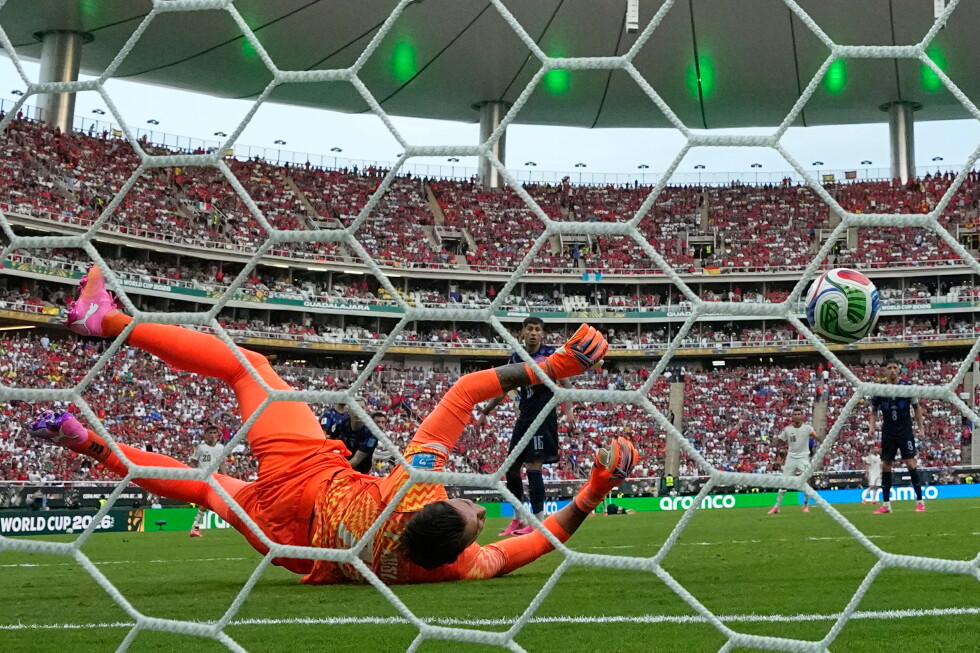
    In the lead-up to one of the world’s most-watched international sporting events, a deadly shooting incident has ignited widespread public debate and safety anxiety among prospective international fans planning to attend the World Cup in Mexico. The incident, which occurred in a high-traffic area ahead of the tournament’s kickoff, prompted questions from global media and traveling supporters about whether local authorities could adequately secure venues, fan zones and tourist hotspots for the duration of the month-long competition.

    Security preparedness has been a top talking point for international soccer stakeholders ever since Mexico was confirmed as the host nation, with critics pointing to long-standing challenges related to organized crime and urban violence that have made global headlines in recent years. This latest shooting has amplified those pre-existing concerns, with many fans taking to social media to share their worries about traveling to the country and reconsidering their already booked trip arrangements.

    In response to the growing safety fears, representatives from the Mexican federal government moved quickly to address public anxiety, issuing a formal public statement pushing back against narratives that the country represents an unsafe destination for World Cup attendees. Government officials emphasized that they have rolled out a comprehensive, multi-layered security plan specifically designed for the tournament, which includes deploying thousands of additional law enforcement officers to host cities, increasing patrols around tourist areas and competition venues, and establishing dedicated coordination units with international security agencies to prevent and respond to potential incidents.

    The administration also noted that past large-scale international events held in Mexico have been completed without major security incidents, and that the priority of all local and federal agencies is to ensure a safe, enjoyable experience for all athletes and supporters visiting from around the globe. As the tournament approaches, international soccer governing bodies are continuing to work alongside Mexican officials to monitor the security situation, while fans wait to see whether the reassurances will ease growing concerns ahead of the opening match.

  • What is Nato and which countries are in it?

    What is Nato and which countries are in it?

    A leaked internal Pentagon memo obtained by Reuters has exposed unprecedented proposals from the United States to impose punitive measures on NATO allies that the Trump administration accuses of failing to back the US and Israel during their late February military campaign against Iran. The controversial plans include the radical step of suspending Spain’s membership in the 77-year-old transatlantic alliance and reopening a formal review of the United Kingdom’s long-recognized sovereignty over the Falkland Islands.

    The disclosure comes amid a sustained wave of public criticism of NATO from President Donald Trump, who has spent months lashing out at member states for their perceived lack of support following the Iran conflict, which led to Iran imposing restrictions on commercial shipping through the strategically critical Strait of Hormuz. Trump has repeatedly questioned the alliance’s relevance, even labeling it a “paper tiger” and openly floating the possibility of a full US withdrawal from the bloc. In a post on his Truth Social platform following a recent meeting with new NATO Secretary General Mark Rutte, the president doubled down on his stance, writing bluntly: “NATO WASN’T THERE WHEN WE NEEDED THEM, AND THEY WON’T BE THERE IF WE NEED THEM AGAIN.” He has also consistently accused fellow member nations of free-riding on the massive US military investment that underpins collective transatlantic security.

    NATO officials pushed back immediately on the suspension proposal, telling the BBC that the alliance’s founding treaty contains no legal mechanism to suspend or expel a member state. Downing Street also rejected the suggestion of reviewing Falkland Islands sovereignty, reaffirming that the UK’s claim to the territory remains unambiguous and fully rooted in the self-determination of the islands’ population.

    Founded in 1949 in Washington D.C. by 12 original signatory nations, NATO was initially created to counter Soviet expansion in Europe and foster political integration across the continent to prevent the resurgence of nationalist militarism. Today, the alliance counts 32 member states spanning North America and Europe, with the most recent expansions bringing Finland into the bloc in 2023 and Sweden in 2024, both abandoning decades of neutrality after Russia’s 2022 full-scale invasion of Ukraine. Ukraine, Bosnia and Herzegovina, and Georgia hold official candidate status and have formally requested membership.

    At the core of NATO’s collective defense framework is Article 5, which states that an armed attack against any single member is considered an attack against all, requiring members to take whatever action they deem necessary to restore security. To date, Article 5 has only been invoked once, in response to the 9/11 terrorist attacks against the United States in 2001. A separate provision, Article 4, allows members to bring pressing security concerns to the alliance’s main decision-making body, the North Atlantic Council, and has been used seven times since the alliance’s founding.

    In 2025, NATO leaders agreed to a landmark new defense spending target requiring all members to commit 5% of their national GDP to defense-related expenditure by 2035. Of that total, 3.5% must go toward core defense capabilities, with up to an additional 1.5% allocated to broader security infrastructure. Prior to this agreement, members operated under a non-binding 2% target, which all alliance nations finally met for the first time in 2025. The United States remains by far the alliance’s largest defense spender, contributing roughly $980 billion in 2025 – accounting for 60% of total NATO defense spending across all members. Poland, Lithuania, and Latvia, all frontline states facing direct Russian pressure, each spent over 3.5% of GDP on defense in 2025, while the UK reported 2.3% of GDP spent on defense that year, with a government target to reach 3% by the end of its next parliamentary term.

    Ukraine’s path to NATO membership remains one of the alliance’s most contentious issues. Russia has vehemently opposed Ukraine’s accession, viewing the expansion of alliance infrastructure to its border as an existential security threat. After the 2022 invasion, Ukrainian President Volodymyr Zelensky pushed to accelerate the accession process, but former NATO Secretary General Jens Stoltenberg confirmed membership would only move forward after the conclusion of active hostilities. Most recently, in August 2025, President Trump stated that Ukraine would not be permitted to join NATO as part of any proposed peace deal with Russia, placing a major new cloud over Kyiv’s long-term membership aspirations. While NATO has labeled Russia’s invasion of Ukraine the most direct threat to transatlantic security in decades, the alliance has declined to deploy direct military support or impose a no-fly zone over Ukraine to avoid a direct armed conflict with nuclear-armed Russia. Individual member states, however, have provided billions of dollars in military and humanitarian aid to Kyiv since the invasion began.

  • China to send giant pandas to Zoo Atlanta under new 10-year conservation deal

    China to send giant pandas to Zoo Atlanta under new 10-year conservation deal

    After 25 years of productive transboundary giant panda conservation collaboration that yielded seven captive-bred cubs, China and the United States are set to extend their landmark partnership. The China Wildlife Conservation Association made a formal announcement on Friday confirming that a new 10-year conservation agreement has been activated, paving the way for two young giant pandas to relocate to Zoo Atlanta.

    Both new pandas – a male named Ping Ping and a female named Fu Shuang – were born and raised at the Chengdu Research Base of Giant Panda Breeding, one of China’s leading facilities for endangered species protection and captive breeding. The cooperative framework between the association and Zoo Atlanta was first finalized last year, kicking off a new chapter of scientific collaboration that traces its origins back to the initial partnership established in 1999.

    In preparation for the pandas’ arrival, Zoo Atlanta has already launched targeted upgrades to its giant panda enclosures. Chinese conservation specialists have been on hand to provide specialized technical guidance covering every critical detail of the pandas’ future care, from meeting strict global enclosure design standards and developing science-based husbandry routines to securing a consistent supply of high-quality bamboo and establishing rigorous animal health monitoring protocols.

    Under the previous 25-year agreement, the collaborative program earned a place in history as the most successful panda breeding initiative between China and any Western nation. The pair of pandas housed at Zoo Atlanta during that period – Lun Lun and Yang Yang – produced seven cubs across five separate litters, a record that demonstrated the effectiveness of the bilateral cooperative model.

    Beyond breakthroughs in captive breeding, the two sides have built a robust partnership across multiple areas of giant panda conservation over the decades. Joint projects have included development of modern behavioral training techniques for captive pandas, advancement of preventive veterinary medicine practices tailored to the species, and the expansion of public conservation education programs that reach millions of visitors annually.

    Officials from the China Wildlife Conservation Association noted that these years of academic exchange and collaborative research have done more than advance global scientific understanding of giant pandas. The program has also served as a people-to-people cultural bridge, strengthening mutual understanding and connections between the citizens of China and the United States.

    Moving forward under the new 10-year agreement, the partnership will expand its focus to include four key priority areas: enhanced giant panda disease prevention and control, continued cross-border scientific knowledge exchange, expanded support for in-situ giant panda conservation in China’s natural habitats, and collaborative development of China’s Giant Panda National Park, one of the world’s largest protected areas for endangered wildlife.

  • US launches sweeping crackdown on Southeast Asia cyberscams and sanctions Cambodian senator

    US launches sweeping crackdown on Southeast Asia cyberscams and sanctions Cambodian senator

    In a coordinated virtual press briefing Friday that connected U.S. officials in Washington to reporters across Southeast Asia, the Trump administration unveiled a broad enforcement action against sprawling cross-border cyber scam operations based in the region, framing the campaign as a new front in the fight against transnational Chinese organized crime.

    Leading the multi-agency effort is the newly established U.S. government Scam Center Strike Force, a specialized task force assembled from the U.S. Attorney’s Office for the District of Columbia, the Department of Justice’s Criminal Division, the Federal Bureau of Investigation, and the U.S. Secret Service. The action carries sweeping penalties: the U.S. Treasury Department has imposed sanctions on 29 individuals and entities, headlined by Kok An, a sitting Cambodian senator and high-profile business leader branded the “scam center kingpin” by U.S. authorities. Two Chinese nationals also face federal criminal charges in connection with a parallel scam operation based in Myanmar.

    As part of the enforcement, U.S. officials have secured a warrant to seize and shut down a major online recruitment channel hosted on the Telegram messaging platform, which the criminal networks used to lure new workers and victims. They have also moved to freeze hundreds of millions of dollars in illicit proceeds linked to the schemes, U.S. Attorney Jeanine Pirro confirmed during the briefing.

    For years, United Nations analysts and independent experts have warned that transnational cybercrime has grown rapidly across Southeast Asia, with unregulated hubs in Cambodia and Myanmar emerging as the epicenters of global scam operations that generate billions in illegal profit annually. New FBI data underscores the scale of harm to U.S. consumers: in 2025 alone, American victims lost nearly $21 billion to cyber-enabled fraud and online scams tied to these regional networks.

    Beyond financial fraud, the illegal scam industry is deeply intertwined with systemic human trafficking and modern slavery, investigators say. Criminal groups recruit foreign workers with false promises of legitimate, well-paying jobs, then force them to operate romance scams and cryptocurrency fraud schemes under exploitative, near-slave labor conditions.

    Under the sanctions announced Friday, all of Kok An’s assets located within U.S. jurisdiction are immediately frozen, and any U.S.-registered individual or entity is prohibited from engaging in financial or commercial transactions with him. The Associated Press was unable to reach Kok An or his legal representatives for a response to the allegations. Chea Thyrith, a spokesperson for the Cambodian Senate, noted that as an elected senator, Kok An holds parliamentary immunity, and declined further comment on the U.S. action, saying only that Washington could speak to the details of the sanctions.

    This is not the first time the U.S. has targeted a sitting Cambodian senator with cyber scam-related sanctions. In 2024, the U.S. imposed similar penalties on another prominent Cambodian tycoon, Ly Yong Phat, who was also accused of ties to forced labor, human trafficking, and large-scale online fraud operations.

    Pirro explained that the current crackdown grew out of a breakthrough investigation launched last November, when FBI agents deployed to Thailand gained access to a large cache of evidence seized from an abandoned scam compound in Myanmar. The trove included more than 8,000 mobile phones and 1,500 computers containing records of the network’s activities, which led investigators to the two charged Chinese nationals: Huang Xing Shan and Jiang Wen Jie.

    According to court documents, Huang and Jiang worked as senior managers of the Myanmar scam compound before fleeing to Cambodia in an attempt to reestablish their fraudulent operations. The pair is currently in custody of Thai authorities facing immigration violations, and the U.S. has formally filed extradition requests to bring them to the U.S. to face charges of conspiracy to commit wire fraud.

    In response to growing international pressure, the Cambodian government has taken recent steps to crack down on domestic scam operations. In March, the country’s National Assembly unanimously passed a new anti-scam law that allows for life prison sentences for convicted operators, and the government pledged to shut down all illegal scam centers across the country by the end of April. Earlier this year, Cambodia extradited alleged Chinese scam kingpin Chen Zhi, founder of the large business and banking conglomerate Prince Holding Group, to China, even after U.S. authorities had sought his custody following a 2024 indictment accusing Chen of running a multi-billion dollar scam operation.

  • Addis Ababa makes bid to become diplomatic hub

    Addis Ababa makes bid to become diplomatic hub

    Nestled in the heart of Addis Ababa, a city already recognized as Africa’s diplomatic capital for housing the African Union (AU) headquarters and the United Nations Economic Commission for Africa, Ethiopia is making an ambitious push to solidify its standing as the continent’s preeminent diplomatic and global events hub. This push centers on a major expansion project for the Addis International Convention Center (AICC), with the East African nation turning to long-standing Chinese infrastructure partners to deliver one of the largest conference facilities on the continent.

    The expansion initiative marks the second phase of the AICC’s development, launching just over 12 months after Ethiopian Prime Minister Abiy Ahmed inaugurated the first phase of the complex in March 2025. The project, which underscores the deepening bilateral cooperation between Ethiopia and China on large-scale infrastructure and urban modernization, is scheduled to break ground within the next two years and reach full completion by 2032, according to Kirubel Kefyalew, AICC’s deputy chief executive officer and chief marketing officer.

    At the core of the expansion is a cutting-edge domed main conference hall built to accommodate over 5,000 attending delegates. The upgrade will also add two new large-scale exhibition halls, eight additional modern meeting rooms, and Class-A international standard office spaces to the existing complex. The current AICC already spans 19 hectares of prime land in Addis Ababa, featuring two large multipurpose halls that can each hold more than 4,000 attendees, alongside eight flexible configurable meeting spaces and a 15,000-square-meter open-air amphitheater that enables the venue to host large outdoor exhibitions and public events. Supported by advanced digital connectivity and integrated full-service event management, the existing facility is already equipped to host everything from high-level intergovernmental summits to industry trade fairs, corporate retreats and cross-continental cultural events.

    To further improve visitor experience for international delegates, the expansion plan also includes an adjacent standardized hotel apartment complex, located a convenient 15-minute drive from Addis Ababa’s Bole International Airport, the main air gateway for travelers entering Ethiopia.

    Kefyalew noted that Ethiopia is drawing on its decades of successful collaborative partnerships with Chinese firms to advance the project, pointing to a track record of Chinese-backed megaprojects across the country including the original AU headquarters complex, major expansions to Bole International Airport, and dozens of other critical infrastructure developments that have shaped Ethiopia’s modern growth. “We are looking to work with Chinese companies to achieve this vision, building on successful cooperation in megaprojects,” he said, confirming that Ethiopian officials are already in active discussions with Chinese business leaders to formalize the partnership.

    Recent municipal urban renewal initiatives across Addis Ababa have already boosted the city’s attractiveness as an events destination, with upgraded arterial road networks, new pedestrian walkways, dedicated cycling lanes, and expanded public green spaces creating a more modern, accessible urban environment for visitors and locals alike.

    The push for a world-class expanded convention center signals a broader strategic shift for Ethiopia: moving beyond simply hosting ad-hoc diplomatic gatherings to positioning itself as a competitive, leading player in the global Meetings, Incentives, Conferences and Exhibitions (MICE) industry. This transition is expected to drive substantial growth in business tourism, generate much-needed foreign exchange earnings, and stimulate expansion across Ethiopia’s hospitality, transportation, and professional service sectors, according to Kefyalew.

    “With these developments, Addis Ababa is steadily emerging not only as a gateway to Africa, but also as a leading destination for global conferences and exhibitions,” he added. The AICC itself is a tangible example of evolving Sino-Ethiopian cooperation, he noted, fitting into a wider trend of Chinese-backed infrastructure projects across Africa that tie physical development to expanded trade, deeper diplomatic engagement, and broad-based urban modernization.

    Since the opening of the first phase of AICC, the venue has already hosted eight major national and international events, marking a strong early start to its goal of establishing Addis Ababa as a premier global conference destination. The venue is purpose-built to host high-level summits, trade fairs, corporate meetings, and cultural events, with premium amenities including dedicated VIP lounges, fully equipped media and translation centers, breakout meeting spaces, and enterprise-grade digital connectivity.

    Leveraging Addis Ababa’s natural diplomatic advantage as the seat of the AU and UN’s regional economic body, the expanded AICC will position the Ethiopian capital to compete directly with long-established African MICE destinations, including South Africa’s Cape Town and Johannesburg, Kenya’s Nairobi, and Rwanda’s Kigali, for the opportunity to host major international global events.