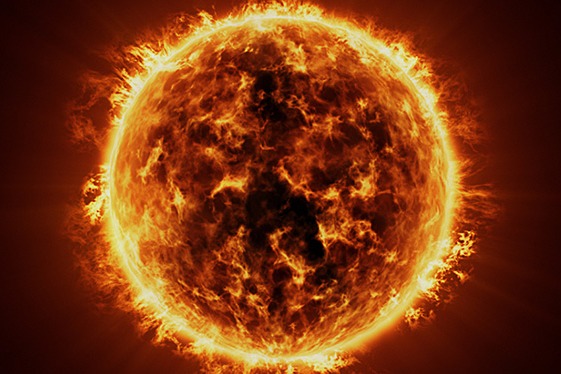
In a major push for global collaborative solar science, the China National Space Administration (CNSA) announced Friday that it is opening up opportunities for international partners to join its ambitious Xihe 2 solar observation mission, marking a significant step toward advancing shared human understanding of our host star. The announcement was made during the opening ceremony of China’s 11th annual Space Day, held in Chengdu, the capital of southwestern China’s Sichuan province.
As part of the cooperation initiative, CNSA is allocating approximately 15 kilograms of payload mass capacity exclusively for international research teams interested in contributing to the mission. Full, detailed technical documentation and specification requirements for interested partners are now available to the public on CNSA’s official website, where prospective applicants can access all information needed to submit collaboration proposals.
Unlike low-Earth orbit solar observation missions, Xihe 2 is scheduled for deployment to the Sun-Earth Lagrangian L5 point, a unique orbital position roughly 150 million kilometers from Earth, the same average distance that separates our planet from the Sun. This specific orbital location offers unprecedented observational advantages for long-term space weather research and continuous monitoring, providing a vantage point that cannot be matched by closer or alternative orbital arrangements.
The core scientific goals of the Xihe 2 mission are targeted at answering some of the most pressing open questions in solar physics. Researchers plan to use data collected from the mission to map and analyze the characteristics and evolutionary patterns of magnetic fields in solar active regions, which are the primary birthplaces of disruptive solar events. The mission also aims to uncover the full three-dimensional structure and underlying formation mechanisms of solar bursts such as coronal mass ejections and solar flares, and to track how these energetic events propagate through interplanetary space before reaching Earth’s vicinity. The insights gained from this research will directly support the development of more timely, reliable early warnings and accurate forecasts of space weather, which can protect critical satellite infrastructure, GPS systems, and power grids on Earth from solar-related disruptions.