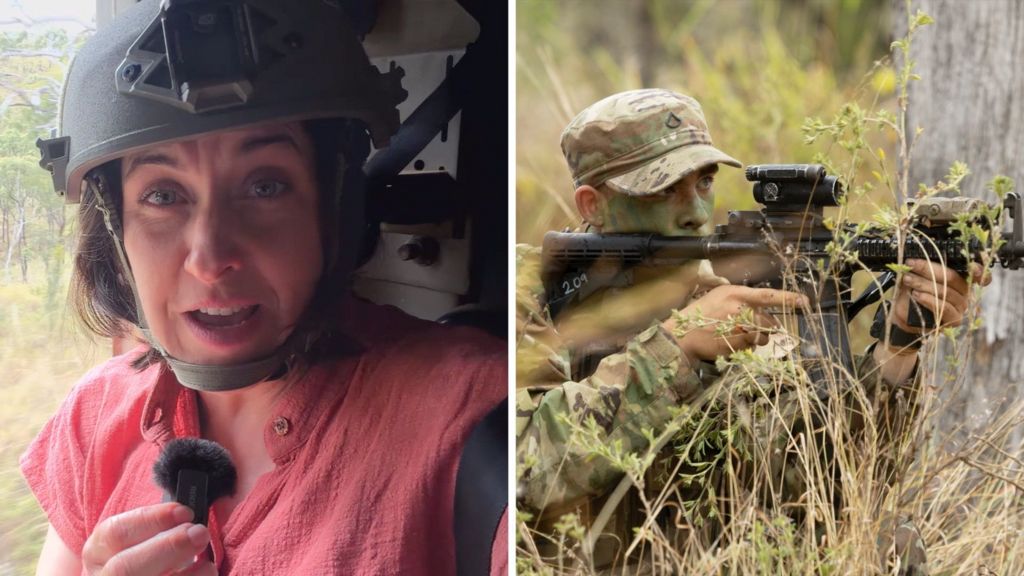
Deep within the rugged, sparsely populated heart of Australia’s inland bushland, an unusual military presence has drawn global attention: soldiers from the United States and Japan are conducting large-scale training exercises thousands of kilometers away from the world’s active conflict zones, on the territory of a nation that is not currently engaged in any open war. This exercise raises pressing questions for international observers about the strategic purpose behind the deployment, and what it signals about shifting security dynamics across the Indo-Pacific region. As the BBC’s Katy Watson reports, the choice of remote Australia as a training ground is no random decision. The vast, unpopulated expanses of the Australian outback offer unique logistical advantages that are hard to replicate in more crowded regions of the Asia-Pacific. Unlike the densely populated coastal areas where most military activity in the region is concentrated, the remote bush provides ample space to test large-scale maneuvers, live-fire exercises, and combined arms operations without disrupting civilian communities. Beyond geographic convenience, the location also carries significant strategic weight. Australia has deepened its security cooperation with both the United States and Japan in recent years, as part of a broader push to reinforce deterrence and interoperability across allied nations in the Indo-Pacific. The joint training effort serves multiple goals: it allows troops from three different nations to practice coordinating operations in unfamiliar terrain, strengthens personal and professional bonds between military command structures, and sends a clear signal of unified commitment to maintaining a free and open regional order. For Australia, hosting the drills also underscores its role as a key hub for allied military activity in the southern Indo-Pacific, even as the country avoids direct participation in ongoing conflicts thousands of kilometers to its north. Military analysts note that exercises like this have grown in frequency and scope in recent years, reflecting rising concerns among allied nations over shifting regional security challenges. While the training is billed as a routine defensive exercise, it comes at a moment of heightened geopolitical tension across the Indo-Pacific, making the deployment notable for both its timing and its composition of troops from three major regional powers.
作者: admin
-
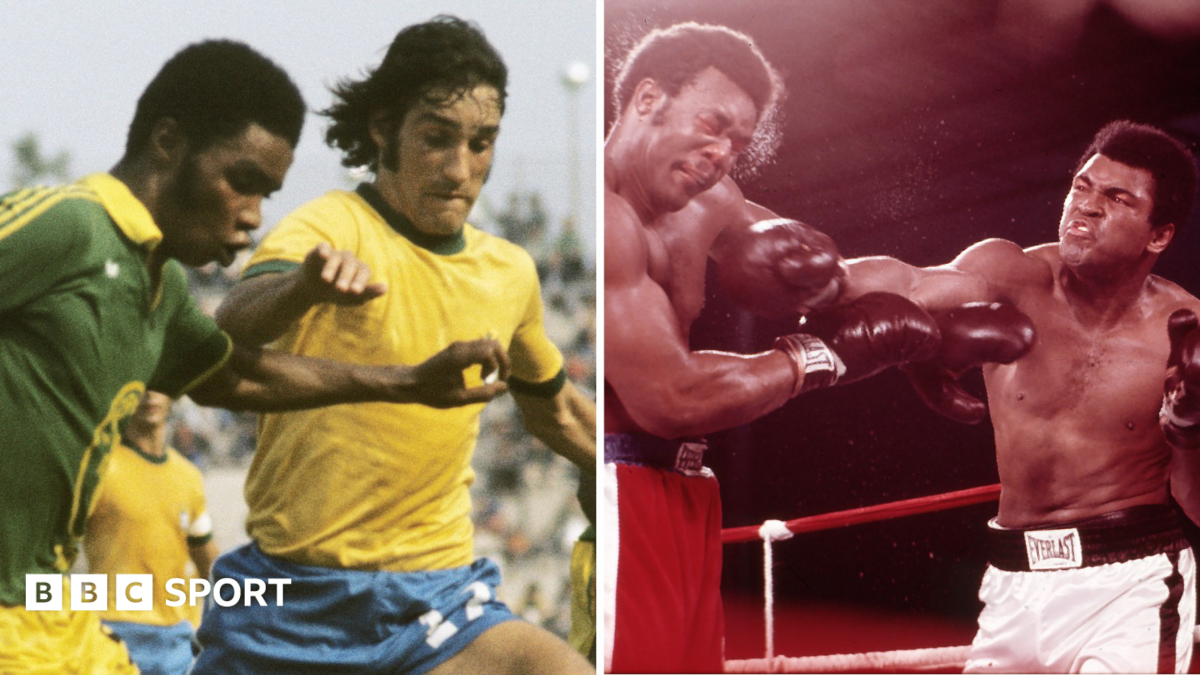
Bigger than Rumble in the Jungle? DR Congo bid for World Cup history
Half a century after two contrasting global sporting moments put the central African nation then known as Zaire in the world spotlight, DR Congo is preparing to write an unprecedented new chapter of its own at the 2026 FIFA World Cup, facing England in the Round of 32 this Wednesday.
The 1974 journey began with historic achievement: as the first sub-Saharan African men’s national team to qualify for a World Cup finals, Zaire entered the tournament riding high. Just three months prior, the squad – nicknamed the Leopards – had claimed their second consecutive Africa Cup of Nations title, building on a run of regional dominance that included three continental club titles between 1967 and 1973. Then-president Mobutu Sese Seko, who had seized power in a 1965 military coup and renamed the country Zaire in 1971 after independence from Belgium, lavished the squad with rewards: every player received a new house and car, and was pulled from their club duties to focus entirely on World Cup preparations.
But behind the optimistic buildup lurked unresolved tensions that would unravel the team’s World Cup dream. By 1974, Zaire was already grappling with a severe economic crisis: global copper prices had plummeted, fuel shortages paralyzed daily life, and the World Bank had stepped in to stabilize the crumbling economy. Off the pitch, players grew furious when promised FIFA performance allowances never arrived, with many alleging that national football federation officials had embezzled the funds. The squad initially refused to take the field against Yugoslavia in their second group match, and while they eventually relented, the lack of morale and preparation led to a devastating 9-0 defeat – one of the worst lopsided losses in World Cup history.
The final group game against defending champion Brazil produced one of the most infamous moments in World Cup folklore. Trailing 2-0 late in the second half, defender Mwepu Ilunga broke from the defensive wall during a Brazilian free kick, and launched the ball far downfield. For decades, the incident was dismissed as proof that Zaire’s players did not understand the laws of the game. But nearly 40 years later, in a 2010 interview with the BBC five years before his death, Ilunga revealed the act was deliberate: he had hoped to receive a red card and walk off the pitch in protest of the stolen bonuses. “I was aware of football regulations. I did it on purpose,” he said. “Why should I play for the benefit of officials who took the players’ money? But I didn’t succeed, the referee didn’t give me a red card.” The protest ultimately changed nothing: Zaire exited the tournament winless, with three losses, 14 goals conceded, and zero goals scored.
Just a few months later, the world’s attention returned to Zaire’s capital Kinshasa, this time for what is still widely considered the greatest boxing match in history: the Rumble in the Jungle, a heavyweight world title showdown between Muhammad Ali and George Foreman. Ali had been stripped of his heavyweight crown in 1967 and banned from boxing for three and a half years for refusing induction into the U.S. military to protest the Vietnam War, and by 1974 he was still chasing a chance to reclaim his undisputed title. Promoter Don King brokered a landmark deal: Mobutu agreed to pay $5 million to both Ali and Foreman to host the fight in Kinshasa, a staggering sum for the era. Journalist Justin Kabala Mwana, who covered the event for local media, recalled that Mobutu viewed the bout as a chance to put Zaire on the global map. “Mobutu said that the dignity of his country was beyond price, and that he was prepared to pay whatever it took,” Kabala told BBC Sport Africa. “The whole country was mobilised to welcome this super fight of the century, as if to rise to the challenge.”
On October 30, 1974, a capacity crowd packed Kinshasa’s Stade du 20 Mai, most cheering for Ali as the underdog. The fight went down in history for Ali’s iconic rope-a-dope tactic: he leaned against the ring ropes for rounds, absorbing Foreman’s heavy blows to tire out the younger, stronger champion. By the end of the eighth round, Ali landed a blistering combination that knocked Foreman out, reclaiming the heavyweight title. “That day it was a celebration all over the country,” Kabala recalled. “People partied right through the night. Beer was flowing freely for up to 48 hours after the fight. Zaire caught its breath a little. Except economically, that wasn’t really the case. You could feel that once the party was over, it was goodbye to the good times.”
For the 1974 Leopards, the hard times lingered for decades. Ilunga reported that the squad returned home “without a penny,” and admitted in 2002 that he was “living like a tramp.” Star striker Pierre Ndaye Mulamba was shot in the leg during a 1996 home invasion and later fled to South Africa. In 1997, Mobutu’s 32-year authoritarian rule ended, and the country was renamed the Democratic Republic of the Congo. The following years brought two regional wars that drew in nine African nations and killed an estimated six million people, and ongoing conflict in eastern DR Congo continues to destabilize the country today, alongside recent public health crises including an Ebola outbreak that disrupted the 2026 World Cup squad’s preparations.
It took 52 long years for DR Congo to qualify for another World Cup, coming up just short in 2018 and 2022 before securing their spot this year. A big part of the squad’s success comes from tapping talent from the DR Congo diaspora, a strategy increasingly used by African nations: only six members of the 2026 squad were born in DR Congo, and none play domestically, where the local league has been gutted by decades of federation mismanagement. Yet under French coach Sébastien Desabre, appointed in 2022, the team has built a strong cohesive unit with consistent selection and team spirit. The 2026 Leopards have already broken the 1974 curse: they notched their first ever World Cup goal and point against Portugal in their opening match, followed by their first ever World Cup win against Uzbekistan to advance to the knockout stage.
For a country that has endured decades of conflict, political instability, and economic hardship, this World Cup run means far more than just sporting glory. Many see it as a chance to replicate the unifying national energy of the 1974 Rumble in the Jungle, and reclaim national dignity after generations of struggle. “The World Cup has given people an investment into our country,” DR Congo supporter Tanya Maria told BBC Sport Africa ahead of the England match. “When people care about a country, when they care about the people that live there. That’s when change can happen.”
For the current squad, the weight of expectation off the pitch is clear. “It’s not easy in our country,” striker Yoane Wissa, who scored two goals to secure DR Congo’s knockout spot, said after the win over Uzbekistan. “There’s a war in East Congo. Every day, every time we wear this shirt, we think about them. Because we want peace… We came from nothing to be here. Now we write our story.”
Conditions for today’s players are a world away from the 1974 squad. With new leadership elected to the national football federation in May, there is cautious hope that the World Cup run can help revitalize domestic football and build long-term change. Centre-back Axel Tuanzebe, who scored the decisive goal in the intercontinental play-off against Jamaica that sealed DR Congo’s spot, noted that the squad has all the support they need to compete. “We’re very privileged to have everything that we need,” he said. “We’re not longing for anything and it enables us to go and perform the best we can.”
For Kabala, who witnessed both the 1974 World Cup disappointment and the triumph of the Rumble in the Jungle, Wednesday’s Round of 32 clash against England is almost a more significant moment for the nation than the iconic 1974 boxing bout. If the 2026 Leopards can pull off an upset against the three-time World Cup contenders, they will write a new chapter of African sporting history that far outlasts any 1974 footnote.
-

Basketball superstar James to leave LA Lakers
After eight seasons of record-breaking performances and a celebrated championship run, 41-year-old NBA legend LeBron James has announced his departure from the Los Angeles Lakers, bringing an end to one of the most notable stints in the franchise’s recent history.
James arrived in Los Angeles in 2018, and over his tenure with the purple and gold, he delivered one of the franchise’s most cherished modern titles: a 2020 NBA championship, secured just nine months after the tragic helicopter crash that killed Lakers icon Kobe Bryant, his daughter Gianna, and seven others. That title run, completed under extraordinary public health and personal hardship, stands as one of the most resilient victories in James’ career. In recent years, he also made history as the first NBA player to share the court with his own son, Bronny James, 21, who joined the Lakers roster in 2024.
Across the 2024-2025 season, James maintained his elite level of play, averaging 20.9 points, 7.2 assists, and 6.1 rebounds per game. For his entire career, he holds the league’s all-time records for both total points (43,440) and games played (1,622), a testament to his unmatched longevity and consistency. A 22-time All-Star and four-time NBA champion, James’ career resume already includes titles with the Miami Heat (2012, 2013), Cleveland Cavaliers (2016), and the Lakers (2020). His iconic 2016 championship run with Cleveland remains one of the most legendary moments in basketball history: after returning to his hometown franchise, he rallied the Cavaliers from a 3-1 deficit in the Finals to defeat the same Golden State Warriors that are now linked to him, delivering Cleveland its first ever NBA title and fulfilling the promise he made to fans a decade earlier.
In an official statement following James’ departure, the Lakers organization paid tribute to the future Hall of Famer, calling him one of the greatest athletes in world history. “We will always be grateful for his eight years with the Lakers – including the title he led us to in 2020, under the most difficult circumstances imaginable, and the countless records he broke in purple and gold,” the statement read. “We wish him the best in his future, both on and off the court. He will always be a cherished member of the Lakers family.”
Multiple industry media reports now point to the Golden State Warriors as the leading suitor for James, as the 18-time All-Star looks to extend his historic career with a new franchise. Though no official deal has been confirmed, the potential move would see James join one of the league’s most successful modern dynasties, closing a full-circle narrative that began with his iconic upset of the Warriors in 2016.
-
How six months in Israeli jail changed this Palestinian journalist’s life forever
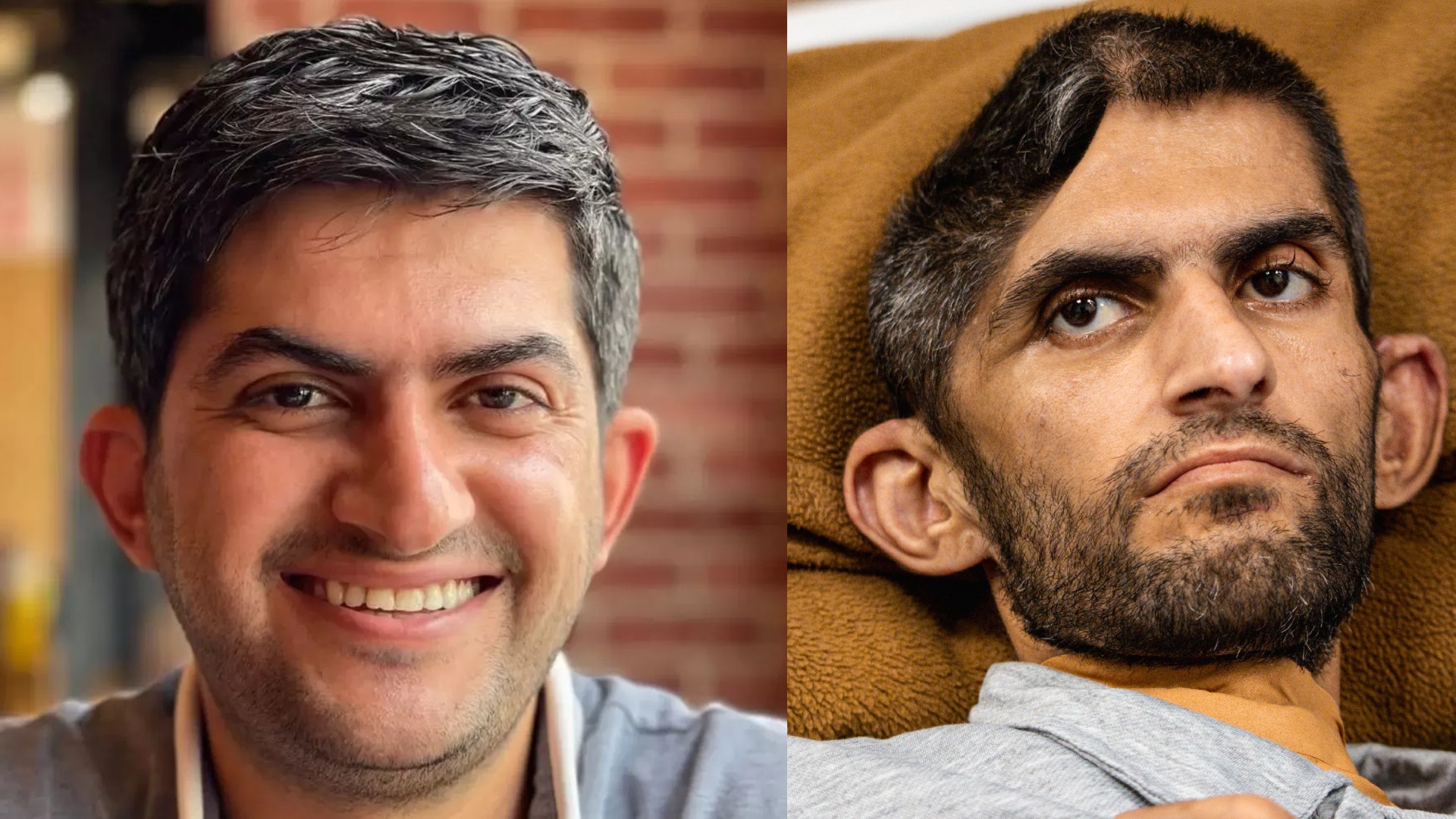
When Mujahid Bani Mufleh saw his own before-and-after photographs following six months of uncharged detention in Israeli custody, the transformation shocked even him. Today, five months after his release, the 36-year-old father of three and veteran Palestinian journalist from Beita, a town in the occupied West Bank near Nablus, remains hospitalized, fighting a long, uphill recovery that grew dire just days after he walked free.
Arrested at his family home on June 28, 2025, Bani Mufleh was held under Israel’s controversial administrative detention policy: a practice that allows authorities to imprison Palestinians indefinitely without charge or trial, relying on secret evidence that neither detainees nor their legal representatives are permitted to review. Before his arrest, he had only a pre-existing diagnosis of diabetes and was otherwise in good health. But what he encountered behind bars – systematic torture, repeated physical abuse, and deliberate medical neglect – shattered his health permanently.
Two days after his release on January 12, 2026, Bani Mufleh was rushed to the hospital with a severe brain hemorrhage that triggered a stroke, a medical crisis he attributes directly to the abuse he endured in custody. Surgeons performed emergency life-saving surgery, removing a portion of his skull to reduce dangerous pressure on his brain, and he spent two months in a coma. When he awoke, he emerged gaunt, frail, with hollowed features and sunken eyes, appearing years older than the man taken from his home half a year earlier.
“It hurts to look at photographs of the person I used to be,” Bani Mufleh shared from his hospital bed at Jenin’s Ibn Sina Hospital. “My defences collapsed under the weight of torture and humiliation. They wanted you to forget who you were.”
For his entire adult life, Bani Mufleh has worked as a journalist, and throughout his detention, he clung to one unshakable goal: once free, he would share the untold stories of the fellow prisoners trapped alongside him. Today, the torture and subsequent stroke have robbed him of the ability to report as he once did, turning him from a storyteller into the story itself. “I never forgot that I was a journalist,” he said. “Throughout my detention, I kept thinking that one day I would tell the stories of those who could no longer speak for themselves. But time never gave me that chance. Before I could write about the tortured, I suffered a stroke. And instead of writing their stories, I became the story.”
Even as he relearns basic skills – his speech is slow, punctuated by long pauses as he searches for forgotten words – Bani Mufleh has not abandoned that promise. The deaths of two detainees he was held with remain seared into his memory, and he is determined to honor them by sharing their fates. The first was Samir al-Rifai, a 50-year-old prisoner who could not survive the abuse he endured. After the pair were tortured together, prison guards stormed their cell and pepper-sprayed the entire space, leading al-Rifai to collapse. He was carried out and never returned; Bani Mufleh later learned he had died in custody.
The second was 20-year-old Ahmad Taza’zah, whose health rapidly declined after he was attacked during torture. “During torture, they unleashed a dog on him that tore into his face,” Bani Mufleh recalled. “The wounds became infected, and all he needed was a course of antibiotics. Instead, they left him suffering for days. He began vomiting constantly. Later, they took him into the prison yard. He never returned alive.”
Bani Mufleh’s experience is far from an isolated case. Since October 2023, Israeli forces have arrested more than 20,000 Palestinians across the occupied West Bank and Gaza Strip. Independent human rights organizations and international media investigations have documented widespread, systematic abuse of Palestinian detainees, including routine torture, deliberate starvation, denial of medical care, and sexual violence. At least 84 confirmed Palestinian detainees, including one child, have died in Israeli custody under these conditions, and rights groups warn the actual death toll is almost certainly higher.
Throughout his detention, Bani Mufleh clung to one memory from the outside world to get through the violence and loss: the face of his young son, Arab, the day of his arrest. “In prison, I kept trying to remember my son Arab’s face so I wouldn’t be consumed by the faces of those who died behind bars. But I could remember only one image of him – crying as Israeli soldiers arrested me in our home,” he said. “After they beat and tortured me, I looked at him while I lay on the floor. He was crying. That became the last image of him that stayed with me.”
For Bani Mufleh’s wife, Nuha al-Shurfa, and their three children, rebuilding life after his release has meant adapting to permanent change and celebrating small signs of progress. When Bani Mufleh came home, he had lost 25 kilograms during his detention, and received no meaningful treatment for his diabetes behind bars. “When Mujahed came home, it felt as though our family had come back to life,” al-Shurfa told Middle East Eye. “He returned severely weakened… Throughout his time in prison, despite being diabetic, he received no proper medical care. Seeing him improve, even little by little, gives us hope and the strength to keep going.”
Al-Shurfa added that her husband’s condition remains fragile five months after release. He still struggles to consume most fluids, even water, over fears it will worsen his condition and damage his lungs. “We know his recovery is far from over and that he still faces many challenges every day,” she said. “But having him with us again is something we are deeply grateful for, and we will stand by his side every step of the way.” For the family, recovery is measured in quiet, small victories: a few clear words spoken without effort, an unassisted step, a day with less pain than the last.
For Bani Mufleh, the harrowing experience of detention and recovery has reshaped his understanding of what matters most in daily life. “During my detention, I learned what real hunger feels like – waiting for meals that never felt enough, going to sleep with an aching stomach, and waking up with the same feeling,” he said. “I learned how a simple loaf of bread can become a dream, and how a sip of cold water can feel like a blessing from heaven.”
Recovery has taught him an equally humbling lesson, he added: “Throughout my recovery, I learned the meaning of helplessness – when getting out of bed becomes a battle, taking a single step feels like an achievement, breathing without pain becomes a wish, and a peaceful night’s sleep turns into a distant luxury. Those months taught me that life’s greatest blessings are not the big things we once imagined. They are the small, everyday moments we used to live without ever noticing.”
Even as physical challenges keep him from returning to full-time reporting, Bani Mufleh says sharing the stories of his fallen cellmates is now a core part of his own recovery – and he has no intention of breaking the promise he made behind bars.
-
US Supreme Court upholds birthright citizenship in blow to Trump
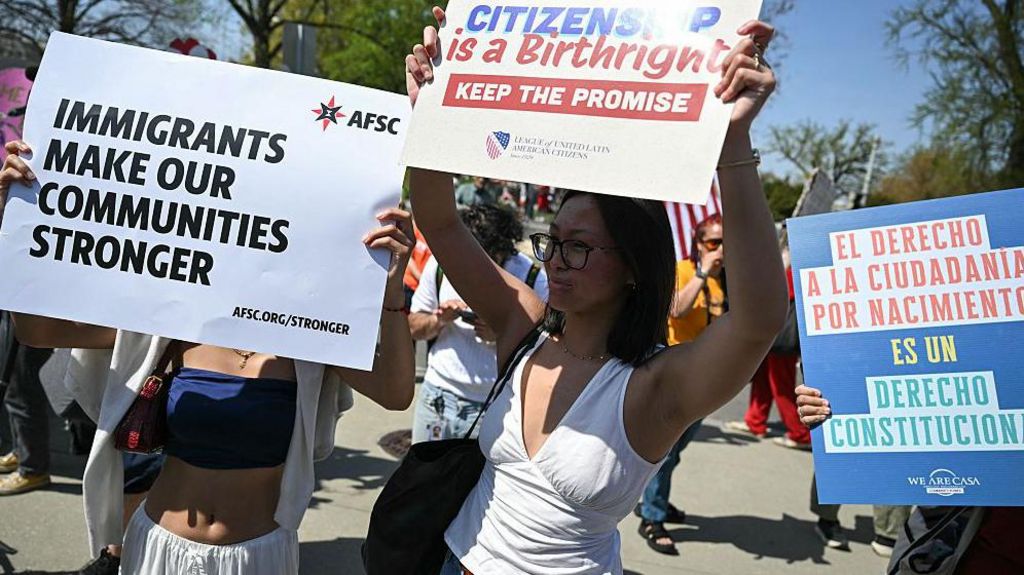
In a landmark decision that has reshaped the trajectory of U.S. immigration policy and dealt a critical setback to former President Donald Trump’s long-held policy goals, the U.S. Supreme Court has voted 6-3 to reaffirm that all children born on U.S. soil hold a constitutional right to birthright citizenship, directly rejecting Trump’s bid to overturn the 150-year-old established practice.
Writing for the court’s majority, Chief Justice John Roberts anchored the ruling in the text and intent of the 14th Amendment, clarifying that even children born to parents who are in the United States either unlawfully or on a temporary status qualify as full U.S. citizens from birth. “Citizenship, then and now, was the right to have rights – to freely participate in our political community,” Roberts wrote in his opinion. “The Framers of the Fourteenth Amendment extended that promise to ‘every free-born person in this land’, and we keep that promise today.” This longstanding policy has been a cornerstone of U.S. immigration and citizenship law since the 14th Amendment was ratified in 1868, following the U.S. Civil War, and has been repeatedly upheld by previous Supreme Court rulings over the decades.
Trump had pushed to curtail birthright citizenship via executive action, arguing that the children of undocumented immigrants and temporary visa holders do not meet the 14th Amendment’s requirement of being “subject to the jurisdiction thereof” and thus are not eligible for automatic citizenship. The case carried such high stakes for the president that he made a rare public appearance at the Supreme Court in April to observe the oral arguments.
Following the ruling’s release, Trump reacted on his social platform Truth Social, calling the outcome “too bad” and pledging to continue his campaign to end birthright citizenship through congressional legislation. Arguing that a full constitutional amendment is not required to enact the change, Trump urged Congress: “Congress should today start work on ending expensive, and unfair to our country, birthright citizenship.”
The ruling split the nine-member court sharply along ideological lines. Three justices – Clarence Thomas, Neil Gorsuch, and Samuel Alito – issued dissenting opinions. Thomas argued that the 14th Amendment, originally drafted to guarantee citizenship for formerly enslaved people, was being misappropriated for modern political goals, noting that the freed slaves the amendment was intended to protect were already Americans with no conflicting foreign allegiance. Alito called the ruling a “serious mistake,” claiming it grants citizenship to nearly anyone born in the U.S. even if their parents traveled to the country specifically to give birth before returning to their home country.
Senior White House advisor Stephen Miller, a leading architect of the Trump administration’s restrictive immigration policies, echoed the dissent’s frustration in a post on X, labeling the ruling “one of the most destructive and outrageous decisions” in the Supreme Court’s history. “American citizenship is not the birthright of the world,” Miller wrote. “No provision of the Constitution can be read to require our national self-obliteration.”
Meanwhile, civil rights groups and immigration advocates across the country have celebrated the decision as a major victory for equal rights and longstanding constitutional principle. Dariely Rodriguez, chief counsel at the Lawyers’ Committee for Civil Rights Under Law, noted that the ruling “solidifies what we have known to be true for over a hundred years. Anyone born on American soil, regardless of the legal status of their parents, is born an American citizen. We have endured an incredible test of our collective will as a nation and have prevailed.” BBC senior political correspondent Gary O’Donoghue has characterized the decision as a defining legal and political defeat for Trump’s immigration agenda.
-
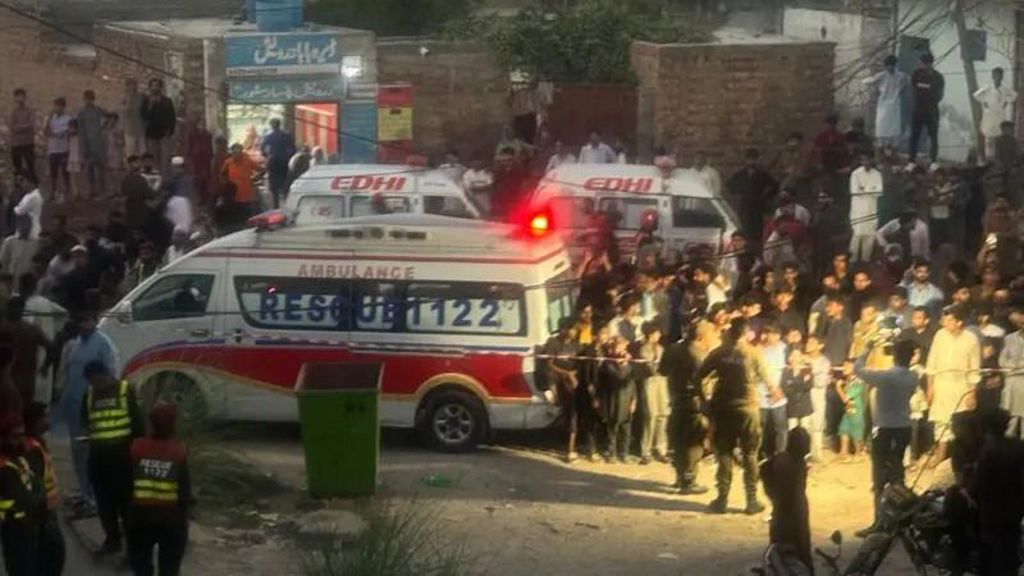
Roof collapse kills 14 children at Pakistan tuition centre
A tragic structural collapse has claimed the lives of 14 children in a suburban area of Pakistan’s second-largest city, Lahore, leaving emergency responders and local communities reeling from the preventable-seeming disaster. The incident unfolded on Monday afternoon at an unregulated private tuition center located in Kahna, a densely populated suburb on the outskirts of Lahore, when the building’s roof caved in unexpectedly while dozens of young students were attending classes.
Official statements from Pakistan’s leading emergency response agency Rescue 1122 confirm that most of the fatalities are children between the ages of 7 and 11, with multiple victims under 10 years old pulled from the rubble. Five additional people, most also young students, were injured in the collapse and have been transported to local hospitals for urgent medical care.
Rescue 1122 spokesperson Farooq Ahmed told reporters from the BBC that the emergency agency received the first distress call about the incident at 16:45 local time, which translates to 12:45 BST. First responders rushed to the scene immediately and were able to clear the rubble and complete the entire search and rescue operation within just 60 minutes of the initial call, a timeline that speaks to the speed of the response but also to the scale of the disaster.
In the wake of the collapse, Pakistani provincial authorities have launched a full formal investigation into the incident, focusing on potential structural negligence, unapproved building modifications, and failure to comply with local construction safety regulations. As part of the preliminary inquiry, two people linked to the tuition center and the building’s ownership have been taken into police custody for questioning.
This disaster has reignited longstanding concerns in Pakistan about lax enforcement of building safety codes in informal suburban settlements, where many private educational institutions operate in converted residential structures without adequate structural inspections or safety certifications.
-
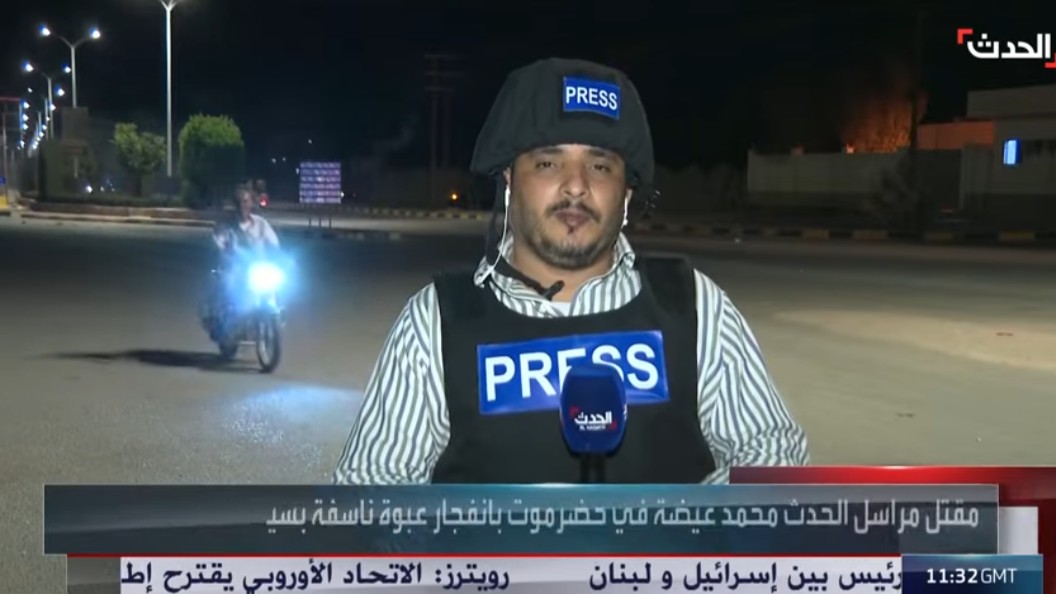
Assassination of Al-Arabiya journalist highlights tensions in southern Yemen
On the evening of June 24, a deadly attack unfolded in central Mukalla, the capital of Yemen’s eastern Hadramaut governorate, that cut short the life of a seasoned regional journalist and pulled back the curtain on deep unresolved political and security fractures in southern Yemen. Forty-year-old Mohammed Aydah, a freelance photographer and correspondent for Saudi state-owned outlet Al Arabiya, had just dropped his family at their residence and was preparing to drive to meet a friend when an improvised explosive device hidden beneath his driver’s seat detonated. The blast engulfed his vehicle in flames on Sitteen Street, close to the city’s Pakistani School, and killed Aydah instantly.
Local security sources confirm Aydah was explicitly warned of threats to his life roughly one month before the attack, with authorities urging him to take strict safety precautions. Since 2019, Aydah had covered political, security, and development beats across eastern Yemen, and his reporting on demonstrations organized by the UAE-backed Southern Transitional Council (STC) – along with his on-the-ground documentation of the group’s governance activities – had made him targets of hostile actors, sources close to the journalist confirm.
As of this report, no faction among Yemen’s deeply fragmented political landscape has claimed responsibility for the killing. The Saudi-backed Presidential Leadership Council (PLC), which is based in Aden, has issued a formal condemnation of the attack. Salem Ahmed Al-Khanbashi, Hadramaut’s governor and the general who led the military operation that retook the region from STC control in early January, has ordered a full official investigation into the incident. Prime Minister Shaya Mohsen al-Zindani has also directed Yemen’s Interior Ministry and all relevant security agencies to prioritize identifying and apprehending those responsible for the assassination.
Political finger-pointing began almost immediately after the attack, with STC representatives quickly shifting blame to Al-Qaeda in the Arabian Peninsula (AQAP) and other independent armed groups. However, this accusation has been widely challenged by regional analysts, who note that AQAP’s established modus operandi centers on sudden, unclaimed large-scale violence rather than forewarned targeted assassinations of specific individuals. Many observers also frame the STC’s statement as political opportunism: by attributing the killing to extremist “terrorist” groups, the organization implicitly argues that such violence was contained during its period of administrative control over southern Yemen.
An anonymous STC National Assembly member rejected all claims of the group’s involvement in an interview with Middle East Eye. “It is true that we consider Saudi Arabia a major enemy, as it has been damaging the south, but that doesn’t mean we will assassinate or welcome the assassination of a civilian journalist,” he said. “We are a project of peace, not death. If we were going to create chaos, we would target Saudi-backed officials, not a journalist.” He also pushed blame onto the Saudi-backed Aden-based government and Hadramaut’s governor, arguing their administration had failed to uphold security, noting that multiple assassinations have rocked southern Yemen in the six months since the STC lost territorial control.
The Houthi movement, which controls Yemen’s capital Sanaa and has fought the Saudi-led coalition for more than a decade, condemned the assassination via its Al Masirah media outlet without assigning blame, while using the incident to emphasize chronic instability in PLC-held territory.
Senior Yemeni and Gulf analyst Ibrahmi Jalal notes that both the Houthis and the STC – which announced its own dissolution in a controversial 2025-2026 political deal – had motive to target Aydah over his critical coverage. “When we look at the landscape and examine who might have access to sleeping cells and sabotage activities with the intent to disrupt and undermine the stability of government-held areas, there are two primary actors: the Houthis and the quote-unquote self-dissolved STC,” Jalal explained.
Aydah’s killing is far from an isolated event. Since the STC’s military defeat and contested dissolution between late December 2025 and early January 2026, targeted political assassinations across southern Yemen have increased sharply. Just last month, Wesam Qaid, CEO of Yemen’s Social Fund for Development, was abducted and killed in Aden. In April, Abdulrahman Al Shaer, an educator and senior leader of the Islah political party, was assassinated. In January, a senior Salafi brigadier general, Hamdi Shukri, who now commands a large southern military region, survived an attempted assassination.
Senior Yemeni political analyst Baraa Shiban notes that in the Al Shaer assassination case, authorities arrested members of a cell with ties to former counterterrorism units that previously operated under the STC’s umbrella. “The prosecution has started the process of making charges, but it will take time,” Shiban said. He added, “Whoever targeted Mohammed wanted to silence him, but it was also a threat to all other journalists.”
Prior investigations by the BBC have already documented direct links between the UAE-backed STC and a string of earlier assassinations in Aden. Many commentators have drawn a key inference from the current trend: while targeted killings were relatively rare during the STC’s period of direct administrative control, their recent surge suggests that STC-affiliated armed networks still retain influence as a militia that no longer holds territory but retains the capacity to carry out coordinated attacks. One anonymous source familiar with Aden’s political climate noted that STC members publicly condemned Aydah’s killing but privately celebrated his death, given his consistent critical coverage of the group’s activities.
Crucially, the STC’s formal dissolution did not result in the full dismantling of its security and military structures. Some units were redeployed to new posts, while others were nominally absorbed into official Yemeni Interim Regional Government institutions. Jalal explains that even integrated units still retain large numbers of personnel loyal to the STC, whose core political goals and loyalties remain unchanged. “It remains to be seen how well they would be absorbed and demonstrate a sense of belonging to an institution that protects the people above all,” he said.
The STC’s exiled leader, Aidarous al-Zubaidi, fled to Abu Dhabi in January and continues to issue political statements from abroad. Regional analysts widely agree that the UAE does not view the STC’s recent territorial setback as a permanent defeat, and continues to back the group as a proxy in Yemen’s ongoing internal conflict.
Aydah’s assassination comes at a particularly sensitive moment for Saudi Arabia’s engagement in Yemen. Just two weeks before the attack, Riyadh signed a $150 million agreement to supply petroleum derivatives to Yemeni power plants – the latest installment of more than $12.6 billion in Saudi development and humanitarian support for Yemen since 2012. A high-profile ceremony was even held in Mukalla itself to open a new 100 MW power plant, developed through a tripartite partnership between the Saudi Development and Reconstruction Programme for Yemen, Yemen’s Ministry of Electricity, and Gulf Power International.
Yemeni President Rashad al-Alimi has publicly framed Saudi economic assistance as the critical foundation holding Yemeni government institutions together, and has asked Yemenis to exercise “more patience” to see the full benefits of these investments. For ordinary Yemenis across government-held territory, access to basic services like electricity and clean water remains the top priority, and many express support for whichever political faction can deliver these necessities.
Murad Ali, a 60-year-old construction laborer from Aden supporting seven family members, says his only focus is securing food and basic needs for his household, but he still holds out hope the government can expand access to critical services. “Our government failed to provide us with electricity, healthcare, or any other basics, and it is Saudi Arabia that has been helping us since January 2026 to access basic services,” he told Middle East Eye.
Yet public patience is wearing thin. In early June, as temperatures soared across southern Yemen and chronic power outages continued, hundreds of Aden residents took to the streets, sleeping outside on mattresses to protest the lack of consistent electricity. Local sources describe the protests as fundamentally apolitical, driven by anger at failing infrastructure rather than opposition to the PLC administration, and note that STC organizers attempted to co-opt the demonstration and ultimately failed. “When we took to the streets, we were calling on Saudi Arabia to help us because we know it is the only country that can. We cursed our government because it deserves it, but we didn’t call on them because we know they are unable to help,” Ali said.
Jalal argues that the growing gap between Saudi-backed reconstruction rhetoric and on-the-ground security reality represents a major vulnerability for the PLC and its backers. “When we look at the profiles of those targeted – a journalist, a religious figure, teachers, a social development champion, military commanders – the picture indicates that most societal figures, regardless of their walk of life, are under a sustained elimination attempt,” he explained. “The motive is to instil fear, demonstrate instability, question trust in the government and its backer Saudi Arabia, and shake the image that is now enabling the government to seek increased support from international development institutions like the World Bank and the IMF.”
Underpinning all current tensions is an unfinished national political process. Following the military recapture of southern territory from the STC, PLC President Rashad al Alimi called for a comprehensive Southern Dialogue Conference to be hosted by Saudi Arabia, but no date has yet been set for the talks. In February, STC-affiliated demonstrators stormed a government building in Ataq; security forces responded, killing five protesters and wounding 39 others.
Saudi Arabia’s current strategy hinges on using infrastructure investment, an inclusive southern political process, and the unification of military command under the PLC to consolidate control over southern Yemen before turning its full attention back to the northern front against the Houthis. Jalal notes that meaningful stabilization will require a far more comprehensive multi-pronged approach than Riyadh has pursued to date.
“Economically, the government needs more than emergency funding: it needs to improve domestic revenue collection and resume oil and gas exports, which have been hampered since 2015 and 2022 respectively,” he said. “On security, undoing a decade of fragmentation requires time, but also a more adaptive and proactive approach. The full cabinet leadership needs to return to the country, to be with the people, rebuild institutional trust, and pave the way for recovery.”
Whether Aydah’s assassination is ultimately linked to STC remnants or another armed faction, the killing makes clear just how much of Yemen remains politically unsettled, even in territory formally controlled by the Saudi-backed PLC. Shiban struck a defiant note on the implications for press freedom in the country: “Whoever targeted Mohammed wanted to silence him, but it was also a threat to all other journalists. At the end of the day, they won’t be able to silence everyone if everyone is speaking up and everyone is active.”
-
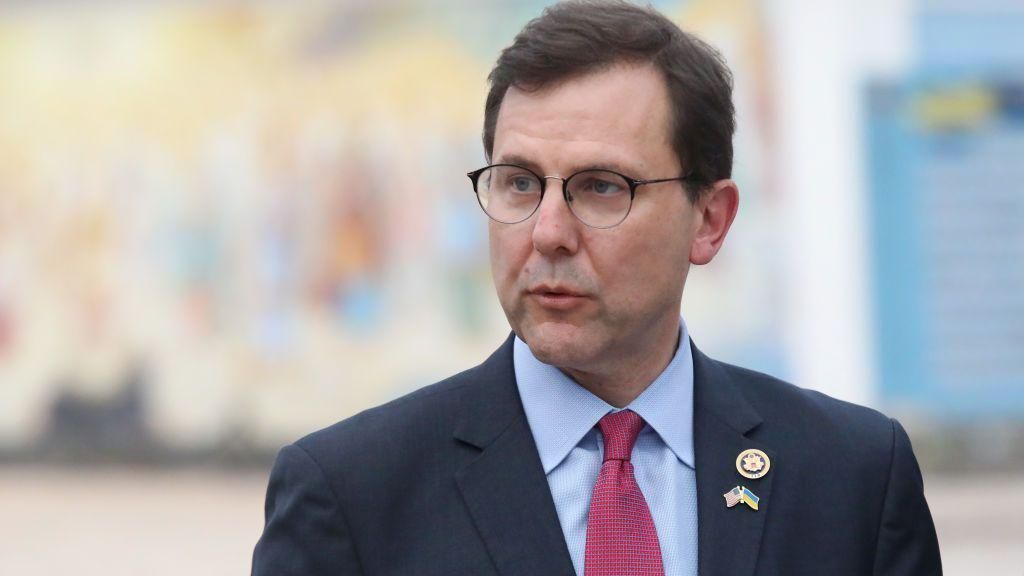
Missing US congressman explains mysterious four-month absence
After four months away from Capitol Hill on a previously unexplained medical leave, New Jersey Republican Congressman Tom Kean Jr. made his public return to the House of Representatives on Tuesday, opening up about his private struggle with depression in an emotional address to fellow lawmakers. The 57-year-old lawmaker, who is gearing up to defend his competitive swing district seat in November’s upcoming midterm elections, confirmed what had not been shared publicly during his absence: he was admitted to a hospital to receive treatment for a newly confirmed diagnosis of depression, a stay that stretched far longer than he initially anticipated.
Kean told the chamber that he entered the medical facility several months ago for routine health testing, never expecting the situation would lead to a months-long stay. When his depression diagnosis was finalized, his care team advised him to remain in the hospital to prioritize his recovery, noting that an extended focused treatment period would speed up his return to full health. In a speech that challenges common misconceptions about mental illness, Kean pushed back on the widespread misunderstanding that depression is just persistent sadness. “It is physical, it is emotional and, until you’ve experienced it yourself, it is difficult to fully understand how powerful this illness can be,” he said. “When people hear the word depression, many people think it simply means feeling sad. But depression is so much more than that.”
During his 142-day absence, Kean missed more than 140 congressional votes, sparking growing speculation and pressure from within his own party to be transparent about the reason for his leave. Prior to Tuesday’s address, Kean had only described his time away as a “personal medical issue” on social media, and even some of his own aides told U.S. media outlets they were unaware of the specific cause of his absence, only confirming that he was under the supervision of medical professionals. Earlier this June, Kean secured the Republican nomination for his district unopposed, clearing the first hurdle on his path to a third term in Congress.
Political analysts and party leaders have flagged Kean’s congressional district as one of the most competitive competitive seats up for grabs this cycle. A classic swing district with a history of shifting between Republican and Democratic control, the seat is viewed as critical to Republicans’ efforts to maintain their majority in Congress. Democrats have identified the district as a top pickup opportunity: unseating Kean would not only shift the balance of power toward Democrats but also mark a high-profile defeat for the movement aligned with former President Donald Trump.
-
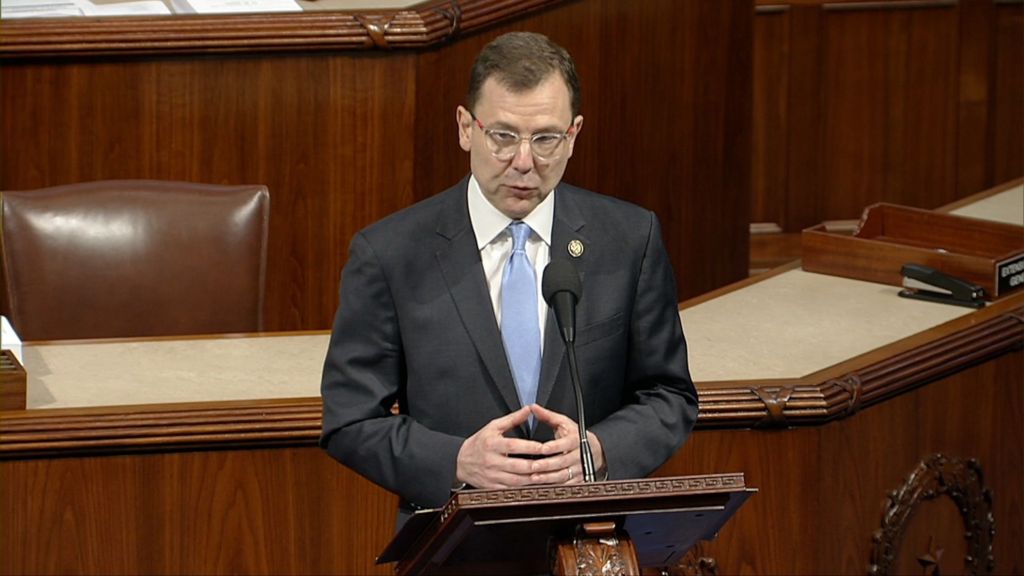
Watch: US congressman reveals depression diagnosis after absence
After a nearly four-month break from his official duties in the nation’s capital, U.S. Representative Tom Kean has made his return to Washington, D.C. — and in a bold, public step, he has pulled back the curtain on a private battle that millions of people around the world face every day: a recently confirmed diagnosis of depression.
Kean’s absence from Capitol Hill had drawn quiet speculation from political observers and constituents alike, as lawmakers typically disclose little about personal health matters that do not directly impact their ability to serve. But rather than continuing to keep his struggle private, the congressman chose to share his experience in the hope of chipping away at the persistent stigma that surrounds mental illness.
In comments to reporters and colleagues following his return, Kean spoke candidly about the overwhelming symptoms of depression that prompted him to step back from his regular schedule to prioritize treatment and recovery. He highlighted that seeking professional care is not a sign of weakness, but a necessary and courageous step for anyone grappling with mental health challenges.
His decision to go public with his diagnosis has already resonated across political and community circles, with many advocates praising his transparency. For constituents and other public figures struggling with similar issues, Kean’s openness offers a powerful example of how even people in high-stress, public roles can face mental health conditions and access the support they need to heal.
-
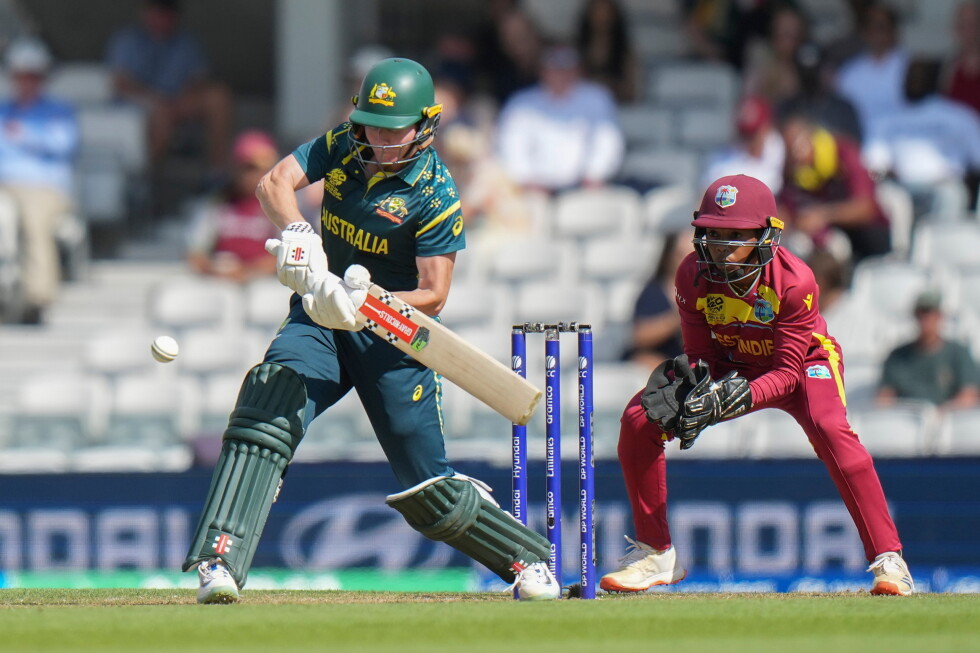
Australia storms into another Women’s T20 World Cup final after crushing West Indies
LONDON — In a dominant display of batting prowess at London’s iconic Oval ground on Tuesday, Australia secured its place in yet another Women’s Twenty20 World Cup final, dismantling the West Indies by an eight-wicket margin with overs to spare.
After winning the toss and choosing to field first, Australia restricted the West Indies to a total of 125 runs for the loss of seven wickets. The modest run target quickly proved well within Australia’s reach, as the tournament favorites chased down the required score with a full seven overs still left to play, making clear the gulf in class on the day.
Midway through the run chase, opening batter Beth Mooney and all-rounder Ash Gardner forged a match-winning unbeaten partnership that dismantled the West Indies bowling attack. The pair stacked up 63 runs from just 37 deliveries, steering Australia to a final score of 127 for two wickets and securing the semi-final victory.
Mooney anchored the innings with a rapid 61 runs off 36 balls, notching her eighth T20 World Cup half-century. This result ties her with New Zealand veteran Suzie Bates for the record of most fifties in the history of the women’s tournament. Gardner contributed an equally explosive 35 runs from only 20 deliveries, turning a steady chase into a commanding win.
Heading into the final, Australia remains undefeated in this year’s tournament, and is now set to compete for its seventh T20 World Cup title. This appearance marks the side’s eighth trip to the tournament final in just 10 editions of the global competition, a testament to its decades-long dominance in women’s short-format cricket. Australia will face off against either host nation England or South Africa in the title match at Lord’s this coming Sunday. The second semi-final between England and South Africa is scheduled to take place this Thursday at the same Oval ground where Australia secured its win.