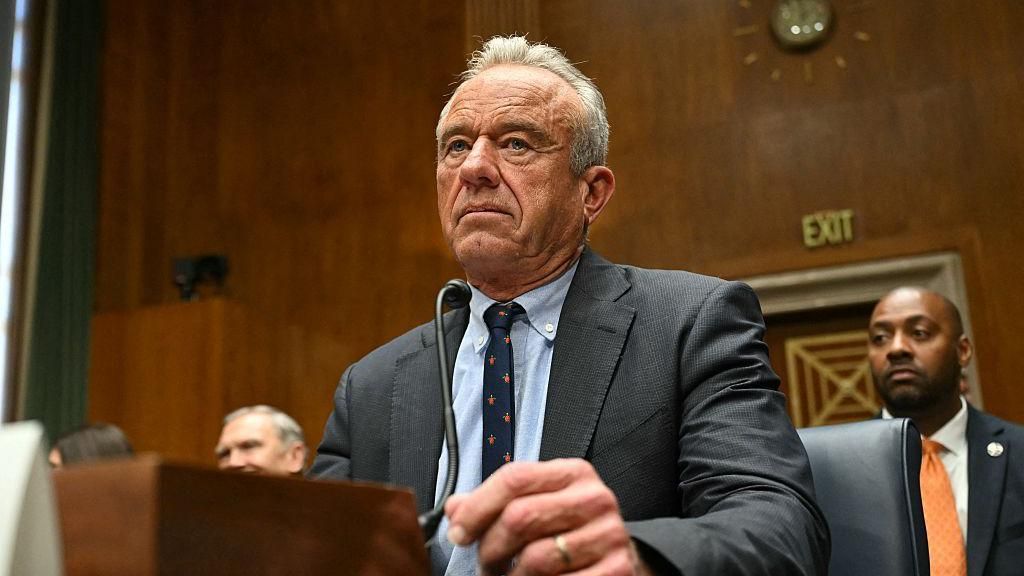
Twelve months ago, U.S. President Donald Trump made a public promise to then-nominee Robert F. Kennedy Jr.: once tapped to lead the Department of Health and Human Services (HHS), Kennedy would be given free rein to pursue his controversial policy priorities. What began as a politically strategic alliance forged during the 2024 presidential campaign, however, has increasingly fractured amid conflicting policy priorities, congressional scrutiny, and growing frustration from Kennedy’s core base of supporters.
The partnership between Trump and Kennedy was built around the “Make America Healthy Again” (MAHA) movement, a spin on Trump’s iconic “Make America Great Again” campaign slogan. Kennedy, a longstanding critic of mainstream public health policy, drew a diverse cross-section of American voters to the Trump ticket: anti-vaccine activists, health-focused parents, environmental advocates, and nutrition enthusiasts who united around shared concerns about vaccine safety, environmental chemical exposure, processed food, and rising rates of chronic disease. For a year, however, cracks in the alliance have widened, with the most visible public tension playing out during days of bipartisan grilling on Capitol Hill earlier this month.
The most heated exchange of the congressional hearings centered on Kennedy’s public support for a Trump executive order expanding domestic production of glyphosate, a widely used herbicide that Kennedy’s base has spent decades fighting over proven links to non-Hodgkin’s lymphoma and other chronic illnesses. Democratic Senator Brian Schatz of Hawaii pressed Kennedy directly, noting that many of his own Hawaii-based supporters who backed the MAHA agenda felt “hurt, shocked, confused” by his endorsement of the order. Kennedy countered that he had made his personal opposition to the order clear to Trump, but that the president framed the policy as a matter of critical national economic security for the U.S. agricultural sector.
That tense exchange laid bare a growing pattern: a year into his tenure as HHS Secretary, many of Kennedy’s closest allies and core supporters say he has never received the unfettered access to policy change that Trump initially promised. Early, high-profile changes to national vaccine policy have stalled amid legal pushback and direct White House pressure, and even his work on less controversial health priorities has been hampered by friction with the Trump administration.
“Kennedy only has so much authority at HHS,” explained Jeff Hutt, former national field director for the MAHA Institute, in an interview with the BBC. “At the end of the day, he’s more of a spokesperson than a change agent, so progress is going to come much slower than anyone expected.”
In response to queries about growing frustration among MAHA voters, an HHS spokesperson emphasized that Kennedy’s team remains fully focused on the priorities that consistently rank highest for American voters: chronic disease prevention, improved childhood nutrition, higher food quality standards, and expanded access to affordable health care.
Kennedy’s most significant early policy moves focused on overhauling decades of evidence-based U.S. vaccine policy, a core campaign promise to his vaccine-hesitant base. Shortly after taking office, he dismissed the entire membership of the federal vaccine advisory committee, replacing it with a slate of prominent vaccine skeptics. The reconfigured committee quickly voted to withdraw universal hepatitis B vaccine recommendations for newborns, and the Centers for Disease Control and Prevention (CDC) subsequently cut nearly half of the recommended childhood immunization schedule.
When CDC director Susan Monarez refused to automatically approve the committee’s new recommendations, Kennedy removed her from her post, leaving the nation’s leading public health agency without a permanent leader for more than six months. The policy shifts unfolded as the United States grappled with the worst measles outbreak in 70 years, with more than 4,000 confirmed cases recorded across 2025 and early 2026, including two child deaths in Texas.
For many in the MAHA base, the vaccine changes represented a long-sought victory, framed as a win for individual patient choice and informed consent. “This just gives families more space and time to make their own decisions about what’s right for their kids,” said Jacqueline Capriotti, a former Kennedy campaign social media strategist who administers a large Facebook group for MAHA moms. “Having open conversations about informed consent, about understanding what you put in your body, is a healthy thing for our country.”
But that early momentum quickly collapsed. In March, a federal judge blocked nearly all of Kennedy’s vaccine policy overhauls, ruling that the new advisory committee members lacked the required scientific credentials for their roles. HHS has publicly stated it plans to appeal the ruling, but no filing has been made to date.
Shortly after the ruling, Kennedy allies confirmed to the BBC that the Trump administration ordered him to shift his focus away from vaccine policy entirely ahead of November’s midterm elections. Longtime Republican pollster Whit Ayres noted that the White House came to the conclusion that vocal vaccine skepticism was “political poison,” given that a large majority of American voters continue to support evidence-based vaccination programs.
Republican campaign advisor Abby McCloskey argued that the court ruling actually worked to the White House’s advantage. “It almost takes it off of RFK Jr’s plate and gives him a valid reason to not talk about it ahead of the election,” she explained. The shift in messaging was obvious during Kennedy’s April congressional testimony, where he surprised many observers by stating that every child should be vaccinated against measles.
With his vaccine agenda stalled, Kennedy has reoriented his work toward the other core issues of the MAHA movement: chronic disease prevention, food system reform, and environmental safety. He has overseen a complete redesign of the iconic U.S. food pyramid, a change that has drawn mixed reviews from public health experts, and launched a campaign to persuade major food corporations to voluntarily phase out synthetic food dyes.
Even on these issues, however, friction with Trump has persisted. Beyond the glyphosate executive order that enraged MAHA supporters, Trump’s longstanding support for the fast food industry has clashed with Kennedy’s push for stricter nutrition standards. After pressure from the White House, Kennedy ultimately released a public statement supporting the glyphosate order, citing the agricultural sector’s longstanding reliance on the herbicide.
Hutt, who remains aligned with the MAHA movement, called the endorsement a necessary compromise rather than a choice Kennedy wanted to make. “I wish he had not done it, and I think that’s how most of our supporters felt,” he said. Zen Honeycutt, founder of the MAHA-aligned advocacy group Moms Across America, said many member moms were “outraged” by the decision, arguing that the order was directly written to benefit large chemical corporations. Even so, Honeycutt said she does not doubt Kennedy’s commitment to protecting children’s health, noting that he faces constant pressure from pharmaceutical, chemical, and food industry lobbying groups that limit his ability to act.
Polling from Politico suggests that the discontent is widespread: 47% of voters who identify as MAHA supporters believe Trump and Kennedy have not delivered on enough of their campaign promises, compared to just 44% who say they have made sufficient progress. An anonymous HHS official countered to the BBC that blocking glyphosate access would have had “severe” negative economic impacts on American agriculture, adding that the department’s new dietary guidelines prioritize whole fruits and vegetables as a step toward reducing long-term reliance on chemically intensive farming practices.
Despite repeated policy conflicts, Republican strategists say Trump still views Kennedy as a valuable political messenger ahead of the midterms. Politico reports that Kennedy is expected to campaign as a Trump surrogate in key swing states this fall, and he recently launched a new podcast focused on “fearless conversations with critical thinkers, including independent doctors.” He has also announced two new policy initiatives: a major national research project on the health impacts of microplastic exposure, and a renewed administration-wide focus on reducing rates of chronic disease.
Even with this new rebranding effort, political analysts remain skeptical that the shift will help the Trump administration win over broader support for the MAHA agenda. “Kennedy is so widely associated with anti-vaccine advocacy that it’s going to be difficult for him to redefine himself in any other way,” Ayres said. McCloskey added that the Trump administration is squandering a unique opportunity to connect with the large, diverse MAHA base of parent voters who care far more about nutrition and children’s health than vaccine policy. “What’s really missing is a clear set of next concrete policy steps that people can rally around,” she said.
For his core supporters, however, even with all the setbacks, Kennedy has already delivered one major win: he has pushed MAHA’s set of health concerns into the national mainstream, and most long-time backers understand the constraints he faces. “People who supported Bobby [Kennedy] understand that his ability to be a change agent is really limited by how much rope the president gives him,” Hutt said. Even so, he added, Kennedy and his team still do not recognize how much political power their movement already has to shift the national conversation around American health.