作者: admin

  • The threat of light pollution puts the world’s darkest skies in the Atacama Desert at risk

    The threat of light pollution puts the world’s darkest skies in the Atacama Desert at risk

    Tucked into northern Chile, the Atacama Desert — widely recognized as the driest terrestrial landscape on the planet — offers one of the clearest unobstructed views of the cosmos available anywhere on Earth. For first-time visitors, the experience of gazing up at its night sky is transformative: eyes adjust slowly to the profound darkness, first picking out faint pinpricks of light, then brighter stars, until entire galaxies stretch out in full view, visible to the naked human eye.

    This extraordinary stargazing environment is the product of a rare confluence of natural conditions: extreme aridity, high elevation, and, most critically, geographic isolation far from the glow of urban light pollution. This combination has turned Atacama into the global gold standard for ground-based astronomy, hosting more of the world’s largest and most advanced astronomical observatories than any other region on Earth.

    “The conditions in the Atacama Desert are unique in the world,” explained Chiara Mazzucchelli, president of the Chilean Astronomical Society. “There are more than 300 clear nights per year, meaning no clouds and no rain.”

    Today, the desert’s nearly 41,000 square miles of open, high-altitude terrain are home to nearly 30 separate astronomical research sites, most run by international scientific collaborations. Dubbed “Photon Valley,” this concentrated corridor of cutting-edge observation facilities draws thousands of scientists from across the globe annually, all pursuing answers to fundamental questions about the origins of the universe. Even with the region’s popularity, access is highly competitive: Julia Bodensteiner, an assistant professor at the University of Amsterdam and a visiting researcher at the European Southern Observatory’s (ESO) Paranal Observatory, the flagship facility in Atacama, notes that only 20 to 30 percent of competing research proposals win observation time.

    While the harsh desert terrain — with altitudes pushing past 10,000 feet, where oxygen is scarce, scorching daytime heat gives way to freezing nighttime temperatures, and rocky ground makes travel difficult — poses challenges for human researchers, it is perfectly suited for astronomical observation. The region is currently host to the most ambitious ground-based telescope project in history: ESO’s $1.5 billion Extremely Large Telescope (ELT), scheduled for completion in 2028 at Paranal. With 798 individual mirrors and a total light-collecting area of nearly 1,000 square meters, the ELT will be 20 times more powerful than any existing leading optical telescope, and capable of producing images 15 times sharper than NASA’s iconic Hubble Space Telescope.

    For astronomers, the ELT promises to unlock breakthroughs that were previously unthinkable. “We should be able to see Earth-like planets in what we call the habitable zone, so basically the planets which are candidates towards life,” explained ESO astronomer Lucas Bordone. Data collected from Atacama’s observatories does not only advance our understanding of deep space; it also delivers critical insights for life on Earth, and research into the future of human exploration beyond our home planet. That makes protecting these sites a global scientific priority.

    But the world’s most valuable window into space is under growing threat. Last year, a proposed green energy complex just 6 miles from Paranal Observatory ignited a global dispute between the energy company developing the project and the international astronomical community. The proposal exposed a critical gap: Chile’s existing regulations designed to protect dark skies for astronomical research are lax, outdated, and unclear, leaving the region’s unique scientific assets vulnerable to unregulated industrial development.

    After widespread outcry from astronomers, physicists, and even Nobel laureates, the energy company canceled the project in January. But the risk of future development remains. The incident sparked a review of Chile’s environmental regulations governing protected astronomical zones, but scientists warn that no meaningful regulatory update has been enacted to prevent similar proposals from moving forward in the future.

    “We are working to ensure the new criteria are strict enough to guarantee that there will be no impact on astronomical areas,” said Daniela González, director of the Cielos de Chile Foundation, a non-profit founded in 2019 dedicated to preserving the quality of Chile’s night skies for research.

    Eduardo Unda-Sanzana, director of the Astronomy Center at the University of Antofagasta and a member of the ministerial advisory commission that delivered regulatory recommendations to the Chilean government after the energy project controversy, recalled how dramatically the Atacama has changed over the past two decades. “Twenty years ago, the Atacama Desert was ‘an ocean of darkness,’” he said. “It was just you and the universe.”

    Today, urban expansion, industrial growth, mining operations, and renewable energy development have turned the remote desert into a highly coveted territory, and balancing competing interests has grown increasingly difficult. Even small amounts of human activity can derail cutting-edge astronomical observation: at Paranal, researchers live in an underground residential facility designed to minimize their impact, with all windows covered, hallways kept dark, and outside movement limited to red-filtered flashlights to avoid even the faintest light pollution interfering with telescope data.

    The proposed energy project near Paranal posed multiple threats beyond light pollution: project construction and operation would have generated constant micro-vibrations, increased dust pollution, and disrupted atmospheric stability, all of which would have rendered high-precision astronomical observation impossible. As Itziar de Gregorio-Monsalvo, ESO’s Chile representative, put it: “If you place the ELT next to a city, it doesn’t matter that its diameter is 40 meters long. It’s just the same as having a tiny telescope.”

    History offers a stark warning of what is at stake. In the early 20th century, the first international heliophysics observatory in Chile — a major solar research station operated by the U.S. Smithsonian Institution — was forced to permanently close in 1955 after expanding mining operations in the area created irreversible pollution that made research impossible.

    “We’ve had 70 years to learn from history and avoid repeating those same mistakes,” Unda-Sanzana said. Despite the high-profile cancellation of last year’s energy project, he warned that without updated, enforceable protections, the Atacama’s irreplaceable astronomical resource remains at risk: “Despite all the media hype in 2025, we find ourselves exactly where we were last year.”

  • Bad to worse: Season from hell for the Storm continues with Jahrome Hughes ruled out

    Bad to worse: Season from hell for the Storm continues with Jahrome Hughes ruled out

    The Melbourne Storm’s nightmare 2026 NRL season has taken another devastating turn, with star playmaker Jahrome Hughes confirmed to miss next Friday’s critical Round 9 showdown against the Dolphins after failing a mandatory head injury assessment. While initial scans have cleared the representative halfback of any serious structural damage to a worrying wrist injury that hampered his performance during Saturday’s heavy home defeat, the concussion protocol ruling has ruled him out of what is already a must-win game for the struggling club.

    Hughes’ absence is the latest in a string of crippling blows for the Storm, who are currently mired in their longest losing streak under legendary head coach Craig Bellamy, having dropped six consecutive matches. After Saturday’s humiliating defeat to the South Sydney Rabbitohs at AAMI Park, which saw Melbourne’s long-unbeaten home record against the Sydney club completely erased, the club sits second-from-bottom on the NRL ladder, only ahead of the still-winless St George Illawarra Dragons.

    During the second half of Saturday’s defeat, Hughes repeatedly grabbed at his left wrist and forearm after taking multiple heavy knocks during the match, sparking immediate concern over a potential long-term layoff. Earlier in Round 8, the halfback was forced from the field early due to an unspecified injury, with Bellamy admitting post-match he could not confirm whether the issue was linked to the wrist or shoulder. However, post-match scans delivered one small piece of positive news: no significant ligament or bone damage was found, and Hughes will continue to be monitored by the club’s medical staff throughout the week.

    That small reprieve was overshadowed by confirmation that a head knock sustained during the match has ruled Hughes out of the Dolphins clash. In an official statement, the Storm confirmed: “The club can confirm Hughes’ initial assessments of his wrist show no significant injury and he will continue to be assessed throughout the week, however the halfback failed his HIA and will enter concussion protocols. Hughes will be unavailable for Storm’s Round 9 game against the Dolphins.”

    With Hughes sidelined, utility Tyran Wishart is widely expected to step into the starting halves combination for Melbourne.

    The six-game losing run is unprecedented during Bellamy’s more than two-decade tenure at the club, and the veteran coach did not mince words after Saturday’s Anzac Day defeat, admitting it was the most embarrassed he had ever been in his decades-long coaching career. “It’s probably the most embarrassed I’ve ever been in my footy life to be quite honest,” Bellamy told reporters post-match. “There are obviously a few things the off-field staff is doing wrong and I’m included in that, so obviously I’m not doing my job as well as I should be… but to come up with a performance like that and a lack of effort like that on Anzac Day is embarrassing. I can’t say too much more than that.”

    At this stage of the season, the Storm’s slim hopes of reaching the 2026 finals are already hanging by a thread, and the loss of their most influential playmaker has all but crushed early-season optimism among fans and analysts alike.

  • Foran plenty: Sea Eagles continue perfect start under Kieran Foran after belting the Eels

    Foran plenty: Sea Eagles continue perfect start under Kieran Foran after belting the Eels

    Just one month ago, Manly Sea Eagles supporters booed their team off the home pitch at 4 Pines Park, calling for immediate leadership change after a third consecutive defeat that saw former head coach Anthony Seibold lose his job. Ironically, that loss came at the hands of the Sydney Roosters, led by ex-Sea Eagles star Daly Cherry-Evans, leaving fans fearing the club would spend the 2026 NRL season fighting to avoid the wooden spoon. Today, that narrative has flipped entirely: a dominant 33-18 second-half victory over the Parramatta Eels has pushed Manly to four straight wins, and club legend-turned-interim coach Kieran Foran has turned early-season despair into legitimate finals contention.

    Foran’s incredible turnaround since taking the top job has been nothing short of miraculous. The undefeated 4-0 start under his guidance has erased all talk of a last-place finish, with fans and analysts now openly debating whether the Sea Eagles can sustain their red-hot form to climb all the way into the top four. This win against the Eels was Foran’s biggest test to date, with star fullback Tom Trbojevic sidelined by injury – but Tom’s brothers stepped up to fill the gap seamlessly. Within the opening minutes of the match, Jake Trbojevic crashed over the try line off a well-placed kick to put Manly on the board early.

    Midway through the second half, Ben Trbojevic delivered a pinpoint offload to halfback Jamal Fogarty, who sprinted 50 metres to score a breakaway try that blew the game wide open and cemented Manly’s lead. While the win was a massive boost for the club’s finals hopes, it did come with fresh injury concerns: Fogarty was taken off the field late in the match, and forward Corey Waddell was forced to exit early with a pectoral injury. The Sea Eagles’ credentials will face their toughest test this coming Sunday night, when they take on defending premiers Penrith in a clash that will prove just how far this revitalized side has come.

    For the Parramatta Eels, the result extends a devastating run of poor form and crippling injury woes that have left them sitting 15th on the ladder ahead of the round 12 bye. The club’s injury crisis deepened during the match, when center Dylan Walker suffered an arm injury that saw him return for the second half with his left arm strapped in a sling. Walker is the latest key player sidelined for Parramatta, joining a long list of starters including Jonah Pezet, Isaiah Iongi, J’maine Hopgood and Bailey Simonsson who are already out long-term. Walker had been one of the Eels’ most consistent playmakers through the early rounds, and his absence will be a major blow for the side moving forward. The Eels also face potential further disruption, with dummy-half Tallyn Da Silva facing possible suspension after being sin-binned for a dangerous lifting tackle on Jake Simpkin. While Parramatta put up a solid defensive fight in the first half, they collapsed in the second, as Manly carved through their edges repeatedly – winger Brian Kelly had a particularly tough day, committing five costly errors. The Eels will face tough matches against the New Zealand Warriors, North Queensland Cowboys and Melbourne Storm before their bye, leaving them with little room to claw their way back up the ladder in the coming weeks.

    One of the standout individual performances of the match came from Manly back-rower Haumole Olakau’atu, whose barnstorming display dragged the side through an otherwise unremarkable first half and pushed him into contention for a call-up to the NSW Blues State of Origin side. The powerful forward ran 201 metres from 21 carries, notched four offloads, broke seven tackles and delivered a brutal hit on Dylan Walker just before halftime that set up a field goal to give Manly a 7-6 halftime lead. Olakau’atu, who came off the bench in two Origins for the Blues in 2024, is now firmly on NSW coach Laurie Daley’s radar after a string of dominant displays showcasing his explosive running and elite aerial skills.

    Speed winger Jason Saab also delivered a memorable moment for the Sea Eagles, showcasing unexpected soccer skills to score one of the match’s most talked-about tries. After Fogarty put up a high kick into the in-goal area, Saab out-jumped the Eels defence to notch a perfect header that set him up for a clear run to the line, capping off a stunning day for the revitalized Manly side.

  • Loud bangs and a Trump evacuation: chaos at correspondents’ dinner

    Loud bangs and a Trump evacuation: chaos at correspondents’ dinner

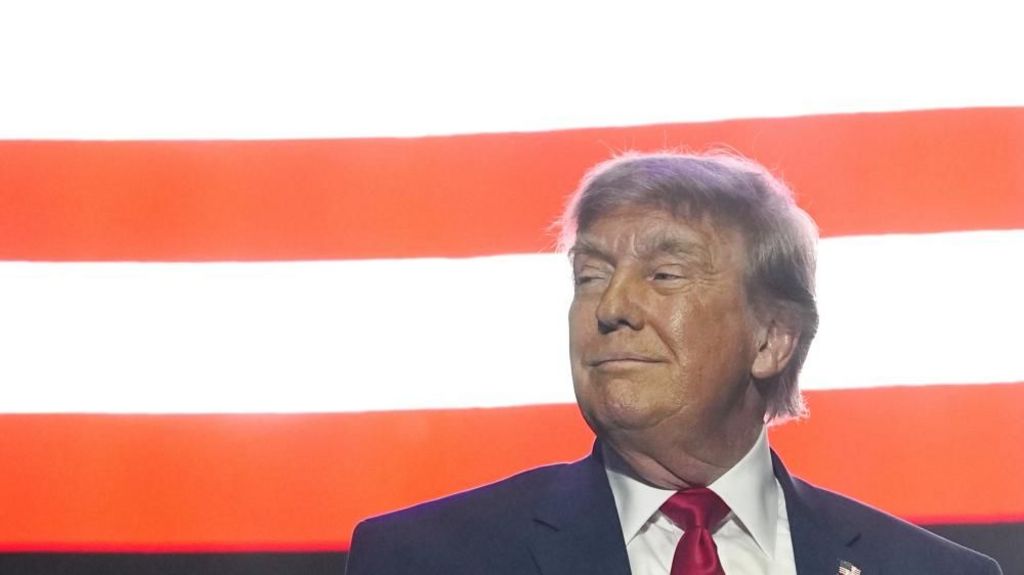
    What was supposed to be a glamorous, landmark Saturday evening at Washington D.C.’s Washington Hilton — marking Donald Trump’s first attendance at the annual White House Correspondents’ Association (WHCA) dinner as sitting president — quickly descended into chaos when reports of gunshots sent attendees scrambling for cover and security agents rushing the commander-in-chief to safety. The incident unfolded as Trump sat on the event’s main dais, with sudden loud bangs cutting through the atmosphere of celebration, catching the president and other stage guests off guard, who immediately looked up in alarm. Footage captured by AFPTV, independent journalists on site, and other media outlets documents the panicky scene that unfolded in seconds. Moments after the loud reports, which attendees initially believed were gunshots, urgent shouts of “Get down!” and “Stay down!” rippled through the packed ballroom. Attendees ranging from veteran White House correspondents to senior Trump administration officials and cabinet members dropped to the floor or dove under tables to take cover. In the immediate aftermath of the disturbance, U.S. Secret Service agents surrounded President Trump with weapons drawn, swiftly escorting him off the stage through a rear curtain as the stunned crowd remained crouched in their places. The event’s big band performance came to an abrupt halt, and the normally festive room full of guests in formal ball gowns and tuxedos fell dead silent. Agents swarmed through the massive ballroom, moving past guests huddled on the floor, in a venue that carries grim historical weight: it is the same hotel where President Ronald Reagan survived an assassination attempt 45 years prior to this incident. Mehmet Oz, Trump’s pick to lead the Centers for Medicare and Medicaid Services, was being evacuated when he told reporters on site, “Shots fired upstairs.” Also hurried out of the ballroom by security was U.S. Health and Human Services Secretary Robert F. Kennedy Jr., who carries his own family history of assassination: his uncle, President John F. Kennedy, was killed by an assassin’s bullet in Dallas, Texas in 1963. Alexandra Ingersoll, a correspondent with One America News, who was inside the ballroom when the chaos began, described the rapid response from the Secret Service to protect the president. “I just ducked under the table and I was like ‘I’m not going to risk this,’” Ingersoll told AFP. “I didn’t know if the shooter was neutralized or what was going on.” With few immediate details available about what had actually triggered the disturbance, officials ordered a full evacuation of the ballroom. Hundreds of attendees filed out into the Hilton lobby and eventually into the chilly Washington evening, where many gathered outside. Guests could be seen hugging one another, frantically calling and texting friends, family members and their news organizations to update them on their safety. In an official statement released shortly after the incident, the Secret Service confirmed it was investigating a shooting near the main security screening perimeter for the dinner. “The president and the first lady are safe, along (with) all protectees,” the agency confirmed. “One individual is in custody.” As of Saturday evening, it remained unclear whether the person taken into custody had fired shots, or if the gunfire reported was from Secret Service agents responding to the threat. Around 8:40 pm local time (0040 GMT), an AFP reporter on the scene observed uniformed police sprinting through the streets surrounding the hotel, moving barriers to redirect foot traffic, clearing vehicles from the area as quickly as possible, while a police helicopter circled overhead. Minutes after the evacuation, a presidential motorcade departed the Hilton, heading toward the White House. No further updates on the condition of the individual in custody or the nature of the threat had been released as of the initial reporting.

  • Shots fired, Trump evacuated unhurt from press dinner in Washington

    Shots fired, Trump evacuated unhurt from press dinner in Washington

    On Saturday night, a shooting incident disrupted the annual White House Correspondents’ Dinner at Washington Hilton, triggering an immediate emergency evacuation of former president and current officeholder Donald Trump. What was meant to be a landmark appearance—Trump’s first attendance at the iconic media gala during his term in office—descended into chaos when gunshots rang out near the venue’s main security screening checkpoint, located just outside the packed ballroom where hundreds of formally dressed guests had gathered.

    Within seconds of the loud bangs being reported, United States Secret Service agents drew their weapons, rushed Trump from the stage he was preparing to speak from, and swarmed through the crowds of attendees. Panicked guests dove under tables to take cover as tactical security units established defensive positions around the stage, while uniformed police flooded the hotel perimeter and law enforcement helicopters circled overhead.

    The suspect, identified as the gunman, was taken into custody at the screening area shortly after the incident, and Trump confirmed he emerged from the evacuation completely unharmed. In a post to social media immediately after the incident, Trump praised the rapid response of security teams, writing, “Secret Service and Law Enforcement did a fantastic job. They acted quickly and bravely. The shooter has been apprehended.”

    He also confirmed that all other senior officials, including First Lady Melania Trump, Vice President and Cabinet members, were unharmed, stating, “The First Lady, plus the Vice President, and all Cabinet members, are in perfect condition.” Shortly after the evacuation, Trump announced he would hold an official press conference at the White House to address the incident, and shared plans to reschedule the gala event within 30 days.

    This incident marks the third high-profile security threat targeting Trump in less than a year. In 2024, an assassination attempt at a campaign rally in Butler, Pennsylvania left one attendee dead and Trump with a minor wound to the ear. Just months after that attack, a second man was arrested after a Secret Service agent spotted a rifle barrel protruding from bushes on the perimeter of a West Palm Beach golf course where Trump was playing a round.

    Adding historical weight to the incident, the Washington Hilton—site of Saturday’s gala—was also the location of the 1981 assassination attempt on Republican president Ronald Reagan, who survived a gunshot wound after the attack just outside the venue.

    Confusion lingered in the immediate aftermath of the shooting, with senior administration officials evacuated first, and no clear initial details emerging on the severity of the incident or the suspect’s motives. Cabinet member Mehmet Oz, who was escorted out by security, confirmed to reporters he had been told “shots fired upstairs” as the evacuation began. Organizers initially told guests the dinner would continue following the incident, but later reversed course and announced the event would be postponed.

    This year’s dinner was already notable for breaking decades of precedent: the White House Correspondents’ Association extended an invitation to Trump despite his years of public attacks on the mainstream media, and his attendance marked the first time he had appeared at the annual gathering during his current term in office. For more than a century, every sitting U.S. president has attended the dinner regularly, a tradition Trump had declined to uphold until this year.

    Dubbed the “Nerd Prom” by attendees, the annual event brings together hundreds of Washington-based journalists, media executives, and political figures to raise funds for journalism scholarships and honor outstanding reporting. The gala traditionally features a stand-up comedian routine skewering the sitting president, followed by comedic remarks from the president himself—but organizers did not book a comedian for the 2025 iteration of the event.

  • Trump pulls envoys out of Iran talks trip to Pakistan

    Trump pulls envoys out of Iran talks trip to Pakistan

    In a sudden shift to ongoing diplomatic efforts between Washington and Tehran, U.S. President Donald Trump has officially confirmed that the White House scrapped a planned visit to Pakistan by two senior American envoys, Jared Kushner and Steve Witkoff, that was intended to facilitate negotiations with Iran. The decision was announced Saturday, and it follows closely on the heels of a key diplomatic move from Tehran: Iranian Foreign Minister Abbas Araghchi had already departed Islamabad earlier that same day after concluding high-level bilateral talks with top Pakistani government officials.

    Taking to his Truth Social platform to break the news of the cancellation directly to the public, Trump stated that he personally made the call to call off the trip. He justified the reversal by pointing to what he called unnecessary travel delays, as well as what he described as ongoing infighting and organizational confusion within Iran’s top governing bodies. Despite the abrupt cancellation, the former president struck a confident tone, asserting that the United States currently holds all the leverage in any future interactions with Iran.

    In an additional comment to U.S. news outlet Axios, Trump sought to dampen speculation that the sudden cancellation signaled a looming shift toward military confrontation with Iran. He emphasized that the move does not mean Washington has made any decision to resume offensive military action against Tehran, adding that the administration has not even considered that option at this stage.

    For his part, Araghchi offered a mixed assessment of his own diplomatic visit to Pakistan in a post on the social platform X. The Iranian foreign minister described his meetings in Islamabad as “fruitful,” and publicly commended Pakistan’s sustained efforts to mediate and advance peace efforts across the volatile Middle East region. However, he also made clear his government remains skeptical of U.S. diplomatic commitments, writing that Tehran has yet to see concrete evidence that Washington is genuinely serious about pursuing diplomatic solutions to ongoing tensions between the two countries.

    This report included contributions from multiple international news agencies.

  • Moment Trump rushed from White House Correspondents’ Dinner after  gunshots heard

    Moment Trump rushed from White House Correspondents’ Dinner after gunshots heard

    A routine appearance by former U.S. President Donald Trump at the annual White House Correspondents’ Dinner took a frightening turn Saturday evening when sudden gunshots rang out, forcing an immediate emergency evacuation of the commander-in-chief. Witnesses reported that the former president was in the middle of an on-site conversation with guests when multiple loud bangs echoed through the event venue, cutting the interaction short abruptly. Within seconds of the sounds being identified as gunfire, Secret Service agents, who are tasked with 24/7 protection for former U.S. presidents, moved quickly to surround Trump and rush him out of the banquet hall to a secured location. Attendees and staff at the dinner, a high-profile annual gathering that brings together top White House officials, journalists, and national media figures, were immediately placed on lockdown as law enforcement units swept the venue to locate the source of the gunfire and neutralize any potential threat. While initial reports confirmed that Trump was escorted to safety unharmed, the incident has sparked renewed discussions about security protocols at high-profile political events open to large public and media gatherings. As of the latest updates, law enforcement is continuing to investigate the circumstances surrounding the gunshots and has not yet released details on whether any suspects have been detained or if any injuries were reported at the scene.

  • Angus Taylor takes on ‘bad countries’, Pauline Hanson to rally outside parliament

    Angus Taylor takes on ‘bad countries’, Pauline Hanson to rally outside parliament

    As preparations got underway Sunday for a controversial anti-mass immigration rally led by One Nation founder Pauline Hanson on the grounds of Australia’s Parliament House in Canberra, senior Liberal Party figure Angus Taylor has publicly admitted he shares some policy ground with the far-right leader, while pushing for sweeping changes to Australia’s immigration system centered on “Australian values” screening.

    By early Sunday morning, event organizers had already begun setting up rally infrastructure, installing Australian national flags and immigration-focused posters emblazoned with flag motifs, with a large contingent of Australian police deployed to the site to maintain public order. Hanson is scheduled to address attendees of the “Rally To End Mass Immigration” later that day.

    In an interview with public broadcaster ABC, Taylor responded to questions about Hanson’s hardline anti-immigration position, confirming that the two politicians see eye-to-eye on some key issues, though disagree on others. Taylor’s core starting point for immigration reform, he said, is that Australia’s current annual migration intake has remained far too high, while entry standards have dropped to unacceptably low levels.

    The Liberal MP has repeatedly called for a full review and restructuring of Australia’s migration framework, one that enshrines Australian values as a core requirement for entry, including explicit provisions to block radical extremists from gaining entry to the country.

    Taylor pushed back on suggestions that his framing of values-based screening would advantage migrants from majority Western nations such as the United Kingdom over migrants from Asian countries including China and Vietnam. He clarified that while “many good people come from bad countries”, noting that some of Australia’s most accomplished citizens trace their roots to nations that were considered unstable or hostile at the time they migrated, he believes “bad countries” inherently carry a higher risk of producing “bad people” seeking entry to Australia.

    Despite this, Taylor insisted that the proposed screening process would not be based on country of origin, religion, or race, but exclusively on alignment with Australian values.

    When pressed to confirm whether China – which critics frequently accuse of mass imprisonment of journalists and broad application of the death penalty – qualifies as a “bad country”, Taylor avoided a direct answer, instead pointing to other examples. “To claim that Iran is a good country right now. Seriously?” he said, noting that the current federal Labor government has already implemented legislation restricting entry for Iranian citizens, a move Taylor supports.

    Taylor also repeated his earlier critical remarks about resettling Palestinian refugees from the Gaza Strip, pointing to ongoing “terrible acts of atrocity” connected to the Israel-Hamas war in the blockaded enclave.

    The public alignment between Taylor and Hanson comes at a tense political moment for the Liberal Party, as One Nation is widely predicted to win the New South Wales federal seat of Farrer from the Liberals following the resignation of former Liberal leader Sussan Ley. The Victorian-based MP addressed questions about the Coalition’s controversial decision to give One Nation candidate preferences ahead of Climate 200-backed independent candidate Michelle Milthorpe, brushing off concerns about the strategic choice.

    Taylor said the Liberal Party continues to prioritize earning first-preference votes from Farrer voters, and has ranked the National Party second on its how-to-vote cards. Pressed on whether One Nation poses an existential threat to the Liberal Party, Taylor argued that the “existential threats” to Australia’s regional communities are teal independent policies and federal Labor policies.

    Speaking to the impacts of current policy on regional Australia, Taylor said residents of rural areas are already facing acute anxiety over access to diesel, a critical resource for planting crops and operating freight transport that underpins regional economies across the country.

  • Man subdued with Taser after attacking nurses at Sydney hospital

    Man subdued with Taser after attacking nurses at Sydney hospital

    A violent outburst by a patient at a major Sydney public hospital left multiple medical staff and a bystander injured Saturday night, prompting police to deploy a Taser to subdue the attacker before taking him into custody, New South Wales Police confirmed.

    Officers were already present on the grounds of Prince of Wales Hospital in Randwick when emergency alerts of an ongoing assault came in just after 8:30 p.m. local time. According to official statements from NSW Police, the aggressor — identified as a 51-year-old male patient at the facility — launched a sustained attack that left one nurse with severe leg wounds. The patient also assaulted two additional nurses and a hospital security guard in the incident.

    A 26-year-old woman who stepped in to protect another patient during the chaos was also attacked by the man, police added. After the situation escalated, responding officers used a Taser to disable the aggressor and took him into custody. He was subsequently moved to a secured unit within the Randwick hospital for holding.

    As of the latest update, the nurse who sustained serious leg injuries remains admitted to the hospital for ongoing treatment. The other four people hurt in the attack — the two additional nurses, the security guard, and the 26-year-old woman — received on-site medical care for their injuries and did not require admission.

    The Eastern Beaches Police Area Command has launched a formal investigation into the assault to determine the full circumstances of the incident and prepare potential criminal charges against the suspect. This attack comes amid growing national conversation in Australia about rising rates of violence against frontline hospital workers, who have repeatedly called for greater workplace protections to prevent similar harm.

  • AP Was There: Early Chernobyl victims buried in Moscow cemetery

    AP Was There: Early Chernobyl victims buried in Moscow cemetery

    Forty years after the world’s worst nuclear accident, the Associated Press is republishing a groundbreaking 1986 report that first pulled back the Soviet Union’s veil of secrecy around the human cost of the Chernobyl disaster. On April 26, 1986, an explosion and subsequent fire destroyed reactor No. 4 at the Chernobyl Nuclear Power Plant in northern Ukraine, then part of the USSR. In the chaotic, information-blackout weeks that followed, Soviet authorities released only sparse, deliberately vague statements about the scale of death and destruction stemming from the catastrophe. It took a tip from an anonymous source and a risky on-the-ground investigation by two Western journalists to reveal the quiet toll unfolding hundreds of miles away in Moscow’s suburbs.

    Acting on a telephone tip, then-AP Moscow correspondent Carol J. Williams and a fellow Western reporter traveled to Mitinskoye Cemetery, a sprawling green space on the capital’s northwestern outskirts. What they found there confirmed what Soviet officials had long hidden: a dedicated burial plot exclusively for those killed by the Chernobyl accident. Just inside the cemetery’s main gate, 23 freshly dug, uniform graves sat ready, with no public signage marking them as a memorial to nuclear disaster victims. Each mound of turned earth bore fresh floral arrangements from grieving relatives and had a poured concrete border; work crews were already busy installing identical plain marble headstones, while eerie, empty stretches of prepared ground made clear that more fatalities were expected.

    Six of the completed headstones already bore the names of firefighters, whose deaths from radiation exposure had been briefly acknowledged in Soviet state media. A cemetery official, who spoke on condition of anonymity to the visiting reporters, confirmed the entire plot was reserved for people who died as a result of the April 26 accident. Every death date etched into the installed headstones fell after the Chernobyl explosion, with details of each victim’s name, birth year, and date of death painted in gold leaf. Some graves still only had handwritten temporary name placards, while the official confirmed a larger central monument would eventually be erected to honor all those buried here. “They will all be brought here,” he told the reporters, though he refused to disclose the expected final death toll.

    At the time of Williams’ original reporting on June 24, 1986, the last official Soviet casualty update had been released 19 days earlier, on June 5. That statement put the official death toll at 26: two killed in the initial explosion and fire, and 24 more who died later from acute radiation sickness. Two of those initial fatalities were not buried in the Moscow plot: plant worker Valery Khodemchuk’s body was never recovered from the destroyed reactor, so he remains entombed within the ruined structure, as reported by the Communist Party daily *Pravda* in late May. Another, plant employee Vladimir Shashenok, was killed instantly in the blast and buried in a small village near the disaster site.

    Even as Soviet officials declined to update the death toll, outside medical experts warned more fatalities were inevitable. Dr. Robert Gale, an American bone marrow specialist who traveled to Moscow to assist Soviet doctors in treating dozens of patients with severe acute radiation sickness, publicly noted that between 55 and 60 patients remained in critical condition, and many would not survive. All patients with severe radiation exposure from the accident were transferred to Moscow specialty hospitals, meaning any subsequent deaths would occur in the capital, explaining why victims were being buried hundreds of miles from their home region near Chernobyl.

    The layout of the Mitinskoye plot made clear that more burials were planned: the 15 existing graves in the back row were followed by a second row of eight, with a gap that could fit seven more, signaling officials had already prepared for at least seven additional fatalities. For the six fallen firefighters buried in the plot, their headstones bore additional markings: gold-etched stars and the ranks they held in the elite military fire brigade that was first on scene to battle the reactor blaze, all of whom absorbed lethal doses of radiation while containing the fire.

    Graveyard workers would not say when the burials had been carried out, nor whether funerals were held individually or as a single group service. Relatives had left carefully arranged bouquets of red and pink roses on each grave, quiet testaments to the lives cut short. An elderly Moscow woman visiting another section of the cemetery shared her quiet grief with the reporters: “It’s very sad, they were so young. They were brought here to be treated at hospitals, but they couldn’t be sent home to be buried.”

    By the time of the reporters’ visit, Soviet authorities had already established an exclusion zone around the damaged Chernobyl plant, evacuating every resident from nearby contaminated towns and villages, leaving no local communities to host burials for the victims who died in Moscow.

    The investigation did not come without consequences. After the reporters began documenting what they saw, cemetery officials confiscated their notebooks and film, noting that journalist access to the plot required special government approval. A police officer stationed at the cemetery confirmed the entire section was off-limits to anyone other than immediate family members of the deceased, and special permission from local government officials was required to photograph the headstones or record the victims’ names. Eventually, officials escorted the reporters out of the cemetery section after allowing them a brief, unrecorded look at the graves.