作者: admin

  • Can the World Cup’s viral stars turn social media fame into fortunes?

    Can the World Cup’s viral stars turn social media fame into fortunes?

    The 2026 World Cup has produced more than just iconic on-pitch moments—it has sparked a new phenomenon where underrated, little-known athletes achieve overnight global fame through viral social media attention, reshaping how modern sports stardom is built. Two standout cases from the group stage illustrate just how dramatically social media can rewrite an athlete’s profile in a matter of days, even when that fame comes from very different origins.

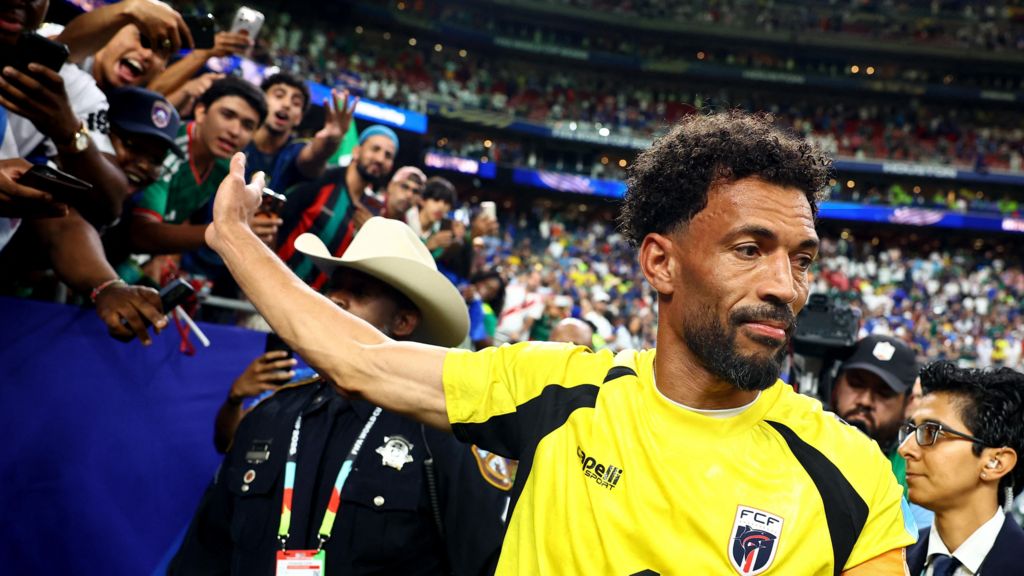
    For 40-year-old Cape Verde goalkeeper Vozinha, viral stardom was the product of a once-in-a-lifetime on-pitch performance. His 90-minute masterclass in goal against tournament favorite Spain secured a shock 0-0 draw for his underdog side, turning the previously little-known keeper into a global sensation overnight. In the days following the match, Vozinha’s Instagram follower count skyrocketed from just 50,000 to more than 17.4 million—surpassing the 15.5 million followers of NFL legend Tom Brady, one of the most famous athletes on the planet.

    Half a world away, New Zealand defender Tim Payne earned his viral fame through a very different route. Ahead of the tournament, an Argentine influencer with the online handle ‘elscarso’ dubbed Payne the ‘least-known player at the World Cup’ in a viral video, and called on his hundreds of thousands of followers to help boost the defender’s profile. Payne embraced the unexpected moment of attention, leaning into the trend by posting more content and engaging with the influencer who launched his rise. In just a few days, his follower count jumped from roughly 5,000 to nearly 6 million—enough to surpass the entire population of his home country, which sits just above 5.3 million. Unlike Vozinha, Payne’s new fame did not stem from a standout match performance, but from a spontaneous social media trend.

    Industry experts say these two cases are part of a larger shift in the sports world that has accelerated over the past decade. Mike Serazio, a Boston College professor who studies the intersection of media and sport, explained that unlike decades past, when athletes needed elite, long-term on-pitch success to land major commercial opportunities, social media has opened the door for any athlete to gain a following and strike lucrative brand deals. ‘You simply don’t need the mass media in the way that you did previously and athletes understand this,’ Serazio said. ‘Athletes have been taking to social media and using it ambitiously to cultivate followings, to strike brand deals, to make money, to leverage their popularity.’

    Serazio noted that today, viral moments carry more cultural and financial weight than consistent performance over an entire career or tournament. ‘Your performance across the whole arc of the game doesn’t matter as much as having a signature moment that’ll play well, that’ll reverberate in the viral confines of social media,’ he said. ‘The viral moment has greater currency, it’s the thing that matters more than the game itself.’

    While viral fame can open the door to six-figure payouts and brand partnerships—Brooke Duffy, a digital media scholar at Cornell University, confirmed that creators with millions of followers can regularly command payments exceeding $100,000 for sponsored content—experts warn that this fame is often fleeting. Serazio points out that viral stardom rises as quickly as it fades, questioning whether one-hit viral stars will be able to maintain their popularity and commercial opportunities long after the World Cup ends. ‘You have a window there of attention,’ Serazio said. ‘Nobody knew who the Cape Verde goalie was… and I don’t know that they’ll know who he is after the World Cup ends.’

    Unlike established global superstars such as Lionel Messi, Cristiano Ronaldo, or Kylian Mbappé, who will retain commercial clout long after they retire, there are far fewer examples of athletes who turned one viral moment into a sustainable long-term career off the pitch. One rare success story is U.S. rugby player Ilona Maher, who saw her popularity explode during the 2024 Paris Olympics and has since leveraged her following into a podcast, multiple brand ambassador roles, a modeling feature in Sports Illustrated, a runner-up finish on *Dancing with the Stars*, and a 2025 ESPY Award for Best Breakthrough Athlete.

    Duffy added that while long-term opportunities do exist for viral sports stars, the digital media economy remains unstandardized and unpredictable, with no set rates for sponsored content and few safeguards to guarantee a stable income. ‘These are individuals whose careers so far have been hitched to soccer. So thinking about how they navigate the variability of a kind of shadowy ecosystem of the digital media economy is curious,’ she noted.

    Right now, the cultural and financial value of these viral World Cup stars is at its peak. What becomes of their newfound fame, and whether it will translate to long-term professional and financial success, will ultimately depend on their ability to hold the attention of their new millions of followers long after the final whistle of the tournament.
  • Congo bans gatherings in areas far from Ebola outbreak. Some say it limits dissent

    Congo bans gatherings in areas far from Ebola outbreak. Some say it limits dissent

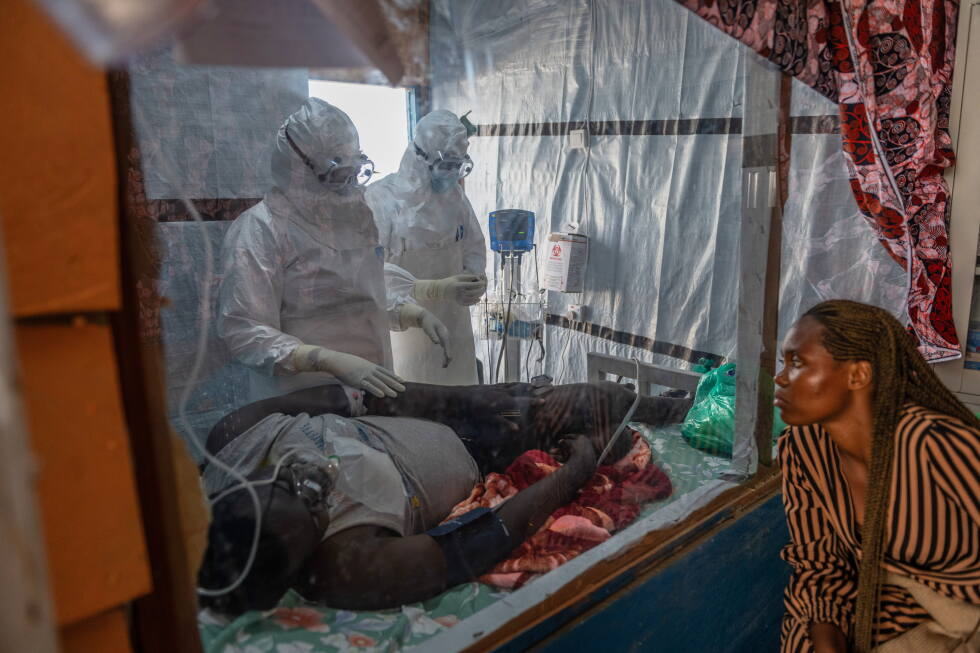
    KINSHASA, DRC – A new government ban on public demonstrations and large-scale gatherings across four provinces of the Democratic Republic of Congo – none of which have recorded confirmed Ebola cases – has triggered fierce backlash from opposition politicians and civil society groups, who claim the public health measure is a thinly veiled attempt to stifle political dissent ahead of a planned anti-government protest.

  • China’s currency stance could cost it lost decades

    China’s currency stance could cost it lost decades

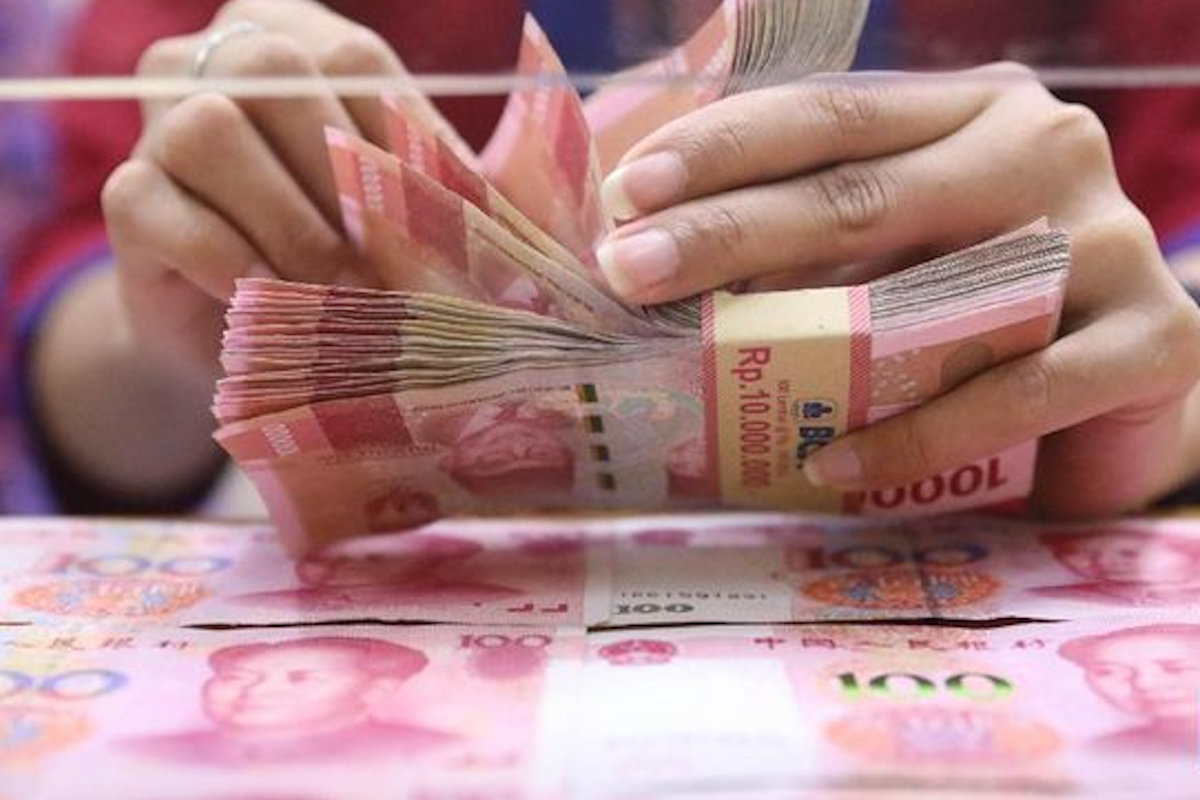
    Growing frictions between China and major global economies have increasingly centered on China’s swelling trade surplus, with European political leaders ramping up pressure that has sparked sharp pushback from Chinese officials. The debate has escalated to questions of currency policy, with German Chancellor Friedrich Merz reviving calls for a Plaza Accord-style agreement to force a revaluation of the Chinese renminbi, which he claims is undervalued by as much as 30% to gain unfair trade advantage. This proposal comes as the European Union weighs new trade defense tools to address its widening trade deficit with China, growing industrial competition, and overreliance on Chinese supply chains, with some hardline politicians framing bilateral economic ties as a systemic threat to Europe.

    Chinese state outlet the Global Times has rejected these claims, arguing that the competitive edge of Chinese firms stems from China’s complete industrial ecosystem, consistent investment in technological advancement, a massive domestic consumer market, and robust domestic market competition—not from artificially suppressed exchange rates. The editorial adds that targeting the RMB will not resolve Germany’s struggling manufacturing sector or fix gaps in Europe’s innovation chain, pointing out that Europe’s own industrial challenges stem from a mix of long-term structural issues, including chronically high energy prices, underinvestment in innovation, and ineffective industrial policy, compounded by near-term shocks such as spillover from the Ukraine war and the outflow of investment attracted by U.S. industrial subsidies.

    However, financial analyst Michael Pettis points out a critical flaw in China’s core argument: it rests on the assumption that the RMB exchange rate is solely China’s sovereign domain, and any external intervention amounts to a neocolonial overreach. This framing opens up three unresolved logical tensions that risk derailing future trade negotiations with major import partners, unless addressed through a broader, consensus-based framework.

    The first core tension revolves around the nature of global exchange rate governance. A country’s exchange rate does not exist in a vacuum; it only functions relative to the currencies of other trading nations, operating within a shared global system rather than as an exclusively domestic asset. In an open global trading system, exchange rate arrangements rely on agreed multilateral rules rather than unilateral national control. If every nation asserted exclusive sovereign right to set its own exchange rate independent of global consensus, the entire system of international trade would break down, leaving only power politics where major powers dominate bilateral arrangements. History, from ancient Chinese hegemonic cycles to modern global order, shows that unregulated competition over currency rules either leads to competing coalitions against dominant powers or, eventually, catastrophic conflict to unify the system. The current U.S.-led global order, for all its flaws, rests on a broad global consensus rather than brute force alone, and any power seeking to replace it must build that same broad consensus, which requires an open, inclusive global approach.

    The second tension comes from China’s widely held interpretation of the 1985 Plaza Accord, which is often framed as a deliberate U.S. plot that pushed Japan into its decades-long economic stagnation after forcing yen appreciation. This narrative is misleading and overlooks deep structural problems that predated the agreement: by the 1980s, Japan’s asset bubble was already extreme, with the total value of Japanese land reaching two-thirds of America’s despite Japan being 26 times smaller geographically. Japan also relied excessively on export-led growth while suppressing domestic consumption, and made a losing bet on supercomputer development rather than the networked computing that spawned the internet and modern AI revolution. At its core, the Plaza Accord was rooted in the principle that global trade requires broad structural equilibrium—it cannot rely on one-sided dynamics that serve a single nation’s interests, a point that has been well-documented by Chinese scholars such as Yu Jie, author of *Managing the US Dollar: The Plaza Agreement and the Fate of the RMB*.

    The third tension draws from lessons China drew from the 1970s OPEC oil crisis, which shaped Beijing’s long-term strategic approach to economic statecraft. After watching Henry Kissinger negotiate with both China (to counter the Soviet Union) and the Soviet Union (to secure alternative oil supplies to bypass OPEC’s production cuts), Chinese leaders concluded that U.S. foreign policy prioritizes commercial interests over ideological or strategic alliances. This inspired Deng Xiaoping’s famous 1992 observation that while the Middle East holds oil, China holds rare earths, leading Beijing to conclude that economic leverage must be backed by credible military strength to avoid being coerced by outside powers, just as OPEC and Japan were forced to bend to U.S. pressure.

    Today, this strategic outlook informs China’s approach to global trade: it holds a near-monopoly on rare earth processing, dominates many primary industrial sectors, and boasts unrivaled cost-quality competitiveness across most global manufacturing supply chains, all backed by a military that provides effective deterrence against external coercion, allowing it to defend its commercial interests without fear of forced concessions.

    More recently, China’s strategic outlook has also been shaped by lessons drawn from Russia’s political and economic trajectory. The dominant narrative in Beijing holds that Russia’s collapse after the Soviet Union stemmed from excessive political reform, while Vladimir Putin’s two decades of rule proved that strong military power and geopolitical maneuvering could overcome global pressure. But Russia’s protracted and costly war in Ukraine has upended this narrative: a much smaller Ukraine has shown far greater capacity for innovation and has successfully resisted and pushed back against Russian invasion, while Russia has become increasingly dependent on Chinese support, exposing the deep weaknesses of the Putin model. The article argues that Putin’s rule has set Russia back centuries, demonstrating that the authoritarian model of tightly binding political control to economic activity fails over the long term. While state intervention can be useful during temporary crises, ignoring market rules in normal times eventually grinds the entire system to a halt, a dynamic that is also visible in global misunderstandings over exchange rates and the Plaza Accord.

    The author argues that Russia’s decline should prompt Beijing to undertake a fundamental reevaluation of its approach to global trade and domestic economic governance. Without full currency convertibility for the RMB and further opening of China’s domestic market, internal economic pressures including rising underemployment in urban and rural areas will continue to build, potentially creating cascading domestic problems over the next one to two decades. The author warns that if China continues to avoid addressing its trade and exchange rate imbalances through market-oriented reform, rather than political expediency, it risks losing decades of economic progress, just as it did under Mao Zedong’s mid-20th century rule. If China continues to suppress domestic demand and cling to unfair trade practices, the U.S. and other major economies will gradually decouple from Chinese supply chains, leaving Chinese households poorer even amid technological progress. Russia’s current crisis, the author concludes, is a clear warning that ignoring market rules and global consensus ultimately carries catastrophic costs.

  • Floods in Ghana and Ivory Coast leave at least 24 dead following torrential rains

    Floods in Ghana and Ivory Coast leave at least 24 dead following torrential rains

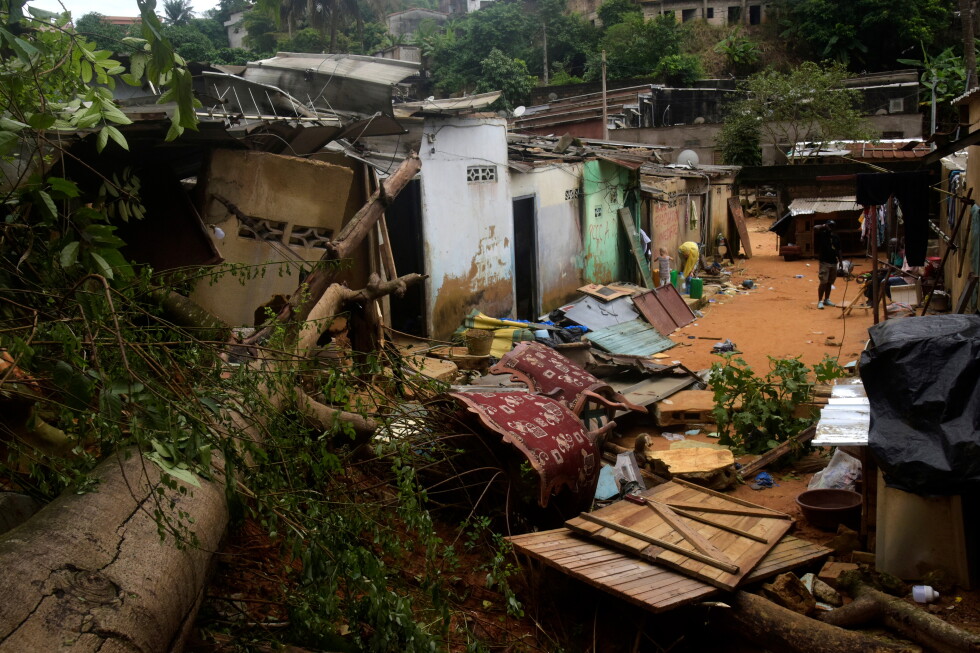
    ACCRA, Ghana – Days of unrelenting torrential rainfall have unleashed catastrophic flooding and deadly landslides across the capital cities of West African nations Ghana and Ivory Coast, leaving at least 24 people dead as emergency responders race to evacuate hundreds of trapped residents from waterlogged structures, national authorities confirmed Tuesday.

    In Ghana’s capital Accra and the adjacent industrial port city of Tema, the floodwaters swallowed entire buildings, swamped major roadways, and severed travel access to multiple hard-hit neighborhoods by Monday. The Ghana National Fire Service has recorded 12 confirmed fatalities in the country, including a mother and her young child who were swept away by rushing floodwaters in the densely populated Achimota-Agbogbloshie district, said service spokesperson Alex King Nartey in an interview with The Associated Press.

    Across the border in Ivory Coast, the sustained downpour has caused devastating flooding that killed more than a dozen people, the vast majority of whom lived in the Attécoubé and Yopougon municipalities of Ivorian economic capital Abidjan, stated Minister of National Cohesion Myss Belmonde Dogo. Local media reports confirm that at least nine of those fatalities were crushed under collapsed building rubble in Abidjan’s Mossikro neighborhood, after days of rain that first began saturating the region on Saturday.

    Footage circulating from Accra captures the urgent, community-led response to the disaster: local residents wade and swim through neck-deep floodwaters to pull trapped neighbors to safety, while dozens of vehicles sit abandoned on inundated roads that have become impassible. For emergency teams, reaching cut-off communities has presented a major logistical barrier that forced officials to request additional support from the country’s military, Nartey explained. As of Tuesday morning, dozens of residential neighborhoods remained partially submerged.

    Ghana’s National Disaster Management Organisation reported that emergency alert calls began flooding agency communications starting around 7 a.m. Monday, as alarmed residents realized rising waters were seeping into their homes. “The whole place was flooded. It’s alarming,” said Mariam Dongyela Millah, the agency’s deputy director of communications.

    Looking ahead, the Ghana Meteorological Agency has issued new warnings urging local residents to brace for additional heavy rainfall across Accra throughout the rest of the week.

    This disaster underscores a long-documented pattern of deadly extreme weather across much of Africa. Deadly seasonal flooding is a recurring hazard across many regions of the continent, which the World Meteorological Organization ranks as one of the globe’s most vulnerable regions to climate-driven extreme weather events – despite the fact that African nations contribute only a tiny fraction of global greenhouse gas emissions that drive climate change.

  • The full list of the 2026 class of ‘Great Immigrants, Great Americans’

    The full list of the 2026 class of ‘Great Immigrants, Great Americans’

    On Tuesday, the Andrew Carnegie Foundation launched its annual recognition of immigrant contributions to the United States by revealing the 2026 cohort of its prestigious ‘Great Immigrants, Great Americans’ initiative. Now a long-standing program that celebrates the profound, far-reaching impact of immigrants across every sector of American life, this year’s list brings together 26 outstanding individuals who have built extraordinary careers and driven innovation in fields ranging from global finance and tech entrepreneurship to academic research, arts, athletics, and public service.

    The 2026 honorees hail from every corner of the globe, bringing diverse perspectives and expertise that have reshaped their respective industries. Representing Sudan is Iman Abuzeid, co-founder and chief executive officer of healthcare platform Incredible Health. Sunil Amrith, the Renu and Anand Dhawan Professor of History at Yale University, earned a spot as one of this year’s inductees, hailing from Kenya. Leading the cybersecurity sector on the list is Nikesh Arora, chair and chief executive officer of Palo Alto Networks, who immigrated from India; he is joined by three other Indian-born trailblazers: Mahzarin Banaji, Harvard University’s Richard Clarke Cabot Professor of Social Ethics; Sanjiv Chopra, a professor of medicine at Harvard Medical School; and Reshma Kewalramani, president and chief executive officer of biotech giant Vertex Pharmaceuticals.

    Other honorees include Ingrid Daubechies, James B. Duke Distinguished Professor Emeritus of Mathematics at Duke University, who was born in Belgium; Hernan Diaz, an Argentina-born Pulitzer Prize-winning author; Scotland native Jane Fraser, chair and chief executive officer of global banking leader Citi; German-born Johannes Fruehauf, president and chief executive officer of Biolabs and founder and chairman of LabCentral; and Uruguay-born Gabriela Hearst, co-founder and creative director of the eponymous luxury fashion brand.

    The roster also includes Abbas Karimi, an Afghanistan-born Paralympic competitive swimmer; South Korean-born Jeong Kim, founder and chair of digital media company Kiswe; Chinese-American novelist Ling Ma, who also serves as an associate professor at the University of Chicago; Romania-born Cristian Măcelaru, conductor of the Cincinnati Symphony Orchestra; and El Salvadoran visual artist Guadalupe Maravilla. Joel Mokyr, the Robert H. Strotz Professor of Arts & Sciences at Northwestern University, who immigrated from the Netherlands, and Hiroshi Motomura, Japanese-born Susan Westerberg Prager Professor of Law and co-faculty director of the Center for Immigration Law and Policy at the UCLA School of Law, also earned recognition this year.

    Rounding out the 2026 class are Gregory Nagy, a Hungarian-born Harvard University professor of classical Greek literature and comparative literature; Argentina native Antonio Neri, president and chief executive officer of Hewlett Packard Enterprise; Mexican-born Pulitzer Prize-winning author Cristina Rivera Garza, who serves as M.D. Anderson Professor in Hispanic Studies and director of the creative writing program in Hispanic Studies at the University of Houston; British-born James Robinson, a professor at the University of Chicago’s Harris School of Public Policy and the university’s department of political science; Malaysian-born Hock E. Tan, president and chief executive officer of semiconductor leader Broadcom Inc.; Jordanian Nobel Prize-winning chemist Omar Yaghi, the James and Neeltje Tretter Chair Professor of Chemistry at the University of California, Berkeley; and Canadian Michelle Zatlyn, co-founder, president and chief executive officer of cybersecurity firm Cloudflare.

    The ‘Great Immigrants, Great Americans’ initiative was created to highlight how immigration has long been a cornerstone of American economic, cultural, and social progress, showcasing the wide-ranging contributions that foreign-born individuals make to the nation every day. This Associated Press coverage of philanthropy and nonprofit work is supported through a collaboration between AP and The Conversation US, with funding from Lilly Endowment Inc. The AP retains full editorial responsibility for all content. To access more of AP’s philanthropy reporting, visit https://apnews.com/hub/philanthropy.

  • Cape Verde will beat Argentina 1-0 in World Cup clash, predicts president

    Cape Verde will beat Argentina 1-0 in World Cup clash, predicts president

    Cape Verde, the tiny Atlantic island archipelago making its first ever FIFA World Cup appearance, is gearing up for one of the biggest underdog stories in modern football history. Fresh off becoming the smallest nation ever to advance to the tournament’s knockout round, the country’s president José Maria Neves has boldly predicted that his side, nicknamed the Blue Sharks, will pull off a seismic upset against defending champions Argentina in their upcoming round of 32 clash.

    In an exclusive interview with the BBC conducted from Cape Verde’s capital Praia, Neves laid out his optimistic vision for Friday’s match, scheduled for 22:00 GMT in Miami. “I think Cape Verde can beat Argentina 1-0,” he stated. “We are playing to win… when expectations are low regarding a team, and if that team has the urge to win, anything is possible. A small nation like Cape Verde should always strive to do exactly that — to permanently surprise the world.”

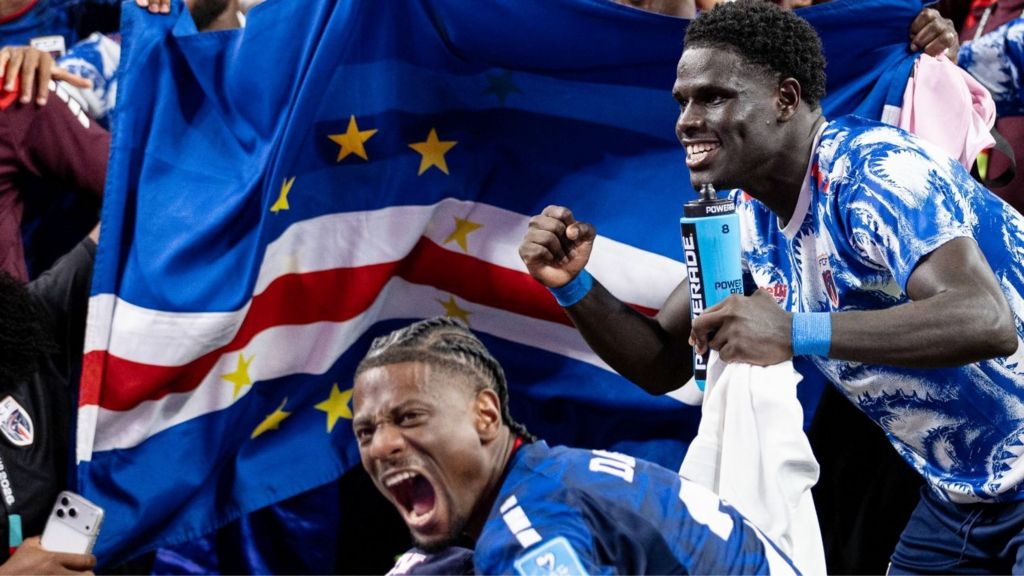
    Neves’ confidence stems from Cape Verde’s already historic run through the group stage, a stretch of results that has cemented the Blue Sharks’ reputation as giant-killers before they even take the pitch against Lionel Messi’s side. The team opened their World Cup campaign with a stunning goalless draw against European powerhouse Spain, where 40-year-old veteran goalkeeper Vozinha delivered a player-of-the-match performance to shut down one of the world’s most dangerous attacks. They followed that up with an exciting 2-2 draw against two-time World Cup winners Uruguay, then secured their knockout spot with another goalless draw against Saudi Arabia on Saturday. Finishing as Group H runners-up behind Spain, who defeated Uruguay in the final group match, Cape Verde wrote a new chapter of World Cup history as the smallest nation ever to reach this stage of the tournament.

    The gap between the two sides on paper could not be wider. FIFA’s current world rankings place Argentina at the top of the global standings, while Cape Verde sits 63 spots below, ranked just 13th among African national teams. That gap means nothing to Neves, who says the Blue Sharks bring far more heart and determination to the pitch than their ranking suggests. “Our team has 100% faith, 100% hope, and they will leave every last drop of effort on the pitch. So, we have a 100% chance to win against Argentina,” he said.

    The president’s bullish outlook aligns with the mindset of the entire Cape Verde camp, echoing comments made by head coach Pedro Leitão Brito, widely known as Bubista, over the weekend. Standing before reporters draped in his country’s flag, Bubista declared “to us, nothing is impossible” after the team secured their knockout spot. The coach added that the team’s core mission extends far beyond results: “From the very beginning, we’ve said that one of our main goals was to show our country to the rest of the world. To be able to play Argentina and Messi at this stage of the World Cup is a win for our country, no matter what happens in the match itself.”

    For the players, the run already feels surreal. Midfielder Deroy Duarte called the experience “like being in a dream,” acknowledging that facing Argentina will be an enormous challenge but adding that the side remains fully focused on causing an upset: “It will be tough, but let’s believe. Anything is possible.”

    Even if the underdog run ends on Friday, Neves says there is no reason for disappointment, framing the entire tournament as a success for the small island nation. “There is no such thing as failure for us here,” he explained. “Regardless of the outcome, we will leave the World Cup with our heads held high, knowing we accomplished every mission we set out to achieve. We came to this tournament to write our own destiny, and that destiny starts with facing the best champions in the game.”

    Cape Verde fans across the globe have already celebrated the team’s historic run, with many describing the Blue Sharks’ progression to the knockout stage as nothing short of a miracle. As kickoff approaches, the entire football world will be watching to see if the smallest underdog in the tournament can pull off the biggest upset in World Cup knockout history.

  • Abdul Ahad Momand, an Afghan air force pilot who served on the Mir space station, dies at 67

    Abdul Ahad Momand, an Afghan air force pilot who served on the Mir space station, dies at 67

    Abdul Ahad Momand, the trailblazing Afghan who made history as the first person from his country to reach outer space, has passed away at the age of 67 following a battle with cancer. His death, confirmed by close family and friends on June 21, came at a Stuttgart, Germany hospital, where he had resided since fleeing Afghanistan’s escalating civil war in 1992.

    Widely celebrated as a national hero across Afghanistan, Momand’s passing drew widespread tributes from political leaders and ordinary citizens alike. Former Afghan President Ashraf Ghani shared his grief in a post on X, writing, “I am deeply saddened by the sudden death of Afghanistan’s first and only astronaut, Abdul Ahad Momand.” He extended his heartfelt condolences to Momand’s wife, children, and extended family, adding that the astronaut’s nine-day mission aboard the Mir space station helped Afghans temporarily set aside the deep pain and division of the 1980s civil conflict.

    Momand’s journey to space began in 1988, when the 29-year-old Afghan Air Force pilot was selected to join a Soviet space initiative that flew representatives from Soviet-aligned nations into low Earth orbit. At the time, Afghanistan was under Soviet military occupation.

    After completing months of rigorous spaceflight training, Momand launched alongside veteran Russian cosmonauts Vladimir Lyakhov and Valery Polyakov on the Soyuz TM-6 mission. Over nine days docked at the Mir space station, he carried out a slate of planned scientific experiments aligned with his pre-mission goals: mapping Afghanistan’s untapped mineral reserves, evaluating the country’s hydroelectric energy potential, studying glacial patterns, and assessing regional earthquake risk. Before his flight, he told Soviet media outlet *Sovietskaya Rossiya* that the data collected from orbit would directly benefit his home country’s long-term development.

    A historically notable moment of his mission came when he broadcast a televised address to his fellow Afghans from orbit. In the message, he noted that national borders and the violence plaguing his homeland were invisible from space. “I would like to believe that such will be the situation on the land inhabited by my brothers and sisters, on the land of our fathers and mothers who have suffered so much during the years of the war,” he said at the time. During his flight, he also brought a copy of the Quran and read from it, a detail Ghani highlighted as a moment that introduced Afghanistan to the global community “with national colors and national words” and shared the country’s Islamic identity with the cosmos. Momand also added his native Pashto to the small list of languages ever spoken in space, a point of national pride that endures for many Afghans today.

    His return trip to Earth almost did not go according to plan. Momand and Lyakhov were scheduled to return on Soyuz TM-5, but a last-minute technical issue pushed their landing back by 24 hours. The pair were briefly stranded in the cramped return capsule, facing potential shortages of food and oxygen before the issue was resolved and they landed safely.

    Contemporary Associated Press reporting from the flight period notes that Momand, whose surname was alternately spelled Mohmand at the time, had previously participated in joint Soviet-Afghan counterinsurgency operations early in his military career, and had flown hundreds of combat attack missions before his selection for the space program.

    Born in the Andar district of Afghanistan’s southeastern Ghazni Province, Momand received military training at institutions in both Afghanistan and the Soviet Union before his selection for the historic space mission.

    Across Afghanistan, news of his death sparked widespread sorrow among residents who still regarded him as a unifying national icon. Zahir Ammar, a 35-year-old cosmology blogger based in Jalalabad, honored Momand’s legacy in a tribute, emphasizing the unprecedented nature of his achievement for the country. “Now, astronauts’ trips to (international space stations) have become commonplace, but during the time of the late Abdul Ahad Momand, this was a great achievement for Afghanistan,” Ammar wrote. He also voiced regret that Momand spent his final decades in exile, saying the astronaut’s lifetime of experience could have inspired a new generation of young Afghans interested in science and exploration.

    As of the announcement of his death, no formal funeral or memorial service arrangements have been made public. Momand is survived by his wife, two daughters, and one son.

  • Restoring dignity one haircut at a time in Kenya’s largest mental health hospital

    Restoring dignity one haircut at a time in Kenya’s largest mental health hospital

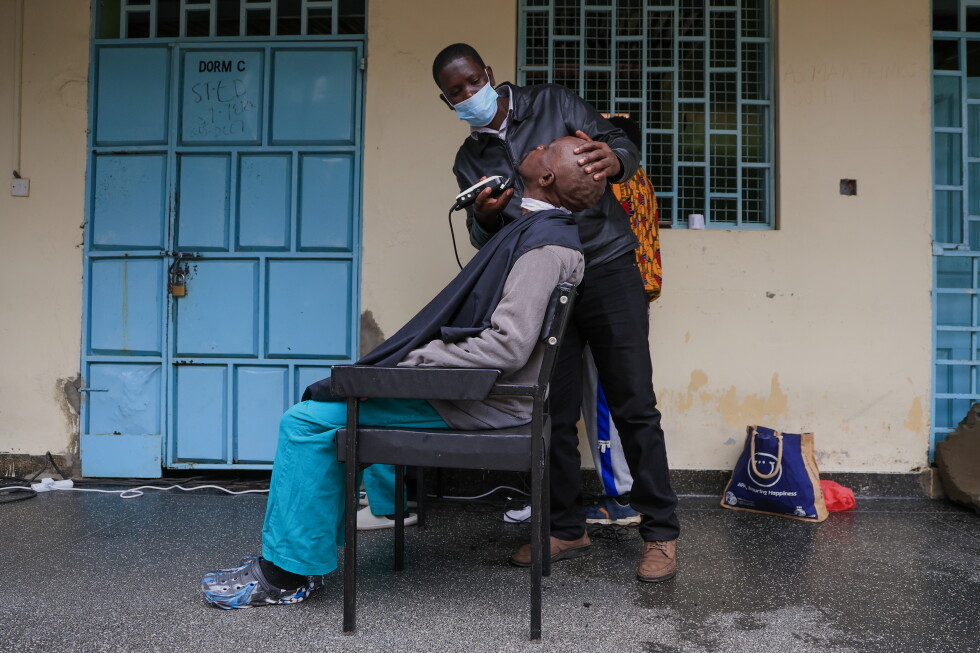
    At Mathari National Teaching and Referral Hospital, Kenya’s largest facility for specialized mental health care, a unique, community-led therapy program is transforming the recovery journey for male patients: monthly free personal grooming sessions delivered by volunteer barbers. As soon as barbers lay out their clippers, scissors and shaving supplies, a palpable wave of excitement moves through the waiting group of patients. One by one, men take their seat in the temporary barber chair, eager to walk away with a fresh cut and clean shave that many have not had in months.

    Healthcare providers at the facility explain that targeted self-care interventions like this fill a critical gap in standard mental health treatment. A common, widely overlooked symptom of many mental health conditions—particularly depression, which is one of the most prevalent mental health disorders in Kenya—is a gradual loss of motivation to maintain personal hygiene and physical appearance. For patients struggling with severe mental illness, this neglect can quickly spiral into lower self-worth, deeper social isolation, and slower progress toward recovery.

    Kenya’s mental health care system still faces major gaps in data and infrastructure, with limited national tracking of mental illness prevalence. The most recent official government policy framework, released in the 2015 National Mental Health Policy, estimates that 25% of all outpatient care attendees and 40% of inpatient admissions across Kenyan health facilities live with a diagnosable mental health condition. Mental health practitioners note that mood disorders like depression and anxiety top the list of most commonly diagnosed conditions, while substance use disorders remain an especially persistent and widespread challenge among male patients.

    The initiative comes as June marks global Men’s Mental Health Awareness Month, a moment that local health workers are leveraging to encourage a cultural shift in how Kenyan men address mental health struggles. Francis Kabugua, a senior nursing officer at Mathari Hospital, stresses that harmful cultural expectations of emotional stoicism often push men to cope with distress through harmful coping mechanisms rather than open discussion. “Many men with progressive depressive disorders start to withdraw from their families, step back from their responsibilities, and isolate themselves entirely,” Kabugua explained. Too often, instead of seeking professional support, they turn to alcohol and drugs to numb their symptoms, worsening their condition over time.

    The free grooming program is run by Uniquely Gifted, a community-based organization founded by Sheila Lugaliki, who drew on her own personal experience receiving inpatient psychiatric care to launch the monthly initiative. “I saw firsthand what it feels like to be hospitalized for months without anyone helping you care for your appearance, and how that makes you feel invisible and neglected,” Lugaliki said. She designed the program not just as a practical service, but as a gesture of human connection: the simple act of a haircut is intended to restore patients’ sense of dignity, rebuild their confidence, and remind them that they are seen and valued members of the community. “When someone has been admitted for half a year and no one has trimmed their hair, their outward appearance doesn’t just reflect neglect—it deepens the negative feelings they already have about themselves,” she added.

    Titus Enko, a psychiatric nurse at Mathari Hospital, echoes this perspective, noting that personal care is often sidelined in treatment plans that prioritize medication and traditional talk therapy. “We focus so much on clinical interventions that we forget the small, tangible acts of care that signal recovery. When a patient starts caring about how they look, that’s a clear sign they are starting to feel better about themselves,” Enko explained. “Personal grooming builds self-esteem, and that boost in self-worth directly supports long-term recovery and overall well-being.”

    By the end of the latest grooming session, as barbers finished trimming beards and cleaning up necks, one patient summarized the impact of the program in one simple, powerful word: he said he felt “alive.”

  • Pope promotes Italian nun to top migrant role in his first major appointment of a woman to Holy See

    Pope promotes Italian nun to top migrant role in his first major appointment of a woman to Holy See

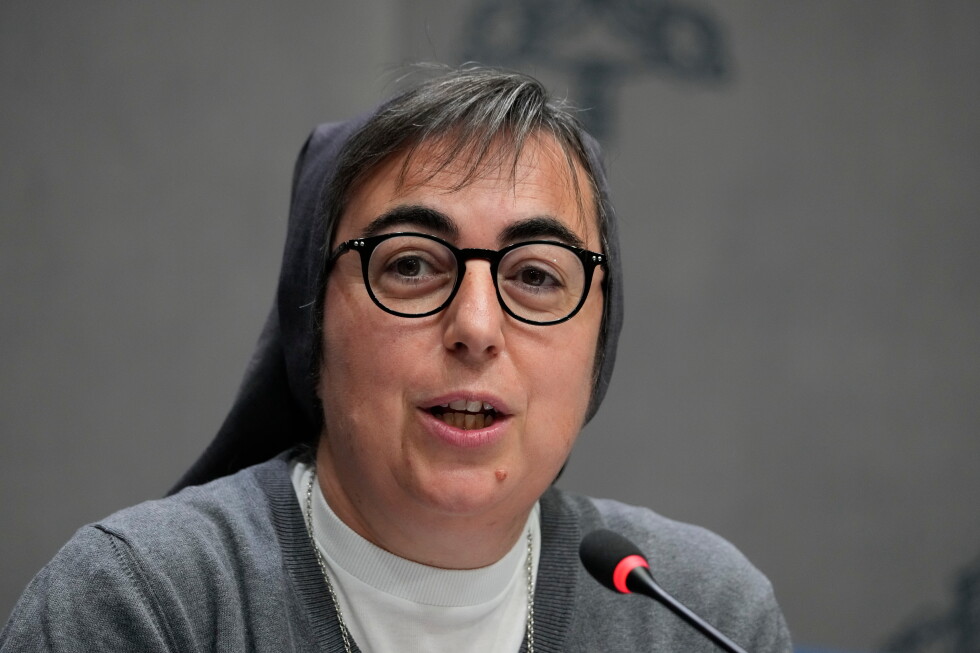
    VATICAN CITY, ROME – In a landmark move that continues the gender inclusion agenda set by his predecessor, Pope Leo XIV announced Tuesday the first major appointment of a woman to a senior leadership role in the Holy See’s top governing hierarchy. Italian economist Sister Alessandra Smerilli will take over as head of the Dicastery for Promoting Integral Human Development, the Vatican office charged with advancing policies on migration, environmental stewardship, and global human development.

    Smerilli currently serves as the second-in-command at the dicastery, and will succeed retiring Canadian Cardinal Michael Czerny, who is stepping down as he approaches his 80th birthday. To align with longstanding Catholic doctrine that restricts the priesthood exclusively to men – a requirement for some core responsibilities of senior Vatican department leadership – Pope Leo also named current undersecretary Cardinal Fabio Baggio to the parallel role of pro-prefect of the dicastery. Alongside this new post, Baggio will also lead the Vatican’s Borgo Laudato Si environmental education center located at Castel Gandolfo, the papal summer residence just outside Rome.

    This appointment marks the second high-profile role given to a woman by Pope Leo in less than a month. Earlier this March, the pontiff tapped Mexican-American leader Maria Montserrat Alvarado to oversee the Holy See’s entire global communications operations. The move builds on the deliberate legacy of Pope Francis, who prioritized breaking gender barriers in Vatican management throughout his papacy in direct response to decades of calls from Catholic women for greater decision-making authority within the institutional church.

    For generations, women have shouldered the bulk of the Catholic Church’s on-the-ground community work around the world: running most parish schools, managing faith-based hospitals and healthcare clinics, and leading intergenerational faith formation to pass Catholic teachings to younger generations. Despite this central role, women have long criticized the church for confining them to second-class status and barring them from top leadership and ordination, a grievance that continues to fuel calls for structural reform within the global institution.

  • The Paraguay hero who sold his kit when his son was born

    The Paraguay hero who sold his kit when his son was born

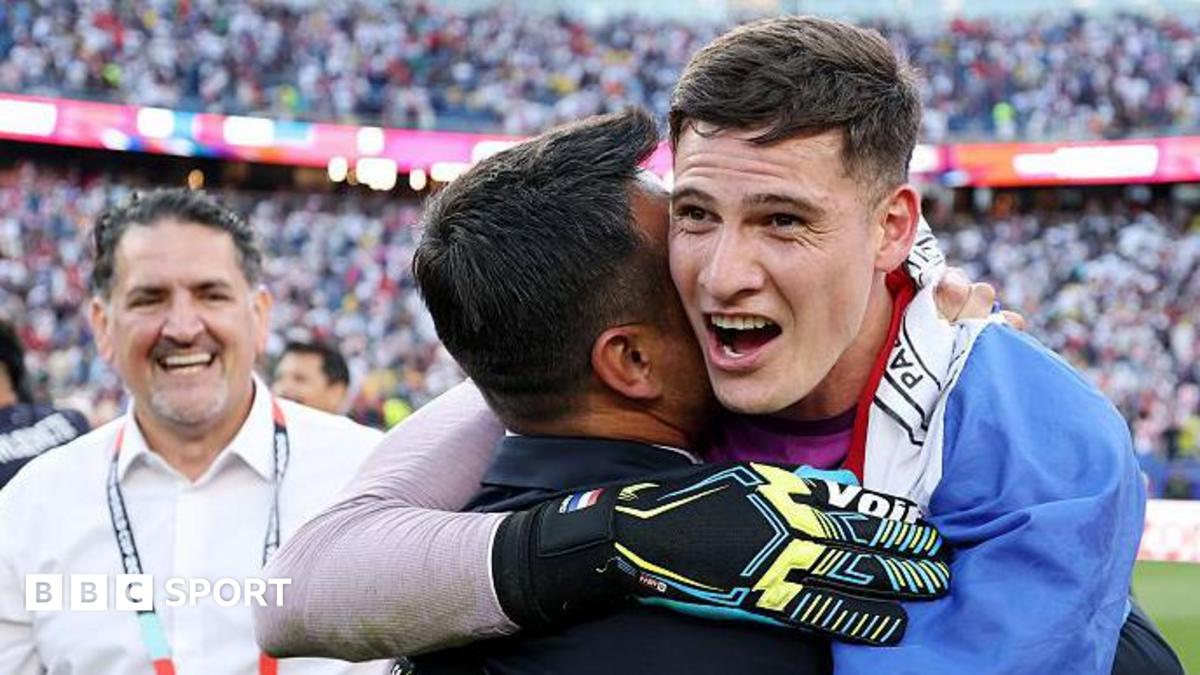
    For the 26-year-old Paraguayan goalkeeper Orlando Gill, the 2026 FIFA World Cup round of 32 clash against Germany was far more than just a match – it was the latest chapter in one of the most incredible underdog stories in modern football. Just four years after selling his most prized playing gear to cover emergency medical bills for his prematurely born son, Gill delivered a career-defining performance, saving two penalties to secure a shock shootout victory over Germany, catapulting Paraguay into the tournament’s last 16.

    Standing at an imposing 6 feet 6 inches tall, Gill has emerged as one of the breakout stars of this World Cup, but his path to global football stardom was lined with financial hardship and personal tragedy. The shot-stopper climbed through the youth ranks at lower-tier Paraguayan clubs 13 de Junio and CS San Lorenzo, earning a call-up to Paraguay’s U-20 squad for the 2019 South American U-20 Championship. He made his senior debut in September 2020, but registered just two first-team appearances before life-changing crisis struck in 2022, when his wife Melissa Avalos developed life-threatening complications during pregnancy.

    The couple’s son Lautaro was expected to arrive on New Year’s Eve 2022, but Melissa was hospitalized in late November, and after a week of induced labor, complicated childbirth left the new mother requiring emergency surgery, with the newborn placed immediately in intensive care. The family made it home in time for Christmas, but were left completely destitute by medical costs, as Melissa shared on social media last year: “We had nothing, and Orlando was selling his club gear to cover expenses. Our son fought for his life, and his dad was always there. He gave everything, he sold everything: his clothes, his sneakers, even his U20 national team jersey, which he couldn’t keep as a memory.”

    Nearly a year after Lautaro’s birth, with Gill still only having two senior appearances to his name, a life-changing gamble changed the course of his career. Argentina’s top-flight side San Lorenzo signed the little-known keeper on an initial loan deal. He spent the end of 2024 grinding through reserve team matches, and earned a promotion to the first-team starting lineup in early 2025, catching the eye of Paraguayan national team head coach Gustavo Alfaro.

    After receiving his first two call-ups in March and June of 2025, with Paraguay already having secured its World Cup spot, Gill made his senior international debut in the final qualifying match against Peru last September. He went on to start in five pre-tournament friendlies, impressing enough to earn the starting goalkeeper job heading into the 2026 World Cup. The campaign got off to a rough start with a 4-1 opening loss to co-hosts the United States, but Gill has found his form ever since, conceding just one goal across his next three matches – including 120 minutes of scoreless play against four-time World Cup champions Germany. He saved 16 of the 17 shots on target he faced through that stretch, a remarkable stat that proved critical to forcing the match to penalties.

    While some debate surrounded a late free-kick decision that denied Germany a late winning goal in regular extra time, there was no questioning Gill’s heroism in the shootout. Two critical stops from the Paraguayan shot-stopper secured his nation’s spot in the last 16, only the second knockout stage win in the country’s World Cup history, and earned him FIFA’s official Player of the Match award.

    In a heartfelt post-match tribute, Gill dedicated his honor to his hospitalized nephew Alexander back home in Paraguay, continuing the theme of family that has defined his incredible rise. “Alexander, this trophy is for you,” he said. “I hope you get better soon. Your godfather is supporting you from a distance.”

    For Gill, the journey from obscurity and financial crisis to World Cup stardom is already one of the most inspiring stories of the 2026 tournament, and his unlikely run with Paraguay is still only halfway through.