作者: admin

  • Three-year-old rescued and taken to hospital six days after Venezuela quake

    Three-year-old rescued and taken to hospital six days after Venezuela quake

    Six days after a pair of powerful back-to-back earthquakes tore through Venezuela, a 3-year-old toddler named Klieber Morán has been pulled alive from the collapsed rubble, a Jordanian rescue team confirmed in a groundbreaking discovery that has reignited hope across the disaster-stricken nation. Released video footage captured by Jordanian Public Security shows the moment rescuers erupted in cheers as the small child was extracted from the wreckage in La Guaira, one of the hardest-hit regions of the disaster. Delcy Rodríguez, a senior Venezuelan government official, called the remarkable survival an “unexpected moment of hope” for a country grappling with overwhelming loss. This miracle extraction comes far beyond the 72-hour window that experts identify as the period with the highest odds of finding trapped survivors alive, making the child’s survival all the more extraordinary.

    Initial assessments of NASA satellite data confirm the catastrophic scale of the destruction: the 7.2 and 7.5 magnitude quakes that struck last week have damaged or destroyed at least 58,870 buildings across the country. As of Tuesday, the official death toll has climbed to 1,943, with more than 10,000 people injured and tens of thousands still unaccounted for, leaving countless families waiting for word of missing loved ones. At a makeshift morgue set up at La Guaira’s port, local resident Wilker Molalla told reporters he was waiting to identify the remains of 9 of his family members, including his sister and her children. Only he and one other relative survived, he said, because they were away at work when the tremors hit.

    After receiving immediate on-site first aid from the Jordanian rescue team, Klieber was transferred to a hospital in the capital city of Caracas, where Venezuelan Assembly President Jorge Rodríguez confirmed the toddler’s vital signs are stable and good. Rodríguez emphasized that the successful rescue proves there is still reason to continue searching for other possible survivors, adding that domestic rescue teams and international responders from more than 30 countries including the United States and Mexico are continuing to comb through collapsed structures with search dogs and heavy moving equipment. Shelters for displaced residents have already been opened across La Guaira and other affected regions, he noted.

    Despite the small spark of hope from the rescue, the overall humanitarian situation in the impacted areas remains dire. The United Nations has issued urgent warnings that tens of thousands of displaced survivors are in critical need of life-saving food, clean water, and emergency shelter. The UN High Commissioner for Refugees (UNHCR) reported Tuesday that widespread food shortages have already taken hold in La Guaira, where basic public services have collapsed and most communication lines remain cut off. “Community tensions are rising as access to assistance remains constrained,” the agency said in an official statement. Local 18-year-old Daniela Armas, who was injured in the quake when she fell from a motorbike during the tremors, told reporters that even when supplies are distributed, competition is so fierce that people often come to blows over scarce rations, comparing the scene to a violent cockfight.

    The World Health Organization (WHO) added that local health systems are already operating under extreme pressure, increasing the risk of deadly outbreaks of preventable contagious diseases. WHO spokesperson Christian Lindmeier explained that low pre-existing vaccination coverage in the region leaves communities vulnerable to outbreaks of measles and diphtheria as public health infrastructure remains disrupted. To address the growing crisis, UNHCR has requested an initial $15 million in emergency funding to scale up protection services, deliver core relief supplies, and provide temporary shelter for 30,000 displaced survivors over the next six months. Some international aid has begun to arrive: a 47-tonne shipment of UN humanitarian supplies landed in the country Tuesday, including emergency medical kits, safe childbirth supplies, and materials for disease prevention. As search efforts continue, the nation has begun the painful process of burying the dead recovered so far, with thousands more families still waiting for answers about their missing loved ones.

  • Williams falls just short on Wimbledon singles return

    Williams falls just short on Wimbledon singles return

    Four years after what most assumed was her final goodbye to Wimbledon’s iconic Centre Court, tennis legend Serena Williams made a much-anticipated return to singles competition Tuesday, falling just short of a fairy-tale comeback in a nail-biting three-set clash against 20-year-old rising star Maya Joint.

    The 44-year-old American icon, owner of 23 Grand Slam singles titles and a record seven Wimbledon singles crowns alongside six doubles trophies, walked out to a thunderous standing ovation from the packed Centre Court crowd 1,462 days after her last singles point at the All England Club. Many thought Williams had permanently stepped away from competitive singles when she announced her planned retirement nearly four years ago, but a wildcard entry gave her the chance to step back onto the grass courts she dominated for decades.

    Her return to competitive tennis began earlier this month in doubles competition, with scattered glimpses of the power and tenacity that defined her legendary career. But questions lingered over whether the 44-year-old could match the pace and endurance of a far younger opponent in a full singles match, 12 years after she claimed her last Wimbledon singles title.

    The opening set appeared to validate those questions. Rust from her long hiatus showed as Joint, a 20-year-old Australian born in the U.S., dominated baseline rallies with sharp down-the-line winners, taking the first set 6-3. But Williams’ iconic never-say-die mentality soon emerged. Her level climbed steadily through the second set, and twice fought back from a break deficit to force a deciding tiebreak.

    When Joint earned a match point in the tiebreak, Williams delivered a blistering forehand winner followed by a 120mph serve to save the point, sending the crowd into a frenzy and forcing a decisive third set. The grueling battle took its physical toll, however, and Joint held firm to close out the match 6-3 6-7 (6-8) 6-3, securing the first Wimbledon main draw win of her young career.

    For Joint, who entered the match on an 11-match losing streak at the WTA Tour level, the upset was a career-defining moment. After the match, the 20-year-old told on-court reporters she could barely process the win: “I didn’t get much sleep last night, I was up until 2am just thinking about it. Walking out, I forgot the warm-up, my legs weren’t moving. I really don’t know what to say right now. I don’t know what just happened.”

    She added that beating the player she calls “the best of all time” was a childhood dream come true: “This court has had so many huge names that have played on it. She has so much aura, she is such a legend. I have been dreaming about this since I was a little kid, so this is pretty crazy.”

    Williams offered a gracious congratulation to Joint at the net before soaking in a minutes-long standing ovation from the supportive Centre Court crowd. Instead of attending the mandatory post-match press conference, she released a statement reflecting on her emotional return: “It was really great to be back at Wimbledon. I never expected to be here. The atmosphere was amazing. Walking out was amazing. I definitely relished it and missed it and enjoyed the moment more than anything.”

    Williams’ family was in attendance to support the legend, including her husband Alexis Ohanian, sister and longtime doubles partner Venus Williams, and her two daughters — 8-year-old Olympia and nearly 3-year-old Adira. Williams told reporters ahead of her comeback that playing in front of her daughters was her primary motivation for returning to the court. The Williams sisters are set to return to competition later this week for the women’s doubles draw, where they will face Camila Osorio and Solana Sierra in the first round as the six-time Wimbledon doubles champions look to add another chapter to their historic partnership.

  • Rio bus drivers and workers throughout Brazil demand shorter work week as lawmakers examine proposal

    Rio bus drivers and workers throughout Brazil demand shorter work week as lawmakers examine proposal

    On a busy Tuesday in downtown Rio de Janeiro, hundreds of striking bus drivers gathered in protest, bringing public attention to a growing national movement pushing for sweeping labor reform. The demonstrators are calling for improved working conditions, fairer wage increases, and the elimination of Brazil’s widespread six-day work schedule — a core demand of a broader campaign to guarantee all Brazilian workers two full days of rest each week.

    For many workers on the frontlines of this movement, the current schedule leaves little room for anything beyond constant labor. Alexandre Garrido, a 49-year-old bus driver with two decades of experience on Rio’s routes, spelled out the human cost of the six-day workweek. “You can’t spend quality time or go out with your family, give attention to your children, visit relatives, or have a day like going to a restaurant to have lunch together,” he explained.

    The protest comes as a landmark constitutional amendment to cap the national workweek at 40 hours, with no corresponding pay cut, advances through Brazil’s legislative process. The measure won approval from the country’s lower house in May and is currently under review in the Senate. It has earned the public backing of President Luiz Inácio Lula da Silva, who has included the reform as a key policy pledge in his October reelection campaign.

    Brazil’s current labor landscape allows for a 44-hour weekly work limit. For millions of workers, this translates to five standard eight-hour days plus an additional four-hour shift on a sixth day, while other workers fit 44 hours into a five-day schedule with two days off already. According to campaign organizers, the reform would transform daily life for an estimated 14 million Brazilians currently stuck on six-day schedules — a group that disproportionately includes low-income, low-skilled workers.

    Lower-wage workers and women in particular bear the brunt of the extended workweek. Fernanda Sousa, 26, is one of those millions. Every morning except Tuesday, she climbs out of bed before dawn to navigate the steep paths of Rocinha, Rio’s largest favela, drop her 6-year-old son off with his godmother, and commute to a bistro in the upscale neighborhood of Gavea, where she serves pão de queijo and other snacks to customers. “Going to work on Sunday when everyone is with their families breaks my heart,” Sousa shared, as she headed home with her young son on a recent Friday evening. Like many women around the world, she struggles to balance formal employment with unpaid housework, a burden made far heavier by the longer work schedule.

    For younger workers seeking to advance their careers, the grueling schedule also blocks opportunities for education and growth. Matheus Paulo Costa da Silva, a 28-year-old home goods store supervisor in Rio, recently tried to enroll in an evening information technology course to boost his job prospects — but constant exhaustion from his 44-hour week forced him to drop out. “I can’t see my family, I can’t go to the gym, I can’t study. I live to work,” he said.

    Workplace reform advocates frame the end of the six-day workweek as a long-overdue correction of Brazil’s history of exploitative labor. Rick Azevedo, a Rio city councilor who attended Tuesday’s protest and founded Life Beyond Work, one of the main grassroots groups driving the amendment, put it bluntly: “Those who support working six days a week are in favor of modern slavery.” Erika Hilton, the lawmaker who shepherded the amendment through the lower house, echoed that framing, noting that even some conservative opponents have now come around to supporting the reform, even as others work to block it in the Senate. “Ending the six-day workweek allows us to care for workers who are under attack since Brazil’s slavery days,” she said, referencing the country’s 400-year history of chattel slavery that only ended in 1888.

    Tuesday’s industrial action by bus drivers, organized by a local union that lists higher wages as its top demand, was just one part of a national day of protest coordinated by Azevedo’s movement across the country.

    Not everyone supports the change, however. Brazil’s business community has raised sharp alarms about the potential economic costs of cutting working hours. The National Confederation of Industry argues that the reform could push annual labor costs up by as much as 267 billion reais ($52 billion), a 7% increase that would slow Brazil’s economic growth by an estimated 0.7 percentage points.

    Industry analysts and small business advocates warn that micro, small and medium enterprises would face the steepest challenges from the reform. Sebrae, Brazil’s public small business support institution, notes that small businesses make up 97% of all enterprises in the country and account for half of all formal private sector jobs. For small business owners with already thin profit margins, the change presents an impossible choice.

    Marcelo Pierini, a 52-year-old cafe and pie shop owner in downtown Sao Paulo, currently has five employees and only closes one day a week on Sunday. “This change could mean one of two things: closing on Mondays and losing some profit or sharing my bill with the customers,” he said. “It is hard. I want some rest too, but I can’t afford it.”

    While the reform faces headwinds in the Senate, it follows a growing trend across Latin America, where multiple nations have already adopted similar 40-hour workweek reforms. Argentina stands out as an outlier in the region, having recently moved in the opposite direction to extend working hours for some sectors.

  • Americans react to Supreme Court upholding birthright citizenship

    Americans react to Supreme Court upholding birthright citizenship

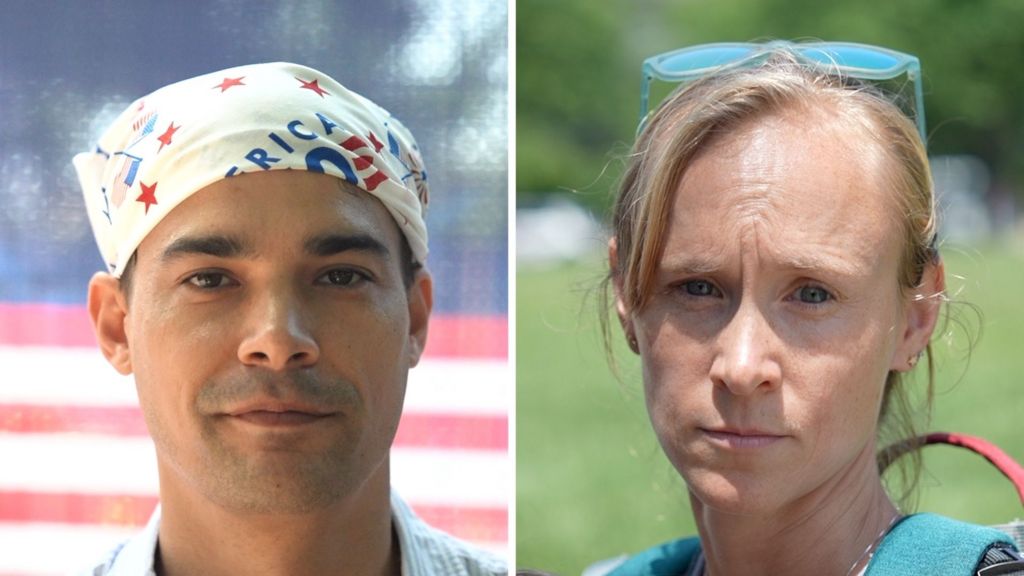
    A decades-old foundational principle of U.S. citizenship law remained intact after the U.S. Supreme Court issued a ruling upholding birthright citizenship, prompting the BBC to reach out to ordinary Americans across the country to capture their reactions to the high court’s decision. Birthright citizenship, which grants automatic U.S. citizenship to nearly all people born on American soil, is enshrined in the 14th Amendment of the U.S. Constitution, and the Supreme Court’s ruling reaffirmed this long-standing interpretation of the nation’s founding document. The BBC’s outreach captured a wide spectrum of opinions that mirror the deep partisan and cultural divides that shape contemporary debates over immigration and national identity in the United States. Many respondents who backed the ruling emphasized that birthright citizenship is a core part of America’s identity as a nation of immigrants, arguing that it upholds the country’s long-standing promise of opportunity to people born within its borders regardless of their parents’ immigration status. These respondents framed the Supreme Court’s decision as a victory for constitutional originalism and equal treatment under the law, noting that the 14th Amendment was explicitly written after the Civil War to grant citizenship to formerly enslaved people and establish a clear standard for birthright nationality. On the other side of the debate, critics of the ruling expressed disappointment that the Supreme Court did not revisit the issue, arguing that the current policy incentivizes illegal immigration and puts unfair strain on local government resources. These respondents contended that the 14th Amendment’s wording was never intended to grant automatic citizenship to children of non-citizens, and called for future legislative or constitutional action to revise the policy. Between these two polarizing views, some respondents shared more nuanced perspectives, acknowledging the historical importance of the principle while calling for broader comprehensive immigration reform to address unresolved challenges in the U.S. immigration system. For many Americans, the ruling has reignited conversations about what it means to be American, and how the nation should balance its commitment to inclusive principles with the need to enforce immigration laws. Legal experts note that the Supreme Court’s ruling sets a firm precedent that will likely keep birthright citizenship unchanged for the foreseeable future, even as the political debate over the issue continues to play out in statehouses and national election campaigns across the country.

  • Ecuador make Mexico fans hotel noise complaint

    Ecuador make Mexico fans hotel noise complaint

    As anticipation builds for a high-stakes 2026 FIFA World Cup round of 16 clash between Ecuador and co-hosts Mexico in Mexico City, a pre-match controversy has thrown the contest into the spotlight ahead of kickoff on Wednesday. Ecuador’s national football federation has officially submitted a grievance to World Cup governing body FIFA, calling out disruptive behavior by hundreds of local Mexican supporters outside the Ecuadorian team’s hotel just two days before the game.

    Local media outlets confirmed that approximately 1,000 Mexico fans gathered outside the accommodation on Monday, staging a deliberately noisy public demonstration they framed as a “serenade”. The crowd used noisemakers, pots, and buckets to amplify their performance of the iconic Mexican folk song *Cielito Lindo*, before local law enforcement intervened to disperse the gathering and move the crowd back from the hotel perimeter.

    In an official public statement, the Ecuadorian federation condemned the action, arguing that it violates the core values of fair play, solidarity, and unity that the global FIFA World Cup is built on. Despite the criticism of the pre-match antics, the federation made clear that the Ecuadorian side would focus on responding to the provocation through their performance on the pitch at Mexico City Stadium, where the match will kick off at 02:00 BST on Wednesday.

    The statement also emphasized that Ecuador hopes such unsporting behavior will not overshadow the global football celebration that connects the two neighboring, culturally linked nations. FIFA has been contacted by reporters for a response to the complaint, and has not yet issued an official comment on the incident.

    This knockout-stage encounter already carries high stakes for both sides: Mexico has secured wins in all three of its previous 2026 World Cup matches played on home soil at Mexico City Stadium, while Ecuador earned its spot in the round of 16 after a stunning upset victory over Germany in the group stage. If both Mexico and England win their respective round of 16 matches — with England facing DR Congo later Wednesday at 17:00 BST — the two sides will face off in the quarter-finals right here in Mexico City.

  • ‘Absolute madness’: Row over plan to demolish Nazi bunker under Berlin

    ‘Absolute madness’: Row over plan to demolish Nazi bunker under Berlin

    BERLIN — A bitter public debate has erupted over the fate of one of the final standing physical remnants of Adolf Hitler’s Nazi power infrastructure, as city officials advance plans to clear the site for a mixed-use development of residential apartments and commercial office space.

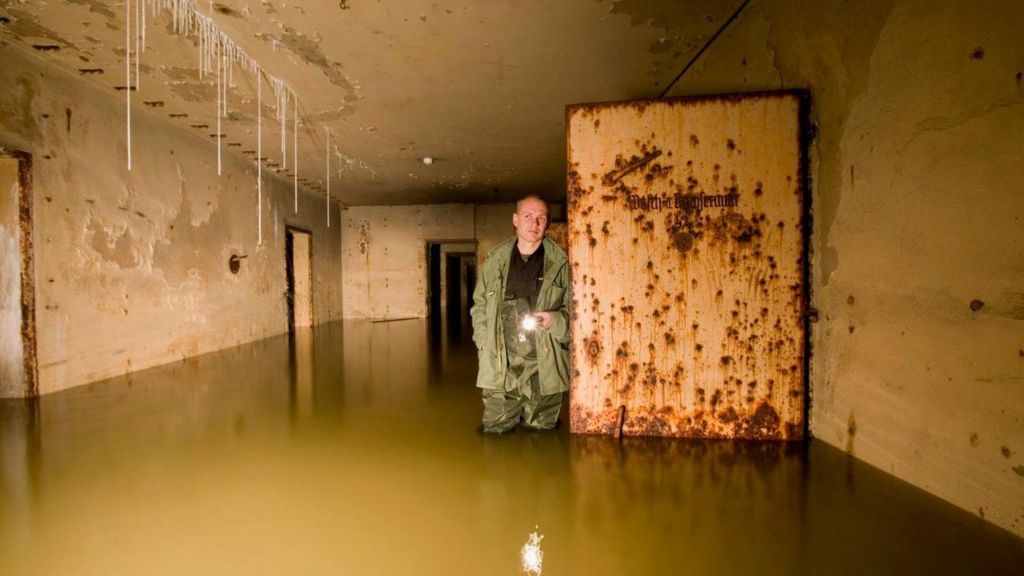
    Of Hitler’s central New Reich Chancellery complex, constructed in the 1930s by Albert Speer — Hitler’s preferred personal architect — almost no trace survives in central Berlin today. The main above-ground structure was heavily damaged by Allied bombing and combat during the final weeks of World War II, and Soviet occupying forces ordered its complete demolition in 1949. What has remained intact, however, is the sprawling underground bunker that served chancellery staff, sitting on an undeveloped plot of land just 120 meters south of the far more famous Führerbunker where Hitler and Eva Braun took their own lives in 1945.

    City officials argue that demolition is the clearest and most responsible path forward. Christian Gaebler, Berlin’s Senator for Housing and a member of the center-left Social Democratic Party, framed the proposal in comments to local outlet BZ, saying: “We are not standing in the way of new housing developments just to preserve a bunker that might then even become a place of pilgrimage” for neo-Nazi sympathizers.

    But the plan has drawn fierce pushback from historians, heritage preservation groups, and local historical organizations, who warn that destroying the structure would erase an irreplaceable piece of 20th-century history. Dietmar Arnold, chairman of the Berlin Underworlds Association — a group that documents and preserves the city’s subterranean historical sites — calls the proposed demolition “absolute madness.”

    Arnold, who last explored the bunker in 2007 when he confirmed it remained in excellent structural condition, told the BBC that the site is one of the last tangible links to the regime that planned and launched World War II and the Holocaust. “It is a site of the perpetrators. It was the power centre of Nazi Germany, Hitler’s New Reich Chancellery, and these are the last remains,” he said. Rather than clearing the site, Arnold has proposed partnering with Germany’s national Holocaust Museum to convert the bunker into a public memorial and museum, hosting educational exhibits focused on the final days of the Nazi regime in 1945.

    Critics of demolition note that Germany has already lost countless historical sites from both the Nazi and Cold War communist eras, and that destroying this structure would set a harmful precedent. “So much history has been destroyed here in Germany, both Communist history and Nazi history. We can’t keep doing that,” Arnold added.

    Structural assessments from Arnold’s group confirm that roughly 1,200 square meters of the bunker complex remain fully intact, with 1.7-meter-thick reinforced concrete walls and ceilings. The structure is large enough that it even housed a field hospital in the final days of the Battle of Berlin, and a well-known 1945 photo captures German General Helmuth Weidling emerging from the bunker to surrender to Soviet forces. Arnold also argues that the planned development could move forward without full demolition: it would be entirely possible to construct new buildings above the existing bunker without removing the structure itself.

    The Berlin State Monuments Council came out against the demolition plans last year, stressing that the site carries substantial historical weight. In a formal statement, the council noted: “The New Reich Chancellery was the planning centre and starting point of World War Two and also symbolises the catastrophic end of the Nazi regime. In view of its potential significance as a historic monument, its state of preservation and its inclusion on the list of listed buildings should be assessed by the State Office for the Preservation of Historical Monuments.” To date, no final decision on the bunker’s future has been announced.

  • UK journalists and NGOs risk terrorism prosecutions under new security bill

    UK journalists and NGOs risk terrorism prosecutions under new security bill

    As the United Kingdom’s controversial National Security (State Threats) Bill races toward final parliamentary approval this week, independent security and legal experts have issued stark warnings that the sweeping legislation could inadvertently criminalize foreign correspondents and non-governmental organization (NGO) workers who interact with state-backed groups designated as threats under the new law.

    The bill grants UK Home Secretary Shabana Mahmood broad authority to label any state-backed organization that is judged to harm the UK’s national safety and core interests as an official threat. Under its provisions, anyone found to “support, assist, or obtain material benefits” — including information — from a designated proscribed group commits a criminal offense, carrying a maximum penalty of 14 years in prison. Most notably, the legislation explicitly rules out a “reasonable excuse” defense for these offenses, a provision that critics say creates dangerous gaps in protection for legitimate public-facing work.

    Former independent reviewer of UK terrorism legislation David Anderson has emerged as one of the most prominent critics of the bill, arguing that the proposed legislation contains effectively no safeguards for reporters working in conflict zones and sensitive international beats. Writing for The Guardian, Anderson noted that promised protections for both journalists and NGO workers are largely missing from the final draft of the bill. He added: “Foreign correspondents could also be affected. Indeed on the face of it, they would be at risk of prosecution if they were to have contact of any kind with sources within designated bodies or their agents.”

    In an attempt to address growing criticism, cabinet ministers have argued that only information “which possesses an inherent value that enriches the recipient” is banned under the legislation. But Anderson pushed back against this claim, pointing out that the bill’s formal definition of “material benefit” explicitly categorizes information as a separate category from financial gain, meaning even routine reporting that relies on sourcing from designated groups could fall afoul of the law. The UK government also rejected a formal recommendation from current independent terrorism legislation reviewer Jonathan Hall, who called for the “reasonable excuse” defense to be expanded to cover cases involving information gathering for journalistic work.

    UK Home Office officials have pushed back against critics, insisting that the bill does not target the work of professional journalists. A spokesperson for the department said: “This bill does nothing to undermine the vital work journalists do, and any suggestion otherwise is absolutely false. Legitimate activity including journalistic freedoms are protected under the bill, as well as diplomatic and humanitarian engagement. We have a proud tradition in this country of upholding the freedom of the press. Indeed, it is our obligation to ensure journalists are empowered to carry out their work.”

    But beyond the risks to press freedom, critics warn that the bill’s vague language around key terms including “foreign power threat activity” and “expressing support” creates the opening for authorities to weaponize the legislation to restrict peaceful protest rights. Many critics have also highlighted the unusually fast pace of the bill’s passage through parliament as a major red flag, arguing that the rushed process prevents robust scrutiny of its far-reaching implications.

    Former Labour Party leader Jeremy Corbyn amplified these concerns in a formal statement released on June 17, describing the bill as “an alarming expansion of state power, and an escalation of the government’s chilling assault on the right to protest.” Corbyn argued that the legislation’s deliberately vague and open-ended wording allows the home secretary to unilaterally criminalize political campaigns that the government of the day opposes. He pointed to recent mass arrests of activists under existing terrorism legislation as evidence of the risk of overreach: more than 3,000 people have been arrested under the Terrorism Act for expressing support for proscribed Palestinian advocacy group Palestine Action, after the group was banned in July 2025. Earlier this month, five senior judges overturned an earlier February High Court ruling that had found the proscription of Palestine Action to be unlawful, a decision that has added to fears of expanded crackdowns on protest under the new national security law.

  • How the UAE continued supporting Sudan’s RSF through Haftar and Libya

    How the UAE continued supporting Sudan’s RSF through Haftar and Libya

    A landmark collaborative investigation by three independent journalistic and monitoring groups has uncovered a sustained, covert network of military support that the United Arab Emirates (UAE) maintains for Sudan’s Rapid Support Forces (RSF) through territory in eastern Libya, even after regional pressure targeted the group’s weapons supply lines. The probe, carried out by Lighthouse Reports, Sudan War Monitor and Evident, confirmed on Monday that RSF fighters receive weapons, logistical backing and specialized weapons training at multiple dedicated camps across Libya, contradicting repeated public denials from Abu Dhabi, the Libyan Arab Armed Forces (LAAF) led by Khalifa Haftar, and the RSF itself.

    Interviews with seven RSF defectors who have passed through the Libyan training infrastructure, plus current and former LAAF insiders, have corroborated the findings. One defector, identified only as Ahmed, offered on-the-record testimony detailing the full supply chain. According to Ahmed, all military equipment sent to the RSF is Emirati-made. “Emirates is the one supporting the RSF. They would bring it from their country by a plane to here and from here we would receive them and deliver it to Sudan,” he explained. Ahmed added that he personally saw an armored vehicle marked “Made in Emirates” at one camp, even as most supplies are shipped without visible branding to cover the UAE’s involvement. He also emphasized the critical nature of Abu Dhabi’s backing, stating, “If the RSF lost UAE support, if UAE stopped supporting them, the RSF won’t be able to fight in the field anymore, it will break apart.”

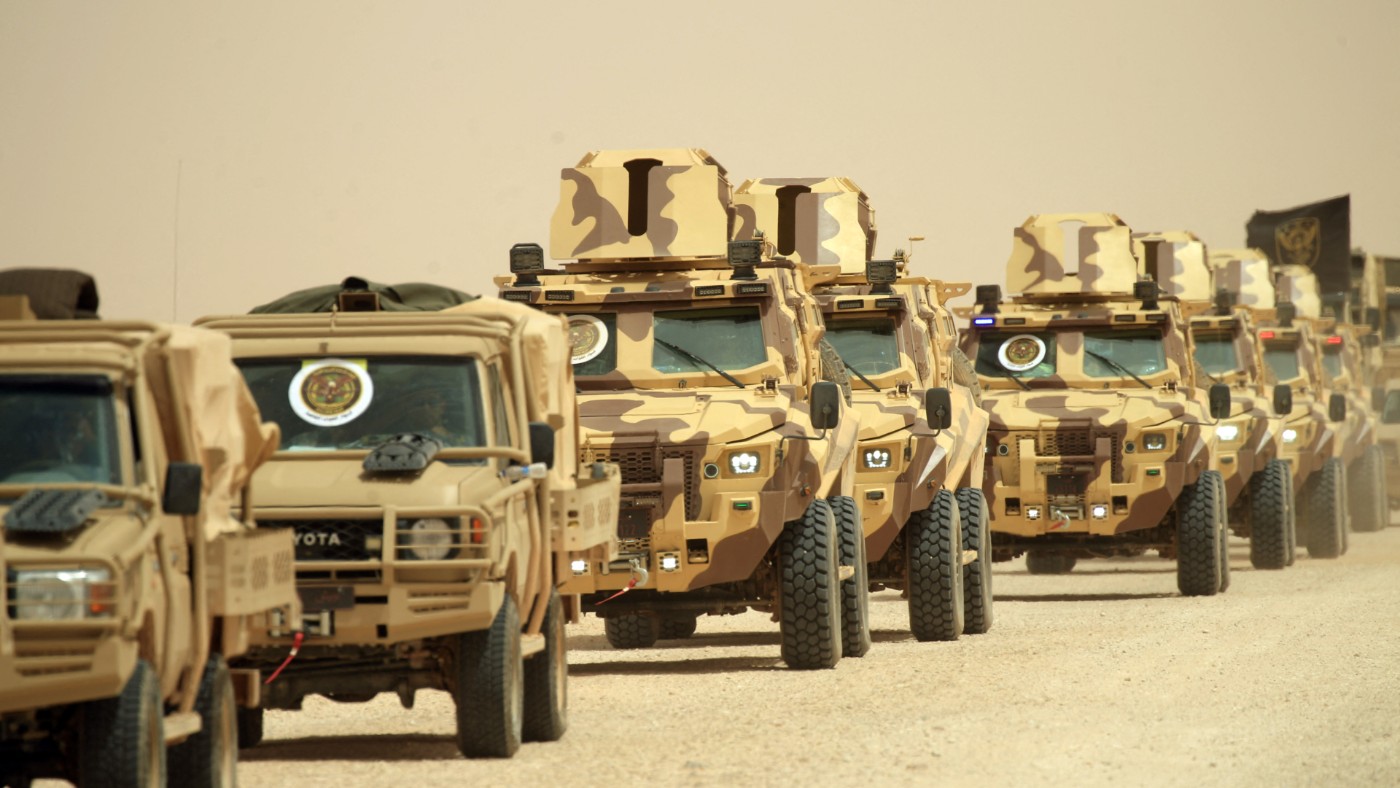
    The investigation identified five active RSF camps in Libyan territory controlled by Haftar’s LAAF, four of which were newly mapped: Seweidiya near the key southeastern LAAF base of al-Kufra, Sabha, al-Jufra, and Camp 17 near the eastern coastal city of Benghazi. Ahmed confirmed the logistics chain: RSF fighters are transported to the remote Chad-Libya-Sudan border triangle, moved to al-Kufra, then relocated to Benghazi and finally to Camp 17, which serves as the primary storage hub for all supplies bound for Sudan. Training at the camps includes hands-on instruction for operating heavy weaponry, such as DShk heavy machine guns, rocket-propelled grenades (RPGs) and multiple rocket launch systems. Investigators also confirmed the presence of Colombian mercenaries at the sites, matching a May 2025 Human Rights Watch report that identified these fighters as contracted by a UAE-based security firm with direct ties to the Emirati government.

    This is not the first time foreign support networks for the RSF have been exposed: Middle East Eye, which first broke extensive coverage of LAAF-RSF collaboration, previously revealed a separate RSF training camp operated in Ethiopia. Longstanding ties bind the UAE to RSF leader Mohamed Hamdan Dagalo, widely known as Hemedti: for decades, gold extracted from Darfur mines controlled by the Dagalo family has been exported to commercial markets in Dubai, and RSF fighters previously deployed as mercenaries to support the Saudi-UAE coalition in the Yemen war.

    Despite regional pressure that included Egyptian and Turkish airstrikes on RSF weapons convoys departing from LAAF-held territory starting in November 2025, the investigation finds that the UAE has not scaled back its support – it has merely rerouted it. Egypt backs the Sudanese Armed Forces (SAF), the RSF’s opponent in Sudan’s ongoing civil war, putting Cairo in direct conflict with the UAE and Haftar’s alliance. After airstrikes forced the temporary closure of al-Kufra air base, the UAE shifted its main supply hub to Amdjarass airport in eastern Chad, according to senior Egyptian military and intelligence sources speaking to Middle East Eye. Flight tracking data confirms a sharp uptick in flights from the UAE and Libya to Amdjarass following the closure of al-Kufra, proving the route shift was a tactical adjustment, not an end to operations. “The flights didn’t stop,” a senior Egyptian military source noted. “They were simply redirected – from Libya to Chad, and specifically to Amdjarass.”

    Egyptian security surveillance has documented large-scale, ongoing expansion of Emirati infrastructure at Amdjarass, including a fully operational Emirati military coordination room, new drone hangars, and upgraded facilities capable of accommodating large Ilyushin cargo aircraft, one of the world’s largest military transport planes. “Emirati companies carried out extensive construction and expansion work at the airport that wasn’t limited or symbolic development,” an Egyptian commander explained. “What happened was large-scale expansion and the construction of new facilities.” The UAE has claimed its activities at Amdjarass are purely humanitarian, a claim that contradicts the documented military infrastructure observed by Egyptian intelligence.

    A new secondary weapons corridor has also been established, running from the Gate 17 border crossing between Libya and Chad through central-eastern Chad to the Sudanese border town of Adre, before entering Darfur – the vast western Sudanese region almost entirely controlled by the RSF. Adre currently hosts hundreds of thousands of refugees who have fled Sudan’s civil war, which has been classified as the world’s worst ongoing humanitarian crisis, with an estimated 200,000 people killed since fighting broke out between the RSF and SAF in April 2023. The RSF has faced widespread international accusations of committing genocide against non-Arab communities in Darfur.

    Jalel Harchaoui, a leading analyst specializing in Libyan political economy, told Middle East Eye that recent developments had incorrectly suggested the UAE was winding down its involvement. “Far from receding, Emirati interference is returning with full force: the UAE is aggressively re-escalating its support for the RSF via eastern Libya,” he said. To date, the UAE’s ongoing support for the RSF has faced no significant pushback from major Western powers, including the United States and the United Kingdom.

    All parties involved have continued to deny any wrongdoing: the UAE’s foreign ministry issued a statement asserting “The UAE has not provided and is not providing military or financial support to any warring party in Sudan,” while the RSF has also denied receiving Emirati backing.

  • Australia sues Amazon for making allegedly unfair contracts with subscribers

    Australia sues Amazon for making allegedly unfair contracts with subscribers

    The Australian Competition and Consumer Commission (ACCC) has launched legal action against Amazon, accusing the global e-commerce and technology giant of violating national consumer protection laws through unfair contract terms tied to the rollout of ads on its Prime Video streaming service. The case centers on changes Amazon made to its Prime offering starting in early 2024, when the company introduced mandatory advertising to the previously ad-free Prime Video platform that has long been included as a core perk of annual Prime subscriptions.

    For more than ten years, Prime Video positioned itself as a commercial-free streaming bonus for Amazon Prime members, who pay an annual fee for faster delivery and a bundle of additional digital benefits. Prime launched in Australia in 2018, and when Amazon began rolling out advertising across its global Prime Video footprint, Australian subscribers were told they would have to pay an extra monthly fee to retain the ad-free experience they had originally agreed to. That surcharge pushed the total effective monthly cost of Prime to 12.99 Australian dollars.

    According to the ACCC’s filing, more than 850,000 Australian customers had already prepaid for full-year Prime subscriptions when Amazon rolled out the change. These prepaid subscribers were forced to accept a lower-quality, ad-interrupted streaming service for the remainder of their subscription terms unless they paid the additional cost for ad-free access. The regulator alleges that Amazon enforced these changes using five unfair contract clauses that applied to more than 1 million Australian subscribers between November 2023 and August 2025. These clauses allowed Amazon to unilaterally make material changes that negatively impact the service, while offering no contractual right for subscribers to claim a refund or other fair compensation for the degraded service.

    “Consumers who wanted to avoid ads were left with no choice but to pay more to maintain the service they’d initially signed up for,” ACCC Chair Gina Cass-Gottlieb said in a statement outlining the regulator’s legal position. Amazon has not yet issued a public response to the lawsuit, as media outlets have been unable to secure comment from the company.

    This is not the first time Amazon’s consumer practices have drawn regulatory scrutiny across the globe. In the United States, the Federal Trade Commission (FTC) has previously taken legal action against Amazon over allegations it signed users up for Prime subscriptions without their explicit consent and deliberately made the cancellation process overly complicated. Just this week, Amazon agreed to pay an FTC fine to settle separate claims that it failed to protect consumers from online shopping fraud, creating what regulators described as a “Kafkaesque ordeal” for defrauded customers seeking resolution. In the United Kingdom, regulators have previously opened investigations into Amazon’s third-party product listing practices and the widespread spread of fraudulent customer reviews on the platform.

  • Firefighters struggle to contain deadly Greek wildfire

    Firefighters struggle to contain deadly Greek wildfire

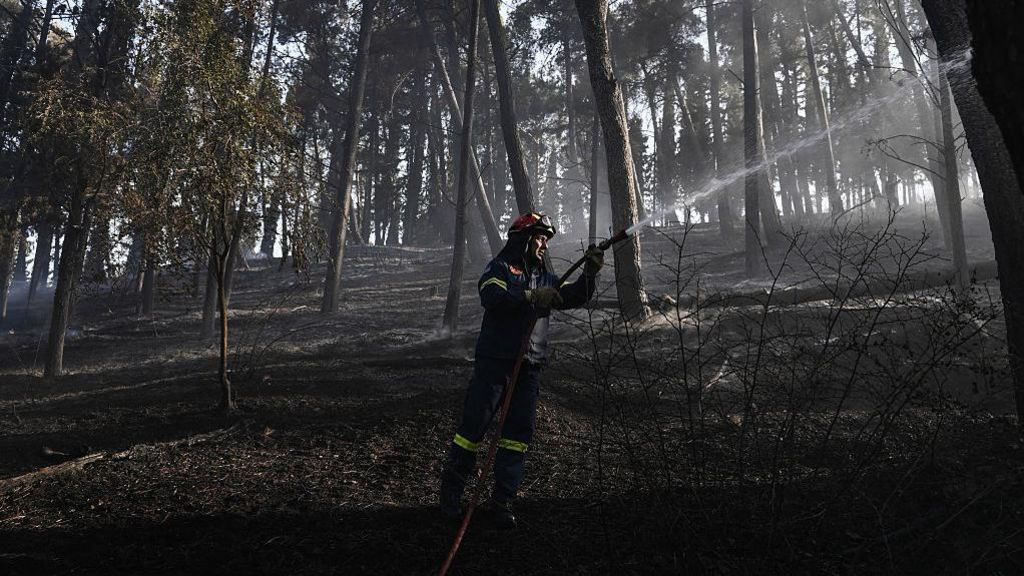
    A devastating out-of-control wildfire raging through northern Greece has left one person dead and forced hundreds of residents from their homes, as extreme weather conditions hamper hundreds of firefighters’ efforts to corral the spreading blaze. The victim’s remains were recovered Tuesday from a scorched patch of land near Liti, a small settlement located roughly 15 kilometers northwest of the country’s second-largest city, Thessaloniki. More than 100 firefighters have been deployed to the fire zone, backed by dozens of fire trucks and at least seven water-bombing aircraft, which were called in to tackle the inferno that stretched across a 5-kilometer active flame front by Tuesday evening. A woman was also hospitalized with hand burns after she attempted to put out small spot fires near her property, authorities confirmed.

    The blaze ignited around 14:30 local time Tuesday, rapidly spreading from its starting point to adjacent forested areas amid unseasonably hot, windy and bone-dry conditions. Greek authorities had issued a high wildfire risk alert for the region hours before the fire broke out, forecasting conditions that would help any spark escalate quickly and lead to repeated flare-ups even after initial containment. By Tuesday night, all residents of Liti had been ordered to evacuate to safer areas, and the fire was advancing toward the neighboring village of Melissochori, with a small number of structures already sustaining damage, according to public broadcaster ERT. Investigators have not yet pinpointed the cause of the blaze, which is the latest in a string of summer wildfires to hit Greece this year.

    As the country approaches its peak summer tourist season, the recurring wildfire threat underscores the growing risk Greece faces from increasingly frequent droughts and heatwaves linked to climate change. Summer wildfires have become a routine annual hazard across much of the country’s forested mainland and islands, forcing repeated large-scale evacuations and straining national firefighting resources year after year.