作者: admin

  • Indian Dalit man’s alleged custodial death and a family’s wait for justice

    Indian Dalit man’s alleged custodial death and a family’s wait for justice

    Nearly two months after 26-year-old Akash Delison died in a Tamil Nadu government hospital, his body remains unclaimed in a morgue, held hostage by a grieving family’s demand for justice. Akash, a member of India’s marginalized Dalit community who aspired to become a lawyer to serve his people, died on March 8, just 48 hours after he was taken into police custody alongside a friend in an ongoing criminal case. What began as a local tragedy has now reignited national and international scrutiny of India’s long-running crisis of custodial death and police torture, a problem that disproportionately targets the country’s most vulnerable communities.

    Akash’s parents, Rajesh and Anandhi Delison, allege their son was brutally tortured by officers during his detention. Anandhi, who visited her son hours before he succumbed to his injuries, told the BBC he had been blindfolded and beaten severely; an autopsy later confirmed more than 20 external and internal injuries, including a fractured right leg, brain hemorrhaging, and swelling of the heart and lungs. Gopi, the second man arrested alongside Akash, remains in judicial custody. Local police have rejected the torture claims, asserting Akash suffered fatal injuries when he jumped off a bridge while attempting to escape custody.

    Widespread public outcry over the incident has already led to administrative action: six police officers have been suspended from duty, and the Tamil Nadu state government has ordered a full probe by the state’s top anti-crime agency. Still, Akash’s family refuses to retrieve his body for funeral rites until all officers deemed responsible for his death are taken into custody. Dalit organizations across the state have condemned the killing and thrown their full support behind the family’s campaign for accountability.

    Akash’s death is not an isolated incident. It marks the third reported custodial death in Tamil Nadu alone in 2026, putting a fresh spotlight on a pattern of unlawful violence that stretches across the entire country. Just weeks before Akash’s arrest, the Central Bureau of Investigation (CBI) concluded that the 2025 custody death of 27-year-old Ajith Kumar, a temple security guard held in connection with a false robbery complaint in Sivaganga district, was directly caused by police excessive force. Earlier in April, a special court in Madurai handed down death sentences to nine police officers for the 2020 custody killings of a father and son, a case that previously sparked massive nationwide protests.

    Official data from India’s federal home ministry underscores the scale of the crisis: between 2025 and March 15, 2026, 170 custodial deaths have been recorded across the country. The northern state of Bihar reported the highest number at 19, followed by Rajasthan with 18 and Uttar Pradesh with 15. Beyond formal custody deaths, rights groups also document widespread extrajudicial “encounter killings,” staged confrontations that police use to eliminate suspects without going through the formal legal process, a practice disproportionately reported in Uttar Pradesh and Assam.

    The crisis has drawn sharp condemnation from the international community. In its 2026 Global Torture Index, the World Organisation Against Torture ranked India as a “high risk” country for torture and ill-treatment by security forces, placing it alongside Pakistan, Nigeria, Colombia and Mexico. The report explicitly notes that severe abuse, including beatings and forced confessions, disproportionately targets marginalized groups: Dalits, Adivasi tribal communities, Muslims, LGBTQIA+ people, and informal migrant workers.

    In February 2026, United Nations human rights experts sent an open letter to the Indian government calling for independent, transparent investigations into what they described as “alarming allegations of hundreds of extrajudicial killings and torture-related deaths.” The letter raised particular alarm over the normalized practice of “encounters” and “half-encounters,” warning that the routine use of unlawful violence risks eroding the rule of law. To date, Alice Edwards, the UN Special Rapporteur on torture, confirmed the Indian government has not responded to the letter, and the 60-day deadline for a reply has expired. The BBC has reached out to India’s federal home ministry, Tamil Nadu’s home secretary, and the state’s police director general for comment on Akash’s case and the broader allegations, but has not received a formal response as of publication.

    Legal experts and human rights activists say that while holding individual officers accountable for high-profile cases like Akash’s is a critical step, deep systemic reform is the only way to end the ongoing crisis. India’s constitution and existing criminal code already include formal legal safeguards against custodial abuse, but consistent enforcement remains weak across the country. Anupama Arigala, a New Delhi-based legal consultant, argues that police, magistrates, and prosecutors must shift away from a culture prioritizing arrests and convictions over due process.

    “These three parties must carefully analyze if there’s really a need for police or judicial custody, or if the accused can participate in the investigation just as effectively while out on bail,” Arigala explained. She added that magistrates must proactively screen for signs of torture when suspects are brought to court, a step that is often skipped due to overloaded dockets and systemic understaffing that plagues India’s judicial system.

    UN experts and activists alike have also called on India to ratify the UN Convention Against Torture, a step that would require the country to pass a standalone national law explicitly criminalizing torture—legislation that does not currently exist on India’s federal books. While activists acknowledge that a new law will not eliminate custodial abuse overnight, they say it would mark a critical formal recognition of the crisis and create a framework for long-term institutional change.

    For Rajesh Delison, that change cannot come soon enough. He told the BBC his family has yet to recover from the shock of losing Akash, a young man who worked in his shop while studying to become a lawyer to help his marginalized community. “They have snuffed out the life of an active young man who had big dreams for the future,” he said. For now, his family remains resolved: they will continue to leave Akash’s body in the hospital morgue until they get the justice they have pledged to fight for.

  • Syria begins trial of first Assad-era official in Damascus

    Syria begins trial of first Assad-era official in Damascus

    On a landmark Sunday morning in central Damascus, Syria, a metal cage was positioned at the heart of the courtroom in the Palace of Justice, steps from the bustling al-Hamidiyah souk. Shortly before 11 a.m., Atef Najib, the cousin of ousted former president Bashar al-Assad and a one-time top security official, was led into the enclosure. Clad in a brown striped prison uniform and wearing a blank, unreadable expression, he took his seat as the courtroom fell quiet.

    Najib stands accused of orchestrating one of the earliest and deadliest crackdowns on anti-government demonstrators that erupted at the start of the 2011 Syrian uprising, with formal charges of “crimes against the Syrian people” brought against him. Mounted directly opposite the defendant’s dock was a portrait of Hamza al-Khatib, the 13-year-old boy who became a global symbol of the uprising’s human cost after he was killed and tortured by security forces in 2011.

    The roots of this trial stretch back 15 years to the 2011 Arab Spring, when a group of teenagers in the southern Syrian city of Deraa spray-painted anti-regime slogans on a local school wall. One line, “Doctor, it’s your turn,” cut directly at Assad, a trained ophthalmologist. The detention and brutal torture of those young children by security forces sparked the first widespread anti-government protests across the country. At the time, Najib was the top political security chief in Deraa, overseeing the sweeping campaign of mass arrests and violent repression that followed.

    Sunday’s opening session marks the first public trial of a senior Assad-era official since the fall of the former government in December 2024. Najib was among the first high-ranking figures arrested, taken into custody on Syria’s coast in January 2025, just weeks after Assad fled the country to Russia. For more than a year, families of victims of the Assad regime’s crackdown have waited for this moment of accountability.

    In the courtroom, emotions ran high as victim’s families passed the dock in front of international and local reporters. A young woman held aloft a photo of Hamza al-Khatib, as chants broke out across the room: “The martyrs are the heroes. Atef, you are the dog.” The trial comes as Syria’s new transitional authorities work to demonstrate progress on long-awaited transitional justice, a key demand from Syrians who spent 14 years under the repressive Assad regime during the civil war.

    Just two days before Najib’s trial opened, Syrian security forces announced the arrest of Amjad Youssef, the primary suspect in the 2013 Tadamon massacre, where nearly 300 unarmed civilians were executed and dumped into a mass grave. Footage of Youssef personally shooting victims before they were thrown into the pit was widely circulated after the massacre, and his arrest in the Al-Ghab Plain area of Hama province near his hometown was publicly shared by the interior ministry to broad attention across the country.

    Since Assad was toppled on December 8, 2024, Syrians have consistently demanded full accountability for the thousands of crimes committed under his government. But the transitional justice process has moved slowly in a country fractured and worn down by 14 years of violent conflict.

    Addressing the court on Sunday, Damascus Public Prosecutor Hosam Khatab framed the trial as a foundational step for the new Syrian justice system. “Transitional justice begins with him, trust the state and justice,” Khatab told the court. He called Najib “the first ‘pharaoh’ when he gave the orders to fire on protesters,” using the term Syrians have adopted to refer to abusive former regime officials. “This will be neither the first nor the last. We will pursue them all.”

    Turning directly to Najib in the dock, Khatab raised his voice: “Our God has given us what we wanted. And as for you: did your God, Bashar al-Assad, give you what he promised?” Najib offered no response. The prosecutor then went on to announce a list of 10 additional high-profile suspects who will face trial in coming months, topped by Bashar al-Assad himself. Other names on the list include Assad’s younger brother Maher al-Assad, who commanded the elite 4th Armoured Division — the regime’s primary armed wing that led multiple crackdowns; Wassim al-Assad, another close relative of the ousted president; former Grand Mufti Ahmed Badreddin Hassoun; and multiple other military and security officials arrested in recent months. Bashar al-Assad, who remains in exile in Russia, will be tried in absentia.

    Sunday’s opening session was limited to preliminary administrative and legal procedures, and the judge did not question Najib directly. A second full hearing is scheduled for May 10.

    Currently, Syria retains the death penalty as a legal punishment, but the legal definitions of crimes against humanity and war crimes have not yet been formally codified into the country’s national law. An independent observer monitoring the trial’s impartiality on site spoke to Middle East Eye, noting the challenge of upholding judicial standards in the wake of mass atrocities. “We must maintain a degree of neutrality and avoid overly political language to meet the standards of justice, even if it is difficult in the face of victims,” the observer said. “It will happen gradually. This was the first day.”

    As Najib was led out of the courtroom at the end of the session, the iconic chants from the 2011 uprising rang out across the chamber once again: “Syria is ours, not the Assad family’s.”

    Outside the Palace of Justice after the hearing, dozens of victim’s families from Deraa waited for buses to carry them back to their southern home city, sitting on plastic chairs as traffic slowed around the building. Many mothers, their eyes wet with tears, embraced one another, comforting each other after the emotional day.

    Among them was 50-something Warda, whose son — an unarmed bystander — was killed when security forces stormed the al-Omari Mosque area in Deraa in late March 2011. Dozens of protesters were killed that day when forces used tear gas and live ammunition to break up weeks of ongoing sit-ins and demonstrations. Warda said she believes Najib will ultimately face the death penalty for his role in the violence. “This is the most beautiful day of my life. God has put him in a cage. We hope justice will prevail,” she told Middle East Eye.

  • The Chinese sports brand taking on Nike and Adidas

    The Chinese sports brand taking on Nike and Adidas

    In the late 1980s, as China began opening its economy to the world, 17-year-old high school dropout Ding Shizhong arrived in Beijing carrying 600 pairs of sneakers produced at a relative’s local factory. What began as a small street selling venture would evolve into one of the world’s fastest-growing sportswear powerhouses, challenging the long-held dominance of Western giants Nike and Adidas. Today, that humble startup is Anta Sports – a multinational multi-brand group with a portfolio that includes household names like Fila, Arc’teryx, Salomon, Wilson, and a major stake in Germany’s Puma, with bold ambitions to capture market share across the globe.

    Anta’s origin story is deeply tied to the rise of Jinjiang, a small agricultural county in China’s southeastern Fujian province that grew into the self-styled “shoe capital of the world.” As part of China’s targeted industrial development policy for coastal regions, Jinjiang built a specialized manufacturing ecosystem that drew investment from global sneaker brands seeking lower production costs. At the heart of this boom was Chendai town, a 40-square-kilometer hub home to thousands of factories and specialized suppliers for every part of a shoe, from laces to soles to technical fabrics, paired with streamlined logistics that turned designs into finished retail goods in record time.

    By 2005, United Nations estimates showed Fujian province alone produced nearly 20% of the world’s total footwear output, with one-third of Jinjiang’s workforce employed in the footwear sector, turning the region into one of China’s highest-earning economic districts. Fei Qin, an associate professor at the University of Bath who studied China’s coastal manufacturing clusters in the 2000s, notes this level of concentrated industrial specialization was unprecedented globally at the time. As foreign brands placed bulk orders with Jinjiang factories, local manufacturers gained far more than just revenue: they mastered cutting-edge production techniques, learning to deliver higher quality, faster turnaround, and more consistent output than competitors anywhere else in the world.

    It was within this ecosystem that Anta cut its teeth, first producing bulk footwear for Western labels before building a robust domestic distribution network across China and gradually building its own brand recognition. Unlike many domestic manufacturers that remained stuck in low-margin subcontracting work, Anta prioritized growing its own brand, opening retail locations across China and sponsoring top domestic sports competitions from basketball to table tennis. In 2007, the company listed on the Hong Kong Stock Exchange, raising HK$3.5 billion ($450 million) – at the time, the largest ever IPO for a Chinese sports firm.

    Branding consultant Wei Kan, who has worked with major global brands including Nike and Converse in China, says Anta stood out from its domestic competitors from an early stage thanks to its fully integrated production hub, which allowed it to design and bring new products to market far faster than most rivals. It was also one of the first Chinese brands to target the same mid-to-premium consumer segment that Western giants had long dominated. As Kan explains, firms that start as contract manufacturers for global brands gradually master end-to-end business operations, build strength in China’s massive domestic market, and naturally evolve into global competitors in their own right. Anta is far from the only example: Chinese tech giant Xiaomi started as a software developer customizing Android systems before launching its own line of smartphones, electronics, and now electric vehicles; drone leader DJI began making third-party camera and drone components before becoming the world’s top consumer drone manufacturer; and BYD, once a battery supplier for Tesla, is now the world’s largest electric vehicle producer. “Each of these firms are now giants in their fields,” Kan notes.

    Today, Anta operates more than 12,000 stores across China and 460 outlets in international markets, with plans to expand to 1,000 locations across Southeast Asia alone over the next three years. In February 2026, the company opened its first standalone US flagship store in Los Angeles’ upscale Beverly Hills neighborhood, marking a major milestone in its global expansion push. This expansion comes amid a shifting global trade landscape, as former US President Donald Trump’s tariffs aimed at bringing manufacturing jobs back to the US have highlighted both the competitiveness and indispensability of Chinese manufacturing supply chains.

    Anta’s global push has not been without its challenges. Chinese brands have long faced a persistent perception gap in Western markets, where many consumers still associate Chinese-made goods with low quality and low cost. Additionally, rising geopolitical tensions between Beijing and Western capitals, particularly Washington, have created additional headwinds for Chinese firms expanding abroad. To navigate these barriers, Anta has adopted a deliberate multi-brand acquisition strategy, rather than pushing its core Anta label directly into crowded Western markets.

    The strategy first proved successful in 2009, when Anta acquired the brand rights for Fila in China, turning the century-old Italian athletic label into one of the company’s top revenue generators. In 2019, Anta purchased a controlling stake in Finland’s Amer Sports, gaining ownership of premium outdoor brands Arc’teryx and Salomon, as well as American sporting goods maker Wilson – the official supplier of game balls for the US National Basketball Association. Most recently, in 2026, Anta acquired a 29% stake in German sportswear giant Puma, with plans to accelerate the brand’s growth in China’s massive domestic market.

    Sports business analyst Rufio Zhu of global marketing firm IMG explains that this approach allows Anta to enter foreign markets through established, well-regarded Western brands first, avoiding consumer skepticism around Chinese-owned labels. “These are moves that help Anta avoid ‘forcing’ its goods into every market and instead use its Western brands as a gateway,” Zhu notes. Celebrity endorsement deals, a cornerstone of global sportswear brand building, have also been a key focus: Anta has already signed top athletes including NBA stars Klay Thompson and Kyrie Irving, and counts Olympic freestyle skier Eileen Gu – a figure who became polarizing in Western media after choosing to compete for China instead of the US at the Winter Olympics – among its brand ambassadors. Still, the company has yet to land a game-changing global endorsement deal on par with Nike’s iconic 1980s partnership with Michael Jordan. As Wei Kan puts it: “Brands like Anta need to be ready to navigate the fine line between Chinese and Western markets, a challenge that comes with being a global Chinese brand.”

    Anta’s global rise comes at a moment when its main Western rivals face mounting challenges both in China and abroad. Nike and Adidas have seen their earnings squeezed by US tariffs on Asian-manufactured goods, and Nike has struggled to revive sales in China after a misjudged post-pandemic e-commerce push amid a broader slowdown in Chinese consumer spending. Zhu says these struggles have created a unique opening for Anta, as global consumers increasingly show appetite for alternative sportswear brands. “The question isn’t whether Anta will raise their profile. It’s whether competitors can adapt quickly enough to defend their home turf,” Zhu says.

    Fei Qin adds that China’s ongoing investment in factory automation is positioning its manufacturing sector for long-term global competitiveness, allowing for faster production and further cost reductions that will benefit firms like Anta. Standing in Anta’s new Beverly Hills flagship, where shelves are lined with performance sneakers and basketball shoes designed to compete directly with Nike and Adidas’ core product lines, company representatives acknowledge they have a long road ahead to build brand recognition in the US. Still, they remain optimistic about the future. “We’re realistic about the competition but the global sportswear landscape is not a zero-sum game,” an Anta spokesperson said. “We are confident that sports lovers will recognise Anta’s innovations and brand value.”

  • Global voices meet Confucian culture in Nishan

    Global voices meet Confucian culture in Nishan

    Between April 24 and 26, 2026, Qufu, the ancient birthplace of the renowned Chinese philosopher Confucius located in Jining, Shandong Province, opened its gates to a special cross-cultural gathering. Hosted under the theme “Nishan Sacred Land: A Vision Shared with the World”, the event welcomed 28 digital content creators from more than a dozen nations across the globe, including the United States, France, and Russia, inviting them to dive deep into centuries-old Confucian heritage.

  • What it was like in the room during gunshots at Trump event

    What it was like in the room during gunshots at Trump event

    The annual White House Correspondents’ Dinner, a high-profile gathering that typically brings together Washington’s political elite, journalists, and public figures, was abruptly thrown into chaos earlier this week when gunshots rang out near the venue. In a firsthand account shared with audiences, BBC correspondent Tom Bateman, who was on site covering the event, has offered a vivid, unfiltered look at what unfolded in the moments after the first shot was heard.

    Bateman described how the room, which had been buzzing with quiet conversation and pre-dinner networking just seconds before, descended into sudden panic. Attendees who moments earlier had been mingling, checking their notes, and chatting with colleagues froze, before a wave of urgent movement swept through the crowd. “You could instantly feel the shift in the energy,” Bateman recounted. “One moment everyone was going about their business, the next, people were diving under tables, scrambling for exits, and pressing themselves against walls to get out of the line of fire.”

    Security personnel, who are routinely deployed in large numbers for White House-linked events, reacted within seconds, Bateman said. Teams of armed Secret Service agents and local law enforcement rushed through the room, blocking potential access points, directing terrified attendees to safe shelter, and conducting an immediate sweep of the building to locate the source of the gunfire. Event organizers quickly locked down the venue, suspending all scheduled programming as the situation unfolded.

    In the immediate aftermath, as attendees waited in secured areas for the all-clear signal, the room was filled with a mix of anxiety and quiet confusion, Bateman added. Many pulled out their phones to alert family and friends that they were safe, while others clustered in small groups to share what they had seen and heard. As of the latest updates, preliminary investigations into the incident are ongoing, with authorities working to confirm the origin of the gunshots, whether there are any casualties, and what motive may have been behind the incident.

    The incident has sparked renewed discussion about security protocols for high-profile political events in the United States, coming amid a broader rise in threats against public figures and political gatherings. For attendees and journalists on site, the interruption to what is normally a ceremonial, light-hearted event served as a sharp reminder of the persistent security risks that accompany political discourse in the country today.

  • China pushes contracts, pay reforms for gig workers

    China pushes contracts, pay reforms for gig workers

    China has introduced a landmark, high-level policy framework designed to enhance regulatory oversight and support services for the rapidly expanding cohort of workers in new internet platform-linked business models, a group that includes food delivery riders, online livestreamers and other gig economy employees.

    The policy document, released jointly by the General Office of the Communist Party of China Central Committee and the State Council, China’s top executive body, sets clear, time-bound targets to standardize employment practices, upgrade working conditions and strengthen legal protections for this growing new employment group by 2027.

    According to the roadmap laid out in the guideline, over the next three to five years, China aims to build a more resilient management and service system for platform-based workers, foster more harmonious labor relations, and deliver more substantial progress across all areas of the sector’s sustainable development.

    To meet these ambitious goals, the policy urges internet platform operators, courier service providers and other relevant enterprises to overhaul their internal labor management frameworks. It specifically calls for broader adoption of formal labor contracts and customized written agreements that align with the unique characteristics of different platform-based industries and meet the practical needs of their workers.

    The guideline also emphasizes the core accountability of corporate headquarters in ensuring that affiliated partners, franchisees and local branch operations fulfill their legal and ethical obligations to workers. This includes requirements to crack down on uncivilized workplace conduct, as well as mandates to upgrade workplace safety management systems to protect on-the-job safety and occupational health for all employees.

    A key focus of the new policy is strengthening safeguards for workers’ legal rights and interests. The document requires firms to set remuneration levels in direct proportion to workers’ actual workload and labor intensity, and guarantees full, on-time wage payments. It also pushes for the establishment of accessible internal channels for workers to voice concerns, improvements to labor dispute resolution mechanisms, and the fair handling of worker complaints and appeals.

    In addition, the policy encourages internet platforms to meet their social responsibilities by adjusting their algorithm management practices and increasing operational transparency. It requires platforms to optimize and revise algorithmic rules for work allocation after incorporating input from trade unions and elected representatives of platform-based workers.

  • Honolulu mayor says getting giant pandas to Hawaii would be ‘incredible’

    Honolulu mayor says getting giant pandas to Hawaii would be ‘incredible’

    During an official visit to Fuzhou, the capital city of China’s Fujian Province, Honolulu Mayor Rick Blangiardi has publicly expressed his ambition to bring giant pandas to Hawaii, framing the potential cross-Pacific wildlife exchange as a powerful symbol of the deepening friendship between Honolulu and its Chinese sister city Fuzhou.

    Blangiardi made the remarks Saturday during a tour of Fuzhou Panda World, the city’s premier panda exhibition and conservation facility. While walking through the venue’s exhibition hall, the mayor also asked detailed questions about the daily feeding protocols and long-term care regimens that keep the facility’s giant pandas healthy. A photo from the tour, taken by Qiu Yuwen for China Daily, documented the mayor’s visit to the popular attraction.

    “If we were fortunate enough to get pandas to come to Hawaii, that would be incredible,” Blangiardi told reporters during his stop at the venue.

    The push for pandas comes as part of ongoing people-to-people and cultural exchanges between the two sister cities, which have built cooperative ties across tourism, culture, trade and municipal governance in recent years. Giant pandas have long served as iconic cultural ambassadors for China, with panda exchanges between nations historically helping to deepen public connection and diplomatic goodwill between partner countries. If the initiative moves forward, Hawaii would become one of the few regions outside of continental China to host the globally adored endangered species, drawing significant public and tourist interest to the islands.

  • Iran foreign minister returns to Pakistan despite Trump cancelling envoys’ trip

    Iran foreign minister returns to Pakistan despite Trump cancelling envoys’ trip

    Amid a rapidly shifting regional crisis in the Middle East, overlapping diplomatic efforts and fresh security incidents have created a tangled landscape of negotiations and ongoing conflict over the weekend, with major powers and regional actors clashing over war termination and territorial control.

    Iran’s top diplomatic envoy Abbas Araghci made a return trip to Islamabad on Sunday to advance peace negotiations aimed at ending the ongoing Iran war, even after former US President Donald Trump scrapped a planned trip by his own negotiating team to the Pakistani capital. Araghchi’s visit marked the second stop in a regional diplomatic tour: he first met with senior Pakistani officials including Prime Minister Shehbaz Sharif, Foreign Minister Ishaq Dar, and powerful military chief Asim Munir — a key mediator in the talks — last Saturday, before traveling to Oman for additional negotiations on Sunday. After the initial round of Pakistani talks, Iranian envoys returned to Tehran to receive updated guidance on proposals to end the conflict, Iran’s state-run Isna news agency confirmed.

    In Muscat, Araghchi held closed-door talks with Sultan Haitham bin Tariq al-Said, covering navigation security in the strategically critical Strait of Hormuz and wider Gulf waters, as well as coordinated diplomatic pushes to end the war. In remarks carried by an Iranian foreign ministry statement, Araghchi argued that long-standing US military presence in the Middle East has exacerbated regional instability and deepened divisions between local actors, calling for a new regional security architecture built without external interference. Following the conclusion of Sunday’s talks in Pakistan, the foreign minister is scheduled to travel to Moscow for further consultations, according to diplomatic sources.

    The Iranian diplomatic push came as Trump made a last-minute reversal of a planned trip by his own Middle East envoy Steve Witkoff and senior advisor Jared Kushner, his son-in-law, to Islamabad. Speaking to Fox News, Trump said he called off the trip because he saw no value in what he described as unproductive talks, and dismissed Tehran’s initial negotiating position as inadequate. In a surprising twist, Trump added that Tehran revised its proposal just 10 minutes after he announced the cancellation. “They gave us a paper that should have been better and — interestingly — immediately when I cancelled it, within 10 minutes, we got a new paper that was much better,” he told reporters, declining to share further details on the content of the revised proposal. When asked if the cancelled trip would lead to a resumption of full-scale hostilities, Trump downplayed the risk, saying “No, it doesn’t mean that. We haven’t thought about it yet.”

    Hours after Trump announced the cancellation of the envoy trip, a security incident near the White House Correspondents’ Association Dinner held at the Washington Hilton forced an emergency evacuation of Trump and other top US leaders. A shooting outside the venue left a Secret Service agent wounded by gunfire, but the agent survived after a bulletproof vest stopped the round, Trump confirmed. In a statement to reporters after the evacuation, Trump said the incident would not change his policy in Iran. “It’s not going to deter me from winning the war in Iran,” he said, adding that he did not believe the shooting was connected to the ongoing conflict. The president later posted an image on his social platform Truth Social showing the suspected shooter, hand cuffed and lying face down, topless, on the ground.

    Despite the diplomatic flurry over ending the Iran war, Iran’s Islamic Revolutionary Guard Corps (IRGC) reaffirmed it has no plans to lift its current blockade of the Strait of Hormuz, the chokepoint through which roughly one-fifth of the world’s total crude oil and liquefied natural gas shipments pass each year. “Controlling the Strait of Hormuz and maintaining the shadow of its deterrent effects over America and the White House’s supporters in the region is the definitive strategy of Islamic Iran,” the IRGC said in a post on its official Telegram channel. The US has responded with its own blockade of Iranian ports, escalating the standoff over the critical waterway.

    Separately, in Lebanon, ongoing violations of a existing ceasefire by the Israeli military have left multiple civilians dead and deepened humanitarian suffering over the weekend. Lebanon’s state-run National News Agency reported that Israeli airstrikes targeted multiple villages in southern Lebanon’s Nabatieh, Bint Jbeil, and Sour districts on Sunday, killing three people. The strikes mark the latest in a string of repeated Israeli attacks since a ceasefire between Israel and Lebanese armed groups came into effect on 17 April.

    Israeli forces continue to occupy a roughly 10-kilometer deep buffer zone inside southern Lebanon it calls the “yellow line,” and has barred displaced residents from returning to their homes in the area. Over the weekend, the Israeli military dropped leaflets over the village of Mansouri in the Sour district, warning civilians against entering nearly two dozen villages in the occupied zone. In a post on the social platform X, Israeli army spokesperson Avichay Adraee renewed warnings to civilians against entering areas near the Litani River, Wadi Salhania and Saluki, and published a list of dozens of villages within the yellow line where residents are officially barred from returning.

    Lebanon’s health ministry reported Sunday that the total death toll from Israeli attacks on Lebanon since 2 March has risen to 2,496, with more than 7,725 people wounded. The strikes come a day after four people were killed in Israeli airstrikes in southern Lebanon, even under the current ceasefire framework.

  • Global influencers experience Chinese cultural charm in Qufu

    Global influencers experience Chinese cultural charm in Qufu

    From April 24 to 26, 28 influential global digital content creators gathered in Qufu, the birthplace of Confucius located in Jining, Shandong Province, for a three-day cultural immersion event titled “Nishan Sacred Land: A Vision Shared with the World”. The event, designed to showcase China’s profound traditional heritage to an international audience, brought the creators through a curated journey of historical sites and folk cultural experiences unique to the region.

    On the second day of the event, the group kicked off their exploration at the Nishan Confucian Temple, the cradle of Confucianism that has stood for centuries on the sacred Nishan Mountain. They walked through the sprawling temple complex, visiting iconic historic landmarks including the grand Dacheng Hall, the main ceremonial hall dedicated to Confucius, and the riverside Guanchuan Pavilion, where Confucius is said to have reflected on the passage of time. Throughout their tour, the influencers soaked in the quiet, contemplative atmosphere of the sacred site, gaining first-hand insight into the depth and nuance of 2,500-year-old Confucian culture that has shaped East Asian civilization for millennia.

    In the afternoon, the group traveled to the nearby Nishan Luyuan Village Scenic Area, a popular cultural tourism destination that seamlessly blends traditional rural Chinese heritage with modern leisure infrastructure. Stepping fully into the experience, the creators put on authentic hanfu, the traditional clothing of China’s Han ethnic group, before joining hands-on activities rooted in ancient Chinese culture. Among these activities was traditional archery, one of the Six Arts that formed the core of ancient Chinese scholar education system, allowing the influencers to gain personal experience of traditional cultural practices rather than just observing them from a distance.

    As evening drew over the scenic area, the group joined a vibrant festive fish lantern parade, winding through the stone-paved historic alleys of the village. The evening’s highlight came after the parade, when the crowd gathered to watch datiehwa, the centuries-old folk performance art also known as molten iron fireworks. Artisans flung thousand-degree molten iron into the night sky, where it shattered into thousands of sparkling, showering sparks that lit up the dark hillside, drawing gasps of amazement from the international guests.

    The event closed with a curated performance of traditional Chinese music and folk dance, wrapping up a three-day experience that gave the global creators a holistic, intimate introduction to both Confucian philosophy and vibrant northern Chinese folk culture. Organizers of the event noted that the gathering aims to build cross-cultural understanding, letting international audiences see and feel authentic Chinese culture through the perspectives of creators they trust.

  • Gunman sought to kill Trump, cabinet at gala dinner

    Gunman sought to kill Trump, cabinet at gala dinner

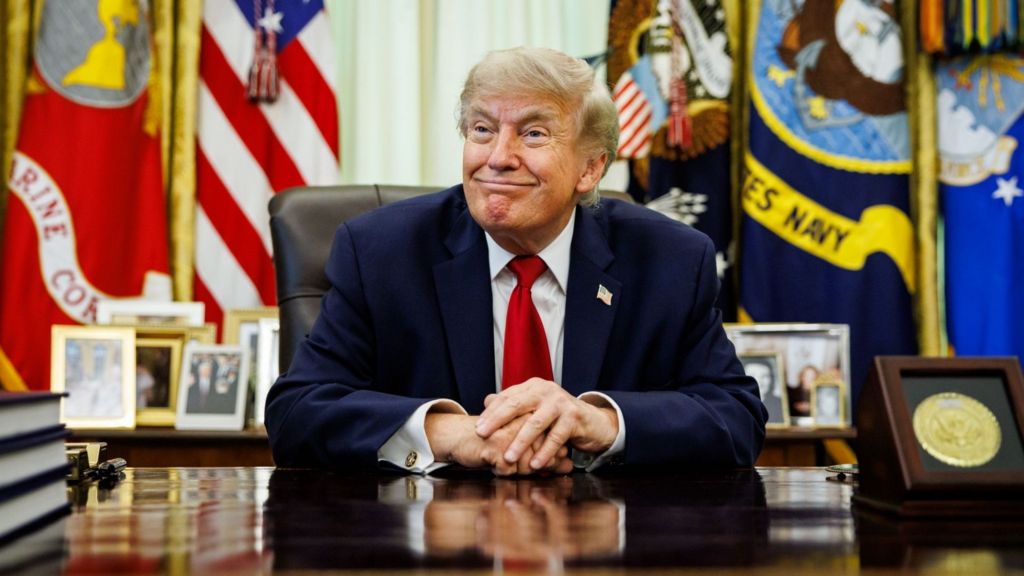
    On a chaotic Saturday evening at the Washington Hilton, a would-be assassin’s plot to kill former President and current U.S. President Donald Trump and multiple senior administration officials was disrupted by a quick exchange of gunfire with Secret Service agents, leaving security protocols for high-profile Washington events under intense national scrutiny.

    Within hours of the incident, investigators confirmed that the suspect, identified as 31-year-old Cole Allen, had traveled cross-country by rail from Los Angeles via Chicago to reach the capital, where he had checked into the same hotel hosting the annual White House Correspondents Association (WHCA) black-tie gala. Armed with a shotgun, a handgun, and multiple knives purchased within the last two years, Allen attempted to sprint past a security checkpoint to reach the packed ballroom where Trump, First Lady Melania Trump, Vice President JD Vance, cabinet members, top congressional leaders, and hundreds of political and media figures had gathered. The attempt triggered a brief gunfight with agents, and Allen was taken into custody at the scene immediately.

    Acting U.S. Attorney General Todd Blanche told CBS’s *Face the Nation* on Sunday that preliminary investigations confirm Allen planned to target top-ranking administration officials in order of their rank. “He’s not actively cooperating. I expect that he will be formally charged tomorrow morning in federal court in Washington,” Blanche stated, adding that no clear motive for the attack has yet been established. Trump later confirmed to Fox News that Allen had penned what he described as an “anti-Christian” manifesto, noting that the suspect’s own family had previously raised concerns about his behavior to law enforcement. The New York Post reported that Allen sent a note to his family shortly before the attack outlining his plan to prioritize targets from the highest-ranking to lowest.

    The moment shots were rang out triggered chaos inside the gala ballroom. Secret Service agents immediately swarmed the venue to clear and secure the space, prompting hundreds of attendees to dive under tables for cover. Trump was quickly rushed out of the ballroom by his security detail, and he later recounted that he initially mistook the gunfire for the sound of a dropped serving tray. The only injury reported was to a Secret Service officer, who was shot at close range in his safety vest and is expected to make a full recovery.

    In a late-night emergency press briefing at the White House, Trump confirmed that investigators currently believe Allen acted as a lone attacker, a assessment he shares. This incident marks at least the third plot on Trump’s life in less than a year: in 2024, an assassination attempt at a Pennsylvania rally left one attendee dead and Trump lightly wounded in the ear, just months before a second man was arrested for pointing a rifle from the bushes at a Florida golf course where Trump was playing. Notably, the Washington Hilton is also the site of the 1981 assassination attempt on President Ronald Reagan, a history that has amplified calls for stricter security reviews.

    The incident has reignited debate over presidential security protocols, with Trump noting that the Washington Hilton venue “is not a particularly secure” facility. He argued that the foiled attack justifies his controversial plan to construct a large new events ballroom adjacent to the White House, a project that has already faced multiple legal challenges. For Washington observers, the repeated attempts on Trump’s life have sparked growing alarm: “This keeps happening,” attorney Brian Raftery told AFP Sunday. “One of these times, unfortunately, something very bad is going to happen if we continue to have these types of attacks on political leaders.”

    This year’s WHCA gala marked a historic break with tradition: Trump, who has repeatedly attacked the mainstream media, had never attended the annual dinner during his previous time in office, breaking a 100-year pattern of sitting presidents participating in the event, which raises funds for journalism scholarships and awards. The foiled attack also comes less than 48 hours before King Charles III and Queen Camilla are set to arrive in Washington for a four-day official state visit, which will see heightened security across the U.S. capital already in place. After the incident, Trump expressed hope that the gala can be rescheduled within the next 30 days.