In the late 1980s, as China began opening its economy to the world, 17-year-old high school dropout Ding Shizhong arrived in Beijing carrying 600 pairs of sneakers produced at a relative’s local factory. What began as a small street selling venture would evolve into one of the world’s fastest-growing sportswear powerhouses, challenging the long-held dominance of Western giants Nike and Adidas. Today, that humble startup is Anta Sports – a multinational multi-brand group with a portfolio that includes household names like Fila, Arc’teryx, Salomon, Wilson, and a major stake in Germany’s Puma, with bold ambitions to capture market share across the globe.
Anta’s origin story is deeply tied to the rise of Jinjiang, a small agricultural county in China’s southeastern Fujian province that grew into the self-styled “shoe capital of the world.” As part of China’s targeted industrial development policy for coastal regions, Jinjiang built a specialized manufacturing ecosystem that drew investment from global sneaker brands seeking lower production costs. At the heart of this boom was Chendai town, a 40-square-kilometer hub home to thousands of factories and specialized suppliers for every part of a shoe, from laces to soles to technical fabrics, paired with streamlined logistics that turned designs into finished retail goods in record time.
By 2005, United Nations estimates showed Fujian province alone produced nearly 20% of the world’s total footwear output, with one-third of Jinjiang’s workforce employed in the footwear sector, turning the region into one of China’s highest-earning economic districts. Fei Qin, an associate professor at the University of Bath who studied China’s coastal manufacturing clusters in the 2000s, notes this level of concentrated industrial specialization was unprecedented globally at the time. As foreign brands placed bulk orders with Jinjiang factories, local manufacturers gained far more than just revenue: they mastered cutting-edge production techniques, learning to deliver higher quality, faster turnaround, and more consistent output than competitors anywhere else in the world.
It was within this ecosystem that Anta cut its teeth, first producing bulk footwear for Western labels before building a robust domestic distribution network across China and gradually building its own brand recognition. Unlike many domestic manufacturers that remained stuck in low-margin subcontracting work, Anta prioritized growing its own brand, opening retail locations across China and sponsoring top domestic sports competitions from basketball to table tennis. In 2007, the company listed on the Hong Kong Stock Exchange, raising HK$3.5 billion ($450 million) – at the time, the largest ever IPO for a Chinese sports firm.
Branding consultant Wei Kan, who has worked with major global brands including Nike and Converse in China, says Anta stood out from its domestic competitors from an early stage thanks to its fully integrated production hub, which allowed it to design and bring new products to market far faster than most rivals. It was also one of the first Chinese brands to target the same mid-to-premium consumer segment that Western giants had long dominated. As Kan explains, firms that start as contract manufacturers for global brands gradually master end-to-end business operations, build strength in China’s massive domestic market, and naturally evolve into global competitors in their own right. Anta is far from the only example: Chinese tech giant Xiaomi started as a software developer customizing Android systems before launching its own line of smartphones, electronics, and now electric vehicles; drone leader DJI began making third-party camera and drone components before becoming the world’s top consumer drone manufacturer; and BYD, once a battery supplier for Tesla, is now the world’s largest electric vehicle producer. “Each of these firms are now giants in their fields,” Kan notes.
Today, Anta operates more than 12,000 stores across China and 460 outlets in international markets, with plans to expand to 1,000 locations across Southeast Asia alone over the next three years. In February 2026, the company opened its first standalone US flagship store in Los Angeles’ upscale Beverly Hills neighborhood, marking a major milestone in its global expansion push. This expansion comes amid a shifting global trade landscape, as former US President Donald Trump’s tariffs aimed at bringing manufacturing jobs back to the US have highlighted both the competitiveness and indispensability of Chinese manufacturing supply chains.
Anta’s global push has not been without its challenges. Chinese brands have long faced a persistent perception gap in Western markets, where many consumers still associate Chinese-made goods with low quality and low cost. Additionally, rising geopolitical tensions between Beijing and Western capitals, particularly Washington, have created additional headwinds for Chinese firms expanding abroad. To navigate these barriers, Anta has adopted a deliberate multi-brand acquisition strategy, rather than pushing its core Anta label directly into crowded Western markets.
The strategy first proved successful in 2009, when Anta acquired the brand rights for Fila in China, turning the century-old Italian athletic label into one of the company’s top revenue generators. In 2019, Anta purchased a controlling stake in Finland’s Amer Sports, gaining ownership of premium outdoor brands Arc’teryx and Salomon, as well as American sporting goods maker Wilson – the official supplier of game balls for the US National Basketball Association. Most recently, in 2026, Anta acquired a 29% stake in German sportswear giant Puma, with plans to accelerate the brand’s growth in China’s massive domestic market.
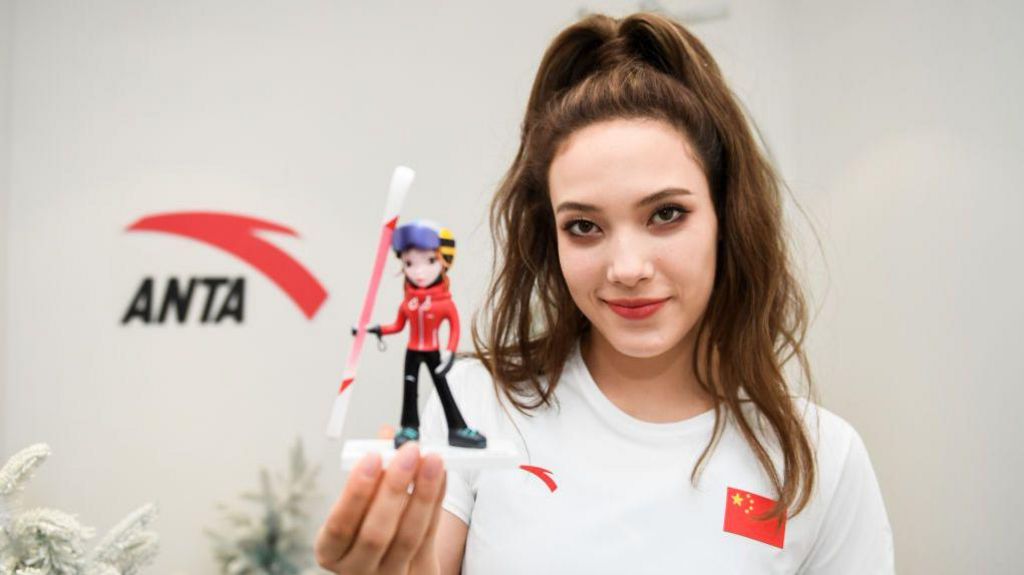
Sports business analyst Rufio Zhu of global marketing firm IMG explains that this approach allows Anta to enter foreign markets through established, well-regarded Western brands first, avoiding consumer skepticism around Chinese-owned labels. “These are moves that help Anta avoid ‘forcing’ its goods into every market and instead use its Western brands as a gateway,” Zhu notes. Celebrity endorsement deals, a cornerstone of global sportswear brand building, have also been a key focus: Anta has already signed top athletes including NBA stars Klay Thompson and Kyrie Irving, and counts Olympic freestyle skier Eileen Gu – a figure who became polarizing in Western media after choosing to compete for China instead of the US at the Winter Olympics – among its brand ambassadors. Still, the company has yet to land a game-changing global endorsement deal on par with Nike’s iconic 1980s partnership with Michael Jordan. As Wei Kan puts it: “Brands like Anta need to be ready to navigate the fine line between Chinese and Western markets, a challenge that comes with being a global Chinese brand.”
Anta’s global rise comes at a moment when its main Western rivals face mounting challenges both in China and abroad. Nike and Adidas have seen their earnings squeezed by US tariffs on Asian-manufactured goods, and Nike has struggled to revive sales in China after a misjudged post-pandemic e-commerce push amid a broader slowdown in Chinese consumer spending. Zhu says these struggles have created a unique opening for Anta, as global consumers increasingly show appetite for alternative sportswear brands. “The question isn’t whether Anta will raise their profile. It’s whether competitors can adapt quickly enough to defend their home turf,” Zhu says.
Fei Qin adds that China’s ongoing investment in factory automation is positioning its manufacturing sector for long-term global competitiveness, allowing for faster production and further cost reductions that will benefit firms like Anta. Standing in Anta’s new Beverly Hills flagship, where shelves are lined with performance sneakers and basketball shoes designed to compete directly with Nike and Adidas’ core product lines, company representatives acknowledge they have a long road ahead to build brand recognition in the US. Still, they remain optimistic about the future. “We’re realistic about the competition but the global sportswear landscape is not a zero-sum game,” an Anta spokesperson said. “We are confident that sports lovers will recognise Anta’s innovations and brand value.”