作者: admin

  • Eurovision, eh? Canada will compete at the glitzy song contest in 2027

    Eurovision, eh? Canada will compete at the glitzy song contest in 2027

    One of the world’s most iconic and wildly popular music competitions is crossing a new ocean to expand its global reach. The Eurovision Song Contest, a decades-long staple of European pop culture known for its over-the-top stagecraft, infectious catchy tunes, and cross-continental fanbase, has announced that Canada will become the first new country to join the competition in 12 years, set to compete in the 2027 edition hosted in Bulgaria.

    The joint announcement came from the European Broadcasting Union (EBU), the governing body that oversees the annual contest, and Canada’s national public broadcaster CBC, made purposely to coincide with Canada Day, the country’s national holiday. The invitation to join follows Canada’s recent acceptance as a full member of the EBU, a prerequisite for competing in the flagship song competition.

    First launched in 1956 as a small cross-European broadcasting experiment, Eurovision has grown into a global cultural phenomenon that draws hundreds of millions of viewers annually. Often described as ‘the World Cup of pop music’ for its combination of friendly national competition and mass audience appeal, the contest has launched some of the music industry’s biggest global careers. Most famously, Swedish 1970s supergroup ABBA catapulted to international fame after winning the 1974 contest with their breakout hit ‘Waterloo’, setting the stage for decades of Euro-pop chart dominance.

    For Canada, the participation marks a groundbreaking opportunity to showcase homegrown musical talent to a massive global audience. ‘This partnership will allow Canadian talent to be showcased on one of the most storied music stages in the world,’ said Marie-Philippe Bouchard, President of CBC. EBU Eurovision Director Martin Green framed the move as a natural evolution for the increasingly global competition: ‘Canada’s accession is a further sign that, while born in Europe, the Contest continues to welcome the world.’

    This is not the first time a Canadian musician has claimed Eurovision glory, however. In 1988, legendary Quebec-born singer Celine Dion won the contest representing Switzerland, decades before her rise to global stardom. Canada is the first non-European nation added to the competition lineup since Australia joined in 2015.

    CBC has confirmed that it will release full details on its national selection process for Canada’s debut entry later this year. Selection processes vary across participating countries, with some opting for public, televised national selection shows where fans vote for their favorite act, while others assign the broadcaster to directly select the competing representative.

    The 2027 contest will be hosted in Bulgaria, following Bulgarian singer Dara’s 2026 victory in this year’s 70th anniversary edition of the event. That milestone 2026 contest was marked by significant upheaval, however: five long-standing participating members — Spain, the Netherlands, Ireland, Iceland and Slovenia — launched a boycott of the competition over organizers’ decision to allow Israel to retain its participation spot, despite widespread global criticism of Israel’s military campaign in Gaza and ongoing violence in the West Bank. Israel has been a Eurovision participant since 1973.

    Organizers report that the 2026 grand final drew a global audience of 130 million viewers, a drop from the 160 million viewers that tuned in for the 2025 contest. Even amid the hit to viewership and organizational finances from this year’s boycott, Eurovision is pushing forward with plans for global expansion. A new spinoff event, Eurovision Song Contest Asia, is scheduled to launch in Bangkok this coming November, marking the competition’s latest push to grow its footprint outside of its European roots.

  • Belarus’ authoritarian leader pardons 28 political prisoners to ease ties with the West

    Belarus’ authoritarian leader pardons 28 political prisoners to ease ties with the West

    TALLINN, Estonia – In a move framed as a step toward mending strained ties with Western governments, Belarusian authoritarian leader Alexander Lukashenko has issued a pardon to 28 people imprisoned on what the regime labels “extremism” charges – offenses widely recognized as politically motivated convictions targeting dissent.

    The pardon, announced Wednesday via presidential decree, was timed to coincide with Belarus’ upcoming Independence Day celebration on Friday, with the administration justifying the action on “humanitarian grounds.” The announcement marks the latest in a series of prisoner releases that have gained momentum since the return of U.S. President Donald Trump to the White House, which have been facilitated by Washington-mediated diplomatic negotiations.

    Lukashenko has held unbroken power over the 9.5 million-person nation for more than 30 years, ruling with a harsh, repressive grip that has drawn repeated waves of economic and political sanctions from Western capitals. Sanctions have been imposed both for the regime’s systematic crackdown on fundamental human rights and for its decision to allow Russia to use Belarusian territory as a staging ground for Moscow’s full-scale 2022 invasion of Ukraine.

    The most serious challenge to Lukashenko’s rule emerged after the disputed 2020 presidential election, when hundreds of thousands of Belarusians took to city streets across the country to protest what they widely viewed as a rigged vote outcome. The regime responded with a brutal, sweeping crackdown: tens of thousands of demonstrators were detained, many were beaten by security forces, leading opposition figures were either imprisoned or forced into exile.

    Five years after those mass 2020 protests, Lukashenko secured a seventh consecutive term in office in an election last year that opposition groups dismissed as a completely undemocratic farce.

    Under the series of U.S.-brokered agreements struck in recent months, Lukashenko has overseen the release of hundreds of political prisoners, in exchange for the lifting of a subset of U.S. sanctions. A March deal brokered by Washington saw the release of 250 detained opposition figures and activists, while the U.S. agreed to lift sanctions on two major Belarusian state-owned banks, the national Finance Ministry, and the country’s top potash producer – a key export industry for Belarus. A second deal in April facilitated a prisoner swap between Belarus and Poland that freed prominent independent journalist Andrzej Poczobut as part of a 10-person release.

    Despite these incremental releases, leading Belarusian human rights organization Viasna reports that 864 political prisoners remain behind bars in the country, including 21 journalists working for independent media outlets.

    Earlier this week, Nils Muižnieks, the United Nations Special Rapporteur on human rights in Belarus, issued a stark warning that even with the release of hundreds of detainees over the past year, the broader human rights situation in Belarus has not seen meaningful improvement. “Sustainable progress requires an end to politically motivated repression and accountability for past violations,” Muižnieks stated in his report.

    Sviatlana Tsikhanouskaya, the exiled leader of Belarus’ opposition, told the Associated Press that while the latest pardon will bring momentary relief to the families of the 28 released prisoners, the international community cannot lose sight of the hundreds still detained. “We mustn’t forget that hundreds of political prisoners remain in Belarusian jails, and all of them must be released,” Tsikhanouskaya emphasized.

  • Rory McIlroy takes green jacket to Wimbledon as Ryder Cup players get Royal Box treatment

    Rory McIlroy takes green jacket to Wimbledon as Ryder Cup players get Royal Box treatment

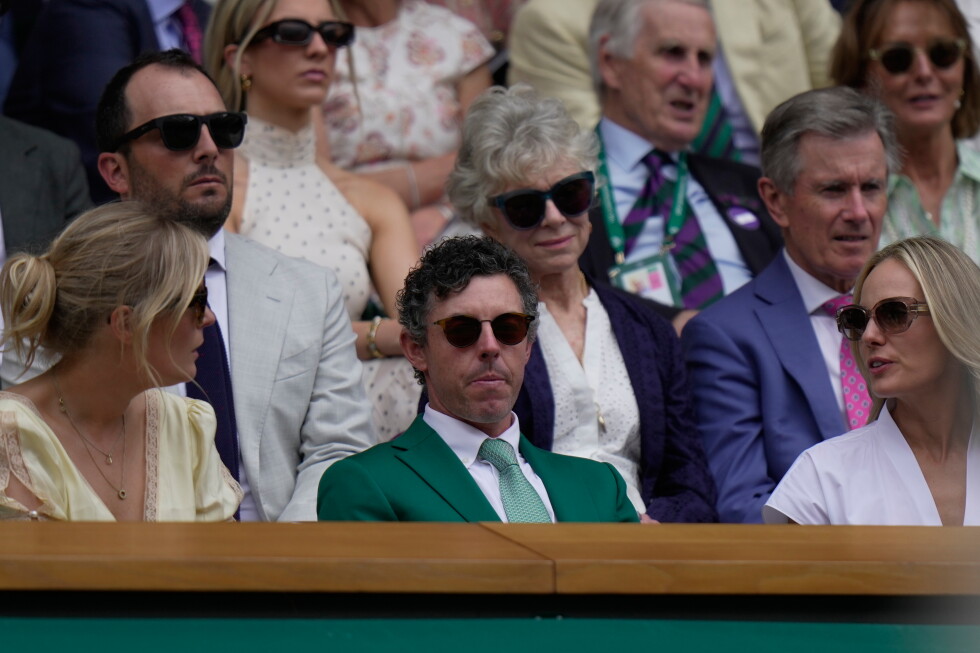
    LONDON – One of golf’s biggest recent champions brought his most iconic trophy to Wimbledon’s most prestigious stage Wednesday, when the core of Europe’s 2023 Ryder Cup-winning squad took a front-row seat in the Royal Box on Centre Court to watch the Wimbledon Tennis Championships.

    Four-time major winner Rory McIlroy, who claimed his second Masters green jacket in a dramatic victory at Augusta National this past April, showcased his coveted championship jacket as he joined his Ryder Cup teammates for the afternoon of world-class tennis. Joining McIlroy in the special guest section were fellow European golf stars Tommy Fleetwood, Justin Rose, and Italian brothers Edoardo and Francesco Molinari. The group was also joined by Ryder Cup captain Luke Donald and vice-captain Thomas Bjorn, making for a heavy golf presence on one of tennis’ biggest global stages.

    The golf contingent was on hand to watch defending Wimbledon men’s singles champion Jannik Sinner face off against Portugal’s Nuno Borges in a highly anticipated second-round clash. Centre Court had a packed slate of marquee matches for the day, with more top talent set to take the grass later Wednesday: 17-year-old Mirra Andreeva, the reigning French Open women’s singles champion, was scheduled to play her next round, followed by men’s legend Novak Djokovic, who is chasing an eighth Wimbledon title, having already lifted the champion’s trophy seven times in his storied career.

    The golf stars were not the only high-profile guests in the Royal Box Wednesday. The venue also hosted award-winning British actors Charles Dance and Richard E. Grant, as well as Martina Navratilova, one of the most decorated champions in Wimbledon history, who claimed nine women’s singles titles across her career.

    This gathering marked a rare cross-over moment between two of Europe’s most popular professional sports, bringing golf’s biggest recent champions into the spotlight as guests of honor at one of tennis’ four Grand Slam tournaments. For context, Europe secured a 15-13 victory over the United States in the 2023 Ryder Cup at Bethpage Black, cementing the team’s place in golf history ahead of the next edition of the team competition.

  • As the World Cup grows more global, many fans still struggle to get there

    As the World Cup grows more global, many fans still struggle to get there

    Forty years after Iraq’s last World Cup appearance, Mustafa al Saadi had every reason to believe he would cheer on his national team in person this June. The 32-year-old oncology lab technician from Mosul General Hospital had traveled the world alongside three colleagues to follow Iraq’s national soccer side, and when the team clinched its 2026 World Cup spot — the first in al Saadi’s lifetime — the group immediately planned their trip to the co-hosted North American tournament.

    Only three of the four friends boarded a flight to the United States. Al Saadi’s visa application remained stuck in processing, forcing him to watch Iraq’s opening match against France from a makeshift outdoor fan zone in Mosul’s al Muthanna neighborhood, less than a mile from the crumbling ancient fortification walls of Nineveh. As red signal flares painted the night sky over the crowd, he tried repeatedly to call his friends inside Philadelphia’s Lincoln Financial Field, but the calls never went through. “It is a very sad feeling to see your close friends present with the national team in every country in the world, but I am not,” al Saadi told reporters at the gathering.

    Al Saadi’s disappointment is far from unique. For decades, FIFA has positioned the World Cup as a tool to bring global soccer communities together, expanding the tournament’s reach to give more small and developing nations a shot at qualification. The 2026 iteration, co-hosted by the U.S., Canada, and Mexico, delivered on that promise in historic fashion, with four nations — Cape Verde, Jordan, Uzbekistan, and Curaçao — making their World Cup debuts. But qualification for the tournament did not guarantee entry for the teams’ supporters, journalists, and even official personnel, as immigration rules remain the exclusive domain of the three co-host governments.

    Data from pre-tournament advocacy efforts shows that fans from roughly one in four qualified nations faced travel bans, strict entry restrictions, or dramatically high U.S. visa refusal rates. These inequities were impossible to miss in the tournament’s stands. During a group stage match outside Boston between Haiti and Scotland, two sides returning to the World Cup after decades-long absences, tens of thousands of Scottish supporters took to the city streets in bagpipe-led processions, with their chant of “Flower of Scotland” measured at 125 decibels — roughly the volume of an incoming jet taking off. By contrast, only a small cluster of Haitian fans waving the national red-and-blue flag were present in the stands, as Haitian citizens have been subject to strict U.S. travel restrictions since the Trump administration.

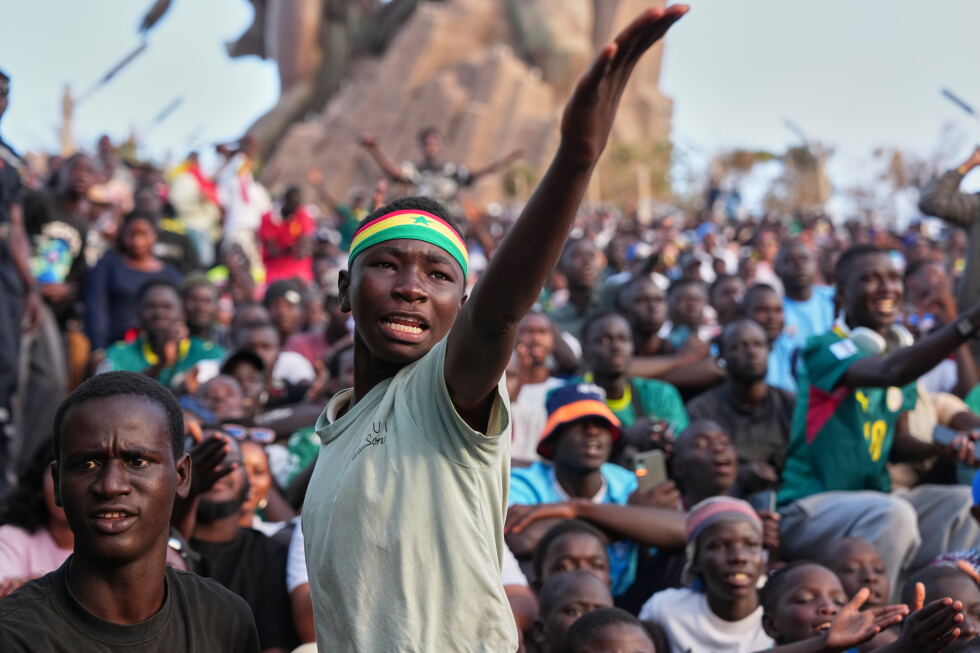
    For the hundreds of thousands of fans locked out of North American stadiums, the 2026 World Cup unfolded in hometown fan zones, local restaurants, and diaspora communities across the globe. Hundreds packed in front of a giant outdoor screen in Mosul to watch Iraq’s long-awaited return. In Brockton, Massachusetts, home to one of the largest Cape Verdean diaspora communities outside the island nation, supporters packed local restaurants to watch their team face Spain before spilling into the streets in celebration, setting off fireworks while waving national flags from car windows. In Dakar, Senegal, hundreds of fans climbed university balconies and perched on window ledges just to catch a glimpse of the giant screen airing their team’s opening match.

    Iraq’s tournament ended in disappointment: after three consecutive heavy defeats, including a 5-0 loss to Senegal in their final group stage match, the 10-man side exited the tournament without earning a single point, leaving local fans shocked and heartbroken. But the conversation around the 2026 World Cup has centered far more on the off-field barriers that have divided the global soccer community than on on-field results.

    Weeks before the tournament kicked off, United Nations High Commissioner for Human Rights Volker Türk warned that existing U.S. immigration policies would undermine equal access to the World Cup, calling for a “massive rethink” of enforcement rules to protect “human rights and human dignity.” As part of a broader immigration crackdown launched during the Trump administration, the U.S. introduced a requirement last year that visitors from 50 designated countries post visa bonds of up to $15,000 to enter the country. After formal requests from FIFA for a World Cup exemption, the administration only waived the bond requirement for ticket holders from five participating African nations — Algeria, Cape Verde, Ivory Coast, Senegal, and Tunisia — leaving all other fans subject to the rule, and all supporters still required to complete the standard, often lengthy, visa application process.

    Unlike previous 2018 and 2022 World Cups hosted by Russia and Qatar, which created streamlined, tournament-specific entry systems to ease international travel for fans, the three North American co-hosts opted to rely entirely on their existing national immigration frameworks, rather than rolling out special entry permits for World Cup attendees. Canada required all qualifying international fans to apply through its standard visitor visa process, while Mexico maintained its existing visa policies for foreign visitors.

    Even experienced sports journalists have not been spared from visa denials. Ghanaian reporter Prince Ayim Brown spent months saving extra money, took on additional freelance assignments, and even completed a special U.S. Embassy training program for journalists covering the tournament, only to have his visa application rejected without explanation by the same embassy. “World Cup is the pinnacle of football — every journalist and every football fan wants to be there,” he said.

    A U.S. State Department spokesperson defended the agency’s processing efforts, noting that the final list of qualified teams had been public for months, giving fans who required visas adequate time to submit applications. The spokesperson added that the department deployed more than 600 additional consular staff, added millions of extra visa appointment slots, and used the FIFA PASS program to prioritize World Cup-related applications, all while maintaining existing national security screening standards.

    For fans like Assane Ly, a salesman in Dakar who was denied a U.S. visa, the lost opportunity extends far beyond watching a match from stadium seats. Watched Senegal’s opening match from the same Cheikh Anta Diop University fan zone, Ly said he grieves the chance to connect with fans from across the globe that makes the World Cup unique. “The World Cup is supposed to be a moment when geopolitics are on hold, when the host country welcomes people from all nationalities, skin colors and religions to come together to celebrate football,” he said.

    For diaspora communities, the 2026 World Cup has still brought unanticipated joy, even when few native fans could make it to stadiums. For Cape Verde’s first-ever World Cup appearance, the small Brockton diaspora community got the chance to cheer for their home nation for the first time, after decades of supporting other countries with stronger historical and cultural ties. Jaysen Gonçalves, a Cape Verdean-American who had attended two previous World Cups, bought his tickets as soon as the nation qualified, and was inside the stadium when Cape Verde held powerhouse Spain to a historic scoreless draw. Still, he noted that Spanish fans outnumbered Cape Verdean fans roughly 9 to 1 inside the arena — a gap driven by financial and travel barriers. “It shows,” he said. “That is financial.”

    Back in Brockton, where Jaysen and his mother Amelia own Luanda Restaurant, the celebration was far more vibrant. For more than 20 years, the restaurant’s World Cup watch parties have been dominated by fans wearing jerseys of Portugal and Brazil, reflecting Cape Verde’s colonial history, shared language, and widespread family ties to both nations. This year, however, every screen in the restaurant is tuned to Cape Verde matches, and every fan is wearing the national blue-and-red. When Cape Verde held Spain scoreless, patrons pulled out sparkling wine to celebrate, Amelia Gonçalves said. “It was like we won the World Cup,” she said, adding that she was too emotional to sleep after watching goalkeeper Vozinha make seven game-saving stops. “That means he gives us a lot of visibility to the world. People can see us now. ‘Yes, there is a country — an island — called Cape Verde.’”

    For al Saadi, his stalled visa ended up reshaping his World Cup experience in an unexpected way. His application, submitted a full month before the tournament kicked off, still has not received a response, with no explanation for the delay. Complicating the process for Iraqi applicants, the U.S. suspended routine consular services within Iraq years ago, forcing applicants to travel to neighboring countries just to secure an in-person interview, adding layers of cost and complexity that many cannot overcome.

    Instead of traveling to Philadelphia, al Saadi stepped up to help local organizers build the al Muthanna fan zone, bringing the World Cup to his hometown of Mosul, a city still recovering from years of conflict and isolation. On match nights, the square comes alive: a performer in an Iraqi national jersey walks the crowd on stilts, teenage boys dance with national flags draped over their shoulders, spotlights sweep over the crowd, and soccer anthems echo off the surrounding buildings. “By having this event, we brought the World Cup from America, Mexico and Canada to the city of Mosul,” al Saadi said. “Now Mosul is a global city.”
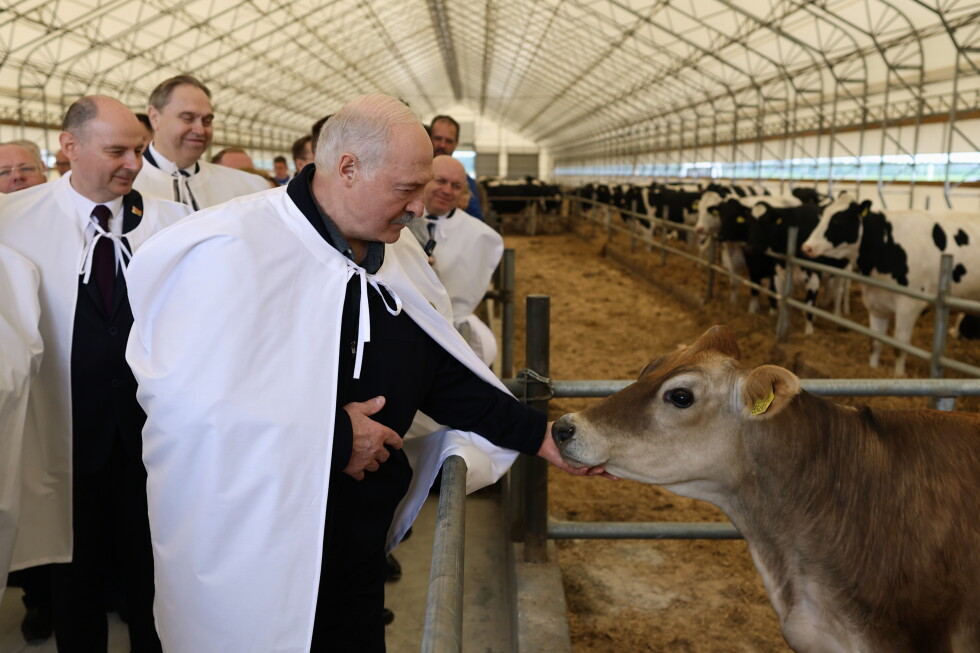
  • Canada will take part in Eurovision Song Contest 2027

    Canada will take part in Eurovision Song Contest 2027

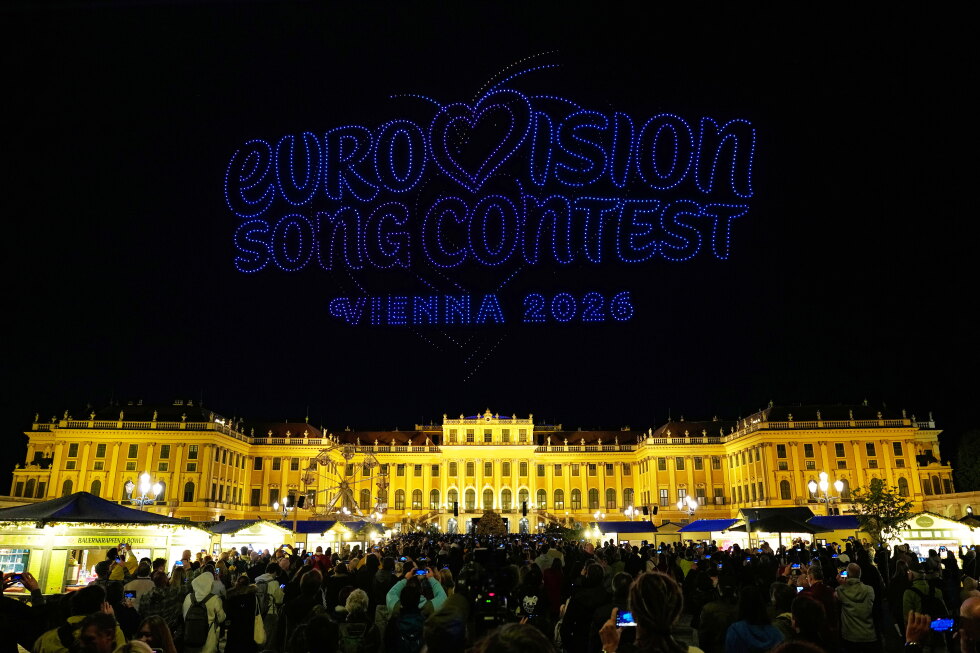
    In a landmark announcement that reshapes the landscape of one of the world’s most-watched live music competitions, organizers of the Eurovision Song Contest have confirmed that Canada will make its official debut as a competing nation at the 2027 event, set to be hosted in Sofia, Bulgaria. This makes Canada the first new country to join the competition’s roster since Australia was invited to participate back in 2015, a development that comes on the heels of a turbulent 2026 contest marked by widespread withdrawals from long-standing participating nations over the EBU’s decision to include Israel.

    The path for Canada’s entry was formally cleared just last week, when the country’s national public broadcaster CBC/Radio-Canada finalized its transition from associate status to full membership of the European Broadcasting Union (EBU), the governing body that produces and organizes the annual Eurovision competition. Under Eurovision’s long-standing rules, only active full member broadcasters from eligible territories are permitted to field competing entries, a requirement Canada had not met until this latest membership change.

    While this will mark Canada’s first time competing as an official national entrant, the country already holds a unique place in Eurovision history as the home nation of multiple past competitors. Quebec native Céline Dion, one of the best-selling recording artists of all time, famously claimed the contest’s top trophy for Switzerland in the 1988 Eurovision Song Contest with her iconic performance *Ne Partez Pas Sans Moi*. Since Dion’s historic win, other Canadian artists have competed for other European nations: Acadian singer Natasha St-Pier from New Brunswick represented France in 2001, and Montreal-based performer La Zarra competed for France at the 2023 contest.

    Discussions around Canada’s Eurovision participation have been in motion for months. Back in November 2024, the Canadian government under Prime Minister Mark Carney confirmed it was working alongside CBC/Radio-Canada to explore the possibility of joining the competition, and included C$150 million (£80 million) in dedicated funding for the public broadcaster in its annual budget to support the initiative. CBC/Radio-Canada has announced that further details surrounding the selection process for Canada’s debut 2027 entry will be released to the public later this year.

    Canada is not the first non-European nation to take part in Eurovision, which has long opened its doors to eligible non-European EBU members. Israel and Australia have been regular competitors for decades, and Morocco even fielded a single entry back in 1980.

    As the 2027 contest preparations get underway, uncertainty still hangs over the return of several high-profile European nations that boycotted the 2026 contest held in Vienna. Ireland, Iceland, the Netherlands, Slovenia, and Spain all withdrew from this year’s competition in protest of the EBU’s decision to allow Israel to participate amid ongoing conflict in Gaza.
    Speaking ahead of the 2026 final, Eurovision director Martin Oestergaard-Green noted that the competition’s organizing body remained open to dialogue with the boycotting broadcasters for 2027. “We’ve got 35 members of our family here, and that’s enough to have a big party,” he told BBC News. “But, you know, five [are absent] and we miss them. When this show is over, I know we’ll pick up the dialogue and we’ll see what comes.”

    The 2026 Eurovision crown was ultimately claimed by Bulgarian pop artist Dara, who won top honors with her upbeat entry *Bangaranga*. By Eurovision tradition, the winning country hosts the following year’s contest, paving the way for the 2027 event to take place in Sofia, where Canada will make its first semi-final appearance.

  • EU issues new steel and e-commerce regulations to reduce trade imbalance with China

    EU issues new steel and e-commerce regulations to reduce trade imbalance with China

    BRUSSELS – Facing a rapidly widening trade imbalance with China that has hit a staggering 1 billion euros per day, the European Union has launched two targeted trade policy changes on Wednesday, designed to shore up its struggling domestic steel sector and curb the flood of unregulated low-value small e-commerce parcels entering the bloc. The announcement marks the most significant shift in Brussels’ trade approach to Beijing in recent years, as growing domestic political and industrial pressure forces policymakers to abandon the status quo of unbalanced trade.

    The first measure ends the decades-old “de minimis” customs exemption that had allowed all parcels valued under 150 euros to enter the EU duty-free. In its place, a new fixed 3 euro ($3.42) customs duty will be applied to all low-value small parcels entering the bloc. European Commission President Ursula von der Leyen framed the change as a long-overdue correction to an unfair playing field, noting that the exponential growth of low-value online imports from Chinese firms has placed domestic European retailers at a crippling competitive disadvantage. She added that a large share of these unregulated imports also fail to meet the EU’s strict product safety and environmental standards, putting ordinary consumers at unnecessary risk.

    EU data confirms the scale of the small parcel surge: the bloc received 5.9 billion small parcels from international sources in 2025, up from just 1.4 billion in 2022. At roughly 16 million parcels per day, these shipments account for 97% of all cross-border parcel traffic into the EU, though they make up only 2% of total import value. European officials estimate that Chinese e-commerce giants including Temu and Shein control around 90% of this low-value parcel trade, a concentration that has upended traditional brick-and-mortar retail across the bloc. The U.S. implemented an identical policy change last year, signaling a coordinated global shift toward restricting this trade model. The new rule also addresses widespread environmental concerns, as the majority of these small shipments come wrapped in excessive single-use plastic that adds to the EU’s waste management burden.

    Bernd Lange, chair of the European Parliament’s trade committee, welcomed the move in an online statement, saying that “Europe finally shows teeth against flood of cheap package deals.” However, some trade analysts caution that the 3 euro duty may not deliver the transformative change policymakers are seeking. Gary Ng, a research fellow at the Central European Institute of Asian Studies, noted that the fee is negligible compared to the large price gap between Chinese manufactured e-commerce goods and equivalent European products. Ng added that while the duty may reduce casual impulse purchases, consumers and platforms can easily evade the measure by grouping multiple small orders into a single shipment to avoid or reduce fees.

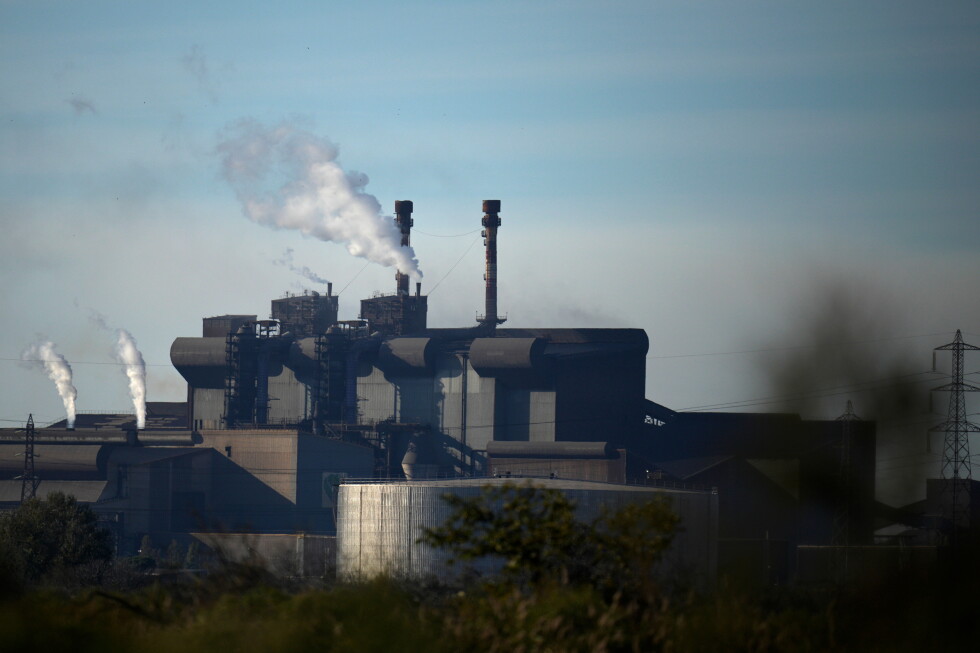
    The second, equally impactful measure targets the EU’s strategically critical steel sector, which has been reeling from years of global overcapacity driven largely by Chinese government production subsidies that have flooded global markets with artificially cheap steel. Under the new rules, the EU will set an annual tariff-free import quota of 18.3 million metric tons for 26 categories of steel products. Any imports that exceed this quota will face a 50% punitive tariff. The framework also introduces strict new transparency requirements for importers, mandating that they disclose where the core “melt and pour” production stage took place to prevent Chinese steel from being rerouted through third countries to skirt EU trade protections.

    Europe’s steel industry has already slid into a deep crisis, with the European Steel Association reporting that crude steel output fell to a historic low in the first half of 2026. Axel Eggert, the trade group’s director-general, warned in March that “Europe’s steel production is shrinking while imports as a share of the EU market are rising.” He urged EU policymakers to quickly enact the full, unwatered-down measures, warning that further delay would put more European industrial capacity and jobs at permanent risk. Notably, while China produces more than half of the world’s total steel output, most of the EU’s steel imports currently come from allied and partner economies including the U.K., Ukraine, India, Turkey, Japan and South Korea. Ukraine has received full exemptions from the new tariffs to support its post-invasion economic recovery, though the rules could still trigger dispute mechanisms under existing free trade agreements with other partners including Japan. This new steel framework builds on emergency tariffs the bloc put in place last October to address diverted steel shipments stemming from new U.S. trade policy under the Trump administration.

    A senior anonymous Commission official confirmed that Brussels intends to work with like-minded global partners to collectively address the systemic issue of global steel overcapacity, noting that “in an ideal world there is fair competition and level playing fields. Unfortunately, we don’t seem to live in an ideal world.”

    The EU’s trade deficit with China ballooned to roughly 360 billion euros ($410 billion) in 2025, and projections show the gap continuing to widen through 2026. Against this backdrop, the new measures have already drawn a sharp rebuke from Beijing, which has repeatedly warned Brussels against adopting what it calls “discriminatory” trade policies. China’s Ministry of Commerce issued a formal warning in May, stating that it would “firmly respond” to any measures targeting Chinese companies. Alicia García-Herrero, chief economist for Asia Pacific and the Middle East at French bank Natixis, noted that even though the measures are not formally labeled as targeting China, Beijing is certain to oppose them, as it views the framework as a potential precedent for broader trade restrictions on Chinese exports across multiple sectors.

    Chinese policy analysts have already warned of growing global backlash against China’s export-led manufacturing model. A recent report from Tsinghua University’s Center for International Security and Strategy identified what it calls “China Shock 2.0” — a massive surge of heavily subsidized advanced Chinese manufacturing exports flooding global markets — as one of the top 10 security risks facing China. The report warns that the EU’s new tariffs, combined with existing protectionist sentiment in the U.S., could trigger a “wolf pack effect” where dozens of other countries follow suit with steep tariff hikes and stricter investment screening targeting Chinese firms. The report notes that this coordinated response would not only cause direct economic losses but also damage China’s broader strategic and international business reputation globally. Beijing has pushed back against this framing, arguing that its export growth brings shared economic benefits and technological innovation to global markets.

    HSBC economists Frederic Neumann and Justin Feng noted in a recent research note that while the EU has historically taken a less confrontational approach to trade with China than the U.S. under the Trump administration, the overall policy direction in Brussels is clearly shifting toward greater restriction. This shift aligns with a broader G7 push for greater supply chain independence for critical minerals and high-tech goods, with G7 leaders issuing a joint statement in June committing to diversify supply chains away from over-reliance on single sources.

    Chinese officials have pushed back against the idea that China is to blame for the EU’s trade imbalances. “China and the EU are partners, not rivals,” Guo Jiakun, a spokesperson for the Chinese Ministry of Foreign Affairs, said this Tuesday. “The root cause of the EU’s problems does not lie with China.” Trade analysts note that China successfully weathered the Trump administration’s escalated tariff threats last year, in part by leveraging its control over global rare earth supply chains to negotiate a truce with Washington. This experience has left Beijing more confident in its ability to withstand external pressure, leading analysts to predict that China will be unwilling to make major concessions to the EU in upcoming trade talks.

    “If China managed a U.S. tariff ramp-up and the global energy shock during the U.S.-Iran conflict, it may show less inclination to make concessions to the EU,” Neumann and Feng wrote. “The near-term outlook points to limited progress towards a comprehensive China-EU settlement.” García-Herrero added that even though the EU common market is critical to China — 90% of China’s battery exports and 60% of its electric vehicle exports go to the bloc — Beijing believes it can split EU member states through targeted lobbying to prevent unified action. “China thinks Europe has no leverage,” she said. “They do think they have the upper hand, by all means.”

    The new measures come just one day after a high-profile meeting between China’s Commerce Minister Wang Wentao and EU Trade Representative Maroš Šefčovič in Brussels. After the talks, Šefčovič reaffirmed the EU’s commitment to open trade but stressed that the bloc must defend its own industrial base. “The EU remains open for business but we need to defend our industrial base and keep pushing for a level playing field globally, so our industries get a fair shot at competing,” he said. “That is why today’s talks – and the ones to follow – matter.” Šefčovič has set an October deadline for reaching meaningful progress on rebalancing bilateral trade, adding bluntly that “the status quo is not an option.”

  • Has football fever taken hold in the US?

    Has football fever taken hold in the US?

    As the 2026 FIFA World Cup co-hosted by the United States, Mexico and Canada enters its knockout round phase, the co-host United States men’s national team is set to face Bosnia-Herzegovina in the round of 32, with a spot in the last 16 on the line. With the tournament now a few weeks in, BBC Sport’s senior team of correspondents has reflected on shifting perceptions of the U.S. leg of the event, after widespread pre-tournament questioning over whether the competition would gain traction in a country with stacked domestic sports calendars.

    Before the tournament kicked off, a raft of concerns hung over the U.S. hosting leg: Would ticket prices price out most fans? Would public enthusiasm fail to materialize in a country where soccer has long ranked below other major sports? Would security fears and political distractions overshadow the build-up? What reporters on the ground witnessed, however, tells a story of slow-burn momentum that grew into widespread, cross-city enthusiasm as the tournament progressed.

    Many correspondents shared a distinctly muted first impression, overshadowed by the New York Knicks’ first NBA championship win in 53 years that coincided with the tournament’s opening weeks. John Bennett, a BBC World Service reporter, recalled arriving in New York on the same day as the NBA Finals’ third game, spending his first week surrounded by Knicks fever rather than World Cup excitement. In those early days, the tournament felt like little more than a background event in a city already packed with major happenings. Ian Dennis, senior football reporter for BBC Radio 5 Live, echoed that experience, noting that his pre-tournament stay in Florida felt entirely disconnected from the World Cup, and his arrival in New York found the Knicks’ historic title run dominating local conversation. Even in Los Angeles, thousands of miles from the East Coast, the Knicks run dominated headlines, with minimal visible World Cup promotion beyond a handful of generic banners and billboards, BBC Sport journalist Gary Rose recalled.

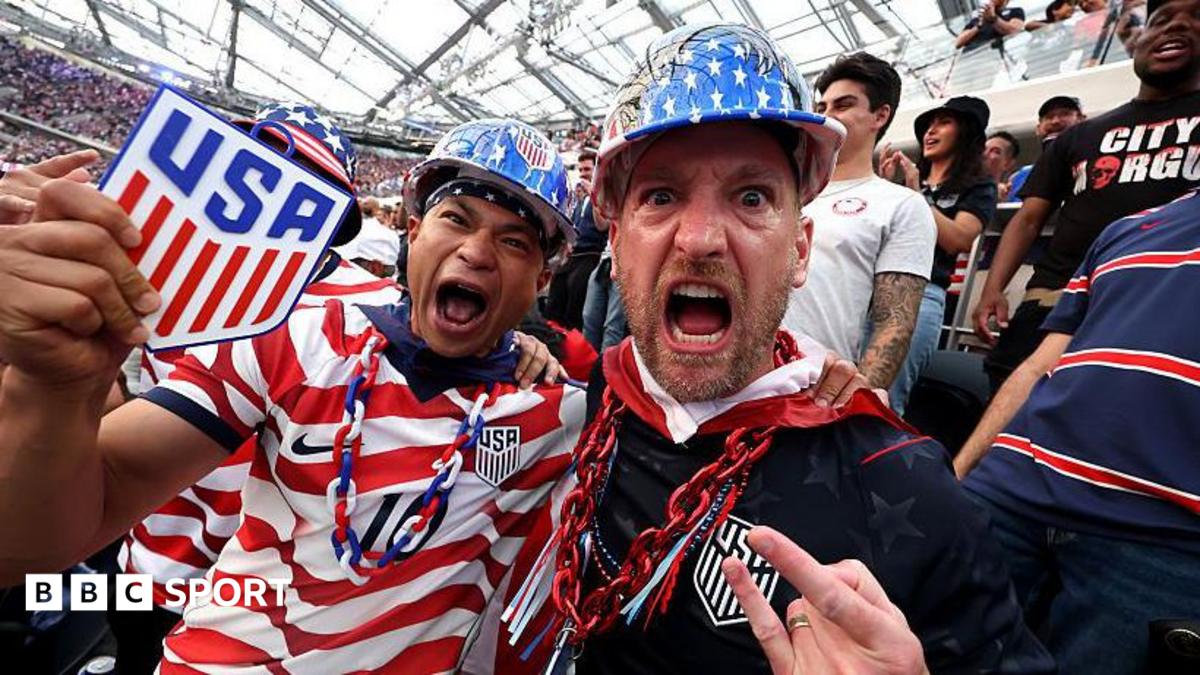
    That muted opening, however, quickly shifted as the tournament progressed, with diaspora communities, strong host city engagement, and the U.S. national team’s impressive on-pitch run turning casual awareness into widespread excitement. “Slowly but surely you could tell that the World Cup was capturing the imagination in New York,” Bennett said, recalling a packed fan event in Harlem that showcased the huge role diaspora fans would play: fans hailing originally from competing nations, or with family ties to competing teams, turned public spaces across the country into hubs of celebration. Bennett even stumbled upon a group of construction workers and local business people who had stopped outside a Greenwich Village bar to watch the closing minutes of Cape Verde’s dramatic 0-0 draw with Spain – proof that World Cup fever had taken hold.

    For Dennis, the turning point came during a trip to Atlanta, where the downtown fan buzz and mingling fans from across the globe finally felt like a traditional World Cup. Liz Conway, a BBC Sport journalist, who entered the tournament cautiously optimistic, said her view has shifted completely. “World Cup fever has well and truly arrived in the United States,” she said, noting she was impressed by vibrant fan zones, friendly volunteer teams, and widespread enthusiasm even among casual fans who do not typically follow soccer. “Even some of the fans I’ve spoken to, who admitted they don’t usually watch football, have been genuinely excited to get behind the World Cup and learn more about the game. It’s been fantastic to see.”

    Across other host cities, the story was the same. In Philadelphia, the city fully embraced a nine-day stretch that hosted four matches, with the Rocky statue steps becoming an iconic pre-match gathering spot for visiting fans, and the Lemon Hill fan festival drawing a record U.S.-host crowd of nearly 55,000 fans to watch the USA’s second group match on the big screen. In Seattle, post-match street parties became a regular tradition, with city officials closing downtown streets to make space for singing, dancing and casual street football. In Los Angeles, iconic local spots including Santa Monica Pier, the LA Memorial Coliseum and Union Station were transformed into fan zones, with Mexican American communities turning the city’s streets into celebration hubs after every Mexico national team win.

    Correspondents also addressed one of the biggest pre-tournament concerns: empty seats from overpriced tickets. Neil Johnston, who has covered eight matches across five U.S. host cities, noted that every stadium he visited was full, with predictions of widespread empty seats failing to materialize. While some matches lacked the sustained chants and noise of traditional World Cup crowds in other host nations, the overall atmosphere compared favorably to past tournaments held in Brazil, Russia and Qatar, correspondents agreed. Even with some variation across cities – the spread-out geography of Houston made spontaneous street buzz harder to find, for example – the overall trajectory of growing enthusiasm matched predictions that Americans lean into major sporting events once they are underway, rather than leaning into long pre-tournament build-ups.

    As the tournament moves into its knockout stages, the USA will look to continue their strong run against Bosnia-Herzegovina, with momentum and home support firmly behind the co-hosts.

  • Zelenskyy says Ukraine hits a Russian oil refinery for the second time in a week

    Zelenskyy says Ukraine hits a Russian oil refinery for the second time in a week

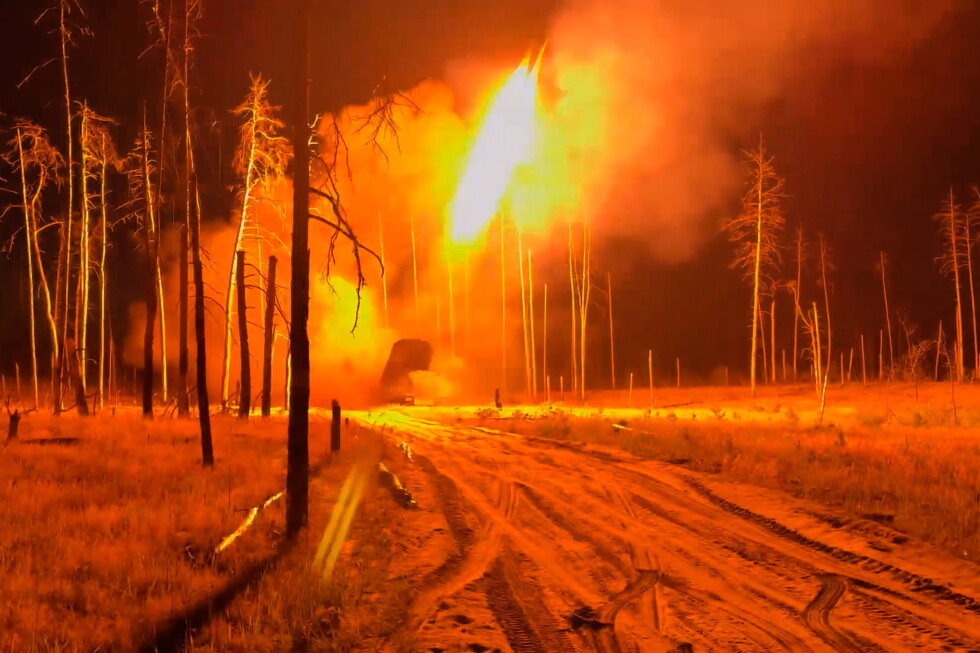
    As Russia’s full-scale invasion of Ukraine enters its third year, Kyiv has stepped up a sustained long-range drone campaign targeting critical Russian energy and military assets, carrying out a second strike on one of Russia’s largest oil processing facilities in just seven days, Ukrainian President Volodymyr Zelenskyy confirmed Wednesday.

    In a social media statement, Zelenskyy noted the attacked facility — the Ufa oil refinery, a top producer of lubricants for the Russian market — sits more than 1,000 kilometers (620 miles) from the Ukrainian border, a range that underscores Kyiv’s growing ability to strike deep inside Russian territory. Alongside the refinery strike, Zelenskyy said Ukrainian forces also hit a missile component manufacturing plant in Russia’s Penza region, located roughly 500 kilometers (310 miles) southeast of Moscow and far from the front lines of the war.

    Russian officials have not formally confirmed the strikes on the two industrial sites, which cannot be independently verified by third-party outlets as of Wednesday. The Russian Defense Ministry did announce that its air defense systems intercepted 179 Ukrainian drones across 16 Russian regions, the illegally annexed Crimean Peninsula, and the waters of the Azov and Black Seas. Oleg Melnichenko, governor of the Penza region, only acknowledged that debris from downed drones damaged a local power line and fell on an unfinished building, making no mention of the targeted missile facility.

    This latest wave of strikes is part of a months-long, systematic campaign by Ukraine using domestically designed and produced drones and missiles to disrupt Russia’s energy infrastructure. Ukraine’s forces have targeted a wide range of sites including refineries, oil storage depots, pipeline pumping stations, and export terminals. The persistent attacks have had tangible ripple effects: even Russia, one of the world’s largest energy producers, has been forced to introduce fuel rationing in multiple regions, creating a growing domestic fuel crisis that amplifies political pressure on the Kremlin.

    Western and Ukrainian officials say the stepped-up long-range strikes have already shifted battlefield momentum. Kyiv’s recent development of indigenous advanced weaponry has given Ukraine a new tactical edge, according to Western officials, with deep strikes cutting critical Russian supply lines and slowing the pace of Russian ground advances across the front.

    “Russians now have great problems with delivering infantry to the front line and supplying it,” Ukrainian Defense Minister Mykhailo Fedorov told reporters Wednesday.

    Beyond its battlefield gains from the drone campaign, Ukraine is also emerging as a global supplier of sought-after military drone technology, attracting growing international interest as Western allies prepare for long-term security competition with Russia. During a visit to Kyiv this week, Swedish Defense Minister Paul Jonsson noted that many European nations view Ukraine as a critical bulwark against further Russian territorial expansion across the continent.

    “Ukraine is becoming a security provider for the whole of Europe,” Jonsson said during talks with Fedorov. On Tuesday, the two nations signed an agreement for Sweden to supply Ukraine with Gripen fighter jets, which Fedorov said will help counter Russian aircraft deploying highly destructive glide bombs that have caused heavy casualties and damage across Ukrainian frontline regions.

    Jonsson reaffirmed European support for Ukraine’s eventual integration into Euro-Atlantic defense structures, ahead of a key NATO summit set to take place in Turkey next week. While Ukraine’s membership bid remains a contentious issue among alliance members, Jonsson argued that accelerated accession would benefit all European stakeholders. “The sooner it happens, the better it is for you, the better it is for our security and prosperity as well,” he told a joint press conference.

    Ukraine is also pushing for tangible progress on its European Union accession bid during Ireland’s current rotating EU Council presidency. Zelenskyy traveled to Ireland Wednesday to advance the membership process, stating that Kyiv has proven it deserves a place as an equal member of the European bloc. “Ukraine proves every day that it deserves to be an equal partner of our common European home. And we hope that during Ireland’s presidency of the EU Council, we will be able to achieve tangible progress on the path to membership and open all negotiation clusters,” he said.

    As Ukraine’s deep strikes into Russian territory intensify, Russia has continued its own long-range bombardment of Ukrainian civilian and energy infrastructure, leaving three civilians dead across the country in fresh attacks Wednesday. In the southern Kherson region, a Russian drone struck a passenger bus, killing two people and wounding six others, regional governor Oleksandr Prokudin reported. Overnight strikes targeting five gas stations in the central Dnipropetrovsk region killed a 43-year-old woman and injured three others, including a 35-year-old pregnant woman, regional authorities confirmed. Russian forces have increasingly targeted Ukrainian fuel retail sites in recent weeks as part of their own campaign to disrupt Ukrainian civilian and military logistics.

  • Williams’ knee injury leaves Wimbledon doubles in doubt

    Williams’ knee injury leaves Wimbledon doubles in doubt

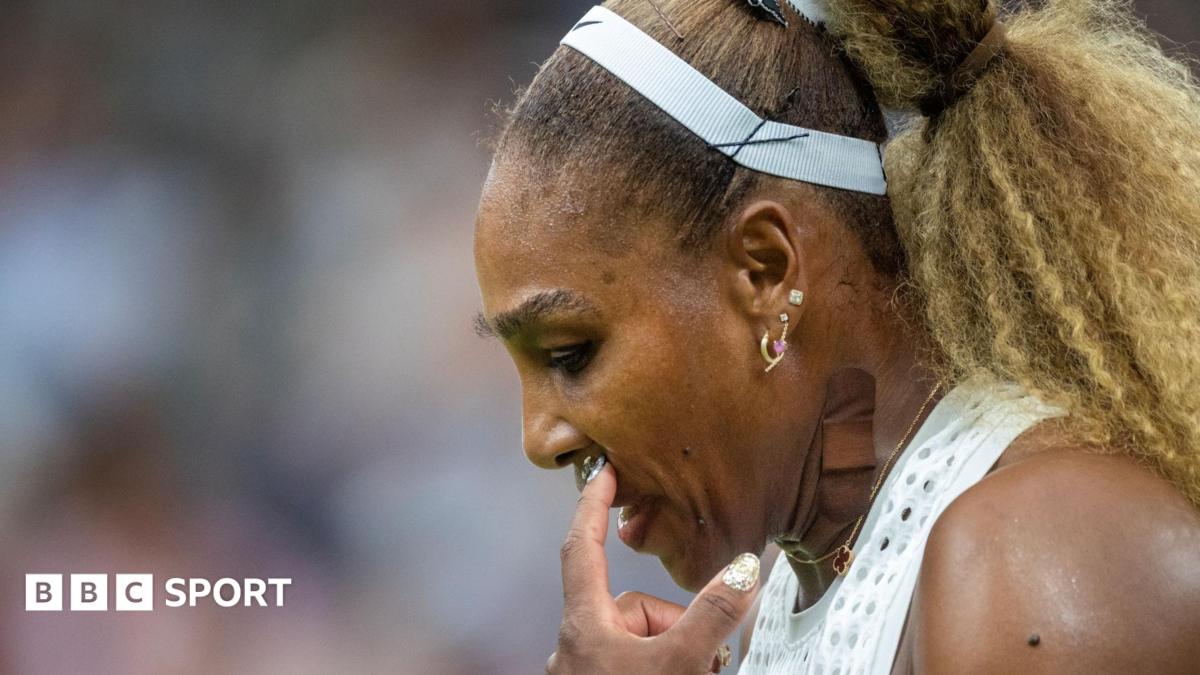
    Tennis icon Serena Williams’ long-awaited comeback to the court at Wimbledon has hit an unexpected setback, with a knee injury sustained during her first singles singles match in almost four years putting her highly anticipated doubles reunion with sister Venus in serious jeopardy. The 44-year-old American legend, a 23-time Grand Slam singles champion, returned to Centre Court on Tuesday after 1,462 days away from the All England Club, drawing massive global attention to what was her first competitive singles outing since she stepped back from the sport in 2022. Her planned Friday doubles match with Venus, where the pair are six-time Wimbledon champions and set to play their first Grand Slam together since 2022, now hangs in the balance after Serena’s right knee swelled up during her three-set defeat to 20-year-old Australian rising star Maya Joint.

    The injury occurred late in the first set, when Serena tweaked her knee. Despite medical advice to withdraw from the match, sources confirmed to BBC Sport that the fiercely competitive champion refused to exit, pushing through the pain to take the match to a deciding third set. She received no in-match treatment, and observers noted her slowed movement and uncertain footwork throughout the decider. After the match, medical staff offered crutches to assist her walking, an offer she declined, and she left the venue unassisted that same night. She did not speak to reporters post-match, with Wimbledon officials confirming the medical teams from the tournament and the WTA excused her from mandatory media obligations due to the injury.

    In a post on her official Instagram following the match, Serena opened up about her emotions around her return, saying it felt incredible to be back on the court she has dominated for decades. “It felt so good to be back. I’m incredibly thankful for the wildcard – and even more grateful my daughters got to see that it’s never too late to chase something you love,” she wrote. She confirmed the knee tweak but stressed she is taking every possible step to be fit enough to compete alongside Venus on Friday. She also offered a public congratulations to Joint on her victory, and thanked fans for the overwhelming outpouring of support.

    This comeback marks a full-circle moment for Serena, who played what she expected would be the final match of her professional career at the 2022 US Open. Notably, she avoided calling the move a retirement, instead saying she was “evolving away” from tennis, leaving the door open for a potential return that has now materialized at the tournament where she has enjoyed some of her greatest success: seven singles titles and six women’s doubles titles at the All England Club.

    Against Joint, the veteran champion showed flashes of the unparalleled talent that made her one of the greatest players in the history of the sport, and was within touching distance of a sensational comeback victory before the younger Australian held firm to seal a 6-3 6-7 (6-8) 6-3 win. Her decision to push through the injury to finish the match was characteristic of her legendary competitive drive, which has been defined by her famous quote that she hates losing more than she loves winning. That grit, however, may now cost her the chance to share the court with her sister this week.

    While Serena has not officially ruled herself out of Friday’s doubles draw, multiple indicators suggest the odds of the iconic pair sharing the Centre Court once again are heavily stacked against them. Missing the doubles match would mark a deeply disappointing end to a comeback that has dominated headlines at SW19 over the past week, with fans and analysts alike captivated by the story of the 44-year-old’s return to the sport she revolutionized. Williams’ camp has reaffirmed that she is doing everything in her power to get fit in time, leaving the tennis world waiting to see if she can pull off one more magical moment at Wimbledon.

  • 1 dead in Romania in a powerful storm after intense heatwave

    1 dead in Romania in a powerful storm after intense heatwave

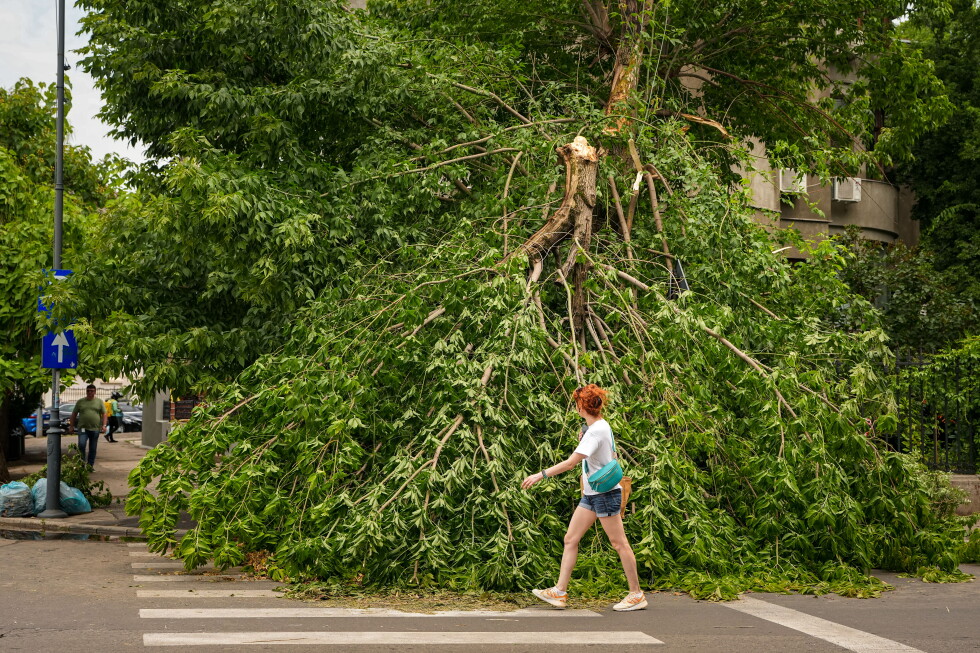
    A devastating severe storm swept through Romania in the overnight hours leading into Wednesday, cutting through a weeks-long record-breaking heatwave and leaving one person dead, widespread flood damage and thousands of urgent calls for emergency response across 20 of the Eastern European nation’s counties.

    According to Romania’s General Inspectorate for Emergency Situations (IGSU), the torrential downpour and high winds impacted a total of 60 localities across the country, with the capital Bucharest and its adjacent Ilfov County bearing the brunt of the extreme weather. The sole confirmed fatality occurred in the region when a large tree, uprooted by powerful gusts, collapsed onto a moving vehicle, killing the occupant inside.

    In the wake of the storm, IGSU teams worked around the clock to respond to more than 2,200 distress calls from residents trapped by floodwaters or dealing with storm-related debris. Crews pumped standing water out of more than 350 residential properties and 100 public streets that had been left submerged by the intense rainfall. To supplement local response efforts, emergency management officials deployed additional rescuers and heavy equipment—including water pumps, utility trucks and chainsaws—from neighboring unaffected counties to support recovery work.

    Preliminary damage assessments from the IGSU confirm that nearly 1,000 trees were felled across the hardest-hit regions, and 495 parked and moving vehicles suffered damage from falling debris or floodwaters.

    The extreme storm event comes as much of Continental Europe grapples with an intense summer heatwave, which has pushed temperatures in parts of Romania to forecast highs above 40 degrees Celsius (104 Fahrenheit). The sweltering conditions created the unstable atmospheric conditions that fueled the sudden severe storm, according to national weather officials.

    On Wednesday, Romania’s National Meteorological Administration extended its warning for additional extreme weather, noting that ongoing atmospheric instability would likely trigger more torrential rainfall and severe thunderstorms across the country’s western and southern regions in the coming hours.